
Best Espresso Machines with Built-In Grinder and Milk Frother


OneHundredCoffee is reader-supported, and some products displayed may earn us an affiliate commission. Details
A good all-in-one coffee station should feel simpler after the novelty wears off, not more complicated. That sounds obvious, yet this category can hide several weak links inside one body: an imprecise grinder, a brewing system that struggles to stay consistent, a milk frother that creates hot bubbles instead of usable texture, or an interface that turns every drink into a menu exercise. The strongest machines solve those problems as one connected workflow.
I judge the best espresso machines with a built-in grinder and milk frother by what they remove from the counter without removing the parts of home espresso that still matter. Fresh grinding should be easy to adjust. Brewing should remain repeatable. The milk system should match the owner’s preferred level of involvement. Cleaning should feel like a routine rather than a surprise. When those elements work together, home coffee becomes faster and more consistent without feeling anonymous.
The five machines here cover three distinct ownership styles. The De’Longhi La Specialista Touch is a guided semi-automatic machine with a 15-setting conical burr grinder and flexible automatic or manual milk preparation. PioneerWorks and TROPOW focus on the one-touch convenience associated with a super-automatic espresso machine. The two Takywep models keep more of the portafilter and steaming routine while integrating the grinder into the same footprint.
Top 3 Espresso Machines with Built-In Grinder and Milk Frother — Editor’s Picks
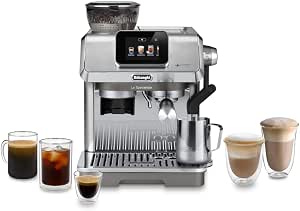
De’Longhi La Specialista Touch
- 15 grind settings
- 10 preset drinks
- Bean Adapt guidance
- Automatic or manual milk
- Iced and cold-drink options
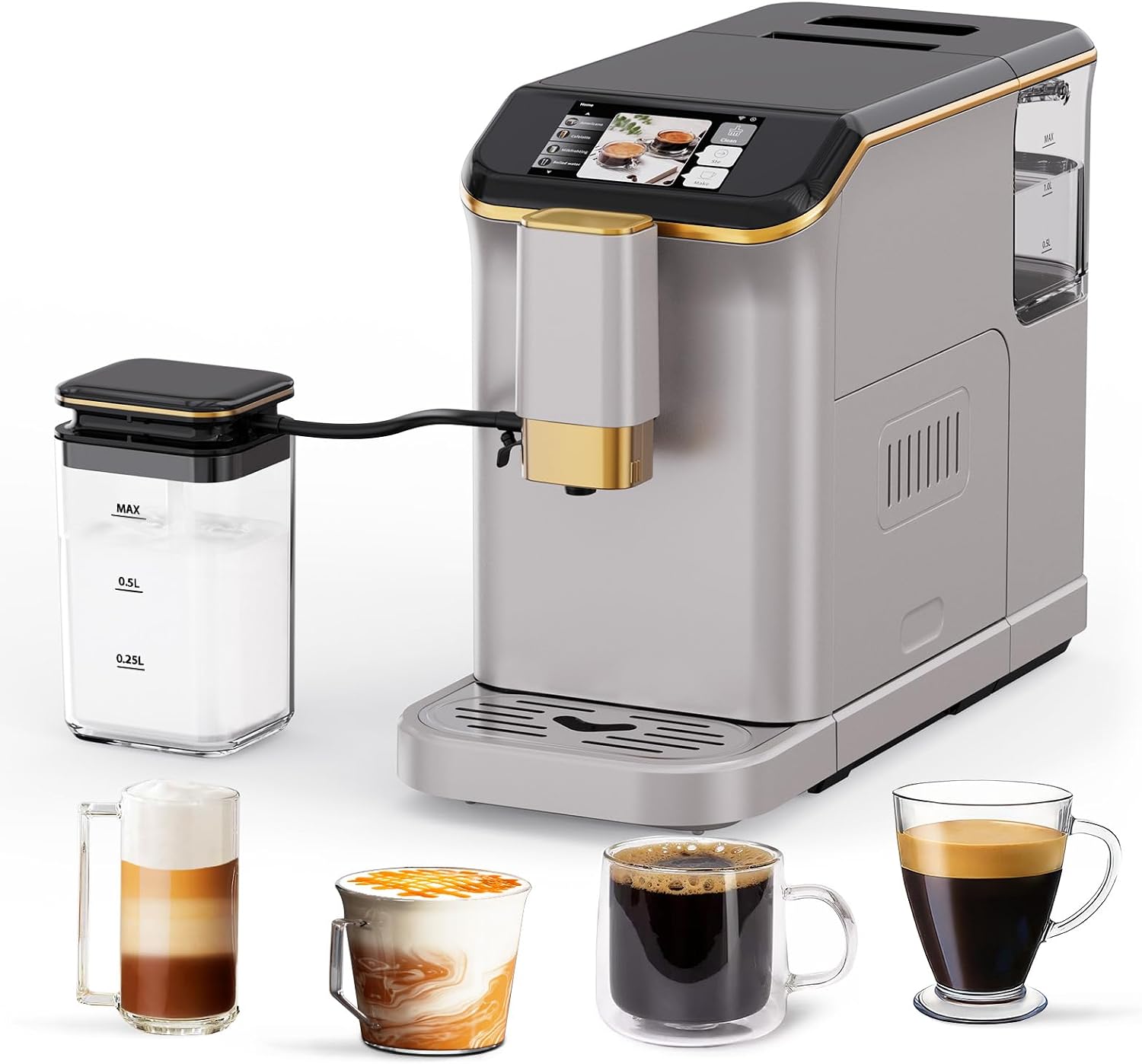
PioneerWorks Fully Automatic Espresso Machine
- Fully automatic workflow
- Built-in grinder
- Integrated milk frother
- Touchscreen-style controls
- 20-bar pressure system
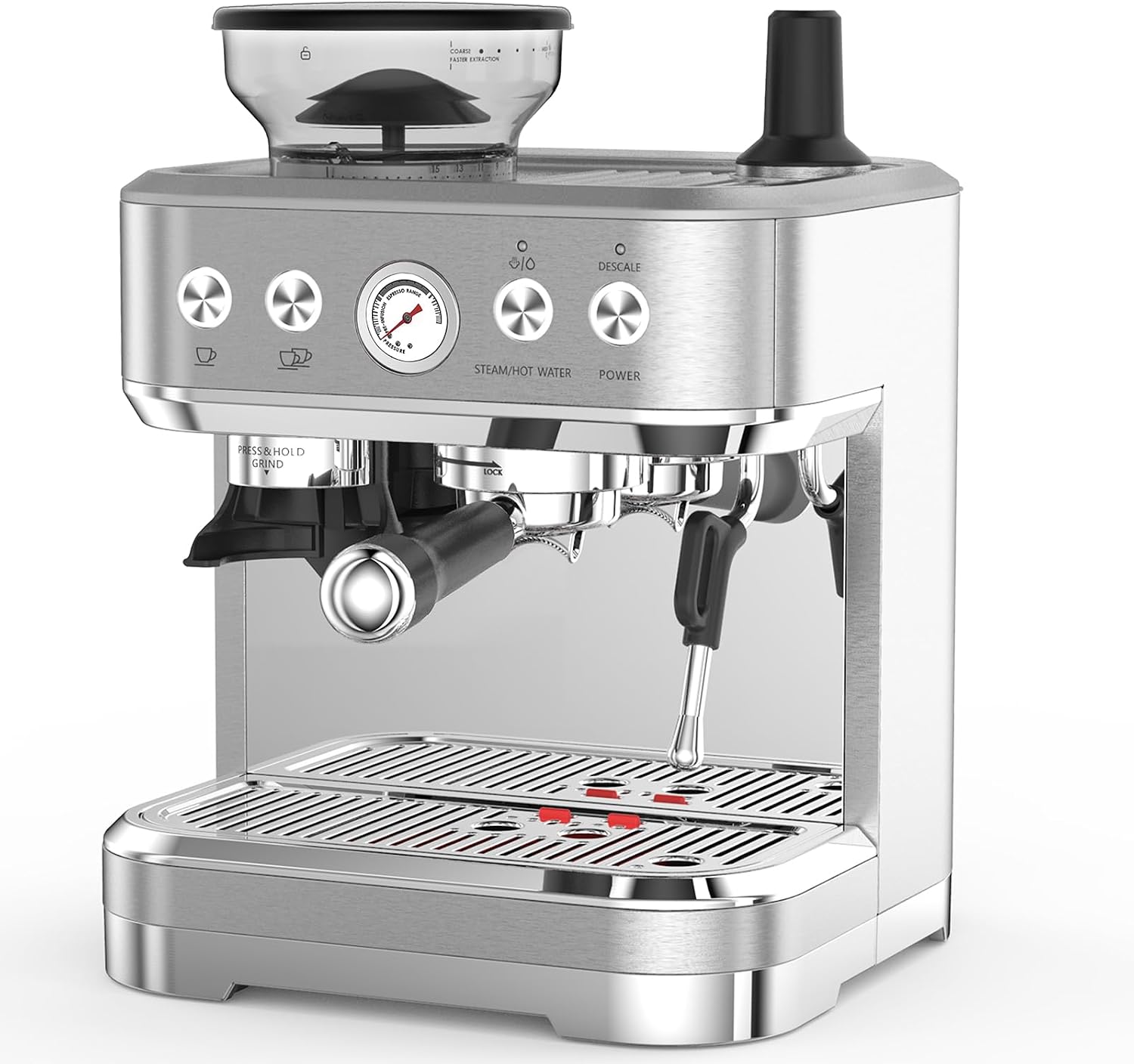
Takywep Professional Espresso Machine (EZ01)
- 15 grind selections
- 15-bar ULKA pump
- PID temperature control
- 58mm dual portafilters
- Steam microfoam workflow
Choosing among them starts with deciding how much of the drink you want the machine to own. A guided semi-automatic model still asks you to handle the portafilter and pay attention to the shot. A fully automatic model treats the entire process as a saved routine. Neither approach is universally better. The better machine is the one whose daily rhythm still feels reasonable after the first month.
The grinder deserves special attention because it determines how much control the brewing side can use. A built-in grinder saves space and keeps the station visually clean, but it also ties the grinder’s adjustment range and service life to the machine. I look for enough settings to correct shot flow, a grounds path that does not make routine cleaning awkward, and controls that encourage small, deliberate changes rather than random dial turning.
Milk preparation creates the next major split. Automatic frothing is the practical winner for speed and repeatability, especially when several people make drinks. A steam wand is better for someone who wants to learn texture, temperature, and pouring. Separate milk frothers can be useful, but they weaken the reason for buying an integrated machine in the first place.
I also pay attention to water capacity and cleanup. Espresso, rinsing, steaming, and automated cleaning can empty a reservoir faster than the cup size suggests. The same machine that saves counter space may still create a busy maintenance routine if the drip tray, milk path, grinder chute, and brew area all need attention at different times.
The ranking therefore favors balance rather than feature count. The De’Longhi takes first place for its guided control and milk flexibility. PioneerWorks follows because it is the clearest one-touch choice. The EZ01 ranks third by offering the most traditional hands-on value. TROPOW is the budget full-automatic alternative, while the large-tank Takywep suits a narrower capacity-focused buyer.
Top 5 Espresso Machines with Built-In Grinder and Milk Frother — At a Glance
De’Longhi La Specialista Touch
- 15 grind settings
- 10 preset drinks
- Bean Adapt guidance
- Automatic or manual milk
- Iced and cold-drink options
- Guided semi-automatic workflow
PioneerWorks Fully Automatic Espresso Machine
- Fully automatic workflow
- Built-in grinder
- Integrated milk frother
- Touchscreen-style controls
- 20-bar pressure system
- 1.5-liter water tank
Takywep Professional Espresso Machine (EZ01)
- 15 grind selections
- 15-bar ULKA pump
- PID temperature control
- 58mm dual portafilters
- Steam microfoam workflow
- Semi-automatic operation

TROPOW Fully Automatic Espresso Machine
- One-touch screen
- Fully automatic mode
- Built-in grinder
- Integrated milk frother
- 20-bar extraction system
- 1.5-liter water tank
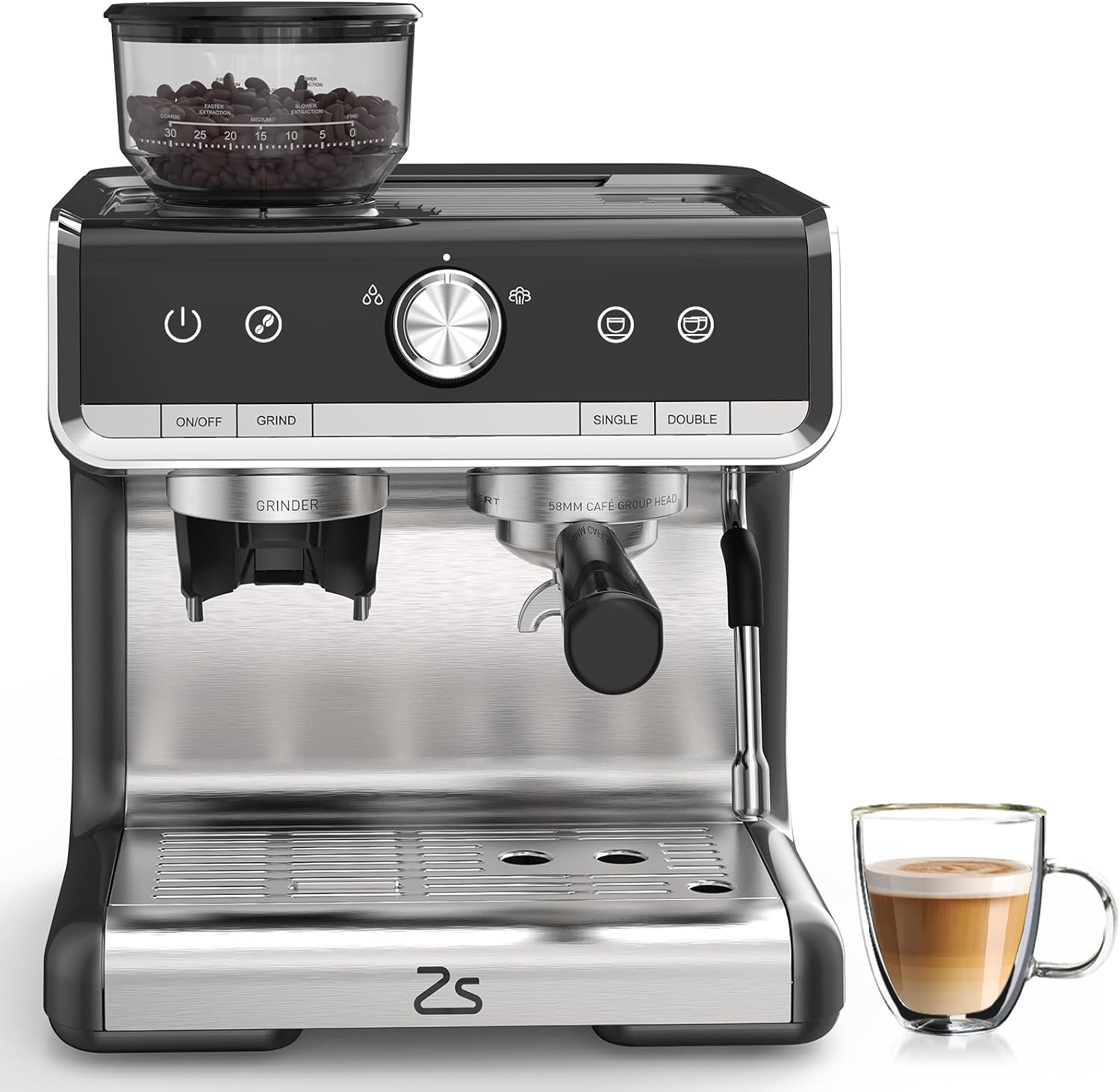
Takywep 20-Bar Built-In Grinder Espresso Machine
- Up to 30 grind settings
- 20-bar pressure format
- 1450-watt system
- Removable 95-ounce tank
- Built-in milk frother
- Latte and macchiato workflow
Quick Ranking: Best Espresso Machines with Built-In Grinder and Milk Frother
| Rank | Machine | Best For | Why It Earned Its Place |
|---|---|---|---|
| 1 | De’Longhi La Specialista Touch | Best Overall | Best blend of control, guidance, and milk-drink flexibility |
| 2 | PioneerWorks Fully Automatic Espresso Machine | Best One-Touch | Best for low-effort bean-to-cup espresso and milk drinks |
| 3 | Takywep Professional Espresso Machine (EZ01) | Best Hands-On Value | Best budget route to a more involved semi-automatic routine |
| 4 | TROPOW Fully Automatic Espresso Machine | Best Budget Full-Auto | Best lower-cost route to one-touch whole-bean milk drinks |
| 5 | Takywep 20-Bar Built-In Grinder Espresso Machine | Best Large Tank | Best for capacity-focused buyers who value feature count |
Best Espresso Machines with Built-In Grinder and Milk Frother: Detailed Reviews
1. Best Overall: De’Longhi La Specialista Touch

The most complete choice for buyers who want guided espresso, an integrated grinder, automatic milk texture, and enough control to keep the routine engaging.
De’Longhi La Specialista Touch Espresso Machine with Grinder & Milk Frother
The most complete choice for buyers who want guided espresso, an integrated grinder, automatic milk texture, and enough control to keep the routine engaging.
Technical Specifications & Daily Features
- Machine style: Guided semi-automatic espresso machine with an integrated grinder
- Grinder: Italian-made conical burr grinder with 15 settings
- Drink menu: 10 presets covering espresso, milk drinks, hot water, and cold options
- Dial-in support: Bean Adapt guidance for grind and brewing adjustments
- Milk system: Automatic frothing with five froth levels and four milk-temperature settings, plus manual control
- Best workflow: Freshly ground espresso with guided preparation and flexible milk finishing
- Best user: A buyer who wants coaching and convenience without moving to a fully automatic machine
30-Day Ownership Outlook: Pros & Cons
Pros
- Balanced control: It keeps the portafilter-based espresso experience while removing much of the uncertainty that makes integrated machines frustrating for beginners.
- Useful drink range: The preset menu supports straight espresso, longer drinks, milk drinks, and cold routines without making the controls feel disconnected.
- Milk flexibility: Automatic frothing makes weekday drinks easier, while the manual option leaves room for a more involved texture and pouring routine.
- Coherent design: The grinder, brewing guidance, and milk system feel like parts of one machine rather than three features sharing a housing.
- Strong household fit: It can serve one person who enjoys dialing in and another who mainly wants an uncomplicated cappuccino.
Cons
- More machine to learn: The guidance reduces the learning curve, but the number of drink and milk options still asks for an initial setup period.
- Cleaning remains broad: A grinder, portafilter, milk system, drip tray, and water path all need regular attention.
- Not fully one-touch: Buyers who want the machine to grind, brew, and finish milk without handling a portafilter will prefer a full automatic model.
My Final Verdict
The La Specialista Touch takes first place because it understands the real purpose of an all-in-one espresso machine: reducing friction without flattening the coffee-making experience.
I would choose it for a home where milk drinks matter, different users want different levels of involvement, and the owner values a more established, polished platform over the lowest possible entry price.
The La Specialista Touch earns its lead before the first drink is even finished because the workflow feels deliberate. The grinder is not treated as a token convenience, the milk system is not limited to one generic foam result, and the drink menu does more than decorate the interface. Each part supports the same goal: helping a home user move from whole beans to a finished espresso drink without assembling a separate station.
What makes this machine especially appealing is the way it sits between manual ritual and automatic assistance. I still get the tactile rhythm of dosing into a portafilter and paying attention to the shot, yet the guidance keeps small setup errors from turning the first week into a string of sour or stalled extractions. That balance is more useful than maximum automation for someone who wants to improve rather than simply press a button.
Milk preparation is another reason it separates itself from the group. Five froth levels and four milk-temperature settings give the automatic side enough range to serve a small latte, a drier cappuccino, or a softer flat-white-style drink. The manual option matters just as much because it prevents the machine from becoming restrictive once the owner gains confidence.
The 10 preset drinks also make the machine easier to share. A household can move from espresso to Americano, latte, long black, hot water, or a cold-drink routine without rebuilding every setting from the beginning. Presets do not replace good beans or sensible grinding, but they reduce the small repeated decisions that make an ambitious machine feel tiring over time.
The compromise is that this remains a feature-rich semi-automatic platform. There are more removable parts and more surfaces to clean than on a simple espresso machine, while the owner still handles the portafilter. I see that as a fair exchange for the quality and flexibility available here, but a convenience-first buyer may be happier with the PioneerWorks instead.
2. Best One-Touch: PioneerWorks Fully Automatic Espresso Machine
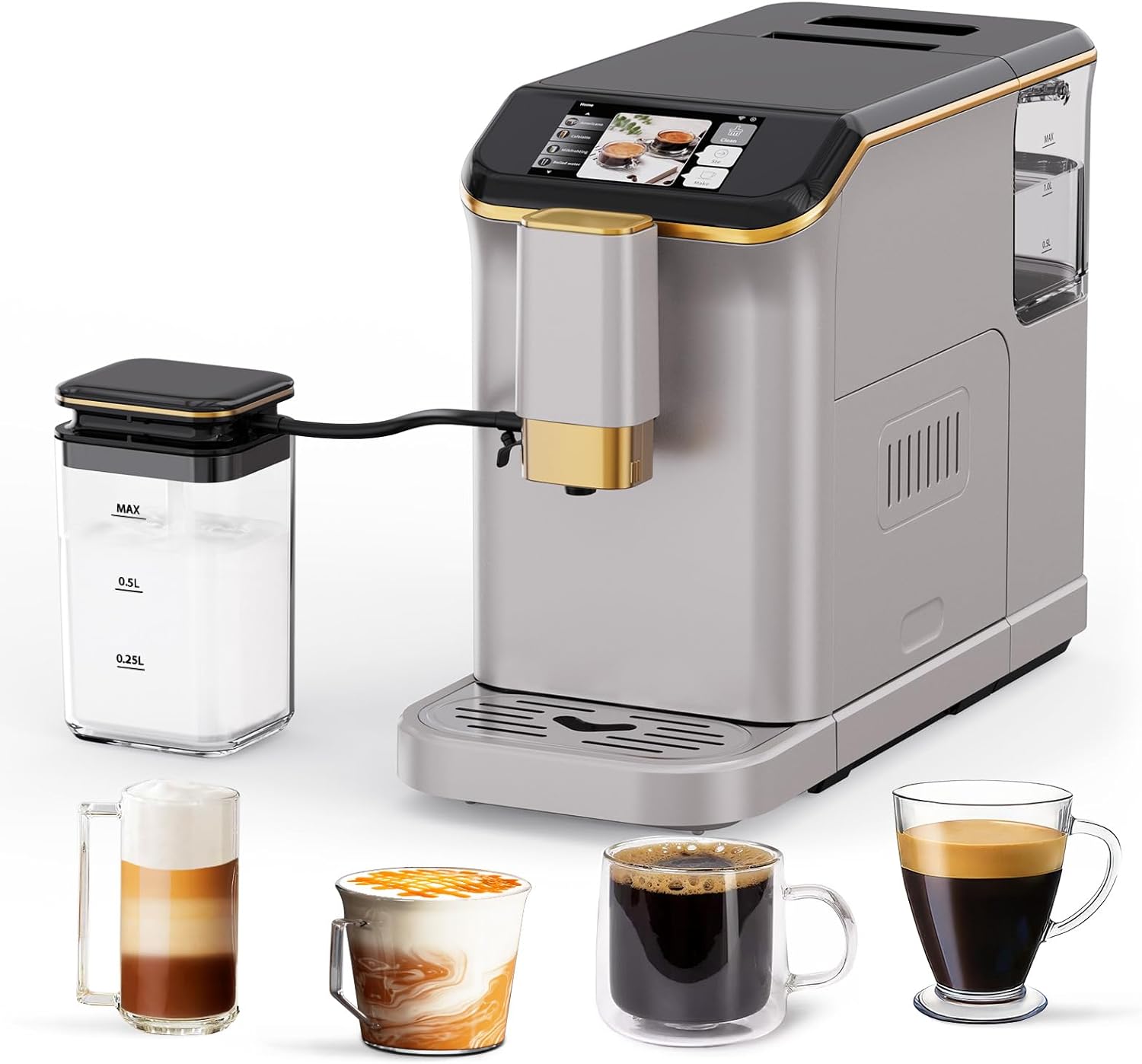
The clearest fit for a convenience-first household that wants whole-bean coffee, milk drinks, and a touchscreen-style routine with minimal hands-on work.
PioneerWorks Fully Automatic Espresso Machine with Built-In Grinder & Milk Frother
The clearest fit for a convenience-first household that wants whole-bean coffee, milk drinks, and a touchscreen-style routine with minimal hands-on work.
Technical Specifications & Daily Features
- Machine style: Fully automatic bean-to-cup espresso machine
- Grinder: Integrated whole-bean grinder
- Controls: Touchscreen-style one-touch drink workflow
- Milk system: Built-in milk frothing system
- Pressure system: 20-bar pump format
- Water tank: 1.5-liter reservoir
- Best user: A busy household that values repeatability and speed above manual espresso control
30-Day Ownership Outlook: Pros & Cons
Pros
- Low-effort mornings: Grinding, brewing, and milk preparation are organized around a much shorter path than a portafilter-based routine.
- Whole-bean freshness: It preserves the main flavor advantage of fresh grinding without requiring a separate grinder or dosing station.
- Easy household adoption: A one-touch interface is simpler for several users who do not share the same espresso experience.
- Compact station: The grinder and frother live in the machine, reducing countertop sprawl and cable clutter.
- Milk-drink focus: Its feature set is aimed directly at the latte and cappuccino drinker who wants consistency more than manual texture practice.
Cons
- Less tactile control: The machine decides more of the dose, brewing, and milk workflow than a guided semi-automatic model.
- Integrated maintenance: Cleaning cycles and milk-path care cannot be skipped because several systems share one body.
- Lower upgrade freedom: The built-in grinder and milk hardware cannot be replaced independently if the owner later wants a different workflow.
My Final Verdict
PioneerWorks ranks second because it delivers the most direct version of the all-in-one promise: whole beans in, finished coffee out, with very little manual coordination.
It is the machine I would favor for a family or office-style home routine where several drinks need to be made quickly and the owner does not want espresso preparation to become a hobby.
PioneerWorks approaches the category from the opposite direction to the De’Longhi. Instead of guiding the user through espresso preparation, it tries to remove as many steps as possible. That distinction matters because it changes the entire ownership experience. The machine is not asking me to become more skilled with a portafilter; it is asking me to choose a drink and let the internal systems coordinate the work.
For the right buyer, that is not a compromise. It is the reason to buy the machine. A fully automatic workflow becomes valuable when mornings are rushed, when several people use the same appliance, or when a household wants milk drinks but has little interest in tamping, steaming, or cleaning loose grounds from a dosing area.
The integrated grinder keeps the routine connected to whole beans, which gives this style of machine an advantage over pod convenience. Freshness still depends on the beans and hopper habits, yet the cup begins with ground-on-demand coffee rather than a sealed portion that was prepared elsewhere. That difference is easy to appreciate in daily espresso and milk drinks.
The 1.5-liter water tank is sensible for a machine expected to brew, rinse, and froth during the same session. Full automatic machines use water for more than the drink itself, so a tiny reservoir would quickly undermine the convenience. This capacity should support ordinary home use without turning every second cappuccino into a refill reminder.
I keep it behind the La Specialista Touch because the PioneerWorks offers less room for the owner to shape the process. That will not bother someone who wants one-touch simplicity. It will matter to a buyer who expects to experiment with dose, shot handling, or milk texture as their skills develop.
3. Best Hands-On Value: Takywep Professional Espresso Machine (EZ01)

The strongest lower-cost choice for someone who still wants a portafilter, steam-wand involvement, PID temperature control, and an integrated conical burr grinder.
Takywep Professional Espresso Machine with Built-In Grinder and Milk Frother
The strongest lower-cost choice for someone who still wants a portafilter, steam-wand involvement, PID temperature control, and an integrated conical burr grinder.
Technical Specifications & Daily Features
- Machine style: Semi-automatic espresso machine with an integrated grinder
- Grinder: Built-in conical burr grinder with 15 grind selections
- Pump: 15-bar ULKA pump
- Temperature: PID temperature control
- Portafilter: 58mm dual-portafilter format
- Milk system: Steam-wand frothing for manual microfoam
- Best user: A value-focused buyer who wants hands-on espresso and milk preparation without purchasing a separate grinder
30-Day Ownership Outlook: Pros & Cons
Pros
- Enthusiast-shaped workflow: The portafilter, PID, and steam wand create a more traditional espresso sequence than the fully automatic machines.
- Integrated grinder value: Fifteen grind selections give a starting range for dialing espresso without adding another appliance.
- Manual milk control: The steam-wand approach lets the user change texture and temperature through technique rather than a fixed automatic program.
- 58mm format: The larger portafilter style supports a familiar puck-preparation routine and a broad accessory mindset.
- Clear upgrade in involvement: It gives the owner more influence over the cup than the one-touch machines while keeping the station compact.
Cons
- More technique required: Grinding, distributing, tamping, brewing, and steaming all depend more heavily on the user.
- Integrated grinder ceiling: A built-in grinder is convenient, but it limits the freedom to upgrade the grinding side independently.
- Busier cleanup: Loose grounds, a portafilter, and a steam wand create more immediate after-drink work than a full automatic system.
My Final Verdict
The EZ01 earns third place by offering the most traditional espresso character among the lower-priced all-in-one machines in this group.
I would choose it for someone who wants to learn puck preparation and milk steaming but needs the grinder included from the beginning. Buyers who mainly want one-touch drinks should move toward PioneerWorks or TROPOW.
The EZ01 is the machine in this lineup that most clearly speaks to a budget-minded home barista. Its feature set is built around the familiar semi-automatic sequence: grind into a portafilter, prepare the puck, start the shot, and texture milk with a steam wand. The integrated grinder simplifies the equipment list without removing the parts of the process that many espresso owners actually enjoy.
Fifteen grind selections are not an unlimited adjustment system, but they create a practical starting range for matching coffee, dose, and shot flow. The important ownership habit will be learning to change only one variable at a time. A small grind move, a stable dose, and consistent tamping will produce more useful feedback than chasing every control simultaneously.
PID temperature control adds real value to this kind of machine because repeatability matters when the user is already managing several manual steps. A stable brewing target does not guarantee a good shot, but it removes one source of variation and makes grind and dose adjustments easier to understand.
The 58mm dual-portafilter format and 15-bar ULKA pump give the machine a more prosumer-style identity than the fully automatic options. In daily use, that means the owner should expect a preparation station rather than a single-button appliance. A scale, a clean towel, and a simple puck routine will make the machine feel much more organized.
Its limitation is the same quality that makes it appealing: the EZ01 asks for involvement. The steam wand must be wiped and purged, the portafilter must be knocked out and rinsed, and the grinder setting must be managed as beans age. That is satisfying for one buyer and unnecessary work for another.
4. Best Budget Full-Auto: TROPOW Fully Automatic Espresso Machine

A convenience-led full automatic option for buyers who want a one-touch screen, whole-bean grinding, integrated milk frothing, and a more price-conscious path to bean-to-cup drinks.
Fully Automatic Espresso Machine with Built-In Grinder and Milk Frother
A convenience-led full automatic option for buyers who want a one-touch screen, whole-bean grinding, integrated milk frothing, and a more price-conscious path to bean-to-cup drinks.
Technical Specifications & Daily Features
- Machine style: Fully automatic bean-to-cup espresso machine
- Controls: One-touch screen operation
- Grinder: Integrated whole-bean grinder
- Milk system: Built-in milk frother
- Pressure system: 20-bar format
- Water tank: 1.5-liter reservoir
- Best user: A value-focused buyer who prioritizes automated milk drinks and a compact all-in-one footprint
30-Day Ownership Outlook: Pros & Cons
Pros
- Fast drink path: The one-touch structure minimizes the number of separate actions between choosing a drink and serving it.
- Whole-bean input: The integrated grinder supports fresher coffee than a capsule-based convenience routine.
- Milk drinks included: A built-in frother keeps lattes and cappuccinos inside the same workflow.
- Reasonable reservoir: The 1.5-liter tank suits an appliance that also uses water for rinsing and milk-system care.
- Low learning barrier: The machine is aimed at repeatable results rather than manual puck preparation or steaming technique.
Cons
- Fewer manual corrections: Owners have less direct influence over the puck, extraction, and milk texture than they do with a semi-automatic machine.
- Cleaning discipline required: Automated convenience depends on keeping the internal brew and milk paths clean.
- All systems are linked: The grinder, brewer, and frother cannot be upgraded as separate pieces later.
My Final Verdict
TROPOW makes sense when the priority is obtaining a full automatic feature set without moving to the most premium option in the group.
I would keep expectations centered on convenience and whole-bean milk drinks. Buyers seeking a more developed manual espresso path should choose the EZ01, while those wanting the most polished guided platform should stay with the De’Longhi.
TROPOW competes by concentrating on the features that immediately attract a convenience shopper: a one-touch screen, a built-in grinder, an integrated milk frother, and fully automatic preparation. The machine is not trying to teach espresso technique. It is trying to turn whole beans into a familiar drink with as little friction as possible.
That approach fits a household where coffee is part of the schedule rather than the main event. A user can move from waking up to a latte without measuring a dose, tamping a puck, or learning a steam-wand angle. The benefit becomes even clearer when several people want drinks and none of them wants to manage a separate grinder and milk pitcher.
The 20-bar system is less important to me than how consistently the machine manages its internal brewing routine. Pump numbers alone do not decide cup quality. Fresh beans, sensible grind calibration, regular cleaning, and a stable automated recipe will have a much larger effect on whether the espresso tastes balanced under milk.
A 1.5-liter tank is a practical match for the machine. Automated systems rinse and clean as part of normal use, so reservoir capacity disappears faster than the drink volume suggests. Keeping the tank filled and the drip tray emptied becomes part of the weekly rhythm rather than an occasional task.
I rank TROPOW fourth because it is strongest as a value bundle, not as the most flexible or refined ownership experience. It offers a persuasive feature combination for the right buyer, but it does not give the same manual growth path as the semi-automatic machines above it.
5. Best Large Tank: Takywep 20-Bar Built-In Grinder Espresso Machine

A feature-dense option built around a large removable reservoir, integrated grinder, milk frother, and up to 30 grind settings for buyers comfortable with a less streamlined platform.
Takywep Espresso Machine with Built-In Grinder and Milk Frother
A feature-dense option built around a large removable reservoir, integrated grinder, milk frother, and up to 30 grind settings for buyers comfortable with a less streamlined platform.
Technical Specifications & Daily Features
- Machine style: All-in-one espresso platform with integrated grinding and milk frothing
- Grinder: Built-in grinder with up to 30 settings
- Pressure system: 20-bar format
- Power: 1450 watts
- Water tank: Removable 95-ounce reservoir
- Milk system: Integrated frother for latte and macchiato-style drinks
- Best user: A capacity-focused shopper who values broad features and accepts a more involved ownership decision
30-Day Ownership Outlook: Pros & Cons
Pros
- Large water supply: The 95-ounce removable tank reduces refill frequency when several drinks are prepared in one session.
- Broad grinder range: Up to 30 settings provide more room for adjustment than the simpler integrated grinders in the group.
- All-in-one footprint: Grinding, brewing, and milk preparation remain on one station rather than spreading across the counter.
- Milk-drink readiness: The frother supports the latte, cappuccino, and macchiato routines that motivate many buyers in this category.
- Feature density: The machine combines several attention-grabbing specifications in one package.
Cons
- More variables to manage: A larger adjustment range and several integrated systems can make the setup feel less immediately intuitive.
- Upgrade limitations: The grinder and frother remain tied to the machine rather than functioning as replaceable tools.
- Cleaning load: A large reservoir does not reduce the need to rinse the portafilter area, purge the milk system, and manage grinder residue.
My Final Verdict
This Takywep model earns its place through capacity and feature coverage rather than the most cohesive workflow in the ranking.
I would consider it for a buyer who specifically wants the 95-ounce tank and broader grinder adjustment, but I would still favor the machines above it when ease, guidance, or a clearer ownership style matters more than raw feature count.
The final machine in the ranking takes a capacity-first approach. A removable 95-ounce water tank changes the daily experience for a household that prepares several milk drinks, because brewing, steaming, and rinsing can consume water quickly. Fewer refills are a genuine convenience when the machine is used throughout the day.
Up to 30 grind settings also give the integrated grinder more adjustment room than the basic all-in-one concept might suggest. That range becomes useful when moving between different roast levels or correcting a shot as beans age. The owner still needs a consistent dose and puck routine, but the grinder provides more space to make a targeted change.
The 1450-watt, 20-bar format places the machine firmly in the feature-rich home category. I would not choose it because of pressure language alone. The more important question is whether the whole workflow remains manageable: loading beans, selecting a grind, preparing the coffee, frothing milk, and cleaning every contact point afterward.
Its large-tank advantage can also encourage better multi-drink use. Preparing two lattes back to back is less disruptive when the machine does not need immediate refilling. The milk frother and integrated grinder keep the station compact, which helps a buyer who wants one appliance rather than a collection of separate tools.
I place it fifth because its appeal is more specification-led than workflow-led. The machine can suit a buyer who knows exactly why the large reservoir and wider grind range matter. Someone seeking the easiest recommendation, however, will find a clearer match higher in the list.
Buying Guide: How to Choose an Espresso Machine with a Built-In Grinder and Milk Frother
Choose the ownership style before comparing specifications.
The first decision is not pressure, wattage, or drink count. It is whether you want a semi-automatic espresso machine or a fully automatic one. A semi-automatic machine keeps the portafilter, puck preparation, and often manual milk steaming in your hands. A full automatic machine prioritizes repeatability and speed by coordinating grinding, brewing, and milk preparation internally.
The La Specialista Touch and EZ01 make the most sense when involvement is part of the appeal. PioneerWorks and TROPOW suit a buyer who wants a shorter path to the cup. The large-tank Takywep sits between those identities and should be chosen for its specific capacity and adjustment advantages rather than because it has the longest feature list.
Treat grinder adjustment as a brewing control.
A grinder with more settings is useful only when those settings create meaningful changes. Espresso reacts quickly to grind size, so the owner needs enough resolution to correct a fast or slow shot without changing several other variables. This is why precision grinding matters more than a dramatic maximum setting count.
Keep the dose and tamping routine stable while adjusting the grinder. Many common brewing mistakes come from changing grind, dose, temperature, and coffee at the same time. A built-in grinder simplifies the station, but it does not remove the need for a methodical dial-in process.
Match the milk system to your preferred drinks.
Automatic frothing is the better fit for speed, shared use, and predictable weekday drinks. A steam wand is more rewarding when texture and pouring matter. Learning how to steam and froth milk takes practice, yet it gives the owner direct control over aeration and final temperature.
The De’Longhi is unusually flexible because it offers automatic and manual approaches. The EZ01 is the more traditional steam-wand choice. PioneerWorks and TROPOW are designed around the one-touch milk experience, which is more convenient but less useful for someone who wants to develop latte-art technique.
Do not judge the machine by pump pressure alone.
A 15-bar or 20-bar pump number does not tell me how the coffee will taste. Espresso is brewed at a much lower working pressure than those headline figures. Grinder consistency, puck preparation, temperature behavior, dose control, and the machine’s internal regulation have a greater effect on the cup.
For a portafilter machine, the basket also shapes the result. Understanding how to choose an espresso basket and filter is more useful than assuming a larger pump figure automatically produces stronger or richer espresso.
Size the water tank for rinsing as well as drinking.
All-in-one machines consume water through brewing, steam production, automatic rinsing, and milk-system cleaning. A reservoir that looks generous on paper can empty quickly in a household that prepares several lattes. The 95-ounce Takywep has the clearest capacity advantage, while the 1.5-liter PioneerWorks and TROPOW tanks fit ordinary daily use.
A removable tank is easier to refill and wash, but placement matters. A rear tank may require pulling the machine forward under low cabinets. Before buying, measure not only the body width but also the space needed to remove the hopper lid, refill water, and access the side or rear service points.
Accept the cleaning routine before buying the convenience.
Integrated machines reduce equipment clutter, but they combine several cleaning jobs. Grounds collect around the grinder and brew area. Milk residue must be removed quickly. Drip trays fill with rinse water. The convenience is real only when those tasks fit the owner’s schedule. This is especially important with one-touch milk-frothing machines.
A simple routine works best: empty the puck or grounds container after use, wipe and purge the milk outlet or steam wand, rinse removable milk parts, empty the drip tray before it overflows, and follow the machine’s descaling schedule. Neglecting one system eventually affects the others because everything shares the same appliance.
Choose beans that support the integrated workflow.
Medium roasts are the easiest starting point for these machines. They usually dial in with less sensitivity than very light coffee, remain expressive under milk, and work well for an Americano routine or a balanced espresso. Very oily dark roasts can create more grinder residue, while extremely light coffee may demand finer adjustment and tighter temperature control.
For cold drinks, choose a coffee that stays sweet when chilled rather than simply increasing strength. A balanced blend can move from cappuccino to an iced coffee drink without forcing a complete grinder reset. Freshness still matters, but beans do not need to be used immediately after roasting; a short resting period often makes espresso easier to manage.
Set a budget for ownership, not only purchase.
The most affordable machine is not automatically the best value if its workflow frustrates the household or its cleaning demands are ignored. My broader guide to best-value espresso machines for home uses the same principle: value comes from the number of satisfying drinks a machine produces over time, not from the lowest checkout price.
Allow for water filters, descaling supplies, cleaning tablets, milk-system cleaner, a scale for semi-automatic models, and replacement seals or baskets. Fully automatic machines reduce accessory needs but may depend more heavily on machine-specific cleaning products. Semi-automatic models ask for a few tools but offer more freedom to replace them independently.
Final Comparison Table: Which Espresso Machine with Grinder and Frother Should You Buy?
| Machine | Grinder | Milk System | Best Match | Price |
|---|---|---|---|---|
| De’Longhi La Specialista Touch | Italian-made conical burrs, 15 settings | Automatic or manual frothing | Guided control and drink variety | Amazon |
| PioneerWorks Fully Automatic Espresso Machine | Integrated whole-bean grinder | Built-in automatic frother | One-touch household convenience | Amazon |
| Takywep Professional Espresso Machine (EZ01) | Conical burrs, 15 selections | Manual steam-wand microfoam | Hands-on value and learning | Amazon |
| TROPOW Fully Automatic Espresso Machine | Integrated grinder | Built-in automatic frother | Budget full-automatic workflow | Amazon |
| Takywep 20-Bar Built-In Grinder Espresso Machine | Built-in grinder, up to 30 settings | Integrated milk frother | Large tank and broad features | Amazon |
My Final Recommendation
The De’Longhi La Specialista Touch is my best overall recommendation because it gives the category a clear purpose. Its grinder, guided brewing, preset drinks, and flexible milk system work together without reducing the owner to a passive observer. It is the strongest choice for a household that wants convenience now and room to become more involved later.
PioneerWorks is the more appropriate machine when one-touch simplicity is the main requirement. I would choose it for a busy home where several people want espresso and milk drinks but no one wants to manage a portafilter. Its value is not manual control; it is a shorter, more repeatable morning routine.
The Takywep EZ01 is the best alternative for a buyer who wants to learn. Its integrated grinder, PID, 58mm portafilter format, and steam wand create a more traditional espresso experience at a lower position in the ranking. TROPOW is better for a cost-conscious full-automatic buyer, while the large-tank Takywep makes sense when reservoir capacity and a broader grinder range are specific priorities.
My own decision would come down to involvement. I would buy the De’Longhi for guided craft, PioneerWorks for low-effort drinks, or the EZ01 for a more hands-on budget setup. That choice is more useful than comparing pressure numbers because it predicts whether the machine will still suit the owner after the initial excitement fades.
FAQ: Best Espresso Machines with Built-In Grinder and Milk Frother
What is the best espresso machine with a built-in grinder and milk frother overall?
The De’Longhi La Specialista Touch is the best overall choice in this group. It combines 15 grinder settings, guided brewing, 10 preset drinks, and automatic or manual milk preparation in the most balanced ownership package.
Is a built-in grinder espresso machine worth it?
It is worthwhile for a buyer who values a compact station and a connected workflow. The tradeoff is that the grinder cannot be upgraded separately, so the machine should offer enough adjustment and consistency for the coffee you expect to use.
Which machine is easiest for beginners?
The La Specialista Touch is the strongest guided beginner option because it supports the user without removing the portafilter experience. PioneerWorks is easier for someone who wants the machine to handle nearly everything through a one-touch routine.
Which model is best for a hands-on espresso routine?
The Takywep EZ01 is the most traditional hands-on choice after the De’Longhi. Its portafilter, PID temperature control, 15-setting grinder, and steam wand give the owner direct influence over extraction and milk texture.
Are fully automatic machines better than semi-automatic models?
They are better for speed and consistency, not necessarily for control. Fully automatic models reduce preparation steps. Semi-automatic machines suit owners who enjoy dialing in, preparing a puck, and shaping milk texture themselves.
Does the De’Longhi La Specialista Touch froth milk automatically?
Yes. Its milk system offers five froth levels and four milk-temperature settings, and it also includes a manual option for users who want more direct control.
How many grinder settings do I need for espresso?
The quality and spacing of the settings matter more than the headline count. Fifteen well-placed adjustments can be workable in an integrated machine, while a wider range is useful when changing roast levels or correcting shot flow in smaller increments.
Is a 20-bar espresso machine stronger than a 15-bar machine?
Not in a way that guarantees better espresso. Both pump formats can supply more pressure than the coffee puck needs. Grinder consistency, dose, temperature, puck preparation, and internal regulation matter more to flavor.
Which machine is best for lattes and cappuccinos?
The De’Longhi is the most flexible milk-drink choice because it combines automatic frothing presets with a manual option. PioneerWorks and TROPOW are simpler for one-touch drinks, while the EZ01 is better for learning manual microfoam.
How often should I clean an all-in-one espresso machine?
Milk-contact parts and steam wands should be cleaned after each use. The drip tray and grounds area need frequent emptying, while the brew path, grinder area, and descaling system should follow the machine’s regular maintenance schedule.


