
Best Value Espresso Machines for Home


OneHundredCoffee is reader-supported, and some products displayed may earn us an affiliate commission. Details
There is a kind of coffee purchase that feels good for about two days. The box looks exciting, the machine looks shiny on the counter, and for a brief moment, you feel like you outsmarted the whole category. Then real life starts. The steam wand is weaker than you hoped. The machine runs hot one shot and cool the next. The basket feels limiting. The workflow gets annoying. And suddenly that “great deal” starts feeling like a compromise you now have to work around every morning.
That is why I think the best value espresso machines for home are much better searched than “cheapest espresso machine” or even “best budget espresso machine.” Value is not only about spending less. It is about how much genuine espresso enjoyment, milk performance, consistency, and long-term satisfaction you get for the money. Sometimes that means buying the least expensive machine that still does the important things well. Sometimes it means spending a little more to avoid the kind of limitations that would bother you for the next three years. In other words, value is not the sticker price. Value is the feeling that the machine earns its place in your kitchen.
That is how I approached this list. I wanted five machines that each represent a different kind of smart home espresso purchase. The Breville Bambino is the speed-and-simplicity pick with a fast ThermoJet system, a 54 mm portafilter, low-pressure pre-infusion, and manual microfoam capability. The De’Longhi Dedica Arte is the compact style-focused choice with a slim body, a My LatteArt wand, and a more approachable countertop footprint. The Gaggia Classic Evo Pro / Classic platform is the more serious classic with a 58 mm stainless commercial-style portafilter and a 3-way solenoid valve. The Ninja Luxe Café Premier is the all-in-one modern value machine with espresso, drip coffee, and cold brew modes, a built-in grinder, weight-based dosing, and hands-free frothing. The SOLIS Barista Perfetta sits in that middle zone where compact size meets more enthusiast-friendly control.
What I like about this lineup is that the machines do not all chase the same definition of value. One gives you speed and low stress. One gives you style and space savings. One gives you a more traditional espresso machine foundation that enthusiasts tend to respect. One tries to give you as much capability as possible in one box. And one quietly aims for balance. That makes this kind of article more useful, because the “best” value machine for one kitchen is not automatically the best value machine for another. A beginner in a small apartment, a milk-drinking household, and someone slowly learning to care about puck prep and extraction all have different ideas of what feels worth paying for.
So this is not a roundup built around exaggerated hype. It is built around a simple question I think matters more: which of these machines feels like money well spent once the novelty wears off? That is the question I kept coming back to as I ranked them.
Best Value Espresso Machines for Home — At a Glance
| Image | Product | Features | Price |
|---|---|---|---|
|
Best Compact Value

|
Fast heat-up in a tiny footprint
|
Price on Amazon | |
|
Slim Counter Pick

|
Ultra-compact espresso + latte setup
|
Price on Amazon | |
|
Best Prosumer Value
|
58mm commercial-style platform
|
Price on Amazon | |
|
Best Feature Value

|
Espresso, drip, and cold brew in one
|
Price on Amazon | |
|
Best Niche Upgrade
|
Slim semi-automatic stainless design
|
Price on Amazon |
Quick Ranking: My Top Picks
- Breville Bambino
- Ninja Luxe Café Premier
- Gaggia Classic Evo Pro / Classic platform
- De’Longhi Dedica Arte
- SOLIS Barista Perfetta
What “Value” Really Means in a Home Espresso Machine
I think people often judge value too quickly in this category. They look at the machine price and stop there, but espresso machines are not blenders or toasters. They are workflow tools. The way they heat, the way they steam, the way the portafilter behaves, the amount of counter space they occupy, and the way they respond when you use them tired at 6:45 in the morning—that is where value becomes real. A machine can be affordable and still be frustrating. It can also be a little more expensive while saving you so much annoyance that it ends up feeling cheaper over time.
For me, value in this category comes down to a handful of things. First, I want the espresso side to feel serious enough that the drinks taste like a meaningful step above basic coffee appliances. That does not mean every machine must be a hobbyist dream, but it does mean I want to feel some sense of texture, sweetness, body, and repeatability. Second, I want the steam side to matter, because a huge number of people buying these machines are not just pulling shots—they are making cappuccinos, flat whites, iced lattes, and weekend milk drinks for other people. Third, I care about whether the machine respects your time. Fast heat-up, logical controls, manageable cleanup, and an intuitive morning rhythm are all part of the value. And finally, I care about whether the machine gives you room to grow. Some value machines are valuable because they stay easy forever. Others are valuable because they let you improve as your taste improves.
That is one reason this list looks the way it does. The Breville Bambino is here because it gets a lot of the foundational espresso stuff right without making you wait around: 3-second ThermoJet readiness, a 54 mm basket system, low-pressure pre-infusion, and manual steam wand microfoam capability are all part of its appeal. The Ninja Luxe Café Premier is here because its value case is broader: 3-in-1 brewing, 25 grind settings, a built-in grinder, weight-based dosing, and guided frothing features give it a lot of utility for the money. The Gaggia Classic is here because it has the kind of traditional espresso bones that many people still want: a 58 mm portafilter, a 3-way solenoid, a steel body, and made-in-Italy positioning. The Dedica Arte is here because value sometimes means fitting a real espresso machine into a small kitchen without turning your counter into a project. And the SOLIS Barista Perfetta is here because compact enthusiast-style machines can hit a sweet spot when they are designed thoughtfully.
That is also why I did not rank these purely by maximum capability. If I did, the article would be much less helpful. The best value espresso machine for home is not automatically the one with the most serious espresso pedigree. It is the one that gives the right person the least regret and the most pleasure per dollar.
Breville Bambino — Best Overall Value for Most Homes
Breville Bambino Espresso Machine — Brushed Stainless Steel
Key Features
- Fast heat-up workflow
- 54mm portafilter format
- Manual steam wand control
- Compact counter footprint
- Simple daily cleanup
Why We Like It
I like the Bambino when mornings are busy: it gets up to temp quickly, keeps the countertop footprint small, and still lets you practice real espresso + milk technique without a complicated menu system.
Pros
- Quick warm-up routine
- Small-kitchen friendly
- Great starter platform
- Capable milk steaming
Cons
- Needs a good grinder
- Less advanced controls
Bottom Line
A compact, fast-heating espresso machine that fits real life—especially if you want quick daily milk drinks.
Price on AmazonIf I had to pick one machine in this group that I think makes the most sense for the widest number of people, it would be the Breville Bambino. I understand why so many home users keep circling back to it. It has a very clear personality. It is not trying to become a café simulator, and it is not trying to drown you in automation. It is trying to make good home espresso feel less intimidating and less time-consuming, and I think that is exactly why it lands so well in the value conversation.
The core spec story is strong for this price tier. Breville positions the Bambino around its ThermoJet heating system, which reaches operating temperature in about 3 seconds, and pairs that with a 54 mm portafilter, low-pressure pre-infusion, and 9-bar extraction language designed to support fuller espresso flavor. It also includes both single-wall and dual-wall filters and uses a manual steam wand for microfoam. That combination matters more than it may look on a quick glance. What it means in practical terms is that the Bambino gives you a pretty easy on-ramp. You can start simpler if your grinder or prep routine is not perfect yet, but the machine still offers enough structure to feel like a real espresso machine rather than a glorified shortcut appliance.
What I like most here is the rhythm. The Bambino is the kind of machine that tends to fit real life well. You do not need to stand around waiting for a long warm-up before every drink, and you do not have to dedicate huge emotional energy to “running the machine.” That has real value. Morning espresso should not always feel like a project. If you are someone who wants a machine that helps you make two or three drinks a day without turning the process into an obstacle course, this kind of responsiveness is a huge part of what makes the Bambino feel worth it.
I also think the Bambino hits a very nice middle ground in terms of learning curve. It is not a one-button super-automatic, so you still get a sense of involvement. You tap, lock in, steam manually, and feel that your choices matter. But it is also not so unforgiving that every small mistake turns into a bad time. That balance is one reason I think it is such a smart “home value” pick. It lets people grow into espresso without punishing them every step of the way.
There are, of course, limits. This is still a relatively compact machine, and compact manual machines always involve some compromise. You are not getting the larger, heavier, more café-like body and the deep upgrade mythology of something like a Gaggia Classic. You are also not getting the broad beverage flexibility and integrated grinder convenience of the Ninja. But those are trade-offs, not failures. The Bambino is valuable precisely because it avoids trying to do too much. It focuses on fast heat-up, credible espresso foundations, and manageable milk work, and for most homes, that turns out to be an excellent formula.
Why I rank it first
- 3-second ThermoJet readiness makes it unusually convenient for daily use.
- The 54 mm portafilter, pre-infusion, and 9-bar extraction framing give it stronger espresso credibility than many casual “starter” machines.
- It feels like a machine that respects your time without removing all involvement.
Who it is best for
- Beginners who want a real espresso machine, not just a coffee-flavored shortcut
- Small to medium kitchens
- People who care about good milk texturing but do not want a complicated setup
- Buyers who want a machine they can enjoy immediately and still learn from over time
My honest watch-out
The Bambino’s value is strongest when you appreciate simplicity. If your idea of value is “I want the most traditional café-like platform possible,” you may eventually look longingly at something with a 58 mm workflow and more old-school enthusiast appeal.
Ninja Luxe Café Premier — Best All-in-One Value
Ninja Luxe Café Premier 3-in-1 Espresso Machine
Key Features
- 3-in-1 drink flexibility
- Built-in grinder system
- Hands-free milk frother
- Assisted tamping workflow
- Good for milk drinks
Why We Like It
I like this kind of “everything in one place” machine for households that want options. Espresso when you’re in the mood, drip when you need volume, and a faster cold-brew-style option when it’s hot out.
Pros
- Very versatile machine
- Built-in grinder convenience
- Milk drinks made easy
- Great for mixed households
Cons
- Takes counter space
- More parts to maintain
Bottom Line
A versatile 3-in-1 setup for people who want espresso, drip, and cold options without juggling multiple machines.
Price on AmazonThe Ninja Luxe Café Premier is the machine in this group that makes the most aggressive case for value through sheer breadth. And I have to admit that it is compelling. Ninja positions it as a 3-in-1 machine that can brew espresso, drip coffee, and cold brew, while also including an integrated conical burr grinder, 25 grind settings, weight-based dosing, Barista Assist Technology, and hands-free frothing with preset programs. On paper, that is a lot. In practice, it means Ninja is trying to solve a very specific home-coffee problem: what if you want one countertop machine that covers multiple coffee moods without making you buy separate gear?
That is why I rank it second instead of dismissing it as overambitious. For the right buyer, this machine could absolutely be the best value on the list. Not everyone wants a machine dedicated only to espresso. Plenty of homes have one person who wants espresso, another who wants coffee, someone who wants cold drinks in warm weather, and a general household desire to avoid countertop chaos. When I view the Ninja through that lens, the value story gets very strong very quickly. One machine, one grinder, one frothing system, and a much broader beverage range than the others.
I also think the guided nature of the design matters. Ninja’s Barista Assist Technology and grind recommendations suggest that the machine is meant to reduce uncertainty for people who want good results without falling into obsessive espresso rabbit holes. I actually think that is a smart kind of value. There is a category of buyers who want to make good coffee at home but do not want to become an “espresso forum person.” For them, intelligent guidance, weight-based dosing, and hands-free frothing may be far more valuable than traditional enthusiast cues.
What keeps it out of first place for me is not lack of quality. It is simply that the Ninja’s value depends heavily on the youth’s whole concept. If you are only interested in classic espresso and milk drinks, some of the broader utility becomes less important. The Bambino feels cleaner and more focused in that scenario. But if you are looking at total household usefulness, the Ninja becomes extremely persuasive. Espresso in the morning, drip for a larger mug or a second person, cold drinks later, an integrated grinder, and built-in assistance—that is a lot of functionality for one machine’s footprint.
There is also something psychologically valuable about not having to piece together a setup. Many home buyers underestimate how much money, space, and friction can go into building a machine-plus-grinder-plus-frother ecosystem. The Ninja shortcuts that process. Sometimes that convenience can be a little less romantic, sure, but it is still valuable. And for many homes, practical value beats romantic value every time.
Why does it rank so high?
- It combines espresso, drip, and cold brew in one machine.
- The integrated grinder has 25 settings, and the system uses weight-based dosing.
- Hands-free frothing and guided brewing make it unusually friendly for mixed-skill households.
Who it is best for
- Households that drink more than just espresso
- Buyers who want one machine to do a lot
- Beginners who appreciate guidance
- People who value convenience, range, and built-in help over old-school espresso purity
My honest watchout
If your heart is set on a more traditional espresso identity, the Ninja can feel a little too broad and system-driven. Its value is greatest when you want all its talents, not just one of them.
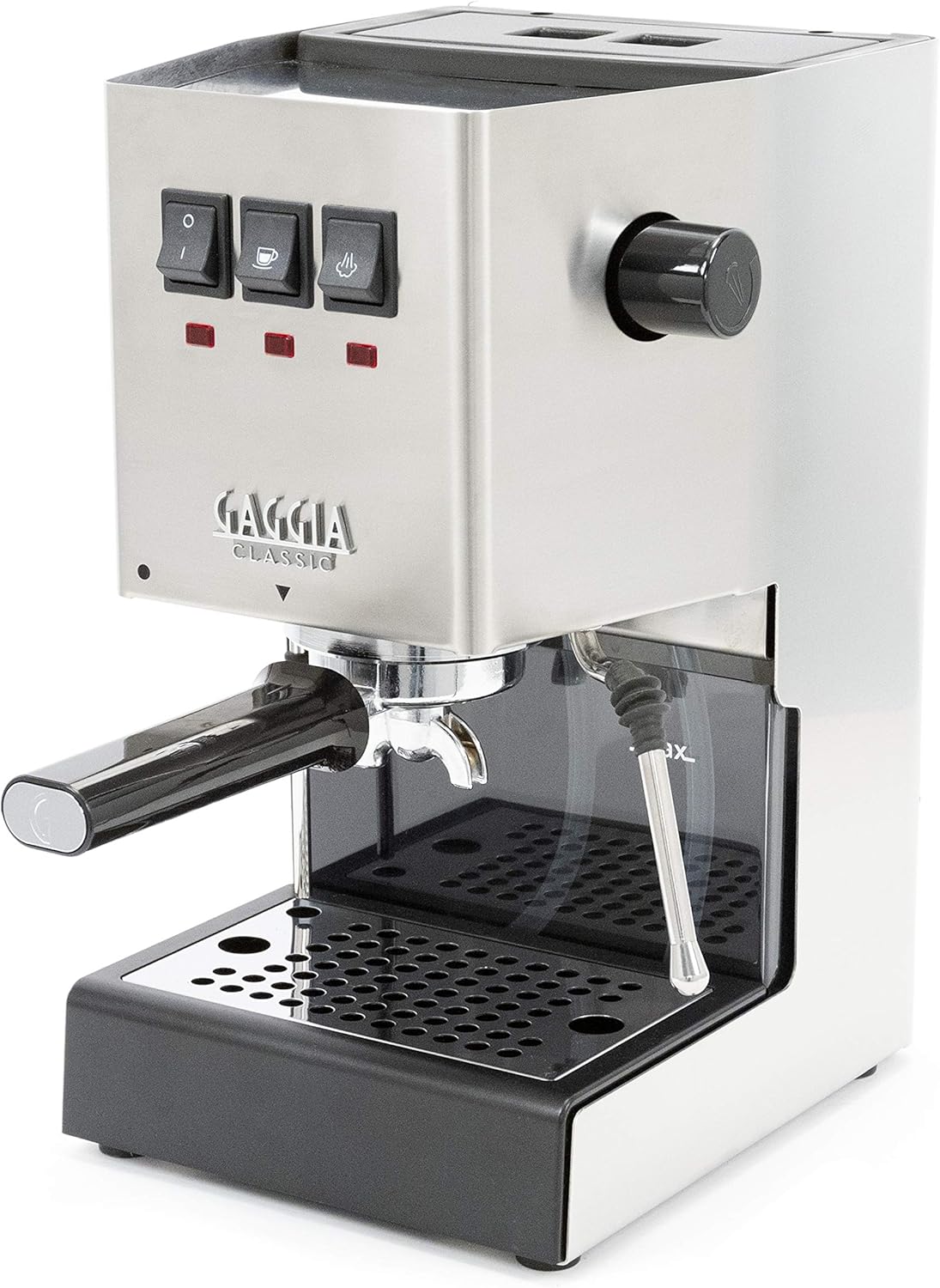
Gaggia Classic Evo Pro / Classic Platform — Best Traditional Espresso Value
Gaggia Classic Pro Espresso Machine
Key Features
- Commercial-style 58mm portafilter
- Steam wand for microfoam
- Built for long ownership
- Great community support
- Upgrade-friendly platform
Why We Like It
I like the Classic Pro because it teaches real espresso skills—grind quality, puck prep, and steaming technique all matter, and that’s exactly why it’s such a satisfying machine to grow with.
Pros
- True 58mm ecosystem
- Strong steam potential
- Sturdy classic build
- Great modding community
Cons
- Needs a capable grinder
- Learning curve is real
Bottom Line
A classic 58mm espresso machine that rewards practice—perfect if you want to learn “real espresso” at home.
Price on AmazonThe Gaggia Classic Evo Pro / Classic platform is a very different kind of value machine. If the Bambino wins by making espresso easier to live with, the Gaggia wins by making espresso feel more “real.” That is the best way I can put it. This is the machine in the lineup that most clearly speaks to people who want a proper little espresso machine with old-school enthusiast credibility. The official-style product pages emphasize a solid steel housing, made-in-Italy positioning, a 58 mm commercial-style portafilter, and a 3-way solenoid valve. That is not small stuff. Those are the kinds of details that make many espresso people stop and pay attention.
The 58 mm portafilter in particular matters because it changes the feel of the entire workflow. It moves the machine psychologically closer to commercial tradition. The 3-way solenoid valve matters too, because it is part of why the machine feels more serious and better behaved in use, with easier cleanup and a more proper espresso-machine identity. If I were writing only for buyers who want to grow deeper into espresso as a hobby, the Gaggia would probably rank even higher. There is a reason people stay interested in machines like this for years instead of replacing them after one enthusiastic season.
What keeps it in third place instead of higher is that the value is broader than enthusiast respect. The Gaggia asks more from the user. That is not bad. It is simply true. This is not the machine I would hand to every sleepy beginner and say, “You’ll love this immediately.” It can absolutely reward learning, but the reward structure is different. It assumes that part of the value comes from involvement, learning, and ownership pride. Some people love that. Some people just want good coffee faster.
I also think the Gaggia’s value depends a lot on personality. If you are the kind of person who secretly enjoys developing a ritual, noticing small extraction changes, and feeling connected to the mechanics of the machine, the Gaggia starts to look very attractive very quickly. But if you mostly define value as low friction, then the Bambino and Ninja may simply feel more practical. This is where value stops being universal and becomes personal again.
Still, I would never leave this machine out of a serious home-value roundup. It earns its place because the underlying espresso platform is respectable in a lasting way. The steel body, 58 mm format, solenoid valve, and traditional steam orientation all contribute to a machine that feels less disposable and less trend-driven than many modern “starter” picks. If that matters to you, the Gaggia can be a phenomenal value.
Why it deserves respect
- A 58 mm commercial-style portafilter is a big deal in this price conversation.
- A 3-way solenoid valve is a traditional enthusiast feature that improves cleanup and workflow.
- Made-in-Italy steel-body positioning gives it a more serious long-term identity.
Who it is best for
- Buyers who want a more classic espresso experience
- People who plan to grow into the hobby
- Users who care about machine “bones” more than broad automation
- Anyone who wants value through longevity of interest, not just convenience
My honest watch-out
Its value is not effortless. You have to be the kind of person who sees involvement as part of the reward. Otherwise, a faster, more forgiving machine may feel like the better buy.
De’Longhi Dedica Arte — Best Compact Value for Smaller Kitchens

De'Longhi Dedica Arte Espresso Machine (EC885M)
Key Features
- Ultra-slim compact footprint
- 15-bar pump espresso pressure
- My LatteArt steam wand
- 3-level temperature control
- Great for daily milk drinks
Why We Like It
I like the Dedica-style machines because they solve a very real problem: small counters. You get a tidy setup, quick espresso, and a steam wand that makes lattes feel possible without owning a huge machine.
Pros
- Very space-efficient
- Fast, simple routine
- Great for lattes
- Clean modern look
Cons
- Dial-in takes patience
- Not ideal for parties
Bottom Line
A slim, stylish espresso maker that fits tight kitchens and still delivers satisfying espresso-and-milk drinks.
Price on AmazonThe De’Longhi Dedica Arte is the machine in this group that I find easiest to imagine in a real apartment kitchen. Not in a fantasy coffee studio. Not on a wide designer counter with unlimited space. In a normal kitchen, with a toaster nearby, a dish rack not far away, and a genuine need for things to fit without creating visual clutter. That kind of value matters more than people admit. A machine can be wonderful in theory and still be wrong for a home simply because it takes over the counter and makes the kitchen feel crowded.
De’Longhi presents the Dedica Arte as a sleek, ultracompact espresso machine that can brew espresso and milk-based drinks at home, with a dedicated My LatteArt steam wand and an adjustable tray arrangement to accommodate different cup sizes. That description is a good summary of why it works. The Dedica Arte is clearly built around footprint-conscious living. It wants to look sharp, feel approachable, and still let the user do some proper milk texturing rather than just pressing a generic milk button.
I think that gives it a very specific kind of value. This is not the machine I would choose if I were chasing the deepest long-term espresso hobby journey. And it is not the machine I would choose if I wanted maximum all-in-one flexibility. But if I wanted a stylish manual-ish espresso machine that respects limited space and still feels more “real” than the cheapest casual options, it would be high on my list. There is a huge category of home buyers who want the espresso-machine experience without the espresso-machine sprawl, and the Dedica Arte understands that need.
The reason it lands fourth is that I think the machines above it either offer broader value or deeper value. The Bambino gives more all-around confidence for most people. The Ninja gives more functionality. The Gaggia gives more traditional espresso depth. The Dedica Arte, by contrast, is more of a specialized value pick. That is not a criticism. It is actually its strength. It knows what it is. It is there for the buyer who cares about compactness, style, and an approachable path into manual espresso drinks.
And I do think there is something to be said for machines that do not overcomplicate the proposition. The Dedica Arte is not trying to persuade you that it is a commercial machine in disguise. It is trying to be a very livable home espresso machine. That honesty has value, too.
Why it belongs in this list
- Its ultracompact design is one of its biggest real-world advantages.
- The My LatteArt steam wand makes it more than just a one-note small machine.
- It is a very plausible choice for homes where space is part of the buying decision.
Who it is best for
- Apartment kitchens
- Buyers who want a slim machine that still feels stylish and intentional
- People who want to make milk drinks but do not want a bulky setup
- Home users who care about “fits my life” value more than upgrade-culture value
My honest watchout
If your definition of value includes room to obsess and grow into more serious espresso technique, the Dedica Arte may eventually feel a little too narrow in ambition.
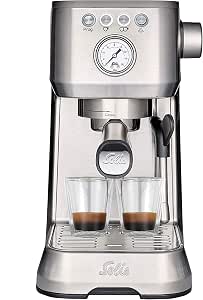
SOLIS Barista Perfetta—Best Quiet Middle-Ground Pick
SOLIS Barista Perfetta Espresso Machine
Key Features
- Quick heat-up workflow
- Compact, slim footprint
- Ground coffee + ESE pods
- Programmable shot settings
- Milk steaming capability
Why We Like It
I like the Barista Perfetta idea for smaller kitchens where you still want a semi-auto routine. It’s compact, heats quickly, and keeps the daily espresso habit feeling easy rather than heavy.
Pros
- Space-saving design
- Fast warm-up feel
- Simple daily workflow
- Pod or ground flexibility
Cons
- Needs grind dialing-in
- Steam technique takes practice
Bottom Line
A compact semi-auto espresso machine that’s ideal when you want a quick, tidy daily routine on a smaller counter.
Price on AmazonThe SOLIS Barista Perfetta is the kind of machine that makes sense to me when someone says, “I want something more intentional than a casual beginner machine, but I also do not want a bulky monster.” It lives in that in-between zone that can be very attractive if you want compactness without feeling like you gave up control altogether. Available sources around the Perfetta line highlight compact design, quick heat-up, stable brewing temperature, quiet operation, and a pressure gauge for extraction control in the Plus version family. That combination gives it a thoughtful, balanced identity.
I actually like this type of machine a lot in theory because middle-ground machines often end up being the most emotionally sustainable. They are small enough to live with comfortably but serious enough to keep you interested. The Perfetta line seems designed around that idea. It is not making the flashiest promises in the group. It is not trying to be three machines in one. It is not leaning on a decades-old enthusiast cult reputation either. Instead, it is pitching a clean, compact, capable home espresso experience with a bit of control and a bit of elegance.
So why does it rank fifth? Mostly because the value story feels slightly less sharp than the others. The Bambino has a very strong and recognizable use case. The Ninja has a huge breadth. The Gaggia has classic espresso credibility. The Dedica Arte has compact clarity. The SOLIS feels more nuanced, which can be appealing but also makes it a little harder to define as the most obvious buy for a specific person. It is the machine I would call “quietly interesting” rather than “instantly obvious.”
That said, there is absolutely a buyer for whom this could be the best value. If you want a machine that feels compact, more refined than entry-level, quick to get going, and a little more control-oriented without tipping into full enthusiast heaviness, the Perfetta line might hit beautifully. Sometimes the right value machine is the one that simply feels the most balanced.
Why it still deserves inclusion
- Compact design and quick heat-up are very attractive in daily use.
- Quiet operation and pressure-gauge-oriented control make it feel more thoughtful than a basic beginner machine.
- It may be the right answer for buyers who want the middle path.
Who it is best for
- Small kitchens that still want a little enthusiast flavor
- Buyers who care about balance more than hype
- People who want a machine that feels compact but not too basic
My honest watchout
The value proposition is a little less immediately defined than the others, so it helps to know exactly what kind of machine personality you want before choosing it.
How I’d Choose Between These Five
If I were helping someone narrow this list down in real life, I would not start by asking, “What is your budget?” I would start by asking, “What kind of coffee mornings do you want?” That question gets you to the right machine faster.
If you want a machine that feels fast, sensible, and satisfying without demanding too much from you, I would point you toward the Breville Bambino. If you want one machine that covers multiple coffee styles and reduces the need for extra gear, I would point you toward the Ninja Luxe Café Premier. If you want the most traditional espresso machine spirit, I would point you toward the Gaggia Classic. If your kitchen is tight and your taste leans stylish and compact, I would point you toward the De’Longhi Dedica Arte. And if you want a slightly quieter, more balanced, compact-control kind of machine, I would say the SOLIS Barista Perfetta is worth a serious look.
That is the thing about value: it becomes much clearer once you stop pretending every buyer is the same buyer.
Best Beans to Pair with Value Espresso Machines
One thing I always think is worth saying in articles like this is that a value espresso machine gets a lot better when the beans suit the machine. A lot of home users buy a good-value machine and then accidentally sabotage it with beans that are either too old, too dark and oily, or too light and finicky for the workflow they actually want.
For most of the machines in this list, I think medium to medium-dark espresso blends make the most sense. They are forgiving, they work well in milk, and they tend to give you the sweet spot of body, chocolate, nuts, caramel, and enough brightness to keep things from tasting sleepy. The Bambino, for example, is the kind of machine I would pair with something sweet and balanced that makes dial-in feel encouraging rather than punishing. The Gaggia can reward a more precision-minded approach if you want to explore a little, but even then, I do not think a harshly light roast is the best place to start for most households. The Ninja, because it covers multiple drink styles, also benefits from beans that stay pleasant across espresso and longer formats.
If your main drinks are cappuccinos and lattes, I would lean slightly more developed. If you are drinking more straight espresso or Americanos, I would look for something balanced rather than aggressively roasty. And if your machine is new to you, I would always rather begin with beans that are forgiving than beans that are “interesting” in a way that makes every shot feel like a referendum on your technique.
The machine matters, yes. But one of the best value upgrades you can make is simply giving your machine beans that match its personality.
FAQ: Best Value Espresso Machines for Home
What is the best value espresso machine for home overall?
For most people, I think the Breville Bambino is the best overall value because it combines fast heat-up, a real manual espresso workflow, low-pressure pre-infusion, and microfoam capability without feeling intimidating or overpriced for what it offers.
Which value espresso machine is best for beginners?
The Bambino and the Ninja Luxe Café Premier are the easiest beginner-friendly picks here, but in different ways. The Bambino keeps things simple and fast, while the Ninja adds grinder help, guided brewing, and broader drink versatility.
Which one is best for small kitchens?
The De’Longhi Dedica Arte is the clearest small-kitchen value pick because De’Longhi explicitly positions it as sleek and ultracompact while still supporting espresso and milk-based drinks.
Which machine has the most traditional espresso feel?
The Gaggia Classic has the most traditional espresso-machine identity here because of its 58 mm commercial-style portafilter, steel body, and 3-way solenoid valve.
Is the Ninja Luxe Café Premier a good value if I drink more than just espresso?
Yes. Its value gets especially strong if you want espresso, drip coffee, and cold brew from one machine, plus an integrated grinder and frothing system.
Should I buy based on the lowest price alone?
I would not. A home espresso machine becomes a daily routine object very quickly, so workflow, heat-up speed, milk performance, cleanup, and long-term satisfaction usually matter more than saving a little up front.
Is a 58 mm portafilter important?
It can be, especially if you care about a more traditional espresso workflow and the accessory ecosystem that tends to surround that size. It is one reason the Gaggia Classic appeals to enthusiasts.
Final Verdict
If someone asked me, with no extra context at all, which machine in this group feels like the smartest all-round purchase, I would still say the Breville Bambino. It has the cleanest value story. It heats quickly, feels like a real espresso machine, supports manual milk work, and avoids becoming either too basic or too fussy. For a huge number of homes, that is exactly the sweet spot.
But the machine I’d recommend most enthusiastically still depends on the person. The Ninja Luxe Café Premier could easily be the best value for a household that wants breadth and convenience. The Gaggia Classic could be the best value for someone who wants traditional espresso foundations that stay interesting over time. The De’Longhi Dedica Arte could be the perfect fit for a small, stylish kitchen. And the SOLIS Barista Perfetta could be the right answer for someone who wants compactness with a little more nuance.
That is the beauty of value in home espresso. It is not one shape. It is the point where the machine’s personality lines up with your kitchen, your drinks, and your patience level. Once that happens, the price starts feeling much less important than the fact that you genuinely enjoy using the thing.
Full Detailed Comparison Table
| Feature | Breville Bambino | Ninja Luxe Café Premier | Gaggia Classic Evo Pro / Classic | De’Longhi Dedica Arte | SOLIS Barista Perfetta |
|---|---|---|---|---|---|
| My rank | 1 | 2 | 3 | 4 | 5 |
| Best for | Most homes | All-in-one buyers | Traditional espresso lovers | Small kitchens | Balanced compact buyers |
| Guided all-in-one platform; official snippets focus more on dosing, grinding, and drink modes than warm-up time | ThermoJet, ready in about 3 seconds | Portafilter/basket character | Traditional single-boiler-style classic platform emphasis; official snippets highlight build and brewing hardware more than rapid warm-up. | Compact pump machine; official snippets emphasize compactness and drink range | Quick heat-up highlighted in Perfetta Plus family materials, around 40 seconds in available sources |
| Compact semi-automatic character; available sources emphasize control and pressure gauges on the Perfetta Plus family. | 54 mm portafilter, 18 g dosing language | Good compact balance with a more controlled feel | 58 mm commercial-style portafilter | Smaller compact-system approach; the official snippet does not foreground 58 mm style positioning | Best classic espresso machine bones |
| Espresso personality | Fast, forgiving, very daily-friendly | Broad-use, guided, versatile | Traditional, more enthusiast-leaning | Compact, approachable, stylish | Middle-ground, compact control |
| Milk approach | Manual steam wand for microfoam | Hands-free frothing with presets | Commercial-style steam wand emphasis in listing text | My LatteArt steam wand | Steam-wand-oriented semi-auto workflow in Perfetta family materials |
| Grinder included | No | Yes, an integrated conical burr grinder with 25 settings | No | No | No |
| Special value angle | Best mix of speed, real espresso feel, and low stress | Replaces multiple coffee tools in one machine | Good compact balance with a more controlled feel | Best value for tight counters | A broad system may be more than pure espresso users need. |
| Main compromise | Less traditional than a Gaggia | A user who wants to grow into the hobby | More demanding and less instantly easy | Narrower long-term ceiling for enthusiasts | Less sharply defined than the others |
| Best buyer type | New or intermediate home espresso drinker | Mixed-skill, mixed-drink household | Good compact balance with a more controlled feel | Apartment or smaller-space owner | Buyer who wants compact but not too basic |


