
How to Choose the Best Espresso Basket for Better Shots


One Hundred Coffee is reader-supported, and some products displayed may earn us an affiliate commission. Details
If you have ever changed beans, adjusted grind, obsessed over puck prep, and still felt like your espresso was somehow just a little off, there is a very real chance the basket is part of the story. I think espresso baskets get overlooked because they look so simple. They are small, metallic, easy to ignore, and often treated like the most boring part of the setup. But once you spend enough time chasing better shots, you realize the basket quietly shapes almost everything: how much coffee you can dose comfortably, how evenly water flows through the puck, how forgiving your workflow feels, and even how messy or clean your bottomless shots look. A better basket does not magically fix bad puck prep, but it can absolutely make your machine easier to work with and your espresso more consistent. Precision basket makers like VST and IMS build baskets around tighter manufacturing tolerances, specific dose ranges, and fit dimensions that are designed to improve repeatability rather than just “hold coffee.”
The Best Espresso Baskets — At a Glance
| Image | Product | Features | Price |
|---|---|---|---|
|
Best 58mm Overall

|
Precision ridgeless basket
|
Price on Amazon | |
|
Best Breville 54mm

|
Breville-focused precision fit
|
Price on Amazon | |
|
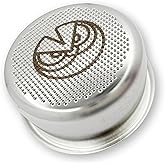
Best 54mm Competition
|
IMS “M” hole pattern
|
Price on Amazon | |
|
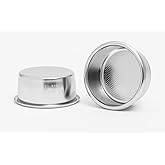
Best Triple-Shot Fit
|
Larger 54mm capacity
|
Price on Amazon | |
|
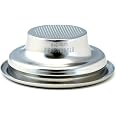
Best Single Basket
|
58mm single-shot IMS
|
Price on Amazon | |
|
Best 20g Basket

|
High-extraction 20g design
|
Price on Amazon | |
|
Best 18g Basket
|
High-extraction 18g design
|
Price on Amazon | |
|
Best 54mm High-Flow

|
2569-hole pattern
|
Price on Amazon | |
|
Best Refined 54mm

|
0.28mm precision holes
|
Price on Amazon | |
|
Best Triple Basket

|
22g larger-capacity basket
|
Price on Amazon |
What makes this topic confusing is that “best” depends on what you are actually trying to solve. Are you trying to pull sweeter shots at an 18-gram dose? Are you moving from a stock basket that feels cramped? Are you wondering whether a ridgeless basket really helps, or whether a high-extraction basket is worth the fuss? That is why I do not like one-line advice here. Espresso baskets are not all the same, and once you understand dose range, physical height, portafilter fit, tamper diameter, and the difference between stock and precision manufacturing, the whole decision becomes much easier. VST, for example, publishes basket sizing by dose, basket height, outside diameter, and tamper size, which is exactly the sort of detail that matters when you are trying to make a real choice instead of guessing.
Why the espresso basket matters more than people think

The basket is the chamber that holds your coffee puck, which means it influences resistance, headspace, and how evenly water can move through the bed. If the basket is too small for the dose you want to use, the puck can sit too close to the shower screen, which often makes prep fussier and extraction less forgiving. If the basket is too large for the dose you are using, you may end up with too much space and a puck that is harder to dial in cleanly. If the perforations are inconsistent or the basket geometry does not match your puck prep habits, the results can feel confusing even when everything else seems reasonable. Precision basket brands market their products around more consistent hole geometry and controlled dimensions for exactly this reason: the goal is not just capacity, but repeatable extraction behavior.
This is why I usually tell people not to think of a basket as an accessory in the decorative sense. It is more like part of the brew path. You are not buying it because it looks clever. You are buying it because it changes the working conditions of the puck.
The first thing to choose: basket size and dose range
This is the biggest decision, and honestly, the one that solves the most problems.
A basket should match the dose range you actually like to use, not the number you think sounds impressive. If you typically enjoy classic doubles around 17 to 19 grams, then an 18-gram basket is usually the right starting point. If you prefer larger modern doses around 19 to 21 grams, then a 20-gram basket often makes more sense. VST’s sizing table lays this out very clearly: its 15-gram basket is intended around 14–16 grams, its 18-gram basket around 17–19 grams, and its 20-gram basket around 19–21 grams, with basket heights increasing accordingly.
A practical dose guide
| Basket label | Real-world dose range | Typical use |
|---|---|---|
| 15g | 14–16g | Traditional double, smaller milk drinks |
| 18g | 17–19g | Most versatile modern double |
| 20g | 19–21g | Larger modern espresso doses |
| 22g+ | 21–23g or more | Big shots, turbo experimentation, heavy body styles |
This is one of those places where a simple shift can make a machine feel better immediately. If you have been cramming 19 grams into a basket that really behaves best at 16 or 17, the answer may not be more distribution tools or more complicated tamp rituals. The answer may simply be that the basket is the wrong size for the way you brew.
The second thing to choose: your portafilter diameter
This sounds obvious, but it catches people all the time. Basket families are not just about dose. They are also about fit.
Many prosumer and commercial-style machines use 58 mm baskets, and VST states that its precision baskets are designed to fit most 58 mm portafilters, with the important note that you should compare basket height to your portafilter depth before buying.
But there are also 54 mm systems, 51 mm systems, and various proprietary setups. IMS, for example, makes baskets in several dimensions, including 51 mm and 57 mm tamper-fit families on some models, not just 58 mm-class baskets.
Before you buy, check these 3 things
- Your machine or portafilter basket diameter
- Your current basket’s height
- Your tamper size
I know this can sound annoyingly technical, but this is the difference between a clean upgrade and buying something that technically exists but does not actually fit your setup.
Stock basket vs precision basket
This is the question most people are really asking, even when they phrase it differently.
A stock basket is the basket that came with your machine or portafilter. Sometimes those are perfectly decent. Sometimes they are basic, inconsistent, or built more for broad compatibility than for sweet, repeatable espresso.
A precision basket is usually marketed around tighter tolerances, more consistent perforation, and a clearly stated dose target. VST describes its baskets in terms of precision sizing, published dimensions, and compatibility specs, while IMS’s competition line emphasizes homogeneous hole diameters and perforation design aimed at consistency.
What a precision basket usually changes
- It can make dose selection clearer
- It can improve consistency shot to shot
- It often rewards better puck prep
- It may feel less forgiving if your prep is sloppy
- It can make your espresso taste cleaner or more transparent
That last point matters. A lot of people expect “better basket” to mean “more chocolate and more crema.” Sometimes what you get is actually more clarity and a more obvious view of what your coffee is doing. If your grinder, distribution, or tamping is inconsistent, a precision basket can reveal that rather than hiding it.
Ridged vs ridgeless baskets
This is one of those details that sounds bigger than it is, but it still matters.
A ridged basket has a small circumferential ridge that helps the retaining spring hold it in place. A ridgeless basket has smooth walls. Both designs exist across premium basket lines. VST explicitly offers standard and ridgeless versions of its baskets, and IMS has many ridgeless competition baskets in its line.
My honest take on ridged vs ridgeless
For flavor, this is not where the big change happens.
For workflow, though, it can matter:
- Ridged baskets can feel a bit more secure in some portafilters
- Ridgeless baskets are often easier to remove and cleaner-looking
- Some people find ridgeless baskets seat more nicely in certain bottomless portafilters
If I am buying a new basket for a bottomless setup, I usually lean toward ridgeless because I prefer the cleaner fit and easier basket swapping. But I would never tell someone to replace a good, ridged basket just because of the ridge.
Basket shape matters more than most beginners realize

Who is this for?
This 54mm bottomless portafilter from VOURMIO is crafted with durable stainless steel and a wooden handle for precision espresso extraction. Ideal for Breville machines, it provides real-time feedback to improve tamping and grind consistency, making it perfect for home baristas aiming for café-quality shots.Not all espresso baskets have the same internal shape. Some are more cylindrical. Some narrow or change geometry toward the base. IMS, for example, describes certain baskets as cylindrical with a convex bottom or as cylindrical with a narrowing at the base, and explicitly notes that shape interacts with extraction style and portafilter pairing.
This matters because the shape affects puck depth and how the coffee bed forms under pressure. In practical terms, what you may notice is:
- Some baskets feel easier to distribute evenly
- Some are happier at their intended dose than outside it
- Some work better with bottomless diagnostics
- Some emphasize more centered extraction behavior
You do not need to become a geometry obsessive to buy a good basket, but it is useful to know that “same dose, same machine” does not always mean “same extraction chamber.”
High-extraction baskets: are they worth it?
This is where things get interesting.
There are now baskets marketed specifically as high-extraction designs. Normcore, for instance, sells high-precision and high-extraction basket variants, describing them as designed for more stable and even extraction, with specific hole design approaches intended to improve water distribution behavior.
In plain English, these baskets are trying to change how water meets the puck and how evenly the shot develops. In practice, what people usually chase with them is:
- cleaner extractions
- Higher extraction yield potential
- less muddiness
- more flavor separation
But here is the tradeoff
A more revealing basket often expects more from you.
That means:
- better grinder consistency
- better puck prep
- more careful dialing in
If your current issue is that your shots are messy because your prep is rushed, a fancy high-extraction basket may not feel like an instant upgrade. It may feel like an expensive way to discover your weak habits.
If, on the other hand, your workflow is already decent and you want to push clarity and repeatability further, it can be a fun and legitimate upgrade.
How basket height affects fit and workflow
This is the part people skip until the day the new basket shows up, and the portafilter will not lock in comfortably.
VST’s published sizing table ties basket dose to basket height, and that is not just trivia. Higher-capacity baskets are physically taller. If your portafilter depth is limited, or if your machine’s group design leaves little room, that taller basket may create fit issues or force awkward headspace conditions.
Quick examples from VST sizing
| Basket | Approx. height |
|---|---|
| 15g | 22 mm |
| 18g | 24 mm |
| 20g | 26 mm |
| 22g | 28 mm |
That is why “I want a bigger basket” should always be followed by “and I need to check if it actually fits my portafilter and machine comfortably.”
Tamper fit: a small detail that is not small at all
This one is more important than many people realize.
VST specifies a 58.4 mm tamper fit for its 58 mm-class baskets, while some IMS basket lines call for other tamper sizes depending on family, such as 51 mm or 57 mm in certain models.
What that means in the real world is that basket choice and tamper choice are connected. A poorly matched tamper can leave a larger untamped ring at the edges, which can make prep more annoying and potentially encourage less even puck structure.
My simple rule
If you move into a premium basket family, make sure your tamper actually matches that basket well. Do not spend real money on a precision basket and then tamp it with a tool that fits sloppily.
Single baskets vs double baskets
I will be blunt here: unless you specifically love traditional single shots and know how to dial them in, I would focus on double baskets first.
Single baskets are often more finicky because their geometry is less straightforward, and they can be harder to extract evenly. VST’s own sizing list includes a separate 7-gram single with a much smaller tamper size range than its larger baskets, which hints at how different the format is.
For most home users, the best basket to choose is a double basket in the 18 g or 20 g range, because that is where the workflow is easiest, and the espresso world has the most support and shared dialing-in knowledge.
The best basket size for most people
If you forced me to answer in one line, I would say this:
For most home espresso drinkers using a 58 mm machine, an 18 g ridgeless precision basket is the safest, smartest starting point.
Why?
Because it is:
- versatile
- widely supported
- large enough for modern doubles
- not so large that it becomes awkward
- easier to pair with common tamp sizes and bottomless workflows
That does not mean 20 g is wrong. In fact, if you regularly dose 19–20.5 g, I think a 20 g basket is often the better choice. But the 18 g class remains the sweet spot for the broadest range of users.
Basket recommendations by user type
If you are a beginner
Stay simple.
Look for:
- the correct diameter for your machine
- a clearly stated dose range
- 18 g capacity if you usually make doubles
- ridged or ridgeless based on preference, not hype
A stock basket may be fine if your machine is already behaving well. Upgrade only if you feel constrained, inconsistent, or poorly matched to your preferred dose.
If you are an enthusiast with a bottomless portafilter
This is where a precision basket usually makes sense.
Look for:
- 18 g or 20 g, depending on your actual dose
- ridgeless if you like swapping baskets easily
- published dimensions
- compatible tamper fit
VST’s 18 g and 20 g families are classic examples because they publish both dose range and size data clearly.
If you are already chasing clarity
Then you are in high-extraction territory.
Look at:
- precision baskets with tighter tolerances
- specialty designs from established makers
- whether your grinder is good enough to take advantage of them
Normcore’s high-extraction basket line is one current example in this category.
Specific basket families worth knowing
I am not calling these “the only good baskets,” but these are the names most people run into for a reason.
VST Precision Filter Baskets
VST offers baskets in 7 g, 15 g, 18 g, 20 g, 22 g, and 25 g sizes, in both standard and ridgeless versions, and publishes detailed fit and sizing information. That transparency alone makes them easier to buy intelligently.
IMS Competition Baskets
IMS’s competition line emphasizes homogeneous hole diameters and controlled perforation design, and the company offers multiple shapes and dimensions across machine families.
Normcore Precision / High-Extraction Baskets
Normcore markets precision and high-extraction basket options with laser-cut or specialized hole-pattern approaches aimed at more even extraction.
Do you need a “precision basket” if your grinder is mediocre?
This is where I try to save people money.
If your grinder is the weak link, the basket is not always the smartest first upgrade. A precision basket can improve consistency, but it cannot create uniform grounds out of nowhere. In a setup with a shaky grinder, the gains from a basket swap may feel subtle or frustrating.
In that situation, I would often prioritize the grinder first, then the basket. The basket becomes more valuable when the rest of the espresso chain is already reasonably stable.
How to tell when your current basket is the problem
A basket may be holding you back if:
- Your preferred dose always feels cramped
- The puck often contacts the shower screen
- You cannot get a clean tamper fit
- Your stock basket feels vague or inconsistent
- You want a clearer target dose and published dimensions
- You are ready for a basket that better matches modern puck prep
Notice what is not on that list: “I saw one online, and it looked cool.” Basket changes are most satisfying when they solve a specific problem.
What I would personally buy in 3 common scenarios
1) You have a 58 mm machine and want one smart upgrade
I would look for an 18 g precision basket from a known line with published sizing, such as VST or IMS.
2) You regularly dose around 20 g
Skip the 18 g basket and buy the 20 g basket that matches your actual routine. VST explicitly lists 19–21 g as the intended range for its 20 g basket.
3) You are already deep into espresso and want to experiment
Then I would consider a high-extraction basket or a distinct geometry basket from a brand like Normcore or IMS, but only if your grinder and prep are already solid.
FAQ
What is the best espresso basket size for beginners?
For most home users, an 18 g double basket is the easiest starting point because it sits in the most versatile part of the modern espresso workflow. VST’s published sizing also places its 18 g basket in the 17–19 g real dose range, which matches how many people actually brew.
Is an IMS basket better than a stock basket?
Often, yes, especially if your stock basket has vague capacity or inconsistent behavior. IMS markets its competition baskets around uniform hole diameters and specific basket geometries designed for consistent extraction.
Is VST or IMS better?
Neither is universally “better” for everyone. VST is especially clear and methodical about dose, height, and tamper fit, while IMS offers a wide range of shapes and machine-specific options. The better choice is the one that fits your machine, dose, and workflow best.
Do I need a ridgeless basket?
No. Ridgeless is mostly a workflow preference, not a guaranteed flavor upgrade. Both VST and IMS offer ridgeless options, but that does not make ridged baskets obsolete.
Can a better basket improve channeling?
It can help consistency, but it will not erase poor prep. Even Normcore notes in its bottomless portafilter guidance that channeling and spurting are commonly tied to puck preparation factors like grind, tamping, and distribution rather than the portafilter itself.
Do I need a new tamper with a new basket?
Sometimes, yes. Basket families can call for different tamp diameters, and VST specifically publishes 58.4 mm tamp sizing for its 58 mm baskets.
Final thoughts
If I had to strip this whole subject down to one useful truth, it would be this: the best espresso basket is the one that matches your machine, your actual dose, and your workflow, honestly.
Not aspirationally. Honestly.
If you love 18 g doubles, buy the basket that is happiest there. If you run 20 g every day, stop pretending you are an 18 g person. If your machine uses a non-58 mm system, do not force 58 mm advice onto it. And if your grinder still produces a lot of inconsistency, be realistic about what a basket upgrade can and cannot do.
A good basket is not glamorous, but it can make your espresso life feel calmer, clearer, and more predictable. And in home espresso, that is often the difference between endlessly fiddling and finally settling into a routine that just works.


