
Best Espresso Machines Under $300 for Beginners


OneHundredCoffee is reader-supported, and some products displayed may earn us an affiliate commission. Details
There is a very specific kind of disappointment that happens when someone buys their first espresso machine. They imagine cozy morning lattes, small victories, and maybe a little café magic at home. Then the machine arrives, and suddenly everything feels harder than it should. The portafilter fights back. The steam wand feels awkward. The shots run too fast or too slow. The milk looks like bathwater with bubbles. And the whole “beginner-friendly” promise starts to feel a little suspicious. That is why I think the best espresso machines under $300 for beginners are not simply the cheapest ones with a pump and a steam wand. They are the machines that make the early learning phase feel survivable, even enjoyable. In this group, the lineup includes the De’Longhi Stilosa, De’Longhi EC155, De’Longhi ECP3420, CASABREWS 3700 Essential, and a Gevi 20-bar espresso machine, which web results identify as a Gevi espresso model with 20-bar pressure, NTC temperature control, and pre-infusion.
What I care about most at this price is not perfection. Nobody shopping under $300 should be sold a fantasy. I care about whether the machine teaches good habits without punishing every mistake. I care about whether it is compact enough to live with, simple enough to understand, and capable enough that a beginner can actually taste progress over time. Some of these machines are more old-school and forgiving in a “basic but honest” way. Others try to feel more polished and modern. Some are good for someone who mainly wants cappuccinos and quick kitchen wins. Others make more sense for the person who genuinely wants to learn espresso technique from the ground up. The De’Longhi Stilosa and ECP3420, for example, are both marketed around 15-bar pump systems and manual milk frothing, while CASABREWS positions its 3700 Essential around a 20-bar pump, adjustable coffee volume, a steam wand, and a compact design.
Best Espresso Machines Under $300 — At a Glance
| Image | Product | Features | Price |
|---|---|---|---|
|
Best Beginner Pick

|
Compact 15-bar starter machine
|
Price on Amazon | |
|
Best Old-School Value
|
Classic entry espresso setup
|
Price on Amazon | |
|
Best Daily Driver
|
Compact machine with temperature control
|
Price on Amazon | |
|
Best Feature Value
|
20-bar budget espresso machine
|
Price on Amazon | |
|
Best Compact 20-Bar
|
Compact 20-bar espresso setup
|
Price on Amazon |
My Ranking: Best Espresso Machines Under $300 for Beginners
1. De’Longhi ECP3420
2. De’Longhi Stilosa
3. CASABREWS 3700 Essential
4. Gevi 20-Bar Espresso Machine
5. De’Longhi EC155
This ranking is based on one beginner-centered question: which machine gives the most balanced mix of usability, learning potential, and day-to-day livability without asking too much too soon?
What I Personally Want from a Beginner Espresso Machine Under $300
At this budget, I stop chasing prestige and start chasing sanity.
I want a machine that makes sense quickly. I want the controls to feel obvious enough that a new user can start making drinks without needing a weekend of research just to understand the basics. I want the machine to be compact enough that it does not feel ridiculous in a normal kitchen. I want the steam wand to be good enough that a beginner can practice milk drinks without instantly giving up. And I want the machine to feel like it can grow a little with the user, even if it never becomes a forever machine.
I also think beginner machines should reward effort clearly. That matters a lot. A new espresso user needs to see that better grind, better puck prep, and better milk handling lead to noticeably better cups. Otherwise, espresso just feels random, and random is the fastest route to frustration. The machines here all promise some version of that beginner path, but they do not all go about it in the same way.
That is the lens I’m using throughout this article.
Why Buying a Beginner Espresso Machine Is More About Fit Than Features
One mistake I see all the time is people assuming the machine with the biggest pressure number or the flashiest product manual must be the best deal. At this level, that is often not true. A beginner machine is really about fit.
Some beginners want to be taught. They want the machine to slow them down just enough to learn the basics well. Other beginners do not actually want to become espresso hobbyists. They just want something affordable that can make a decent latte at home without too much drama. Those are different buyers. A machine that delights one of them might irritate the other.
That is why a basic De’Longhi can still be such a strong recommendation year after year. Sometimes “simple and coherent” beats “spec-heavy but awkward.” The under-$300 category is full of machines that try to look more advanced than they really are. I would much rather recommend something modest that feels honest.
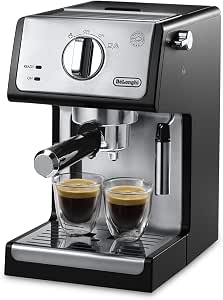
De’Longhi ECP3420 — Best Overall Beginner Pick Under $300

De'Longhi 15-Bar Pump Espresso Machine with Milk Frother & Temperature Control
Key Features
- 15-bar pump extraction
- Milk frother/steam system
- Temperature control support
- Compact home-barista size
- Easy-to-clean removable parts
Why We Like It
I like this machine for people who want classic espresso-and-milk drinks at home with a simple routine. It’s the “get a strong shot, steam milk, repeat” vibe—straightforward, familiar, and practical for daily use.
Pros
- Strong espresso-style output
- Milk drinks are easy
- Compact countertop fit
- Simple daily workflow
Cons
- Manual technique matters
- Benefits from good grinder
Bottom Line
A dependable 15-bar De'Longhi-style home espresso machine for everyday lattes and cappuccinos.
Price on AmazonThe De’Longhi ECP3420 is the machine I would rank first because it hits the best middle ground. What I like most about the ECP3420 is that it feels like a machine that understands what a beginner actually needs. It is not trying to be a trendy showpiece. It is not pretending to be a prosumer machine in disguise. It is offering a straightforward entry point with just enough seriousness to teach you something. That balance matters a lot. I think some of the most successful first espresso experiences happen on machines that are clear, repeatable, and unpretentious.
The ECP3420 also feels like a machine a beginner can keep around for a while without immediately outgrowing it emotionally. That is important. A lot of entry machines feel disposable from day one. You used them because they were cheap, not because you enjoyed them. This one feels a little more durable in spirit. Not luxurious, not magical, but credible. I like that.
If I were recommending one machine to a friend who was totally new to espresso but genuinely curious, this would probably be the safest choice. It seems to have the right combination of recognizable brand reliability, approachable controls, and enough espresso identity to make the learning process feel real. The 15-bar pump and manual frother are not exotic features, but they are exactly the kind of foundation that makes sense for a first machine in this range.
Why I’d put it first
- It feels balanced rather than gimmicky.
- Good fit for beginners who want to learn without diving too deep too fast.
- Compact and familiar enough to live with easily.
Who I think should buy it
The beginner who wants one sensible, dependable first espresso machine and does not want to overthink the decision.
De’Longhi Stilosa — Best for True First-Time Espresso Learners

De'Longhi Stilosa Manual Espresso Machine
Key Features
- 15-bar pump espresso pressure
- Manual milk frother wand
- Compact countertop footprint
- Single & double espresso shots
- Tamper included for prep
Why We Like It
I like this one as a first “real espresso” machine because it stays simple: you learn the basics of puck prep, extraction timing, and milk frothing without a complicated menu getting in the way.
Pros
- Great learning machine
- Small and tidy footprint
- Milk drinks are possible
- Simple daily routine
Cons
- Manual workflow needs practice
- Not for high-volume use
Bottom Line
A friendly, compact manual espresso machine for beginners who want to learn espresso the right way.
Price on AmazonThe De’Longhi Stilosa has a very specific appeal, and honestly, I get it. De’Longhi’s is designed to provide an easy brewing experience for authentic espresso, latte, and cappuccino drinks and highlights its 15-bar pump pressure, stainless steel boiler, and manual milk frother. We describe it as a compact manual espresso machine and directly say it was created for those starting their espresso journey.
That “starting your espresso journey” line can sound like marketing fluff, but in this case, I think it mostly fits. The Stilosa looks and feels like a machine aimed squarely at the person who is curious about espresso but not yet emotionally committed enough to buy something expensive. And that is a huge audience.
What I like here is the honesty of the experience. This is not a one-touch shortcut machine. It is a basic manual espresso maker that asks you to participate. That is good. A beginner learns faster when the machine still makes them do a few things by hand. You begin to understand grind, tamp, timing, and milk texture because you have to. The Stilosa seems especially well suited to that kind of gentle apprenticeship.
I rank it just below the ECP3420 because the ECP feels a bit more broadly dependable as an all-around first recommendation. But I could easily imagine some beginners preferring the Stilosa precisely because it feels a little more stripped down and “I’m learning espresso now” in character. If I were buying for someone who likes to learn by doing and does not mind a few imperfect early drinks, I would feel very comfortable pointing them here. Its size and clear beginner positioning make it one of the most psychologically approachable machines in the group.
Why does it work so well for beginners?
- It is explicitly designed for beginner entry.
- Compact form makes it less intimidating.
- Manual frothing and basic controls teach useful habits early.
Who I think should buy it
The person buying their first espresso machine who wants to actually learn the process, not just press a button and hope.
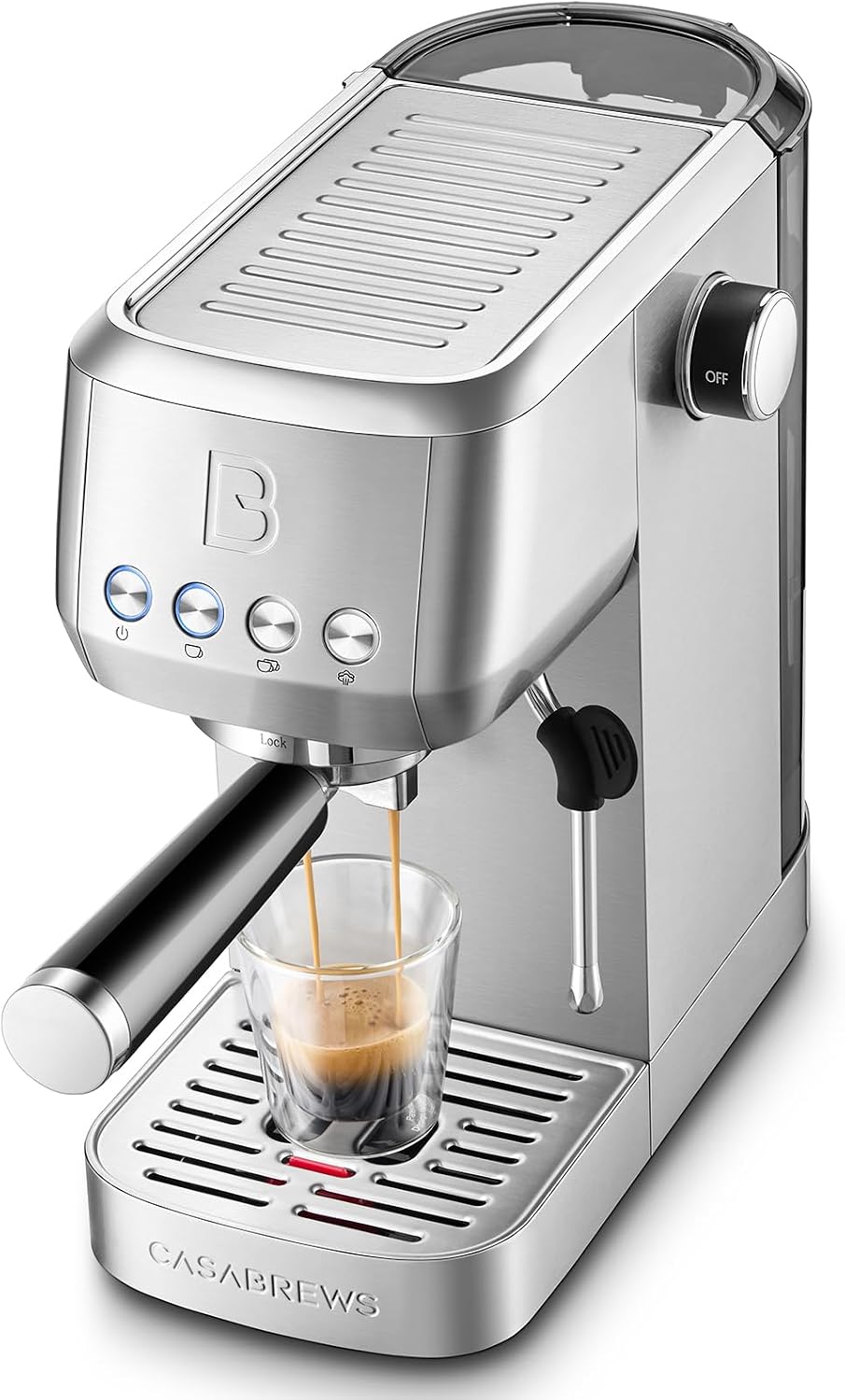
CASABREWS 3700 Essential — Best Budget Pick for Beginners Who Want the Most “Modern Espresso Machine” Feel

CASABREWS 3700 Essential Espresso Machine 20 Bar
Key Features
- 20-bar pump pressure
- Steam frother for milk
- Stainless steel finish
- 43.9oz removable water tank
- Compact home/office footprint
Why We Like It
I like compact 20-bar machines like this when you want espresso and milk drinks without committing to a huge setup. The footprint stays small, and the workflow is straightforward: brew, steam, wipe, repeat.
Pros
- Great space saver
- Strong milk drink capability
- Easy daily routine
- Good value feel
Cons
- Milk technique takes practice
- Results depend on grinder
Bottom Line
A compact 20-bar espresso machine that’s built for practical home lattes and cappuccinos on a budget.
Price on AmazonThe CASABREWS 3700 Essential is interesting because it comes in the beginner category with a more contemporary pitch. CASABREWS says the 3700 Essential uses a 20-bar Italian pump, offers optimal temperature control and a purge function, has adjustable coffee volume, has a stainless steel steam wand, and has a removable water tank.
This is the kind of machine that makes sense for the buyer who wants their first espresso machine to feel a little shinier and a little more “real café setup” than the older-style De’Longhi basics. And I do understand that instinct. Sometimes the look and feel of the machine matter more than coffee nerds admit. A beginner is more likely to use a machine they are excited to see on the counter.
What makes me rank it third instead of first or second is that I trust the De’Longhi options slightly more as teaching tools. The CASABREWS sounds very attractive on paper, especially with the 20-bar language, adjustable coffee volume, and compact stainless styling, but for a first-time buyer, I still tend to value proven simplicity over spec-forward presentation. That said, I would not dismiss it at all. In fact, for someone who wants an under-$300 machine that feels newer and more feature-conscious, this may be the most exciting option here.
I also think it is a strong fit for beginners who are milk-drinking first users. If your real goal is to make home cappuccinos and lattes, and you want a machine that looks the part while staying compact, the CASABREWS has a lot of appeal. The steam wand and adjustable volume features give it a slightly more customizable daily-use vibe than the most basic entry machines.
Why does it earn a high spot?
- Strong, compact, modern machine appeal.
- Adjustable volume is useful for beginners experimenting with drink size.
- Steam-focused milk-drink beginners may find it especially fun.
Who I think should buy it
A beginner who wants a budget-friendly machine that looks more current and feels a bit more feature-rich on the counter.
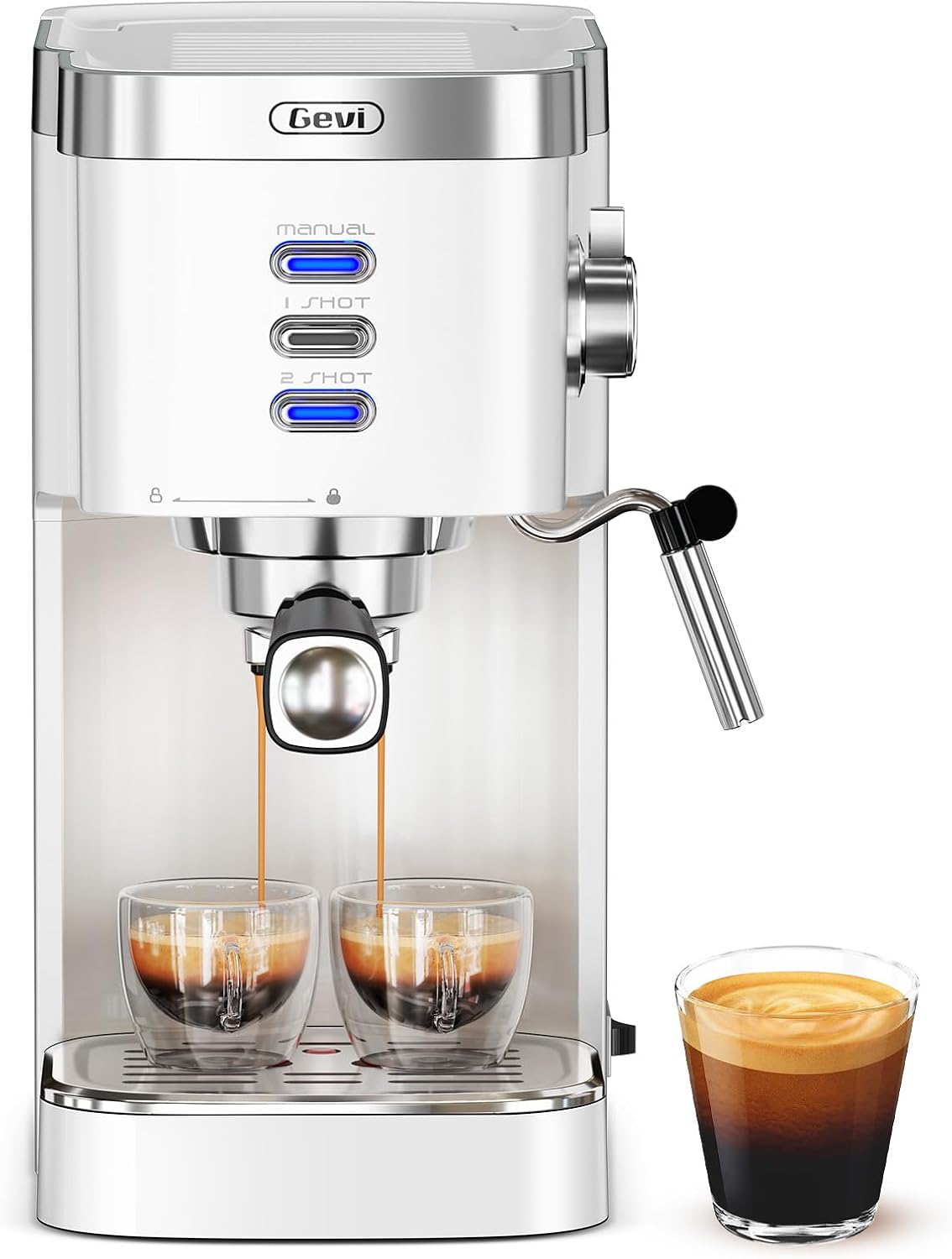
Gevi 20-Bar Espresso Machine — Best for Beginners Who Want More Features on Paper

Gevi Professional Espresso Machine 20 Bar
Key Features
- 20-bar pump pressure
- Milk frother steam wand
- Adjustable shot volume
- Compact countertop design
- White, clean modern look
Why We Like It
I like machines like this when you want a compact latte setup that still feels “espresso-first.” Adjustable shot volume helps you settle into a repeatable routine, and the steam wand keeps milk drinks in the daily rotation.
Pros
- Compact for small kitchens
- Milk drinks are supported
- Adjustable shot control
- Clean modern styling
Cons
- Steam technique takes practice
- Grinder quality still matters
Bottom Line
A compact 20-bar espresso machine for latte lovers who want a tidy, repeatable home setup in a clean white finish.
Price on AmazonThat combination instantly makes it interesting. On paper, this is the kind of machine that tries to give the beginner a more serious-looking spec sheet: 20-bar pressure, temperature control language, pre-infusion, and the general promise of a more refined extraction story. I understand why buyers are drawn to that. It feels like getting a “more expensive machine” for the money.
Still, I rank it fourth because when I think about the first machine, I do not just ask which one sounds sophisticated. I ask which one will be easiest to understand, easiest to use consistently, and most likely to keep a beginner engaged. The Gevi may absolutely be a good fit for some people, especially those who like feature language and want a machine that feels more advanced on day one, but I am a little more cautious with it simply because the web evidence I could verify cleanly is more limited than with the De’Longhi and CASABREWS models.
That does not mean it lacks merit. In fact, the NTC temperature control and pre-infusion language are exactly the sort of details that could appeal to a beginner who already knows they want to learn espresso with a bit more intention. I just would not rank it above the clearer, more established-feeling picks here for a first recommendation.
Why does it still make the list?
- The feature set sounds ambitious for the price.
- Pre-infusion and temperature-control language are attractive at this level.
- Could be a fun fit for a beginner who wants something more spec-driven.
Who I think should buy it
A beginner who likes the idea of more advanced-sounding features and does not mind being a little more adventurous with their first machine.
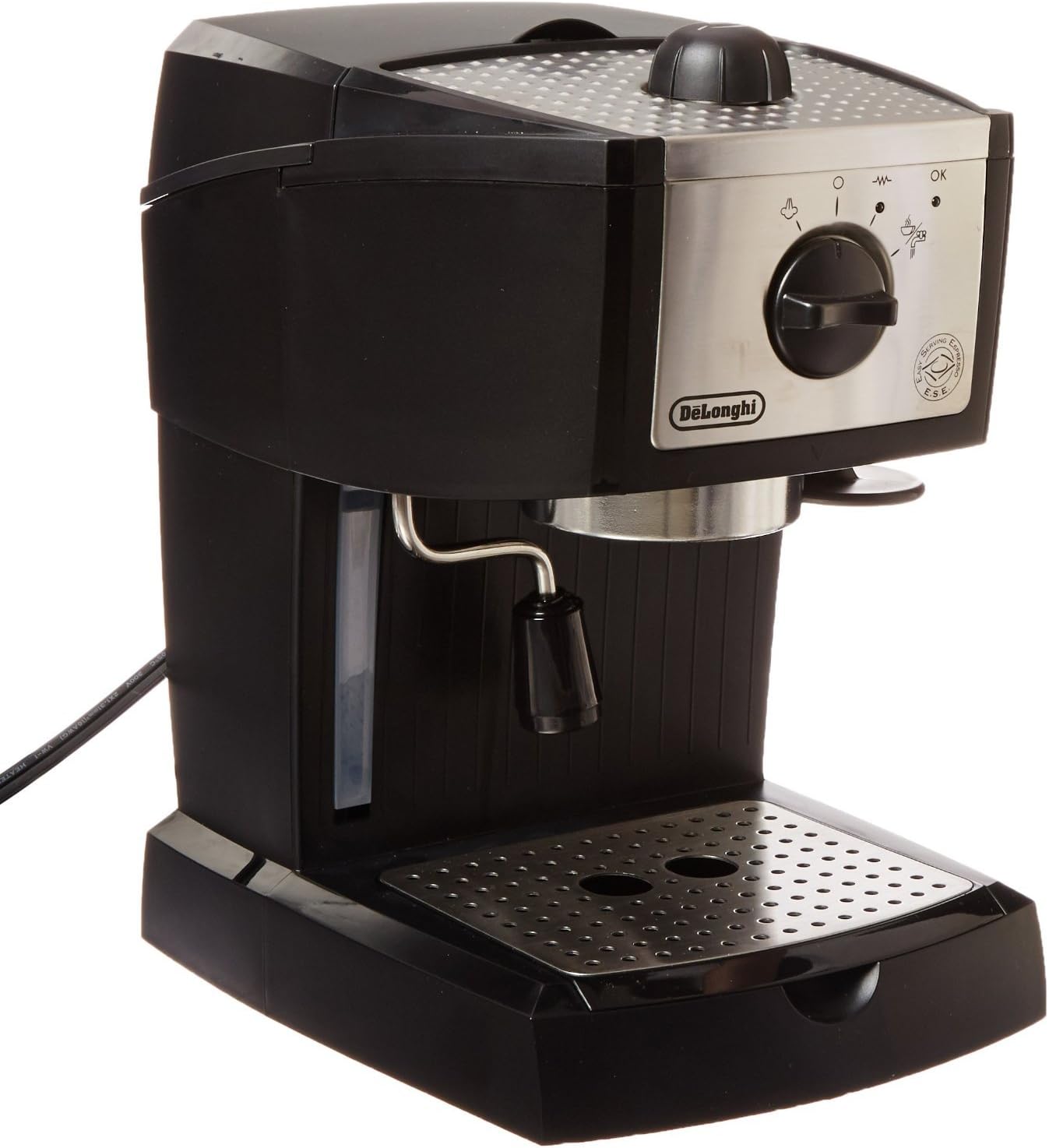
De’Longhi EC155 — Best for the Absolute Lowest-Stakes Beginner Entry

DeLonghi EC155 15 Bar Espresso and Cappuccino Machine
Key Features
- 15-bar pump espresso pressure
- Swivel jet frother wand
- Compact, narrow footprint
- Ground coffee or pods use
- Removable tank & drip tray
Why We Like It
I like the EC155-style machines because they’re simple and honest: you get espresso and cappuccino capability in a small body, and you can keep your routine fast without turning your counter into a full café station.
Pros
- Affordable entry point
- Small counter footprint
- Easy daily operation
- Milk drinks made simple
Cons
- Limited advanced control
- Milk texture takes practice
Bottom Line
A classic budget espresso-and-cappuccino machine for practical daily coffee routines.
Price on AmazonThe De’Longhi EC155 is one of those classic budget espresso machines that seems to have been around forever, with a 15-bar espresso and cappuccino machine with a removable tank and cup warmer features.
I do not rank it last because it is bad. I rank it last because the rest of the list feels a little easier to recommend in 2026. The EC155 has a kind of old-school budget charm, and I can absolutely see why some people still pick it. It is basic. It is familiar. It gets people into home espresso without much financial drama. There is value in that.
But if I am being honest, it also feels like the most “starter-kit era” of the group. That can be fine for the right buyer. If you want the simplest possible way into manual espresso and mostly care about low commitment, the EC155 still argues. But compared with the ECP3420 or even the Stilosa, I think many beginners today will find the newer-feeling options slightly more appealing and easier to love.
Still, I do not want to undersell its place. There is something to be said for a machine that keeps the barrier low and the expectations grounded. A lot of first espresso machines do not need to be exciting. They just need to be enough to begin.
Why it remains relevant
- Longstanding budget entry option.
- Straightforward manual cappuccino-style setup.
- Good for a very cautious first step into espresso.
Who I think should buy it
Someone who wants a very simple, familiar, low-pressure way to test whether home espresso is even their thing.
Which Machine I’d Choose for Different Beginner Types
Best overall for most beginners
De’Longhi ECP3420
This is the safest, most balanced recommendation in the group. It looks like the machine is most likely to make a beginner feel capable quickly without feeling toy-like.
Best for someone who truly wants to learn the basics
De’Longhi Stilosa
If the goal is to understand espresso, not just make coffee-adjacent milk drinks, the Stilosa is a great entry point. De’Longhi explicitly frames it for beginners starting their espresso journey.
It’s best if the looks and modern feel matter a lot.
CASABREWS 3700 Essential
This is the pick for the person who wants their first machine to feel contemporary and a bit more feature-rich on the counter.
Best for feature-chasing beginners
Gevi 20-Bar Espresso Machine
If you like the sound of pre-infusion and temperature-control language, this one is worth a look, though I’d still rank it just behind the stronger all-round beginner picks.
Best for ultra-cautious first-time buyers
De’Longhi EC155
It is the machine for someone who wants to spend modestly and test the waters before taking espresso more seriously.
The Kind of Beans I’d Use with Beginner Machines Like These
With beginner espresso machines, I usually think of them as forgiving rather than fussy.
I would not start with ultra-light roasts that demand incredible precision. That is a fast way to make yourself think the machine is worse than it really is. I would start with medium or medium-dark beans that give you a little cushion: chocolate, caramel, toasted nuts, mild fruit, and rounded sweetness. Those profiles are easier to understand, easier to dial in, and kinder to beginner technique.
For milk drinks, I especially like beans that keep their shape when diluted by milk. For straight espresso, I would still lean medium rather than very light, especially at this budget. Under-$300 machines can absolutely make satisfying coffee, but they tend to feel happiest when you are not asking them to perform miracles with demanding roast profiles.
What I’d Tell Any Beginner Before Buying an Espresso Machine Under $300
The machine matters, but not in the way you think.
The first thing I would say is do not expect the machine alone to carry the whole experience. Espresso is a system. Coffee freshness matters. Grind quality matters. Milk choice matters. Patience matters. The second thing I would say is choose a machine you actually want to use. Motivation is underrated. The best beginner machine is often the one that gets turned on consistently.
I would also say this very clearly: under $300 is enough to start, but it is not enough to buy your way out of learning. That is not bad news. It is actually the fun part. You get to improve. You get to notice the difference between a rushed shot and a better one. You get to see your milk texture slowly stop looking tragic. That progress is what makes home espresso addictive in the best way.
FAQ: Best Espresso Machines Under $300 for Beginners
What is the best espresso machine under $300 for beginners?
For most people, I would choose the De’Longhi ECP3420 because it offers the best overall balance of beginner-friendliness, compact size, and believable long-term usability.
Is the De’Longhi Stilosa good for beginners?
Yes. De’Longhi explicitly markets the Stilosa as a machine created for people starting their espresso journey, and its 15-bar pump, manual frother, and compact layout make that positioning believable.
Is 15 bars enough for a beginner espresso machine?
Yes. Several beginner machines in this group, including the Stilosa, ECP3420, and EC155 line, are built around 15-bar pump systems, which is a common spec for entry-level home espresso machines.
Is CASABREWS a good starter brand?
It can be. The CASABREWS 3700 Essential is clearly positioned as a compact home espresso machine with a 20-bar pump, adjustable coffee volume, and a steam wand, which makes it attractive for budget-conscious beginners.
Should beginners buy a manual espresso machine?
Usually, yes, if they actually want to learn. A manual or semi-automatic beginner machine teaches more about espresso than a push-button system.
Is the Gevi machine a safe beginner choice?
It looks promising based on the features visible in web results, especially the 20-bar pump, NTC temperature control, and pre-infusion, but I have slightly more confidence in the De’Longhi and CASABREWS picks because their model details were easier to verify.
Is the De’Longhi EC155 outdated?
A little, compared with newer-feeling entry models, but it still works as a very basic first-step manual espresso machine.
Can I make lattes and cappuccinos on these machines?
Yes. Both have steam or milk-frothing capability for latte and cappuccino-style drinks.
Which machine here is best for someone who wants the lowest learning curve?
The ECP3420 is probably the smoothest all-round starting point, while the Stilosa is the best for someone who wants the learning itself to be part of the appeal.
Which one would I personally buy as a first machine?
I would start with the De’Longhi ECP3420. It is the most balanced choice here.
Final Verdict
If someone asked me, with no extra context, what the best espresso machine under $300 for beginners is, I would send them first to the De’Longhi ECP3420. It feels like the least risky recommendation. It has the right balance of approachability, espresso identity, and everyday usability to make a beginner feel like they are learning something real without making the whole hobby feel exhausting.
The De’Longhi Stilosa would be my second choice because it is such a clean, honest beginner machine. It feels like the one for people who genuinely want to learn espresso fundamentals.
The CASABREWS 3700 Essential is the stylish, feature-forward budget pick that I think will appeal to a lot of new buyers who want their first setup to feel a bit more polished.
The Gevi is the more speculative but intriguing option for feature-minded beginners.
And the De’Longhi EC155 is the classic low-commitment starter for someone who simply wants to begin somewhere.
So my final ranking stays:
- De’Longhi ECP3420
- De’Longhi Stilosa
- CASABREWS 3700 Essential
- Gevi 20-Bar Espresso Machine
- De’Longhi EC155
At this budget, that feels like the most honest order.
Full Detailed Comparison Table
| Machine | Best For | Beginner Friendliness | Milk Drink Potential | What I Like Most | Main Tradeoff | Verified Details |
|---|---|---|---|---|---|---|
| De’Longhi ECP3420 | Best overall beginner pick | 9/10 | 8/10 | Balanced, compact, believable first machine | Not flashy | 15-bar pump, milk frother, temperature control, removable tank, compact build |
| De’Longhi Stilosa | True first-time learners | 9/10 | 8/10 | Beginner-focused identity and compact footprint | Slightly more of a “learning curve” feel than ECP3420 | 15-bar pump, stainless steel boiler, manual milk frother, beginner-positioned design |
| CASABREWS 3700 Essential | Modern-looking budget starter | 8/10 | 8.5/10 | Contemporary feel and adjustable coffee volume | I trust the De’Longhi picks slightly more as default starter recs. | 20-bar pump, temperature control, purge function, adjustable volume, steam wand, compact design |
| Gevi 20-Bar Espresso Machine | Feature-curious beginners | 7.5/10 | 8/10 | More ambitious-sounding feature list | Harder to verify cleanly | 20-bar pump, NTC temperature control, pre-infusion seen in web results |
| De’Longhi EC155 | Lowest-stakes first step | 7/10 | 7.5/10 | Familiar classic budget entry | Feels a bit older than the others | Manual cappuccino system, removable tank, longstanding entry-level design |


