
Best Espresso Machines for Beginners (2026 Updated)


OneHundredCoffee is reader-supported, and some products displayed may earn us an affiliate commission. Details
Buying your first espresso machine is one of those moments that feels bigger than it should. It’s not just a kitchen purchase. It’s a lifestyle shift. You’re basically saying, “I want better mornings, and I want them at home.”
But beginners don’t need perfection. They need clarity, forgiveness, and a machine that doesn’t make them feel stupid on day one.
What follows is not hype, not spec worship, and not “barista cosplay.” This is a real, human, daily-use perspective on five beginner espresso machines that actually make sense when you’re starting. I’ll talk about how they feel at 6:30 a.m., how annoying they are to clean, what you’ll love in week one, what you’ll notice in month three, and who each machine is really for.
Best Espresso Machines for Beginners (2026 Updated)
| Image | Product | Features | Price |
|---|---|---|---|
|
Best Beginner Budget
|
15-bar manual espresso starter
|
Price on Amazon | |
|
Best Slim Counter Fit

|
Compact thermoblock espresso machine
|
Price on Amazon | |
|
Best Easiest Milk Drinks

|
Auto steam wand texture control
|
Price on Amazon | |
|
Best Retro Design Pick
|
Iconic 50’s aesthetic + 15-bar pump
|
Price on Amazon | |
|
Best “Classic Italian” Feel

|
Semi-auto with analog temp gauge
|
Price on Amazon |
These aren’t “best on paper” machines. These are best to live with machines.
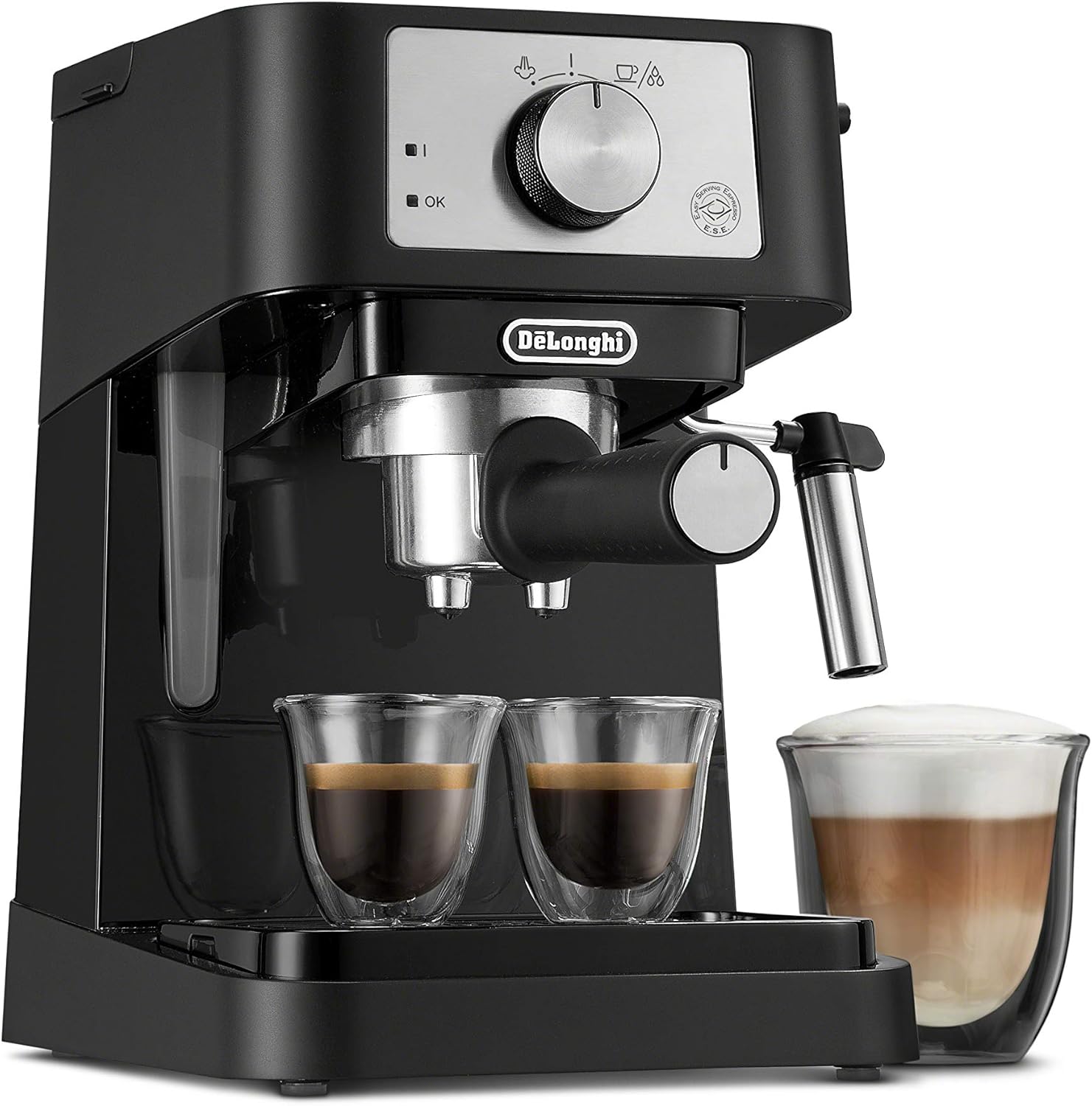
De’Longhi Stilosa (EC260BK) — the most honest first espresso machine you can buy
De’Longhi Stilosa (EC260BK)
A simple, no-drama espresso starter that teaches you the basics without punishing you while you learn.
- Pressurized baskets (beginner-friendly)
- Manual steam wand for learning milk
- Compact footprint for small counters
- Dial control: brew + steam
It’s honest. You’ll actually learn espresso fundamentals—dose, tamp, flow—without a confusing interface getting in your way.
- Easy first machine
- Great value
- Simple to clean
- Basic build materials
- Manual frothing needs practice
If you want your first real espresso setup without spending a fortune, this is the cleanest entry point.
The De’Longhi Stilosa feels like that friend who doesn’t sugarcoat things but still wants you to succeed. It doesn’t try to impress you. It doesn’t pretend to be more than it is. And that’s exactly why it works so well for beginners.
This is usually the first machine people buy when they decide, “Okay, I want real espresso, not pods.” And the Stilosa meets that moment perfectly.
What it’s like to actually use every day
The first thing you notice is how unintimidating it is. No screens. No menus. No blinking lights that look like they’re judging you. There’s a simple rotary dial: one direction for brewing, one for steam. You turn it, something happens. That alone lowers stress dramatically when you’re new.
It’s light—about 9 pounds—so you can move it easily, but not so light that it slides around when you lock in the portafilter. The footprint is friendly: roughly 8.5 inches wide, 12 inches deep, so it fits into small kitchens without demanding sacrifices.
Espresso extraction: forgiving by design
The Stilosa uses pressurized baskets, which beginners often underestimate. These baskets are the reason you can use pre-ground coffee and still get crema. They smooth out inconsistencies in grind size and tamp pressure. Translation: your espresso will be drinkable even when your technique isn’t.
You’ll see the flow. You’ll hear the pump. You’ll start noticing how changing grind or dose affects extraction. The machine doesn’t hide mistakes—it just doesn’t punish them harshly.
That’s perfect for learning.
Portafilter feel
The portafilter is lighter than prosumer machines, but that’s a good thing early on. It locks in easily without needing brute force. You won’t struggle with alignment or feel like you’re about to snap something. You develop confidence instead of tension.
Milk steaming: where you actually learn
The steam wand is basic and manual. At first, your milk will probably look like bubble bath. That’s normal. Then you’ll figure out positioning. Then timing. Then suddenly your milk is smoother, and you’ll feel proud in a very quiet way.
This machine teaches milk frothing the old-school way. No automation, no shortcuts—just practice.
Cleaning and maintenance reality
Cleaning is simple. Rinse the portafilter. Wipe the steam wand. Empty the drip tray. There’s nothing hidden or complicated. For beginners, that matters more than fancy self-clean cycles.
Who this machine is truly for
If you want to learn espresso without pressure,
If you’re okay upgrading later but want a solid start,
If you don’t want screens or complexity,
If budget matters but quality still counts
The Stilosa doesn’t grow with you forever—but it teaches you enough to know what you want next.
De’Longhi Dedica Deluxe — when counter space is tight and mornings are rushed
De’Longhi Dedica Deluxe
A fast, narrow, beginner-friendly machine that slides into small kitchens and still makes legit espresso drinks.
- Ultra-slim body (space saver)
- Fast thermoblock warm-up
- Pressurized baskets for easy starts
- Manual steam wand for lattes
It’s the “busy-morning” espresso machine—quick heat-up, simple buttons, and it doesn’t take over your counter.
- Very small footprint
- Quick daily workflow
- Easy to learn
- Manual frothing takes reps
- Small drip tray capacity
If you want espresso at home without donating half your counter space, Dedica is the easy yes.
The Dedica Deluxe feels like De’Longhi saying, “What if espresso actually fit modern apartments?” This machine is shockingly slim, fast, and surprisingly capable for beginners who want convenience without giving up control.
Living with the Dedica day after day
This machine is famous for one thing: it’s about 6 inches wide. That’s not a typo. It genuinely fits where almost nothing else does. If you’ve ever rearranged your counter just to make coffee, the Dedica feels like relief.
Despite the slim build, it weighs close to 9 pounds and feels stable. No wobble, no cheap rattling.
Heat-up speed changes habits
The thermoblock system brings the machine up to temperature in about 40 seconds. That means less waiting, less guessing, and fewer excuses to skip espresso in the morning.
For beginners, faster heat-up equals better habits. You actually use the machine.
Button controls: simple but modern
Instead of a dial, the Dedica uses illuminated buttons. Espresso. Double espresso. Steam.
It feels more “appliance-like” than the Stilosa, but still not intimidating. You don’t need a manual nearby. You press, you watch, you learn.
Espresso quality in real use
Like the Stilosa, the Dedica uses pressurized baskets, which means you can start with pre-ground coffee. The espresso is consistent, warm, and forgiving. As you improve your grind and dose, the machine responds nicely—but it never demands perfection.
Adjustable cup height
This is a small but meaningful detail. The Dedica’s drip tray can be removed to fit taller mugs—up to about 5 inches. That means you can brew espresso directly into a latte mug without gymnastics.
Milk steaming: slightly easier, still manual
The steam wand here is improved over the Stilosa. It’s still manual, but it’s more forgiving. You’ll get smoother milk faster, especially with whole milk or barista-style oat milk.
Who the Dedica is perfect for
If your kitchen is small,
If you value speed and simplicity,
If you want a modern feel without complexity,
If espresso needs to fit into busy mornings
The Dedica is a machine you won’t resent owning.
Breville Bambino Plus — the beginner machine that secretly spoils you
Breville Bambino Plus
A compact machine that feels premium, heats insanely fast, and makes milk drinks way easier than they should be.
- Ultra-fast heat-up
- Auto milk frothing
- Consistent espresso workflow
- Compact stainless body
It gives beginners café-level comfort early—especially for lattes and cappuccinos—without removing the learning journey.
- Very fast warm-up
- Great milk texture
- Feels high-end
- Needs a good grinder
- Smaller drip tray
If you want beginner-friendly espresso that still feels like a serious upgrade, Bambino Plus is the sweet spot.
The Bambino Plus is what happens when a company decides beginners deserve really good espresso without suffering first. This machine doesn’t scream “beginner,” but it absolutely respects beginners.
Build quality and presence.
This machine feels premium the moment you lift it. It weighs around 12 pounds, with a stainless steel body that doesn’t flex or creak. It’s compact but solid, about 7.5 inches wide and 12 inches deep.
The heating system: ridiculously fast
Breville’s thermojet system heats in about 3 seconds. Not marketing seconds. Real seconds. That changes everything because it removes waiting and guesswork.
Shot control: guided but flexible
The Bambino Plus gives you pre-infusion, consistent pressure, and volumetric shot buttons. That means you can let the machine handle timing while you focus on grind and dose—or manually stop shots as you gain confidence.
Automatic milk frothing
You pour milk, select texture and temperature, and the machine does the rest. And it does it well. Silky foam. Repeatable results. No frustration.
Cleaning rhythm
The machine feels supportive. It prompts you when it needs cleaning and keeps the workflow tidy enough that you’ll actually stick to it.
Who the Bambino Plus is perfect for
If you want excellent espresso fast,
If you love milk drinks,
If you want automation without losing learning potential,
If you plan to grow your skills over time
This machine feels like cheating—in a good way.
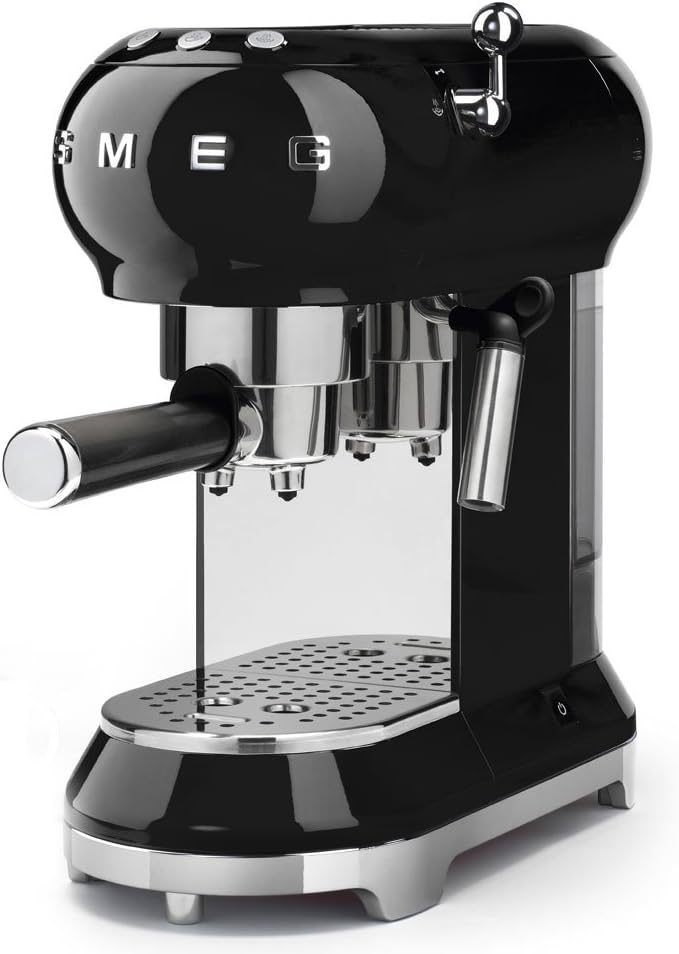
SMEG ECF01 (50’s Style) — espresso as a design statement
SMEG ECF01 (50’s Style)
A gorgeous, cheerful espresso machine that keeps the learning curve friendly and the counter looking amazing.
- Retro design, compact build
- Pressurized baskets for beginners
- Simple button workflow
- Manual steam wand
You’ll actually use it—because it’s pleasant. It makes espresso feel like a daily ritual instead of a technical project.
- Looks incredible
- Easy controls
- Good beginner crema
- Mostly manual workflow
- Paying for design too
If you want espresso and you care how your kitchen feels, SMEG makes coffee feel like a mood.
The SMEG ECF01 is the machine people buy when they want espresso and personality. And here’s the truth: beginners don’t hear enough: when a machine looks good, you use it more.
Let’s talk looks (because they matter here)
This machine is unapologetically stylish. Curved lines. Glossy finish. Retro colors. It looks like it belongs in a design magazine.
Build and dimensions
The SMEG weighs around 11 pounds and has a solid feel despite its playful appearance. It’s about 6 inches wide and 13 inches deep, so it doesn’t hog counter space.
The brewing system
It’s straightforward and forgiving with pressurized baskets. Espresso is consistent and beginner-friendly, without demanding perfect grind precision on day one.
Milk steaming
Manual, approachable, and decent. With a bit of practice, you can make smooth milk for cappuccinos and lattes without feeling defeated.
Who the SMEG is perfect for
If aesthetics matter to you,
If you want espresso without tech overload,
If you value simplicity and style equally,
If you want a machine that feels joyful to use
This is espresso as lifestyle, not just caffeine.
Gaggia Carezza Deluxe — old-school espresso DNA for beginners
Gaggia Carezza Deluxe
A heavier, more traditional espresso machine that rewards practice and feels “old-school café” in daily use.
- Traditional boiler heating
- Heavier, stable build
- Manual steam wand power
- Beginner-friendly baskets
It feels like a real espresso machine, not a coffee gadget. If you enjoy learning technique, it’s genuinely satisfying.
- Sturdy, planted feel
- Strong steaming
- Classic workflow
- Slower warm-up
- Bigger footprint
If you want a beginner machine that feels traditional and rewarding, Carezza is the one with the “espresso soul.”
The Gaggia Carezza Deluxe is for beginners who appreciate tradition. Gaggia has deep espresso roots, and this machine carries that DNA in a beginner-friendly form.
Build and feel
This machine feels sturdy. Around 17 pounds, with a heavier, more planted presence than most beginner machines. It doesn’t slide around. It doesn’t feel hollow.
It’s larger—about 9 inches wide and 16 inches deep—so it wants some counter commitment.
Boiler-based heating
Unlike thermoblock machines, the Carezza uses a traditional boiler. That means longer warm-up (about 1–2 minutes), but more classic espresso behavior.
Portafilter and baskets
The portafilter is substantial and satisfying to use. Lock-in feels solid. Extraction feels deliberate.
Milk steaming
The steam wand is strong. It requires practice, but it rewards good technique. If you want to truly learn milk texturing, this machine gives you the tools.
Who the Carezza is perfect for
If you like classic espresso machines,
If you don’t mind a slightly longer warm-up,
If you want a heavier, more traditional feel,
If you enjoy learning techniques
This machine feels like a bridge between beginner and enthusiast worlds.
Beginner Espresso Machines – Technical Specifications at A Glance
| Feature | Stilosa | Dedica | Bambino | SMEG | Gaggia |
|---|---|---|---|---|---|
| Machine type | Semi-auto (pressurized-friendly) | Semi-auto (pressurized-friendly) | Semi-auto (guided + advanced capable) | Semi-auto (pressurized-friendly) | Semi-auto (classic workflow) |
| Pump pressure (rated) | 15 bar | 15 bar | 15 bar | 15 bar | 15 bar |
| Heating system | Thermoblock | Thermoblock | ThermoJet | Thermoblock | Boiler |
| Warm-up time (typical) | ~40 sec | ~40 sec | ~3 sec | ~40 sec | ~1–2 min |
| Portafilter size | ~51 mm class | ~51 mm class | 54 mm | ~51 mm class | ~53 mm class |
| Filter baskets included | Pressurized + single/double | Pressurized + single/double | Single-wall + dual-wall options | Pressurized + single/double | Pressurized + single/double |
| Shot control style | Manual dial (start/stop) | Buttons (volumetric-ish) | Volumetric + manual override | Buttons (simple presets) | Manual buttons + classic timing |
| Pre-infusion | Basic (varies by use) | Basic (varies by use) | Yes (gentle pre-infusion) | Basic (varies by use) | Basic (workflow-dependent) |
| Milk frothing | Manual steam wand | Manual steam wand | Auto-froth + manual steam | Manual steam wand | Manual steam wand (strong) |
| Milk texture learning curve | Medium–High | Medium | Low (auto) / Medium (manual) | Medium | Medium–High (more power) |
| Hot water function | Limited / via wand (use-case dependent) | Limited / via wand (use-case dependent) | Yes (hot water via wand) | Limited / via wand (use-case dependent) | Yes (via wand) |
| Cup clearance (tall mug option) | Moderate (remove tray helps) | Good (tray removal helps) | Good (adjustable for cups) | Moderate | Moderate |
| Water tank accessibility | Top/back access (easy) | Rear/top access (easy) | Rear/top access (easy) | Rear access (easy) | Front/top access (easy) |
| Best with pre-ground coffee | Yes (very forgiving) | Yes (very forgiving) | Okay (better with grinder) | Yes (forgiving) | Yes (forgiving, improves with grinder) |
| Best with espresso grinder | Helpful, not required | Helpful, not required | Strongly recommended | Helpful, not required | Recommended (rewards technique) |
| Build feel | Light, practical | Slim, solid enough | Premium compact | Stylish, sturdy | Heavier, classic |
| Weight (approx.) | ~9 lb | ~9 lb | ~12 lb | ~11 lb | ~17 lb |
| Footprint highlight | Small counter-friendly | Ultra-slim width | Compact but “serious” | Compact + décor piece | Larger, more traditional |
| Daily cleaning effort | Low | Low | Low–Medium (auto prompts help) | Low | Low–Medium |
| Beginner friendliness | Very high | Very high | High (best results with grinder) | High | High (more “classic” feel) |
| Best “first latte” success | Good (manual practice) | Good (manual, easier) | Excellent (auto-froth) | Good (manual) | Good–Excellent (powerful steam) |
Final, honest takeaway
There’s no “best” beginner espresso machine—only the one that fits your space, your mornings, and your patience level.
If you want the simplest, honest start: De’Longhi Stilosa
If space and speed matter: De’Longhi Dedica
If you want the smoothest learning curve: Breville Bambino Plus
If you want joy and design: SMEG ECF01
If you want a classic espresso feel: Gaggia Carezza Deluxe
The right first machine doesn’t make espresso harder. It makes you want to keep making it.


