
Coffee Roasting Trends: New Technologies Changing Home Roasting


OneHundredCoffee is reader-supported, and some products displayed may earn us an affiliate commission. Details
The future of coffee roasting is becoming smarter, yet somehow even more soulful.
I still remember the first time I stood beside a proper drum roaster that meant business. It was loud in that steady, confident way—like a small jet engine that had decided to become a musical instrument. My eyes watered a little from that sweet, smoky perfume hanging in the air, and the room felt warmer than it should have been… not just from the flame, but from the intensity of it all. The roaster’s hands hovered over the trier like a violinist over strings. He wasn’t staring at the beans as much as listening to them—waiting for the exact kind of crack that signals the story is changing. And when it happened—first crack snapping like tiny fireworks—there was this brief moment where the aroma turned from grassy to caramel to something almost like toasted nuts. It felt like catching a flavor that only exists for a few breaths before it vanishes.
The Future of Coffee Roasting — New Technologies & Trends
| Image | Product | Features | Price |
|---|---|---|---|
|
Best Smart Automation

|
Auto + manual digital roasting
|
Price on Amazon | |
|
Best App-Style Roasting

|
Guided profiles + compact workflow
|
Price on Amazon | |
|
Best Air-Roaster Value

|
Variable heat + fan control
|
Price on Amazon | |
|
Best Pro-Style Control

|
Direct-flame roasting + dual logging
|
Price on Amazon | |
|
Best Roast Data Tracking

|
4-probe temperature logging
|
Price on Amazon | |
|
Best Fast Cooling

|
Rapid cool + chaff separation
|
Price on Amazon | |
|
Best Beginner Manual

|
Simple stovetop learning tool
|
Price on Amazon |
That craft isn’t going away. Not even close.
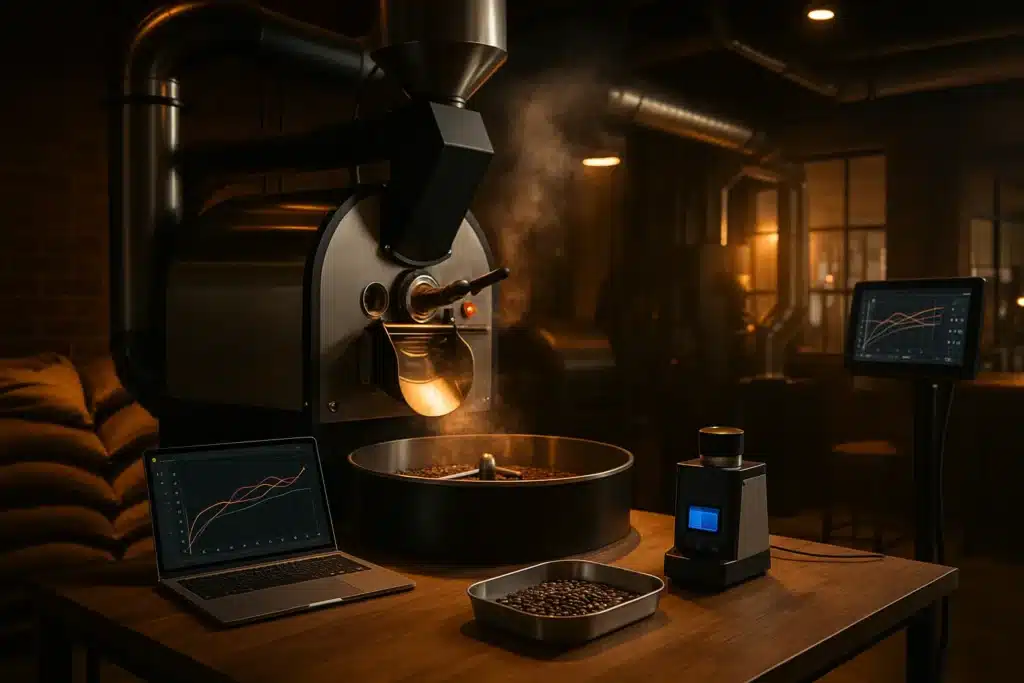
But if you walk into a modern roastery today—especially one that’s scaling up while still trying to keep its coffee tasting “handmade”—you’ll notice something else humming beside all that romance. Screens. Sensors. Roast curves tracing clean lines across dashboards. Airflow graphs. Heat application is displayed in neat percentages. A little predicted “end temperature” hovering like a weather forecast for the batch. In some rooms, there’s even less flame than you’d expect, replaced by electric heating, induction systems, and controlled airflow that feels more like an aircraft cockpit than a smoky backroom.
And here’s the interesting part: the future of coffee roasting is becoming both warmer and smarter.
Warmer, because the best new systems are getting gentler and more controllable with how they deliver heat—less scorching, less guesswork, more “let’s nurture flavor instead of wrestle it.” Smarter, because data and automation are becoming the new baseline standards for consistency, safety, and sustainability. Not in a cold, robot way… more in a “we’re finally able to repeat that magical batch on purpose” kind of way.
So if you’ve ever Googled things like “best home coffee roaster,” “electric coffee roaster vs. gas,” “what is roast profiling,” “how to get consistent roasts,” or even “is coffee roasting becoming automated?”—you’re in exactly the right place. Consider this a friendly field guide to where roasting tech is headed, what it means for flavor and reliability, and how you can ride the wave without losing the soul of roasting.
The big shift: from “feel” to “feedback.”
Traditional roasting has always been a beautiful mix of skill, instinct, and repetition. People learn by smell, sound, color, timing, and that sixth sense that develops only after you’ve ruined enough batches to earn it. That’s not an insult—that’s the apprenticeship. It’s how roasters become roasters.
What’s changing is that we’re now layering feedback on top of feel. Think of it like driving: you can be an amazing driver by instinct, but it’s still nice to have a speedometer, a fuel gauge, and GPS when you’re pushing the limits.
Modern roasting technology gives roasters more real-time insight into what the beans are experiencing. Heat isn’t just “high, medium, or low” anymore—it’s about rate of rise, energy input, and airflow response. It’s the bean probe temperature compared to the environmental temperature, how quickly a batch moves through browning, and whether the system is drying too fast or coasting too soon. That’s why roasters watch curves now—not because they’ve lost their senses, but because they’ve gained a second set of eyes.
And at home? This is exactly why the current generation of home roasting is so addictive. It doesn’t feel like “guess and hope” anymore. It feels like learning a skill with training wheels—then gradually removing them as your palate gets sharper.
If you’ve ever wanted to roast your own beans without needing an industrial setup, machines like the Behmor 1600 Plus Customizable Drum Coffee Roaster are popular because they give you that drum-roast character with more control than older “set-it-and-pray” designs. You can still roast with feeling—but you’re not blind.
Electric, induction, and the quiet revolution in heat
Gas roasting has a personality. It’s responsive, powerful, and traditional for a reason. But it also comes with practical headaches: ventilation, emissions rules, heat inefficiency, and a learning curve that punishes distraction. For commercial spaces, gas isn’t disappearing—yet. But the direction is clear: roasters are moving toward cleaner heat systems with tighter control and lower environmental impact.
Electric roasters are getting better at a few key things that matter for flavor:
They provide steadier heat without the tiny fluctuations caused by flame shifts or uneven airflow. They can adjust power more precisely and work seamlessly with modern airflow control, which is key since airflow is the unseen factor in roasting—too little and you get smoky, baked flavors; too much and you risk losing aromatics or speeding up development.
Induction roasting, meanwhile, is getting attention because it can be incredibly efficient and controlled. It heats metal components directly, which can reduce wasted energy and allow for a fast response. For roasteries trying to hit sustainability targets without sacrificing quality, these technologies are starting to feel less like experiments and more like the future baseline.
And for home roasters? The electric wave is already here. A fluid-bed-style roaster like the Fresh Roast SR800 roasts with hot air and tends to highlight clarity and brightness—especially fun for lighter roasts and fruity coffees. It feels different from drum roasting, yes, but it teaches you a lot about airflow and heat balance in a very hands-on way.
Drum vs hot air vs “smart roasting”: a quick real-world comparison
Because you’ll probably wonder this while reading (everyone does), here’s a simple way to think about the big roasting styles—not as “one is better,” but as “what vibe do you want in the cup and in the process?”
| Roasting style | What it feels like | What it tends to taste like | More consistent batch-to-batch and fewer “mystery off-notes.” |
|---|---|---|---|
| Drum roasting (classic) | Slow-cooked, tactile, traditional | More body, chocolate/nut depth, rounded sweetness | That “roastery” flavor and the craft feel |
| Hot-air/fluid-bed | Fast, responsive, airy | Brighter, cleaner, sharper fruit clarity | Great for learning and for lively light roasts |
| Smart electric / sensor-driven | Measured, repeatable, precise | More consistent batch-to-batch, fewer “mystery off-notes.” | Repeatability without losing artistry |
| Induction-forward designs | Efficient, snappy, modern | Controlled development, less scorching risk | Cleaner heat + sustainability + precision |
If you want something extremely portable—almost like a “roast anywhere” tool—the Nuvo Eco Ceramic Handy Coffee Bean Roaster is a fun reminder that roasting doesn’t have to be complicated. It’s not about automation; it’s about intimacy with the bean. You can literally hear and smell everything up close. It’s a different kind of magic—and honestly, it makes you appreciate the high-tech world even more.
Roast curves, predictions, and why automation doesn’t have to be “soulless.”
Let’s talk about the elephant in the roastery: automation.
People hear “automated roasting” and imagine coffee turning into factory output. Same taste, no personality, just consistent mediocrity. But that’s not what the best roasters are using automation for. They’re using it for the boring stuff—the stuff that steals attention from the sensory craft.
Automation is increasingly being used to:
- hold airflow steady through a chaotic stage,
- prevent accidental over-application of heat,
- replicate a successful profile when green coffee lots are consistent,
- reduce operator fatigue (because tired roasters make mistakes),
- Keep production stable while still letting the roaster make flavor decisions.
In other words, it protects the “human” part by removing the “oops, I got distracted and ruined the batch” part.
Some newer home units and small commercial roasters now integrate systems that can sync with roast profiling tools and produce cleaner repeatability. A machine like the Kaleido Sniper M1 Coffee Roaster has gained attention because it blends that compact “serious hobbyist” capacity with a more controlled, tech-forward approach. It’s part of a bigger trend: roasting is becoming more approachable without becoming less artistic.
Sustainability isn’t a marketing word anymore—it’s shaping roaster design.
This might be the biggest behind-the-scenes driver of the entire tech shift.
Roasting coffee takes energy and creates smoke and particulates, and it’s no longer limited to industrial zones—it’s happening in cities. With regulations getting stricter in many areas, and even where they’re not, customers and café partners are asking tougher questions: Where’s your energy coming from? What’s your environmental footprint? Are you using afterburners? Cutting down on waste? Roasting in a way that honors the environment where the coffee originated?
So roaster design is shifting toward the following:
- more efficient heating,
- lower-emission systems,
- better filtration and smoke management,
- heat recovery methods,
- more precise roasting to reduce waste in batches.
And this matters for you as a coffee drinker, because sustainable roasting isn’t only about guilt-free operations—it often correlates with better flavor consistency, because the same tools that reduce wasted energy also reduce unstable roasting behavior.
The home roasting renaissance: “I want café freshness at home.”
Home roasting used to be a niche inside a niche. Now it’s becoming a real category because people are chasing freshness—and realizing they can’t always buy it locally.
If you’ve ever bought beans that were roasted months ago, you know that moment where the coffee tastes fine… but not alive. Then you taste a cup brewed with beans roasted within the last week, and you’re like, “Oh. This is what people mean by aroma.” That contrast is what pulls people into home roasting.
What’s cool is that home roasting can now be a spectrum. You can go full hobbyist with small batches, or you can roast enough for your week and treat it like meal prep for your caffeine life.
Machines like the Gene Cafe CBR-101 Coffee Roasting Machine (a regional listing but widely recognized as a home roasting staple) are part of that middle ground: not tiny, not industrial, just a serious tool for someone who wants control and consistency without building a roastery in their kitchen.
Consistency: the unglamorous superpower that makes coffee taste “premium.”
Here’s a truth most people don’t hear until they’ve tasted coffee from a few different roasters:
A lot of “premium taste” is just consistency.
If a roaster can hit the same development style across batches, the coffee tastes trustworthy. It tastes intentional. It tastes like the roaster has a point of view.
Tech helps with this in a few key ways:
- tracking roast curves so you can repeat success,
- monitoring rate of rise so you don’t stall or race,
- controlling airflow to manage smoke and aromatics,
- improving cooling performance so you lock in flavor at drop.
Even at home, one of the biggest upgrades you can make isn’t a fancier roaster—it’s simply measuring what you’re doing. That’s where tools like a good scale become quietly powerful. A scale such as the TIMEMORE Black Mirror Basic 2 Coffee Scale isn’t “roasting tech” on paper, but in real life, it’s part of the same mindset: repeatable inputs, repeatable results. Whether you’re measuring green weight, roasted yield, or brew ratios afterward, consistency becomes your best friend.
The part nobody talks about: storage and cleanliness after roasting (yes, it matters).
Now, let’s address something that always gets overlooked until it ruins someone’s coffee: oils and storage.
Freshly roasted coffee is alive for a short time. It releases gas, changes day by day, and easily absorbs surrounding odors. And yes, coffee oils can stick to surfaces and turn stale, especially if you keep using the same container without cleaning it properly.
That’s why choosing the right storage isn’t “extra.” It’s part of protecting your roast.
A container that seals well, reduces oxygen exposure, and is easy to clean is a simple way to keep your coffee tasting like the roast you worked so hard to nail. Something like the Planetary Design Airscape Stainless Steel Coffee Canister is popular for a reason: it’s built around pushing out excess air, which helps slow staling. And just as important, it’s not a nightmare to take apart and wash when it needs it—because sooner or later, it will.
If you’ve ever opened a container and smelled something faintly “old” or waxy, you’ve met the problem. Clean storage is flavor insurance.
So, where is roasting tech headed next?
If I had to describe the next chapter in one sentence, it would be this:
Roasting is becoming more transparent.
Not in the sense that everyone will roast the same way—but in the sense that roasters will better understand what’s happening inside each batch, and they’ll waste less coffee getting there. More feedback, more control, fewer mystery outcomes, and fewer “weird” batches that don’t match the profile. That’s good for roasters, good for cafés, and honestly… good for anyone who just wants their morning cup to taste like it’s supposed to.
The best part? None of this has to erase the romance. If anything, it can protect it. Because when the boring variables are handled—stable heat, reliable airflow, predictable development—you get more room to do the real art: shaping flavor on purpose.
And whether you’re a professional trying to scale without losing quality or a home enthusiast roasting on a weekend just to smell that “first crack moment” again, the direction is the same. The future of roasting isn’t a machine replacing the roaster.
It’s a roaster using better tools to chase that fleeting flavor and catching it more often.
If you’ve been thinking about trying it yourself, start simple, stay curious, and treat your first batches like a conversation with the bean. The tech is getting smarter… but the magic is still in the listening.
Best Quality Roasted Brand

Who is this for?
Black Rifle Coffee’s Freedom Roast is crafted for coffee drinkers who value bold flavor, patriotism, and premium quality. This medium roast offers smooth, balanced notes with a clean finish, making it ideal for daily drinking. Designed by veterans and roasted in the USA, it’s perfect for those who support military-owned businesses. Whether you brew with a French press, drip machine, or pour-over, this roast consistently delivers excellence. With ethically sourced beans and small-batch roasting, it caters to coffee lovers who appreciate rich taste and strong values. Ideal for anyone wanting to fuel their day with purpose, pride, and bold character.Why Roasting Is Changing (and why that’s good for your cup)
Roasting used to be dominated by heavy gas drums and skilled operators reading the beans like weather: sound, smell, color, and air. That sensory intuition still matters. But three forces are pushing the craft further:
- Consistency pressures: Cafés and e-commerce expect repeatable flavor. Customers want the same caramel-almond profile in every bag.
- Sustainability and regulation: Cities and countries are tightening rules on emissions, venting, and energy use. Roasters want cleaner options that don’t require expensive afterburners or ductwork.
- Data and software: Affordable sensors, IoT connectivity, and cloud logging make it possible to see what’s happening inside a roast and repeat it with surprising precision.
The result: roasters who embrace both craftsmanship and technology are producing cleaner, sweeter, and more dependable coffee while cutting waste and energy use.
Electric, Induction, and Hybrid Heat: goodbye guesswork, hello control.
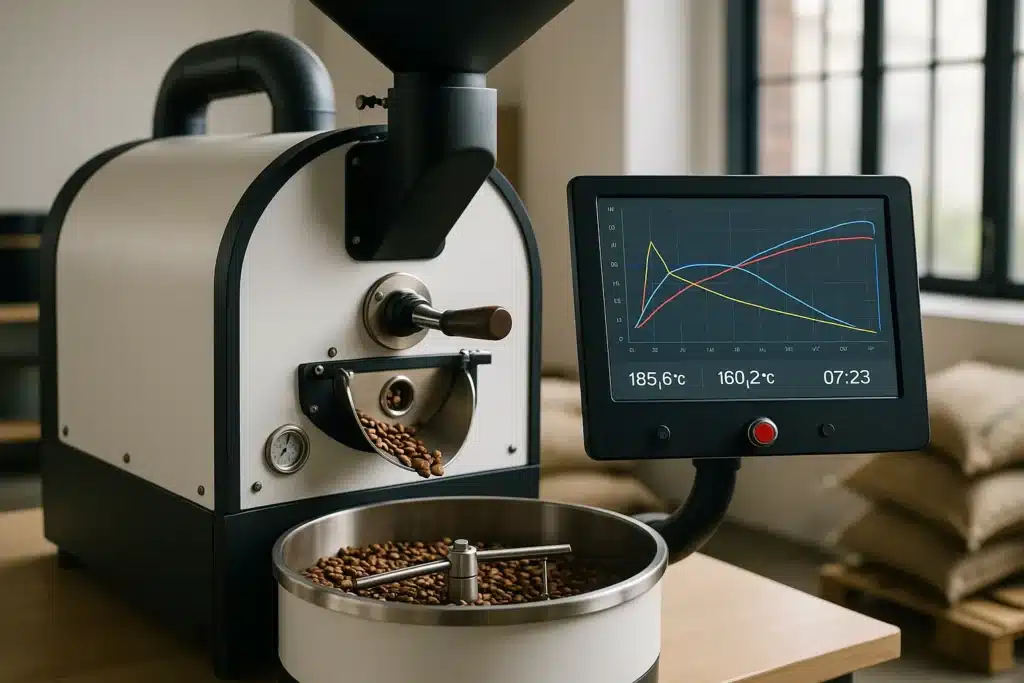
Traditional gas roasters heat a drum; the drum heats the beans via conduction and convection. Gas is powerful, but small changes in gas pressure, ambient temperature, or airflow can throw off a roast. Electric and induction systems are changing that calculus.
- Electric resistance roasters deliver steady, controllable heat that isn’t affected by gas pressure fluctuations. For small to medium machines, this provides repeatable energy input and often simpler installation (no gas lines).
- Induction heating couples energy directly into the roasting environment, offering fast response and fine control. Because power changes translate quickly to bean-environment temperature changes, profiles can be executed more precisely.
- Hybrid designs blend electric heat with smart airflow and recirculation, maintaining thermal stability while minimizing exhaust losses.
What this means in the cup: better control near the cracks (those fragile moments when sugars unzip into aromas), fewer baked or scorched batches, and more confidence that a great profile is repeatable in different weather or altitudes.
Airflow, Recirculation, and Heat Pumps: Efficiency Meets Clarity
Air has always mattered in roasting, but we’re getting smarter about it. Modern systems use variable-speed fans, pressure sensors, and recirculating heat to maintain consistent thermal energy without dumping BTUs into the sky.
- Variable airflow lets roasters manipulate drying, Maillard, and development phases independently. Higher airflow can pull smoke out and emphasize clarity; lower airflow improves conductive contact and body.
- Recirculating hot air slashes energy use by reusing exhaust heat after filtering particulates and odor. Flavorwise, this can reduce smoky taints while delivering steadier heat.
- Heat-pump-assisted roasting (an emerging area) captures waste heat and lifts its temperature back into the process. Imagine a roaster that sips electricity yet keeps a stable bean temperature curve in winter.
These engineering choices don’t just save kilowatts—they give roasters new knobs to tune sweetness, juiciness, and finish.
Low-Emission and Ventless Systems: Roasting Without the Chimney Drama
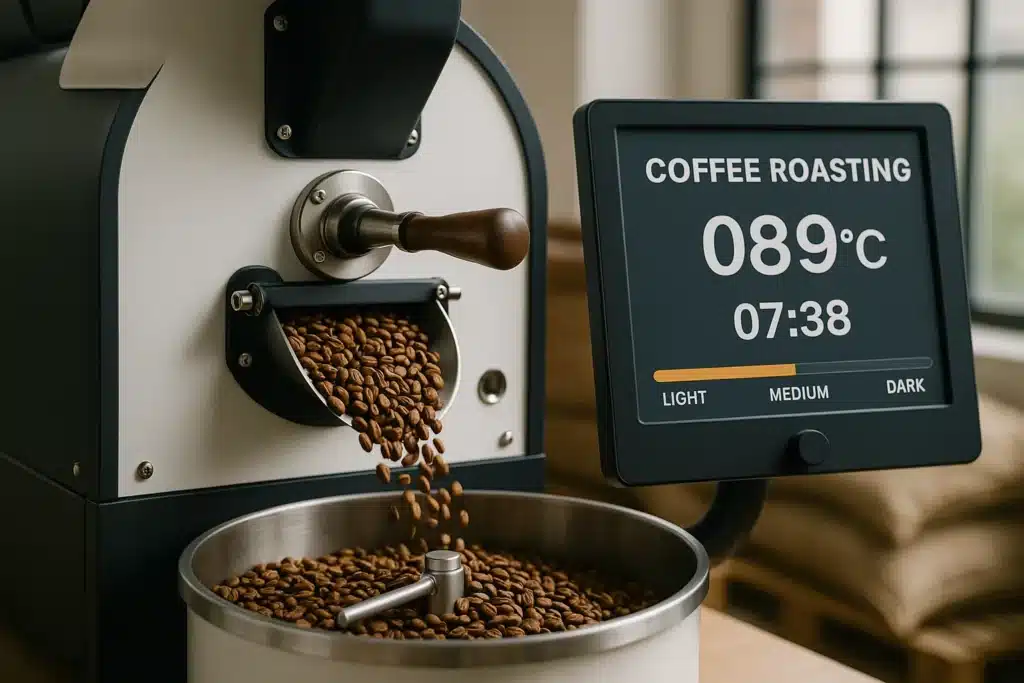
One of the biggest barriers to launching a roastery is venting and afterburners. Modern solutions attack that problem from two sides:
- Integrated catalytic or regenerative systems burn or catalyze smoke and VOCs within the roaster body, trimming the need for separate afterburners.
- Particulate and odor filtration (electrostatic or catalytic) cleans exhaust air so thoroughly that some small roasters can operate with minimal external venting.
- Fully electric, “ventless” designs for small/medium production let cafés roast on site, shortening the time from roast to cup, boosting freshness, and turning roasting into a customer experience.
If you’ve dreamed of “roast today, brew today” in a small space, these machines are opening doors that used to be bolted shut by building codes.
Sensors everywhere: seeing the roast you used to feel
The next leap is not just better heat; it’s better vision. Modern roasters embed sensors that once lived only in lab equipment:
- Bean temperature (BT) and environmental temperature (ET) probes with improved placement and response, so curves reflect what beans are really experiencing.
- Rate of rise (RoR) calculations that smooth noise and highlight dangerous stalls or spikes.
- Exhaust temperature and humidity to gauge drying progress and smoke evacuation.
- Infrared (IR) and optical color monitoring to estimate bean surface color in real time.
- Load cells for live batch mass measurement (detecting moisture loss) and dose validation.
With this instrumentation, a roaster can steer flavor with fewer blind spots. The human senses still decide where the curve should go; the sensors help ensure it gets there.
Software, AI, and “Ghost Profile” Repeats: from art to reproducible art
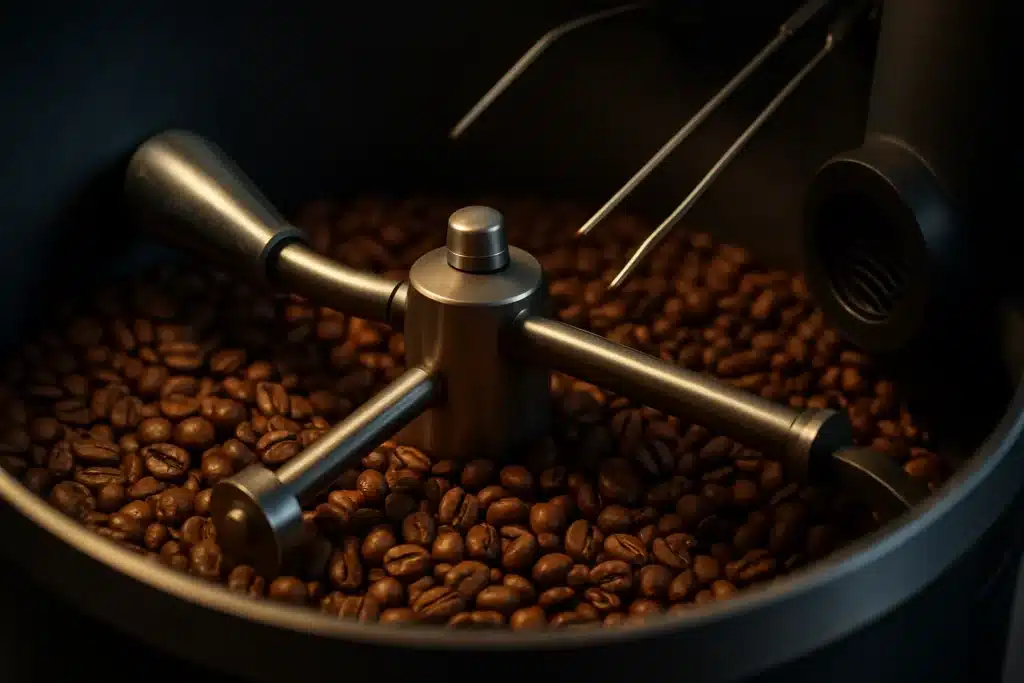
Ask any roaster about software, and you’ll hear familiar names: roast logging, curve replay, shared profiles, and QC tracking. The frontier is moving from mere logging to predictive control:
- Recipe replay: Start a batch, and the system adjusts power and airflow to keep your bean temp and RoR hugging a saved curve—even if ambient conditions shift.
- Anomaly detection: If the curve drifts or the first crack is late, the software flags it early so you can intervene.
- Batch-to-batch learning: Over time, the system suggests small changes—slightly higher preheat, a gentler soak—to align outcomes (color, loss, cupping scores) with your target.
- Integration with QC tools: Linking roast logs to colorimeter readings, moisture/loss data, and cupping notes builds a feedback loop that tightens your flavor window.
Is AI replacing roasters? Not even close. It’s more like a co-pilot that never blinks, leaving the human to choose the destination while the software trims the sails.
Colorimeters and Roast Degree: quantifying the endpoint
For years, Roast Degree lived in the language of “city+” and “full city.” Today, more roasters lean on objective color scales. Benchtop or handheld colorimeters measure ground coffee reflectance, producing a number that correlates with roast level. Tie that number to your cupping notes, and you get a map: “When this Brazilian sits at 64 ± 1 on our scale with 14–15% weight loss, we nail the peanut-butter brownie note.” That makes training easier and replication faster, especially across multiple facilities.
Small batches, fast cycles: roasting fresher, more often
The economics of roasting are shifting away from giant batches and long inventory cycles toward smaller, faster, fresher:
- Micro-batches reduce staling risk and let roasters tweak profiles per shipment.
- In-café roasting turns freshness into theater. Customers watch, smell, and buy hot items off the cooling tray.
- Dynamic blends: With better control, roasters can maintain a house flavor year-round by adjusting component percentages weekly without flavor whiplash.
Shorter time from roast to cup means brighter aromatics in your mug and less capital tied up in stored beans.
Green coffee intelligence: moisture, density, and the physics of heat
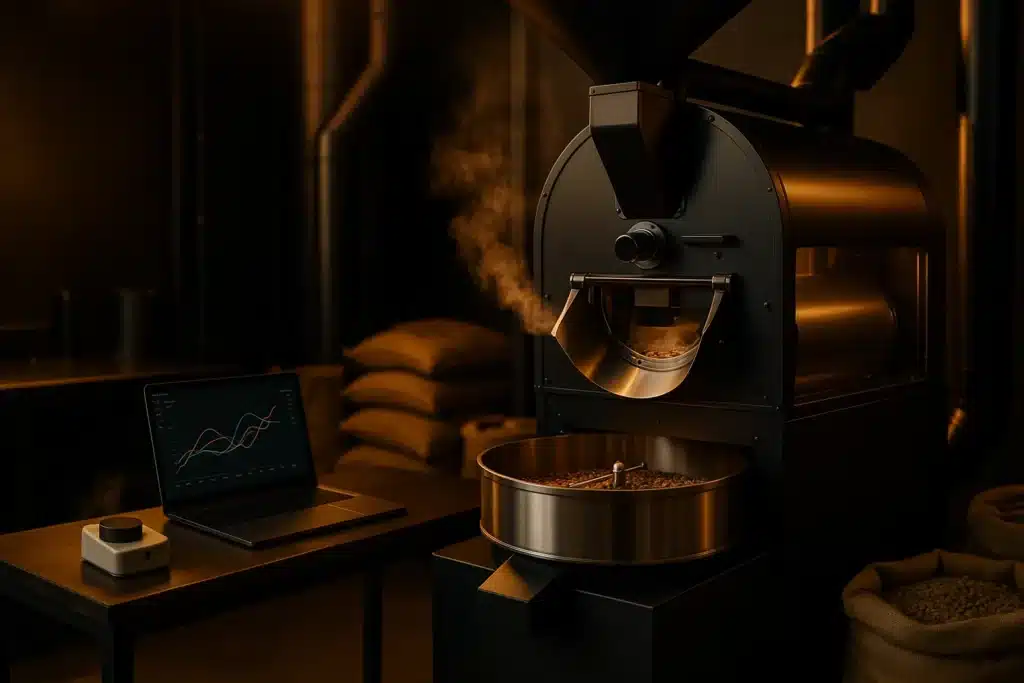
The best future-proofed roasters think about green coffee data before hitting “charge.” Moisture content, water activity (aw), and density shape how beans absorb heat. Denser, high-altitude beans absorb energy more slowly and can show sharp acidity if rushed; lower-density beans scorch if pushed too hard early. Modern workflows include the following:
- Moisture/aw meters when bags arrive.
- Preheat protocols matched to density and screen size.
- Charge temperature tables (e.g., “Kenya AA at 310 g/L density → charge at X, soak for Y seconds, then ramp”). ”)
That attention pays off in cup quality and fewer surprise defects.
Sustainability beyond smoke: carbon, energy, packaging, and logistics
Sustainability is broader than emissions. The next wave tackles the following:
- Energy dashboards track kWh/kg roasted, prompting maintenance when efficiency drops.
- Roast scheduling that groups similar profiles to reduce heat-up/cool-down waste.
- Lightweight, recyclable packaging with valves that actually work and laminates that don’t sabotage recycling.
- Local roasting near consumption to cut shipping emissions and preserve freshness.
The greener machines win not only the planet points but also the profit math: less energy in, fewer defects out, and faster turns.
Home roasting gets serious: countertop machines, app control, and safer venting
A decade ago, home roasting meant a heated popcorn popper or a brave drum on a camping stove. Now there’s an ecosystem of countertop roasters offering the following:
- App-controlled profiles with live graphs and repeat modes.
- Safer chaff management and cleaner exhaust.
- Electric or induction heat for apartments without gas.
- Community profile sharing so you can learn by doing, not by guessing.
It’s never been easier to roast a clean, even 200–800 g batch at home and actually repeat it next week. The barrier has shifted from tools to patience and palette.
What this all means for flavor: sweetness, clarity, and confidence
Technology doesn’t brew your cup; it just gives roasters better leverage. Here’s the flavor payoff you’ll actually taste:
- More sweetness and fewer “meh” cups thanks to better control through first crack and development.
- Cleaner aromatics due to optimized airflow and lower smoke recirculation.
- Less batch variation week to week, meaning your favorite notes stick around.
- Better espresso compatibility as profiles are tuned precisely for solubility, reducing “sour light” and “bitter dark” extremes.
In short: fewer surprises, more of what you love.
Will automation kill the craft?
The fear is understandable. But in practice, the curve-following and flag-raising are handled by software-free roasters to do their highest-value work: cupping, sourcing, blending, and deciding which flavors a coffee should express. The machine can keep a curve on target; only a human can taste a harvest and say, “Let’s go a touch longer in Maillard to turn that lime into sweet tangerine.” The future belongs to people who can listen to beans and read a graph.
How to future-proof your roastery (or your hobby)
You don’t need to rip out your drum to keep up. Start simple:
- Instrument what matters: Ensure BT/ET probes are accurate and well-placed. Calibrate regularly.
- Log everything: time, temps, airflow, gas/power settings, charge weight, color, loss %, and cupping notes.
- Build recipes, not myths: Use a profile as a starting point and refine by taste and data, not lore.
- Tighten airflow control: Variable fans give more flavor control than any single “secret trick.”
- Aim for clean exhaust: Even partial filtration improves cup quality and neighborhood relations.
- Train your palate: cup blind, often. Tech helps you execute—your palette tells you where to go.
- Plan maintenance: Bearings, seals, thermocouples, and fans drift. Preventive care keeps curves honest.
For home roasters, the advice is similar—plus, keep it fun. Roast small, cup everything, and keep a notebook. You’ll learn twice as fast.
Practical flavor levers you can feel in your mug
When a coffee tastes flat, roasters of the future fix it with intention:
- Push early energy to speed up drying and brighten fruit, but ensure a gentle transition into Maillard to avoid grassiness.
- Extend the Maillard by 15–30 seconds to deepen the sweetness and chocolate. Watch RoR dips to avoid baking.
- Shorten development slightly when citrus turns bitter; lengthen it if the finish is sour.
- Tune airflow: more airflow can lift smoke and sharpen clarity; less can boost body but risks smoky taint if chaff isn’t managed.
These knobs existed before; sensors and software just make them easier to hit reliably.
The café-roastery hybrid: fresher coffee, richer stories
One of the most exciting trends is café-integrated roasting. Picture a 2–5 kg roaster behind glass, running a few smart batches each morning. The head barista roasts the single origin they’ll feature that week, updates the profile by taste, and prints fresh labels. Customers see the process, smell the first crack, and walk out with beans roasted hours—not weeks—ago.
It’s a win for freshness and education. And because modern electric/filtered systems reduce the regulatory friction, more neighborhoods can host this kind of coffee theater.
Education and accessibility: the new on-ramps to excellence
Quality roasting used to require long apprenticeships. Now, shared profiles, virtual classes, and community-curated libraries let newcomers avoid common mistakes and focus on sensory learning. Paired with benchtop color meters and simple cupping protocols, a small team can reach professional-level consistency in a fraction of the time—provided they taste often and record everything.
What about green buying and seasonality?
While machines get smarter, the green coffee world is also evolving. Expect more lot transparency (variety, elevation, and processing details), seasonal calendars that guide roast strategy, and direct relationships that let roasters tweak profiles for specific farms year over year. In other words, better inputs mean better outputs, and future roasters will align their tech with the agronomy rather than force beans into one house profile.
The human factor isn’t optional (and never will be).
I like to think of tomorrow’s roaster as equal parts chef, engineer, and storyteller. The chef decides what delicious means. The engineer keeps the tools honest. The storyteller connects a profile to a place, a harvest, and a person. Technology, at its best, is the quiet sous-chef—laying out the ingredients perfectly so the chef can cook freely.
Best 5 Selections to Explore Roasting’s Future at Home
To taste where roasting is going, try modern home roasters that offer electric heat, profile control, and safer venting.
FreshRoast SR800 – A countertop fluid-bed roaster with variable fan and heat controls, great for learning airflow’s impact and repeating light-to-medium roasts confidently.

Who is this for?
This MAGO roasting chamber is perfect for coffee roasting enthusiasts using the FreshRoast SR800. Its transparent design offers a clear view of the roast, while improved airflow and cooling efficiency enhance control and consistency. Ideal for hobbyists and pros who demand precision and durability in small-batch home coffee roasting.KALDI Home Coffee Roaster (Motorized Drum)—A sturdy, drum-style unit for folks who want a classic conduction/convection feel with modern thermometry and repeatable batches.

Who is this for?
The KALDI WIDE Home Coffee Roaster is perfect for serious coffee enthusiasts who want full control over the roasting process. With stainless steel construction, a thermometer, and a rotating drum, it’s ideal for hobbyists and pros alike. Roast fresh green beans at home for ultimate flavor, freshness, and personalization.DYVEE Hand-Crank Drum Roaster (Stovetop) – A budget-conscious, tactile way to learn the basics of heat application and development, perfect for small experimental batches.

Who is this for?
The DYVEE Electric Coffee Roaster is for home roasters who want efficiency and precision. Featuring an integrated roasting and cooling system, this machine offers excellent heat control and even roasting for rich flavor. It’s perfect for hobbyists or small-batch coffee lovers who seek fresh, aromatic beans roasted their way.Nuvo Eco Ceramic Handy Roaster – Minimalist and hands-on; not a “smart” roaster, but fantastic for teaching your senses how heat and agitation shape flavor.

Who is this for?
The Nuvo Eco Ceramic Handy Roaster is perfect for beginners and enthusiasts who love the simplicity of stovetop roasting. Made from ceramic and cowhide, it offers an eco-friendly and traditional method of roasting small coffee batches. It’s compact, affordable, and ideal for home brewers seeking freshness and hands-on roasting.A home roasting playbook you can try this month
Week 1 – Learn your machine
Roast the same washed Colombia twice: once with higher airflow (or heat) early and once with lower. Cup them blind. Note brightness, sweetness, and finish.
Week 2 – Map development
Hold the shape of the curve, but change the development by ±20 seconds. Cup is blind again. Which cup tastes baked (dull) and which sings (sweet and clear)?
Week 3 – Profile replay
Pick your favorite roast and repeat it three times with recipe replay (or manual mimicry). Track color and weight loss. Aim for ±1 point color and ±0.3% loss.
Week 4 – Espresso tuning
Take your best profile and roast a slightly longer development variant for espresso. Pull shots at 1:2.2 and 1:2 ratios; taste clarity vs. chocolate.
By month’s end, you’ll have a personal map of how heat, airflow, and development paint flavor.
Troubleshooting the “future” roast with old-school wisdom
- If your light roast tastes grassy: You likely underpowered the drying phase or rushed into the crack. Add early energy and manage airflow so the core dries evenly.
- If sweetness disappears: Watch for RoR crashes around the first crack—keep energy gently declining, not plummeting.
- If smoke dulls the cup: Increase airflow near the crack or improve chaff removal/filtration. Smoke is a thief of nuance.
- If espresso is sour and thin: Either extend Maillard a touch or lengthen development 10–20 seconds; aim for more soluble sugars without tipping into flatness.
All the dashboards in the world won’t replace a careful nose and a clean palate. Trust your senses; use the numbers to confirm.
Where we go next: modularity, interoperability, and “flavor APIs.”
The horizon looks modular. Think of roasters as platforms: swap a fan module for more static pressure, clip in a better probe array, and upgrade your control board without scrapping the drum. Software will become more interoperable—roast curves, color data, and cupping notes moving between tools like a “flavor API.” This will help multi-site operations maintain a house profile, whether they’re roasting downtown or at a partner site three time zones away.
We’ll also see more carbon-accounting dashboards and energy-per-kg benchmarks built right into the UI, nudging users toward greener schedules and maintenance.
A personal note from the cooling tray
The first time I drove a “ghost profile”—letting the machine hold a target curve while I focused on aroma and crack timing—I was skeptical. It felt like autopilot in a plane. Then I cupped the results next to my fully manual roast: same sweetness, cleaner finish, and less batch-to-batch drift. The software didn’t make the roast better by itself; it made me better by freeing attention for the decisions only a human can make.
That, to me, is the future worth rooting for. Keep the art. Keep the stories. But give roasters tools that help them choose flavor on purpose and share it reliably with everyone who opens a bag.
The takeaway for drinkers and roasters alike
- Drinkers: Expect fresher, cleaner cups with fewer duds. Roast dates will matter even more as local roasting spreads. Try the same origin from two roasters and notice how their software-supported profiles express different facets—juicy vs. chocolatey—of the same bean.
- Home roasters: Small electric machines now deliver real control. Start with a simple washed origin, log everything, and your future will thank you for it.
- Pro roasters: If you haven’t already, invest first in measurement (accurate probes, color, moisture), then in control (variable airflow, stable heat), then in software that closes the loop between roast, QC, and cupping. The market is rewarding the roaster who can promise flavor and keep that promise at scale.
The romance of roasting—the crackle, the aroma swell, the moment the coffee seems to breathe—hasn’t changed. The future simply gives us steadier hands and clearer eyes. And that future tastes like more sweetness, more clarity, and more cups that make you stop mid-sentence and smile.


