
Gaggia Anima vs. Philips 3200 LatteGo


One Hundred Coffee is reader-supported, and some products displayed may earn us an affiliate commission. Details
Whenever I compare two bean-to-cup machines, I treat them like they’re moving into my kitchen for a week—not like they’re getting a five-minute showroom demo. That means I’m looking at the stuff you only notice on day 3… like whether the drip tray nags you constantly, whether the grinder wakes the whole house, and whether the “easy cleaning” milk system is actually easy when you’re half asleep.
Here’s the routine I follow:
1) Same beans, same water, same expectations.
I use the same medium roast beans for both machines, and I keep water consistent (same filter or same bottled water). That way, if one espresso tastes sharper, sweeter, or more bitter, I know it’s the machine’s brewing behavior—not a bean switch.
2) Dial-in isn’t one shot. It’s a mini process.
For super-automatics, “dial-in” is grind setting + aroma/strength + temperature + shot volume. I start from factory defaults, then do small changes: one grind click at a time, one strength step at a time. On machines like these, a tiny grind change can swing the flavor a lot.
3) I judge espresso by texture first and flavor second.
Texture tells the truth. If the crema is thin and the body feels watery, the rest usually follows. Once the texture is right, I chase flavor: sweetness, balance, and whether it keeps the pleasant notes without harsh bitterness.
4) Milk drinks are judged by foam quality and cleanup pain.
Cappuccino foam should feel dense and silky, not bubbly bath foam. Latte milk should feel smooth and integrated. Then I score cleanup: “Do I actually want to clean this every day?”
5) I track the annoying stuff.
Refilling frequency, noise, how often it asks for emptying, whether the menus feel logical, whether the spouts fit real mugs, and how forgiving the machine is when you’re rushing.
That’s the lens for everything below—not perfection on paper, but comfort in real life.
Gaggia Anima vs Philips 3200 LatteGo
Ten important buying factors scored side by side to determine whether Gaggia’s espresso-first simplicity and manual milk control or Philips’ one-touch LatteGo convenience is the better everyday bean-to-cup purchase.
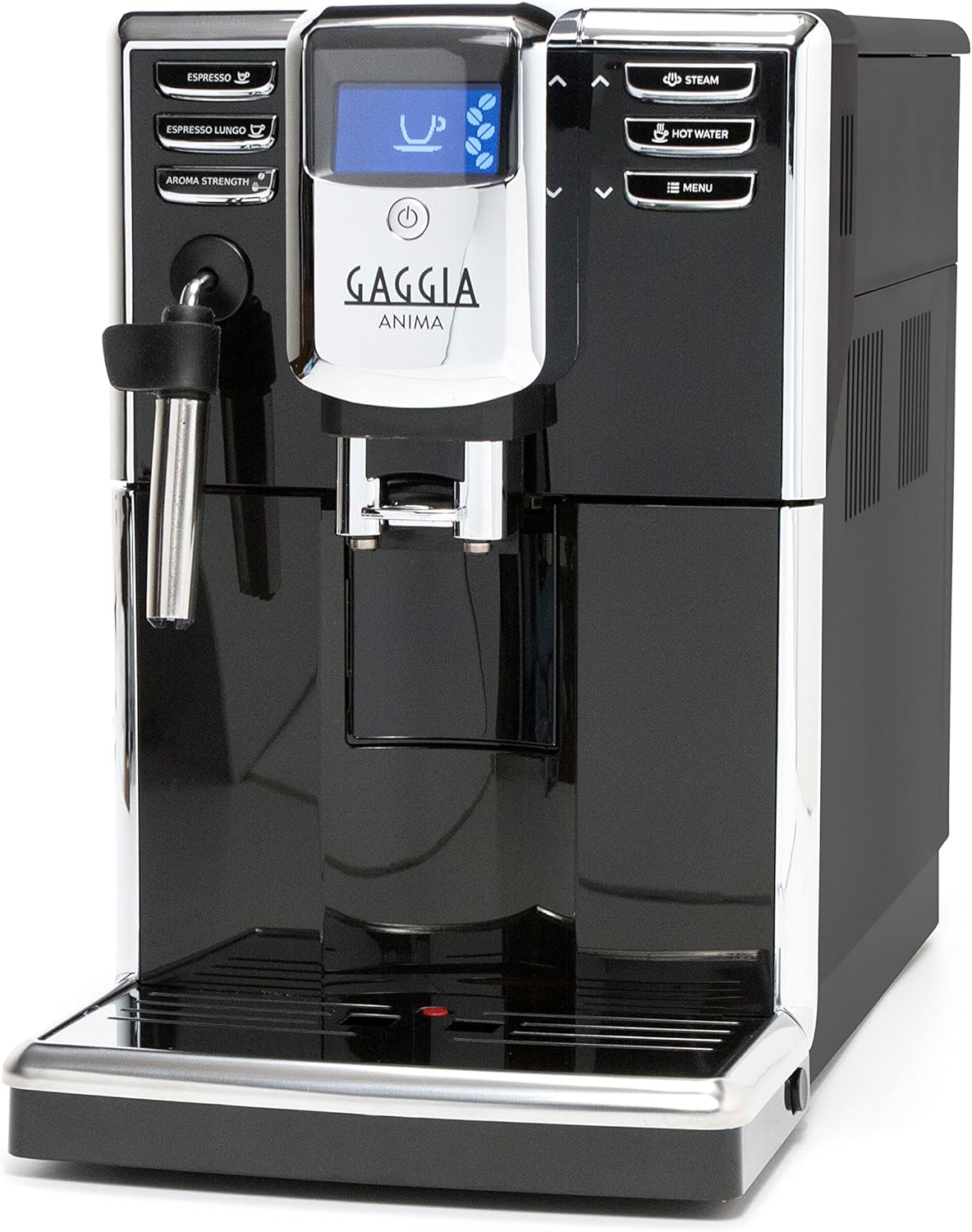
Gaggia Anima
out of 100
- Bold espresso-first flavor profile
- Manual steam-wand milk control
- Removable rinseable brew group
- Integrated ceramic burr grinder
- Simple traditional button workflow
10-Factor Buying Score
Each category scored out of 10 points
Anima
3200
Philips 3200 LatteGo Wins Overall
The Philips 3200 LatteGo earns the overall win because its advantages solve the biggest daily frustrations of super-automatic ownership. Latte and cappuccino preparation is genuinely one-touch, the LatteGo system rinses quickly without hidden milk tubes, the touch interface is easy for almost anyone to understand, and the AquaClean-supported maintenance approach helps keep ownership predictable.
Choose the Gaggia Anima instead when your coffee routine is mainly espresso, lungo or Americano and you enjoy having more control over milk texture. Its bold espresso personality, manual steam wand, removable brew group and straightforward controls make it a very satisfying machine for an espresso-first owner who does not need automatic milk drinks every morning.

Philips 3200 Series LatteGo EP3241/54
out of 100
- One-touch LatteGo milk drinks
- Fast two-part milk-system cleanup
- Integrated ceramic burr grinder
- Beginner-friendly touch interface
- AquaClean-supported maintenance workflow
These results are reported by our editors after 30 days of comparative testing and review, using our authentic editorial scoring process.
Overview
If you want the short vibe check:
- Gaggia Anima feels like a straightforward Italian espresso “button machine” with a more hands-on milk approach. It’s built around a removable brew group (very nice for regular rinsing), a ceramic grinder, and simple, no-drama controls.
Who is this for?
The Gaggia Anima is for coffee lovers who want fresh-ground, bean-to-cup espresso with minimal effort and reliable Italian flavor. It suits busy households, first-time super-automatic owners, and anyone upgrading from pods who still wants one-touch cappuccinos, programmable strength and volume, and easy daily cleaning. If you prefer consistency, quick heat-up, and simple buttons over manual tweaking, Anima fits beautifully. Great for compact kitchens and mixed tastes—espresso, lungo, or milk drinks—it makes weekday mornings smooth and hosting effortless. LEARN MORE- Philips 3200 LatteGo is the “press one button and get a milk drink” pick, with the LatteGo milk system and a modern touch interface. It’s also built around a ceramic grinder and is designed to keep maintenance simple, especially if you use the AquaClean system.
Who is this for?
The Philips 3200 LatteGo is for anyone who wants effortless bean-to-cup coffee with reliable results and almost no cleanup. It suits busy families, first-time espresso owners, and hosts who want one-touch cappuccinos or americanos without fiddling. If you value fresh-ground flavor, an intuitive touch panel, and a milk system that clicks apart and rinses in seconds, this is your lane. Great for small kitchens and shared tastes—from straight espresso to milk drinks—it delivers consistent crema, programmable strength/volume, and everyday convenience. LEARN MORESo the decision usually comes down to this:
- Want easy milk drinks + minimal fuss → Philips 3200 LatteGo
- Want simple espresso focus + manual steam wand control → Gaggia Anima
Which is better?
The honest answer: “Better” depends on your mornings.
Pick the Gaggia Anima if:
- You mainly drink espresso/lungo/Americano-style drinks
- You like manually steaming milk (or you’re willing to learn)
- You want a removable brew group you can rinse often (huge for long-term cleanliness)
- You prefer simpler controls over touchscreen menus
Pick the Philips 3200 LatteGo if:
- You want milk drinks at the touch of a button (LatteGo is the whole point)
- You want a more “guided” user experience
- You like the idea of filter-supported scale reduction (AquaClean ecosystem)
- Multiple people will use it, and you want fewer “How do I make a latte?” questions
Gaggia Anima vs Philips 3200 LatteGo (quick summary)
Gaggia Anima = espresso-first, simple, rinse-friendly, manual milk.
Philips 3200 LatteGo = convenience-first, one-touch milk drinks, easy daily flow.
| Key Feature | Gaggia Anima (RI8760) | Philips 3200 LatteGo |
|---|---|---|
| Machine or Grinder Image |
|
|
| Machine type | Fully automatic | Fully automatic |
| Pump pressure | 15 bar | 15 bar |
| Power consumption | 1400 W | 1500 W |
| Voltage | 120 V | 120 V |
| Frequency | 60 Hz | 60 Hz |
| Water tank capacity | 1.8 L | 1.8 L |
| Bean hopper capacity | 250 g | 275 g |
| Waste container capacity | 15 servings | 12 servings |
| Milk system | Classic pannarello | LatteGo |
| Milk carafe capacity | No carafe | 0.26 L |
| Drink menu count | 5 drinks | 5 drinks |
| Hot water function | One touch | Yes |
| Pre-ground option | Yes | Yes |
| Double cup | Yes | Yes |
| Milk double cup | No | No |
| Grinder type | Ceramic burr | Ceramic burr |
| Grinder settings | 5 steps | 12 steps |
| Aroma strength settings | 5 levels | 3 levels |
| Temperature settings | 3 levels | 3 levels |
| Pre-brew / pre-infusion | Yes | Yes |
| Display / UI | 2-color display | Touch display |
| User profiles | No | No |
| Adjustable spout height | 110–150 mm | 85–145 mm |
| Removable brew group | Yes | Yes |
| Auto rinsing | Yes | Yes |
| Guided descaling | Yes | Yes |
| Water filter support | Intenza+ optional | AquaClean |
| Dishwasher safe parts | Not specified | Drip tray, LatteGo |
| Product dimensions | 221×340×430 mm | 246×371×433 mm |
| Weight | 7.5 kg | 8 kg |
| Warranty | 24 months | 2-year |
| Price on Amazon | Price on Amazon | Price on Amazon |
Product deep dives (the “live with it” section)
- Gaggia Anima Super-Automatic Espresso Machine
- Philips 3200 LatteGo Fully Automatic Espresso Machine
Gaggia Anima

Gaggia Magenta Prestige
Magenta Prestige is for the person who wants café-style cappuccinos and lattes on repeat — without touching a steam wand. It’s a true bean-to-cup routine (grind → brew → milk) with a friendly interface, fast daily workflow, and that classic Gaggia “espresso-first” vibe under the hood.
- Automatic milk carafe: one-touch cappuccino/latte style drinks (no manual steaming).
- Bean-to-cup freshness: built-in grinder for fresh aroma and crema.
- Drink variety: espresso classics + milk-based favorites at a tap.
- Quick-clean logic: built for easy rinsing and guided maintenance.
- Customization: strength, volume, temperature presets for repeatable results.
- Pros: excellent milk convenience; fresh grinding; fast morning workflow; consistent drinks.
- Cons: milk carafe needs regular cleaning; not for manual espresso hobbyists.
- Milk drinks feel “real café” without needing practice.
- Buttons/touch controls make daily use genuinely easy.
- It’s a strong “family machine” — everyone gets their favorite quickly.
- If you want latte art control, you’ll miss a traditional steam wand.
- Like any milk machine, skipping cleaning is the fastest way to lose foam quality.
| Type | Super-automatic bean-to-cup |
| Grinder | Integrated grinder (fresh grind per cup) |
| Milk | Automatic milk carafe system |
| Controls | Touch/button interface (model UI dependent) |
| Use style | One-touch espresso + one-touch milk drinks |
| Best for | Milk-drink households |
| Grinder | Built-in |
| Milk steamer | Automatic milk system (carafe) |
| Portafilter | N/A (internal brew unit) |
| Heater | Automatic thermo control workflow |
| Water tank | Removable reservoir |
| Brewer | Automatic brew group |
Who is this for? Anyone who wants one-touch cappuccinos and lattes from fresh beans with minimal effort and a repeatable daily routine. Skip it if you want manual portafilter espresso and hands-on steaming. LEARN MORE
Gaggia Anima—what it’s like to own
The best way I can describe the Gaggia Anima is that it’s the machine you buy when you want espresso to be easy but you don’t want espresso to be soulless. It has that traditional Italian “press the button, get the shot” simplicity—and because it’s not trying to be a café menu with 17 icons, you spend less time navigating and more time drinking.
Morning flow is simple. You switch it on, it warms up, and it’s ready to do the espresso/lungo rhythm with minimal drama. That “no drama” part matters more than people think. Some machines feel like they demand attention: warnings, menus, rinse cycles that make you feel guilty, and extra steps just to get your first cup. With the Anima, the daily vibe is straightforward—you can make coffee before your brain fully loads.
Now let’s talk taste, because that’s the reason this thing exists. When you get the grind and strength settings into a sweet spot, the Anima produces espresso that leans bold and classic—not syrupy like a high-end dual boiler but absolutely satisfying in the way most people actually drink espresso at home: quick, rich, and forgiving. The crema can get nicely layered when your beans are fresh and your grind isn’t too coarse. What I like is that it doesn’t force one flavor style; you can push it darker and punchier or soften it a little by nudging dose/strength and volume.
One of the biggest practical wins is the removable brew group. In real life, this changes your relationship with the machine. Instead of wondering what’s growing inside the brew path, you can literally remove the brew unit, rinse it, and put it back—and that regular rinse habit is one of the simplest ways to keep a super-automatic tasting fresh over time. If you’re the type who hates mystery buildup (I am), this is calming.
Manual milk is both a drawback and a superpower. If you love one-touch lattes, yes—a manual steam wand will feel like work. But if you want more control, the wand becomes a feature, not a flaw. Here’s the truth: automatic milk systems make milk drinks easy, but they also lock you into “their” foam texture. A manual wand lets you chase the texture you personally like. The first couple of days are awkward, then it clicks: purge steam, position the tip, stretch a little air early, and then roll. Once you get that rolling vortex, you can make cappuccino foam that feels thick and creamy and latte milk that blends smoothly into espresso instead of sitting on top like bubbly fluff.
I also like that the animal doesn’t try to pretend it’s something it’s not. It’s not a pro steam wand like a dedicated prosumer machine—and it won’t magically turn you into a latte art champion overnight. But it will give you a route to better milk than many auto systems, as long as you’re willing to practice for a few minutes.
Noise and mess are “normal” for super-automatics. The ceramic grinder helps keep the sound more “crunchy” than “screechy,” and the machine feels stable on the counter. It’s not silent—no grinder is—but it’s not the kind of noise that makes you apologize to the house every morning. Expect the normal drip tray routine too: these machines rinse and purge, so you’ll empty water more often than you’d expect if you’ve only used drip coffee makers.
In a household setting, the Anima is best when the main drinker is espresso-focused. If multiple people want milk drinks constantly, the manual frothing becomes the bottleneck. But for one or two people who mostly drink espresso/long coffee and only steam milk sometimes, it’s honestly a satisfying rhythm. You can wake up, press a button, get your espresso, and get on with life—and that’s the whole point.
If you’re shopping with long-term ownership in mind, the Anima’s “rinseable” nature plus straightforward layout is a big confidence booster. It’s the kind of machine that encourages small habits that keep it running well: rinse the brew group, wipe the wand, and keep the tray clean—done.
Philips 3200 LatteGo

Philips 3200 LatteGo
The Philips 3200 LatteGo is the “busy mornings, clean kitchen” kind of bean-to-cup machine. You get one-touch espresso and milk drinks, plus a milk system that’s designed to be quick to rinse (so you actually keep using it). It’s a strong choice for homes that want cappuccinos and lattes without maintenance drama.
- LatteGo milk system: quick-attach milk frothing designed for fast rinsing.
- Intuitive touch display: easy drink selection without menu confusion.
- Bean-to-cup grinder: fresh grind and adjustable strength settings.
- Multiple drink presets: espresso + coffee + milk drinks at a tap.
- Filter workflow (AquaClean on many versions): helps reduce descaling frequency (model dependent).
- Pros: super easy milk cleanup; friendly UI; consistent daily drinks; great for shared households.
- Cons: not for manual espresso control; milk system still needs routine rinsing for best taste.
- LatteGo style milk cleanup feels genuinely “doable every day.”
- Touch interface keeps the machine approachable for everyone.
- Great “default home café” results without fussing.
- If you want very strong café-style espresso nuance, dialing beans/grind matters a lot.
- Drink customization is easy, but power users may want deeper profile control.
| Type | Super-automatic bean-to-cup |
| Grinder | Integrated ceramic grinder (series feature) |
| Milk | LatteGo automatic milk frothing system |
| Controls | Intuitive touch display (version dependent) |
| Use style | One-touch espresso + milk drinks |
| Best for | Fast, easy home lattes |
| Grinder | Built-in |
| Milk steamer | Automatic milk system (LatteGo) |
| Portafilter | N/A (internal brew unit) |
| Heater | Automatic thermo control workflow |
| Water tank | Removable reservoir |
| Brewer | Automatic brew group |
Who is this for? Anyone who wants easy one-touch lattes/cappuccinos with a milk system that’s quick to rinse—perfect for busy mornings and shared kitchens. Skip it if you want manual portafilter espresso and hands-on steaming. LEARN MORE
Philips 3200 LatteGo—what it’s like to own
The Philips 3200 LatteGo is the machine I point to when someone says, “I want café drinks… but I don’t want a new hobby.” It’s built around a very specific promise: you should be able to get a satisfying espresso or milk drink with minimal thinking, minimal mess, and minimal chance of messing it up.
And honestly? That’s exactly the vibe it delivers.
The biggest win is the milk routine. If you’ve ever owned a machine with a fussy milk tube, a hidden milk line, or a carafe system that feels like a science experiment to clean, you’ll immediately understand why LatteGo is loved. The system is designed around quick rinse-and-go behavior. You make your latte/cappuccino, rinse the parts, and you’re back to normal life. For daily milk drinkers, this changes everything because it removes the “ugh, I don’t want to clean that” barrier that stops people from using milk systems regularly.
Now, how does it taste? When you dial it in, the Philips tends to produce espresso that’s smooth and consistent—not wild, not temperamental, and not trying to be edgy. It’s a friendly profile that works especially well with medium roasts because it highlights sweetness and balance without demanding perfect technique. If you’re coming from capsule machines, it feels like a big upgrade in aroma and freshness because you’re grinding beans on demand. And because it’s a repeatable system, once you find your favorite settings, the machine becomes a reliable routine: you press the same button every morning, and your cup tastes like “your cup.”
The touch interface matters more than it sounds. When a machine is easy to navigate, you experiment more. You try a slightly stronger setting, a slightly smaller volume, and a different drink, and you actually learn what you like—without the machine making you feel like you’re entering cheat codes. Philips lists a touch display, 15-bar pump pressure, and the LatteGo milk system as core parts of the user experience, and you can feel that “made for normal people” design philosophy in daily use.
Capacity and household friendliness are strong. Philips lists a 1.8 L water tank and 275 g bean hopper on its Series 3200. In real terms, that means you’re not constantly refilling after every couple of drinks, which is exactly what you want if two people in the house both drink coffee. It also means it’s more “guest friendly.” When someone visits, you can ask what they want and press a button, and you’re not stuck steaming manually while trying to have a conversation.
Maintenance is where Philips quietly wins people over. The machine is designed to keep you in a simple routine: empty the drip tray, empty the puck container, rinse what needs rinsing, and keep going. If you choose to use the AquaClean filter ecosystem, Philips markets reduced descaling frequency when the filter replacement schedule is followed. (And yes, in the real world, water hardness still matters—but anything that reduces scale headaches is a quality-of-life win.)
Here’s the one thing I always say to set expectations: LatteGo makes milk drinks easy, but it doesn’t magically equal a café steam wand. The foam can be creamy and pleasant, but if you’re the type who obsesses over microfoam texture for latte art, you may find it “good and consistent” rather than “barista-level.” That’s not a failure—it’s a tradeoff. Philips is prioritizing speed, consistency, and easy cleanup, not the artisanal ritual.
So, who does the Philips 3200 LatteGo make the happiest? People who drink lattes and cappuccinos regularly, people who want the whole household to use the machine without confusion, and people who value a clean workflow more than manual tinkering. It’s the kind of machine that turns café drinks into something you do on autopilot—and for most homes, that’s the dream.
Final verdict (what I’d choose, depending on the person)
If I’m choosing for my own kitchen, I decide based on what my mornings look like:
- If I’m mostly espresso/long coffee and I enjoy the little ritual of steaming milk sometimes, I’d lean Gaggia Anima—it feels direct, classic, and rinse-friendly.
- If I’m making milk drinks often (or for multiple people) and I want “press button, get latte, clean fast,” the Philips 3200 LatteGo is the smarter daily companion.
My simplest rule:
- Espresso-first home → Gaggia Anima
- Milk-drink home → Philips 3200 LatteGo
FAQ
1) Which one is easier for a beginner?
Philips 3200 LatteGo. The one-touch milk drinks and touch interface make it hard to mess up, and the routine is very beginner-friendly.
2) Which makes better espresso?
Both can make satisfying espresso, but the Anima often feels more “espresso-first” in personality, while the Philips leans smoother and more convenience-tuned. If you like bold, classic shots, you may prefer Gaggia.
3) Which is better for cappuccinos and lattes?
Philips 3200 LatteGo, almost always, purely for workflow and consistency.
4) Do both machines use ceramic grinders?
Philips explicitly markets a 100% ceramic grinder, and the Gaggia Anima platform is also widely sold with ceramic burrs.
5) Do I need to descale often?
It depends on your water. Philips promotes reduced descaling frequency when using AquaClean as recommended.
6) If I only drink espresso, is LatteGo wasted?
Not “wasted,” but it’s like buying a great SUV and never using the back seats. If you’ll rarely use milk drinks, the Anima’s simplicity might feel more satisfying.
7) Can I use kidney beans in these?
Both are happier with medium-roast beans that aren’t super oily. Very oily beans can cause clumping and extra residue in grinders over time.
8) What if I want latte art?
Manual steaming (Gaggia) gives you a higher ceiling if you practice. LatteGo gives you consistency but less “art” control.


