
Best Farberware Coffee Makers (2026 Guide)


One Hundred Coffee is reader-supported, and some products displayed may earn us an affiliate commission. Details
Farberware coffee makers occupy a slightly unusual place in home brewing. The brand is strongly associated with stainless-steel percolators, yet the coffee lineup reaches beyond one brewing style. That makes this comparison less about choosing the machine with the longest feature list and more about deciding how you actually want water and coffee to meet. An electric percolator automates heat and keeps a full pot ready. A stovetop percolator gives you direct control over the burner and works without an outlet. A compact electric model limits waste when one or two people are drinking. The French press moves in a different direction altogether, using immersion rather than repeated circulation to build body and aroma.
I find that distinction more useful than treating every Farberware brewer as a variation of the same appliance. The 12-cup FCP412 makes sense when the kitchen routinely needs a generous pot and the owner values plug-in simplicity. The Yosemite is almost the opposite: no cord, no automatic cycle, and no need for an electrical outlet, which gives it a practical advantage on a stovetop or away from a normal kitchen. The compact 4-cup electric model keeps the familiar percolator character but trims the batch size. The 8-cup French press is for someone who wants to control steep time and prefers the richer texture of immersion coffee. If you are also comparing coffee makers designed around modern convenience, those workflow differences matter more than a brand name on the front.
The strongest choice therefore depends on what kind of morning you are trying to simplify. A household filling travel mugs before work has different priorities from a couple brewing one concentrated pot at breakfast. Someone who enjoys watching a stovetop brewer work may actively prefer Yosemite’s manual pace, while another person may see the same requirement as unnecessary attention. The French press introduces an equally important divide because it asks you to grind coarsely, time the immersion, and plunge rather than letting electricity or a burner manage the brew cycle.
This updated guide keeps the decision practical. I compare capacity, heat source, cleanup, serving style, counter-space demands, and the kind of cup each brewer naturally favors. I also separate the electric and stovetop percolators instead of blurring them together, and I treat the French press as its own brewing method rather than pretending it behaves like a percolator. The goal is to help you choose the Farberware coffee maker that fits your routine, not simply the one with the biggest number on the box.
Top 3 Farberware Coffee Makers — Editor’s Picks
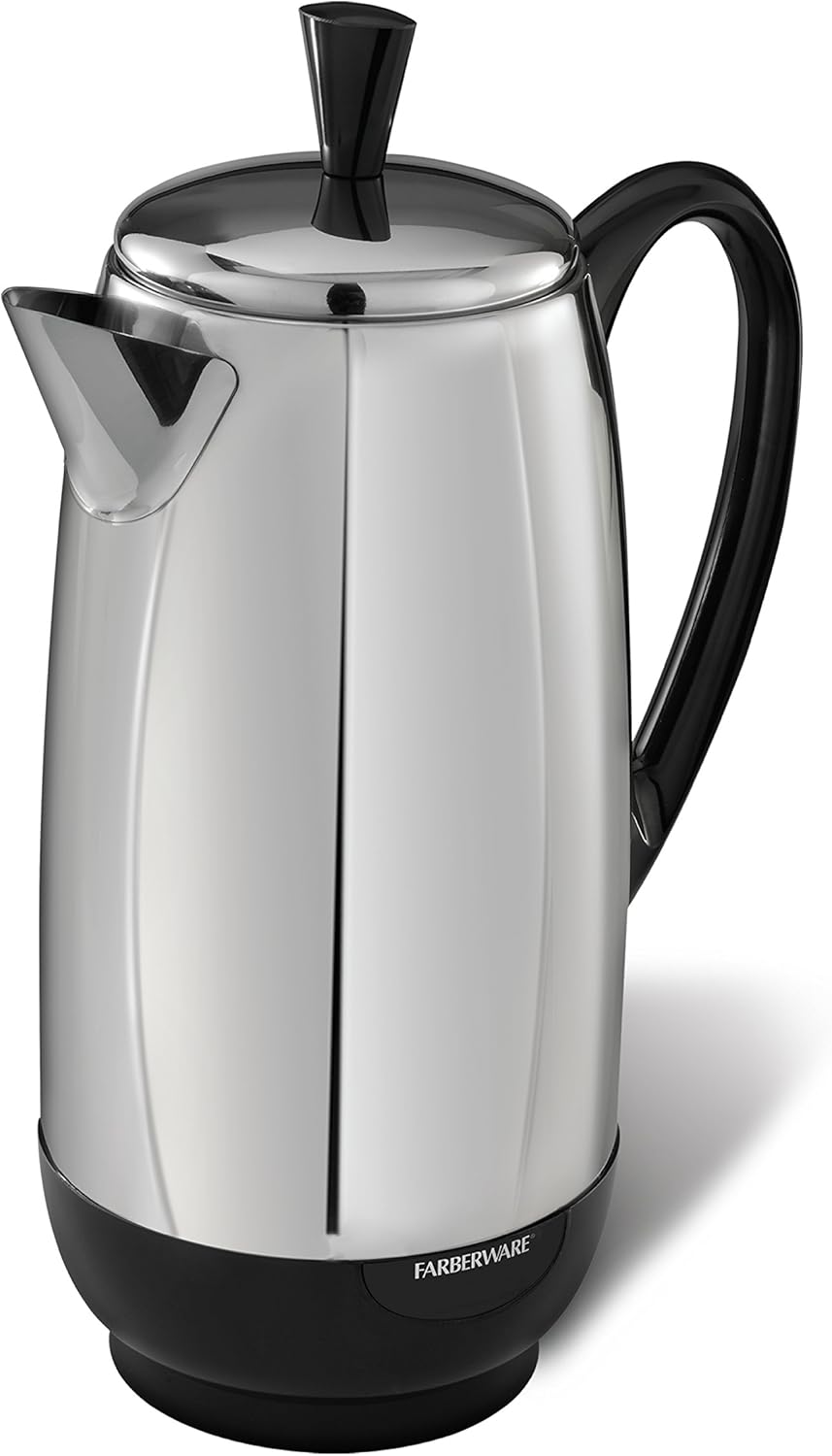
Farberware FCP412 12-Cup Electric Percolator
- 4-to-12-cup flexibility
- Automatic electric brewing
- Stainless-steel body
- Automatic keep-warm
- Detachable serving cord

Farberware Classic Yosemite 8-Cup Percolator
- Stovetop brewing
- 8-cup capacity
- Heavy-duty stainless steel
- Permanent filter basket
- Clear top knob

Farberware 8-Cup French Press
- Immersion brewing
- 8-cup capacity
- Borosilicate glass
- Reusable metal filter
- No electricity required
Three different brewing personalities show up immediately in those top picks. The FCP412 is the easiest recommendation for people who already know they like percolated coffee and want a larger electric pot. The Yosemite appeals to the same flavor preference but changes the ownership experience because heat comes from the stove rather than an internal element. The French press is the outlier, and that is exactly why it deserves a place here: it gives Farberware buyers a manual route that emphasizes steep time and mouthfeel instead of the characteristic circulation of a percolator.
The smaller 4-cup electric percolator deserves attention even though it misses the top-three card row. Large-capacity machines can be wasteful when one person only wants a mug or two, and a full 12-cup body can occupy more counter and cabinet room than a small kitchen needs. The compact Farberware keeps the electric percolator idea but makes it more realistic for solo drinkers, couples, offices with light use, or a second coffee station.
One point is worth keeping in mind before comparing any of these models: the word “cup” on coffee equipment rarely corresponds to the oversized mug many people use at home. Think in terms of brewer capacity first, then translate that into your normal serving size. A 12-cup percolator is a genuinely larger batch brewer; a 4-cup model is intentionally small; and an 8-cup French press still behaves more like a shared manual pot than a single-serve device.
Farberware Coffee Makers at a Glance
Farberware FCP412 12-Cup Electric Percolator
- Electric percolator
- 4–12 cup range
- Automatic keep-warm
- Stainless body
- Detachable cord
- Large-batch focus
Farberware Classic Yosemite 8-Cup Percolator
- Stovetop percolator
- 8-cup capacity
- Permanent basket
- Stainless body
- Visible top knob
- No outlet needed
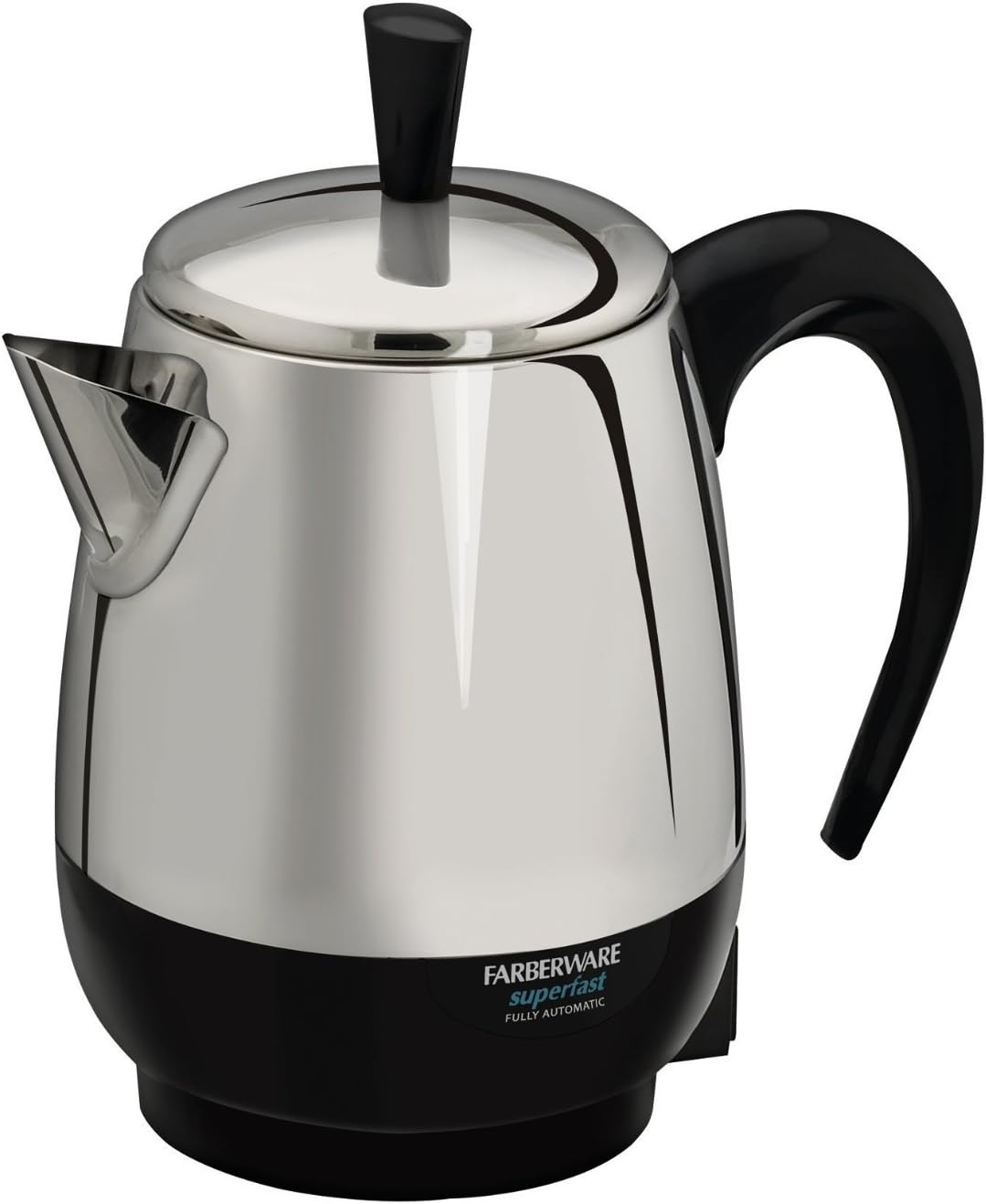
Farberware 4-Cup Electric Percolator
- Compact electric pot
- 4-cup capacity
- 1000-watt platform
- Reusable basket
- Small footprint
- One-to-two-person fit
Farberware 8-Cup French Press
- Manual immersion
- 8-cup capacity
- Borosilicate glass
- Stainless filter
- Steep-time control
- No electricity needed
Quick Ranking: Best Farberware Coffee Makers
| Model | Type | Best For | Main Advantage | Amazon |
|---|---|---|---|---|
| FCP412 12-Cup Electric Percolator | Electric | Best Overall | Large batch with automatic heat | Price on Amazon |
| Classic Yosemite 8-Cup | Stovetop | Best Stovetop | Outlet-free traditional brewing | Price on Amazon |
| 4-Cup Electric Percolator | Electric | Best Compact | Small batch and footprint | Price on Amazon |
| 8-Cup French Press | Manual | Best Manual | Immersion control and body | Price on Amazon |
Detailed Reviews: Best Farberware Coffee Makers
1. Best Overall: Farberware FCP412 12-Cup Electric Percolator
The FCP412 is the Farberware model that makes the strongest case for keeping a percolator on a modern kitchen counter. It does not try to imitate a programmable drip machine or hide the character of percolated coffee behind multiple digital modes. Instead, it takes the old-school circulation method and removes the most demanding part of stovetop ownership: managing the heat source. Fill the pot within its working range, load the basket, and connect the cord, and the appliance handles the active heating cycle before moving into keep-warm mode.
That simplicity changes how often a large percolator can realistically fit into a busy morning. A stovetop brewer asks you to stay aware of burner intensity and timing. The FCP412 turns the process into an appliance routine, which is especially useful when breakfast already involves several competing tasks. The 4-to-12-cup range also gives it more flexibility than the model name first suggests. You do not have to prepare a completely full pot every time, yet the upper capacity remains available for a family breakfast, an office corner, or a table where several people want refills.
The flavor profile remains distinctly percolator-like. Water repeatedly moves through the coffee bed, so the cup tends toward boldness, heat, and a heavier roasted impression than a paper-filter drip brewer. That style can be satisfying with medium-dark and dark roasts, particularly when milk or sugar is part of the drink. It also means grind choice matters: overly fine coffee can make the cup harsher and increase sediment, while a coarser, even grind gives the basket a better chance to work cleanly.
Serving is another area where the design earns its place. A detachable cord means the brewer can move from the outlet to the table without dragging a cable behind it. That sounds minor until you compare it with an appliance that must remain tethered to the wall while people line up for refills. The stainless body also sits naturally beside other metal kitchen appliances, while the keep-warm function supports a slower breakfast better than a manual pot that begins cooling as soon as it leaves the stove.
A large electric percolator for households that want traditional bold coffee without managing a stovetop burner
Farberware FCP412 12-Cup Electric PercolatorThe FCP412 combines a 4-to-12-cup brewing range with stainless-steel construction, automatic electric operation, keep-warm convenience, and a detachable serving cord. It is the most natural all-around Farberware choice when percolated coffee is the goal and several cups may be needed from one brew.
Price on AmazonTechnical Specifications & Daily Features
- Brewer type: Electric coffee percolator
- Capacity range: 4 to 12 cups
- Body: Stainless steel
- Heat management: Automatic electric brewing
- After brewing: Automatic keep-warm
- Serving: Detachable power cord
- Filter format: Reusable percolator basket
- Best fit: Families, offices, entertaining, and larger daily batches
Pros & Cons
Pros
- Large but flexible batch range
- Automatic heat management
- Keep-warm convenience
- Cord detaches for easier serving
Cons
- Large body is unnecessary for light use
- Less extraction control than immersion brewing
- Best results still depend on suitable grind size
Daily Workflow & Final Verdict
The FCP412 works best when you value repeatability over experimentation. Measure water, add coffee to the basket, assemble the stem and lid correctly, and let the electric cycle handle the heat. Once brewing finishes, the pot can remain warm for refills without returning to a burner.
I would choose it for a household that already enjoys the assertive character of percolated coffee and wants a dependable large-capacity appliance. I would skip it if most days involve one mug, highly delicate light-roast coffee, or a strong preference for precise manual extraction.
For a large-capacity Farberware purchase, this is the model I would put first because its compromises are easy to understand. You give up the control of a French press and the outlet-free freedom of the Yosemite, but you gain a straightforward appliance routine that can produce a full pot and keep it ready.
The main reason to move away from it is not quality but fit. If two people rarely finish more than a few cups, the 4-cup model is easier to justify. If brewing away from an outlet is important, the Yosemite is more adaptable. The FCP412 earns its place when capacity and convenience are both genuine daily needs.
2. Best Stovetop: Farberware Classic Yosemite 8-Cup Percolator
The Yosemite changes the pace of brewing because it removes electricity from the machine itself. That gives the pot a more direct relationship with the kitchen: the burner becomes the control system, the clear top knob becomes the visual cue, and the person brewing decides when the coffee has circulated long enough. For anyone who likes simple cookware more than countertop appliances, that arrangement can feel refreshingly durable and understandable.
Its 8-cup capacity also places it in a useful middle ground. It is large enough for a shared breakfast but not as oversized as a 12-cup electric pot. The heavy-duty stainless body is suited to repeated heating, and the permanent basket means paper filters are not part of the normal routine. Because the brewer is fully stovetop-dependent, though, it rewards a little attention. Excessive heat can push extraction too hard, while gentler control after the first visible perk can help keep the cup from becoming unnecessarily bitter.
Portability is where the Yosemite becomes more than a nostalgic kitchen piece. A stovetop percolator can move to a cabin, an RV setup, or another place where a normal electric coffee maker is inconvenient. That does not mean it should be romanticized as indestructible camping equipment; it simply has fewer electrical dependencies. At home, the same quality is useful when counter outlets are crowded or when you would rather store the brewer in a cabinet and use the range only when coffee is needed.
The visible top knob contributes to the experience without adding a digital interface. You can watch the color of the circulating liquid and use that cue alongside time and aroma. For some owners, that involvement is exactly the point. For others, it is a reminder that a stovetop brewer is not as automatic as plugging in the FCP412. The Yosemite is best when you see active heat control as part of brewing rather than as a chore.
A straightforward stainless stovetop percolator for people who value burner control, portability, and a permanent filter basket
Farberware Classic Yosemite 8-Cup PercolatorThe Yosemite is an 8-cup stovetop percolator built around heavy-duty stainless steel, a permanent coffee basket, and a clear top knob. It requires more attention than an electric model but needs no outlet and gives the brewer direct control over the heat source.
Price on AmazonTechnical Specifications & Daily Features
- Brewer type: Stovetop coffee percolator
- Capacity: 8 cups
- Construction: Heavy-duty stainless steel
- Filter: Permanent reusable basket
- Brew cue: Clear top knob
- Power: External stovetop heat
- Paper filters: Not required for normal use
- Best fit: Stovetop traditionalists, cabins, RVs, and portable setups
Pros & Cons
Pros
- No electrical connection required
- Simple reusable brewing hardware
- Useful medium-size capacity
- Clear knob makes percolation visible
Cons
- Requires active heat management
- Easier to over-extract if left too hot
- No automatic keep-warm cycle
Daily Workflow & Final Verdict
Set the pot over the burner, bring the water into active percolation, then reduce the heat enough to maintain a controlled cycle rather than an aggressive boil. The process is simple, but it rewards staying nearby and learning how your stove behaves.
The Yosemite is the Farberware I would choose when the brewer should feel more like durable cookware than an appliance. It is less convenient than the FCP412 for busy mornings but more flexible when an outlet is unavailable or when manual heat control is part of the appeal.
The Yosemite is also the better teaching tool of the two larger percolators. Because you control the burner, changes in heat are easier to connect with changes in the cup. That can help you understand why percolated coffee sometimes turns harsh and how a calmer cycle can improve balance.
I would not choose it merely because it looks traditional. Its real advantage is independence from an internal heating element. If that does not matter and convenience matters more, the FCP412 is the easier everyday machine.
3. Best Compact: Farberware 4-Cup Electric Percolator
Small coffee makers are often judged as reduced versions of larger machines, but the 4-cup Farberware deserves a different lens. Its main benefit is that the brewer is proportioned for modest demand. A person who drinks one large mug, a couple splitting a morning pot, or a desk-side coffee station does not need the reservoir, storage height, or leftover volume of a 12-cup machine. The smaller pot can therefore be the more sensible appliance even when both models use the same general percolator method.
The 1000-watt electric platform gives the compact model a direct, appliance-like routine. There is no burner to manage and no separate kettle to heat. That makes it attractive in spaces where a full drip machine feels oversized but a pod brewer is not desirable. You still use ground coffee and a reusable basket, so the experience remains closer to traditional coffee preparation than inserting a capsule.
Capacity, however, should be understood realistically. Four coffee-maker cups do not equal four oversized café mugs. If two people drink large travel cups, the small percolator can feel undersized quickly. Its strength appears when the batch is intentionally limited, not when it is forced to serve a crowd. That is why I see this model as a right-sized brewer rather than a miniature entertaining machine.
The cup character remains bold because the brewing mechanism is still percolation. The smaller volume does not turn it into a delicate brewer. A reasonably coarse, even grind remains important, and loading the basket too aggressively can work against the cleaner cup that a small brewer should make easy to achieve. The best ownership pattern is simple: brew only what you intend to drink, rinse the basket soon after serving, and keep the compact pot ready for the next small batch.
A compact electric percolator for one or two coffee drinkers who want bold coffee without storing or filling a large pot
Farberware 4-Cup Electric PercolatorThis 4-cup model keeps the electric percolator format in a much smaller footprint. Its 1000-watt platform and reusable basket suit light daily demand, small kitchens, offices, or households where a 12-cup pot would routinely leave coffee behind.
Price on AmazonTechnical Specifications & Daily Features
- Brewer type: Compact electric percolator
- Capacity: 4 cups
- Power: 1000-watt platform
- Body: Stainless-steel format
- Filter: Reusable percolator basket
- Ground coffee: Required
- Best fit: Singles, couples, small counters, or light office use
- Main tradeoff: Limited batch size
Pros & Cons
Pros
- Small footprint
- Electric convenience
- Less leftover coffee for light users
- No disposable pods required
Cons
- Too small for gatherings
- Percolator flavor is still relatively bold
- Limited capacity for large travel mugs
Daily Workflow & Final Verdict
The compact model is easiest to appreciate when it replaces an oversized brewer. A short fill, measured grounds, and the electric cycle produce enough coffee for a modest routine without creating a half-pot that sits cooling or gets discarded.
I would choose it for one or two people who specifically enjoy percolator coffee. If the household often serves guests or refills several mugs, the FCP412 is the more sensible long-term size.
This is also the model I would consider for a secondary coffee location: a home office, a small guest area, or a workspace where a full kitchen machine would be excessive. Its value comes from keeping the workflow conventional while shrinking the physical commitment.
The limitation is equally clear. Small capacity cannot be fixed with clever technique. If you repeatedly brew one batch and immediately start another, you have already outgrown the reason to buy the compact model.
4. Best Manual: Farberware 8-Cup French Press
The French press belongs in this Farberware guide because it answers a different question from the three percolators. Instead of asking how much automation you want around repeated water circulation, it asks how much control you want over immersion. Coffee and water stay together for the full steep, the metal filter separates the grounds at the end, and the brewer never needs an electrical element or a stove beneath it. You do need a separate way to heat water, but once that water is ready, the press itself is mechanically simple.
Its borosilicate glass body also changes the ownership experience. The brewing process remains visible from the first pour through the final plunge, which can be helpful when learning how the coffee bed behaves. Glass does not offer the drop resistance of an all-stainless percolator, so storage and handling deserve more care. In return, you get a lighter visual presence on the counter and a clearer view of the immersion process.
The 8-cup capacity makes the press suitable for more than a single small mug, yet the real draw is extraction flexibility. Grind coarser or finer within a sensible French-press range, adjust steep time, change the coffee-to-water ratio, and alter water temperature to suit the roast. Those variables can be more useful with lighter or more aromatic coffees than the relatively fixed behavior of an electric percolator.
Texture is the other major difference. A reusable metal filter allows more coffee oils and fine particles into the cup than a paper filter, so French press coffee generally feels fuller and more substantial. That does not mean it should be gritty. A consistent coarse grind, a patient plunge, and pouring the brewed coffee rather than leaving it sitting on the grounds all help keep the cup cleaner. For a buyer who enjoys participating in brewing, that small amount of technique is part of the appeal rather than a disadvantage.
The Farberware choice for drinkers who prefer visible immersion brewing, manual steep control, and a full-bodied metal-filtered cup
Farberware 8-Cup French PressThe Farberware French press uses heat-resistant borosilicate glass, stainless-steel brewing components, a reusable filter, and an 8-cup capacity. It is the least appliance-like option in this comparison and gives the brewer the most direct influence over steep time and coffee-to-water ratio.
Price on AmazonTechnical Specifications & Daily Features
- Brewer type: Manual French press
- Capacity: 8 cups
- Carafe: Heat-resistant borosilicate glass
- Filter: Reusable stainless-steel press assembly
- Heating: Separate kettle or hot-water source required
- Control: User sets ratio, water temperature, grind, and steep time
- Cleaning: Grounds must be removed from the carafe and filter
- Best fit: Manual brewers who value body and extraction control
Pros & Cons
Pros
- Highest manual extraction control here
- No electrical brewing hardware
- Full-bodied cup from metal filtration
- Transparent carafe shows the brew
Cons
- Requires a separate hot-water source
- Glass needs more careful handling
- Grounds cleanup is more hands-on
Daily Workflow & Final Verdict
Heat water separately, add coarsely ground coffee, pour, saturate evenly, allow the immersion to develop, then plunge slowly. Pour the brewed coffee soon after pressing so extraction does not continue against the grounds.
I would choose the French press for a drinker who sees brewing as a short manual ritual and wants more freedom than a percolator provides. It is less suitable when automatic heat, built-in keep-warm, or quick large-batch service is the priority.
This model also makes the most sense when the beans themselves are the focus. Because you can change temperature and immersion time without changing hardware, it is easier to adapt the recipe as you move between darker, medium, and lighter roasts. That versatility is different from convenience, but for the right coffee drinker it is more valuable.
The tradeoff is that every cup asks for a little more participation. You need hot water from another device, you need to time the brew, and you need to dispose of wet grounds. If that sounds enjoyable, the French press is the most expressive Farberware brewer in the group. If it sounds like unnecessary work before breakfast, an electric percolator is the better match.
How to Choose the Right Farberware Coffee Maker
Choose the Brewing Method Before the Capacity
Capacity is easy to compare, but the brewing method changes the cup more. The three percolators circulate hot water repeatedly through the coffee bed, producing the bold, very hot style associated with percolated coffee. The French press immerses the grounds and then filters them at the end, which gives you more control over steeping and usually preserves more oils in the cup.
If you dislike percolated coffee, a larger or smaller percolator will not solve that preference. Start by deciding whether you want circulation or immersion, then choose the size and heat source. That order prevents a common mistake: buying the right capacity in the wrong brewing format.
Electric Convenience Versus Stovetop Control
Electric percolators are easier when you want a defined appliance routine. The brewer manages heat internally and can offer automatic warming after the brew. That is useful when coffee preparation happens alongside breakfast, packing lunches, or getting several people out the door.
A stovetop percolator removes the electrical dependency but transfers heat control to you. The Yosemite, therefore, suits people who appreciate direct burner control or need flexibility away from a countertop outlet. The electric models fit mornings when attention is already divided and repeatability matters more than hands-on control.
Match Batch Size to What You Actually Drink
A 12-cup brewer is useful only when the household benefits from the capacity. If most of the pot is discarded, the larger machine creates more water use, more coffee use, and more countertop volume than necessary. The 4-cup percolator is a better proportional choice for light daily demand.
The 8-cup Yosemite and 8-cup French presses sit between those extremes, but their brewing methods remain very different. Capacity should narrow the field after you decide how you want to brew, not before.
Think About Serving, Not Just Brewing
Serving several people favors the FCP412 because the detachable cord lets the pot move more cleanly to a table and the keep-warm function supports refills. A stovetop pot can also serve a group, but it does not automatically maintain temperature once removed from heat.
French press coffee is better treated as a defined serving moment. Once the coffee is plunged, pouring it relatively soon helps prevent continued contact with the settled grounds. That makes the press appealing for a deliberate breakfast or coffee break rather than for leaving coffee in the brewer through a long morning.
Grind Size Changes More Than Most Features
All four brewers benefit from an even grind, but they respond differently to fineness. Percolators generally perform better with coffee coarse enough to stay in the basket while water circulates freely. French press also favors a relatively coarse grind, though the reason is different: the filter must separate the grounds cleanly after immersion.
A grinder that creates a wide spread of powder and large fragments can make either method harder to control. Before blaming the brewer for bitterness or sediment, make sure grind consistency is not the larger problem.
Plan the Cleaning Routine Before You Buy
Percolators require the basket, stem, lid, and pot interior to be cleaned so coffee oils do not build up. The French press requires removing wet grounds from the carafe and periodically disassembling the filter plates. Neither format is especially complicated, but the mess appears in different places.
The easiest brewer to own is the one whose cleanup fits your habits. Someone who dislikes scooping wet grounds may prefer a percolator basket; someone who dislikes assembling a stem and basket may find the French press more intuitive.
Do Not Confuse Keep-Warm With Better Flavor
A warm pot is convenient, especially when several people drink at different times. It does not mean coffee improves by sitting. Extended heat can flatten aromatics and deepen bitterness over time, regardless of brewing method.
Use the FCP412’s keep-warm function as a service convenience rather than a reason to brew far more coffee than the household will drink. The best batch size is still the one that will be enjoyed while the coffee tastes fresh.
Final Comparison: Farberware Coffee Makers
| Model | Capacity | Heat Source | Best Ownership Fit | Amazon |
|---|---|---|---|---|
| FCP412 12-Cup Electric Percolator | 4–12 cups | Electric | Large batches with automatic brewing and warming | Price on Amazon |
| Classic Yosemite 8-Cup | 8 cups | Stovetop | Manual heat control and outlet-free brewing | Price on Amazon |
| 4-Cup Electric Percolator | 4 cups | Electric | Small households and compact coffee stations | Price on Amazon |
| 8-Cup French Press | 8 cups | Manual hot water | Immersion control and full-bodied coffee | Price on Amazon |
My Final Recommendation
For the broadest mix of capacity, convenience, and traditional Farberware character, I would choose the FCP412 12-Cup Electric Percolator. It is the easiest model here to integrate into a busy household that already enjoys bold percolated coffee, and the ability to brew below the full 12-cup capacity makes it more flexible than a single large-batch number suggests.
The Yosemite is the better purchase when the burner is part of the appeal or when you want a brewer that is not tied to an electrical outlet. The 4-cup electric percolator makes more sense for one or two people who would rarely use a larger pot efficiently. The French press is the strongest alternative when brewing control and immersion texture matter more than automatic heat.
I would not choose among them by appearance alone. Each brewer asks for a different kind of participation. Match the method to your routine first, then let capacity, storage space, and serving style settle the final choice.
Frequently Asked Questions
Which Farberware coffee maker is best overall?
The FCP412 12-Cup Electric Percolator is the most balanced all-around choice for people who already enjoy percolated coffee. It combines a flexible 4-to-12-cup range with automatic electric brewing, keep-warm convenience, and a detachable serving cord.
Is the Farberware Yosemite electric?
The Yosemite model in this comparison is a stovetop percolator. It depends on an external burner rather than an internal electrical heating element, which makes it more portable but also requires you to manage the heat.
How many cups does the Yosemite percolator make?
The B00005NCWQ Yosemite model used in this article is the 8-cup version. That places it between the compact 4-cup electric percolator and the larger FCP412 in practical batch size.
Is the Farberware B0B3SL9J5H a French press?
Yes. B0B3SL9J5H is an 8-cup Farberware French press built around a heat-resistant borosilicate glass carafe and reusable press filtration. It should not be confused with a measuring cup.
Which Farberware brewer is best for one or two people?
The 4-cup electric percolator is the most practical percolator choice for light demand. It keeps the electric workflow but avoids the storage and leftover coffee that can come with a 12-cup pot.
Does a French press make the same kind of coffee as a percolator?
No. A French press uses immersion, keeping coffee and water together before plunging a filter through the brew. A percolator repeatedly circulates hot water through a coffee basket. The methods create different textures, extraction behaviors, and workflows.
What grind size works best for a percolator?
A moderately coarse, even grind is a sensible starting point because it helps water move through the basket while reducing the amount of fine coffee that can pass into the pot. Exact adjustment still depends on the grinder, roast, and desired strength.
Should I buy a stovetop or electric Farberware percolator?
Choose electric when automatic heat management and keep-warm convenience are priorities. Choose a stovetop when you want direct burner control, fewer electrical dependencies, or a brewer that can move more easily between home and portable cooking setups.
Can I leave coffee in the FCP412 to keep warm all morning?
The keep-warm function is useful for refills, but coffee flavor generally declines when it sits hot for an extended period. Brewing an amount the household will drink reasonably soon usually gives a fresher result.
Which model gives me the most control over extraction?
The French press gives you the most direct control because you choose the coffee-to-water ratio, grind, water temperature, steep time, and plunge timing. The electric percolators trade some of that control for convenience.


