
Best Coffee Grinders for French Press Coarseness


OneHundredCoffee is reader-supported, and some products displayed may earn us an affiliate commission. Details
French press is wonderfully simple, but its simplicity makes grind quality unusually visible in the cup. There is no paper filter waiting downstream to catch a cloud of powder. If a grinder produces too many fines, those particles remain in the brew, continue extracting during the steep, and can make the last part of the cup taste heavier and more bitter than the first. At the other extreme, oversized boulders can leave the brew hollow and underdeveloped. The goal is not merely “coarse.” It is a coarse grind with enough particle consistency that immersion extraction stays balanced.
That distinction is why I would choose a burr grinder over the blade-grinder approach used in the older version of this guide. A blade grinder can be pulsed until the average particle looks coarse, but the chamber usually contains a mixture of powder, medium fragments, and large pieces. A burr grinder controls the gap through which the beans pass, making the grind easier to repeat from one pot to the next. For a French press, repeatability matters because grind size, steep time, water temperature, and coffee-to-water ratio all interact.
Top 3 Coffee Grinders for French Press Coarseness — Editor’s Picks
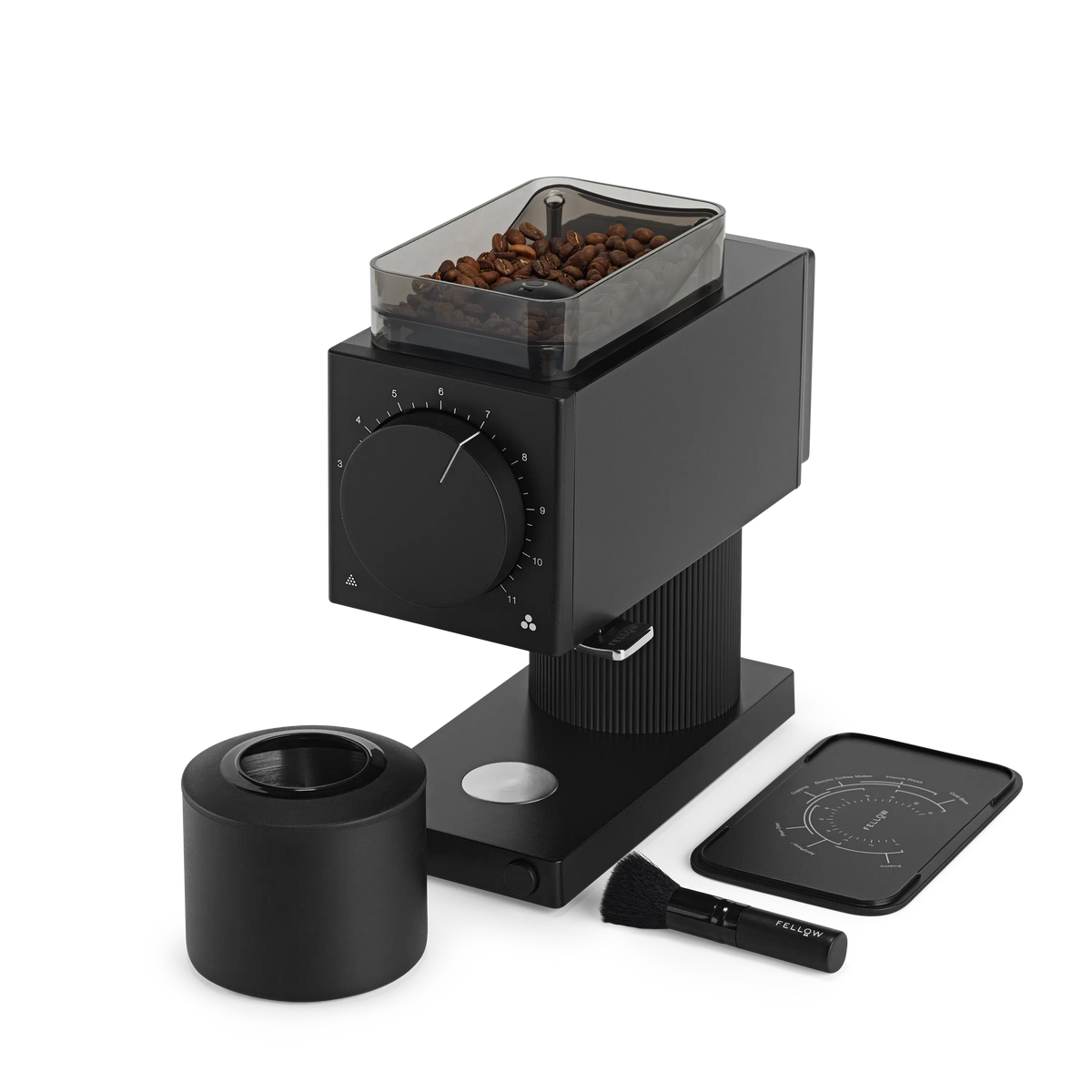
Fellow Ode Brew Grinder Gen 2
- 64 mm stainless-steel flat burrs
- 31 total grind steps across 11 settings
- Designed specifically for brewed coffee
- 100 g single-dose capacity
- Anti-static technology helps control mess
- Auto-stop and magnetic catch cup

Baratza Encore Conical Burr Grinder
- 40 individual grind settings
- 40 mm conical steel burrs
- Coarse range extends to cold brew territory
- Simple hopper-twist adjustment
- Front pulse plus on/off operation
- Repair-friendly Baratza platform

Baratza Virtuoso+
- 40 grind settings from fine to very coarse
- 40 mm M2 conical steel burrs
- Digital timer adjustable in 0.1-second increments
- Backlit grounds bin
- Fast filter-coffee workflow
- French-press-capable upper range
The Fellow Ode Gen 2 leads this group because it is built around brewed coffee rather than espresso. That focus is valuable for French press: more of the adjustment range is useful at medium-to-coarse sizes, and the 64 mm flat burrs are designed for the sort of filter and immersion grinding this article is about. The Baratza Encore takes a different route. It is simpler, less expensive, and exceptionally easy to understand, which makes it a strong first burr grinder. The Virtuoso+ keeps the Baratza-style adjustment but adds a digital timer and a more polished workflow for people who grind larger doses regularly.
The remaining grinders are not filler. OXO gives you an explicitly marked coarse zone; KitchenAid dedicates a surprisingly broad portion of its 70-setting scale to French press; Breville brings strong digital dosing; and the Encore ESP is useful when press coffee and espresso need to share one grinder. The right choice therefore depends on whether you want a press specialist, a simple everyday grinder, or one machine that has to cover several brewing methods.
10 Best Coffee Grinders for French Press Coarseness — At a Glance
Fellow Ode Brew Grinder Gen 2
- 64 mm stainless-steel flat burrs
- 31 total grind steps across 11 settings
- Designed specifically for brewed coffee
- 100 g single-dose capacity
- Anti-static technology helps control mess
- Auto-stop and magnetic catch cup
Baratza Encore Conical Burr Grinder
- 40 individual grind settings
- 40 mm conical steel burrs
- Coarse range extends to cold brew territory
- Simple hopper-twist adjustment
- Front pulse plus on/off operation
- Repair-friendly Baratza platform
Baratza Virtuoso+
- 40 grind settings from fine to very coarse
- 40 mm M2 conical steel burrs
- Digital timer adjustable in 0.1-second increments
- Backlit grounds bin
- Fast filter-coffee workflow
- French-press-capable upper range
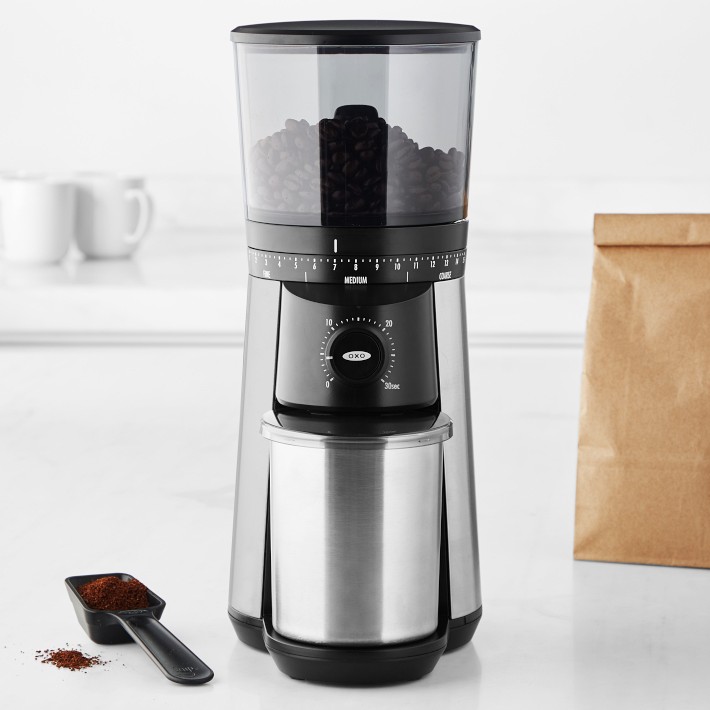
OXO Brew Conical Burr Coffee Grinder
- Stainless-steel conical burrs
- 15 main settings plus microsettings
- Settings 11–15 designated for coarse grinding
- One-touch timer remembers the last setting
- 12 oz UV-blocking bean hopper
- Static-fighting stainless grounds container

KitchenAid Burr Coffee Grinder KCG8433
- 70 precise grind settings
- Dedicated coarse French-press range
- Commercial-grade stainless conical burrs
- Automatic Smart Dosing
- Anti-static technology
- Removable hopper for easier bean changes

Capresso Infinity Plus Conical Burr Grinder
- Commercial-grade solid-steel conical burrs
- 16 clearly marked fineness settings
- Dedicated coarse range
- Gear-reduction motor limits heat buildup
- Wide brew-method coverage
- Safety-lock bean container

Breville Smart Grinder Pro
- 60 unique grind settings
- French Press and Filter cup modes
- LCD grind and dose display
- Dosing IQ timing in 0.2-second increments
- Stainless-steel conical burrs
- Grinds into container, filter, or portafilter

Fellow Opus Conical Burr Grinder
- 41 settings on the outer adjustment ring
- Additional inner-ring adjustment
- Covers espresso through cold brew
- Timed auto-stop options
- Compact modern footprint
- Single-dose-oriented workflow

Baratza Encore ESP
- 40 mm M2 conical steel burr
- Dual-range adjustment system
- Settings 21–40 cover filter, French press, and cold brew
- Quick-release burr for cleaning
- Front pulse plus on/off control
- Included dosing cup
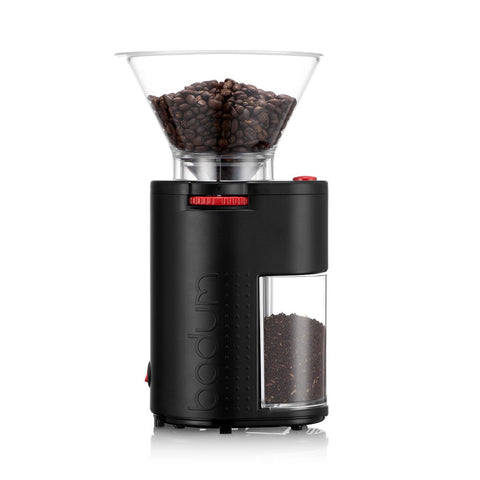
Bodum Bistro Burr Coffee Grinder
- Stainless-steel conical burrs
- 12 adjustable grind settings
- Coarse settings for French press
- Preset grinding timer
- Compact countertop footprint
- Simple hopper-based operation
Quick Ranking
| # | Grinder | Best For | French Press Strength | Check |
|---|---|---|---|---|
| 1 | Fellow Ode Brew Grinder Gen 2 | Best Overall | Brew-focused flat burrs | PRICE ON AMAZON |
| 2 | Baratza Encore Conical Burr Grinder | Best Value | Simple coarse consistency | PRICE ON AMAZON |
| 3 | Baratza Virtuoso+ | Best Upgrade | Timed premium workflow | PRICE ON AMAZON |
| 4 | OXO Brew Conical Burr Coffee Grinder | Best Everyday | Clearly marked coarse zone | PRICE ON AMAZON |
| 5 | KitchenAid Burr Coffee Grinder KCG8433 | Best Range | Very broad coarse range | PRICE ON AMAZON |
| 6 | Capresso Infinity Plus Conical Burr Grinder | Best Simple | Simple dedicated coarse settings | PRICE ON AMAZON |
| 7 | Breville Smart Grinder Pro | Best Controls | Digital dose control | PRICE ON AMAZON |
| 8 | Fellow Opus Conical Burr Grinder | Best Versatile | Multi-method versatility | PRICE ON AMAZON |
| 9 | Baratza Encore ESP | Best Hybrid | Filter/press half of dial | PRICE ON AMAZON |
| 10 | Bodum Bistro Burr Coffee Grinder | Best Compact | Compact coarse grinding | PRICE ON AMAZON |
1. Best Overall: Fellow Ode Brew Grinder Gen 2
The strongest fit when French press is the priority and espresso is not. Its brew-only range gives coarse grinding more room than an espresso-first grinder. For French press, I care less about whether a grinder can reach an ultra-fine espresso setting and more about what happens in the upper half of the dial. A useful press grinder should let you move through several genuinely coarse positions so you can compensate for roast level, steep time, batch size, and the particular mesh filter in your press.
The practical advantage of the Fellow Ode Brew Grinder Gen 2 is that its adjustment system gives you a repeatable reference point. Once you find a setting that produces a clean plunge and the body you like, you can return to it instead of trying to reproduce a pulse pattern by eye. That repeatability becomes especially valuable when you change beans. A dense light roast may need a different approach from a brittle dark roast even when both are brewed in the same press.
Coarse grinding should not be interpreted as choosing the very last number on the dial automatically. French press recipes vary. A traditional four-minute steep often starts coarse, while longer immersion recipes can work beautifully with a somewhat finer grind. I would begin in the grinder’s coarse region, brew with a fixed coffee-to-water ratio, then move one or two steps at a time. If the cup tastes thin or sour, move slightly finer; if it tastes harsh, muddy, or difficult to plunge, move coarser or shorten the contact time.
Daily usability matters too. 64 mm flat burrs · 31 steps · 100 g capacity. Those specifications affect more than a comparison chart: they determine how easily the grinder fits into a real morning routine. Large press batches reward adequate capacity, while frequent bean switching favors a lower-retention or easy-empty hopper. A timer can be convenient, but weighing beans before grinding remains the more dependable way to reproduce a French-press recipe.
The most important expectation to set is that even a good burr grinder will create some fines. Coffee beans fracture rather than cutting into mathematically identical cubes. The goal is to reduce the extreme spread of particle sizes, not eliminate it. With a better coarse grind, the bed settles more predictably, the plunger tends to move with steady resistance, and the cup can keep the rich texture French press is known for without turning unnecessarily silty.
Fellow Ode Brew Grinder Gen 2 for French Press
The strongest fit when French press is the priority and espresso is not. Its brew-only range gives coarse grinding more room than an espresso-first grinder.
Technical Specifications & Daily Features
- 64 mm stainless-steel flat burrs
- 31 total grind steps across 11 settings
- Designed specifically for brewed coffee
- 100 g single-dose capacity
- Anti-static technology helps control mess
- Auto-stop and magnetic catch cup
- 64 mm flat burrs · 31 steps · 100 g capacity
30-Day Ownership Outlook: Pros & Cons
Pros
- Broad brew-focused adjustment range
- Flat burrs suit clarity and particle consistency
- Large enough for generous press batches
- Low-retention single-dose workflow
Cons
- Not intended for espresso
- Premium price compared with entry burr grinders
Ownership outlook: The main question over a month of regular press brewing is whether the adjustment, capacity, cleanup, and dosing workflow remain convenient enough that you keep grinding fresh rather than reverting to pre-ground coffee.
My Final Verdict
Fellow Ode Brew Grinder Gen 2 earns its place here because the strongest fit when French press is the priority and espresso is not. Its brew-only range gives coarse grinding more room than an espresso-first grinder. It is strongest for the buyer described by its Best Overall badge rather than as a universal answer for every coffee setup.
2. Best Value: Baratza Encore Conical Burr Grinder
A straightforward filter-focused grinder whose upper settings give French press drinkers plenty of usable coarse territory without complicating the morning routine. For French press, I care less about whether a grinder can reach an ultra-fine espresso setting and more about what happens in the upper half of the dial. A useful press grinder should let you move through several genuinely coarse positions so you can compensate for roast level, steep time, batch size, and the particular mesh filter in your press.
The practical advantage of the Baratza Encore Conical Burr Grinder is that its adjustment system gives you a repeatable reference point. Once you find a setting that produces a clean plunge and the body you like, you can return to it instead of trying to reproduce a pulse pattern by eye. That repeatability becomes especially valuable when you change beans. A dense light roast may need a different approach from a brittle dark roast even when both are brewed in the same press.
Coarse grinding should not be interpreted as choosing the very last number on the dial automatically. French press recipes vary. A traditional four-minute steep often starts coarse, while longer immersion recipes can work beautifully with a somewhat finer grind. I would begin in the grinder’s coarse region, brew with a fixed coffee-to-water ratio, then move one or two steps at a time. If the cup tastes thin or sour, move slightly finer; if it tastes harsh, muddy, or difficult to plunge, move coarser or shorten the contact time.
Daily usability matters too. 40 mm conical burrs · 40 settings · 300 g hopper. Those specifications affect more than a comparison chart: they determine how easily the grinder fits into a real morning routine. Large press batches reward adequate capacity, while frequent bean switching favors a lower-retention or easy-empty hopper. A timer can be convenient, but weighing beans before grinding remains the more dependable way to reproduce a French-press recipe.
The most important expectation to set is that even a good burr grinder will create some fines. Coffee beans fracture rather than cutting into mathematically identical cubes. The goal is to reduce the extreme spread of particle sizes, not eliminate it. With a better coarse grind, the bed settles more predictably, the plunger tends to move with steady resistance, and the cup can keep the rich texture French press is known for without turning unnecessarily silty.
Baratza Encore Conical Burr Grinder for French Press
Baratza Encore Conical Burr Grinder
A straightforward filter-focused grinder whose upper settings give French press drinkers plenty of usable coarse territory without complicating the morning routine.
Technical Specifications & Daily Features
- 40 individual grind settings
- 40 mm conical steel burrs
- Coarse range extends to cold brew territory
- Simple hopper-twist adjustment
- Front pulse plus on/off operation
- Repair-friendly Baratza platform
- 40 mm conical burrs · 40 settings · 300 g hopper
30-Day Ownership Outlook: Pros & Cons
Pros
- Easy to dial for press coffee
- Strong parts and repair ecosystem
- Simple controls
- Compact footprint
Cons
- No timer or dose programming
- Less refined at the extreme coarse end than premium flat-burr options
Ownership outlook: The main question over a month of regular press brewing is whether the adjustment, capacity, cleanup, and dosing workflow remain convenient enough that you keep grinding fresh rather than reverting to pre-ground coffee.
My Final Verdict
Baratza Encore Conical Burr Grinder earns its place here because a straightforward filter-focused grinder whose upper settings give French press drinkers plenty of usable coarse territory without complicating the morning routine. It is strongest for the buyer described by its Best Value badge rather than as a universal answer for every coffee setup.
3. Best Upgrade: Baratza Virtuoso+
A step up from the Encore when repeatable timed dosing and a more polished daily workflow matter as much as coarse-grind control. For French press, I care less about whether a grinder can reach an ultra-fine espresso setting and more about what happens in the upper half of the dial. A useful press grinder should let you move through several genuinely coarse positions so you can compensate for roast level, steep time, batch size, and the particular mesh filter in your press.
The practical advantage of the Baratza Virtuoso+ is that its adjustment system gives you a repeatable reference point. Once you find a setting that produces a clean plunge and the body you like, you can return to it instead of trying to reproduce a pulse pattern by eye. That repeatability becomes especially valuable when you change beans. A dense light roast may need a different approach from a brittle dark roast even when both are brewed in the same press.
Coarse grinding should not be interpreted as choosing the very last number on the dial automatically. French press recipes vary. A traditional four-minute steep often starts coarse, while longer immersion recipes can work beautifully with a somewhat finer grind. I would begin in the grinder’s coarse region, brew with a fixed coffee-to-water ratio, then move one or two steps at a time. If the cup tastes thin or sour, move slightly finer; if it tastes harsh, muddy, or difficult to plunge, move coarser or shorten the contact time.
Daily usability matters too. 40 mm M2 conical burrs · 40 settings · digital timer. Those specifications affect more than a comparison chart: they determine how easily the grinder fits into a real morning routine. Large press batches reward adequate capacity, while frequent bean switching favors a lower-retention or easy-empty hopper. A timer can be convenient, but weighing beans before grinding remains the more dependable way to reproduce a French-press recipe.
The most important expectation to set is that even a good burr grinder will create some fines. Coffee beans fracture rather than cutting into mathematically identical cubes. The goal is to reduce the extreme spread of particle sizes, not eliminate it. With a better coarse grind, the bed settles more predictably, the plunger tends to move with steady resistance, and the cup can keep the rich texture French press is known for without turning unnecessarily silty.
Baratza Virtuoso+ for French Press
A step up from the Encore when repeatable timed dosing and a more polished daily workflow matter as much as coarse-grind control.
Technical Specifications & Daily Features
- 40 grind settings from fine to very coarse
- 40 mm M2 conical steel burrs
- Digital timer adjustable in 0.1-second increments
- Backlit grounds bin
- Fast filter-coffee workflow
- French-press-capable upper range
- 40 mm M2 conical burrs · 40 settings · digital timer
30-Day Ownership Outlook: Pros & Cons
Pros
- Repeatable timed dosing
- Broad filter-to-press range
- Fast and convenient for larger doses
- Serviceable Baratza design
Cons
- Costs considerably more than the Encore
- Still a stepped grinder rather than stepless
Ownership outlook: The main question over a month of regular press brewing is whether the adjustment, capacity, cleanup, and dosing workflow remain convenient enough that you keep grinding fresh rather than reverting to pre-ground coffee.
My Final Verdict
Baratza Virtuoso+ earns its place here because a step up from the Encore when repeatable timed dosing and a more polished daily workflow matter as much as coarse-grind control. It is strongest for the buyer described by its Best Upgrade badge rather than as a universal answer for every coffee setup.
4. Best Everyday: OXO Brew Conical Burr Coffee Grinder
One of the clearest French-press interfaces here because its coarse zone is easy to understand: OXO explicitly groups settings 11 through 15 for French press and cold brew. For French press, I care less about whether a grinder can reach an ultra-fine espresso setting and more about what happens in the upper half of the dial. A useful press grinder should let you move through several genuinely coarse positions so you can compensate for roast level, steep time, batch size, and the particular mesh filter in your press.
The practical advantage of the OXO Brew Conical Burr Coffee Grinder is that its adjustment system gives you a repeatable reference point. Once you find a setting that produces a clean plunge and the body you like, you can return to it instead of trying to reproduce a pulse pattern by eye. That repeatability becomes especially valuable when you change beans. A dense light roast may need a different approach from a brittle dark roast even when both are brewed in the same press.
Coarse grinding should not be interpreted as choosing the very last number on the dial automatically. French press recipes vary. A traditional four-minute steep often starts coarse, while longer immersion recipes can work beautifully with a somewhat finer grind. I would begin in the grinder’s coarse region, brew with a fixed coffee-to-water ratio, then move one or two steps at a time. If the cup tastes thin or sour, move slightly finer; if it tastes harsh, muddy, or difficult to plunge, move coarser or shorten the contact time.
Daily usability matters too. Conical burrs · 15 main settings + microsettings · 12 oz hopper. Those specifications affect more than a comparison chart: they determine how easily the grinder fits into a real morning routine. Large press batches reward adequate capacity, while frequent bean switching favors a lower-retention or easy-empty hopper. A timer can be convenient, but weighing beans before grinding remains the more dependable way to reproduce a French-press recipe.
The most important expectation to set is that even a good burr grinder will create some fines. Coffee beans fracture rather than cutting into mathematically identical cubes. The goal is to reduce the extreme spread of particle sizes, not eliminate it. With a better coarse grind, the bed settles more predictably, the plunger tends to move with steady resistance, and the cup can keep the rich texture French press is known for without turning unnecessarily silty.
OXO Brew Conical Burr Coffee Grinder for French Press
OXO Brew Conical Burr Coffee Grinder
One of the clearest French-press interfaces here because its coarse zone is easy to understand: OXO explicitly groups settings 11 through 15 for French press and cold brew.
Technical Specifications & Daily Features
- Stainless-steel conical burrs
- 15 main settings plus microsettings
- Settings 11–15 designated for coarse grinding
- One-touch timer remembers the last setting
- 12 oz UV-blocking bean hopper
- Static-fighting stainless grounds container
- Conical burrs · 15 main settings + microsettings · 12 oz hopper
30-Day Ownership Outlook: Pros & Cons
Pros
- Easy coarse-range dialing
- Large hopper suits family-size presses
- Timer memory simplifies repeat brews
- Good everyday value
Cons
- Less granular than grinders with dozens of steps
- Hopper workflow is less ideal for frequent bean switching
Ownership outlook: The main question over a month of regular press brewing is whether the adjustment, capacity, cleanup, and dosing workflow remain convenient enough that you keep grinding fresh rather than reverting to pre-ground coffee.
My Final Verdict
OXO Brew Conical Burr Coffee Grinder earns its place here because one of the clearest French-press interfaces here because its coarse zone is easy to understand: OXO explicitly groups settings 11 through 15 for French press and cold brew. It is strongest for the buyer described by its Best Everyday badge rather than as a universal answer for every coffee setup.
5. Best Range: KitchenAid Burr Coffee Grinder KCG8433
Its unusually broad adjustment scale is useful for French press because KitchenAid dedicates settings 1–24 to the coarse French-press zone rather than squeezing press coffee into only a few clicks. For French press, I care less about whether a grinder can reach an ultra-fine espresso setting and more about what happens in the upper half of the dial. A useful press grinder should let you move through several genuinely coarse positions so you can compensate for roast level, steep time, batch size, and the particular mesh filter in your press.
The practical advantage of the KitchenAid Burr Coffee Grinder KCG8433 is that its adjustment system gives you a repeatable reference point. Once you find a setting that produces a clean plunge and the body you like, you can return to it instead of trying to reproduce a pulse pattern by eye. That repeatability becomes especially valuable when you change beans. A dense light roast may need a different approach from a brittle dark roast even when both are brewed in the same press.
Coarse grinding should not be interpreted as choosing the very last number on the dial automatically. French press recipes vary. A traditional four-minute steep often starts coarse, while longer immersion recipes can work beautifully with a somewhat finer grind. I would begin in the grinder’s coarse region, brew with a fixed coffee-to-water ratio, then move one or two steps at a time. If the cup tastes thin or sour, move slightly finer; if it tastes harsh, muddy, or difficult to plunge, move coarser or shorten the contact time.
Daily usability matters too. Conical burrs · 70 settings · Automatic Smart Dosing. Those specifications affect more than a comparison chart: they determine how easily the grinder fits into a real morning routine. Large press batches reward adequate capacity, while frequent bean switching favors a lower-retention or easy-empty hopper. A timer can be convenient, but weighing beans before grinding remains the more dependable way to reproduce a French-press recipe.
The most important expectation to set is that even a good burr grinder will create some fines. Coffee beans fracture rather than cutting into mathematically identical cubes. The goal is to reduce the extreme spread of particle sizes, not eliminate it. With a better coarse grind, the bed settles more predictably, the plunger tends to move with steady resistance, and the cup can keep the rich texture French press is known for without turning unnecessarily silty.
KitchenAid Burr Coffee Grinder KCG8433 for French Press
KitchenAid Burr Coffee Grinder KCG8433
Its unusually broad adjustment scale is useful for French press because KitchenAid dedicates settings 1–24 to the coarse French-press zone rather than squeezing press coffee into only a few clicks.
Technical Specifications & Daily Features
- 70 precise grind settings
- Dedicated coarse French-press range
- Commercial-grade stainless conical burrs
- Automatic Smart Dosing
- Anti-static technology
- Removable hopper for easier bean changes
- Conical burrs · 70 settings · Automatic Smart Dosing
30-Day Ownership Outlook: Pros & Cons
Pros
- Very wide coarse adjustment band
- Automatic dosing reduces guesswork
- Anti-static design helps cleanup
- Useful for multiple brew methods
Cons
- More controls than a simple press-only grinder needs
- Larger feature set may be unnecessary for single-method brewers
Ownership outlook: The main question over a month of regular press brewing is whether the adjustment, capacity, cleanup, and dosing workflow remain convenient enough that you keep grinding fresh rather than reverting to pre-ground coffee.
My Final Verdict
KitchenAid Burr Coffee Grinder KCG8433 earns its place here because its unusually broad adjustment scale is useful for French press because KitchenAid dedicates settings 1–24 to the coarse French-press zone rather than squeezing press coffee into only a few clicks. It is strongest for the buyer described by its Best Range badge rather than as a universal answer for every coffee setup.
6. Best Simple: Capresso Infinity Plus Conical Burr Grinder
A sensible choice for drinkers who want a traditional hopper grinder with an obvious coarse zone and no digital interface to learn. For French press, I care less about whether a grinder can reach an ultra-fine espresso setting and more about what happens in the upper half of the dial. A useful press grinder should let you move through several genuinely coarse positions so you can compensate for roast level, steep time, batch size, and the particular mesh filter in your press.
The practical advantage of the Capresso Infinity Plus Conical Burr Grinder is that its adjustment system gives you a repeatable reference point. Once you find a setting that produces a clean plunge and the body you like, you can return to it instead of trying to reproduce a pulse pattern by eye. That repeatability becomes especially valuable when you change beans. A dense light roast may need a different approach from a brittle dark roast even when both are brewed in the same press.
Coarse grinding should not be interpreted as choosing the very last number on the dial automatically. French press recipes vary. A traditional four-minute steep often starts coarse, while longer immersion recipes can work beautifully with a somewhat finer grind. I would begin in the grinder’s coarse region, brew with a fixed coffee-to-water ratio, then move one or two steps at a time. If the cup tastes thin or sour, move slightly finer; if it tastes harsh, muddy, or difficult to plunge, move coarser or shorten the contact time.
Daily usability matters too. Solid-steel conical burrs · 16 settings · gear-reduction motor. Those specifications affect more than a comparison chart: they determine how easily the grinder fits into a real morning routine. Large press batches reward adequate capacity, while frequent bean switching favors a lower-retention or easy-empty hopper. A timer can be convenient, but weighing beans before grinding remains the more dependable way to reproduce a French-press recipe.
The most important expectation to set is that even a good burr grinder will create some fines. Coffee beans fracture rather than cutting into mathematically identical cubes. The goal is to reduce the extreme spread of particle sizes, not eliminate it. With a better coarse grind, the bed settles more predictably, the plunger tends to move with steady resistance, and the cup can keep the rich texture French press is known for without turning unnecessarily silty.
Capresso Infinity Plus Conical Burr Grinder for French Press
Capresso Infinity Plus Conical Burr Grinder
A sensible choice for drinkers who want a traditional hopper grinder with an obvious coarse zone and no digital interface to learn.
Technical Specifications & Daily Features
- Commercial-grade solid-steel conical burrs
- 16 clearly marked fineness settings
- Dedicated coarse range
- Gear-reduction motor limits heat buildup
- Wide brew-method coverage
- Safety-lock bean container
- Solid-steel conical burrs · 16 settings · gear-reduction motor
30-Day Ownership Outlook: Pros & Cons
Pros
- Simple four-zone adjustment logic
- Slow grinding limits heat buildup
- Dedicated coarse settings
- Straightforward controls
Cons
- Only 16 marked settings
- Less precise dose control than timer-equipped rivals
Ownership outlook: The main question over a month of regular press brewing is whether the adjustment, capacity, cleanup, and dosing workflow remain convenient enough that you keep grinding fresh rather than reverting to pre-ground coffee.
My Final Verdict
Capresso Infinity Plus Conical Burr Grinder earns its place here because a sensible choice for drinkers who want a traditional hopper grinder with an obvious coarse zone and no digital interface to learn. It is strongest for the buyer described by its Best Simple badge rather than as a universal answer for every coffee setup.
7. Best Controls: Breville Smart Grinder Pro
The most control-heavy option in the group, useful when French press is only one of several brew methods and you want repeatable digital dosing. For French press, I care less about whether a grinder can reach an ultra-fine espresso setting and more about what happens in the upper half of the dial. A useful press grinder should let you move through several genuinely coarse positions so you can compensate for roast level, steep time, batch size, and the particular mesh filter in your press.
The practical advantage of the Breville Smart Grinder Pro is that its adjustment system gives you a repeatable reference point. Once you find a setting that produces a clean plunge and the body you like, you can return to it instead of trying to reproduce a pulse pattern by eye. That repeatability becomes especially valuable when you change beans. A dense light roast may need a different approach from a brittle dark roast even when both are brewed in the same press.
Coarse grinding should not be interpreted as choosing the very last number on the dial automatically. French press recipes vary. A traditional four-minute steep often starts coarse, while longer immersion recipes can work beautifully with a somewhat finer grind. I would begin in the grinder’s coarse region, brew with a fixed coffee-to-water ratio, then move one or two steps at a time. If the cup tastes thin or sour, move slightly finer; if it tastes harsh, muddy, or difficult to plunge, move coarser or shorten the contact time.
Daily usability matters too. Conical burrs · 60 settings · Dosing IQ. Those specifications affect more than a comparison chart: they determine how easily the grinder fits into a real morning routine. Large press batches reward adequate capacity, while frequent bean switching favors a lower-retention or easy-empty hopper. A timer can be convenient, but weighing beans before grinding remains the more dependable way to reproduce a French-press recipe.
The most important expectation to set is that even a good burr grinder will create some fines. Coffee beans fracture rather than cutting into mathematically identical cubes. The goal is to reduce the extreme spread of particle sizes, not eliminate it. With a better coarse grind, the bed settles more predictably, the plunger tends to move with steady resistance, and the cup can keep the rich texture French press is known for without turning unnecessarily silty.
Breville Smart Grinder Pro for French Press
The most control-heavy option in the group, useful when French press is only one of several brew methods and you want repeatable digital dosing.
Technical Specifications & Daily Features
- 60 unique grind settings
- French Press and Filter cup modes
- LCD grind and dose display
- Dosing IQ timing in 0.2-second increments
- Stainless-steel conical burrs
- Grinds into container, filter, or portafilter
- Conical burrs · 60 settings · Dosing IQ
30-Day Ownership Outlook: Pros & Cons
Pros
- Excellent dose repeatability
- Clear LCD interface
- Broad grind range
- Good multi-method flexibility
Cons
- More complex than a press-only grinder
- Tall body needs cabinet clearance
Ownership outlook: The main question over a month of regular press brewing is whether the adjustment, capacity, cleanup, and dosing workflow remain convenient enough that you keep grinding fresh rather than reverting to pre-ground coffee.
My Final Verdict
Breville Smart Grinder Pro earns its place here because the most control-heavy option in the group, useful when French press is only one of several brew methods and you want repeatable digital dosing. It is strongest for the buyer described by its Best Controls badge rather than as a universal answer for every coffee setup.
8. Best Versatile: Fellow Opus Conical Burr Grinder
A flexible choice when French press shares the counter with espresso, AeroPress, pour-over, and cold brew rather than being the only brewing method. For French press, I care less about whether a grinder can reach an ultra-fine espresso setting and more about what happens in the upper half of the dial. A useful press grinder should let you move through several genuinely coarse positions so you can compensate for roast level, steep time, batch size, and the particular mesh filter in your press.
The practical advantage of the Fellow Opus Conical Burr Grinder is that its adjustment system gives you a repeatable reference point. Once you find a setting that produces a clean plunge and the body you like, you can return to it instead of trying to reproduce a pulse pattern by eye. That repeatability becomes especially valuable when you change beans. A dense light roast may need a different approach from a brittle dark roast even when both are brewed in the same press.
Coarse grinding should not be interpreted as choosing the very last number on the dial automatically. French press recipes vary. A traditional four-minute steep often starts coarse, while longer immersion recipes can work beautifully with a somewhat finer grind. I would begin in the grinder’s coarse region, brew with a fixed coffee-to-water ratio, then move one or two steps at a time. If the cup tastes thin or sour, move slightly finer; if it tastes harsh, muddy, or difficult to plunge, move coarser or shorten the contact time.
Daily usability matters too. Conical burrs · 41+ outer settings · all-purpose range. Those specifications affect more than a comparison chart: they determine how easily the grinder fits into a real morning routine. Large press batches reward adequate capacity, while frequent bean switching favors a lower-retention or easy-empty hopper. A timer can be convenient, but weighing beans before grinding remains the more dependable way to reproduce a French-press recipe.
The most important expectation to set is that even a good burr grinder will create some fines. Coffee beans fracture rather than cutting into mathematically identical cubes. The goal is to reduce the extreme spread of particle sizes, not eliminate it. With a better coarse grind, the bed settles more predictably, the plunger tends to move with steady resistance, and the cup can keep the rich texture French press is known for without turning unnecessarily silty.
Fellow Opus Conical Burr Grinder for French Press
Fellow Opus Conical Burr Grinder
A flexible choice when French press shares the counter with espresso, AeroPress, pour-over, and cold brew rather than being the only brewing method.
Technical Specifications & Daily Features
- 41 settings on the outer adjustment ring
- Additional inner-ring adjustment
- Covers espresso through cold brew
- Timed auto-stop options
- Compact modern footprint
- Single-dose-oriented workflow
- Conical burrs · 41+ outer settings · all-purpose range
30-Day Ownership Outlook: Pros & Cons
Pros
- Wide all-purpose range
- Compact footprint
- Fine adjustment beyond outer dial
- Simple timed auto-stop
Cons
- Inner adjustment adds complexity
- Less press-specialized than the Ode
Ownership outlook: The main question over a month of regular press brewing is whether the adjustment, capacity, cleanup, and dosing workflow remain convenient enough that you keep grinding fresh rather than reverting to pre-ground coffee.
My Final Verdict
Fellow Opus Conical Burr Grinder earns its place here because a flexible choice when French press shares the counter with espresso, AeroPress, pour-over, and cold brew rather than being the only brewing method. It is strongest for the buyer described by its Best Versatile badge rather than as a universal answer for every coffee setup.
9. Best Hybrid: Baratza Encore ESP
A practical hybrid for someone who wants French press coarseness now but also wants enough fine-end resolution to explore espresso later. For French press, I care less about whether a grinder can reach an ultra-fine espresso setting and more about what happens in the upper half of the dial. A useful press grinder should let you move through several genuinely coarse positions so you can compensate for roast level, steep time, batch size, and the particular mesh filter in your press.
The practical advantage of the Baratza Encore ESP is that its adjustment system gives you a repeatable reference point. Once you find a setting that produces a clean plunge and the body you like, you can return to it instead of trying to reproduce a pulse pattern by eye. That repeatability becomes especially valuable when you change beans. A dense light roast may need a different approach from a brittle dark roast even when both are brewed in the same press.
Coarse grinding should not be interpreted as choosing the very last number on the dial automatically. French press recipes vary. A traditional four-minute steep often starts coarse, while longer immersion recipes can work beautifully with a somewhat finer grind. I would begin in the grinder’s coarse region, brew with a fixed coffee-to-water ratio, then move one or two steps at a time. If the cup tastes thin or sour, move slightly finer; if it tastes harsh, muddy, or difficult to plunge, move coarser or shorten the contact time.
Daily usability matters too. 40 mm M2 conical burrs · dual-range 40-step adjustment. Those specifications affect more than a comparison chart: they determine how easily the grinder fits into a real morning routine. Large press batches reward adequate capacity, while frequent bean switching favors a lower-retention or easy-empty hopper. A timer can be convenient, but weighing beans before grinding remains the more dependable way to reproduce a French-press recipe.
The most important expectation to set is that even a good burr grinder will create some fines. Coffee beans fracture rather than cutting into mathematically identical cubes. The goal is to reduce the extreme spread of particle sizes, not eliminate it. With a better coarse grind, the bed settles more predictably, the plunger tends to move with steady resistance, and the cup can keep the rich texture French press is known for without turning unnecessarily silty.
Baratza Encore ESP for French Press
A practical hybrid for someone who wants French press coarseness now but also wants enough fine-end resolution to explore espresso later.
Technical Specifications & Daily Features
- 40 mm M2 conical steel burr
- Dual-range adjustment system
- Settings 21–40 cover filter, French press, and cold brew
- Quick-release burr for cleaning
- Front pulse plus on/off control
- Included dosing cup
- 40 mm M2 conical burrs · dual-range 40-step adjustment
30-Day Ownership Outlook: Pros & Cons
Pros
- Dedicated filter/press half of the dial
- Espresso-capable lower range
- Repair-friendly design
- Easy burr access
Cons
- Extra espresso resolution is unnecessary for press-only use
- Base Encore is simpler for filter-only households
Ownership outlook: The main question over a month of regular press brewing is whether the adjustment, capacity, cleanup, and dosing workflow remain convenient enough that you keep grinding fresh rather than reverting to pre-ground coffee.
My Final Verdict
Baratza Encore ESP earns its place here because a practical hybrid for someone who wants French press coarseness now but also wants enough fine-end resolution to explore espresso later. It is strongest for the buyer described by its Best Hybrid badge rather than as a universal answer for every coffee setup.
10. Best Compact: Bodum Bistro Burr Coffee Grinder
A compact option for smaller kitchens where the grinder needs to cover basic coarse-to-fine brewing without occupying the space of a larger programmable model. For French press, I care less about whether a grinder can reach an ultra-fine espresso setting and more about what happens in the upper half of the dial. A useful press grinder should let you move through several genuinely coarse positions so you can compensate for roast level, steep time, batch size, and the particular mesh filter in your press.
The practical advantage of the Bodum Bistro Burr Coffee Grinder is that its adjustment system gives you a repeatable reference point. Once you find a setting that produces a clean plunge and the body you like, you can return to it instead of trying to reproduce a pulse pattern by eye. That repeatability becomes especially valuable when you change beans. A dense light roast may need a different approach from a brittle dark roast even when both are brewed in the same press.
Coarse grinding should not be interpreted as choosing the very last number on the dial automatically. French press recipes vary. A traditional four-minute steep often starts coarse, while longer immersion recipes can work beautifully with a somewhat finer grind. I would begin in the grinder’s coarse region, brew with a fixed coffee-to-water ratio, then move one or two steps at a time. If the cup tastes thin or sour, move slightly finer; if it tastes harsh, muddy, or difficult to plunge, move coarser or shorten the contact time.
Daily usability matters too. Conical burrs · 12 settings · compact hopper design. Those specifications affect more than a comparison chart: they determine how easily the grinder fits into a real morning routine. Large press batches reward adequate capacity, while frequent bean switching favors a lower-retention or easy-empty hopper. A timer can be convenient, but weighing beans before grinding remains the more dependable way to reproduce a French-press recipe.
The most important expectation to set is that even a good burr grinder will create some fines. Coffee beans fracture rather than cutting into mathematically identical cubes. The goal is to reduce the extreme spread of particle sizes, not eliminate it. With a better coarse grind, the bed settles more predictably, the plunger tends to move with steady resistance, and the cup can keep the rich texture French press is known for without turning unnecessarily silty.
Bodum Bistro Burr Coffee Grinder for French Press
Bodum Bistro Burr Coffee Grinder
A compact option for smaller kitchens where the grinder needs to cover basic coarse-to-fine brewing without occupying the space of a larger programmable model.
Technical Specifications & Daily Features
- Stainless-steel conical burrs
- 12 adjustable grind settings
- Coarse settings for French press
- Preset grinding timer
- Compact countertop footprint
- Simple hopper-based operation
- Conical burrs · 12 settings · compact hopper design
30-Day Ownership Outlook: Pros & Cons
Pros
- Compact and easy to understand
- Conical burr grinding
- Timer helps repeat doses
- Good fit for small coffee stations
Cons
- Only 12 settings
- Less coarse-range precision than higher-step grinders
Ownership outlook: The main question over a month of regular press brewing is whether the adjustment, capacity, cleanup, and dosing workflow remain convenient enough that you keep grinding fresh rather than reverting to pre-ground coffee.
My Final Verdict
Bodum Bistro Burr Coffee Grinder earns its place here because a compact option for smaller kitchens where the grinder needs to cover basic coarse-to-fine brewing without occupying the space of a larger programmable model. It is strongest for the buyer described by its Best Compact badge rather than as a universal answer for every coffee setup.
Buying Guide: How to Choose a Grinder for French Press Coarseness
The phrase “coarse grind” is useful, but it is only a starting point. Two grinders can both have a setting labeled coarse and produce very different particle distributions. For French press, I would prioritize the quality and usefulness of the coarse half of the adjustment range, then look at capacity, workflow, cleanup, and whether the grinder must also serve espresso or other methods.
1. Burrs Before Blades
A blade grinder chops beans according to how long the blade spins. The pieces that happen to stay near the blade keep getting smaller while other pieces remain large. Pulsing and shaking can improve the result, but they do not create a fixed grinding gap. Burr grinders pass coffee through a controlled space between two grinding surfaces, which makes the output easier to reproduce. That is why this update moves away from the old blade-heavy selection.
2. Look for Several Useful Coarse Settings
One coarse position is not enough if you enjoy dialing in coffee. Roast level, bean density, steep time, water temperature, and press design all change the useful grind point. OXO makes the coarse zone easy to understand by assigning settings 11–15 to French press and cold brew. KitchenAid goes further with a broad French-press range on its 70-setting dial. A wide coarse zone gives you room to make small changes without jumping directly from medium to extremely coarse.
3. Do Not Automatically Use the Coarsest Setting
The coarsest possible grind can produce a weak cup if the particles are too large for your recipe. Start in the coarse range, not necessarily at its endpoint. Keep the coffee dose, water volume, and steep time fixed while you adjust the grinder. Taste should drive the final setting. Move finer when the brew feels hollow; move coarser when it becomes rough, overly bitter, or unusually difficult to plunge.
4. Capacity Matters More for French Press Than Espresso
A large press can require a substantial dose. A grinder that is comfortable with 60–80 grams in one workflow is more convenient than one that forces several batches. Single-dose grinders can still be excellent if their load bin is large enough. Hopper grinders make batch brewing easy, but they are less convenient when you rotate among several coffees.
5. Static, Retention, and Cleanup Affect Daily Use
Coarse grounds can scatter across a counter just as easily as fine ones. Anti-static systems, metal catch cups, clean chutes, and easy burr access make a noticeable difference over months of ownership. Retained grounds also matter when you change grind settings frequently because yesterday’s smaller particles can mix with today’s coarse press dose.
6. Decide Whether Espresso Matters
If French press and filter coffee are your main methods, a brew-focused grinder such as the Ode Gen 2 makes sense because you are not paying for fine-end espresso resolution you rarely use. If you want one grinder to handle press coffee and espresso, the Encore ESP, Fellow Opus, or Breville Smart Grinder Pro is a more logical compromise. The tradeoff is that an all-purpose grinder divides its adjustment range across more brewing methods.
7. Use Weight for Repeatable Dosing
Timers are convenient, but bean density changes from coffee to coffee. Weighing the beans before grinding makes the dose independent of the grinder’s timer. Once the dose is fixed, the grind setting becomes easier to evaluate because fewer variables are changing at once.
Final Comparison
| Grinder | Burr / Range | French Press Fit | Tradeoff | Check |
|---|---|---|---|---|
| Fellow Ode Brew Grinder Gen 2 | 64 mm flat burrs · 31 steps · 100 g capacity | The strongest fit when French press is the priority and espresso is not. Its brew-only range gives coarse grinding more room than an espresso-first grinder. | Not intended for espresso | PRICE ON AMAZON |
| Baratza Encore Conical Burr Grinder | 40 mm conical burrs · 40 settings · 300 g hopper | A straightforward filter-focused grinder whose upper settings give French press drinkers plenty of usable coarse territory without complicating the morning routine. | No timer or dose programming | PRICE ON AMAZON |
| Baratza Virtuoso+ | 40 mm M2 conical burrs · 40 settings · digital timer | A step up from the Encore when repeatable timed dosing and a more polished daily workflow matter as much as coarse-grind control. | Costs considerably more than the Encore | PRICE ON AMAZON |
| OXO Brew Conical Burr Coffee Grinder | Conical burrs · 15 main settings + microsettings · 12 oz hopper | One of the clearest French-press interfaces here because its coarse zone is easy to understand: OXO explicitly groups settings 11 through 15 for French press and cold brew. | Less granular than grinders with dozens of steps | PRICE ON AMAZON |
| KitchenAid Burr Coffee Grinder KCG8433 | Conical burrs · 70 settings · Automatic Smart Dosing | Its unusually broad adjustment scale is useful for French press because KitchenAid dedicates settings 1–24 to the coarse French-press zone rather than squeezing press coffee into only a few clicks. | More controls than a simple press-only grinder needs | PRICE ON AMAZON |
| Capresso Infinity Plus Conical Burr Grinder | Solid-steel conical burrs · 16 settings · gear-reduction motor | A sensible choice for drinkers who want a traditional hopper grinder with an obvious coarse zone and no digital interface to learn. | Only 16 marked settings | PRICE ON AMAZON |
| Breville Smart Grinder Pro | Conical burrs · 60 settings · Dosing IQ | The most control-heavy option in the group, useful when French press is only one of several brew methods and you want repeatable digital dosing. | More complex than a press-only grinder | PRICE ON AMAZON |
| Fellow Opus Conical Burr Grinder | Conical burrs · 41+ outer settings · all-purpose range | A flexible choice when French press shares the counter with espresso, AeroPress, pour-over, and cold brew rather than being the only brewing method. | Inner adjustment adds complexity | PRICE ON AMAZON |
| Baratza Encore ESP | 40 mm M2 conical burrs · dual-range 40-step adjustment | A practical hybrid for someone who wants French press coarseness now but also wants enough fine-end resolution to explore espresso later. | Extra espresso resolution is unnecessary for press-only use | PRICE ON AMAZON |
| Bodum Bistro Burr Coffee Grinder | Conical burrs · 12 settings · compact hopper design | A compact option for smaller kitchens where the grinder needs to cover basic coarse-to-fine brewing without occupying the space of a larger programmable model. | Only 12 settings | PRICE ON AMAZON |
Final Recommendation
If French press is the main reason you are buying a grinder, the Fellow Ode Brew Grinder Gen 2 is the most purpose-built option in this group. Its brew-only design avoids spending much of the adjustment range on espresso, its 64 mm flat burrs are aimed at brewed coffee, and its 100 g capacity is well suited to the larger doses common with immersion brewing. The tradeoff is simple: it is not the grinder to buy if espresso is part of the plan.
For a less expensive, uncomplicated route, the Baratza Encore remains compelling because its 40-step adjustment, 40 mm conical burrs, and simple controls make coarse grinding easy to repeat. OXO is another particularly approachable choice because its own guidance clearly maps settings 11–15 to French press and cold brew. If you want much finer control over the coarse region, KitchenAid’s 70-setting system gives French press a generous portion of the dial.
The best result still comes from dialing in rather than treating a grinder number as universal. Start coarse, keep your dose and steep time consistent, and adjust one step at a time. A good grinder gives you the repeatability to make those changes meaningful.
Frequently Asked Questions
What grind size is best for French press?
Start with a visibly coarse, fairly even grind, then adjust to taste and recipe. A longer immersion recipe can use a somewhat finer grind than a traditional short steep, so there is no single universal particle size.
Can a grind be too coarse for French press?
Yes. Extremely coarse coffee can extract too slowly and leave the cup thin or sour at a normal steep time. The coarsest setting on a grinder is not automatically the best setting.
Why does my French press have so much sediment?
Some sediment is normal because the metal mesh does not filter as finely as paper. Excess sludge can come from too many fines, an overly fine grind, aggressive agitation, or pouring the last settled portion of the brew into the cup.
Is a burr grinder better than a blade grinder for French press?
Generally, yes. Burr grinders use a controlled grinding gap, making coarse results easier to repeat. Blade grinders depend on chopping time and tend to create a wider mixture of particle sizes.
Should I use the coarsest grinder setting?
Not automatically. Begin in the coarse zone and adjust from there. If the brew tastes weak, move finer; if it tastes harsh or muddy, move coarser or change the steep time.
Are flat burrs better than conical burrs for French press?
Both designs can work very well. Burr geometry, alignment, adjustment range, and overall grinder design matter more than choosing solely by flat versus conical.
How many grind settings do I need?
You need enough useful steps in the coarse range to make small adjustments. A grinder with fewer well-spaced coarse settings can be more useful for press coffee than a high-number grinder whose extra steps are concentrated around espresso.
Is the Baratza Encore good for French press?
Yes. Its 40 settings extend into coarse and cold-brew territory, and its simple adjustment makes it easy to return to a repeatable press setting.
Is the OXO Brew grinder good for French press?
OXO specifically designates settings 11–15 as coarse and suitable for French press and cold brew, making the coarse zone especially easy to understand.
Is the Fellow Ode Gen 2 suitable for espresso?
No. It is designed for brewed coffee rather than espresso. That specialization is part of its appeal for French press, pour-over, and other filter methods.
Can the Breville Smart Grinder Pro grind for French press?
Yes. Breville provides 60 settings spanning espresso through French press, along with cup-based dosing for French press and filter brewing.
Can the KitchenAid KCG8433 grind coarse enough?
Yes. KitchenAid provides 70 settings and specifically assigns a broad coarse range to French press.
Should I weigh beans before grinding?
Weighing before grinding is one of the easiest ways to improve repeatability. It keeps the dose fixed while you adjust grind size and steep time.
How often should I clean a French-press grinder?
Brush the chute and accessible burr area regularly and follow the manufacturer’s deeper-cleaning instructions. Oily residue and retained grounds can affect flavor and workflow over time.
Does roast level change the ideal French-press grind?
It can. Darker roasts are more brittle and extract readily, while dense light roasts can behave differently at the same setting. Treat the marked number as a starting point and dial in each coffee.
Why is my French press hard to plunge?
An overly fine grind or a large amount of fines can clog the mesh and increase resistance. Do not force the plunger; check the grind and technique instead.
Can I use an espresso grinder for French press?
Only if it has a genuinely useful coarse range. Some espresso-focused grinders prioritize fine adjustment and are awkward at press sizes, while all-purpose models are designed to span both ends.
What matters more: grind size or grind consistency?
Both matter, but consistency determines whether a chosen grind size behaves predictably. A nominally coarse grind filled with powder and boulders can extract less evenly than a slightly finer but more uniform grind.
Is a timer necessary on a grinder?
No. It is convenient for repeat dosing, but weighing beans before grinding is usually more repeatable across coffees of different density.
What is the easiest way to dial in French press?
Keep dose, water, temperature, and steep time fixed. Start in the coarse range, taste the result, then change only the grind setting by a small amount. Repeat until the cup has the balance and texture you want.


