
How to Dial In Pour-Over Coffee


OneHundredCoffee is reader-supported, and some products displayed may earn us an affiliate commission. Details
Dialing in pour-over coffee means adjusting your recipe until the cup tastes sweet, balanced, clear, and satisfying. It is not about copying one perfect recipe forever. It is about learning how your coffee responds to grind size, water temperature, brew time, ratio, bloom, pouring style, and filter flow. Once you understand those variables, pour-over becomes less mysterious and much more enjoyable.
Pour-over coffee can be incredibly rewarding because it gives you control over nearly every part of the brew. You decide the grind. You decide the water temperature. You decide how much coffee and water to use. You decide how fast to pour. You decide how long the bloom lasts. That control is wonderful, but it also means small mistakes show up quickly. A grind that is slightly too coarse can make the cup sour and hollow. A grind that is too fine can make it bitter and dry. Too much water can make it weak. Too much agitation can make it muddy. Too little bloom can leave dry pockets and uneven extraction.
As we discussed previously in our published article about How to Dial In Coffee Without Wasting Beans, the goal is not to burn through half a bag chasing perfection. The goal is to make one sensible brew, taste it carefully, then change one variable at a time. And as we covered in Why Your Coffee Tastes Under-Extracted and Why Your Coffee Tastes Over-Extracted, the flavor in your cup is giving you directions. “Sour and thin” usually means you need more extraction. Bitter and dry usually mean you need less aggressive extraction. Balanced but weak usually means the ratio is too light. “Muddy” usually means the grind, agitation, or filtration needs attention.
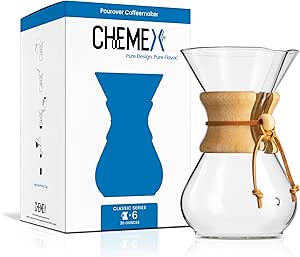
For a simple home pour-over setup, I like using a brewer such as the Hario V60 Ceramic Coffee Dripper, Chemex Classic 6-Cup Coffeemaker, or Kalita Wave 185 Dripper. A scale like the Hario V60 Drip Scale, a controlled kettle such as the Fellow Stagg EKG, and a burr grinder like the Baratza Encore ESP or Fellow Ode Brew Grinder Gen 2 make dialing in much easier. But even with basic tools, you can improve your pour-over dramatically if you adjust with purpose.
Best Pour-Over Coffee Makers in 2026
| Image | Product | Features | Price |
|---|---|---|---|
|
Best Iconic Brewer
|
Borosilicate glass purity
|
Price on Amazon | |
|
Best Classic Dripper

|
Ceramic heat retention
|
Price on Amazon | |
|
Best Balanced Brewing

|
Flat-bed wave design
|
Price on Amazon | |
|
Best Travel-Friendly

|
Durable stainless steel
|
Price on Amazon | |
|
Best One-Pour Style

|
Low-bypass ribs
|
Price on Amazon | |
|
Best Starter Set

|
Dripper + server kit
|
Price on Amazon | |
|
Best Low-Effort

|
Auto-drip water tank
|
Price on Amazon | |
|
Best Modern Daily

|
Controlled drip system
|
Price on Amazon | |
|
Best Reusable Filter
|
Stainless mesh included
|
Price on Amazon | |
|
Best Budget Classic

|
Simple cone brewer
|
Price on Amazon |
The Quick Answer: How to Dial In Pour-Over Coffee
Start with a baseline recipe, taste the cup, then adjust one variable at a time.
| Taste Problem | Likely Cause | First Adjustment |
|---|---|---|
| Sour, sharp, thin | Under-extracted | Grind finer |
| Bitter, dry, harsh | Over-extracted | Grind coarser |
| Balanced but weak | Ratio too light | Use more coffee or less water |
| Balanced but too strong | The ratio is too concentrated | Add water or use less coffee |
| Hollow | Missing sweetness/body | Grind finer or use stronger ratio |
| Muddy | Too many fines/agitation | Grind coarser, pour gentler |
| Flat | Stale beans or water issue | Use fresher beans/better water |
| Slow drawdown | Grind too fine or too many fines | Grind coarser |
| Fast drawdown | Grind too coarse | Grind finer |
| Dry finish | Over-extraction | Coarser grind or cooler water |
A very good beginner V60-style baseline is the following:
| Variable | Starting Point |
|---|---|
| Coffee | 20 g |
| Water | 320 g |
| Ratio | 1:16 |
| Grind | Medium-fine |
| Water temperature | 200°F / 93°C |
| Bloom | 40–60 g for 30–45 sec |
| Total brew time | 2:45–3:45 |
This recipe is not magic. It is a starting point. The real dialing-in happens after you taste it.
What “Dialing In” Really Means
Dialing in simply means adjusting a coffee recipe until the extraction and strength feel right. Extraction is how much flavor water pulls from the coffee grounds. Strength is how concentrated the final drink feels. Those two ideas are related, but they are not the same.
A cup can be weak but well-extracted. That means it tastes balanced but watery. The fix is a ratio.
A cup can be strong but under-extracted. That means it is intense but sour or sharp. The fix is extraction.
A cup can be strong and over-extracted. That means it is intense, bitter, and dry. The fix is gentler brewing.
A cup can be weak and over-extracted. That sounds strange, but it happens when coffee is diluted yet still tastes bitter because the grind was too fine or the brew stalled.
| What You Taste | What It Means | What to Change |
|---|---|---|
| Balanced but watery | Not enough concentration | Ratio |
| Sour and thin | Not enough extraction | Grind/time/temp |
| Bitter and dry | Too much extraction | Grind/time/temp |
| Heavy and cloudy | Too many fines or agitation | Grinder/pour/filter |
| Pleasant but too intense | Strong concentration | Add water |
| Empty and papery | Stale beans or poor extraction | Freshness/extraction |
Dialing in pour-over is about separating these problems instead of treating every bad cup the same way.
Start with the Right Coffee-to-Water Ratio
For pour-over, the safest starting ratio is usually 1:16. That means 1 gram of coffee for every 16 grams of water.
A 1:16 recipe gives enough strength without becoming too heavy. It also gives enough clarity without becoming watery.
| Coffee | Water | Ratio |
|---|---|---|
| 12 g | 192 g | 1:16 |
| 15 g | 240 g | 1:16 |
| 20 g | 320 g | 1:16 |
| 25 g | 400 g | 1:16 |
| 30 g | 480 g | 1:16 |
If you want a fuller cup, try 1:15.
If you want a lighter cup, try 1:17.
If the cup tastes balanced but weak, strengthen the ratio before changing the grind.
If the cup tastes sour or bitter, fix the extraction first.
| Cup Goal | Ratio |
|---|---|
| Light and delicate | 1:17 |
| Balanced daily cup | 1:16 |
| Fuller and sweeter | 1:15 |
| Stronger cup | 1:14 |
| Large batch clarity | 1:16–1:17 |
For dialing in, I recommend starting at 1:16 and only changing the ratio after you understand whether the coffee is under- or over-extracted.
Choose the Right Pour-Over Grind Size
Grind size is the most important pour-over adjustment. It controls how quickly water flows through the coffee and how much flavor is extracted.
For most cone-shaped pour-over brewers like V60, start with a medium-fine grind, similar to fine sand. For Chemex, start a little coarser because the filter is thicker and the brew size is often larger. For Kalita Wave, a medium grind usually works well.
| Brewer | Starting Grind |
|---|---|
| V60 | Medium-fine |
| Chemex | Medium-coarse |
| Kalita Wave | Medium |
| Melitta cone | Medium |
| Origami | Medium-fine to medium |
| Large batch pour-over | Slightly coarser |
The simplest grind-size rule is
Sour and fast = grind finer.
Bitter and slow = grind coarser.
If the coffee drains too quickly, the water is not extracting enough. If the brew stalls and drips slowly for too long, the water is extracting too much, or the filter is clogged with fines.
| Brew Result | Grind Adjustment |
|---|---|
| Drains too fast | Finer |
| Tastes sour | Finer |
| Tastes hollow | Slightly finer |
| Drains too slowly | Coarser |
| Tastes bitter | Coarser |
| Tastes muddy | Coarser |
| The bed looks like wet clay | Coarser or better grinder |
Do not make huge grind jumps. Move one or two settings at a time, then brew again.
Use Brew Time as a Clue, Not a Law
Brew time is one of the most useful clues in pour-over, but it is not the final judge. Taste is the final judge.
A 20 g V60 often lands around 2:45 to 3:45. A Chemex may take 4:00 to 5:30. A Kalita Wave may sit from 3:00 to 4:30. These ranges are starting zones, not rules.
| Brewer | Typical Time Range |
|---|---|
| Small V60 | 2:00–3:15 |
| Standard V60 | 2:45–3:45 |
| Chemex | 4:00–5:30 |
| Kalita Wave | 3:00–4:30 |
| Large pour-over batch | 4:30–6:00 |
If the brew finishes much faster than expected and tastes sour, grind finer. If it finishes much slower than expected and tastes bitter, grind coarser. If the time is normal but the coffee tastes off, look at the temperature, ratio, bloom, and pouring.
| Time + Taste | Meaning | Fix |
|---|---|---|
| Fast + sour | Under-extracted | Grind finer |
| Fast + weak | Too coarse or too light ratio | Grind finer or stronger ratio |
| Slow + bitter | Over-extracted | Grind coarser |
| Slow + muddy | Fines/agitation | Coarser grind, gentler pouring |
| Normal + sour | Water too cool or grind still coarse | Hotter water or finer grind |
| Normal + bitter | Water too hot or too much agitation | Cooler water or gentler pour |
Brew time helps you understand what happened. It should not make decisions for you without tasting.
Pick a Sensible Water Temperature
Water temperature affects extraction speed. Hotter water extracts more. Cooler water extracts more gently.
For most pour-over coffee, start around 200°F / 93°C. Use hotter water for light roasts and cooler water for darker roasts.
| Roast Level | Starting Temperature |
|---|---|
| Light roast | 202–205°F |
| Medium-light | 200–203°F |
| Medium | 198–202°F |
| Medium-dark | 195–198°F |
| Dark roast | 190–195°F |
If a light roast tastes sour and thin, use hotter water. If a dark roast tastes bitter and dry, use cooler water.
Without a temperature-control kettle, use this simple approach:
| Target | Simple Method |
|---|---|
| Very hot for light roast | Use water just off boil |
| Around 200°F | Boil, wait 30 sec |
| Around 195°F | Boil and wait 60–90 sec |
| Around 190°F | Boil and wait 2 min |
A kettle like the Fellow Stagg EKG makes this easier, but you can still dial in without one.
Bloom Properly Before the Main Pour
Bloom is the first small pour that wets the coffee and lets gas escape. It helps reduce dry pockets and improve extraction consistency.
For pour-over, bloom with 2 to 3 times the coffee weight in water.
| Coffee Dose | Bloom Water |
|---|---|
| 12 g | 24–36 g |
| 15 g | 30–45 g |
| 20 g | 40–60 g |
| 25 g | 50–75 g |
| 30 g | 60–90 g |
For a 20 g V60, I usually bloom with about 50 g water and wait 30–45 seconds.
A good bloom should wet the entire coffee bed. If you see dry pockets, gently swirl or stir. If the bloom is uneven, extraction will be uneven too.
| Bloom Problem | Cup Result | Fix |
|---|---|---|
| Too little bloom water | Dry pockets | Use 2–3× coffee weight |
| The bloom is too short | Gas disrupts main pour | Wait 30–45 sec |
| Bloom too aggressive | Bed disturbed | Pour gently |
| Dry edges | Uneven extraction | Wet edges during bloom |
| No bloom at all | Stale coffee or old pre-ground | Use fresher beans |
Bloom water counts as part of the total brew water. If your recipe uses 320 g total water and you bloom with 50 g, your final scale reading should still be 320 g.
Build a Repeatable Pouring Pattern
Pouring technique matters, but it does not need to be theatrical. The goal is to wet the coffee evenly, maintain a stable bed, and avoid either flooding or drying the bed too dramatically.
A simple pouring structure for 20 g of coffee and 320 g of water:
| Pour | Target Scale Reading | Notes |
|---|---|---|
| Bloom | 50 g | Wait 30–45 sec |
| Pour 1 | 150 g | Slow circles |
| Pour 2 | 240 g | Keep bed even |
| Pour 3 | 320 g | Finish gently |
This is easy to repeat. You do not need ten tiny pours unless you enjoy that style.
Keep your pour controlled:
- pour in gentle circles
- avoid blasting the bed
- Avoid pouring only in the center
- Avoid pouring aggressively on the paper wall
- keep the kettle stream steady
- Let the bed drain slightly between pours
- Do not stir or swirl excessively unless needed
Too little agitation can under-extract. Too much agitation can clog the filter and make the cup bitter or muddy. The best technique is controlled, repeatable, and calm.
Dial In V60 Coffee
V60 is expressive and sensitive. It can make beautiful coffee, but it responds quickly to grind and pouring changes. Because it is cone-shaped and fast-flowing, grind size and pour control matter a lot.
V60 Baseline Recipe
| Variable | Amount |
|---|---|
| Coffee | 20 g |
| Water | 320 g |
| Ratio | 1:16 |
| Grind | Medium-fine |
| Temperature | 200°F |
| Bloom | 50 g for 30–45 sec |
| Total time | 2:45–3:45 |
V60 Dial-In Table
| Taste / Brew Result | Fix |
|---|---|
| Sour and fast | Grind finer |
| Bitter and slow | Grind coarser |
| Hollow | Slightly finer grind or stronger ratio |
| Muddy | Grind coarser, pour gentler |
| Weak but balanced | Use 1:15 |
| Harsh dark roast | Lower temperature |
| Light roast sour | Hotter water |
| Dry finish | Coarser grind or cooler water |
With the V60, I usually adjust the grind first. Once the brew time is reasonable, I use temperature and ratio to polish the flavor.
Dial In Chemex Coffee
Chemex is clean and elegant because of its thick paper filter. That filter gives clarity, but it can also make the cup taste thin if the recipe is too light or the grind is too coarse.
Chemex Baseline Recipe
| Variable | Amount |
|---|---|
| Coffee | 30 g |
| Water | 480 g |
| Ratio | 1:16 |
| Grind | Medium-coarse |
| Temperature | 202°F |
| Bloom | 80–90 g for 45 sec |
| Total time | 4:00–5:30 |
Chemex Dial-In Table
| Taste / Brew Result | Fix |
|---|---|
| Thin and hollow | Use stronger ratio or grind finer |
| Sour and quick | Grind finer, hotter water |
| Bitter and slow | Grind coarser |
| Dry finish | Coarser grind or cooler water |
| Too clean/light | Use 1:15 |
| Drawdown stalls | Coarser grind, less agitation |
| Weak aroma | Fresher beans or hotter water |
| Dark roast harsh | Cooler water |
Chemex will never feel as heavy as a French press. Dial it for sweetness, clarity, and smoothness—not heavy body.
Dial In Kalita Wave Coffee
Kalita Wave is usually more forgiving than V60 because it has a flat-bottom design and small drain holes. It can produce a rounded, balanced cup with less dramatic acidity.
Kalita Wave Baseline Recipe
| Variable | Amount |
|---|---|
| Coffee | 20 g |
| Water | 320 g |
| Ratio | 1:16 |
| Grind | Medium |
| Temperature | 200°F |
| Bloom | 50 g for 30–45 sec |
| Total time | 3:00–4:15 |
Kalita Dial-In Table
| Taste / Brew Result | Fix |
|---|---|
| Sour | Grind slightly finer |
| Bitter | Grind coarser |
| Hollow | Stronger ratio |
| Muddy | Reduce agitation |
| Slow flow | Coarser grind |
| Weak | Use 1:15 |
| Flat | Hotter water or fresher beans |
| Dark roast, bitter | Cooler water |
Kalita is excellent if you want pour-over control but less V60 drama.
How to Fix Sour Pour-Over
A sour pour-over is usually under-extracted. The water did not pull enough sweetness and body from the grounds.
Try this order:
- Grind finer.
- Use hotter water.
- Bloom more evenly.
- Pour more slowly or in smaller stages.
- Use a slightly stronger ratio if the cup is also weak.
| Sour Cause | Fix |
|---|---|
| Grind too coarse | Grind finer |
| The water is too cool | Use hotter water |
| Brew too fast | Grind finer |
| Bloom uneven | Wet all grounds |
| Light roast | Use 203–205°F |
| Ratio too light | Try 1:15–1:16 |
A sour cup is asking for more extraction. Do not fix it by grinding coarser or cooling the water.
How to Fix Bitter Pour-Over
Bitter pour-over is usually over-extracted. The brew went too far, or the extraction was too aggressive.
Try this order:
- Grind coarser.
- Lower water temperature.
- Reduce agitation.
- Shorten brew time.
- Use a less aggressive pouring pattern.
| Bitter Cause | Fix |
|---|---|
| Grind too fine | Grind coarser |
| Water too hot | Use cooler water |
| Brew too slowly. | Coarser grind |
| Too much swirling | Reduce agitation |
| Dark roast | Use 190–195°F |
| Filter clogged | Coarser grind / better grinder |
A bitter cup is asking for gentler extraction. Do not fix it by brewing longer.
How to Fix Weak Pour-Over
Weak pour-over can mean two different things. If it tastes balanced but watery, the ratio is too light. If it tastes weak and sour, the extraction is too low.
| Weak Coffee Type | Fix |
|---|---|
| Balanced but weak | Use more coffee or less water |
| Weak and sour | Grind finer |
| Weak and hollow | Stronger ratio or hotter water |
| Weak and flat | Check freshness |
| Weak iced pour-over | Count ice as brew water |
| Weak Chemex | Use 1:15 and hotter water |
Try moving from 1:17 to 1:16 or from 1:16 to 1:15. If the cup becomes fuller without bitterness, the ratio was the issue.
How to Fix Muddy Pour-Over
Muddy pour-over usually means too many fines, too much agitation, or a grind that is too fine.
| Muddy Cause | Fix |
|---|---|
| Grind too fine | Grind coarser |
| Grinders produce fines | Use better burr grinder |
| Too much stirring/swirl | Reduce agitation |
| Drawdown stalls | Coarser grind |
| The bed looks sludgy | Coarser grind / gentler pour |
| Dark oily beans | Try medium roast |
| Reusable filter | Try a paper filter |
A muddy pour-over often tastes heavy but not sweet. Clean up the flow before strengthening the ratio.
How to Dial In Light Roast Pour-Over
Light roasts often need more extraction. They are denser and harder to extract than darker roasts.
For light roast pour-over, try the following:
| Variable | Starting Point |
|---|---|
| Ratio | 1:15.5 to 1:16 |
| Temperature | 202–205°F |
| Grind | Medium-fine |
| Bloom | 45 sec |
| Brew time | Slightly longer than medium roast |
If light roast tastes sour, grind finer or use hotter water. If it tastes thin, strengthen the ratio. If it tastes bitter and sour together, improve pouring and saturation because uneven extraction may be the problem.
How to Dial In Medium Roast Pour-Over
Medium roasts are the easiest to dial in because they usually have enough sweetness and body without extracting too harshly.
For medium roast pour-over:
| Variable | Starting Point |
|---|---|
| Ratio | 1:16 |
| Temperature | 198–202°F |
| Grind | Medium-fine for V60 |
| Bloom | 30–45 sec |
| Brew time | Normal range |
A medium roast like Stumptown Holler Mountain Whole Bean Coffee can be a helpful learning coffee because it has enough sweetness and structure to show recipe changes clearly. Lavazza Qualità Oro Whole Bean Coffee can work if you prefer a smoother profile.
How to Dial In Dark Roast Pour-Over
Dark roasts extract easily, so they usually need gentler brewing. If you brew them too hot, too fine, or too long, they can taste bitter and dry.
For dark roast pour-over:
| Variable | Starting Point |
|---|---|
| Ratio | 1:16 to 1:17 |
| Temperature | 190–195°F |
| Grind | Medium to medium-fine |
| Bloom | 30 sec |
| Brew style | Gentle pouring |
If dark roast tastes bitter, use cooler water and grind coarser. If it tastes weak but not bitter, strengthen the ratio slightly. If it tastes hollow and bitter, check freshness and avoid over-agitation.
Keep Notes While Dialing In
A simple brew log makes dialing in much easier. You do not need anything fancy.
Write down:
- coffee name
- roast level
- brewer
- dose
- water
- grind setting
- temperature
- bloom
- total brew time
- taste
- next change
Example:
| Brew | Grind | Temp | Time | Taste | Next Change |
|---|---|---|---|---|---|
| 1 | 16 | 200°F | 2:25 | Sour, thin | Finer grind |
| 2 | 14 | 200°F | 3:05 | Better, slight hollow | Stronger ratio |
| 3 | 14 | 200°F | 3:10 | Sweet, balanced | Keep |
Notes save beans because they stop you from repeating the same mistake.
Dial In Pour-Over Without Wasting Beans
You do not need to brew 30 g batches while experimenting. Use a smaller recipe first.
Low-Waste V60 Test Recipe
| Variable | Amount |
|---|---|
| Coffee | 12 g |
| Water | 192 g |
| Ratio | 1:16 |
| Bloom | 30 g |
| Total time | 2:00–3:15 |
Taste and adjust. Once the small brew tastes close, scale up.
| Small Recipe | Full Recipe |
|---|---|
| 12 g coffee + 192 g water | 20 g coffee + 320 g water |
| 15 g coffee + 240 g water | 25 g coffee + 400 g water |
| 18 g coffee + 288 g water | 30 g coffee + 480 g water |
A small brew may flow slightly differently from a larger brew, but it teaches you the direction without wasting as much coffee.
Best Tools for Dialing In Pour-Over
| Tool | Suggested Option | Why It Helps |
|---|---|---|
| Pour-over dripper | Hario V60 Ceramic Coffee Dripper | Classic responsive brewer |
| Clean batch brewers | Chemex Classic 6-Cup | Clear, elegant cups |
| Flat-bottom dripper | Kalita Wave 185 | More forgiving flow |
| Scale with timer | Hario V60 Drip Scale | Tracks ratio and time |
| Temperature kettle | Fellow Stagg EKG | Controlled pouring and heat |
| Burr grinder | Baratza Encore ESP | Flexible grind control |
| Brew grinder | Fellow Ode Brew Grinder Gen 2 | Cleaner filter coffee |
| Manual grinder | TIMEMORE Chestnut C2 | Compact consistency |
If you already have a brewer, the best upgrades are usually a grinder and a scale. Better grind consistency and accurate ratios make the biggest difference.
My Personal Pour-Over Dial-In Routine
When I open a new bag, I usually start with 20 g of coffee, 320 g of water, a medium-fine grind, 200°F water, and a 45-second bloom. If it is a light roast, I go hotter. If it is a dark roast, I go cooler. I keep the ratio at 1:16 for the first brew because I want to judge extraction before changing strength.
Then I taste.
If the coffee is sour and fast, I grind finer.
If it is bitter and slow, I grind coarser.
If it is balanced but weak, I use a stronger ratio.
If it is hollow, I either grind slightly finer or use a touch less water.
If it is muddy, I grind coarser and pour more gently.
If it is flat, I check the beans and water.
My goal is not to produce the perfect cup on the first try. My goal is to make the second brew better than the first. That approach keeps pour-over calm, repeatable, and enjoyable.
Final Thoughts: Dialing In Pour-Over Is Taste-Based, Not Recipe-Based
Dialing in pour-over coffee is about listening to the cup. A recipe gives you a starting point, but taste tells you what to do next. Start with a sensible ratio like 1:16, a medium-fine grind for V60, water around 200°F for medium roasts, a 30–45 second bloom, and a total brew time around 2:45–3:45. Then taste.
If the cup is sour, grind finer or use hotter water. If it is bitter, grind coarser or lower the temperature. If it is weak but balanced, use more coffee or less water. If it is hollow, improve extraction or strengthen the ratio. If it is muddy, reduce fines and agitation.
The best pour-over is not the one that follows a recipe perfectly. It is the one that tastes balanced in your cup, with your grinder, your water, your beans, and your brewer. Once you learn how to adjust by taste, every new bag becomes easier to understand.
FAQ: How to Dial In Pour-Over Coffee
What does it mean to dial in pour-over coffee?
Dialing in pour-over coffee means adjusting grind size, ratio, water temperature, bloom, brew time, and pouring technique until the cup tastes balanced, sweet, and clear.
What is the best starting ratio for pour-over?
A good starting ratio is 1:16, such as 20 g coffee to 320 g water. Use 1:15 for a fuller cup and 1:17 for a lighter cup.
What grind size should I use for pour-over?
For a V60, start with a medium-fine grind. For Chemex, start with medium-coarse. For Kalita Wave, start with a medium grind.
Why does my pour-over taste sour?
A sour pour-over usually means under-extraction. Grind finer, use hotter water, improve bloom, or slow the brew slightly.
Why does my pour-over taste bitter?
Bitter pour-over usually means over-extraction. Grind coarser, use cooler water, reduce agitation, or shorten brew time.
Why does my pour-over taste weak?
If it tastes balanced but weak, use a stronger ratio. If it tastes weak and sour, grind finer or use hotter water.
How long should a pour-over take?
A standard V60 often takes around 2:45–3:45, while Chemex often takes 4:00–5:30. Taste matters more than exact time.
How much bloom water should I use?
Use 2–3 times the coffee weight. For 20 g of coffee, bloom with 40–60 g of water for 30–45 seconds.
Should I change the grind or ratio first?
Change grind if the coffee tastes sour, bitter, hollow, or muddy. Change the ratio if the coffee tastes balanced but too weak or too strong.
How do I dial in pour-over without wasting beans?
Use a smaller test brew, such as 12 g of coffee to 192 g of water. Change one variable at a time and keep simple notes.


