
The Great Grinder Debate: Blade vs. Burr in Brewing Outcomes


OneHundredCoffee is reader-supported, and some products displayed may earn us an affiliate commission. Details
Coffee lovers know that a grinder is one of the most important tools for achieving a truly satisfying cup. You can buy beautiful beans, store them perfectly, use great water… and still end up with a flat, bitter, or muddy brew if your grind is all over the place. And that’s exactly why the blade grinder vs burr grinder debate never dies. It’s not just coffee snob talk—it’s about how each grinder type shapes flavor, aroma, clarity, and even how “easy” your morning brew feels.
Because here’s the truth I learned the hard way: grind consistency is basically the hidden engine of good coffee. It determines how evenly your coffee extracts. Even extraction tastes sweet, balanced, and clean. Uneven extraction tastes like mixed signals—one sip is sour, the next is harsh, the finish is dusty or bitter. And most of that comes down to whether your grinder produces uniform particles… or a chaotic mix of boulders and powder.
Best Selling Coffee Bean Grinders in 2026
| Image | Product | Features | Price |
|---|---|---|---|
|
Best everyday burr

|
Consistent all-brew grinding
|
Price on Amazon | |
|
Best for espresso dial-in

|
Micro-adjust dosing control
|
Price on Amazon | |
|
Best no-fuss burr

|
One-touch smart memory
|
Price on Amazon | |
|
Best value burr

|
Slide-dial simplicity
|
Price on Amazon | |
|
Best pour-over flavor

|
Flat burr clarity
|
Price on Amazon | |
|
Best quiet budget burr

|
Low-speed aroma grind
|
Price on Amazon | |
|
Best compact burr

|
Preset timer dosing
|
Price on Amazon | |
|
Best easy-clean blade

|
Dishwasher-safe bowl
|
Price on Amazon | |
|
Best cheap blade

|
Quick one-touch pulse
|
Price on Amazon | |
|
Best travel hand grinder

|
Smooth, even hand grind
|
Price on Amazon |
So if you’ve ever searched: “Are burr grinders really worth it?” “Why does my coffee taste bitter?” “Can a blade grinder make good coffee?” “Best grinder for espresso vs pour-over?”—This is the guide you were hoping to land on. Let’s break it down in a friendly, real-world way, with examples you can actually picture and use.
Why this debate matters: the grind controls extraction
When hot water hits coffee grounds, it pulls out compounds at different speeds. Some dissolve fast (bright acids and lighter aromatics), others slower (sweetness, body, deeper flavors). If your grounds are even, water extracts them at a similar pace, and you get a clean, balanced cup. If your grounds are uneven, the tiny particles over-extract (bitterness, dryness) while the big chunks under-extract (sourness, weak aroma). That’s why coffee from an inconsistent grind often tastes like it’s fighting itself.
This is the core reason burr grinders have such a strong reputation: they give you far more control over particle size—and control equals repeatability.
Blade grinders: what they are, and why they’re tempting
Best Blade Coffee Grinders in 2026
| Image | Product | Features | Price |
|---|---|---|---|
|
Best overall classic
|
Fast, even pulse grind
|
Price on Amazon | |
|
Best easy-clean pick
|
Removable dishwasher-safe bowl
|
Price on Amazon | |
|
Best budget value

|
Simple, fast everyday grinding
|
Price on Amazon | |
|
Best simple safety-lock

|
Safer lid interlock design
|
Price on Amazon | |
|
Best larger-batch blade

|
Holds more per grind
|
Price on Amazon | |
|
Best no-fuss option

|
Straightforward daily grinding
|
Price on Amazon | |
|
Best premium build

|
Removable marked steel bowl
|
Price on Amazon | |
|
Best Amazon’s Choice

|
Strong one-touch control
|
Price on Amazon | |
|
Best for spices too

|
Low-heat grinding chamber
|
Price on Amazon | |
|
Best compact design

|
Quick, controlled pulsing
|
Price on Amazon |
Blade grinders are usually small, affordable, and fast. They work like a tiny spinning propeller that chops beans into smaller pieces. If you’ve ever used one, you already know the vibe: you press the button, it gets loud, the beans bounce around, and you stop when it “looks” right.
That last part is the problem.
Because a blade grinder doesn’t really grind in a uniform way—it chops randomly. Some pieces get chopped multiple times into fine dust, while other pieces stay chunky. You can shake the grinder, pulse it, tilt it—sure, you can improve results a bit. But the design doesn’t naturally produce consistency.
Still, blade grinders aren’t useless. They can be okay for:
- casual drip coffee (if you’re not picky)
- French press when you don’t mind some extra sludge
- cold brew (where long steep times forgive a lot)
- people who just want “coffee” quickly and cheaply
If your goal is simply to break beans down for a basic cup, a blade grinder like the Hamilton Beach Fresh Grind Electric Coffee Grinder gets the job done. And a popular classic like the KRUPS Silent Vortex Electric Grinder is often chosen because it feels more refined (and less shrieky) than many budget blades.
But if you’re chasing clarity, sweetness, and that “wow, this tastes like a café” moment, blade grinders start hitting a ceiling fast.
Burr grinders: what they do differently (and why coffee tastes better)
Best Burr Coffee Grinders in 2026
| Image | Product | Features | Price |
|---|---|---|---|
|
Best entry-level burr
|
Easy, consistent daily grind
|
Price on Amazon | |
|
Best budget espresso burr

|
Micro steps for espresso
|
Price on Amazon | |
|
Best upgrade pick
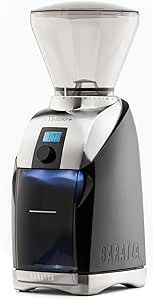
|
Timed dosing precision
|
Price on Amazon | |
|
Best all-rounder controls
|
60-step dosing control
|
Price on Amazon | |
|
Best simple convenience

|
Set-and-forget grinding
|
Price on Amazon | |
|
Best brewed-coffee clarity

|
Sweet, clean cups
|
Price on Amazon | |
|
Best premium espresso

|
Quiet, stepless espresso
|
Price on Amazon | |
|
Best manual consistency

|
Legendary hand-grind feel
|
Price on Amazon | |
|
Best manual value

|
Fast, consistent hand grind
|
Price on Amazon | |
|
Best compact travel burr

|
Smooth, stable grinding
|
Price on Amazon |
A burr grinder uses two burrs (usually conical or flat) that crush coffee beans into a more uniform particle size. Instead of chopping randomly, burr grinders “set” the grind size and push beans through a consistent gap. That’s why burr grinders are the standard for serious coffee brewing.
The payoff shows up immediately in the cup:
- more balanced flavor
- cleaner finish
- stronger aroma
- less bitterness and less sourness
- easier dialing in for your brew method
If you brew pour-over, consistency is everything. If you brew espresso, consistency is non-negotiable. And if you brew French press, burr grinders help you avoid that gritty mud at the bottom.
A beginner-friendly electric burr grinder that’s famous for being a “first real upgrade” is the Baratza Encore Conical Burr Coffee Grinder. It’s not hype—its grind quality is genuinely steady for most non-espresso brewing styles. If you want an even more compact, modern feel, the OXO Brew Conical Burr Coffee Grinder is another solid choice for everyday drip, AeroPress, and pour-over workflows.
And if you’re the kind of person who travels, or you simply love the ritual and control of grinding by hand, a manual burr grinder like the TIMEMORE Chestnut C2 Manual Coffee Grinder gives you burr-level consistency without needing a loud motor on your countertop.
How each grinder impacts flavor, aroma, and “cup quality.”
This is the part people feel immediately—even if they don’t know what “extraction” means.
With a blade grinder…
Your cup tends to swing between:
- harsh bitterness (from fine dust over-extracting)
- sour/weak notes (from big chunks under-extracting)
- muddier aroma (because uneven extraction masks clarity)
- more sediment (especially in the French press)
You can still make drinkable coffee, but it often feels inconsistent. One day it’s okay, next day it tastes oddly sharp, and you don’t know what changed—even though nothing changed except where the beans happened to land under the blade.
With a burr grinder…
You get:
- more sweetness and balance
- clearer flavor notes (fruit, chocolate, florals)
- a smoother finish
- more repeatable brews
- better control for different brew styles
In other words, burr grinders tend to make coffee taste more “intentional.”
Quick comparison table: blade vs burr grinders
| Feature | Blade Grinder | Burr Grinder |
|---|---|---|
| Grind consistency | Rough “by feel.” | High (uniform particles) |
| Best for | Basic drip, cold brew | Pour-over, espresso, consistent drip |
| Flavor result | Often bitter/sour mix | Sweeter, clearer, more balanced |
| Control over grind size | Rough “by feel” | Precise settings |
| Coffee sediment | More likely | Less likely |
| Price range | Lower | Higher (but worth it) |
Matching your grinder choice to your brew method
If you only brew one style, this gets even simpler.
If you brew espresso
Burr grinder. Full stop. Espresso needs tight, consistent particles to build proper pressure and extraction. If you’re going espresso-focused, you’ll typically want a grinder designed for espresso ranges, like the Breville Smart Grinder Pro, which offers more fine-tuning and a grind range that can actually serve espresso workflows.
If you brew pour-over (V60, Chemex, Kalita)
Burr grinders shine here because pour-over exposes inconsistency. Uneven grind = uneven flow = muddled taste. A grinder like the Baratza Encore or a good hand grinder like the TIMEMORE Chestnut C2 makes a noticeable difference.
If you brew a French press
You can use a blade grinder, but a burr gives you a cleaner cup and less sludge. A burr grinder set to coarse is one of the easiest upgrades for French press lovers.
If you brew cold brew
Cold brew is forgiving. Blade grinders can work, especially if you pulse carefully. But burr grinders still improve clarity, consistency, and reduce dusty bitterness.
The “real life” answer: Is a burr grinder worth it?
If you care about flavor, yes. A burr grinder is one of the most impactful upgrades you can make—often more noticeable than switching brewers.
The burr grinder advantage isn’t just “better coffee.” It’s also:
- easier brewing (less trial-and-error)
- predictable results (your recipe finally works consistently)
- less frustration (no more “why does this taste off today?”)
Blade grinders are fine if you’re starting, brewing casually, or keeping a budget setup. But if you’re chasing café-level results at home, burr grinders are where the magic becomes repeatable.


