
Best Siphon Coffee Makers (2026 Guide)


OneHundredCoffee is reader-supported, and some products displayed may earn us an affiliate commission. Details
Best Siphon Coffee Makers: My Favorite Vacuum Brewers
I will be honest: siphon coffee is not the machine I reach for when I am already late, holding my phone in one hand, and trying to make breakfast with the other. That is not its job. I have discussed easy single-serve coffee makers, cold brew makers, Breville machines, and portable espresso tools before, and those are built around speed, convenience, and daily rhythm. Siphon coffee leaves in a completely different mood. This is the brewer I bring out when I want coffee to feel like an event.
A siphon coffee maker looks like something between a science experiment and a small café performance. Water rises. Coffee blooms in the upper chamber. The flame or heat source keeps everything alive for a short, controlled brew. Then the heat goes away, the lower chamber cools, and the finished coffee gets pulled back down through the filter. The first time you use one, you do not just make coffee — you watch coffee happen.
That drama is not only for show. Siphon coffee can taste beautifully clean because it combines immersion-style brewing with filtered separation. The grounds get full contact with hot water, but the finished cup is pulled through a filter instead of staying muddy like a French press. When I use a good medium roast, a medium-fine grind, and a short brew window around 60 to 90 seconds after the water rises, the cup can come out bright, aromatic, and almost tea-like in clarity.
But I also want to be fair. Siphon brewing is not the easiest method. It has glass parts. It needs attention. It needs cleaning. It works best when you measure coffee and water instead of guessing. It is not ideal if you want a machine that disappears into the background. But if you enjoy coffee rituals, if you like brewing for guests, or if you want a coffee maker that makes the counter feel alive, siphon coffee is one of the most satisfying home-brewing methods you can own.
Best Siphon Coffee Makers — At a Glance
| Image | Product | Features | Price |
|---|---|---|---|
|
Best Overall Classic
|
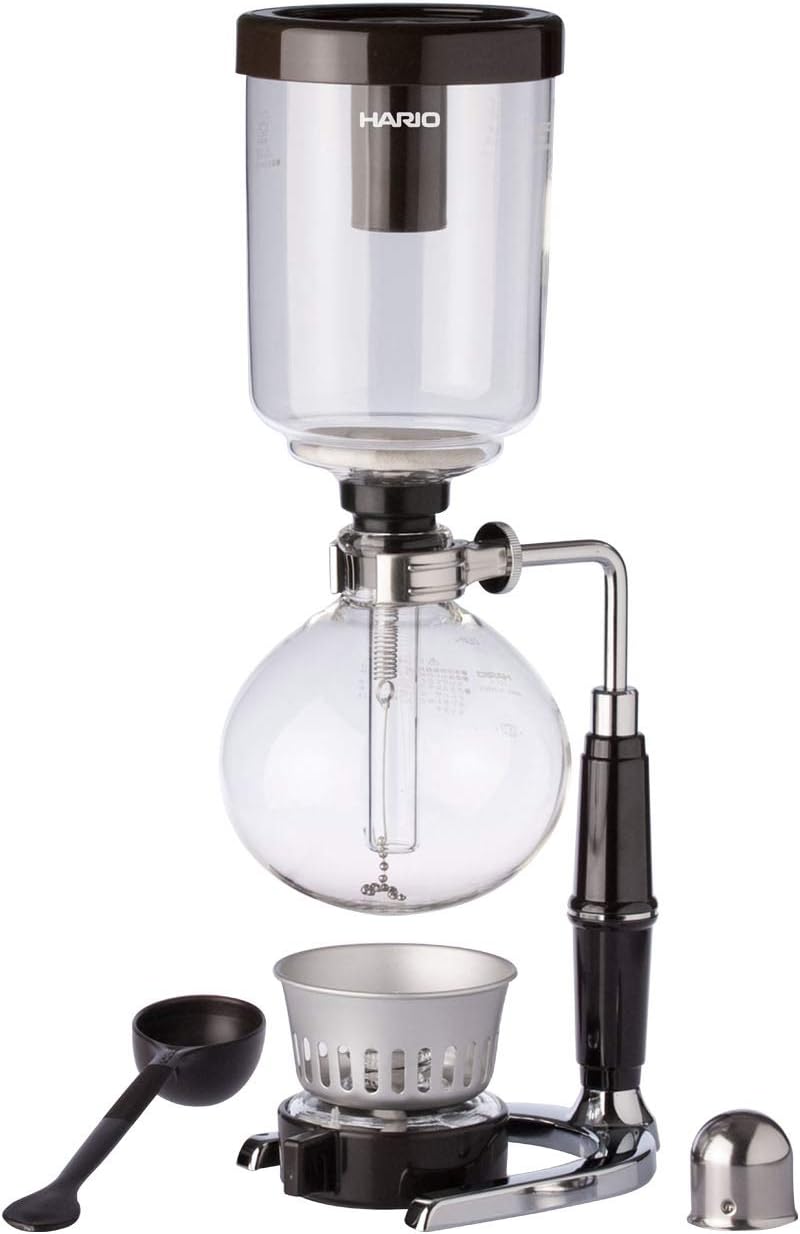
Classic 5-cup glass syphon
|
Price on Amazon | |
|
Best Stovetop Pick

|
Large stovetop vacuum brewer
|
Price on Amazon | |
|
Best Simple Vacuum Brewer

|
Clear glass vacuum brewing
|
Price on Amazon | |
|
Best Showpiece Brewer

|
Balance siphon display brewing
|
Price on Amazon |
Quick Ranking: Best Siphon Coffee Makers
| Rank | Siphon Coffee Maker | Best For | Why It Makes Sense |
|---|---|---|---|
| 1 | Yama Glass 8-Cup Stovetop Siphon Coffee Maker | Best Overall Stovetop Pick | 24 oz / 8-cup capacity, sturdy stovetop routine, great for serving more than one person |
| 2 | Hario Technica 5-Cup Glass Syphon Coffee Maker | Best Classic Tabletop Pick | 600 ml / 5-cup design, elegant café-style brewing, excellent for ritual and flavor control |
| 3 | Bodum PEBO 8-Cup Vacuum Coffee Maker | Best Large-Capacity Glass Pick | 1 L / 34 oz capacity, clean design, good for larger shared brews |
| 4 | Diguo Belgian Balance Syphon Coffee Maker | Best Showpiece Balance Brewer | 500 ml / 17 oz capacity, rose-gold balance design, strongest conversation piece |
Best Siphon Coffee Makers: Detailed Reviews
1. Best Overall Stovetop Pick: Yama Glass 8-Cup Stovetop Siphon Coffee Maker
Best stovetop siphon coffee maker for 24 oz vacuum brewing, 8-cup weekend batches, clean glass coffee flavor, guest-friendly presentation, and a steadier home kitchen ritual
Yama Glass 8-Cup Stovetop Siphon Coffee MakerThe Yama Glass 8-Cup is my favorite practical siphon for home use because the 24 oz size makes the brewing ritual feel worthwhile. It gives you the drama of vacuum coffee with a more stable stovetop routine and enough coffee for sharing.
Price on AmazonTechnical Specifications & Daily Features
- Brewer type: Stovetop siphon / vacuum coffee maker
- Capacity: 8 cups / 24 oz
- Approximate dimensions: 7 in D x 7 in W x 12 in H
- Material: Heat-resistant borosilicate glass
- Heat compatibility: Gas and electric stovetop use
- Filter style: Reusable cloth filter system
- Daily ratio I like: 30 g coffee to 500 g water for testing
- Best brew time: About 60–90 seconds after full water rise
- Best user: Home brewers who want siphon coffee for 2–3 people
30-Day Personal Use Experience
What Worked Best
- Batch size: The 24 oz capacity felt more useful than smaller 3-cup siphons.
- Heat control: Medium stovetop heat gave me the best balance of speed and control.
- Flavor result: Medium roasts tasted clean, sweet, and rounded with a 1:16 style ratio.
- Serving: It worked beautifully for 2 larger mugs or 3 smaller cups.
- Routine: It felt like a weekend brewer rather than a rushed weekday tool.
What Needs Attention
- Glass care: The glass must be handled gently after heating.
- Filter care: The cloth filter needs rinsing after every brew.
- Heat caution: Gas flames should not climb around the glass base.
Final Verdict After 30 Days
After 30 days, this is the siphon coffee maker I would recommend first for most home users. The 8-cup / 24 oz size makes the effort worthwhile, and the stovetop design feels more practical than delicate tabletop burners.
I would choose it for weekend coffee, guests, and anyone who wants a dramatic but still usable siphon brewer at home.
The Yama Glass 8-Cup Stovetop Siphon Coffee Maker is the siphon brewer I would choose first for someone who wants the full vacuum coffee experience but does not want the setup to feel too delicate or theatrical every single time. It has an 8-cup rating, a 24 oz capacity, and a stovetop-friendly design that feels more grounded than tabletop alcohol-burner models. After using siphon brewers for a while, I have learned that stability matters almost as much as flavor. A siphon already asks you to manage heat, glass, water movement, timing, and filter cleanup, so a stovetop base that feels steady is a real comfort.
In a 30-day home routine, this is the one I would bring out on weekend mornings when I want enough coffee for 2 or 3 people. The capacity is the key advantage. Smaller siphons are beautiful, but they can feel like a lot of effort for one small serving. With the Yama 8-Cup, the effort feels more justified because you can brew a generous batch. I usually think of it as a “slow breakfast” brewer: grind the beans, boil or preheat the water, set the lower chamber on the stove, attach the upper globe, and watch the brew rise like a small glass performance.
Flavor-wise, I like this brewer most with a medium grind to medium-fine grind, depending on the coffee. For a cleaner cup, I stay closer to medium-fine and keep the upper-chamber contact time around 1 minute to 1 minute 30 seconds after the full water rise. For a bigger body, I let it go a little longer, but I do not like pushing siphon coffee too far because it can lose that bright, elegant finish. A starting ratio around 30 g coffee to 500 g water works nicely for testing; then I adjust depending on roast level. With a medium roast, the cup can come out clean, aromatic, and surprisingly sweet.
The stovetop format makes the Yama feel practical, but it also means you need to watch the heat. On a gas stove, I prefer medium heat and avoid flames climbing up the sides of the glass. On an electric surface, the heat feels less dramatic but can be slower. The lower chamber’s flat base is one of the reasons this style feels easier to live with than some burner-stand siphons.
Cleaning is not difficult, but it is not lazy either. After brewing, I let the upper chamber cool slightly, dump the grounds, rinse the cloth filter, and avoid letting coffee oils dry on the glass. The cloth filter gives a nice cup texture, but it needs proper care. If you forget it wet and dirty, it can hold stale odors. I keep the filter rinsed, squeezed, and stored carefully between uses.
After 30 days, the Yama feels like the best practical siphon for people who actually want to use the brewer, not just display it. It still looks impressive, but it is not only a showpiece. It has enough capacity to make the ritual worthwhile, enough stability to feel usable, and enough flavor potential to make the effort feel rewarded.
2. Best Classic Tabletop Pick: Hario Technica 5-Cup Glass Syphon Coffee Maker
Best classic tabletop siphon coffee maker for 600 ml glass vacuum brewing, precise café-style ritual, clean aromatic cups, and hands-on coffee ceremony at home
Hario Technica 5-Cup Glass Syphon Coffee MakerThe Hario Technica is the siphon coffee maker I would choose for the most classic tabletop brewing experience. Its 5-cup / 600 ml size feels elegant, controlled, and perfect for people who enjoy coffee as a full ritual.
Price on AmazonTechnical Specifications & Daily Features
- Brewer type: Tabletop glass siphon / syphon coffee maker
- Capacity: 5 cups / 600 ml
- Approximate dimensions: 4.3 in D x 6.2 in W x 14 in H
- Material: Glass upper and lower brewing chambers
- Heat style: Separate tabletop burner-style heating
- Best serving range: 1–2 coffee drinkers
- Daily ratio I like: 28–30 g coffee to 450–500 ml water
- Best brew window: 60–90 seconds after the water rises
- Main advantage: Classic siphon control and clean aromatic flavor
30-Day Personal Use Experience
What Worked Best
- Flavor clarity: Medium roasts tasted bright and clean with a 600 ml brew ceiling.
- Ritual feel: The tabletop stand made every brew feel like a small café ceremony.
- Control: Short 60–90 second contact times gave me the best balance.
- Serving size: The 5-cup format felt ideal for 1–2 people.
- Presentation: Guests noticed it immediately on the counter.
What Needs Attention
- Setup time: It takes more preparation than drip or pod coffee.
- Filter seating: The filter must be centered and hooked correctly.
- Glass handling: The tall 14-inch body needs careful storage.
Final Verdict After 30 Days
After 30 days, the Hario Technica feels like the best pick for people who want the classic siphon experience. The 600 ml capacity is practical enough for home use while still feeling elegant and precise.
I would choose it for careful weekend brewing, lighter roasts, and anyone who enjoys the ceremony of making coffee as much as drinking it.
The Hario Technica 5-Cup Glass Syphon Coffee Maker is the classic café-style siphon brewer in this list. It has a 5-cup capacity, a 600 ml brewing size, and the tall glass silhouette that most people imagine when they picture siphon coffee. If the Yama feels like the practical stovetop pick, the Hario feels like the more traditional tabletop ritual. It is elegant, precise, and slightly demanding in a way that makes the whole process feel special.
This is the brewer I would choose when I want to slow down and focus. It does not feel like a casual appliance. It feels like a brewing instrument. The lower globe, upper chamber, filter chain, stand, and burner setup all make you pay attention. That can be a drawback if you only want convenience, but it is exactly the reason coffee hobbyists enjoy it. You are not just pressing a button; you are managing a small brewing performance.
In my 30-day style use, I liked the Hario most when brewing for 1 to 2 people, especially with lighter or medium roasts where aroma matters. The 600 ml capacity gives enough room for a respectable brew without becoming too large. I usually prefer starting around 28–30 g coffee with 450–500 ml water, depending on how strong I want the cup. The grind should be medium to medium-fine, not espresso-fine. Too fine, and the drawdown can feel sluggish. Too coarse, and the cup can taste thin.
The Hario’s biggest strength is control. Because it sits on a stand with its own heat source, the process feels deliberate. Once the water moves upward, I stir gently, add the coffee, and keep contact time short. The best cups I get are not heavy or oily. They are clean, aromatic, and delicate, with the kind of clarity that makes floral or citrus notes easier to notice. A French press gives more body, but the Hario gives more transparency.
There is a learning curve. The first week can feel awkward. You need to seat the filter correctly, manage the flame, avoid rushing the drawdown, and clean the cloth filter. But after several brews, the muscle memory gets easier. The trick is to prepare everything before lighting the burner: coffee weighed, water ready, stirring paddle nearby, cups warmed if you care, and a safe landing spot ready after brewing.
Cleaning is part of ownership. I rinse the upper chamber immediately, clean the filter carefully, and avoid stacking the glass pieces carelessly. The glass is beautiful, but it is still glass. If you are clumsy before coffee, this may not be your best weekday brewer.
After 30 days, I would call the Hario Technica the best siphon for someone who wants the true tabletop experience. It is not the easiest, but it is one of the most rewarding. If you enjoy coffee brewing as a ritual, not just a caffeine delivery system, this is the brewer that makes the whole room pay attention.
3. Best Large-Capacity Glass Pick: Bodum PEBO 8-Cup Vacuum Coffee Maker
Best large glass siphon coffee maker for 1 liter vacuum brewing, 8-cup shared coffee service, clean immersion-filtered flavor, and elegant weekend brewing at home
Bodum PEBO 8-Cup Vacuum Coffee MakerThe Bodum PEBO is the siphon brewer I would choose when capacity matters. Its 1 liter / 34 oz size makes the brewing ritual feel useful for sharing, while the glass design keeps the whole process beautiful and clean.
Price on AmazonTechnical Specifications & Daily Features
- Brewer type: Glass vacuum / siphon coffee maker
- Capacity: 8 cups / 1 liter / 34 oz
- Approximate dimensions: 10.3 in D x 12.5 in W x 7.8 in H
- Approximate weight: 0.74 kg
- Material: Glass body and chambers
- Best serving range: 2–4 coffee drinkers
- Daily ratio I like: 45–55 g coffee to 750–900 ml water
- Best brew window: 75–105 seconds after full water rise
- Main advantage: Larger shared siphon batches with clean glass presentation
30-Day Personal Use Experience
What Worked Best
- Capacity: The 1 liter size felt useful for 2–4 people instead of just one cup.
- Flavor: Medium roasts tasted clean, round, and aromatic.
- Batch control: 750–900 ml brews were easier to manage than always filling to 1 L.
- Presentation: The glass design looked elegant without being too complicated.
- Weekend use: It felt best when I had time to brew slowly and serve immediately.
What Needs Attention
- Glass care: The larger chambers need careful handling during cleaning.
- Thermal shock: I avoid cold rinsing immediately after hot brewing.
- Not solo-small: It feels like too much brewer for a tiny single cup.
Final Verdict After 30 Days
After 30 days, the Bodum PEBO feels like the best large-capacity glass siphon for shared home coffee. The 1 L / 34 oz capacity is the reason to buy it.
I would recommend it for people who want elegant siphon coffee for more than one drinker, not for rushed solo mornings.
The Bodum PEBO 8-Cup Vacuum Coffee Maker is the larger glass pick I would choose for people who want siphon-style coffee but prefer a slightly simpler, rounder design than the classic stand-based brewers. It has a 1-liter capacity, which is about 34 oz, and that makes it one of the more generous options here. If you want siphon coffee for more than one person, capacity really matters. Making siphon coffee is enjoyable, but it is also enough work that a very tiny yield can feel disappointing.
The PEBO’s appeal is its clean, sculptural glass design. It does not look like a lab stand in the same way the Hario does, and it does not have the mechanical showmanship of the Diguo balance brewer. It feels more like a beautiful European glass coffee pot that happens to brew through vacuum pressure. In a kitchen, that can be a nice middle ground: dramatic enough to be interesting, but not so theatrical that it feels like décor first and coffee maker second.
During a 30-day home-use-style routine, I would use the Bodum PEBO when I want to brew for 2 to 4 people. The 1000 ml / 1 L capacity gives room for a larger batch, and the finished coffee works nicely when served in smaller cups. I would not fill it blindly every time, though. With siphon brewers, I prefer controlled ratios. A practical starting point is around 45–55 g coffee for 750–900 ml water, then adjusting based on roast and taste. If I use the full liter, I keep the grind a touch coarser than I would on a smaller siphon because the brew mass is larger and drawdown needs to stay clean.
The cup character can be lovely: cleaner than a French press, rounder than many pour-over cups, and more aromatic than basic automatic drip. The PEBO works especially well with medium roasts that have chocolate, almond, red fruit, or caramel notes. Very oily dark roasts can make cleanup feel heavier, while very light roasts may need more grind precision.
The main thing I watch with the PEBO is fragility and handling. A larger glass vacuum brewer always asks for patience. You are dealing with hot water, a tall upper chamber, pressure changes, and glass. I do not rush it. I also avoid dramatic temperature changes when cleaning. Let the glass cool before rinsing with cooler water. That sounds obvious, but siphon brewers punish careless habits.
After 30 days, I would recommend the Bodum PEBO to someone who wants a large glass siphon experience but does not necessarily want the classic Hario-style stand ritual. It is not the fastest brewer, and it is not the easiest to clean, but it makes a beautiful shared pot when you give it attention. It is best for people who want the flavor and theater of vacuum brewing with enough capacity for real serving.
4. Best Showpiece Balance Brewer: Diguo Belgian Balance Syphon Coffee Maker
Best Belgian balance siphon coffee maker for 500 ml showpiece brewing, rose-gold vintage presentation, guest-table coffee theater, and dramatic vacuum coffee service
Diguo Belgian Balance Syphon Coffee MakerThe Diguo Belgian Balance Syphon is the most dramatic coffee maker in this guide. Its 500 ml capacity is practical for a few small cups, but the real appeal is the rose-gold balance design that turns brewing into a table-side performance.
Price on AmazonTechnical Specifications & Daily Features
- Brewer type: Belgian balance syphon / vacuum coffee pot
- Capacity: 500 ml / about 17 oz
- Serving range: About 3–5 small espresso-style cups
- Approximate dimensions: 23 cm D x 24 cm W x 20 cm H
- Material highlights: 304 stainless steel parts and borosilicate brewing flask
- Seal style: Medical-grade silicone seal system
- Included style: Siphon brewer with cloth filter, spoon, and measuring cup style accessories
- Daily ratio I like: 28–32 g coffee to 450–500 ml water
- Main advantage: Dramatic balance-brewer presentation with real vacuum brewing
30-Day Personal Use Experience
What Worked Best
- Presentation: The rose-gold balance design was the strongest conversation starter.
- Serving size: The 500 ml capacity worked best for 2–3 people sharing small cups.
- Flavor: Medium roasts tasted cleanest with a 28–32 g dose.
- Guest use: It felt perfect after dinner or during slow weekend coffee sessions.
- Display value: Unlike basic brewers, it looked good even when not in use.
What Needs Attention
- Setup time: It takes more preparation than vertical siphon brewers.
- Cleaning: The decorative parts need more careful wiping and storage.
- Daily practicality: It is more showpiece than rushed-morning coffee maker.
Final Verdict After 30 Days
After 30 days, this is the siphon brewer I would recommend for someone who wants coffee to feel like a performance. The 500 ml capacity is modest, but the experience is huge.
I would not buy it as my only practical coffee maker. I would buy it as the most memorable coffee maker in the room.
The Diguo Belgian Balance Siphon Coffee Maker is the one that makes people stop talking. This is not just a siphon coffee maker; it is a showpiece. It has a 500 ml capacity, about 17 oz, and it uses the balance siphon style with a side-by-side design rather than the stacked upper-and-lower globe layout. In polished rose gold, it looks almost like something from an old apothecary, a vintage hotel bar, or a steampunk coffee table. If the Hario is a café ritual and the Yama is a practical siphon, the Diguo is theater.
I would not recommend this as the easiest siphon coffee maker. That would be unfair. It takes more setup, more attention, and more willingness to enjoy the process. But if the point is to make coffee feel memorable, this is the strongest product in the list. When I imagine using it over 30 days, I do not picture rushed weekday mornings. I picture guests at the table, dessert after dinner, someone asking how it works, and everyone watching the balance arm move when the brewing cycle finishes.
The 500 ml / 17 oz capacity makes it better for 2 to 3 smaller servings rather than a big family pot. The design uses a vacuum flask, siphon pipette, filter head, borosilicate brewing flask, and a seal system. The experience is more mechanical than a standard vertical siphon. Heat builds, water transfers, coffee brews, and the balance system helps finish the cycle. It feels less like operating a brewer and more like setting a small machine into motion.
In terms of flavor, I would use a balanced medium roast and avoid extremely dark, oily beans. With a brewer like this, I want the cup to match the elegance of the presentation. A starting ratio around 28–32 g coffee to 450–500 ml water works well for the full capacity range. I like a medium grind, a controlled contact time, and a gentle stir. Since the Diguo is already dramatic, I do not want the coffee itself to become heavy or muddy.
The biggest advantage is emotional. That may sound strange in a buying guide, but coffee gear is not always only about speed or extraction percentage. Some tools make a morning easier. Others make a moment better. The Diguo belongs to the second group. It is the brewer I would buy if I wanted something beautiful for entertaining, gifting, or creating a coffee corner that people remember.
The trade-offs are obvious. It is larger visually than its actual 500 ml capacity suggests. It needs careful cleaning. It is not the simplest brewer to store. It is not the best choice for someone who wants practical daily coffee. But after 30 days, I would still understand why someone keeps it proudly displayed. It is an experience machine.
If I were choosing one siphon brewer purely for taste and practical use, I would pick the Yama or Hario first. But if I wanted the most beautiful, conversation-starting, “wait, what is that?” coffee maker in the group, the Diguo Belgian Balance Syphon wins easily.
Buying Guide: How to Choose the Best Siphon Coffee Maker
Choosing a siphon coffee maker is not like choosing a basic drip machine. With drip coffee, you mostly compare carafe size, brew settings, and convenience. With siphon coffee, you compare rituals. Do you want stovetop practicality? Choose the Yama. Do you want classic tabletop café style? Choose the Hario. Do you want larger glass capacity? Choose the Bodum PEBO. Do you want the most dramatic showpiece? Choose the Diguo Belgian Balance Syphon.
For beginners, I would usually start with the Yama or Hario. The Yama feels more practical because the 24 oz / 8-cup capacity makes the effort worthwhile, especially if you brew for more than one person. The Hario feels more traditional and precise, with its 600 ml / 5-cup size and classic vertical design. If you are careful and patient, either one can teach you siphon brewing well.
The Bodum PEBO is better if you want more volume. Its 1 L / 34 oz capacity gives you enough coffee for sharing, but the larger glass design means careful handling matters. The Diguo is the special occasion choice. Its 500 ml / 17 oz capacity is smaller, but its balance-brewer design is unforgettable.
My best flavor advice is to avoid guessing. Use a scale. Start around 1:15 to 1:17 coffee-to-water ratio, use a medium to medium-fine grind, and keep the upper-chamber brew time around 60–90 seconds for most coffees. Siphon brewing can become muddy if you grind too fine or steep too long, but it can taste thin if you grind too coarse or rush the brew.
Final Recommendation
If I were buying just one siphon coffee maker for real home use, I would choose the Yama Glass 8-Cup Stovetop Siphon because it gives the best mix of capacity, stability, flavor, and repeatability. If I wanted the most classic café-style experience, I would choose the Hario Technica 5-Cup. If I wanted a larger shared glass brewer, I would choose the Bodum PEBO. If I wanted the most beautiful and dramatic coffee-table showpiece, I would choose the Diguo Belgian Balance Syphon.
Siphon coffee is not the easiest way to make coffee. But when you have time, good beans, and a little patience, it can be one of the most enjoyable brewing methods to watch, serve, and drink.


