
Grinder Tuning 101: A Beginner’s Guide to Burr Setup & Calibration


OneHundredCoffee is reader-supported, and some products displayed may earn us an affiliate commission. Details
If you’ve ever felt like your coffee grinder has a “mood,” you’re not imagining it.
One day, your espresso is syrupy and sweet. The next day, you haven’t changed anything (you swear), and suddenly it’s sour, fast, and thin. Or your pour-over goes from clean and bright to muddy and bitter, and you’re standing there like… did my kettle just develop a personality?
Most of the time, the answer isn’t your espresso machine, your dripper, or even your beans.
It’s your grinder setup—and the tiny calibration details nobody warns you about.
The grinder is the quiet hero of good coffee. It’s also the part of your setup that can drift, shift, and slowly get out of tune without making a big announcement. This can happen whether you’re using a friendly beginner grinder like the Baratza Encore Conical Burr Coffee Grinder, a more espresso-leaning setup like the Baratza Sette 270 Conical Burr Coffee Grinder, or even a “why is this so nice?” hand grinder like the 1Zpresso JX-PRO Manual Coffee Grinder. Different grinders, same truth: when grind consistency slips, your coffee starts acting unpredictable.
And if you switch beans often—light roast today, medium tomorrow, a decaf at night—those little shifts become way more noticeable. Stepped adjustments can feel vague. Burrs can settle. Static can make yesterday’s “perfect” dose behave like today’s chaos. Even your workflow can quietly change: one morning you’re calm, the next you’re rushing and tapping the grinder as it owes you money. (We’ve all been there.) That part of the process is covered in more detail in 5 Best Coffee Grinders for Moka Pot Coffee.
The good news? Grinder tuning isn’t scary. It’s not only for nerds with feeler gauges and lab coats. A beginner can absolutely learn it, do it safely, and feel the difference in the cup within a weekend—especially if you’re pairing your dialing-in with something consistent to measure on, like the Acaia Lunar Coffee Scale. Because once you can see the numbers (dose, time, yield), your grinder stops being “mysterious” and starts being… teachable.
This guide is going to walk you through burr setup, alignment basics, zero-point calibration, and the real-life tuning habits that keep your grind consistent—without turning your kitchen into a science fair. I’ll talk like a human who has spilled beans on the counter and re-dialed a grinder at 6 a.m., half-asleep—because that’s the vibe. Whether you’re trying to get sweeter filter cups on something like the Fellow Ode Gen 2 Brew Grinder, or you’re chasing calmer espresso flow with better prep tools like the Normcore 58.5mm Coffee Distribution Tool, the goal is the same: make your results repeatable. If that exact model is on your shortlist, VieSimple Gen 4 Coffee Grinder Review provides a more focused review.
And by the end, you’ll know how to:
Find your grinder’s true “zero” (without wrecking burrs)
Understand burr alignment in a practical way (not a scary way)
Calibrate for espresso and filter like a sane person—whether you’re using an electric grinder or a hand grinder like the TIMEMORE Chestnut C2 Manual Coffee Grinder.
Troubleshoot the classic “why did my shot change overnight?” moments
Keep your grinder tuned long-term with simple habits (so you’re not re-learning the same lesson every Monday) For that particular buying angle, Best Coffee Grinders for Espresso Machine Owners gives you a more focused comparison of the choices.
Let’s get your grinder acting like the reliable teammate it’s supposed to be.
Best-Selling Coffee Grinders — At a Glance
| Image | Product | Features | Price |
|---|---|---|---|
|
Best Overall Classic

|
Reliable conical burr grind
|
Price on Amazon | |
|
Best Easy Burr

|
One-touch burr grinding
|
Price on Amazon | |
|
Best Budget Burr

|
Slow-grind burr system
|
Price on Amazon | |
|
Best Batch Grinder

|
18-position grind selector
|
Price on Amazon | |
|
Best Stylish All-Rounder

|
Wide-range grind control
|
Price on Amazon | |
|
Best Filter Specialist

|
Brew-focused flat burrs
|
Price on Amazon | |
|
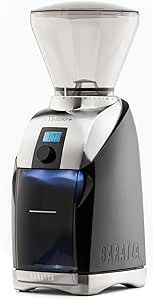
Best Premium Step-Up
|
Better burr performance
|
Price on Amazon | |
|
Best Compact Pick

|
Simple compact burr grinder
|
Price on Amazon | |
|
Best Manual Premium

|
Fast precise hand grinding
|
Price on Amazon | |
|
Best Manual Value

|
Budget-friendly burr hand grinder
|
Price on Amazon |
What “Grinder Tuning” Actually Means (And Why It Changes Your Coffee So Much)

When people say “tune your grinder,” they’re usually talking about four things:
Burr condition (sharpness and cleanliness), burr alignment (how evenly the burrs meet), calibration (where your grind scale sits relative to true zero), and workflow consistency (how you feed beans, purge, and handle retention). For that particular buying angle, Best Turkish Coffee Grinders (2026 Buying Guide) gives you a more focused comparison of the choices.
Here’s the simplest way to think about it:
Your grinder’s job is not to make coffee “fine” or “coarse.”
Your grinder’s job is to make coffee even.
Because in brewing, “even” equals “predictable,” and predictable equals “repeatable,” and repeatable equals “delicious on purpose.” For shoppers with that exact priority, Best Coffee Grinders for Moka Pot Brewing is a more targeted shortlist.
When a grinder is slightly out of tune, you often get a wider spread of particle sizes. That means more fines (tiny dust-like particles) mixed with boulders (larger chunks). This creates brewing chaos:
- Fines extract fast and can turn bitter, dry, and harsh.
- Boulders extract slowly and can leave sour, thin, underdeveloped flavors.
- Together, they confuse your palate, and you start blaming your beans for something the grinder caused.
For espresso, tuning matters even more because espresso is high-pressure, fast, and sensitive. Tiny changes in grind size or particle distribution can swing your shot time by 5–10 seconds. It’s why espresso people sound dramatic. They’re not dramatic. Espresso just is. For shoppers with that exact priority, Best 7 High-End Espresso Grinders for Home Baristas is a more targeted shortlist.
For pour-over, tuning is still huge. A grinder that produces excessive fines can clog your filter, slow your drawdown, and make your cup taste “muted” or “chalky,” even if your recipe is perfect.
And here’s the sneaky part: your grinder can still work while being out of tune. It doesn’t fail loudly. It fails quietly—by making your best recipes feel inconsistent.
So tuning is basically telling your grinder:
“Hey buddy, let’s get you back to doing your job cleanly and predictably.”
Meet the Burrs: The Parts That Do the Real Work

Before you calibrate anything, it helps to understand what you’re actually adjusting.
A burr grinder has two burrs:
- One stationary burr (usually mounted to the body)
- One rotating burr (attached to the motor shaft)
Beans fall in, burrs grab them, crush them, then shear them down smaller and smaller as the particles move outward (in most designs). Your grind setting controls how close the burrs are to each other.
There are two common burr shapes: conical and flat.
Conical burrs often feel forgiving. They can be great for espresso and general home use, and they tend to be less sensitive to tiny alignment issues. They also commonly have slightly more retention (depending on the grinder design) and may produce a different style of particle distribution. If that feature matters most to you, 5 Best Vintage Style Coffee Grinders (Top Picks) narrows the options around it.
Flat burrs are famous for clarity and separation in flavor—especially for filter coffee, and increasingly for espresso too. They can also be more sensitive to alignment. A well-aligned flat burr set is magical. A poorly aligned flat burr set can be… confusing.
Then you’ve got burr materials and coatings: stainless steel, hardened steel, titanium-coated, etc. What matters for beginners isn’t the marketing, but the reality that burrs wear down and burr edges collect oils and fines.
A clean, sharp burr set usually produces:
- More consistent particles
- Easier dialing in
- Better flavor clarity
- Less random bitterness or dryness
A dirty or dull burr set tends to produce:
- More fines
- More “muddy” cups
- Shots that run unpredictably
- A weird need to keep grinding finer over time
This is why burr setup and calibration aren’t “extra.” They’re foundational.
The Beginner Toolkit: What You Need (And What You Don’t)
Let’s not turn this into a garage project. You don’t need 17 special tools to tune a home grinder.
Here’s what actually helps:
A soft brush (small and firm enough to move fines)
A vacuum or handheld blower (optional but satisfying)
Microfiber cloth
Food-safe grinder cleaner (optional—plain cleaning is often enough)
A marker or masking tape (for marking a reference point)
Basic screwdriver/Allen key (whatever your grinder needs for burr access)
A cheap scale (if you’re doing espresso or single dosing, it’s huge)
What you don’t need right away:
- Fancy alignment tools
- Dial gauges
- Precision shim kits (unless your grinder specifically supports them)
- Obsessive measurement devices
The real beginner superpower is controlled consistency—doing the same thing the same way, watching what changes, and adjusting one variable at a time.
Also: safety and common sense. Unplug the grinder before you open it. Don’t stick fingers where spinning burrs live. Don’t force adjustment collars if something is jammed. (That “crunchy” feeling is usually a bean fragment—clear it first.)
If your grinder is under warranty, check if opening the burr chamber affects coverage. Some brands are fine with it. Others are picky. When in doubt, do gentle, reversible steps first: cleaning, calibration marking, purge routines. For a narrower buying path, Best Budget Coffee Grinders Under $100 (Top Picks) focuses on that specific use case.
Clean First, Tune Second: Why Calibration on a Dirty Grinder Is a Trap

If I could tattoo one message onto every new coffee person’s brain, it would be:
Clean your grinder before you calibrate it.
Because old coffee oils and packed fines can make the burrs “feel” like they’re touching earlier than they really are. You’ll set a false zero, and then wonder why your espresso settings are suddenly off by a mile.
A proper clean is not complicated:
- Empty the hopper (or remove it if you can).
- Run the grinder briefly to clear loose grounds.
- Unplug the grinder.
- Open the burr chamber if your grinder allows it.
- Brush out packed grounds.
- Wipe surfaces that collect oils (especially around the exit chute).
- Reassemble carefully.
If you can’t open your grinder easily, you can still improve things by:
- Brushing the throat (where beans drop into burrs)
- Vacuuming around the exit
- Running a small amount of sacrificial beans afterward to clear loosened residue
One detail beginners overlook: the exit path matters. A grinder can have clean burrs but a nasty exit chute, and that stale residue will contaminate your fresh coffee. The dedicated Hamilton Beach Fresh Grind Coffee Grinder Review is useful when you want to examine that model on its own.
If your coffee sometimes tastes “stale” even with fresh beans, or you notice a slight rancid smell when grinding, cleaning can feel like a full reset. The first brew after cleaning often tastes brighter and cleaner—even with the same recipe.
Only after cleaning does calibration become meaningful.
Finding True Zero Without Destroying Your Burrs
“Zero” means the point where the burrs touch.
But here’s the key: you usually don’t want to grind at true zero.
You want to know where it is, so your grind settings make sense.
There are two ways grinders handle this:
- Some grinders have a calibration ring or a way to shift the scale so “0” matches burr touch.
- Others don’t, so you simply find your burr-touch point and mark it mentally (or with tape).
The safest beginner method is the chirp method (when applicable):
- Set the grinder to run (some grinders require running while adjusting finer—follow your model’s guidance).
- Slowly adjust finer until you hear a light chirp or kiss of burrs.
- Stop immediately when you hear it.
- Back off slightly coarser.
That light chirp is your reference: the burrs are touching.
Important notes:
- Don’t force past chirp. You’re not “winning” anything by going tighter.
- If you hear loud grinding, stop. That may be debris, a broken bean, or misalignment.
- Some grinders are designed to touch at a certain point; others should never touch under normal use. If your manual warns against burr touch, respect that.
If your grinder can’t be adjusted while running, you can still do a careful “static” zero check, but it’s trickier and model-dependent. For many beginners, it’s better to stick with the manufacturer’s recommended calibration method.
Once you find true zero, you’ve basically discovered your grinder’s “starting line.” Every espresso or filter setting now becomes less mysterious.
Burr Alignment for Beginners: The “Good Enough” Approach That Works

Alignment sounds scary because people online talk about it like it’s surgery.
In real life, for most home users, alignment is about one thing:
Do the burrs meet evenly?
If they meet unevenly, your grinder can produce inconsistent particles—especially at fine settings. That often shows up as:
- Espresso channeling even with good puck prep
- Shots that swing wildly in time
- Filter brews that stall and taste harsh
Now, not every grinder is designed to be user-aligned. Some are fixed. Some allow small adjustments. Some have tolerances that vary unit to unit.
As a beginner, the “good enough” alignment goal is:
- The grinder is clean
- Burrs are mounted properly
- Screws are tightened evenly (not one side cranked down first)
- Burr carrier sits flush, not cocked at an angle
When reinstalling burrs, tighten screws in a gentle “star pattern” approach—like tightening lug nuts on a wheel. Even pressure matters.
A surprisingly common problem is simply burr seating: a tiny bit of trapped coffee debris under the burr can tilt it. So brushing the mounting surfaces matters. A clean mating surface helps burrs sit flat.
If you’ve done all that and your grinder still feels inconsistent, then yes, deeper alignment methods exist (marker tests, shim kits). But most beginners get a major improvement just by cleaning, reseating burrs, and setting a real zero point.
Think of alignment like posture. You don’t need a professional biomechanical scan to stand straighter—you just need to stop slouching and put your feet under you. For shoppers with that exact priority, Best 6 Professional Burr Coffee Grinders for Espresso is a more targeted shortlist.
Calibration: Making Your Grind Settings Make Sense

Calibration is the act of linking your grinder’s numbers (or clicks) to reality.
Because sometimes “10” on your grinder is espresso for one person, and “10” is French press for another person on a different unit of the same model. That’s not your fault. It’s how manufacturing tolerances work. If that feature matters most to you, Best Coffee Grinder for Espresso and French Press narrows the options around it.
Once you find a true zero, you can do a calibration step:
- If your grinder has a calibration collar or ring:
Set the burrs to the touch point, then rotate the external scale so “0” aligns there. Now your printed numbers actually mean something. - If your grinder doesn’t have that feature:
Use a piece of tape or a marker line. Mark your burr-touch reference point and treat that as your personal “0.”
From there, you can create a simple calibration map for yourself:
- Espresso range (example: 1–4 on your dial)
- AeroPress range (example: 4–7)
- Pour-over range (example: 6–10)
- French press range (example: 10–15)
The exact numbers will vary, but the point is that you stop guessing. Your grinder becomes a tool you understand.
This also makes dialing in faster. If you know your last espresso bean worked at “2.3,” your new bean might start around “2.6” instead of “somewhere between fine and… finer?”
Calibration is what turns “random twisting” into “controlled adjustment.”
Espresso Tuning: The Beginner Routine That Stops the Guessing

Espresso dialing is where grinder tuning pays off immediately.
Here’s the truth: espresso is not hard because it’s mystical. Espresso is hard because it’s sensitive.
So the goal is to create a repeatable routine:
- Same dose
- Same basket
- Same yield
- Same puck prep style
- One variable change at a time (usually grind size)
A beginner-friendly starting point is:
- Pick a dose (like 18g) and stick to it.
- Pick a yield (like 36g out) and stick to it.
- Aim for a shot time window (often 25–35 seconds, depending on your machine and taste).
Then grind, pull, taste, adjust.
If the shot runs too fast and tastes sour/thin: grind finer
If the shot runs too slow and tastes bitter/dry: grind coarser
But here’s where tuning matters: if your grinder is calibrated and consistent, those adjustments behave predictably. You won’t feel like you’re chasing your tail.
Also: purge matters. Many grinders retain some coffee. If you change settings and don’t purge a little, you might be tasting yesterday’s grind mixed with today’s grind. That can make you “correct” a problem that isn’t real.
A simple purge habit:
- After changing grind size, grind 1–2 grams (or a short burst) and discard it before pulling a shot you’re judging.
If you single-dose, consider gently tapping or using a bellows (if your grinder supports it) to reduce retention. Consistent output weight helps keep shots consistent, too.
Finally, pay attention to your environment. Humidity can change grind behavior. Beans age. Burrs warm up after a couple of shots. That’s normal. Tuning gives you a stable baseline so those changes feel manageable, not chaotic.
Filter Coffee Calibration: Pour-Over and AeroPress Without the Mud
Filter brewing can feel “easier” than espresso, but grinders still make or break it.
A filter-tuned grinder should produce:
- Enough fines to support extraction, but not so many that your brew stalls
- A clean, even particle spread
- Consistent drawdown times with the same recipe
If your pour-over drawdowns are randomly slow, or your cups taste dull and astringent, suspect fines overload. That can come from:
- Dirty burrs
- Burr misalignment
- Dull burrs
- Grinding too fine for the dose and filter
- Excess agitation in your pour technique (yes, your pouring can “create mud” too)
A simple tuning approach for the filter:
- Pick one recipe (same brewer, same filter type, same dose).
- Use one coffee for a week.
- Adjust grind size until your drawdown is consistent and the cup tastes balanced.
For beginners, “balanced” often means:
- Not sharp sour
- Not drying bitter
- Sweetness shows up
- Finish is clean, not chalky
If your coffee is sour and watery, grind a bit finer.
If your coffee is bitter and heavy, grind a bit coarser.
And again: purge after big grind changes if your grinder retains coffee.
For AeroPress, you have more flexibility because immersion brewing is forgiving. But tuning still matters. A grinder that’s producing inconsistent particles can make AeroPress taste both bitter and sour at the same time, which is a weird feeling until you realize it’s the grind distribution.
A Practical Brew Method Table You Can Actually Use
Here’s a simple calibration reference you can adapt to your grinder. Instead of specific “click numbers,” this table focuses on particle feel and brew behavior, because that translates across grinders. A closer model-to-model view is available in OXO Brew Conical Burr Grinder vs Bodum Bistro.
| Brew Method | Visual/Feel of Grounds | Common Brew Signs | If It Tastes Off… |
|---|---|---|---|
| Espresso | Powdery but not clumpy dust; feels like fine sand | Shot runs 25–35s (typical), steady stream | Sour/fast → finer; Bitter/slow → coarser |
| Moka Pot | Fine, like table salt leaning smaller | Brew starts smoothly, not explosive | Harsh/burnt → coarser; Weak → finer |
| AeroPress | Medium-fine to medium; like sand | Press feels steady, not too hard | Sour → finer/steep longer; Bitter → coarser/shorter |
| Pour-over (V60/Cone) | Coarse, like cracked pepper | Drawdown consistent, clean cup | Stalling/astringent → coarser; Thin/sour → finer |
| Flat-bottom drippers | Medium; slightly finer than cone sometimes | Even bed, steady flow | Coarse, like cracked pepper |
| French Press | Coarse; like cracked pepper | Minimal sludge, rich body | Muddy → coarser/clean burrs; Weak → slightly finer |
Print that mentally. It’ll save you from obsessing over numbers that only apply to one grinder.
Retention, Static, and the “Why Is My Dose Changing?” Problem

One of the most frustrating beginner experiences is weighing 18 grams in… and getting 17.2 out. Or 18.8 out. And it’s not even consistent.
That’s usually retention and static.
Retention is coffee that stays inside the grinder. Some grinders are designed to minimize it. Others are not. Single dosing reduces it, but doesn’t magically eliminate it.
Static is electricity that makes grounds cling to the chute, the cup, your hand, your soul.
Both can mess with calibration because your output isn’t matching your input. And if output changes, extraction changes, even if your grind size didn’t.
Beginner-friendly fixes:
- Keep your grinder clean (static loves dusty interiors).
- Use a metal dosing cup if possible.
- Tap the grinder gently after grinding to dislodge stuck grounds.
- If your workflow allows it, a tiny mist of water on beans (the classic “one droplet” trick) can reduce static dramatically. Don’t soak beans—just a tiny amount.
Also consider warm-up behavior. Some grinders produce slightly different results after the first grind because the burrs and motor warm up. If you’re super sensitive (espresso life), you may find your second shot is always better. That’s normal. Many people “sacrifice” a small purge dose to stabilize.
The goal isn’t perfection. The goal is to reduce surprise.
Keeping Your Grinder Tuned: The Habits That Make It Stay Consistent
Here’s where the real magic is: a tuned grinder isn’t a one-time event. It’s a relationship.
A few habits keep things stable:
Clean lightly, often.
You don’t need to fully disassemble weekly. But brushing the chute area and clearing loose fines regularly helps.
Purge intentionally.
After large adjustments, purge a little. After switching beans, purge a little. It makes dialing in feel calmer.
Store beans well.
Beans that are stale, oily, or wildly inconsistent in moisture will behave inconsistently in the grinder. Your grinder can’t “fix” that.
Respect bean age.
Espresso beans often change noticeably over days. You may need to grind slightly finer as beans age. That doesn’t mean your grinder drifted. That means coffee is alive.
Don’t chase every bad cup.
Sometimes your pour technique changes. Sometimes you rush puck prep. Sometimes the water temperature was different. Tuning helps you trust your grinder so you can identify what actually changed.
If you keep one small notebook note on your phone with “espresso setting ranges that worked for these beans,” you’ll build confidence quickly. Calibration becomes a practical tool, not a technical obsession.
The Troubleshooting Table: When Coffee Tastes Wrong, What’s the Grinder Telling You?
This is the table I wish every beginner had taped to the cabinet.
| Problem | What You See | Likely Grinder Cause | What to Do |
|---|---|---|---|
| Espresso runs fast + sour | Thin stream, blonding early | Too coarse, false zero, retention mixing | Grind finer; purge; verify zero point |
| Espresso chokes + bitter | Drips, stalls, harsh | Too fine, burrs touching, fines overload | Go coarser; check burr touch; clean burrs |
| Channeling won’t stop | Sprays, uneven flow | Misalignment, clumps, inconsistent grind | Clean + reseat burrs; improve distribution; consider WDT |
| Pour-over stalls | Slow drawdown, muddy bed | Excess fines, dirty burrs | Clean burrs; go coarser; reduce agitation |
| The cup tastes “flat.” | No sweetness, muted | Dull burrs or too many fines | Clean; try coarser; consider burr replacement if old |
| Dose out varies wildly | Output inconsistent | Retention + static | Tap/bellows; RDT droplet; clean exit chute |
This isn’t about blaming your grinder for everything. It’s about learning the “language” of grind behavior so you can fix problems without guessing.
Burr Wear and Replacement: How to Know When It’s Time

Burrs don’t die dramatically. They fade.
A grinder with worn burrs often shows these signs:
- You keep grinding finer over time to get the same shot time.
- Filter brews become harder to make clean and sweet.
- Coffee tastes more muddy or harsh, even with fresh beans.
- Grind size looks less uniform.
- Dialing in feels “slippery,” like small adjustments don’t behave predictably.
If you’re brewing daily, burr lifespan depends on burr type, material, and how much coffee you grind. But the emotional signal is usually the same: you used to get great cups easily, and now you have to fight for them. If your needs are more specific, Best Coffee Grinders with Built-In Scale: Precise Daily Picks takes a closer look at that category.
Before replacing burrs, clean thoroughly and recalibrate. Dirty burrs can mimic worn burrs. If cleaning and calibration don’t restore performance, then replacement becomes a very real upgrade.
And when you replace burrs? Expect a short “break-in” period where burr edges settle. During that time, your settings may drift slightly. That’s normal. Just dial in again and relax—your grinder isn’t betraying you; it’s just learning its new teeth.
Upgrades That Actually Matter (Without Falling Into the Rabbit Hole)
If you’re a beginner, you don’t need to upgrade everything. But if you’re curious, these are the upgrades that genuinely improve tuning and consistency:
A scale you trust.
Being able to dose consistently makes grinder calibration feel meaningful.
A single-dose workflow (if your grinder supports it).
This reduces stale retention and makes grind changes cleaner.
Better burrs (only if your grinder supports swapping).
Not always necessary, but sometimes it transforms clarity and consistency.
A better cleaning routine.
Yes, it’s not glamorous. But it works.
What doesn’t automatically fix things:
- Buying more expensive beans while your grinder is out of tune
- Changing espresso machines
- Switching recipes every day, hoping the problem disappears
A tuned grinder makes everything else easier. It’s one of the most satisfying “level-ups” in home coffee because it creates stability. And stability is what makes experimentation fun instead of frustrating.
A Calm, Repeatable Beginner Calibration Walkthrough
Let’s put it all together in a realistic beginner flow. Imagine it’s Saturday morning. You’re not rushing.
You clean the grinder. You open it if possible, brush out fines, wipe oily spots, reassemble carefully, tightening screws evenly. You feel like a responsible coffee adult.
Then you find your burr-touch point safely and mark it. If your grinder allows scale calibration, you align the scale. If not, you mark your reference.
Now you choose one brew method to focus on first—espresso or pour-over. Not both. You pick one coffee and stick with it for a few days.
You start in the right grind neighborhood and dial in slowly, making small adjustments, purging lightly after changes. You keep doses, and the yield is stable. You taste and take quick notes.
After a few brews, something clicks: your grinder stops feeling mysterious.
And the best part is the confidence. When your espresso runs fast, you don’t panic—you know what to do. When your pour-over stalls, you don’t blame the dripper—you adjust intelligently.
That’s what tuning is. It’s not about perfection. It’s about turning coffee from “random luck” into “repeatable skill.”
Final Thoughts: Your Grinder Can Be Your Best Teacher
There’s a moment every coffee person hits where they realize the grinder is not just a tool—it’s a teacher.
It teaches patience. It teaches cause and effect. It teaches you that tiny changes matter. And if you let it, it teaches you how to trust your process.
Grinder tuning—burr setup and calibration—sounds technical, but it’s really just learning your equipment and building consistency. Clean first. Find the true zero. Understand your adjustment range. Dial in with intention. Keep small habits that prevent drift.
And when you pull a shot that tastes sweet, balanced, and clear—and you know exactly why it happened—there’s a quiet pride in that.
Not because you followed rules, but because you learned a skill.


