
Best Durable Coffee Grinders for Coffee Lovers


Grinding coffee every morning is a surprisingly demanding job for a small kitchen appliance. Beans are hard and irregular, oils collect inside the burr chamber, and a grinder may move from espresso-fine to French press coarse several times in a week. That is why the best durable coffee grinder is not necessarily the heaviest one or the one with the longest feature list. The machine needs a dependable cutting system, an adjustment that remains usable, realistic cleaning access and a credible plan for repairs when parts eventually wear.
I pay attention to three kinds of durability: mechanical construction, repairability and daily usability. A metal housing can protect a grinder from routine handling, but it does not prove that its motor will last longer than one inside a polymer case. A steel burr set can be maintained and sometimes replaced, yet the rest of the grinder still needs care. A manual grinder avoids electrical failures but introduces the demands of hand cranking, shaft alignment and careful storage. Those distinctions matter more than a generic “built to last” label.
Editor’s Picks: Three Durable Grinders Worth Shortlisting
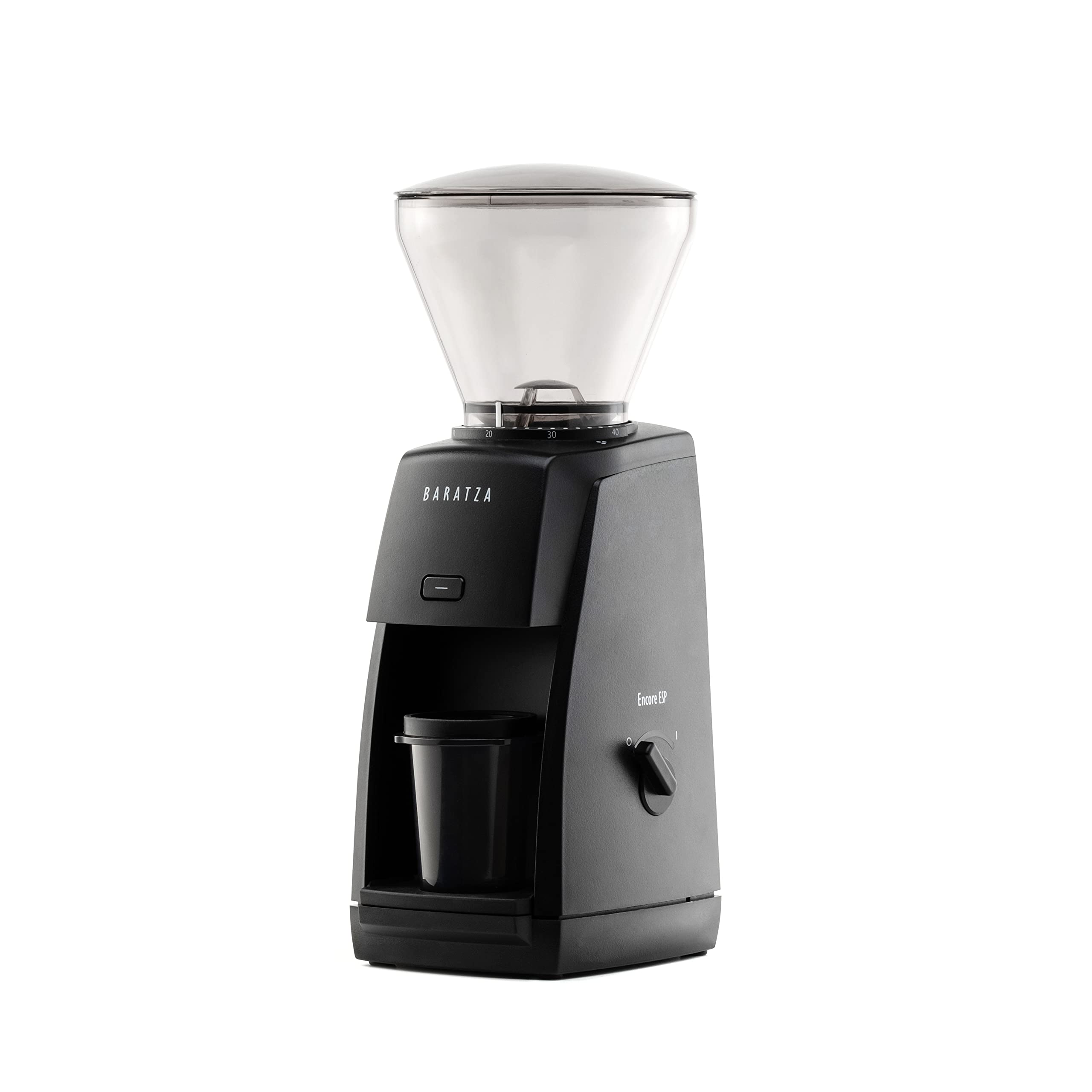
Baratza Encore ESP Coffee Grinder
- 40 mm conical steel burrs
- 40 marked grind positions
- Espresso zone: settings 1–20
- Filter zone: settings 21–40
- Removable burr access
- Baratza replacement-parts support
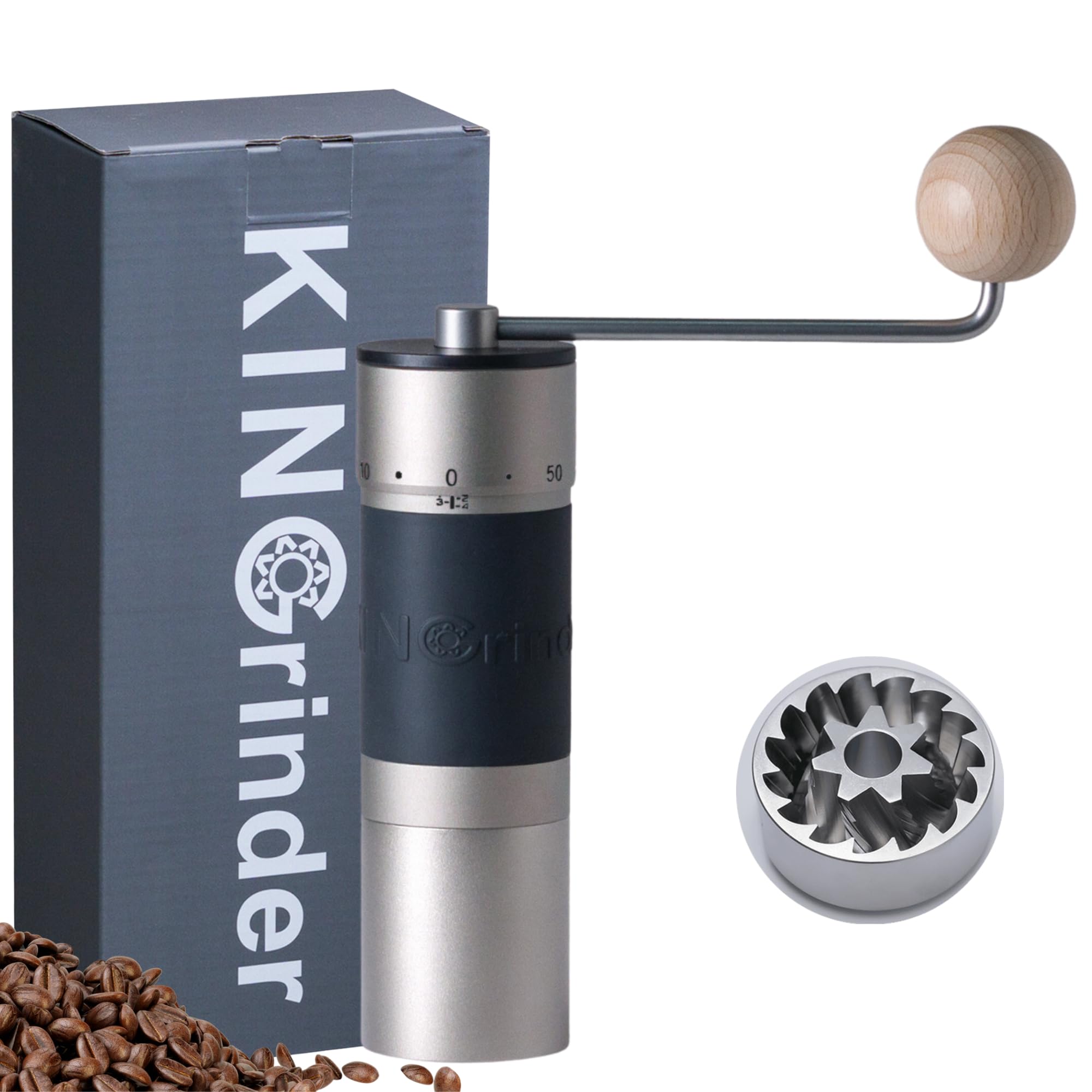
KINGrinder K6 Manual Coffee Grinder
- Aluminum-alloy housing
- Stainless-steel burr set
- External 60-click-per-turn dial
- 16 µm nominal click spacing
- Dual-bearing shaft support
- Portable without any power cord

MiiCoffee DF64 II Single-Dose Grinder
- 64 mm stainless-steel flat burrs
- Stepless grind-size adjustment
- Aluminum body around 15 lb
- Plasma static-control system
- Single-dose bellows and cup
- Burr-upgrade compatibility
This group includes ten distinct options. The Baratza Encore ESP, Virtuoso+ and Sette 270 make the strongest case for manufacturer-backed service documentation. Fellow Ode Gen 2 concentrates on filter coffee and combines an aluminum body with a two-year standard warranty. KINGrinder K6 and TIMEMORE C3 ESP Pro suit people who prefer metal manual equipment, while MiiCoffee DF64 II offers an enthusiast-oriented flat-burr platform. Breville, OXO and Capresso provide more familiar daily countertop alternatives.
No construction specification can guarantee ten years of trouble-free grinding by itself. I have therefore ranked these grinders by documented construction, maintenance access, service support and suitability for the brewing they are actually intended to do. The result is a buying guide for readers who want a machine they can live with, clean sensibly and keep useful instead of replacing it at the first inconvenience.
10 Best Durable Coffee Grinders — At a Glance
These comparisons focus on construction, maintenance access and the kind of brewing each model handles naturally. A grinder that is excellent for filter coffee should not be ranked as an espresso specialist merely because its housing is substantial.
Baratza Encore ESP Coffee Grinder
- 40 mm conical steel burrs
- 40 marked grind positions
- Espresso zone: settings 1–20
- Filter zone: settings 21–40
- Removable burr access
- Baratza replacement-parts support

Baratza Virtuoso+ Coffee Grinder
- Forty-position grind adjustment
- 40 mm steel burr design
- Digital grind-time display
- Quick one-touch timed dosing
- Metal-accented housing
- Baratza service documentation
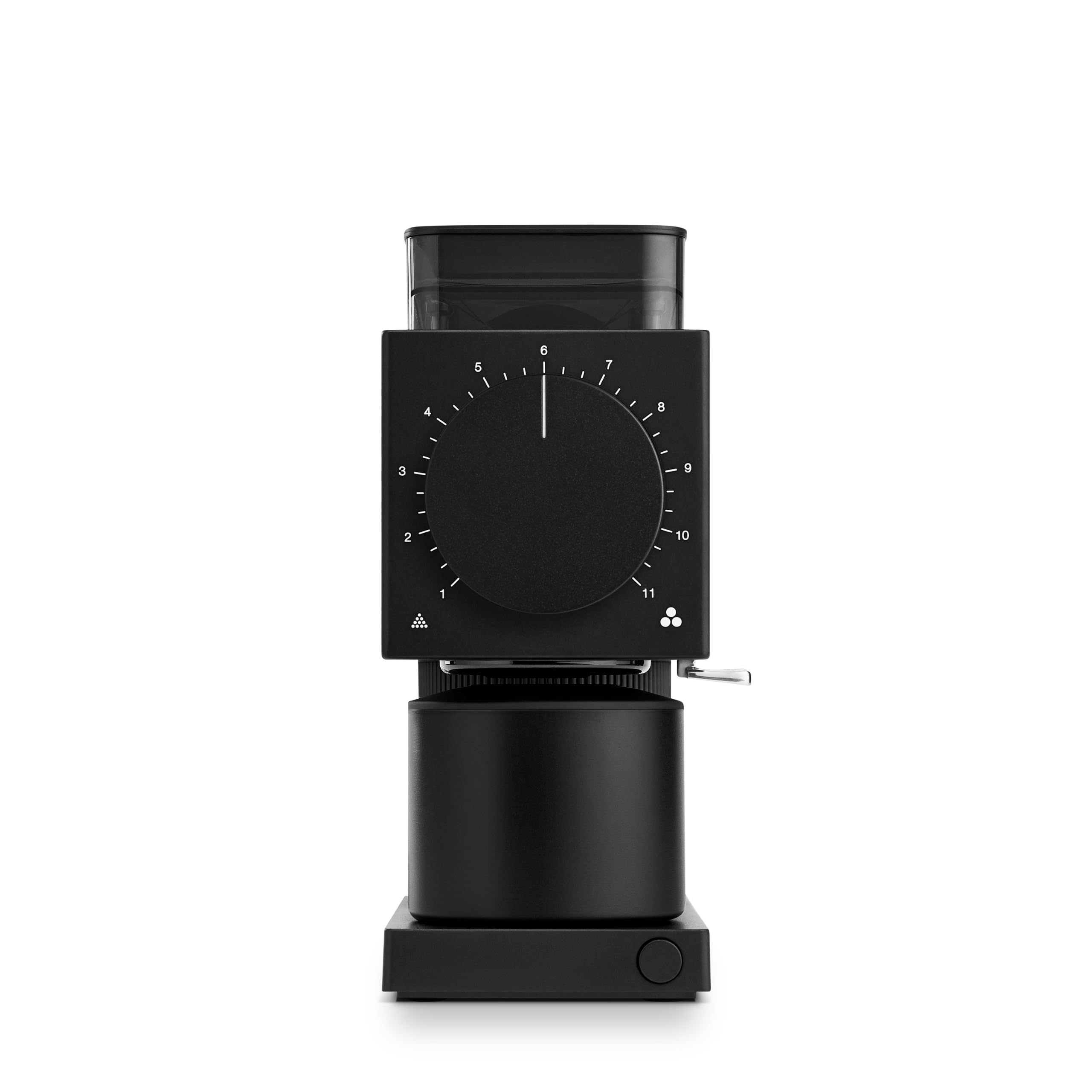
Fellow Ode Brew Grinder Gen 2
- 64 mm flat stainless-steel burrs
- 31 total grind steps
- Aluminum main body
- Anti-static Gen 2 design
- 100 g single-dose load bin
- Two-year standard warranty

Breville Smart Grinder Pro BCG820
- 60 marked grind settings
- Brushed stainless-steel housing
- Digital LCD dosing controls
- 0.2-second time adjustments
- Two portafilter cradle sizes
- Removable upper burr and brush
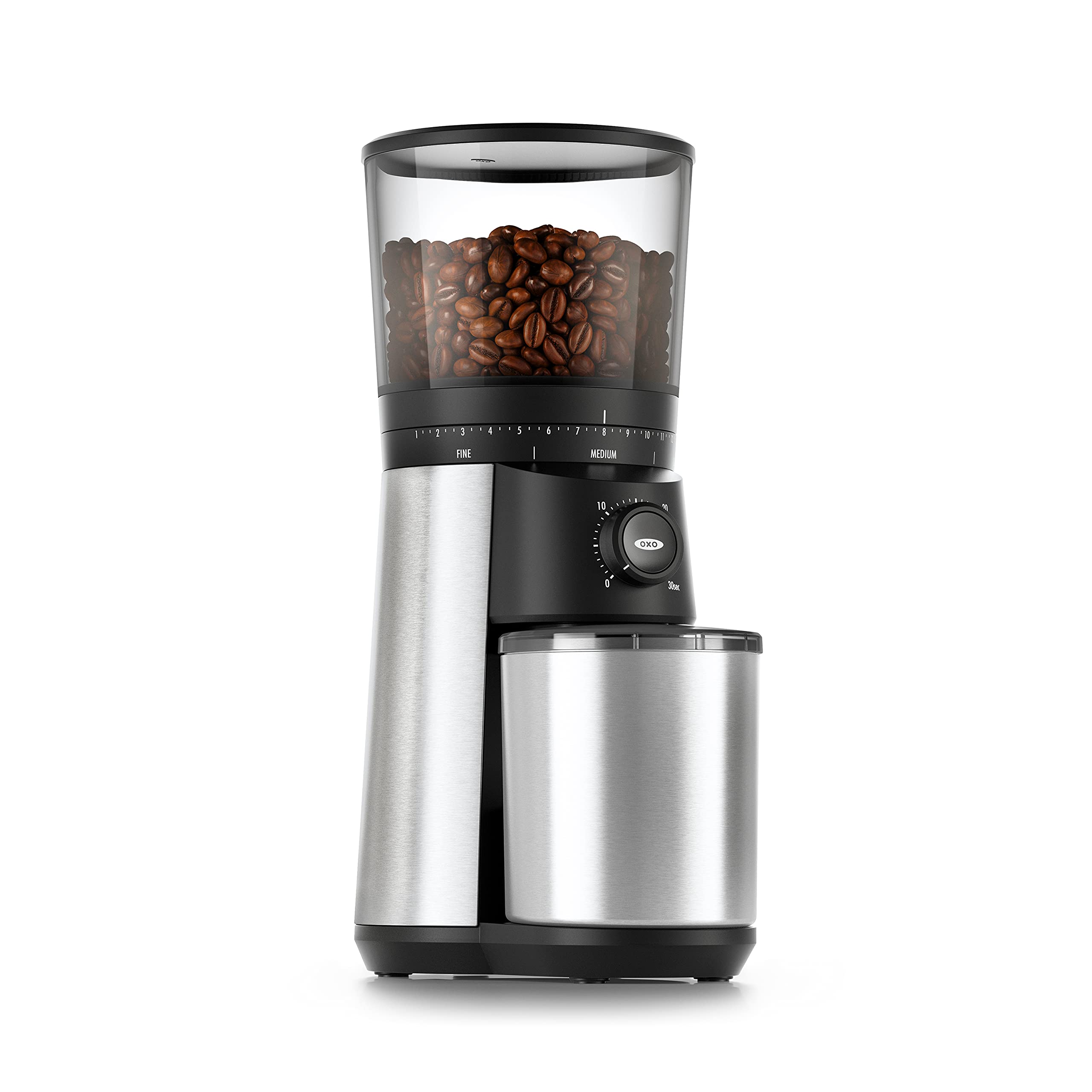
OXO Brew Conical Burr Coffee Grinder
- 15 main grind adjustments
- Additional intermediate settings
- One-touch remembered timer
- 12 oz UV-tinted hopper
- Static-reducing steel grounds cup
- Two-year limited warranty
KINGrinder K6 Manual Coffee Grinder
- Aluminum-alloy housing
- Stainless-steel burr set
- External 60-click-per-turn dial
- 16 µm nominal click spacing
- Dual-bearing shaft support
- Portable without any power cord

TIMEMORE Chestnut C3 ESP Pro Manual Grinder
- 38 mm S2C stainless-steel burrs
- 30 adjustment clicks per round
- Approx. 23 µm per click
- All-metal main body
- Folding travel handle
- Compact single-dose catch cup

Capresso Infinity Plus 570.01 Burr Grinder
- 16 marked grind adjustments
- Solid steel conical burrs
- Slow gear-reduction drive
- Removable upper burr
- 11 oz whole-bean hopper
- Safety interlock and cup selector

Baratza Sette 270 Espresso Grinder
- 270 combined grind positions
- 30 macro × 9 micro steps
- 40 mm conical burr system
- Direct-drop grounds path
- Programmable timed-dose presets
- Published Baratza service resources
MiiCoffee DF64 II Single-Dose Grinder
- 64 mm stainless-steel flat burrs
- Stepless grind-size adjustment
- Aluminum body around 15 lb
- Plasma static-control system
- Single-dose bellows and cup
- Burr-upgrade compatibility
Quick Ranking: Durability, Service Support and Best Uses
| Rank | Grinder | Construction or service advantage | Best use | Main trade-off |
|---|---|---|---|---|
| 1 | Baratza Encore ESP Coffee Grinder | Replaceable-part countertop design | Daily espresso and filter coffee | Polymer housing |
| 2 | Baratza Virtuoso+ Coffee Grinder | Metal-accented countertop enclosure | Pour-over, drip, AeroPress and press | Not espresso-first |
| 3 | Fellow Ode Brew Grinder Gen 2 | Aluminum body with polymer hopper/base | Pour-over, drip, AeroPress, French press | Not for espresso |
| 4 | Breville Smart Grinder Pro BCG820 | Stainless housing with electronic controls | Convenient espresso and multi-method use | Electronic complexity |
| 5 | OXO Brew Conical Burr Coffee Grinder | Mixed-material compact enclosure | Drip, French press, cold brew | Coarser espresso steps |
| 6 | KINGrinder K6 Manual Coffee Grinder | Metal manual cylinder, straight handle | Camping, travel, espresso and filter | Manual effort |
| 7 | TIMEMORE Chestnut C3 ESP Pro Manual Grinder | All-metal ESP Pro housing | Small-dose espresso, pour-over and travel | Small batch size |
| 8 | Capresso Infinity Plus 570.01 Burr Grinder | Black ABS polymer housing | Budget-friendly drip, press, general brewing | ABS exterior |
| 9 | Baratza Sette 270 Espresso Grinder | Vertical-drive electric countertop design | Daily non-pressurized espresso | Gear noise/service |
| 10 | MiiCoffee DF64 II Single-Dose Grinder | Powder-coated aluminum enclosure | Home enthusiast espresso and filter coffee | Higher cost and upkeep |
Ten Detailed Durable Coffee Grinder Reviews
1. Baratza Encore ESP Coffee Grinder
A repairable grinder matters more to me than a dramatic metal finish. The Encore ESP makes that case with a familiar Baratza design, forty usable grind positions and a parts ecosystem that gives owners a route beyond throwing away an appliance when one component wears. Its exterior is not an armored casting; the argument for longevity is practical serviceability.
The distinction from the original Encore is important. The ESP allocates its first twenty positions to smaller espresso adjustments and the remaining twenty to coarser brewing. That makes it a sensible daily partner for a person who pulls shots on weekdays and makes a French press on weekends. The best feature is not the biggest specification on the box; it is a grinder whose settings, maintenance and parts can remain understandable over time.
Repairability is the real durability advantage
A grinder with replaceable wearing parts offers a different proposition from one that must be discarded when a single internal component fails. Baratza publishes parts diagrams and servicing guidance for the Encore family. I put considerable weight on that support when comparing longevity, while recognizing that the availability of any individual part and the cost of repair can change. Owners still have to clean the burr area and use the machine correctly.
Espresso control without a complicated interface
Settings one through twenty are deliberately grouped for espresso. That makes the ESP more appropriate for a standard espresso basket than a generic coarse-only burr mill. I favor small changes while holding coffee weight and target yield steady. There is no scale or dose memory hidden inside the simple controls; weighing a dose remains the reliable way to distinguish a grind adjustment from a change in coffee quantity.
Baratza Encore ESP Coffee Grinder
The strongest everyday durability story here combines espresso-capable adjustment with an established repair-and-parts ecosystem.
- Practical parts and repair documentation
- Dedicated fine espresso adjustment zone
- Convenient enough for daily mixed brewing
- Straightforward hopper and burr cleaning
- Mostly polymer outer housing, not an all-metal shell
- No digital timer or built-in dose scale
- Grounds retention still needs attention
- Espresso adjustment is stepped, not stepless
Technical Specifications & Daily Features
- Encore ESP; not the original Encore or ESP Pro
- 40 mm steel conical burr system
- 40 numbered positions divided into espresso and filter ranges
- Single-dose cup and portafilter-adapter configuration
- Hopper-fed, electrically powered countertop design
- Pulse button and continuous on/off switch
- Removable components and published parts diagrams
- U.S. 120 V configuration; check exact local model
The strongest everyday durability story here combines espresso-capable adjustment with an established repair-and-parts ecosystem.
Pros & Cons After 30 Days of Use
The first-month ownership priorities are dose repeatability, burr-area cleanliness and familiarity with the two adjustment zones. Small corrections in the espresso range are useful only when coffee weight and basket preparation stay consistent. A quick note about each roast prevents needless experimentation when changing beans.
The longer-term cost question is how accessible replacement parts remain and whether routine brushing prevents stubborn buildup. The polymer exterior is not evidence of disposable construction, and serviceability is not immunity from wear. A sensible owner keeps the hopper, adjustment ring and burr carrier clean instead of waiting for a stall.
My Final Verdict
My overall choice for durable everyday ownership is the Encore ESP. The combination of espresso-oriented control and documented service support is stronger evidence of long-term value than an unverified lifetime claim. It is especially compelling for someone who wants one maintainable grinder rather than a collection of appliances.
Care habits that preserve the burr path
A hopper is convenient until a bag of oily beans is left sitting in it for weeks. Smaller daily refills, dry brushing and careful reassembly help keep the feed path clear. I also pay attention to whether the upper burr seats fully after cleaning. The outer housing may show scuffs before the core grinding system reaches the end of its useful life; cosmetics and mechanical usefulness are different measures.
Who gets the most lasting value
For a household moving into real espresso without abandoning filter coffee, the Encore ESP balances capability with long-term practicality. A specialist competition grinder can offer finer control and heavier materials, but those advantages do not always translate into a better ownership decision for ordinary home brewing. The ESP is the pick I favor when predictable maintenance matters as much as the first cup.
2. Baratza Virtuoso+ Coffee Grinder
The Virtuoso+ belongs in a different conversation from the Encore ESP. It is a mature home-brew grinder whose daily strengths are drip, pour-over, AeroPress and immersion coffee. A digital timer makes the routine a little more repeatable, while the metal-accented exterior gives it a substantial feel. Neither feature should overshadow the more meaningful question of what can be maintained when the unit is several years old.
Baratza makes that question easier to answer by offering model-specific documentation and components. I value the Virtuoso+ for a household that grinds multiple filter doses a day and wants a familiar, uncomplicated system. The dial has forty positions, but forty positions are not forty equally precise espresso settings. It is better to buy it for the brews it handles naturally.
Why a familiar platform can outlast novelty
Touch panels, apps and exotic grinders are tempting, but mature designs can be easier to keep in service. Published maintenance diagrams and replacement components give the Virtuoso+ a credible ownership advantage. I treat that as a practical argument rather than a promise that every individual grinder will last a particular number of years. Motor use, coffee oils and cleaning habits still determine how well the machine ages.
A timer simplifies batches, not mass measurement
The digital interface is handy when preparing the same filter recipe each morning. Once a consistent interval is established, starting a batch feels predictable. Yet a light roast or a different setting can change how much coffee leaves the chute in that interval. A small scale remains useful, especially when a pour-over depends on a precise coffee-to-water ratio. The timer saves actions; it does not replace weighing.
Baratza Virtuoso+ Coffee Grinder
A mature filter-focused design with metal-accented construction, a timed interface and repair support.
- Well-established and serviceable grinder family
- Easy repeatable timing for filter batches
- Convenient coarser brewing range
- Useful metal-accented construction
- Timer measures seconds, not dose weight
- Not my first pick for precise non-pressurized espresso
- Hopper and chute need regular brushing
- Finish alone does not predict motor life
Technical Specifications & Daily Features
- Virtuoso+ (plus), not the older Virtuoso without digital controls
- 40 mm conical steel burr grinder
- 40 numbered adjustment positions
- Digital timer and grounds-bin illumination
- Hopper and removable upper-burr access
- Metal-accented enclosure with internal polymer parts
- Countertop electrical grinder for home use
- Baratza publishes parts and support documentation
A mature filter-focused design with metal-accented construction, a timed interface and repair support.
Pros & Cons After 30 Days of Use
A useful thirty-day ownership assessment checks whether the preferred filter setting remains easy to find, whether the timed dose stays close after bean changes and whether the hopper is comfortable to remove for cleaning. None of those checks requires pretending that a grinder is maintenance-free.
Over months and years, the repair pathway matters more than a perfect-looking outer panel. I give the Virtuoso+ a strong durability score for access to brand support and familiar service information, with the understanding that actual repair costs and available parts differ by region.
My Final Verdict
For long-term filter-coffee households, the Virtuoso+ is one of the most convincing choices here. Its appeal is a serviceable platform with convenient timed grinding, not a guarantee of specialist espresso precision. I favor it for people who want familiar daily reliability and an accessible maintenance path.
A good home for the Virtuoso+
I place this model on a counter where drip, French press or paper-filter brewing dominates. Switching grind positions for a weekend AeroPress is easy enough, and the grounds container suits ordinary household batches. Someone using a demanding single-wall espresso basket every day has better options within this list. Matching the brewing method reduces frustration and unnecessary attempts to push a grinder beyond its strongest range.
Maintenance of the hopper and upper burr
Beans and chaff gather around the adjustment ring and discharge path over time. Disconnecting the grinder, clearing the hopper and brushing accessible surfaces keeps the machine easier to operate. It also creates a chance to inspect parts that may be worn. I prefer a small scheduled cleaning habit over a dramatic deep teardown after months of neglected oily coffee.
3. Fellow Ode Brew Grinder Gen 2
The Ode Gen 2 makes a particularly strong case for construction quality when the drink of choice is brewed coffee rather than espresso. Its aluminum body, large flat stainless-steel burrs and simple low-profile shape give it a purposeful identity. Fellow also offers a two-year standard warranty for this generation. That combination gives a buyer more concrete information than an adjective such as heavy-duty.
I am careful not to turn those strengths into the wrong recommendation. Fellow explicitly designs Ode for AeroPress, pour-over, batch drip, French press and cold brew. It is not an espresso grinder, even if its burrs can grind finer than the original Ode. A durable tool used for its intended job is more valuable than a well-built tool constantly forced into the wrong one.
The importance of a substantial main body
Metal housing can reduce some of the flex and cosmetic wear associated with thinner plastic shells, but housing mass alone does not tell us bearing life or future failure rates. Ode combines an aluminum body with plastic components where appropriate. I care that the structure supports the grinder’s intended filter workflow, and that the user does not have to twist it into an espresso machine it was never engineered to be.
Gen 2 burrs and clear brewing boundaries
The 64 mm stainless flat burrs are geared toward brewed coffee. There are eleven main dial markers and thirty-one total adjustment positions, allowing repeatable changes in a useful filter range. The difference from Gen 1 matters: the installed Gen 2 burrs have their own grind guidance. I recommend beginning with the correct generation guide rather than copying an arbitrary number from an older forum post.
Fellow Ode Brew Grinder Gen 2
A solid aluminum-bodied brew grinder with a strong filter focus, anti-static design and two-year standard warranty.
- Substantial housing and large flat burrs
- Two-year standard warranty from Fellow
- Filter-focused grind adjustment
- Single-dose workflow and static reduction
- Explicitly not intended for espresso
- Higher mass than compact home grinders
- Static-control components still require cleaning
- Burr swaps or upgrades increase ownership cost
Technical Specifications & Daily Features
- Fellow Ode Brew Grinder Gen 2; distinct from Gen 1
- 64 mm stainless-steel Gen 2 brew burrs
- Eleven numbered positions with 31 total steps
- 100 g load-bin capacity
- Aluminum housing; plastic load bin and base
- Designed for filter and immersion brewing, not espresso
- 120 V, 140 W U.S. model
- Fellow states a standard two-year product warranty
A solid aluminum-bodied brew grinder with a strong filter focus, anti-static design and two-year standard warranty.
Pros & Cons After 30 Days of Use
The first month is about a repeatable filter routine: choosing an appropriate brew setting, weighing each dose and learning how the grounds cup handles the coffee from lighter and darker roasts. The anti-static design may reduce mess, but the chute still deserves regular inspection.
Longer-term value rests on the quality of the main housing, replaceable burr options and the stated warranty terms. The warranty does not eliminate the risk of wear or accidental damage, and coverage details should be read before purchase. The product is strongest when kept in its intended brewed-coffee range.
My Final Verdict
For a durable, thoughtfully designed filter grinder, I rate the Fellow Ode Gen 2 very highly. Its aluminum construction and two-year standard warranty are concrete strengths; its no-espresso limitation is equally concrete. I recommend it for dedicated brewed-coffee drinkers, not as a universal grinder.
Static reduction has a maintenance cost
The anti-static features and grounds collection system are welcome because fine particles can scatter in dry kitchens. Still, ground coffee and oil accumulate around the chute. Cleaning access matters if the machine stays on the counter for years. Gentle brushing, dry reassembly and keeping coffee away from the motor compartment are better long-term habits than expecting a static-control system to make cleaning obsolete.
Which coffee lover should choose Ode
A person who values pour-over texture and makes several kinds of brewed coffee can appreciate this model every day. It also suits someone who wants a measured single-dose routine rather than a hopper of aging beans. An espresso enthusiast should look toward the Encore ESP, Sette or DF64 II instead. That division of labor is what makes the Ode an honest recommendation instead of an expensive mismatch.
4. Breville Smart Grinder Pro BCG820
Breville prioritizes a comfortable daily workflow. The Smart Grinder Pro combines a brushed-stainless housing with a screen, programmable time control and portafilter cradles. I see a grinder that suits a busy home coffee station, where the ability to repeat a familiar preparation matters nearly as much as the grind range.
Durability is not the same as cosmetic polish. The stainless exterior is a useful construction detail, but electronic controls, switches and grind adjustment parts still require sensible care. Breville’s documented removable upper burr and accessible support material are more important to me than an unsupported claim that the machine lasts forever.
What stainless housing does—and does not—prove
A steel exterior resists ordinary handling differently from a purely plastic case, and the Smart Grinder Pro feels designed to stay on a countertop. Yet it contains moving burrs, plastic interfaces and electronics inside. There is no reliable way to infer a ten-year lifespan just from its weight or shine. I judge it as a practical home appliance with a sturdy outside and a maintenance schedule, not a sealed piece of industrial machinery.
Dosing IQ is useful with an independent scale
The interface permits time changes in 0.2-second increments, allowing a familiar shot routine to be adjusted without guesswork about the timer. The amount of coffee delivered can still change with the bean and grind setting. I weigh output periodically, especially when changing roasts. Treating timed dispensing as a substitute for weighing creates a false sense of precision and can complicate espresso troubleshooting.
Breville Smart Grinder Pro BCG820
A brushed-stainless housing and flexible timed controls make daily espresso preparation less fussy.
- Stainless exterior and established brand support
- Direct-to-portafilter convenience
- Fine timer increments aid routine repeatability
- Useful espresso through press brewing range
- LCD and electronic controls add failure points
- Timed dose is not a weighed dose
- Burr cleaning is essential with oily beans
- Not a specialist stepless espresso grinder
Technical Specifications & Daily Features
- Breville Smart Grinder Pro, BCG820BSS family
- Stainless steel conical burrs and stainless outer housing
- 60 marked grind settings
- Dosing IQ timer adjusts in 0.2-second increments
- Small 50–54 mm and large 58 mm portafilter cradles
- 18 oz bean hopper stated by manufacturer
- Removable upper burr for care and adjustment
- 110–120 V, 165 W; one-year limited warranty listed
A brushed-stainless housing and flexible timed controls make daily espresso preparation less fussy.
Pros & Cons After 30 Days of Use
The first-month ownership checks center on saved grind times, dose variation between roasts and how easily the upper burr can be accessed for brushing. An eighteen-gram target should be weighed, even when the programmed time produces something close.
Longer-term care includes keeping the hopper reasonably clean, avoiding wet burr assemblies and protecting the LCD from spilled coffee. Mechanical alignment and electronics matter as much as the stainless outer shell. I give Breville credit for a thoughtful layout without pretending stainless steel prevents every breakdown.
My Final Verdict
The Smart Grinder Pro earns a recommendation for the buyer who values a durable-feeling housing and practical espresso controls. Its trade-off is a more complex electronic interface. I prefer it for day-to-day convenience rather than for a claim of unmatched longevity.
Portafilter convenience over repeated years
Two cradle sizes make it easier to dose into common espresso portafilters. That benefit persists long after a new grinder stops feeling exciting. Cradles, grounds trays and containers should be removed and cleaned carefully instead of being forced into place. In a shared household I put accessories in the same location each time so a small part is less likely to disappear.
How I place it among durability choices
Breville is a good middle ground for someone who wants espresso-capable adjustment and a friendly interface. I rank Baratza ahead on repair-oriented support and DF64 II ahead for enthusiast single-dose construction, while Breville remains especially accessible for routine dosing. That is a functional ranking, not a claim that every competitor will survive longer.
5. OXO Brew Conical Burr Coffee Grinder

There is a durability argument for doing fewer things well. OXO’s conical burr grinder uses a straightforward main dial, a one-touch starting control and a remembered grinding duration. It has stainless conical burrs and a grounds container built to limit static. The everyday advantage is a familiar routine that does not demand complicated menus before breakfast.
The two-year limited warranty is a meaningful ownership detail, although it should not be confused with proof of a particular failure rate. OXO also makes the hopper and grounds collection practical to handle, which encourages the kind of frequent cleaning that helps a grinder stay pleasant to use. I place it most confidently with drip, French press and cold brew drinkers.
Simplicity can support daily reliability
Fewer modes mean fewer settings to misunderstand and a smaller learning burden for everyone in the kitchen. With fifteen numbered steps plus intermediate positions, OXO covers ordinary home brewing from fine through coarse. Some owners will want more espresso resolution; that does not undermine its value as a filter grinder. A simple design becomes a strength when the controls are used correctly every day.
A warranty is reassurance, not a lifespan forecast
OXO’s two-year limited warranty supports a better purchase discussion than a vague claim of lifetime construction. It is still subject to coverage conditions and proper use. I treat it as one element alongside burr design, maintenance access and the availability of compatible parts. If a particular internal component wears, replacement options should be checked rather than assumed.
OXO Brew Conical Burr Coffee Grinder
Straightforward controls, removable components and a two-year limited warranty make this a sensible daily brewing choice.
- Minimal interface to learn or maintain
- Two-year limited warranty
- Removable hopper and practical catch cup
- Strong everyday filter-brewing fit
- Not a specialist fine-step espresso machine
- Plastic hopper and switches can wear
- Static reduction does not eliminate cleanup
- Grind timer does not measure grams
Technical Specifications & Daily Features
- OXO Brew 8717000 silver conical-burr grinder
- Stainless steel conical burrs
- 15 numbered settings plus micro-adjustments
- One-touch operation and repeatable timer position
- 12 oz / ¾ lb UV-blocking bean hopper
- Trap-door mechanism when hopper is removed
- Stainless static-fighting grounds container
- Manufacturer two-year limited warranty
Straightforward controls, removable components and a two-year limited warranty make this a sensible daily brewing choice.
Pros & Cons After 30 Days of Use
After a month, the useful observations are whether the one-touch timer still suits the household’s normal batch, whether the grounds cup reduces mess and whether the hopper can be emptied without scattering beans. The correct coffee mass still comes from a scale.
For longer ownership, the most meaningful habit is inspecting residue around the hopper and outlet before it becomes a blockage. OXO’s warranty makes the buying risk clearer, but the machine should be maintained like any other electric burr grinder.
My Final Verdict
I recommend OXO for coffee drinkers who want simple, well-supported everyday grinding rather than specialized espresso control. Its warranty, burrs and practical hopper handling make a credible durability package at the uncomplicated end of the market.
Why the hopper trap door is useful
The trap door helps contain beans when the hopper is lifted away. That reduces accidental spills during bean changes and encourages cleaning instead of leaving old coffee in the top of the machine. A tinted hopper also limits some light exposure, but it is not an airtight storage vessel. I prefer keeping most beans sealed elsewhere and adding enough for the coming sessions.
Maintenance without dishwasher mistakes
The grounds cup and removable components need model-specific care, and the electric motor housing must stay out of water. OXO’s instructions caution against placing the grinder in the dishwasher. Dry brushes and a clean chute protect the routine much more effectively than soaking parts indiscriminately. I value straightforward access because cleaning that is easy is more likely to happen.
6. KINGrinder K6 Manual Coffee Grinder
A metal hand grinder avoids several problems associated with electric appliances: there is no motor winding, no mains cord and no timer board. The KINGrinder K6 takes that simple proposition seriously with an aluminum body, a steel burr set, dual bearings and an external adjustment ring. It is one of the clearest choices in this group for someone whose idea of durability includes camping and regular travel.
That does not make it indestructible. A dropped grinder can lose alignment or dent threads, and wet storage can damage metal components. Its strength is a simple, inspectable mechanism. I also appreciate that the external adjustment makes changes visible without repeatedly taking apart the grounds cup.
The appeal of metal construction in a small cylinder
The K6’s housing and burr system emphasize sturdy materials rather than decorative electronics. That is appealing when the grinder is packed beside a kettle or carried into a rented cabin. A protective pouch is still sensible, and metal edges should not grind against other gear in a backpack. Durability is a matter of protecting alignment as well as preventing cosmetic scratches.
External adjustment makes the routine more repeatable
The ring provides sixty click stops per turn, with nominal sixteen-micrometer increments. Those numbers describe adjustment movement, not the exact size of every coffee particle. In practice the benefit is a clear route back to a prior AeroPress or pour-over setting after preparing espresso. I favor a written setting reference and a small scale to keep the brew itself consistent.
KINGrinder K6 Manual Coffee Grinder
An aluminum-bodied hand grinder with steel burrs, external adjustment and no electric motor to depend on.
- Robust metal housing and simple mechanics
- No motor or display to break
- External adjustment is easy to repeat
- Useful for travel and several brew methods
- Hand grinding requires time and effort
- Bearings and threads still need gentle care
- Larger batches need repeated refilling
- A heavy fall can still damage alignment
Technical Specifications & Daily Features
- KINGrinder K6 straight-handle silver configuration
- Metal housing with stainless-steel burr mechanism
- External grind-size adjustment ring
- Nominal 16 micrometers per adjustment click
- 60 clicks per full dial rotation
- Dual-bearing grinding shaft
- Approximate 25–35 g practical coffee capacity
- Manual; no electrical power, timer or motor
An aluminum-bodied hand grinder with steel burrs, external adjustment and no electric motor to depend on.
Pros & Cons After 30 Days of Use
In an initial month, the important observations are whether the dial returns cleanly to favorite settings, whether the handle stays secure and whether the shaft remains smooth after repeated use. A brush is more useful than abrasive cleaning techniques.
Over the years, protection from moisture and impact matters more than cosmetic perfection. I recommend keeping the burrs dry, storing the crank securely and avoiding forced adjustments when the chamber contains jammed beans. The K6’s straightforward mechanism is its durability argument; it is not a claim that steel can never wear.
My Final Verdict
My pick for a rugged manual grinder is KINGrinder K6. It offers meaningful external control and substantial metal construction without a motor or electronic interface. For travel and daily small doses, that is a particularly convincing form of durability.
Burrs, bearings and the work of grinding
A dual-bearing shaft supports the steel burr system, reducing reliance on a loose single-axis arrangement. More consistent support is a legitimate design advantage, but every hand grinder still needs correct assembly. Dense light roasts and fine espresso settings demand real effort. I avoid forcing the crank when something catches; inspecting for trapped fragments is better than applying ever more pressure.
When K6 is the better durable purchase
For camping, carry-on travel or a small home espresso station, the K6 has a persuasive balance of precision and mechanical simplicity. Someone brewing large filter batches each morning may prefer a powered machine. I rank it particularly well for long-term portability because it eliminates dependence on an electrical supply while maintaining an adjustable steel-burr mechanism.
7. TIMEMORE Chestnut C3 ESP Pro Manual Grinder
TIMEMORE’s Chestnut C3 ESP Pro is a different answer to the durability question from a heavy countertop machine. Its compact aluminum body, steel burrs and folding handle are designed around the practical realities of storing and carrying a grinder. It offers the freedom of manual brewing without pretending that a small cylinder is a café workhorse.
The ESP Pro version matters. Its finer adjustment dial gives thirty clicks per rotation, unlike the coarser original C3 dial. The extra resolution is useful when dialing an espresso-style recipe, although the grinder still needs a stable hand and time to work through the dose. For a small travel kit, the combination is persuasive.
A folding handle with a responsibility
The folding crank is the main packing advantage. It reduces protrusion in a bag and makes the grinder easier to store in a crowded drawer. The hinge is also a part worth treating gently. Forcing a folding mechanism or carrying it with heavy objects pressed against the handle can shorten its useful life. Good travel design reduces risk without making damage impossible.
The steel S2C burrs and ESP dial
TIMEMORE specifies a 38 mm stainless S2C burr system. The ESP adjustment changes by roughly twenty-three micrometers per click, which is finer dial movement than its basic C3 arrangement. That supports repeatability across espresso and filter work, but click spacing is not a direct measure of finished particle uniformity. I judge it by the control available to the brewer rather than by an invented extraction score.
TIMEMORE Chestnut C3 ESP Pro Manual Grinder
A folding-handle aluminum hand grinder with steel S2C burrs and finer espresso adjustment steps.
- All-metal compact construction
- Folding crank reduces packing volume
- Fine adjustment useful for espresso learning
- No electronic components to maintain
- Small batches are the natural workload
- Very fine grinding requires patience
- A folding joint deserves careful handling
- Not a substitute for a high-volume electric mill
Technical Specifications & Daily Features
- TIMEMORE Chestnut C3 ESP Pro configuration
- 38 mm stainless steel S2C conical burrs
- ESP adjustment dial with 30 clicks per turn
- Approximately 23 micrometers of nominal adjustment per click
- Folding crank handle and textured metal grip
- All-metal body, lid and handle structure
- Compact single-dose coffee capacity around 20 g
- Manual operation with no motor or electronics
A folding-handle aluminum hand grinder with steel S2C burrs and finer espresso adjustment steps.
Pros & Cons After 30 Days of Use
Month-one ownership revolves around the folding hinge, adjustment clicks and cleanliness of the internal burr path. Those are tangible checkpoints for a portable grinder; there is no need to claim measured years of durability from a few cups.
The larger story is the absence of a motor and the quality of the supporting metal parts. The trade-off is effort and small-dose capacity. Buyers who enjoy making one careful cup have a stronger match than those who need a full family breakfast ready in minutes.
My Final Verdict
TIMEMORE C3 ESP Pro is my compact manual recommendation. Its all-metal design and refined dial make it a thoughtful long-term travel companion. KINGrinder K6 provides a different external-adjustment style, while TIMEMORE wins when folding storage and a neat small-dose routine take priority.
Small capacity influences how long it lasts
For a single 15–20 g cup, the C3 ESP Pro is in its natural territory. Grinding large batches repeatedly creates more handling and fatigue, not a sign that the machine is defective. I prefer letting the dose and brewer dictate the grinder size. If a household routinely prepares sixty grams of beans, a full-size electric system avoids repeating several hand-grinding cycles.
Cleaning stainless burrs on the road
Coffee dust will accumulate around the shaft and catch cup even in a compact hand grinder. I favor careful dry brushing and following the official disassembly guidance before long storage. The metal surfaces should be dry when packed. A travel pouch protects the adjustment ring and helps avoid the small knocks that can make a precisely fitted grinder feel loose.
8. Capresso Infinity Plus 570.01 Burr Grinder
Not everyone needs a heavyweight grinder to get lasting daily service. The Capresso Infinity Plus relies on a straightforward recipe: solid steel conical burrs, a slow gear-reduction drive, sixteen steps and a removable upper burr. It makes a credible case for someone who wants normal brewed coffee without paying for an advanced interface.
The trade-off is visible in its housing. The black 570.01 uses ABS plastic rather than the heavier die-cast finish available on other Capresso versions. I do not disguise that distinction. A plastic exterior can still be useful for years when the machine is maintained, but it should not be sold as all-metal construction.
Why a simple geared system is appealing
Capresso emphasizes lower-speed operation through gear reduction. The intention is controlled grinding with less heat and noise than a high-speed direct drive. This is a meaningful design choice, but no gearing eliminates wear or guarantees silent operation. The better durability habit is avoiding overfilled batches, checking for foreign objects in beans and keeping the chute clear.
Sixteen settings cover many daily brews
The dial spans coarse and fine positions that can serve ordinary drip, French press and several other brewing methods. Sixteen steps are easy to understand and revisit. For sensitive unpressurized espresso, they may be too far apart to land on a precise extraction. I prefer to be clear about that weakness rather than count every advertised brew icon as proof of specialist capability.
Capresso Infinity Plus 570.01 Burr Grinder
A simple gear-reduction burr grinder with removable upper burr, safety interlock and an approachable maintenance routine.
- Relatively uncomplicated mechanical controls
- Removable top burr makes dry cleaning practical
- Steel burrs and slow gear drive
- Accessible price category for several brew methods
- ABS housing rather than heavy metal body
- Sixteen settings limit fine tuning
- Grounds cup and interlock need correct placement
- Not my first choice for demanding espresso
Technical Specifications & Daily Features
- Capresso Infinity Plus, black model 570.01
- Steel conical grinding burrs
- 16 clearly marked grind settings
- Gear-reduction motor, manufacturer describes slow operation
- 11 oz bean hopper and 4 oz grounds container
- One-to-twelve cup selector and pulse feature
- Removable upper burr, interlocking hopper safety feature
- Black ABS exterior; 100 W / 120 V U.S. version
A simple gear-reduction burr grinder with removable upper burr, safety interlock and an approachable maintenance routine.
Pros & Cons After 30 Days of Use
The first thirty days should establish a stable drip or press setting, a cleaning rhythm and careful handling of the plastic hopper lock. A repeatable grind depends on the same dose and coffee, not just the same selector position.
Longer ownership demands respect for the gear drive and safety interlock. Avoid grinding hard non-coffee materials or forcing a jammed adjustment collar. My value judgment rests on the simple burr mechanism and easy cleaning access, with an honest acknowledgment that the housing is ABS.
My Final Verdict
Capresso Infinity Plus is my budget-conscious durability choice for ordinary brewed coffee. Its service-friendly upper burr and uncomplicated controls make sense, but the plastic body and limited espresso adjustment should be considered before purchasing.
Removable upper burr supports routine care
The upper burr lifts for cleaning after the hopper has been emptied and removed as instructed. That simple design makes brushing around the chamber more practical than on many sealed appliances. The safety lock also helps prevent running with the hopper unsecured. These are modest but important ownership advantages, provided the parts are reinstalled properly.
Where the budget model belongs
A home brewer who makes one or two drip batches a day gets more value from its straightforward controls than from an elaborate display. Someone moving between several espresso roasts has stronger options elsewhere in the list. Capresso is a reasonable durability pick on a budget when the right expectation is a maintainable general-purpose burr grinder, not professional-duty construction.
9. Baratza Sette 270 Espresso Grinder
The Sette 270 is the espresso specialist of the group. Its unusual vertical grinding arrangement sends grounds through a short path, and its adjustment combines a thirty-position macro ring with nine micro positions. That level of control is valuable when a standard espresso basket needs a small change, not a dramatic jump. It is not the machine I pick for every cold-brew household.
Its durability story needs nuance. Baratza’s parts and service support are real advantages. At the same time, this is a more complex, high-speed machine with a gear-driven design, so noise, correct use and possible maintenance should be part of the purchase decision. I prefer a transparent service discussion over a claim that specialist performance means zero repairs.
Macro and micro control are for real espresso
An espresso basket responds to surprisingly small changes in particle size. The Sette’s micro ring helps refine a shot after the main macro position is close. That makes the grinder especially useful for someone dialing light and medium roasts in a conventional basket. It should not be confused with the 270Wi, which has a different dose-control arrangement; the linked 270 uses timed dosing.
Direct-drop layout and fewer retained fragments
The grinding path is short compared with some traditional hopper machines. That can make dose transitions cleaner, especially when switching settings. It is not a guarantee of zero retention, because grounds still collect around burrs, lips and containers. I look for an easy way to clean these regions regularly rather than rely on a slogan about perfect cleanliness.
Baratza Sette 270 Espresso Grinder
Espresso-oriented macro/micro adjustment, a direct-drop grind path and Baratza service support distinguish this specialist.
- Fine espresso adjustment resolution
- Direct-drop layout reduces grind path complexity
- Repair documentation and replacement parts
- Convenient programmed timed doses
- More mechanical complexity than a basic hopper grinder
- Gear-drive noise and servicing deserve attention
- Timed, not weight-based, dose control
- Less natural choice for broad coarse brewing
Technical Specifications & Daily Features
- Baratza Sette 270; not the grind-by-weight 270Wi
- 40 mm steel conical burr grinding system
- 30 macro positions paired with 9 micro adjustments
- Up to 270 adjustment combinations
- Programmable timed dosing, not built-in weighing
- Direct-through vertical grinding path
- Adjustable portafilter holder and grounds receiver
- Model-specific Baratza parts, guides and troubleshooting
Espresso-oriented macro/micro adjustment, a direct-drop grind path and Baratza service support distinguish this specialist.
Pros & Cons After 30 Days of Use
The first-month checklist covers the stability of macro/micro settings, portafilter positioning and consistency of timed doses. A separate scale is necessary to check whether a saved grind duration still produces the target weight.
Longer-term planning includes cleaning the burr assembly properly, knowing what gear-drive symptoms require assistance and keeping a record of replacement components. The potential to repair matters; it does not mean the grinder cannot need repair.
My Final Verdict
Sette 270 is my espresso-specialist recommendation when precise adjustment and a repair pathway both matter. It is less universally durable in the sense of simplicity than a manual K6, but it offers the specific control a serious espresso drinker needs.
A serviceable specialist still needs service
Baratza publishes documentation and parts for the Sette 270. That is meaningful for owners willing to maintain equipment or arrange repairs instead of replacing it outright. The gear mechanism and other moving components can still wear, and some users find the machine louder than quieter home grinders. This is part of the honest cost of a dedicated espresso workflow.
Who should prioritize Sette durability
The buyer who pulls several espresso shots daily and wants macro/micro control has a strong reason to accept the trade-offs. Someone making one French press a day has little reason to buy such an espresso-focused device. I value the Sette most when its adjustability and documented service path will actually be used.
10. MiiCoffee DF64 II Single-Dose Grinder
The DF64 II is built for coffee drinkers who see a grinder as equipment worth maintaining and customizing. It is a heavy aluminum-bodied single-dose machine with replaceable 64 mm flat burrs, a stepless dial and a static-reducing chute. I see a very different form of durability here: an upgradeable platform rather than an appliance designed only around a fixed set of features.
The exact generation matters. DF64 II has undergone revisions to the anti-popcorn piece, internal chute and static system. Those updates can be beneficial, but owners should match accessories and replacement parts to the actual version. A large metal enclosure is encouraging; being able to service the burr path intelligently is just as important.
Metal construction with a distinct purpose
The DF64 II’s aluminum housing has meaningful mass, and its motor is sized for an espresso-oriented single-dose workflow. That gives the grinder a substantial countertop presence. More weight does not guarantee quieter sound or longer bearing life, however, and a heavy device can still suffer damage if dropped. Its main advantage is a stable dedicated coffee station, not portability.
A replaceable 64 mm burr platform
The grinder accepts different compatible 64 mm burr choices, making customization possible when brewing preferences evolve. I consider that a more convincing long-term advantage than a promise that the original burrs are perfect for everyone. The installation must follow the correct procedure, and alignment matters. Replacing parts casually without understanding their fit can undermine the very grind consistency the upgrade is supposed to improve.
MiiCoffee DF64 II Single-Dose Grinder
A heavy aluminum-bodied single-doser with replaceable 64 mm flat burrs and an upgrade path for espresso enthusiasts.
- Substantial metal construction
- Burrs can be changed or upgraded
- Fine espresso adjustment range
- Single-dose routine limits stale hopper coffee
- High weight and price compared with entry models
- More hands-on maintenance and adjustment
- Version details can differ between production runs
- Plasma probes and chute must stay clean
Technical Specifications & Daily Features
- MiiCoffee DF64 II / Gen 2, black variant family
- 64 mm replaceable stainless-steel flat burrs
- Stepless adjustment collar
- Plasma-generator anti-static chute system
- Aluminum housing with powder-coated finish
- 250 W motor, U.S. 100–120 V configuration
- Single-dose hopper and bellows arrangement
- Version-dependent chute, button and anti-popcorn components
A heavy aluminum-bodied single-doser with replaceable 64 mm flat burrs and an upgrade path for espresso enthusiasts.
Pros & Cons After 30 Days of Use
The first month is an opportunity to learn a consistent zero reference on the stepless dial, check grounds retention and keep the static-control chute clean. Those observations establish whether the grinder works smoothly with the actual home routine.
Its long-term appeal is an accessible burr platform and substantial housing. The owner must still account for wear, cleaning, version differences and proper service. I recommend it to people willing to maintain their equipment instead of assuming an advanced grinder is self-sustaining.
My Final Verdict
MiiCoffee DF64 II is my upgradeable enthusiast pick. It has substantial construction, replacement-burr options and genuine espresso adjustment flexibility. For a dedicated home coffee station, that can be a durable investment; for a casual brewer, the complexity is unnecessary.
Stepless control and repeatable single dosing
Stepless adjustment permits small changes around espresso fineness. The single-dose routine begins by weighing the beans before grinding instead of keeping a large hopper full. That is useful for switching between roasts, but the dose that enters the grinder is not necessarily identical to what comes out. Bellows help clear retained grounds; a small periodic weight check remains sensible.
The static system and version-aware maintenance
The plasma generator is intended to reduce static around the chute. Its probes can accumulate coffee residue, and revisions to their location mean cleaning procedures may vary across versions. I recommend gentle, dry maintenance following the manufacturer’s configuration instructions. The system is useful, not an excuse to ignore the exit path until it blocks.
Where a serious buyer gets the most from it
For a person who enjoys espresso and wants to experiment with burr choices over several years, the DF64 II makes a compelling case. Someone who only needs drip coffee before work may be better served by an OXO or Virtuoso+. The DF64 II earns its place through serviceable enthusiast design and flexibility, not because every coffee drinker needs a fifteen-pound grinder.
Buying Guide: What Makes a Coffee Grinder Durable?
Durability is easier to evaluate when I separate the things I can check—construction, adjustment design, parts and maintenance—from things no specification sheet can establish, such as an exact failure-free operating life. These are the checks that help me decide whether a grinder belongs on a busy home counter.
Durability starts with the burr mechanism, not the paint
Steel conical and flat burrs both have valid long-service applications. Burr quality, alignment, appropriate motor torque and the way coffee feeds into the cutting surfaces matter more than the shape alone. I judge a grinder on its intended brew range and whether burr access is documented. The big 64 mm burrs in Fellow Ode and MiiCoffee DF64 II make sense for different tasks; neither diameter guarantees a longer life than a well-maintained 40 mm burr set. Ceramic materials can also work, but none of these ten selections should be judged solely by the word steel on the box.
Hard foreign objects, neglected oily residue and forced adjustments can damage excellent burrs. I always favor following the manual when removing the upper burr and keeping water away from electrical grinding chambers.
Why repairability matters more than a lifetime slogan
A product that has a clear parts diagram, replaceable components and a support team has a practical route to continued use after ordinary wear. Baratza publishes documentation and parts for the Encore ESP, Virtuoso+ and Sette 270. That makes the brand especially compelling in a durability comparison. Parts availability, however, depends on the exact grinder and region, and a service call may not be economical in every case. I treat repairability as an opportunity, not a warranty that repairs will always be quick or inexpensive.
Before buying a more complex grinder, I consider the cost of replacing a switch, hopper, burr carrier or electronic control. A grinder that looks cheaper initially may cost more if it becomes unusable when one non-serviceable component fails.
Metal bodies versus well-designed polymer housings
Aluminum and stainless exteriors can feel sturdy and can resist some everyday impacts, but they add weight and cost. Fellow Ode Gen 2 and MiiCoffee DF64 II offer substantial metal construction, while the KINGrinder and TIMEMORE manual bodies are attractive for portable equipment. The Capresso Infinity Plus 570.01 instead has an ABS exterior, and the Baratza Encore ESP uses polymer body components. Neither design category proves a lifespan on its own.
The better question is what the housing protects and how easily the grinder can be cleaned or serviced. A metal shell around an inaccessible, neglected mechanism is not automatically a more durable purchase than a repairable machine with a less glamorous exterior.
A manual grinder removes motors but not wear
Manual grinders are excellent for small quantities and off-grid brewing. KINGrinder K6 uses a metal housing with externally adjustable steel burrs. TIMEMORE C3 ESP Pro emphasizes compact construction and a folding handle. Neither needs a wall socket or electronic control board. That is a meaningful simplification, particularly for travel. The trade-offs are hand effort, smaller capacity, handle joints and the possibility of shaft or burr misalignment after a hard impact.
I protect a hand grinder from damp storage and pack its handle so it does not take the force of other luggage. A grinder can be portable without being impact-proof.
Choose an espresso grinder for espresso
A standard non-pressurized espresso basket demands fine, repeatable adjustment. Encore ESP gives its first twenty settings to espresso, Sette 270 uses macro and micro rings, and DF64 II has a stepless dial. Breville Smart Grinder Pro offers a broader sixty-step range with timed dispensing. These features differ in how easily they correct a slightly fast shot. For dedicated pour-over or drip, the Virtuoso+, Ode and OXO may be better everyday purchases despite being less specialized for espresso.
Fellow explicitly excludes espresso from Ode Gen 2’s intended use. A high-quality burr system operated outside its purpose is not a sensible route to long-term satisfaction.
Serviceable does not mean maintenance-free
A hopper, grounds chute and upper burr collect fine powder and coffee oils. Over time those deposits can reduce smooth feeding and add stale material to fresh coffee. Disconnect powered machines and clean only the components the manufacturer permits. A small dry brush is often the most useful accessory. Do not immerse a motor housing or assume a removable hopper and a removable burr share the same washing instructions.
I keep a simple schedule: brush obvious residue after frequent use, inspect the chute regularly and do a deeper manual-approved cleaning when grounds begin to accumulate. Dark, oily roasts often make this more important.
Timed dosing needs a scale beside it
Breville’s 0.2-second Dosing IQ, Virtuoso+ timing and Sette 270 timed presets are workflow conveniences. A timer measures motor-running duration rather than ground-coffee mass. Bean density, grind size and hopper level can change how much coffee emerges. For a repeated espresso dose or a pour-over ratio, a small scale remains a worthwhile purchase.
A grinder whose timer produces the same number of seconds every day can still deliver varying grams. That difference is normal and should not be mistaken for a defective motor without further checking.
Why a warranty is useful but not the whole story
Fellow states a two-year standard warranty on Ode Gen 2, and OXO specifies a two-year limited warranty for its conical burr machine. Other models may have shorter standard coverage or region-specific terms. I check what counts as manufacturing defect, what is excluded as misuse and whether service is available where the appliance will actually operate.
A warranty does not replace cleaning, and it does not establish the average operating life of every unit sold. Repair support and accessible parts may matter even more after the warranty period ends.
Consider the number of daily doses
An occasional fifteen-gram AeroPress and a household grinding eighty grams every morning ask different things from a grinder. A K6 or C3 ESP Pro feels natural for small servings and travel. A large hopper-fed Baratza or OXO may be more convenient for a family batch. MiiCoffee DF64 II suits careful single dosing in a permanent coffee station.
I choose a workload that fits the product instead of rewarding a small manual grinder for features that go unused or penalizing it for not feeding a commercial batch.
Noise, heat and the duty cycle
Grinding is mechanical and audible. Metal panels do not automatically make a machine quieter, while high-speed direct paths can produce a distinctive pitch. The Sette is especially worth evaluating for acceptable household noise. Repeated long grinding cycles can also warm mechanisms and motors, so any stated duty-cycle limits should be respected.
The quietest plausible ownership routine may be to grind at an appropriate time rather than push a device to run longer or continuously beyond the maker’s instructions.
Protect burr alignment and adjustment parts
A grinder can become frustrating while its motor still works if the adjustment mechanism is forced, the burr carrier is installed incorrectly or coffee dust builds up near threads. The DF64 II’s replaceable burrs reward careful installation, while manual grinders need clean handle and shaft connections. I keep assembly guidance close rather than rely on memory when removing something that affects alignment.
If a new rubbing or grinding sound develops, stop and inspect according to the manual. Pushing on can turn a small issue into more expensive damage.
Think about replacement parts before upgrading
Upgradeable burrs are attractive on the DF64 II, and Baratza offers documented spare parts across multiple grinder families. An upgrade should solve an actual brewing problem. It is not proof that the existing burr set has failed. Swapping parts may require alignment, suitable tools or professional service.
I spend on a replacement part or upgrade when the benefit is clear: restoring the machine’s function, correcting a genuine fault or adapting the grinder to a brewing style that the original components cannot serve well.
Electrical compatibility and safe placement
These Amazon links are intended for a U.S.-oriented shopping audience, and many of the electric versions are rated for 120 V. Countries with 220–240 V supply require checking the exact variant and manufacturer rating. A plug-shape adapter does not convert voltage. Never use a grinder with a damaged cord, and keep electrical parts away from a wet sink or boiling kettle.
Manual grinders avoid this voltage problem, which is one reason KINGrinder and TIMEMORE are appealing for travel.
How to compare real ownership cost
A durable grinder is one that continues to make useful coffee without unreasonable repair, cleaning or replacement costs. I weigh purchase price against brew quality, daily time, accessible support and whether the machine is likely to remain suited to future preferences. The cheapest option can be excellent for drip coffee and poor for espresso. The most expensive can be unnecessary when the household only makes occasional immersion brews.
My practical rule is to buy the simplest serviceable grinder that satisfies the brewing method, rather than pay for complexity on the assumption that complexity is a durability feature.
Care Checklist: Making a Good Grinder Last
The routine that protects the grinding system
- Keep beans free of stones and non-coffee debris before grinding.
- Follow the manual when adjusting grind size or removing burr components.
- Use dry brushing for burrs and chutes unless the manufacturer says otherwise.
- Protect electric controls and motor housings from water, splashes and steam.
- Empty old oily beans rather than leave them indefinitely in the hopper.
- Check dose with a scale instead of relying on timer values.
- Stop if a new rubbing, jamming or burning smell appears; investigate safely.
- Save the exact model number and instructions for future parts or service.
Final Comparison: Which Durable Coffee Grinder Should You Buy?
| Grinder | Burr mechanism | Adjustment | Most meaningful longevity advantage | Shop |
|---|---|---|---|---|
| Baratza Encore ESP Coffee Grinder | 40 mm steel conical burrs | 40 stepped positions; 1–20 espresso, 21–40 filter | Replaceable-part countertop design | Price on Amazon |
| Baratza Virtuoso+ Coffee Grinder | 40 mm steel conical burrs | 40 grind adjustments | Metal-accented countertop enclosure | Price on Amazon |
| Fellow Ode Brew Grinder Gen 2 | 64 mm stainless flat burrs | 11 primary settings, 31 steps total | Aluminum body with polymer hopper/base | Price on Amazon |
| Breville Smart Grinder Pro BCG820 | Stainless steel conical burrs | 60 grind settings | Stainless housing with electronic controls | Price on Amazon |
| OXO Brew Conical Burr Coffee Grinder | Stainless conical burrs | 15 main settings plus microsettings | Mixed-material compact enclosure | Price on Amazon |
| KINGrinder K6 Manual Coffee Grinder | Stainless-steel conical burrs | External 16 µm click adjustment | Metal manual cylinder, straight handle | Price on Amazon |
| TIMEMORE Chestnut C3 ESP Pro Manual Grinder | 38 mm stainless S2C conical burrs | 30 clicks/rotation, approx. 23 µm per click | All-metal ESP Pro housing | Price on Amazon |
| Capresso Infinity Plus 570.01 Burr Grinder | Solid steel conical burrs | 16 grind settings | Black ABS polymer housing | Price on Amazon |
| Baratza Sette 270 Espresso Grinder | 40 mm conical steel burrs | 30 macro × 9 micro positions | Vertical-drive electric countertop design | Price on Amazon |
| MiiCoffee DF64 II Single-Dose Grinder | 64 mm stainless flat burrs | Continuous stepless adjustment | Powder-coated aluminum enclosure | Price on Amazon |
My Final Recommendation
My overall choice is the Baratza Encore ESP. It is capable enough for everyday espresso and filter coffee, and the manufacturer’s established parts and repair support gives it a strong long-term ownership argument. A rugged-looking casing alone cannot compete with the ability to maintain and replace working components when necessary. For a dedicated filter-coffee setup, Baratza Virtuoso+ and Fellow Ode Gen 2 are worthy alternatives; Ode is strictly a brew grinder, not an espresso model.
For power-free durability, KINGrinder K6 is my favorite rugged manual choice, while TIMEMORE C3 ESP Pro is particularly appealing when a folding handle and compact packing matter. MiiCoffee DF64 II is the upgradeable espresso-oriented machine I favor for enthusiasts willing to perform more involved upkeep. The Sette 270 gives espresso specialists detailed adjustment and Baratza service backing, but gear-driven complexity is a trade-off, not proof of an effortless lifetime.
Breville Smart Grinder Pro, OXO Brew and Capresso Infinity Plus round out the choices for people whose priorities are practical daily controls, simple filter brewing or budget value. None is an automatic winner merely because of its materials or its feature count. I recommend buying the grinder that meets your actual brewing needs, cleaning it properly and keeping its support information handy. That is a far more useful durability plan than expecting any machine to be invincible.
Frequently Asked Questions About Durable Coffee Grinders
Which durable coffee grinder is best overall?
Baratza Encore ESP is my overall choice because it combines fine espresso control, filter versatility and a manufacturer-backed path for parts and documentation. That is a more practical indicator of long-term ownership value than a heavy housing alone.
Which grinder has the strongest repair-support argument?
Baratza stands out for publishing model-specific manuals, parts lists and troubleshooting for several current and older grinders. The Encore ESP, Virtuoso+ and Sette 270 all benefit from that approach. Individual spare-part availability should still be checked.
Is a metal coffee grinder always more durable than plastic?
No. A metal shell resists some handling damage, but internal motors, gears, burr carriers and switches can still fail. A well-designed polymer-housed grinder with accessible replacements may offer better lifetime value than an attractive sealed metal unit.
Which durable grinder is best for espresso?
Baratza Sette 270 has detailed macro/micro controls for espresso, while Encore ESP is the more broadly practical overall pick. MiiCoffee DF64 II offers an upgradeable flat-burr alternative. The best choice depends on how much precision, maintenance and complexity you want.
Can Fellow Ode Gen 2 grind espresso?
Fellow does not intend Ode Gen 2 for espresso. It is designed for brewed coffee such as pour-over, AeroPress, drip, French press and cold brew. Its substantial housing should not be mistaken for proof of espresso suitability.
What is the best durable grinder for pour-over?
Fellow Ode Gen 2 is a compelling specialist because of its 64 mm flat burrs, filter-oriented range and aluminum body. Baratza Virtuoso+ is especially appealing when repair support and timed batch grinding matter.
Which is more durable for camping, KINGrinder K6 or TIMEMORE C3 ESP Pro?
Both avoid electrical dependence and use sturdy metal construction. KINGrinder K6 favors external adjustment and substantial steel-burr mechanics; TIMEMORE C3 ESP Pro has a folding handle and a compact body. Protect either from hard impacts and moisture.
Does KINGrinder K6 need electricity?
No. It is a hand-operated grinder with a metal body, steel burr mechanism and external adjustment ring. That makes it useful in a campsite or during travel, although each dose requires manual effort.
What is special about TIMEMORE C3 ESP Pro?
The ESP Pro uses a finer adjustment dial, with thirty clicks per full turn, and a folding handle. The 38 mm S2C stainless burr system is packaged in a compact metal body designed for small doses.
Is Baratza Encore ESP the same as the original Encore?
No. Encore ESP divides its forty steps into a finer espresso-focused range and a coarser filter range. The original Encore is a different grinder and should not be assumed to have identical fine-adjustment behavior.
How does Virtuoso+ differ from Encore ESP?
Virtuoso+ emphasizes familiar home filter brewing with a digital timer and forty-position dial. Encore ESP includes a finer espresso adjustment zone and simple controls. Both benefit from Baratza documentation and parts support.
Does the Baratza Sette 270 weigh coffee?
No. The Sette 270 uses timed presets; the Sette 270Wi is a separate weight-based model. A separate scale remains necessary for checking dose mass on the linked Sette 270.
Does Breville Smart Grinder Pro have a built-in scale?
No. Dosing IQ adjusts grinding time in 0.2-second increments. It does not directly weigh the dispensed grounds, so a separate scale is useful for espresso accuracy.
How many grind settings does Breville Smart Grinder Pro have?
Breville documents sixty marked grind settings and a removable upper burr. Its timed interface and included portafilter cradles are intended to simplify everyday home brewing.
Is OXO Brew Conical Burr Grinder good for long-term home use?
It has steel conical burrs, simple controls, a removable hopper and a two-year limited warranty. Those are meaningful ownership features for drip and immersion brewing. The machine still needs regular, manual-approved cleaning.
How many grind settings does OXO have?
OXO specifies fifteen main settings plus additional microsettings. It is better to describe both parts of the adjustment mechanism than claim an unverified total number.
Is Capresso Infinity Plus made entirely of metal?
No. The black model 570.01 has an ABS plastic housing, while its grinding burrs are steel. The removable upper burr and slow gear-reduction system are its main practical advantages.
Can Capresso Infinity Plus grind for Turkish coffee?
Capresso describes an extra-fine end of its sixteen-setting range, but a manufacturer’s fine setting is not a guarantee that every roast will produce authentic uniform Turkish powder. A specialized Turkish mill is safer when powder fineness is the main requirement.
What makes MiiCoffee DF64 II upgradeable?
Its 64 mm flat-burr platform can accept compatible replacement or alternative burr sets. Proper installation and alignment matter. The grinder also has a stepless dial and a single-dose workflow.
Does DF64 II have zero grind retention?
The manufacturer promotes very low retention, helped by its chute and bellows. No owner should assume every dose is mathematically lossless in every condition. Weighing the output and keeping the chute clean are sensible practices.
How often should a coffee grinder be cleaned?
Frequency depends on daily workload, roast oiliness and grounds buildup. Brush loose residue routinely and follow the model-specific guide for deeper maintenance. A grinder used heavily with dark oily beans may need more frequent attention.
Are stainless-steel burrs better than ceramic for durability?
Neither material alone decides a grinder’s lifetime. Steel and ceramic have different wear and fracture characteristics, and performance depends on geometry, alignment, use and maintenance. The design of the entire grinding assembly matters.
Should I wash steel burrs with water?
Do not wash burrs unless the specific manufacturer permits it. Dry brushing is generally the safer starting point. Electrical components must remain away from water, and all approved washed components should dry completely before reassembly.
Can a coffee grinder be repaired after the warranty expires?
Sometimes. Availability depends on the brand, part and repair service in your region. Baratza provides a particularly visible parts-and-support program. For other brands, ask about the exact component before assuming it is replaceable.
Is a manual grinder a good long-term investment?
For small daily doses and travel, yes. A manual grinder avoids motor and electronics problems but still needs care around burr alignment, bearings, threads and the handle. Large family batches may make a powered grinder more practical.
Which durable coffee grinder is best on a budget?
Capresso Infinity Plus is a straightforward general-purpose burr option, while OXO provides a simple interface and a two-year limited warranty. Choose based on your brew method rather than assuming the cheapest or most expensive machine is automatically tougher.
Are heavy grinders necessarily quieter?
No. Motor type, gear design, housing resonance and bean hardness affect sound. Extra weight may alter vibration but does not prove lower noise. This is particularly important with high-speed espresso designs such as the Sette.
Do grinders with more settings last longer?
No. A larger setting count describes adjustment choices, not bearing life or motor durability. The relevant questions are whether the adjustments serve your brew and whether the mechanism stays clean and serviceable.
What should I check before buying an imported coffee grinder?
Confirm voltage, plug format, warranty region, replacement-part access and shipping terms. Many linked U.S. appliances use 120 V. A simple plug adapter cannot make a 120 V motor safe for an incompatible 220–240 V outlet.
What is the most important durability habit?
Keep the burr path clean, do not force jammed adjustments and follow the appliance’s maintenance instructions. Avoiding misuse and noticing small changes early can be more valuable than choosing a heavier external casing.


