
Best Coffee Grinder for Espresso and French Press


One Hundred Coffee is reader-supported, and some products displayed may earn us an affiliate commission. Details
The hardest grinder test I know is not pulling one good espresso shot or producing one attractive jar of coarse grounds. It is asking the same machine to move from a fine, high-resistance espresso setting to a coarse French press setting—and then return to the original shot without turning the kitchen into a guessing game.
Those two brew methods sit at opposite ends of the adjustment range. Espresso asks the grinder to create enough resistance for a short extraction through a compact puck. A small movement can change the shot from slow and bitter to fast and hollow. A French press asks for a much coarser distribution that steeps evenly, settles cleanly, and does not fill the last sip with excessive fines. A grinder can claim both words on the box while still being genuinely good at only one of them.
I approach this category by separating range from control. Range answers whether the burrs can physically grind fine and coarse. Control answers whether I can land on the exact espresso setting I need, return to a remembered reference, and produce a French press grind that is uniform rather than simply large. That is why I value thoughtful adjustment design as much as the total number printed around the collar.
Top 3 Espresso & French Press Grinders — Editor’s Picks

Baratza Encore ESP Pro Coffee Grinder
- Stepless grind adjustment
- Espresso-to-cold-brew range
- Single-dose auto-stop mode
- 0.1-second timer mode
- Anti-static technology

Baratza Encore ESP Coffee Grinder
- 40 numbered settings
- Espresso micro range 1–20
- Brew range 21–40
- Quick-release M2 burr
- Included dosing cup

Fellow Opus Conical Burr Coffee Grinder
- 41+ grind settings
- 40mm conical burrs
- 6Nm burr torque
- Inner micro-adjust ring
- Anti-static design
The three Editor’s Picks cover the most balanced ownership paths. The Baratza Encore ESP Pro is the strongest all-round choice because its stepless collar, single-dose auto-stop, timer mode, and broad range make it comfortable at both extremes. The standard Encore ESP gives up those premium controls but remains the easiest value recommendation. The Fellow Opus is the compact design-led alternative, with enough range for both methods and a low-mess direct-drop workflow.
I also kept several more specialized grinders in the full ranking because “best” depends on which method matters more. The MiiCoffee DF54 is the espresso-first option: its 54mm flat burrs and stepless adjustment can make dialing a shot feel more precise, but its stock burr geometry is less ideal for an immaculate coarse French press grind. The Baratza Virtuoso+ leans the other way. It is excellent for brewed coffee and French press, yet its step spacing is not my first choice for demanding unpressurized espresso.
The Breville Smart Grinder Pro is here for convenience. Its 60 settings, LCD, 0.2-second timed dosing, portafilter cradles, and large hopper make it easy to share. The TIMEMORE C5 ESP Pro proves that an electric motor is not mandatory: a 42mm hand-grinder burr, fine click spacing, and three-rotation range can cover both methods quietly, although the physical work and smaller batch capacity remain part of the trade-off.
Before buying, I would decide how often I truly switch. Someone who makes espresso every morning and French press twice a month needs a different compromise from someone who alternates methods every day. Frequent switching favors low retention, easy reference points, and a clean ground path. Using one bean for several days favors a hopper, timer, and faster repeat dosing.
The bean matters too. A medium-dark espresso blend is generally more forgiving than a dense light roast. A French press made with a medium roast may tolerate a wider coarse range than a delicate light coffee, where too many fines blur acidity and aromatics. I discuss that relationship more deeply in my guide to espresso-level grinder fineness and in the complete French press brewing guide.
Workflow is the final part of the decision. For espresso, I normally think in an 18g dose, a target beverage weight, and a shot time that tells me whether the grind is close. For a French press, I think a larger dose, a coarse but not rock-like grind, full saturation, controlled steep time, and decanting immediately after plunging. A versatile grinder should support both routines without making either one feel like damage control.
None of these seven machines is perfect in the same way for every buyer. The ranking rewards honest breadth, but each detailed review explains where that breadth comes from and what it costs. That is more useful than pretending every grinder that reaches “fine” and “coarse” deserves the same recommendation.
Top 7 Coffee Grinders for Espresso and French Press — At a Glance
Baratza Encore ESP Pro Coffee Grinder
- Stepless grind adjustment
- Espresso-to-cold-brew range
- Single-dose auto-stop mode
- 0.1-second timer mode
- Anti-static technology
- Flow-control disk
Baratza Encore ESP Coffee Grinder
- 40 numbered settings
- Espresso micro range 1–20
- Brew range 21–40
- Quick-release M2 burr
- Included dosing cup
- Compact Baratza footprint
Fellow Opus Conical Burr Coffee Grinder
- 41+ grind settings
- 40mm conical burrs
- 6Nm burr torque
- Inner micro-adjust ring
- Anti-static design
- Direct-drop grounds path

Breville Smart Grinder Pro
- 60 grind settings
- 0.2-second Dosing IQ
- LCD status display
- 18oz bean hopper
- Two portafilter cradles
- Shots-or-cups dosing
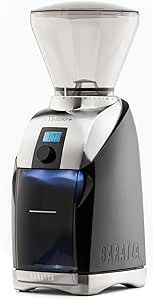
Baratza Virtuoso+ Coffee Grinder
- Precision M2 burr
- 40 grind settings
- 0.1-second timer
- 40-second dosing range
- Backlit grounds bin
- Metal top and base

MiiCoffee DF54 Single Dose Coffee Grinder
- 54mm flat burrs
- Stepless adjustment
- Plasma-generator chute
- Under 0.1g retention claim
- Bellows clearing system
- Compact aluminum body

TIMEMORE C5 ESP Pro Manual Coffee Grinder
- 42mm S2C-042-III burr
- 0.015mm per click
- 50 settings per rotation
- Three-rotation range
- 25g catch cup
- Pull-to-fold handle
Quick Ranking: Best Coffee Grinders for Espresso and French Press
| Rank | Grinder | Best For | Why It Earned Its Place |
|---|---|---|---|
| 1 | Baratza Encore ESP Pro Coffee Grinder | Best Overall | The strongest one-grinder solution here for buyers who genuinely alternate between fine espresso and coarse immersion brewing. |
| 2 | Baratza Encore ESP Coffee Grinder | Best Value | The easiest value recommendation for beginners who want espresso-focused micro-steps and a simple coarse range for French press. |
| 3 | Fellow Opus Conical Burr Coffee Grinder | Best Compact All-Rounder | A design-conscious compact grinder with 41+ settings, a broad brew range, and a low-mess direct-drop workflow. |
| 4 | Breville Smart Grinder Pro | Best Timed-Dosing Convenience | The most convenient hopper grinder here is for users who want an LCD, 60 settings, portafilter cradles, and repeatable timed doses. |
| 5 | Baratza Virtuoso+ Coffee Grinder | Best French-Press-First Pick | A polished brew-focused Baratza with the M2 burr and a 0.1-second timer, best for French press plus occasional forgiving espresso. |
| 6 | MiiCoffee DF54 Single Dose Coffee Grinder | Best Flat-Burr Espresso-First Pick | The strongest espresso-first choice for buyers who want 54mm flat burrs, stepless adjustment, low retention, and occasional French press flexibility. |
| 7 | TIMEMORE C5 ESP Pro Manual Coffee Grinder | Best Manual Pick | A portable all-metal hand grinder with 42mm burrs and 0.015mm adjustment for buyers willing to trade speed for control and silence. |
Best Coffee Grinders for Espresso and French Press: Detailed Reviews
1. Best Overall: Baratza Encore ESP Pro Coffee Grinder
Best coffee grinder for espresso and French press buyers who want the strongest one-grinder solution here for buyers who genuinely alternate between fine espresso and coarse immersion brewing.
Baratza Encore ESP Pro Coffee GrinderThe strongest one-grinder solution here for buyers who genuinely alternate between fine espresso and coarse immersion brewing.
Price on AmazonTechnical Specifications & Daily Features
- Grinder type: Electric all-purpose burr grinder
- Adjustment style: Smooth stepless grind adjustment
- Grinding modes: Single Dose Mode and Timer Mode
- Timer precision: Adjustable in 0.1-second increments
- Range: Fine espresso through coarse French press and cold brew
- Static control: Integrated Anti-Static Technology
- Consistency feature: Integrated flow-control disk
- Best user: The buyer who wants one modern grinder for both brew extremes
- Main advantage: Fine espresso control without giving up easy movement into coarse brewing
30-Day Ownership Outlook: Pros & Cons
Pros
- True dual-purpose control: Stepless adjustment gives espresso enough fine control while keeping the coarse end accessible for a press pot.
- Two useful dosing modes: Single-dose auto-stop suits weighed beans, while the timer supports faster repeated morning doses.
- Cleaner counter routine: Anti-static control reduces the loose chaff and flyaway grounds that make frequent setting changes irritating.
- Modern interface: The display and timed controls make the grinder easier to share with another coffee drinker.
- Clear upgrade path: It feels more adaptable than buying a basic brew grinder now and replacing it when espresso becomes more serious.
Cons
- Newer design: It has a shorter long-term ownership record than Baratza models that have been on home counters for many years.
- Hopper switching: Moving from espresso to French press still requires purging a small amount of coffee when beans remain in the hopper.
- Not a large flat-burr grinder: Buyers chasing a very specific flat-burr espresso profile may still prefer a dedicated single-dose platform.
My Final Verdict
The Encore ESP Pro is the grinder I would put first for a household that really uses both espresso and French press. Its stepless adjustment removes the biggest weakness of many multipurpose grinders: the jump between two espresso settings that are both slightly wrong.
It is the most convincing choice here when convenience matters almost as much as range. Single-dose auto-stop, a precise timer, anti-static control, and broad adjustment make it easier to live with as the only grinder on the counter.
The Encore ESP Pro earns the top position because it approaches the two-brew-method problem directly instead of treating one end of the range as an afterthought. Espresso needs tiny changes. A French press needs a genuinely coarse setting with enough particle uniformity to avoid a muddy cup. The Pro gives me a smoother path between those extremes than a conventional stepped grinder, and that matters every time the beans, roast level, basket dose, or press recipe changes.
Its stepless collar is the feature I value most. With espresso, I can move by a very small amount when a shot is running two or three seconds too quickly rather than changing the dose to compensate for a large grind step. At the coarse end, I can move confidently into an immersion range, grind a larger dose into the bin, and return to an espresso reference point without feeling that the machine was designed only for one of those jobs.
The two operating modes also make sense in a mixed household. I can pre-weigh beans and use auto-stop for a deliberate single-dose espresso routine or use the 0.1-second timer when one familiar coffee stays in the hopper. That flexibility is more meaningful than adding another dozen decorative settings because it changes how comfortably the grinder works on a rushed weekday and on a slower weekend morning.
There are still compromises. A hopper grinder is never as effortless for switching beans as a dedicated low-retention single-dose machine, and the Encore platform does not offer the same burr-upgrade culture as a 54mm or 64mm flat-burr grinder. Yet for the actual title of this guide—espresso and French press—the Encore ESP Pro covers the widest practical ground with the fewest awkward workarounds.
2. Best Value: Baratza Encore ESP Coffee Grinder
Best coffee grinder for espresso and French press buyers who want the easiest value recommendation for beginners who want espresso-focused micro steps and a simple coarse range for french press.
Baratza Encore ESP Coffee GrinderThe easiest value recommendation for beginners who want espresso-focused micro steps and a simple coarse range for French press.
Price on AmazonTechnical Specifications & Daily Features
- Grinder type: Electric stepped conical burr grinder
- Grind settings: 40 numbered positions
- Espresso range: Settings 1 through 20 use higher-resolution steps
- Brew range: Settings 21 through 40 cover filter, French press, and cold brew
- Burr: Quick-release M2 conical steel burr
- Included workflow: Dosing cup with 54mm body and 58mm adapter
- Best user: A beginner building one affordable espresso-and-brew station
- Maintenance: Tool-free upper-burr removal for routine cleaning
- Main advantage: A clearly divided adjustment system that is easy to understand
30-Day Ownership Outlook: Pros & Cons
Pros
- Logical adjustment range: The first half is dedicated to espresso resolution and the second half moves into brewed-coffee territory.
- Beginner-friendly: The numbered collar is easy to record and return to after a French press batch.
- Useful dosing cup: Transferring grounds to common espresso portafilters is tidy and straightforward.
- Serviceable design: Baratza support and replaceable parts make the grinder less disposable than many budget rivals.
- Compact value: It delivers credible espresso without taking over a small counter.
Cons
- Stepped compromise: Even its espresso-focused steps are less adjustable than a true stepless mechanism.
- Basic controls: There is no digital timer, weight dosing, or automatic empty-hopper stop.
- Purge required: Large setting changes work best after the grinder is cleared of retained coffee.
My Final Verdict
The Encore ESP is the value pick I would recommend to someone buying a first serious burr grinder. It makes the espresso range easier to navigate than the original Encore while preserving the coarse settings that made the platform useful for immersion coffee.
Choose it when you want dependable fundamentals, simple controls, and a repairable design rather than a screen full of features.
The standard Encore ESP is less sophisticated than the Pro, but it solves the most important beginner problem at a noticeably simpler level: it separates high-resolution espresso settings from broader brew settings. That division makes the collar easier to understand. I do not have to guess whether the useful espresso window is hidden inside two numbers on a dial designed mainly for drip coffee.
For espresso, settings 1 through 20 give the machine finer movement than the coarser half of the collar. That does not make it equivalent to a large stepless flat-burr grinder, but it gives a new home barista enough control to dial medium and medium-dark roasts without immediately feeling trapped. The included dosing cup also makes more sense than a generic grounds bin when the morning goal is filling a portafilter cleanly.
When I move to a French press—using the same basic principles covered in French Press 101—the grinder becomes pleasantly uncomplicated. I turn beyond the espresso zone into the brew range, grind the larger batch, and use the numbered reference to find my way back. The cup is best when I avoid assuming that the coarsest possible setting is automatically correct. A slightly less coarse but more even grind often tastes sweeter and produces less weak, hollow coffee than oversized boulders.
The Encore ESP is not the machine for a buyer who wants silent operation, precise timed dosing, or constant light-roast espresso experimentation. It is the grinder for someone who wants a reliable first platform, values straightforward maintenance, and would rather spend time learning dose, ratio, distribution, and French press technique than navigating a complicated interface.
3. Best Compact All-Rounder: Fellow Opus Conical Burr Coffee Grinder
Best coffee grinder for espresso and French press buyers who want a design-conscious compact grinder with 41+ settings, a broad brew range, and a low-mess direct-drop workflow.
Fellow Opus Conical Burr Coffee GrinderA design-conscious compact grinder with 41+ settings, a broad brew range, and a low-mess direct-drop workflow.
Price on AmazonTechnical Specifications & Daily Features
- Grinder type: Compact electric all-purpose conical burr grinder
- Burr set: Six-blade 40mm stainless-steel conical burrs
- Adjustment range: 41+ settings with outer and inner adjustment
- Motor characteristic: 6Nm torque at the burr
- Brew range: Espresso, filter, French press, and cold brew
- Retention control: Direct-drop design with anti-static technology
- Dosing aid: Volumetric dosing lid and under-lid grind guide
- Best user: A small-kitchen buyer who values design and multi-method flexibility
- Main advantage: Wide capability in a short, visually clean body
30-Day Ownership Outlook: Pros & Cons
Pros
- Small footprint: The low body fits beneath cabinets and looks less appliance-heavy than a tall hopper grinder.
- Broad brewing range: The burrs and adjustment system are intentionally designed for espresso through cold brew.
- Reduced mess: Anti-static control and a direct grounds path help keep the catch area cleaner.
- Helpful guides: The lid and grind-reference markings make starting points easier for newer users.
- Modern appearance: It blends into a design-led kitchen more gracefully than most utility-focused grinders.
Cons
- Two-part adjustment: The hidden inner ring adds fine control but is slower to understand and less convenient to revisit.
- Reference math: Switching between espresso and French press can require notes until the combined setting system becomes familiar.
- Lightweight feel: Its compact polymer body does not feel as substantial as heavier metal grinders.
My Final Verdict
The Opus is the compact all-rounder I would choose when counter space and appearance matter, but I still want one grinder capable of both espresso and French press.
Its main weakness is not grind range; it is the learning curve created by the outer dial and inner adjustment ring. Once those references are written down, the grinder becomes much easier to own.
The Fellow Opus looks simple from across the kitchen, yet its adjustment system is more involved than the clean exterior suggests. The large outer dial handles the obvious changes, while the inner ring expands the fine-control range. That combination gives the grinder enough flexibility for espresso, but it also means I would keep a small note of my preferred espresso and French press references instead of trusting memory after several bean changes.
The 40mm conical burr set gives the Opus a rounded, forgiving style that suits the role. Medium roasts work especially well because they can produce syrupy espresso and a rich French press without demanding the extreme precision that a very light espresso roast may require. The grinder has enough torque to work across the range, and the direct-drop path helps reduce the stale coffee that would otherwise complicate frequent switching.
For French press, I appreciate the cleaner catch-cup behavior and the grinder’s low height. Larger doses are easy to measure with the lid, and the under-lid guide provides a useful starting point before I refine by taste. I still judge the final setting by the cup: if the press tastes silty and drying, I move coarser; if it tastes thin and cereal-like, I move slightly finer or extend contact time.
The Opus is not the quickest grinder to explain to a guest because its finest adjustment is partly hidden. It is, however, one of the better answers for a small apartment or carefully designed kitchen where a tall, industrial-looking grinder would feel intrusive. It gives up some instant clarity in the control system, but it returns that value through range, low latency, and excellent counter-manners.
4. Best Timed-Dosing Convenience: Breville Smart Grinder Pro
Best coffee grinder for espresso and French press buyers who want the most convenient hopper grinder here for users who want an lcd, 60 settings, portafilter cradles, and repeatable timed doses.
Breville Smart Grinder ProThe most convenient hopper grinder here for users who want an LCD, 60 settings, portafilter cradles, and repeatable timed doses.
Price on AmazonTechnical Specifications & Daily Features
- Grinder type: Programmable electric conical burr grinder
- Grind settings: 60 numbered settings
- Dosing control: Digital time adjustable in 0.2-second increments
- Display: LCD for grind setting, time, shots, and cups
- Hopper capacity: 18 ounces
- Portafilter support: 50–54mm and 58mm cradles included
- Output options: Portafilter, grounds container, filter basket, or paper filter
- Best user: A household that prioritizes speed and repeatable hopper dosing
- Main advantage: The most complete convenience interface in this group
30-Day Ownership Outlook: Pros & Cons
Pros
- Fast daily workflow: The hopper, timer, and portafilter cradles remove several manual steps from espresso preparation.
- Clear display: Settings and dose time remain visible instead of living in a phone note.
- Large range: Sixty positions make it easy to establish separate espresso and French press starting points.
- Large hopper: It suits households preparing several drinks without weighing every dose.
- Flexible output: Grinding into a portafilter or grounds container makes the same grinder comfortable for both methods.
Cons
- Retention during switching: A large hopper and internal path make bean changes less clean than single dosing.
- Coarse consistency limit: The broad range is useful, but dedicated brew grinders can produce a cleaner French press distribution.
- Espresso ceiling: Advanced light-roast espresso users may eventually want finer stepless control.
My Final Verdict
The Smart Grinder Pro is the convenience pick. I would buy it for a busy kitchen where repeatable timed dosing, a visible screen, and direct portafilter grinding matter more than ultra-low retention.
It can cover both espresso and French press effectively, but it is happiest when one coffee remains in the hopper and setting changes are planned rather than constant.
The Breville Smart Grinder Pro is the easiest grinder here to operate like a household appliance rather than a hobby instrument. The LCD shows the grind number, time, and selected shots or cups, while the timer adjusts in 0.2-second increments. That means another person can reproduce a familiar dose without learning a single-dose ritual or weighing beans before every drink.
For espresso, the included cradles are genuinely useful. I can place a 54mm or 58mm portafilter beneath the chute, choose the dose time, and keep the workflow moving. The conical burrs produce espresso that is well suited to classic blends and milk drinks. The limitation appears when a light roast needs a setting between two numbered positions; then I may have to adjust dose or yield because the grinder itself remains stepped.
For French press, switching the machine from shots to cups makes the interface feel natural. The grounds container catches a larger dose more comfortably than an espresso cup, and the 18-ounce hopper suits batch brewing. I would still purge briefly after a large change from fine to coarse because retained espresso-fine particles can add sludge and bitterness to the first press batch.
The Smart Grinder Pro is not the most pure recommendation in this guide. It is the practical recommendation for someone who makes several drinks, values repeatability, and wants one familiar interface. It trades some low-retention precision for speed, capacity, and ease of sharing, which can be exactly the right exchange in a real family kitchen.
5. Best French-Press-First Pick: Baratza Virtuoso+ Coffee Grinder
Best coffee grinder for espresso and French press buyers who want a polished brew-focused baratza with the m2 burr and a 0.1-second timer, best for french press plus occasional forgiving espresso.
Baratza Virtuoso+ Coffee GrinderA polished brew-focused Baratza with the M2 burr and a 0.1-second timer, best for French press plus occasional forgiving espresso.
Price on AmazonTechnical Specifications & Daily Features
- Grinder type: Electric stepped conical burr brew grinder
- Burr: Baratza precision M2 conical burr
- Grind settings: 40 numbered positions
- Timer: Digital timer adjustable to 0.1 second
- Timer range: Up to 40 seconds
- Grounds bin: Front bin with backlighting
- Best brew focus: French press, filter, AeroPress, and occasional espresso
- Best user: A French-press-first household that sometimes pulls forgiving espresso
- Main advantage: Strong coarse-to-medium performance with simple repeatable timing
30-Day Ownership Outlook: Pros & Cons
Pros
- French press character: The M2 burr produces a more controlled coarse grind than many entry-level multipurpose grinders.
- Repeatable timing: The 0.1-second timer makes batch doses easier to reproduce.
- Simple numbered collar: Returning to a familiar coarse setting takes seconds.
- Sturdy presentation: The metal top and base make it feel more finished than the basic Encore body.
- Accessible maintenance: The upper burr and hopper are easy to remove for cleaning.
Cons
- Not espresso-first: Its step spacing is less suitable for demanding unpressurized espresso than the Encore ESP models.
- Grounds-bin workflow: It lacks the dedicated espresso dosing cup and portafilter support of newer grinders.
- Switching purge: Fine remnants should be cleared before a coarse French press dose.
My Final Verdict
The Virtuoso+ belongs in this guide for the buyer whose main drink is French press but who occasionally uses a forgiving espresso setup. Its M2 burr and precise timer make everyday brewed coffee especially comfortable.
I would not choose it over the Encore ESP or ESP Pro for a serious daily unpressurized espresso routine. I would choose it when coarse-grind quality and batch convenience come first.
The Virtuoso+ requires the clearest expectation-setting in this list. It can grind fine enough for espresso, but its greatest strength is brewed coffee. The M2 burr, simple 40-position collar, and timer create an excellent French press routine, while demanding espresso can expose the limits of its step size. That does not make it a poor grinder; it makes it a grinder with a definite center of gravity.
For a French press, that center of gravity is appealing. The coarse settings are easy to revisit, the timer helps repeat a batch dose, and the grounds bin is well suited to 30 or 40 grams of coffee. The illuminated bin may seem minor, but it makes it easier to see whether grounds are collecting unevenly or whether static is beginning to scatter chaff around the opening.
Espresso is more conditional. With a pressurized basket, darker roast, or forgiving machine, the Virtuoso+ can make a respectable concentrated shot. With a precise 58mm nonpressurized basket and a light roast, I may find that one number runs fast and the next number runs slow. At that point, dose and yield become compensation tools rather than the grinder delivering the exact resistance I want.
I rank it fifth because the title requires both methods, and other models in this guide offer a more balanced dual-purpose workflow. Yet a French-press-first buyer should not dismiss it. If the morning is usually a large, full-bodied press and espresso appears on weekends, the Virtuoso+ can be the more satisfying ownership choice than an espresso specialist that treats coarse grinding as a secondary task.
6. Best Flat-Burr Espresso—First Pick: MiiCoffee DF54 Single Dose Coffee Grinder
Best coffee grinder for espresso and French press buyers who want the strongest espresso-first choice for buyers who want 54mm flat burrs, stepless adjustment, low retention, and occasional french press flexibility.
MiiCoffee DF54 Single Dose Coffee GrinderThe strongest espresso-first choice for buyers who want 54mm flat burrs, stepless adjustment, low retention, and occasional French press flexibility.
Price on AmazonTechnical Specifications & Daily Features
- Grinder type: Compact single-dose flat burr grinder
- Burr set: Custom 54mm stainless-steel flat burrs
- Adjustment style: Stepless grind adjustment
- Static control: Plasma generator in the exit chute
- Retention design: Bellows and low-retention internal path
- Bean capacity: Approximately 20g without bellows and up to 50g with bellows
- Motor: 150W AC motor
- Best user: An espresso-first home barista who occasionally brews French press
- Main advantage: Flat-burr espresso control at a compact size and approachable price
30-Day Ownership Outlook: Pros & Cons
Pros
- Fine espresso control: Stepless adjustment makes small shot-time corrections easier than numbered stepped collars.
- Flat-burr presentation: Grounds tend to feel fluffy and easy to distribute into an espresso basket.
- Low-retention workflow: The bellows and short path suit bean switching and decaf use.
- Static reduction: The ionizing chute helps control mess at both fine and coarser settings.
- Compact metal body: It feels substantial without becoming a large 64mm or 83mm counter machine.
Cons
- Espresso-biased stock burrs: The stock burr geometry is more convincing for espresso than for perfectly clean French press grounds.
- Manual dosing ritual: Every dose must be weighed and moved through the bellows workflow.
- Setting return: A stepless collar needs careful markings or notes when jumping far from French press back to espresso.
My Final Verdict
The DF54 is the grinder I would choose from this group when espresso quality is the clear priority and French press is occasional. Its 54mm flat burrs, stepless collar, and low-retention workflow give it a more serious espresso character than most multipurpose hopper grinders.
It can grind coarse, but its stock burrs are espresso oriented. Buy it for the shots, then accept that its French press performance is useful rather than class-leading.
The DF54 is the most specialist-feeling electric grinder in this lineup, and it makes the most sense beside one of the semi-automatic espresso machines I normally use for manual puck preparation. It does not try to make hopper dosing, cup selection, or family-friendly presets the center of the experience. I weigh the beans, pour them into the small chamber, start the motor, use the bellows, and work from the dosing cup. That routine is deliberate, but it gives me control over exactly which coffee enters the next shot.
Its 54mm flat burrs and stepless collar are the reasons to buy it. Espresso adjustments can be tiny, and the ground coffee tends to arrive fluffy enough for an efficient WDT routine. Medium and light-medium roasts can show clearer separation than they do from basic conical burr grinders, while darker roasts still retain enough texture for milk drinks.
At French press settings, the DF54 remains usable, but I would not pretend that its stock espresso burrs suddenly become a dedicated brew burr set. The manufacturer itself positions those burrs as espresso-focused and merely capable at coarser methods. I can make a rich, enjoyable press, especially with a careful sieving-free technique, but I should expect more fines than from a grinder designed primarily for brewed coffee.
The practical question is frequency. If I pull espresso every day and make French press once or twice a week, the DF54 makes excellent sense. If I make a full press every morning and espresso only occasionally, the Virtuoso+ or Encore platform is easier to justify. The DF54 is the honest espresso-first recommendation—not the most balanced, but potentially the most rewarding for the right priority.
7. Best Manual Pick: TIMEMORE C5 ESP Pro Manual Coffee Grinder
Best coffee grinder for espresso and French press buyers who want a portable all-metal hand grinder with 42mm burrs and 0.015mm adjustment for buyers willing to trade speed for control and silence.
TIMEMORE C5 ESP Pro Manual Coffee GrinderA portable all-metal hand grinder with 42mm burrs and 0.015mm adjustment for buyers willing to trade speed for control and silence.
Price on AmazonTechnical Specifications & Daily Features
- Grinder type: All-metal manual conical burr grinder
- Burr set: 42mm seven-blade S2C-042-III multipurpose burr
- Adjustment accuracy: 0.015mm per click
- Adjustment range: Three rotations with 50 settings per rotation
- Body size: Approximately 53mm diameter by 172mm high
- Weight: Approximately 640g
- Capacity: 30g grind chamber and 25g catch cup
- Best user: A solo drinker, traveler, or quiet-kitchen buyer
- Main advantage: Fine manual espresso control with enough range for coarse immersion brewing
30-Day Ownership Outlook: Pros & Cons
Pros
- Very fine adjustment: The 0.015mm click spacing gives espresso far more control than basic hand grinders.
- Quiet operation: There is no electric motor to disturb an early household.
- Portable build: The folding handle and narrow all-metal body travel well.
- Large multipurpose burr: The 42mm seven-blade burr balances speed, clarity, and broad brew capability.
- No retention maze: The simple vertical path is easy to brush and inspect.
Cons
- Manual espresso effort: Grinding a dense light-roast espresso dose requires real time and hand effort.
- Batch limit: The 25g catch cup is smaller than many full French press recipes.
- Setting travel: Moving across three rotations demands careful counting or a written reference.
My Final Verdict
The C5 ESP Pro is the manual pick for someone who values silence, portability, and fine adjustment more than speed. It is unusually capable across espresso and French press for a hand grinder of this size.
I would choose it for one-person brewing, travel, or a secondary setup. I would not choose it for repeated 40g French press batches or several back-to-back espresso drinks.
The C5 ESP Pro changes the buying question in the same way the best manual and portable espresso setups do because there is no motor, hopper, timer, or anti-static circuit to compare. Its value sits in machining, burr geometry, adjustment precision, and the willingness of the owner to turn the handle. For one or two drinks, that simplicity can feel refreshing. For a busy household, it can become the slowest part of the morning.
The 42mm S2C-042-III burr is larger than the burrs found in many compact hand grinders, and the ESP Pro adjustment moves in 0.015mm increments. That fine click spacing is what makes it credible for espresso. I can move a few clicks, observe the effect on shot time, and keep a repeatable number for a particular bean rather than using a vague open-close range.
French press is physically easier to grind because the burrs are farther apart, but the 25g catch cup creates the practical limit. A solo 350 ml press fits comfortably. A larger 500ml or 1-liter recipe may require two grinding rounds. The three-rotation adjustment range also means I would write down both references so I do not lose count when moving from fine to coarse.
I rank the TIMEMORE seventh only because most readers searching for a grinder to serve two very different daily methods will prefer electric speed. Judged as a manual grinder, it is highly appealing. It is quiet, beautifully compact, precise enough for espresso, and genuinely capable of a coarse press grind without needing a second burr set or power outlet.
Buying Guide: How to Choose One Grinder for Espresso and French Press
Decide which method is the priority
A grinder that is equally exceptional at the finest espresso setting and the coarsest immersion setting is rare. Start by deciding whether espresso, French press, or equal daily switching defines the purchase. Espresso-first buyers should prioritize fine adjustment and low retention. French-press-first buyers should prioritize coarse uniformity, batch capacity, and easy grounds collection. Equal switching rewards a clear reference system and a short, purge-friendly grounds path.
Look beyond the total number of settings
Sixty settings are not automatically better than forty. The useful question is how many of those settings fall inside the espresso range and how large each movement is. A grinder may have a broad advertised range but only two or three positions that work for a particular basket and roast. Stepless adjustment offers maximum control, while well-designed stepped systems are easier to record and revisit.
Understand retention before switching
Retention is the coffee left inside the grinder after the motor stops. When I move from espresso to French press, retained fine grounds can add sediment and bitterness. When I move back, retained coarse particles can weaken puck resistance and accelerate the shot. Single-dose grinders, bellows, anti-static chutes, and short vertical paths reduce the amount of purging needed.
Match the burr style to the coffee you enjoy
Conical burrs often produce a forgiving, full-bodied cup and fit compact, affordable grinders. Flat burrs can emphasize clarity and make espresso distribution feel especially clean, although burr geometry matters more than the simple flat-versus-conical label. A stock espresso burr may grind coarse but still create more French press fines than a brew-focused burr.
Choose hopper or single dosing honestly
A hopper is convenient when one bean stays in use and several drinks are prepared. Timed dosing is fast, familiar, and easy to share. Single dosing is cleaner when I rotate beans, use decaf, or switch methods often. It requires a scale and a more deliberate routine, but it keeps old coffee from sitting in the hopper and makes dose changes obvious.
Check French press batch capacity
A 25g hand grinder catch cup is fine for a solo press but small for a large carafe. Electric grounds bins handle 30g to 60g batches more comfortably. Capacity affects whether the French press feels smooth or whether I must grind twice, empty the cup, and remember two separate doses.
Plan how you will return to espresso
Numbered-step grinders are easy to record: espresso at 12, French press at 32, for example. Stepless grinders need a visible marker, dial photograph, or written reference. I also return toward fine settings while the motor is running or the chamber is empty, which reduces the chance of beans jamming between the burrs.
Budget for technique, not only hardware
A better grinder cannot rescue stale coffee, careless distribution, an overloaded espresso basket, or a French press left sitting on the grounds. I would reserve part of the budget for a small scale, a WDT tool for espresso, fresh beans, and a timer. Those inexpensive controls often improve repeatability more than moving one model higher in the range.
Final Comparison Table: Which Dual-Purpose Grinder Should You Buy?
| Buying Priority | Recommended Grinder | Key Strength | Best Ownership Fit |
|---|---|---|---|
| Best Overall | Baratza Encore ESP Pro | Stepless grind adjustment | The strongest one-grinder solution here for buyers who genuinely alternate between fine espresso and coarse immersion brewing. |
| Best Value | Baratza Encore ESP | 40 numbered settings | The easiest value recommendation for beginners who want espresso-focused micro-steps and a simple coarse range for French press. |
| Best Compact All-Rounder | Fellow Opus | 41+ grind settings | A design-conscious compact grinder with 41+ settings, a broad brew range, and a low-mess direct-drop workflow. |
| Best Timed-Dosing Convenience | Breville Smart Grinder Pro | 60 grind settings | The most convenient hopper grinder here is for users who want an LCD, 60 settings, portafilter cradles, and repeatable timed doses. |
| Best French-Press-First Pick | Baratza Virtuoso+ | Precision M2 burr | A polished brew-focused Baratza with the M2 burr and a 0.1-second timer, best for French press plus occasional forgiving espresso. |
| Best Flat-Burr Espresso-First Pick | MiiCoffee DF54 | 54mm flat burrs | The strongest espresso-first choice for buyers who want 54mm flat burrs, stepless adjustment, low retention, and occasional French press flexibility. |
| Best Manual Pick | TIMEMORE C5 ESP Pro | 42mm S2C-042-III burr | A portable all-metal hand grinder with 42mm burrs and 0.015mm adjustment for buyers willing to trade speed for control and silence. |
My Final Recommendation
If I were buying one grinder specifically to move between espresso and French press, I would choose the Baratza Encore ESP Pro. Its stepless adjustment is the decisive advantage because espresso often needs a setting between conventional clicks. The single-dose auto-stop and 0.1-second timer let it behave like two different grinders depending on the morning, while anti-static control makes large setting changes less messy.
For a lower-cost first setup, I would choose the Baratza Encore ESP. Its split adjustment system is easy to learn: the first twenty positions concentrate on espresso, and the remaining positions open into filter, French press, and cold brew. It is not as refined as the Pro, but it gives a beginner a clear path without forcing an immediate second grinder.
The Fellow Opus is the best fit for a small, modern kitchen. The Breville Smart Grinder Pro is the most convenient for repeated hopper doses and shared use. The Virtuoso+ is the French-press first choice. The DF54 is the espresso-first flat-burr choice. The TIMEMORE C5 ESP Pro is the quiet manual choice for smaller doses and travel.
The most important advice is to buy around the method you use most, then make sure the second method is genuinely comfortable—not merely possible. A balanced grinder should reduce the number of corrections I make elsewhere in the recipe. When the machine can move across the range, return accurately, and keep retained grounds under control, owning one grinder for both espresso and French press becomes realistic rather than optimistic.
FAQ: Best Coffee Grinders for Espresso and French Press
What is the best grinder for both espresso and French press?
The Baratza Encore ESP Pro is my strongest overall recommendation because its stepless adjustment, broad range, single-dose auto-stop, timer mode, and anti-static control support frequent movement between fine espresso and coarse immersion brewing.
Can one grinder really handle espresso and French press?
Yes, but the grinder needs both a wide physical range and enough espresso resolution. It also needs a practical way to return to saved settings and clear retained coffee after a large adjustment.
Is the Baratza Encore ESP good for French press?
Yes. Its settings 21 through 40 are intended for brewed coffee, including French press and cold brew. The first 20 settings provide higher resolution for espresso.
Is the Fellow Opus easy to switch between espresso and French press?
It has the necessary range, but the inner micro-adjustment ring makes setting references less obvious than a single numbered collar. I would write down the combined espresso and French press positions.
Is the Breville Smart Grinder Pro good enough for espresso?
It is capable of enjoyable home espresso, especially with medium or darker roasts and milk drinks. Advanced users working with light roasts may eventually want a stepless or more espresso-focused grinder.
Why is the Baratza Virtuoso+ ranked lower?
The Virtuoso+ is excellent for French press and brewed coffee, but its stepped adjustment is less precise for demanding unpressurized espresso than the Encore ESP models, Opus, or DF54.
Can the MiiCoffee DF54 grind for French press?
Yes, it can reach coarse settings, but its stock 54mm burrs are espresso-oriented. French press performance is useful rather than the main reason I would buy it.
Is a manual grinder practical for both methods?
A high-quality manual grinder such as the TIMEMORE C5 ESP Pro can handle both, but espresso requires more effort, and a larger French press may exceed the catch-cup capacity.
Should I purge after changing from espresso to French press?
A short purge is usually helpful because retained fine coffee can increase sediment and bitterness in the press. Low-retention single-dose grinders need less purging than large hopper grinders.
What grind size should I use for a French press?
Start coarse, but not with the largest possible chunks. A uniform medium-coarse to coarse grind often extracts more evenly. Adjust by taste: move coarser for dryness and sludge, or slightly finer for a thin, weak cup.
What should I record when dialing espresso?
Record the grinder setting, dose, beverage yield, shot time, bean, and roast date. Those details make returning from a French press setting much faster.
Is stepless adjustment always better?
Stepless adjustment is better for tiny espresso corrections, but numbered steps are easier to remember and share. The best system depends on whether maximum precision or fast repeatability matters more.


