
Best Instant Adjustments Coffee Grinders: Tested & Reviewed


OneHundredCoffee is reader-supported, and some products displayed may earn us an affiliate commission. Details
Switching from a V60 to French press should take a turn of the grind dial, not a new tutorial. Yet the moment a household adds espresso, the meaning of a “quick adjustment” changes. Filter brewers usually tolerate a fairly comfortable window of grind sizes. Espresso can demand a much smaller correction. One grinder handles those jobs with clear numbered steps; another uses a stepless knob that lets the owner move almost imperceptibly. Neither approach wins every situation.
My priority when comparing coffee grinders for instant grind adjustments is the time it takes to return to a known, useful setting. I look at how the dial communicates its position, how easy it is to record two brew recipes, whether old coffee remains in the chute after a change, and how the machine measures its grinding cycle. Those details often matter more on a rushed morning than a long list of grind numbers.
The five grinders here span very different uses. The Fellow Ode Gen 2 is a filter-focused flat-burr single-doser. The SHARDOR CG203B combines 48 marked positions with electronic timed grinding. Gaggia’s MDF 55 has stepless micrometric control for fine espresso corrections. Hamilton Beach 80385 and the Cuisinart DBM-8-style automatic grinder take a simpler, batch-friendly approach with 18 settings apiece.
My overall favorite for switching among brewed coffee methods is the Fellow Ode Gen 2. Its visible stepped scale, magnetic grounds cup and anti-static workflow are well suited to someone who moves between pour-over, drip and French press. When the main job is correcting espresso shot flow, the Gaggia is better equipped. For broad home use at a more approachable price, SHARDOR makes the strongest middle-ground case. None of these judgments assumes that a setting change is the same as an instantly perfect cup.
My Three Coffee Grinders for Quick Grind Changes

Fellow Ode Brew Grinder Gen 2
- 64 mm flat brew burrs
- 31 repeatable adjustment positions
- Anti-static grounds path
- Single-dose workflow and auto-stop
- Magnetic grounds catch
- Filter coffee, not espresso

SHARDOR Professional Conical Burr Grinder CG203B
- 48 marked grind settings
- Conical stainless-steel burrs
- 40-second electronic timer
- Anti-static grounds handling
- Removable burr for cleaning
- Espresso-to-French-press markings
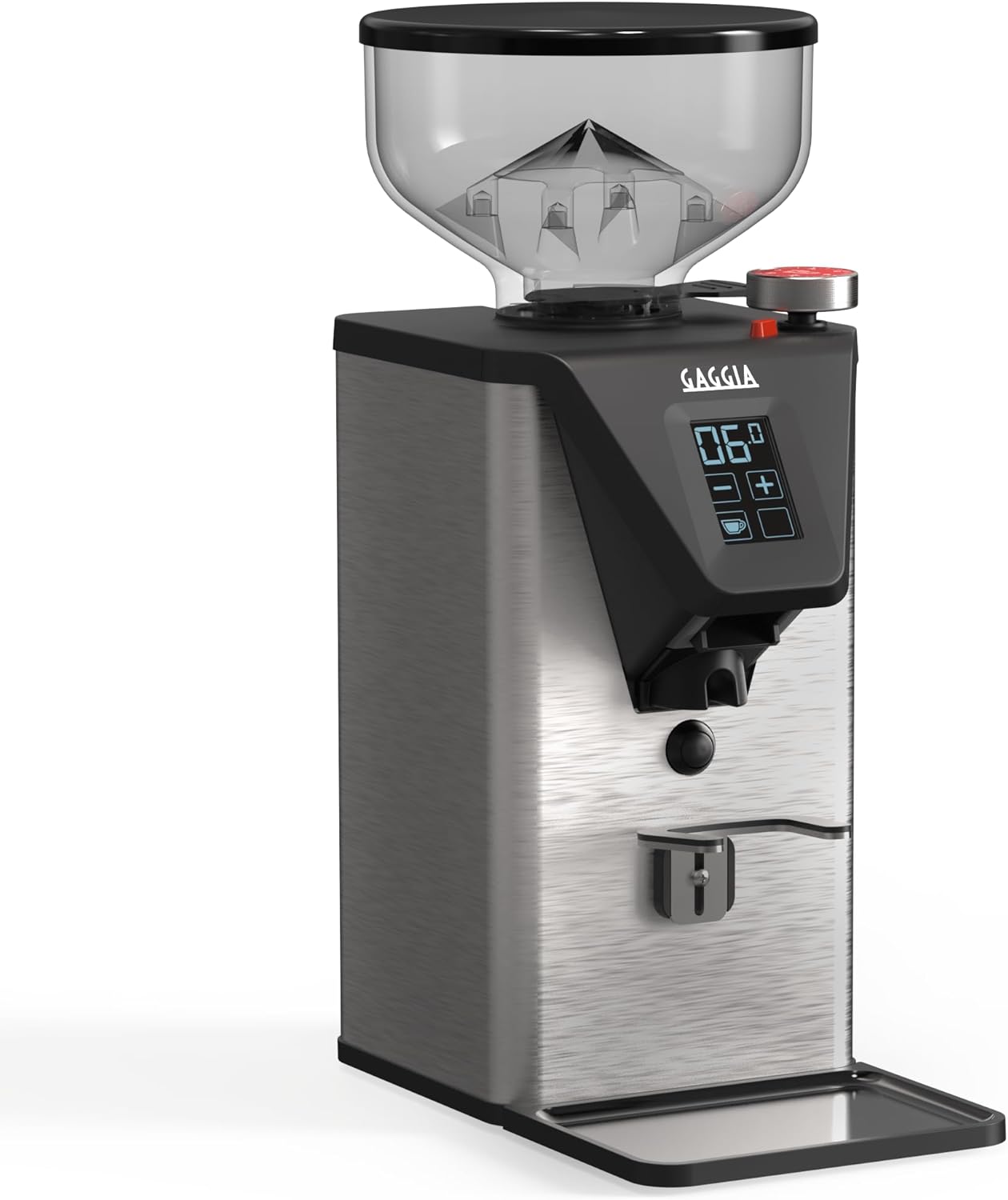
Gaggia MDF 55 Espresso & Coffee Grinder
- 55 mm flat hardened-steel burrs
- Stepless micrometric knob
- Touchscreen dose control
- Timed single and double doses
- Adjustable filter-holder fork
- 250 g removable bean hopper
There is one habit I consider essential regardless of the grinder: keep a record of the grind position alongside the beans, coffee dose, water and brewer. A clear mark on the collar helps, but it cannot remember that the last bag was darker, the paper filter drained differently or the water changed. Once the brewing method is repeatable, an adjustment becomes an informed decision rather than random experimentation.
Timed dosing also deserves a warning before comparing features. A timer measures motor operation, not the mass of coffee delivered. It may help repeat a familiar cycle, but a separate scale remains the right tool when the recipe specifies 18 grams or 30 grams. Even a well-maintained burr grinder can vary slightly in output as beans, roast density and grind size change.
At a Glance: Five Grinders for Instant Grind Adjustments
Each model handles the same basic task differently. The six details in every row focus on the adjustment, dosing, cleanup and brewing realities that determine whether the machine is the right fit.
Fellow Ode Brew Grinder Gen 2
- 64 mm flat brew burrs
- 31 repeatable adjustment positions
- Anti-static grounds path
- Single-dose workflow and auto-stop
- Magnetic grounds catch
- Filter coffee, not espresso
SHARDOR Professional Conical Burr Grinder CG203B
- 48 marked grind settings
- Conical stainless-steel burrs
- 40-second electronic timer
- Anti-static grounds handling
- Removable burr for cleaning
- Espresso-to-French-press markings
Gaggia MDF 55 Espresso & Coffee Grinder
- 55 mm flat hardened-steel burrs
- Stepless micrometric knob
- Touchscreen dose control
- Timed single and double doses
- Adjustable filter-holder fork
- 250 g removable bean hopper

Hamilton Beach Electric Burr Grinder 80385
- 18 stepped grind settings
- Flat burr grinding mechanism
- 2–14-cup quantity selector
- One-touch automatic shutoff
- Removable upper grinding wheel
- Compact stainless-steel body

Cuisinart One-Touch Automatic Burr Grinder DBM-8CGP1
- 18 grind positions
- One-touch automatic grinding
- Batch-oriented cup selector
- Removable hopper and chamber
- Accessible fine-to-coarse dial
- Drip and French press focus
Quick Ranking: Where Each Adjustment System Fits
| Rank | Grinder | Adjustment design | Best use and limitation |
|---|---|---|---|
| 1 | Fellow Ode Brew Grinder Gen 2 | 31 positions on an 11-number brew dial | Best for rapid, repeatable filter-brew adjustments; Not designed to grind for espresso |
| 2 | SHARDOR Professional Conical Burr Grinder CG203B | 48 stepped grind settings | Best value for switching between fine and coarse methods; Timings must be recalibrated after grind or bean changes |
| 3 | Gaggia MDF 55 Espresso & Coffee Grinder | Stepless micrometric adjustment | Best for micrometric changes to espresso grind size; Stepless adjustment needs reference marks for large returns |
| 4 | Hamilton Beach Electric Burr Grinder 80385 | 18 grind settings | Best accessible 18-step grinder for drip and press; Entry-level range lacks fine espresso micro-adjustments |
| 5 | Cuisinart One-Touch Automatic Burr Grinder DBM-8CGP1 | 18 settings grouped into fine, medium and coarse | Best straightforward hopper-and-bin workflow for batches; Older DBM-8 product family; limited specialist espresso control |
What “Instant” Really Means When You Change Grind Size
The adjustment knob turns in a second or two. The coffee does not necessarily become the desired size that quickly. Some old grounds remain in most grinding paths, and the first material dispensed after a large change may still reflect the previous position. That delay is one reason low retention and accessible chutes matter. I favor grinders that make the adjustment easy to reproduce, then treat the first small output as a fresh-dose check rather than a guarantee of clean conversion.
There are two main types of speed. Stepped adjustment gives a set of positions you can return to by number or click. The Fellow, SHARDOR, Hamilton Beach and Cuisinart follow this broad approach. Stepless adjustment offers continuous movement within the range, giving the Gaggia a finer degree of control. That can be valuable when an espresso basket needs a small correction, but a large return to an old setting usually calls for careful notation.
A useful grinder also has to make the chosen dose convenient. Single dosing keeps each batch separate; hopper-and-bin systems favor repeated household production; direct portafilter dosing favors an espresso routine. None is automatically more precise by itself. The correct workflow depends on whether the next cup comes from a V60, a six-cup drip maker or an espresso machine.
Five Detailed Coffee Grinder Reviews
1. Fellow Ode Brew Grinder Gen 2
A grinder that changes settings quickly is only useful when its next cup is predictable. Fellow makes that distinction clearer than any other machine in this group. The Ode Gen 2 uses a prominent, stepped dial and brew-focused flat burrs, so a V60 setting can be noted, changed for a French press and recovered without searching for a microscopic point on an unmarked collar.
My leading recommendation for a home that moves between paper-filter coffee and immersion brewing is the Ode Gen 2. Its 31 positions span the part of the range where these recipes live. The built-in anti-static system, magnetically seated receiver and knocker support fast switching, although none removes the need to brush away coffee residue. Espresso remains outside its intended job.
Why fast adjustments feel different on the Ode
The wide, clearly indexed dial is the main attraction for a person who alternates brewers. A note saying “V60: this mark” and “press: that mark” is actually useful because the setting can be recovered visually. The adjustment itself takes seconds; finding the right recipe still requires tasting and a scale. I prefer this honest version of speed over a promise that changing the grind instantly guarantees the same extraction.
In practice, different roasts and filter papers can need different references. A lighter coffee that tastes thin after a change to a faster-draining cone may benefit from a finer step; a darker roast that tastes harsh may need a coarser reference. Once the brewer and ratio are stable, using the stepped dial to make a single deliberate change is straightforward.
A 64 mm brew burr set with a real limitation
These flat stainless-steel burrs are designed for brewed coffee. The Ode works across pour-over, drip, AeroPress, French press and cold brew; this is a more useful claim than pretending a wide range automatically means espresso precision. The important limitation is clear: the Ode Gen 2 is not an espresso grinder. A household preparing traditional non-pressurized espresso needs a separate machine or a more versatile grinder.
At the fine end of the brew scale, an AeroPress recipe may be entirely appropriate, but it does not make the Ode suitable for regulating espresso shot flow through a fine, compact puck. That difference matters when someone searches for a “do everything” appliance. The Ode deserves its position for making filtered and immersion recipes easy to repeat.
Single dosing, anti-static, and the coffee left behind
Weighing beans before grinding gives each new recipe a controlled starting point. The Ode is built around that practice rather than a permanently full bean reservoir. Its magnetic grounds catcher makes placement intuitive, and the grinds knocker helps move residual fragments from the exit. Anti-static technology reduces the familiar coffee halo around a receiving cup.
There is still a maintenance rhythm. Old coffee can accumulate around the chute, especially after darker, oilier roasts. More regular brushing is a reasonable exchange for keeping the next dose fresh. I also keep the cup and grinder surfaces dry; anti-static technology is a convenience, not proof that every kitchen will be free from flyaway particles.
Fellow Ode Brew Grinder Gen 2
My leading recommendation for a home that moves between paper-filter coffee and immersion brewing is the Ode Gen 2. Its 31 positions span the part of the range where these recipes live. The built-in anti-static system, magnetically seated receiver and knocker support fast switching, although none removes the need to brush away coffee residue. Espresso remains outside its intended job.
- Quick return to a recorded filter setting
- Large brew-specific flat burr mechanism
- Anti-static system and magnetic cup reduce everyday scatter
- Single-dose workflow helps switch between beans
- Does not dial in espresso
- Premium cost for a brew-only appliance
- Chute still needs periodic clearing
- Less natural for people who keep a large hopper filled
Technical Specifications & Daily Features
- 64 mm stainless-steel Gen 2 Brew Burrs
- 11 major dial numbers with 31 grind positions
- Intended brewing range: pour-over, drip, AeroPress, French press and cold brew
- Single-dose loading capacity up to approximately 100 g
- Auto-stop, magnetic catch cup and grinds knocker
- Anti-static design; brush the chute as directed
- Not an espresso-capable grinder
Best for rapid, repeatable filter-brew adjustments. Not designed to grind for espresso.
Pros & Cons After 30 Days of Use
The first week should establish separate grind references for the two most-used brewing methods, recorded alongside dose and water weight. The second week is a good time to judge how much residue remains after a normal batch and whether the knocker keeps the counter under control. Later attention belongs on changing coffees without losing a favorite dial position.
By day thirty, the central ownership question is whether the brew-only range fits the household. For someone who never pulls espresso, the uncomplicated return to known positions is a strong reason to keep this grinder on the counter. For a regular espresso drinker, the same carefully defined limitation becomes the reason to choose another model.
My Final Verdict
For pour-over, drip and French press drinkers who adjust grind size frequently, I rank the Fellow Ode Gen 2 first. The combination of a visible stepped dial, brew-specific 64 mm flat burrs and tidy single-dose handling directly serves the article’s central need. I do not recommend it as a substitute for an espresso grinder.
Who Gets the Most From This Grinder?
The Ode is most comfortable in a kitchen where the same person experiments with several filter methods. The dial is quick to recover, and separate weighed doses keep the workflow understandable. A household that pulls espresso daily needs more than the Ode provides, regardless of its enjoyable filter-coffee routine.
2. SHARDOR Professional Conical Burr Grinder CG203B
SHARDOR is the practical middle ground for readers who brew espresso-style drinks in the morning and a larger filter coffee later. Its main advantage is not a magical combination of seconds and grams. It is the ability to select one of 48 marked positions, change the grind range quickly, and operate the grinder without holding a button throughout the cycle.
This CG203B version has 48 settings and a 40-second electronic timer. Those numbers are specific to this product, not interchangeable with SHARDOR grinders advertised with 31 or 51 positions. The conical burrs give it a genuine grind adjustment rather than the unpredictable chopping of a blade grinder. It is the most broadly adaptable stepped option among the five for someone who wants both finer and coarser brewing choices.
Understanding the 48-position range
The wide scale creates useful separation between a finer espresso-oriented starting point, a medium filter range and coarse French press settings. That reduces the guesswork when switching brew methods, but it does not create a universal setting chart. Coffee roast, age, filter design and brewing ratio still determine the final adjustment. I recommend noting the actual grinder position that produces a balanced cup for each regular brewer.
An important distinction separates versatility from effortless accuracy. Moving the hopper collar is quick. Restoring the same final taste requires a familiar recipe and, occasionally, a small correction after changing beans. Even when the ring returns to the same mark, old grounds retained in the exit can appear in the next dose.
Timed grinding is not grind-by-weight
The CG203B has electronic time control with an upper limit of 40 seconds. That is helpful when grinding a batch while preparing the kettle or dosing cup. It is not an integrated scale and cannot guarantee that eight seconds always equals a particular mass of ground coffee. A finer grind can move through the burrs at a different rate from a coarser one, and dense beans do not flow exactly like more brittle roasts.
For a reliable setup, weigh a few representative outputs at the same setting and time. Use the timer to repeat a convenient operating interval, then weigh the finished amount when accuracy matters. This small distinction is especially important for espresso-style brewing, where a dose difference changes puck preparation and extraction.
Static, retention, and maintenance
The anti-static design can reduce scattered grounds, but the machine still has a hopper, burr chamber and discharge path where coffee fragments can remain. A move from a French press grind to a fine espresso setting may reveal old coarser particles in the first output. The reverse transition can have the same issue in a different direction. Clearing the chute and brushing the accessible burr area helps maintain a cleaner changeover.
Cleaning is a dry, unplugged task around the burrs. The removable components are convenient, but their washing permissions vary; the electrical body and burr assembly must never be soaked casually. Keeping the grounds cup fully dry before reassembly avoids making fresh fragments cling to moisture.
SHARDOR Professional Conical Burr Grinder CG203B
This CG203B version has 48 settings and a 40-second electronic timer. Those numbers are specific to this product, not interchangeable with SHARDOR grinders advertised with 31 or 51 positions. The conical burrs give it a genuine grind adjustment rather than the unpredictable chopping of a blade grinder. It is the most broadly adaptable stepped option among the five for someone who wants both finer and coarser brewing choices.
- Useful breadth from fine to coarse settings
- A clear adjustment reference for multiple brewers
- Electronic timer saves button-holding
- Parts accessible for ordinary cleaning
- Timer measures duration rather than dose weight
- Retention matters after a large setting change
- Less fine-tuning freedom than a specialized stepless espresso grinder
- A completely clean transition between beans may require brushing
Technical Specifications & Daily Features
- SHARDOR CG203B model configuration
- 48 distinct grind settings
- Stainless-steel conical burr grinding mechanism
- Electronic timer adjustable up to 40 seconds
- LED control with start/stop button
- Anti-static grounds-management features
- Detachable hopper, grounds chamber and removable upper burr
- 120 V US configuration; use a compatible electrical supply
Best value for switching between fine and coarse methods. Timings must be recalibrated after grind or bean changes.
Pros & Cons After 30 Days of Use
An owner gets the most from this grinder by creating a short notebook of two or three main settings. A V60 mark, a moka setting and a French press reference are more useful than trying every point on the dial. During the first month, track whether returning to each number remains straightforward and whether timed output changes when the hopper level falls.
After several weeks of alternating beans, pay attention to the cleaning interval. More retained fragments than usual, increased scatter or a change in dose weight during the same timed cycle may signal that the chute needs attention. Those are actionable ownership findings, unlike general claims that a timer makes all drinks identical.
My Final Verdict
The SHARDOR CG203B is my choice for a household wanting broad stepped adjustment without premium pricing. Forty-eight positions and a digital timer make it flexible and approachable. Its shortcomings are equally specific: timed output is not weighed output, and the fine end cannot replace the control of a dedicated espresso specialist in every setup.
Who Gets the Most From This Grinder?
The SHARDOR makes sense when limited counter space and a wider spread of brewing methods make separate grinders unrealistic. The main discipline is recording settings and weighing doses after a change. Its timer saves effort, but it does not eliminate the reasons to use a scale.
3. Gaggia MDF 55 Espresso & Coffee Grinder
The MDF 55 approaches speed from a different angle. Instead of giving the owner a series of numbered clicks, Gaggia uses a stepless micrometric knob designed for extremely small changes. That is a meaningful advantage when an espresso shot is running too quickly or choking the basket. It is less automatically convenient when the same grinder is expected to jump between espresso and French press several times a day.
With 55 mm flat hardened-steel burrs, an aluminum body and a touchscreen that handles timed single and double doses, this is the most espresso-oriented design in the group. I place it high for the ability to correct a narrow grind window without waiting for the next whole click. Someone who changes only between two filter recipes may have little need for that refinement.
Why stepless precision is valuable for espresso
A minor adjustment can change how a dense puck resists water. On a stepped grinder, the ideal point sometimes seems to lie between two marked positions. The MDF 55 allows that space to be explored with a micrometric knob rather than jumping over it. This matters most after a bean change, a shift in freshness or a different basket dose.
The same control method has a practical weakness. Returning from a very coarse grind to the exact previous espresso point is less obvious without a useful reference. An owner who alternates espresso with French press should mark or record the knob position and allow a little care when moving across the full range.
55 mm flat burrs and the grinder’s actual range
The hardened-steel flat burrs are 55 mm in diameter. The size supports a serious home coffee workflow, but the diameter does not itself prove a specific flavor profile. Geometry, alignment, freshness, water and brewing method all shape what arrives in the cup. The MDF 55 is designed with an unusually broad adjustment range for an espresso-focused appliance.
For the daily espresso station, it makes sense to keep the adjustment near the range that gives a reliable flow through the usual basket. For a paper-filter recipe, opening the burr gap is straightforward, but not every household enjoys switching a carefully dialed espresso grinder back and forth. The mechanical ability to reach a setting and the practical ease of recovering a past setting are separate questions.
Touchscreen dosing and the portafilter fork
Timed single and double selections make preparation familiar for someone regularly grinding directly into a basket. The adjustable portafilter fork accommodates different holders, and on-demand operation provides a way to control a dose manually. Still, timed dose programming measures motor time, not the grounds by mass. Small variations can arise as beans, hopper load and grind size change.
A scale remains useful for diagnosing espresso problems. If shot time drifts, changing the burr gap without knowing the dry dose can lead to frustrating adjustments. I treat the timer as a repeatability aid and the scale as the confirmation of what entered the basket.
Gaggia MDF 55 Espresso & Coffee Grinder
With 55 mm flat hardened-steel burrs, an aluminum body and a touchscreen that handles timed single and double doses, this is the most espresso-oriented design in the group. I place it high for the ability to correct a narrow grind window without waiting for the next whole click. Someone who changes only between two filter recipes may have little need for that refinement.
- Very fine control within the espresso range
- Sturdy aluminum body and large flat burrs
- Portafilter-oriented interface suits daily espresso
- Both timed and on-demand dispensing
- Harder to return exactly after a long coarse excursion
- Cost and weight exceed basic home brew needs
- Timed output is not a built-in gram scale
- Overkill when every cup comes from a drip machine
Technical Specifications & Daily Features
- 55 mm flat hardened-steel burrs
- Stepless micrometric grind adjustment via rotating knob
- Touchscreen user interface
- Programmable single/double timed doses plus on-demand operation
- Adjustable rubber-covered portafilter fork
- 250 g removable bean hopper
- 310 W motor; weight approximately 5.5 kg
- Maker describes broad espresso-to-coarse brewing capability; use model-specific settings
Best for micrometric changes to espresso grind size. Stepless adjustment needs reference marks for large returns.
Pros & Cons After 30 Days of Use
The compact commercial-inspired body suits a fixed counter spot more than occasional cupboard storage. At roughly 5.5 kilograms, it is not the grinder that disappears from the countertop after breakfast. The anti-clumping design reduces some dosing inconvenience, but coffee oils and fine residue still call for routine cleaning.
Over the first month, track the number of small corrections needed for a normal espresso roast, whether the chosen times yield familiar weights and whether the portafilter fork keeps transfers easy. Those observations explain the MDF 55 far better than a general promise of “café quality” from every bean.
My Final Verdict
For espresso drinkers who need changes smaller than a stepped dial permits, the Gaggia MDF 55 is the strongest specialist here. The stepless knob, 55 mm flat burrs and timed portafilter interface suit that work. I do not rank it first for instant jumps between radically different brew methods, where clear steps are easier to recover.
Who Gets the Most From This Grinder?
The Gaggia serves the barista who adjusts an espresso recipe in tiny increments and appreciates direct basket dosing. It is less comfortable as a machine that travels constantly between far-apart settings. Clear references and cleaning routines help, but the stepless design remains a deliberate specialist choice.
4. Hamilton Beach Electric Burr Grinder 80385
Hamilton Beach makes a sensible case for stepping away from a blade grinder without spending a fortune. The 80385 is not a machine built around advanced espresso calibration. Its appeal is much more ordinary: eighteen adjustment positions, a simple quantity selector and automatic stopping when it has completed the selected cycle.
The Hamilton Beach 80385 uses a flat burr mechanism and an 18-setting selector. This matters because some versions of similar-looking budget grinders have different burr shapes or controls. Here, the aim is quick switching among familiar drip, pour-over and French press settings. It is not a substitute for a specialist grinder when an unpressurized espresso basket demands very fine corrections.
18 settings are enough for many everyday brewers
A limited number of positions can be a benefit in a shared kitchen. Someone who only makes automatic drip and a weekend French press rarely needs an elaborate control panel. A written note with the position that works for each brewer removes most of the daily guesswork. The collar can be moved directly without studying a touchscreen menu.
I rate this convenience highly for beginning coffee drinkers, but the range is still stepped broadly. Fine-tuning one espresso shot may require an adjustment smaller than the available setting interval. That is a limitation of the product category, not a failure to understand the dial.
The cup selector and one-touch operation
The grinder lets the user select an amount intended for 2–14 cups and then starts a programmed grinding cycle. This is useful for batch brewers who prepare roughly the same volume most mornings. It does not measure grounds in grams. Cup sizes vary between machines and people, so a press recipe intended for two large mugs can differ substantially from “two cups” on the selector.
A scale makes the everyday routine more repeatable when the roast or coffee-to-water ratio changes. Grind what the recipe calls for rather than treating the cup symbol as a precise measure. After a few batches, the dial setting becomes a time-saving approximation rather than a claim of lab accuracy.
Cleaning is simple but still important
The removable upper grinding wheel gives access for brushing away coffee dust. That is a meaningful advantage in a grinder with a grounds container and a hopper that may remain filled between batches. The wheel is not dishwasher-safe. The correct care is a dry brush on the grinding mechanism and separate cleaning of detachable containers only as directed.
Ground coffee retained around the exit can mix with the next batch after a setting change. A small purge or brush may be helpful for a delicate light roast, especially when the previous batch used dark beans. Static and scattered coffee are normal maintenance considerations in a budget appliance.
Hamilton Beach Electric Burr Grinder 80385
The Hamilton Beach 80385 uses a flat burr mechanism and an 18-setting selector. This matters because some versions of similar-looking budget grinders have different burr shapes or controls. Here, the aim is quick switching among familiar drip, pour-over and French press settings. It is not a substitute for a specialist grinder when an unpressurized espresso basket demands very fine corrections.
- Simple, memorable main settings
- Lower barrier to burr grinding
- Automatic cycle for family batches
- Upper grinding wheel removes for brushing
- Broader adjustment steps than espresso specialists
- More grounds retention than single-dose designs
- Cup selector is an estimate rather than a weight scale
- Cleaning wheel is not dishwasher safe
Technical Specifications & Daily Features
- Hamilton Beach model 80385, stainless finish
- Flat burr grinding mechanism
- 18 grind settings from fine to coarse
- 2–14-cup quantity control and one-touch auto shutoff
- Bean hopper holds up to two cups of whole beans
- Removable upper grinding wheel; brush cleaning, not dishwasher-safe
- Approx. 10.9 × 5.08 × 7.4 in (H × W × D)
- 200 W appliance; U.S. one-year limited warranty
Best accessible 18-step grinder for drip and press. Entry-level range lacks fine espresso micro-adjustments.
Pros & Cons After 30 Days of Use
The useful first-month test for a household is not a competition against a premium espresso grinder. It is whether this machine makes routine drip and French press preparation easier to repeat. Note the two preferred positions, check cup-selector output against actual recipes, and keep the accessible wheel brushed.
For owners who only occasionally adjust grind size, this uncomplicated cycle is a genuine strength. Owners moving into precise unpressurized espresso may quickly discover that the coarse stepping is their bottleneck. The best purchase is the one that matches the next year of brewing, not the one with the longest features list.
My Final Verdict
The Hamilton Beach 80385 is the best budget choice in this lineup for ordinary drip and press households. Eighteen settings, flat burrs and one-touch quantity control keep the routine simple. I recommend spending more only when the need for finer espresso adjustment or lower-retention switching is real.
Who Gets the Most From This Grinder?
For a budget-minded drip household, Hamilton Beach offers the quickest route away from blade chopping toward repeatable burr positions. It helps beginners learn the relationship between coarse and fine. It also makes clear when moving into precision espresso justifies a different type of adjustment.
5. Cuisinart One-Touch Automatic Burr Grinder DBM-8CGP1
Cuisinart takes an older but still recognizable approach to grind adjustment. Rather than many electronic menus, there is a large burr selector divided into fine, medium and coarse territory, plus a separate control for the intended batch. The result is approachable for someone preparing a full carafe and changing between drip and French press through the week.
The 18-position format makes this a household rather than enthusiast espresso choice. The DBM-8CGP1 follows the familiar Supreme Grind layout, and the original DBM-8 was later discontinued. That history matters for replacement parts and version differences, but it does not eliminate the practical value of a clearly marked dial for a large batch.
Fast switching without a complicated interface
There is little to memorize beyond the desired brew band and the familiar position within it. Start in the medium region for typical automatic drip, move toward coarse for French press, and make adjustments by taste and brewing results. This is a reasonable approach for a home using two or three repeat recipes instead of constant espresso experiments.
An 18-position collar does not guarantee that the same number always produces the right particle size for every bean. The grind distribution can change with burr wear and coffee condition. A note naming the brewer, roast and successful dial area remains more useful than a supposedly universal chart.
Batch capacity and the limits of cup-based dosing
The combination of bean hopper and collection bin makes the Cuisinart comfortable for larger household batches. One-touch grinding removes the need to hold a button, and a quantity dial lets the user select a rough target. Like Hamilton Beach, the measured unit is not grams of finished coffee. A household using very strong ratios may require a different amount from the selector’s nominal cup count.
For more consistent brewing, weigh enough grounds for the actual carafe and adjust the quantity selection around that. A family that brews one pot every morning may find the routine quite convenient. Someone switching between specialty beans in 15 g doses may prefer a true single-dose design.
Grounds chamber, static and the cleaning habit
A collection bin is easy to empty, but coffee dust can accumulate around its walls and near the grind outlet. This is particularly noticeable after oily beans or in very dry air. The grinder benefits from consistent brushing and a dry interior. An overly full bin or a badly seated hopper can also interfere with normal operation.
Before cleaning, disconnect the appliance and follow its model-specific instructions. The original DBM-8 family has removable parts, but that does not mean every piece belongs in the dishwasher. Old coffee oils on the grinding path can affect the next batch more than one extra click on the adjustment collar.
Cuisinart One-Touch Automatic Burr Grinder DBM-8CGP1
The 18-position format makes this a household rather than enthusiast espresso choice. The DBM-8CGP1 follows the familiar Supreme Grind layout, and the original DBM-8 was later discontinued. That history matters for replacement parts and version differences, but it does not eliminate the practical value of a clearly marked dial for a large batch.
- Quick and visible changes between main brew categories
- Easy batch routine with one-touch stopping
- Large grounds bin suits multi-cup brewing
- Easy to understand without advanced controls
- Less convenient for true low-retention single dosing
- Limited flexibility for fine espresso micro-tuning
- Static and grounds residue can build up in bin
- Original DBM-8 is discontinued; check variant support
Technical Specifications & Daily Features
- Cuisinart DBM-8CGP1 retail variation
- 18-position fine-to-coarse burr selector
- One-touch automatic grinding cycle
- Cup quantity selection for batch brewing
- Removable bean hopper and grounds chamber
- Original DBM-8 family uses a 4–18-cup control and 8 oz hopper
- Original DBM-8 model is discontinued; availability varies by version
- Brush and clean only as the specific variant instructions permit
Best straightforward hopper-and-bin workflow for batches. Older DBM-8 product family; limited specialist espresso control.
Pros & Cons After 30 Days of Use
The original DBM-8 is discontinued, so the precise linked retail variant and available support deserve attention when buying accessories. The grinder remains relevant to this comparison because it illustrates a very quick, visible way to change grind categories for filter coffee.
The first month should establish whether an owner values a stored hopper and large grounds chamber more than frequent small-dose accuracy. For a pot-of-coffee household, that convenience matters. For serious espresso dialing or rapid switching between expensive light roasts, the compromise becomes more noticeable.
My Final Verdict
For a large drip-coffee household that wants one-touch grinding and an uncomplicated 18-position dial, the Cuisinart is a useful batch option. It does not offer the precision of the Gaggia or the low-retention filter workflow of the Fellow. The original DBM-8 family’s discontinued status also makes long-term support a sensible consideration.
Who Gets the Most From This Grinder?
The Cuisinart suits people who grind enough coffee for a larger carafe and appreciate a visible quantity selector. It is less convincing for small single-dose changes throughout the day. Older-model availability and parts support are additional considerations alongside day-to-day grind quality.
Buying Guide: Choosing a Coffee Grinder for Instant Grind Adjustments
Grind adjustment is only one part of the purchase. These are the decisions that determine whether switching settings remains convenient after the excitement of opening a new appliance has worn off.
1. Choose the Kind of Adjustment You Actually Need
The first question is not how many steps a grinder offers. It is how far apart your most common recipes sit. A person moving from a V60 to a flat-bottom dripper needs quick access to a few medium grind references. A household alternating pour-over with espresso has a wider and more demanding problem. The same burrs may cover both methods, but a quick twist across the range can leave retained coffee and a new dose that needs a small correction.
I favor marked, stepped control for people who switch among filter brewers. The Fellow’s 31 positions are spread across that intended range, while SHARDOR’s 48 positions reach more broadly. Hamilton Beach and Cuisinart use eighteen settings that are easier to memorize than an elaborate electronic menu. Gaggia is the outlier: its stepless micrometric adjustment is most useful when a small espresso tweak matters more than the fastest journey from one brew method to another.
2. Stepped Versus Stepless: Two Types of Precision
Steps make a grinder easy to return to. A household can write two reference positions on a card and switch with relatively little uncertainty. The size of each step is not standardized between brands, however, and the total number alone does not tell me how well a grinder handles the fine espresso region. An appliance with fewer thoughtfully distributed settings may serve a filter routine better than one with a large count and confusing markings.
Stepless control allows tiny changes between positions. When espresso extraction is unexpectedly fast at a given dose, that additional freedom can be invaluable. The cost is that returning to a previous position after a major move requires attention. A small line on the collar, a photograph of a familiar setting or a brewing note helps. The best system is not the most technologically impressive one; it is the one that matches how often and how far a person actually changes recipes.
3. Beware of the Myth of Instant Espresso-to-French-Press Conversion
Turning the ring from fine to coarse does not instantly empty every particle of coffee from inside the grinder. A little residue may remain around the burr carrier and exit. The first coffee emerging after the change can include remnants of the previous grind. In a paper-filter brew, those fragments may subtly affect drainage. In an espresso basket, stray coarse particles or stale coffee may complicate puck preparation.
Good grinder design can reduce that nuisance, and the Fellow’s single-dose approach and knocker make sense for frequent changes between beans. SHARDOR, Hamilton Beach and Cuisinart have more conventional hopper and grounds-container paths. Gaggia’s direct portafilter approach changes the transfer, but it does not remove the need for cleaning. For important recipe changes, allow the coffee path to clear and confirm the actual dose rather than assume the dial tells the entire story.
4. Grind Range Matters More Than Advertising Numbers
A brew-only grinder can be better at its intended job than an all-purpose unit whose wide adjustment span is less comfortable in the middle. This is exactly why I do not penalize the Fellow for being unsuitable for espresso. The Ode focuses on filter and immersion grinding. The Gaggia offers espresso-level micrometric control; SHARDOR covers a wide band with marked steps. The budget models concentrate on household convenience.
I look for a useful range for the methods someone owns today, not a hypothetical future espresso setup that may never appear. If espresso is a weekly priority, buy for that requirement. If the entire household drinks drip coffee, spending extra for a stepless collar may not improve the morning experience. A product can be excellent in a deliberately limited range and mediocre at tasks outside it.
5. Read the Burr Type Without Predicting Flavor From Shape Alone
Flat and conical burrs use different cutting geometry, and the size of the burr influences design choices about feed and grinding speed. But neither shape guarantees “bright coffee” or “chocolate body” by itself. Alignment, cutting profile, bean density, grind setting, brew water and extraction determine how the coffee tastes. Treating every flat burr as a clarity machine and every conical burr as a body machine oversimplifies the subject.
In this comparison the Fellow uses 64 mm flat brew burrs, Gaggia has 55 mm flat hardened-steel burrs and SHARDOR has stainless-steel conical burrs. Hamilton Beach 80385 uses a flat burr arrangement; Cuisinart is an eighteen-position burr mill. These are material engineering distinctions, but they matter primarily through the practical grinding range, the interface and ease of maintaining a repeatable recipe.
6. Time-Based Dosing Needs a Separate Weight Check
The timer is one of the most misunderstood grinder features. A saved duration is convenient, but a ten-second cycle can produce different masses when the burr gap, bean type or hopper level changes. That means moving directly from a coarse setting to espresso fineness and keeping the same timer may alter the dose significantly. “One cup” selectors on budget grinders are even broader approximations.
For an eighteen-gram espresso dose, weigh what actually enters the basket and make the timer a supporting control. For a 30-gram pour-over, weigh the grounds before brewing. After a roast change, recalibrate instead of assuming the motor is failing. That simple discipline separates a convenient timed workflow from actual grind-by-weight equipment and prevents needless adjustments to recipes that were only under-dosed.
7. Look for Clear Reference Points and Simple Controls
When everyone in the house uses the grinder, the interface becomes as important as burr size. A ring with visible, repeatable positions makes it easy for a second person to find the correct range. More complex controls can be helpful for direct portafilter dosing, but they also introduce another setting that can be changed accidentally. I value a readable scale, a clear start/stop control and a grounds receiver that returns to the same position each time.
The Fellow and budget machines keep the visible adjustment fairly simple. SHARDOR adds an electronic timer without abandoning a stepped dial. Gaggia offers a touchscreen plus stepless knob. These are not interchangeable kinds of convenience. A beginner with one paper-filter brewer often benefits from fewer controls, while a dedicated espresso enthusiast may genuinely need more.
8. Static and Retention Affect More Than Countertop Neatness
Ground coffee is light, dry and prone to clinging. A small residue of yesterday’s dark roast can appear in today’s lighter coffee, and fine particles near the chute can collect and fall into the next dose. The visible mess is only part of the issue. Switching beans or grind sizes frequently makes retained grounds more noticeable because it becomes harder to tell exactly what went into the brewer.
Anti-static design and a magnetic receiver help the Fellow keep handling clean; SHARDOR includes anti-static features as well. Gaggia uses an anti-clumping system that benefits direct basket dosing. The budget machines require more patient emptying and brushing. None should be presented as perfectly zero-retention or completely mess-free. A quick brush and dry grounds container remain basic coffee-equipment maintenance.
9. How Much Adjustment Do French Press and Cold Brew Really Need?
French press is forgiving compared with espresso because the coffee remains immersed in water. That does not mean grind size stops mattering. A very coarse setting can produce a thin cup, while excessive fines may create unwanted sediment. A medium-coarse starting position often works, followed by small changes according to the bean, steep time and desired body. The key is to repeat the same recipe before deciding a grinder setting is wrong.
For cold brew, the long contact time changes the relationship between grind and extraction. An extremely coarse grind is not automatically necessary for every recipe. The main requirement is a grinder that reaches the desired coarser region without losing repeatability. The Fellow, SHARDOR and both household budget grinders can serve these recipes. Gaggia can reach coarse brewing according to its broad range, though its specialized fine adjustment adds little to a batch cold brew.
10. Espresso Is Where Small Grind Changes Matter Most
An espresso puck creates resistance in a way a loose bed of immersion grounds does not. When dose and tamping remain steady, a finer or coarser grind can change the shot’s flow dramatically. That is why the Gaggia’s stepless micrometric design earns a strong recommendation for this purpose. It lets a barista make the small correction that sits between the settings of a coarser stepped grinder.
SHARDOR offers a finer end intended for espresso-style brewing, but suitability depends on the basket and the demands of the machine. Hamilton Beach and Cuisinart can reach fine settings yet are not my choice for exacting unpressurized espresso calibration. The Fellow Ode Gen 2 is not designed for espresso. These distinctions matter more than calling every grinder “espresso-capable” simply because its dial goes toward fine.
11. Consider How Often You Switch Coffee Beans
A household that empties a bag before opening another can use a hopper grinder very comfortably. Someone comparing three small bags of specialty coffee in the same afternoon usually values a more separated dosing process. Single dosing limits the amount of coffee sitting in the hopper and makes it easier to measure exactly which roast is being ground. Still, single-dosing does not eliminate retention inside the burr path.
The Fellow is naturally arranged around single-dose brewing. Gaggia and SHARDOR can accommodate measured amounts, but their main workflows differ. Hamilton Beach and Cuisinart are better suited to filling a hopper and grinding for a familiar batch. The ideal choice depends on bean rotation, not just whether the household owns a scale.
12. Cleaning Access Is Part of Adjustment Accuracy
A grinder that is easy to brush is easier to use well over a long period. Oils and fine particles accumulate around burr edges and exit paths. With enough buildup, dose consistency, static and grind delivery can become less predictable. Switching from coarse to fine also becomes more frustrating if retained fragments linger in inaccessible corners.
Unplug the grinder before opening any burr area. Use the included brush or model-approved cleaning tool and do not wash steel grinding components unless the manual specifically permits it. Hamilton Beach’s removable upper grinding wheel is brushed, not put in a dishwasher. Gaggia’s and SHARDOR’s detachable components have their own care requirements. Dry every approved washable part completely before reassembly.
13. Match Hopper Size to Real Coffee Consumption
A large bean hopper saves refills but can tempt the owner to store coffee there for too long. Coffee is sensitive to oxygen, heat and repeated exposure. For someone brewing one cup a day and changing origins often, keeping the main supply sealed and weighing each dose can be more sensible. A busy household brewing a full pot every morning may welcome the hopper-and-bin convenience of the Hamilton Beach or Cuisinart.
Capacity must also be judged alongside the grounds receiver. It is no use grinding the correct amount for a family carafe if the collection cup overfills or spills during transfer. Check the normal daily coffee weight, not only the number of “cups” printed on a control knob. The goal is a comfortable routine without stale beans, wasted grounds or repeated awkward emptying.
14. Noise, Footprint and Electrical Compatibility Matter
Countertop convenience includes more than the dial. Larger motor housings and heavy burr mechanisms occupy useful space, and grinders make noise while beans break apart. Gaggia’s approximately 5.5 kg body belongs in a stable espresso station. The Fellow and SHARDOR occupy their own counter space; the budget grinders still need enough clearance to refill the hopper and remove the grounds bin.
Before importing a U.S. model, check the exact voltage and plug configuration. An adapter that changes the plug shape does not convert a 120-volt appliance for a 220–240-volt outlet. Local electrical compatibility and warranty support are practical purchasing factors, especially for machines that require regular use rather than an occasional coffee project.
15. Start With Two Recipes, Not Fifteen Settings
The fastest path to useful adjustments is a repeatable baseline. Choose one familiar coffee and one brewer. Keep the coffee dose, water weight and brewing routine stable until a setting yields a balanced cup. Record the setting. Repeat with a second brewer and record that reference as well. The adjustment dial then becomes a shortcut to two proven recipes, instead of a source of daily guesswork.
After switching back, weigh the next dose and pay attention to any lingering coffee from the previous grind. If the result is not right, change one thing at a time. A grinder with fewer clear settings can outperform a more complicated unit in daily satisfaction when the owner uses it deliberately. Fast adjustments become meaningful only after a consistent recipe exists.
How to Switch Grind Settings Without Spoiling the Next Cup
- Record a proven position: Write down the coffee, brewer, dose and current grind reference before moving the dial. A photograph helps with stepless controls.
- Finish the existing dose: Let the grinder stop completely and empty the grounds receiver. Do not reach into moving burrs or open safety components while the motor is running.
- Adjust as the appliance allows: Turn the collar only within its intended range. Some machines have specific instructions for changing settings while the motor is running; follow those rules rather than forcing the burr carrier.
- Clear retained coffee appropriately: When changing beans or moving a large distance across the grind range, use the permitted cleaning or small purge approach to reduce remnants of the previous batch.
- Weigh the new dose: Do not assume a saved timer produces the same grams at the new setting. Confirm the amount actually delivered before diagnosing flavor or shot flow.
- Taste and make one deliberate correction: If the brew is thin, sour, harsh or overly silty, examine the ratio and brewing method before adjusting everything at once. Write down the successful new reference.
Troubleshooting Grind-Adjustment Problems
The same timer produces a different number of grams
Timing only controls the duration of grinding. Bean density, hopper level, retention and selected grind setting change throughput. Recheck dose weight and clean the chute if residue has built up.
My espresso shot suddenly runs too quickly
Confirm the dry dose, grind reference, basket, coffee freshness and puck preparation. A small move finer can help after those factors are stable. A stepped grinder may reach its adjustment limit sooner than a stepless espresso model.
Fine coffee appears in my French press after switching
Some retained fragments can travel through the chute after a setting change. Clear the grounds path as permitted, then prepare a fresh dose. Avoid assuming the first particles after a move represent the new burr setting perfectly.
My grinder makes a mess after changing beans
Static and dry conditions can increase scatter. Ensure the grounds cup is correctly seated and fully dry, allow the machine to stop before removal and brush accessible areas as instructed.
I cannot return to the old stepless espresso position
Stepless adjustment has no automatic click memory. Use a mark or photo of the knob and allow a small dialing correction. Avoid forcing the collar past its safe limits.
The grinder stalls or feels difficult to adjust
Stop operation and follow the manual. Do not force the burrs or reach into a powered appliance. Check hopper engagement and remove obstruction only under the approved maintenance procedure; seek service for persistent faults.
Final Comparison: Adjustment, Dosing and Daily Suitability
| Grinder | Grind control | Dosing and cleanup | Final fit |
|---|---|---|---|
| Fellow Ode Brew Grinder Gen 2 | 31 positions on an 11-number brew dial | Single-dose hopper; auto-stop when grinding completes; Anti-static technology, magnetic catch and grounds knocker | Best for rapid, repeatable filter-brew adjustments |
| SHARDOR Professional Conical Burr Grinder CG203B | 48 stepped grind settings | Electronic timer with a 40-second upper limit; Anti-static grounds system; detachable hopper and upper burr | Best value for switching between fine and coarse methods |
| Gaggia MDF 55 Espresso & Coffee Grinder | Stepless micrometric adjustment | Touchscreen; timed single, double and on-demand grinding; Anti-clumping design; adjustable portafilter fork | Best for micrometric changes to espresso grind size |
| Hamilton Beach Electric Burr Grinder 80385 | 18 grind settings | One-touch auto-stop; 2–14-cup quantity dial; Removable upper grinding wheel and brush | Best accessible 18-step grinder for drip and press |
| Cuisinart One-Touch Automatic Burr Grinder DBM-8CGP1 | 18 settings grouped into fine, medium and coarse | One-touch automatic cycle and quantity selection; Removable bean hopper and grounds container | Best straightforward hopper-and-bin workflow for batches |
My Final Recommendation
The Fellow Ode Gen 2 is my first choice for a filter-focused household that wants fast, memorable adjustments without inviting extra mess. Its 31-step brew dial, large flat burrs and single-dose handling suit the practical job of moving between V60, automatic drip, French press and cold brew. The limitation is nonnegotiable: it is not the espresso choice.
For people who need one grinder to work across a wider variety of settings, the SHARDOR CG203B earns the versatile-value recommendation. Its 48 steps make it possible to return to familiar brew positions, while the electronic timer simplifies starting and stopping a dose. The next step in accuracy still comes from weighing the grounds. I favor the Gaggia MDF 55 when espresso is the priority and very small stepless corrections are required; it is not my pick for the fastest back-and-forth jumps between distant grind sizes.
The Hamilton Beach 80385 and Cuisinart DBM-8CGP1 remain reasonable choices for everyday batch preparation. Their 18-position selectors give new burr-grinder owners a straightforward way to learn coffee adjustments without advanced screens. Hamilton Beach is the more approachable budget starting point; Cuisinart suits the larger hopper-and-bin routine. The original DBM-8 model has been discontinued, so long-term support matters when considering that family.
The quickest useful adjustment is the one that brings back a familiar recipe. Clear dial references, a weighed dose and a clean grounds path make the difference between convenience and frustration. A grinder helps control that process; it cannot remove the need to taste the coffee.
Frequently Asked Questions About Quick Grind Adjustments
Which grinder is best for switching quickly between pour-over and French press?
I favor the Fellow Ode Gen 2 for this specific use. Its stepped brew dial makes a return to saved positions straightforward, and its single-dose workflow helps keep batches separate.
Is the Fellow Ode Gen 2 suitable for espresso?
No. Its 64 mm flat burrs and adjustment range are designed for brewed coffee such as pour-over, drip, AeroPress, French press and cold brew, not for dialing in traditional espresso.
How many grind settings does Fellow Ode Gen 2 have?
The Ode Gen 2 has 31 grind positions arranged around an easy-to-read brew adjustment dial. Those positions are intended for filter and immersion methods.
Does the Gaggia MDF 55 use flat or conical burrs?
The Gaggia MDF 55 uses 55 mm flat hardened-steel burrs. It combines them with stepless micrometric adjustment and a touchscreen for timed and on-demand dosing.
Does Gaggia MDF 55 have grind steps?
It uses a stepless micrometric knob rather than fixed clicks. That allows very small espresso corrections, although returning from a far coarser grind requires a careful reference.
Can I grind French press coffee with Gaggia MDF 55?
Its broad adjustment range includes coarse brewing applications. I recommend noting the previous espresso position before making a large move and clearing retained coffee as directed.
What is the exact SHARDOR model in this comparison?
The SHARDOR CG203B has 48 stepped grind settings and an electronic timer that runs up to 40 seconds.
Does the SHARDOR CG203B have 51 settings?
No. The CG203B has 48 settings. Other SHARDOR grinders may have different setting counts and timers, so their specifications are not interchangeable.
Does a grinder timer dispense exactly 18 grams?
No. A timer measures motor running time, not ground-coffee mass. Weigh the actual output when following a precise espresso or pour-over recipe.
What is the advantage of a stepped grinder?
The same numbered position or click can be recovered quickly. That is especially useful for households switching among familiar drip, French press and pour-over recipes.
When is stepless adjustment better?
It is particularly valuable for fine espresso corrections where the desired setting may fall between two clicks on a stepped grinder.
Does the Hamilton Beach 80385 use burrs or blades?
Hamilton Beach 80385 is a flat burr grinder. It has 18 grind settings and a 2–14-cup quantity selector with automatic stopping.
Can I put the Hamilton Beach removable grinding wheel in the dishwasher?
No. The removable upper grinding wheel is intended to be cleaned with a brush. Follow the appliance’s care instructions for the remaining removable parts.
How many grind settings does the Hamilton Beach 80385 have?
It has 18 settings from fine to coarse. Its strength is straightforward repeatable adjustments for everyday household brewing.
Is the Cuisinart DBM-8 family discontinued?
The original Cuisinart DBM-8 has been discontinued. The DBM-8CGP1 is a retail variation, and replacement-parts compatibility should be considered separately.
How many grind positions are on the Cuisinart one-touch grinder?
The Cuisinart one-touch burr mill uses an 18-position grind selector grouped across fine, medium and coarse brewing ranges.
Which grinder is best for a large batch of drip coffee?
Cuisinart offers a convenient hopper-and-bin routine with one-touch batch grinding. Hamilton Beach is another accessible choice for routine multi-cup brewing.
Why does a grinder retain coffee after I change settings?
Coffee fragments can remain around the burrs and exit chute. A large adjustment may bring a little of the previous grind into the first output of the new setting.
Does an anti-static system eliminate coffee mess?
It can reduce coffee clinging and scattering, but it does not completely remove residue. A dry receiver, gentle handling and regular brushing remain useful.
Can a grinder switch from espresso to cold brew instantly?
The collar can move quickly, but old grounds may remain and a new dose still needs appropriate calibration. A fast dial movement is not a guarantee of immediate clean output at the new setting.
Is a built-in cup selector the same as weighing beans?
No. Cup selectors estimate a quantity for household brewing. Use a scale when the recipe specifies a particular coffee mass.
Why do different roasts need different grind settings?
Bean density, roast development, freshness and extraction characteristics vary. One grinder position does not guarantee identical brewing behavior for every coffee.
How do I remember a stepless grind position?
Record the knob reference, take a clear photo or use a permitted marker. Small espresso corrections may still be needed after returning to that position.
Is a flat burr always better than a conical burr for pour-over?
No. Burr shape alone does not determine flavor. Burr profile, alignment, particle distribution and the actual brewing recipe all matter.
How often should I clean a grinder that changes settings daily?
Brush accessible grounds paths frequently enough to prevent buildup, and follow the specific manual for deeper cleaning. Oily beans and frequent bean changes can increase the need.
Which grinder is easiest for a beginner?
Hamilton Beach 80385 is an approachable budget option. Its 18-step dial and simple automatic controls make the basics of burr grinding easier to learn.
Can I use a U.S. 120-volt coffee grinder on a 230-volt outlet?
Not with a plug-shape adapter alone. Check the exact appliance rating and use a suitable, safe power arrangement that meets local electrical requirements.
What matters most when moving between multiple brewing methods?
A useful adjustment range, easy-to-recover reference positions, measured doses and manageable retention. Those four factors make a familiar recipe easier to repeat.


