
Best Coffee Grinders for Outdoor Brewing & Travel


OneHundredCoffee is reader-supported, and some products displayed may earn us an affiliate commission. Details
The best travel coffee grinder is not necessarily the smallest cylinder or the machine with the most grind settings. It is the grinder that still feels reasonable to use after an early flight, a cold campsite morning, or a week in a rented apartment with unfamiliar equipment. I judge this category by what a traveler actually carries: the brewer, beans, kettle, water, cup, cleaning kit and whatever space is left for grinding. A good grinder supports that routine; a poor fit turns it into an obstacle.
This six-product selection includes three hand-powered burr grinders, two electric burr grinders and one compact timed blade grinder. That difference matters immediately. For a tent, a sunrise hike or a trip across countries with different outlets, the hand mills have a practical advantage that no fancy LCD can erase. For extended stays with dependable power, a De’Longhi countertop burr grinder can save labor, while the MiiCoffee DF54 serves a much more specialized espresso routine. The SHARDOR belongs to a different class again: its detachable cup makes cleanup easy, but its blades cannot create calibrated grind-size adjustments.
Portability also changes with the brew method. An AeroPress usually needs only a modest single dose; a large French press needs considerably more grounds; and nonpressurized espresso can demand tiny corrections in grind size. I pay attention to these differences before considering color, burr diameter or marketing descriptions. Even an excellent espresso grinder can be the wrong choice for a backpacker who only wants a relaxed cup of filter coffee at the trailhead.
If a fast adjustment is important to your everyday coffee routine, the separate guide to grinders with instant adjustments explains why switching between brew methods calls for repeatable grind control. On the road, that consistency matters even more because water temperature, pouring gear and available time may change from day to day. Rather than chase one perfect grind number, I prefer a short set of notes that makes my favorite cup easy to recreate.
My Three Travel-Grinder Picks
For travel without dependable electricity, the strongest first shortlist is made up of the three manual grinders. They occupy different price and convenience positions, so the choice need not be based on a single imagined ideal traveler.

Normcore Manual Coffee Grinder V2 — 38 mm Stainless-Steel Burr
- 38 mm steel conical burr
- 24 clicks per rotation
- Up to 25 g bean dose
- Bearing-supported crank
- Aluminum body and grip
- No electricity required

JavaPresse Manual Stainless Steel Coffee Grinder
- Ceramic conical burrs
- Portable stainless body
- Stepped grind adjustment
- Detachable hand crank
- Good solo-dose format
- No electrical power

Hario Mini-Slim Pro Ceramic Coffee Mill
- Ceramic conical burrs
- Approx. 24 g capacity
- Stepped grind adjustment
- Stainless-steel exterior
- Detachable crank handle
- No electricity required
Normcore earns the overall position for fine stepped adjustment and a more substantial hand-grinding mechanism. JavaPresse is the cost-conscious choice when the priority is freshly ground coffee without electrical dependencies. Hario Mini-Slim Pro is particularly easy to match with a compact AeroPress or dripper kit. The electric grinders appear below because they serve hotel or car-based trips, not because a camping backpack should carry them.
Best Coffee Grinders for Travel and Camping — At a Glance
A manual grinder is not automatically better for every journey. These six rows separate carrying weight, electrical needs, adjustment and realistic use cases so that a traveler can choose the right kind of equipment before comparing finer details.
Normcore Manual Coffee Grinder V2 — 38 mm Stainless-Steel Burr
- 38 mm steel conical burr
- 24 clicks per rotation
- Up to 25 g bean dose
- Bearing-supported crank
- Aluminum body and grip
- No electricity required
JavaPresse Manual Stainless Steel Coffee Grinder
- Ceramic conical burrs
- Portable stainless body
- Stepped grind adjustment
- Detachable hand crank
- Good solo-dose format
- No electrical power
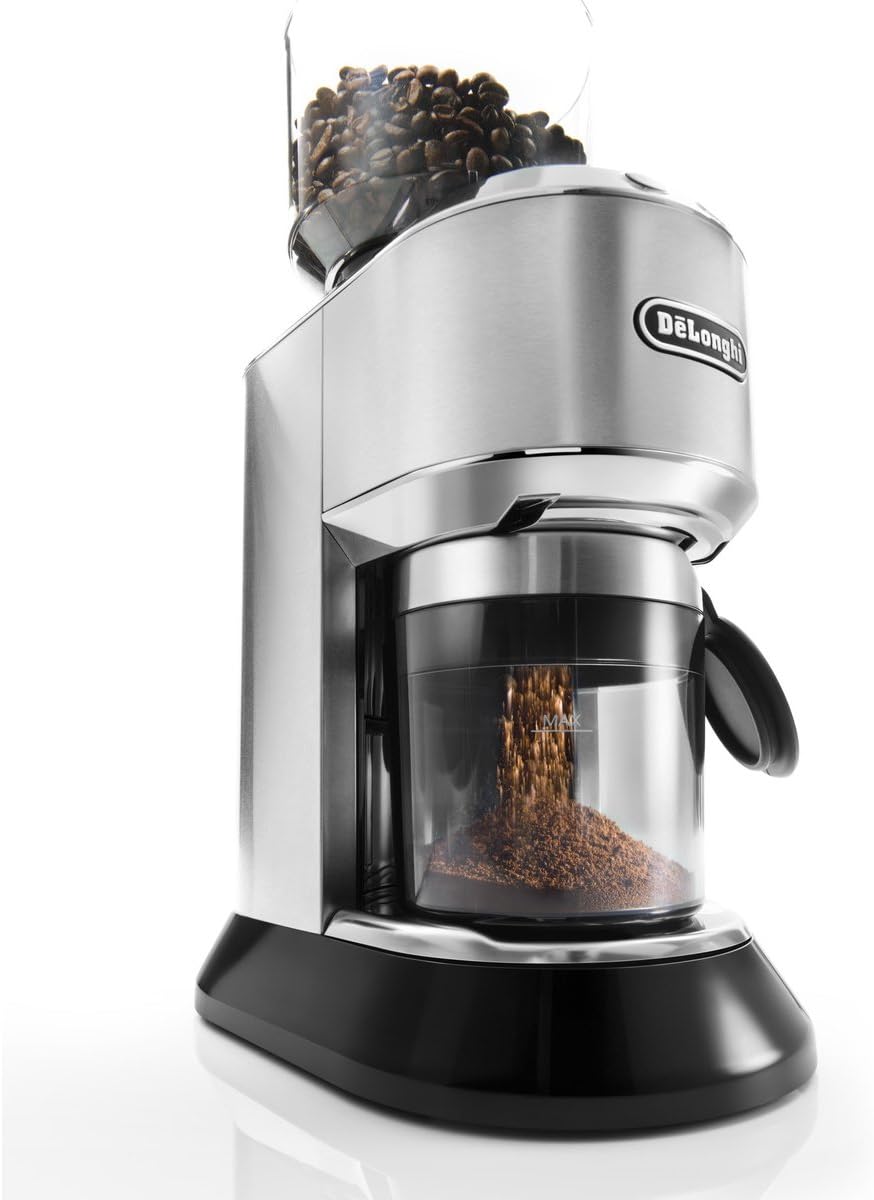
De’Longhi Dedica KG521M Conical Burr Coffee Grinder
- 18 indexed grind settings
- Conical burr mechanism
- LCD dose controls
- Portafilter adapter
- About 350 g hopper
- Requires mains power
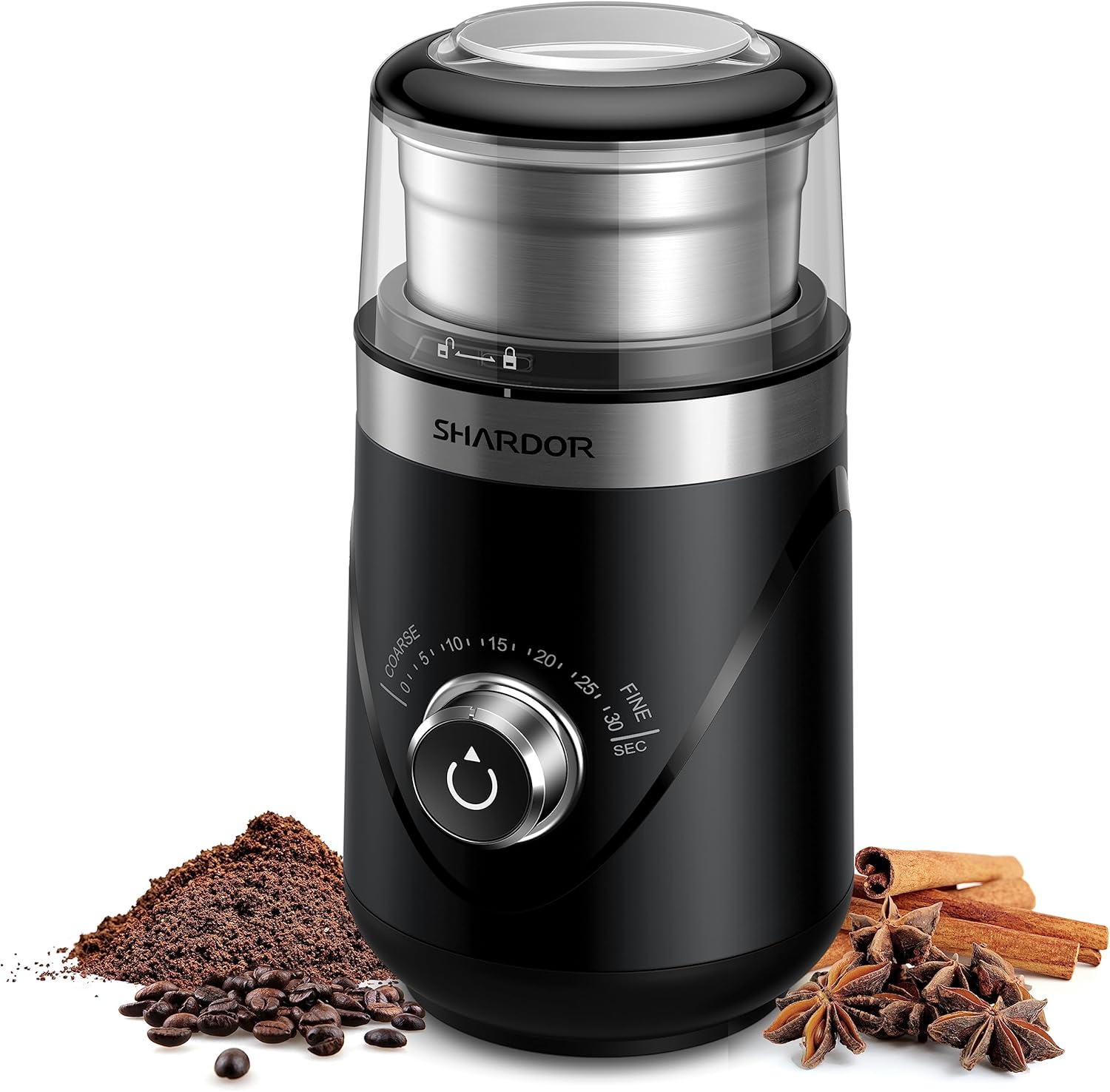
SHARDOR CG638B Adjustable Timed Blade Coffee Grinder
- Blade grinder, not burr
- Timed rotary operation
- Removable steel bowl
- 2.5 oz cup capacity
- Compact powered design
- Hand-wash bowl
Hario Mini-Slim Pro Ceramic Coffee Mill
- Ceramic conical burrs
- Approx. 24 g capacity
- Stepped grind adjustment
- Stainless-steel exterior
- Detachable crank handle
- No electricity required

MiiCoffee DF54 Single-Dose Flat Burr Coffee Grinder
- 54 mm steel flat burrs
- Stepless grind control
- Single-dose bean workflow
- Chute static control
- Bellows and dosing cup
- About 10 lb; plug-in
Quick Ranking: Six Grinders, Six Different Travel Roles
| Grinder | Mechanism | Power | Strongest travel scenario | Main compromise |
|---|---|---|---|---|
| Normcore V2 | Manual · 38 mm stainless-steel conical burr | None | Premium hand grinding anywhere | Higher price and weight than the lightest budget hand mills |
| JavaPresse Manual | Manual · ceramic conical burr | None | Budget backpack or simple hotel kit | Fine grinding requires substantial patience |
| De’Longhi Dedica KG521M | Electric · conical burr | 120 V AC configuration | Long stays with a proper coffee counter | Too bulky for ultralight trips or shared daypacks |
| SHARDOR Timed Blade | Electric · stainless-steel blade | 120 V AC configuration | Basic powered grinding with removable bowl | Cannot dial in a repeatable burr gap |
| Hario Mini-Slim Pro | Manual · ceramic conical burr | None | Minimal single-cup backpacking | More manual effort for hard beans and larger groups |
| MiiCoffee DF54 | Electric · 54 mm flat burr | 120 V AC configuration | Car trip with serious espresso station | Ten-pound body is unsuitable for backpacking |
Six Detailed Travel Coffee Grinder Reviews
1. Normcore Manual Coffee Grinder V2 — 38 mm Stainless-Steel Burr
A grinder can earn its way into a bag by doing one job really well. Normcore’s V2 goes further: it makes several brewing methods practical without asking for a socket. The 38 mm stainless-burr version combines deliberate clicks, a stable handle and a roughly 25 g dose. It is my first choice for a coffee-focused traveler who accepts the extra manual effort in exchange for better control.
Its strongest job is backpacking, aeropress and versatile hand grinding. The strongest all-around travel choice in this group: its accurate stepped burr mechanism, solid handling and roughly 25 g hopper fit a serious single-cup routine without requiring electricity.
A hand grinder that earns the space in a carry-on
A manual grinder can feel like one extra chore on a trip or like the small tool that makes the whole brewing ritual work. Normcore’s V2 belongs in the second category for travelers who care about adjustment and are prepared to turn a crank. A broad, easy-to-grip aluminum body, bearing-supported shaft, and indexed steel burr offer more deliberate control than a basic ceramic travel mill. That does not magically guarantee a particular flavor. It gives the brewer an intelligible way to make changes when unfamiliar water or a different roast alters the cup.
The 25 g hopper has a useful sweet spot: one normal AeroPress, a small V60, or a concentrated cup made with a travel brewer. A larger two-person pour-over often needs two grinding rounds. Before packing, the practical check is whether the crank, grounds cup and grinder fit together in a pouch without putting pressure on the handle shaft. Solid construction helps, but an unprotected metal grinder can still damage other equipment in a bag.
What the 38 mm stainless burr really changes
This configuration uses the 38 mm stainless-steel contemporary-burr variant. Normcore also markets titanium-coated options, which can look deceptively similar in a short description; the selected version should be judged by the steel burr it actually contains. The adjustment system offers 24 clicks per turn, making it possible to note a reference point for immersion brewing and another for a tighter AeroPress or espresso-style recipe. The steps are deliberate, but exact settings are not transferable across different grinders or bean roasts.
A 38 mm hand burr can handle espresso-fine coffee, yet fine grinding creates resistance and takes effort. It is a credible choice for a small travel espresso maker when the user accepts a manual workflow. A person pulling several traditional espresso shots for friends every morning may find an electric dedicated machine less tiring. For filter coffee, the main benefit is dependable adjustment rather than a promise that the burrs create a single perfect particle size.
Grip, alignment and practical packing decisions
The silicone thumb grip addresses a problem easy to underestimate in travel photography: a smooth metal cylinder twists in the palm when harder beans meet a fine setting. Keeping the body stable allows the hand turning the crank to work more comfortably. Bearings and a well-supported shaft also matter, because sloppy axial movement can complicate fine adjustment. None of these features removes the need to hold the grinder steady or occasionally clear grounds around the lower mechanism.
This is not an ultralight piece of plastic. The grinder alone weighs about 423 g and approaches 497 g with its crank. For a backpacker counting each ounce, that weight is worth considering alongside the kettle, brewer, cup, scale and beans. For a frequent traveler using carry-on luggage or a car, the additional mass can be a reasonable exchange for more controlled grinding. The right decision depends less on marketing labels than on the total weight of the coffee kit.
AeroPress, pour-over and travel espresso in the same week
An AeroPress is a natural match because the grinder dose and brewer capacity align. A traveler can start at a familiar medium-fine setting, record it on a small card, then move coarser when preparing a longer steep or cleaner filter brew. The adjustment ring makes those moves practical. For pour-over, burr grind consistency reduces the distraction of wildly different particles, but the grind still needs to be tuned to the filter, water temperature and the way water is poured.
Travel espresso is more demanding. Pressure, basket design and grind-sensitive flow mean a single click may have a noticeable effect. A portable pressurized system will generally be more forgiving than a conventional open basket. Normcore can reach fine settings, but it is not a substitute for careful dosing and puck preparation. Keeping the same coffee and adjusting only one variable at a time is the most effective way to decide whether the grinder fits the machine.
Normcore Manual Coffee Grinder V2 — 38 mm Stainless-Steel Burr
The strongest all-around travel choice in this group: its accurate stepped burr mechanism, solid handling and roughly 25 g hopper fit a serious single-cup routine without requiring electricity.
- Precisely indexed grind control for different brewers
- Strong portable build and comfortable hand placement
- Enough capacity for a typical solo AeroPress or dripper
- No reliance on outlets, adapters or charging
- Higher price and weight than the lightest budget hand mills
- Fine grinding becomes physical work with hard beans
- Small hopper demands two batches for large group brews
- Titanium-coated option is a different configuration
Technical Specifications & Daily Features
- 38 mm CNC-machined stainless-steel conical burr; this configuration uses steel rather than titanium-coated burrs
- 24 clicks per rotation on the stepped adjustment system
- Approximately 25 g maximum hopper capacity
- Unibody aluminum construction and silicone anti-rotation thumb grip
- Central steel shaft and bearing-supported crank
- Approx. 423 g body weight; about 497 g including crank arm
- Hand grinder requiring no electricity, with removable grounds cup
- Dry cleaning with brush and air blower; avoid washing metal burrs
The strongest all-around travel choice in this group: its accurate stepped burr mechanism, solid handling and roughly 25 g hopper fit a serious single-cup routine without requiring electricity.
Pros & Cons After 30 Days of Use
The first-month ownership questions are not about an invented collection of tasting notes. They concern whether the handle remains pleasant after regular fine grinding, whether the catch cup opens without scattering powder, and whether two favorite settings are easy to find after switching brew methods. A dry brush and the supplied blower help with grounds trapped around the burr. Cleaning should follow the specific manual; soaking steel grinding parts creates an unnecessary corrosion risk.
The best sign of a good travel grinder is that it becomes a quiet, repeatable part of the morning rather than the slowest and most annoying step. Normcore is a strong fit for one- or two-cup brewing when adjustment and hand feel matter more than minimum cost. Its clear limitation is scale: as the group grows or espresso becomes the only drink, repeated manual sessions can wear out the enthusiasm faster than the burrs.
My Final Verdict
The strongest all-around travel choice in this group: its accurate stepped burr mechanism, solid handling and roughly 25 g hopper fit a serious single-cup routine without requiring electricity.
Best for: Backpacking, AeroPress and versatile hand grinding. The right grinder is the one whose controls and capacity fit the brewer and the journey.
For solo travel, the Normcore closes the gap between a spare emergency grinder and a tool worth using every morning. Its value lies in deliberate adjustment and hand feel, not in a guarantee that every roast will extract identically. Pair it with a compact brewer, a repeatable dose and a dry brush.
2. JavaPresse Manual Stainless Steel Coffee Grinder
The JavaPresse makes the case for buying less equipment, not more. Its slim cylinder and ceramic burrs offer an adjustable way to prepare coffee away from home without spending heavily on a premium hand mill. The limitations are equally important: it is not the fastest grinder for large batches and does not offer the fine dialing flexibility of a specialist espresso tool.
Its strongest job is entry-level travel coffee and cost-conscious camping. The value pick for a traveler who wants genuinely fresh burr-ground coffee on a small budget. It makes the most sense for simple AeroPress or filter recipes rather than precision espresso.
Why a simple ceramic mill still makes sense
JavaPresse has a different appeal from premium hand mills. It is slim, affordable and easy to explain. Beans enter the chamber, the handle turns a ceramic conical burr, and the resulting grounds collect below. That uncomplicated design is genuinely helpful when the coffee kit is shared among first-time campers or used in a hostel kitchen. No one needs an electrical adapter, and there is no display or charging cable to misplace.
The trade-off is more than extra seconds of effort. The smaller burr assembly and simpler support system limit how refined the adjustment can feel compared with a better engineered hand grinder. That difference becomes obvious in grind-sensitive brewing, especially nonpressurized espresso. For a forgiving AeroPress or immersion recipe, however, the ability to return to a recognizable click setting is often enough to make good coffee consistently.
The burr material needs to be described correctly
The JavaPresse has a stainless-steel exterior, but its grinding surfaces are ceramic. That distinction matters to buyers comparing durability, grind behavior and cleaning needs. Ceramic burrs resist rust but are not indestructible; a hard impact can chip a part, and incorrect reassembly can affect grinding. A reliable travel kit keeps the mill protected rather than tossing it loose beside steel cookware.
The adjustment system is useful but should not be confused with the narrow micro-adjustment of a specialist espresso grinder. Medium and coarse filter recipes are the most sensible home territory. Where a basket demands tiny corrections, the JavaPresse may offer too little precision or too much hand-cranking effort. Understanding that limitation before buying makes its modest cost a benefit rather than a disappointment.
Choosing a dose before starting the crank
Small-batch brewing is the most natural way to use this model. A measured 15–18 g dose for AeroPress or a small dripper reduces the need to top up beans halfway through grinding. When brewing for two, dividing the dose into two portions makes more sense than overloading a narrow chamber. Coffee grinding is easier to repeat when the bean weight is known, even without a travel scale accurate to hundredths of a gram.
With hand grinding, fatigue grows when someone tries to force a fine setting through dense light-roast beans. A steady pace is preferable to wrenching the handle, particularly when the grinder is held awkwardly while walking around camp. The small cost of pausing to sit at a table or stable rock can make the process more comfortable and protect the crank.
Where its simplicity becomes a benefit
Many travelers change equipment every few days. One morning uses an AeroPress in an airport hotel, the next a small cone dripper at a campground, the next a French press at a rented apartment. JavaPresse can accompany all of those methods without claiming elite particle uniformity. Coarser French press grinding and medium filter grinding suit its straightforward mechanical adjustment. It is also useful as an inexpensive second grinder kept in a travel bag.
Beans, water and dose matter more than a fashionable dial number. If a cup tastes weak after arriving in a new location, the first questions are the brew ratio, steeping or pour time, water temperature and the coffee’s age. Moving the click setting a little finer may help, but the grinder is not necessarily responsible for every change in flavor. Good travel brewing begins with one stable recipe and a willingness to make measured adjustments.
JavaPresse Manual Stainless Steel Coffee Grinder
The value pick for a traveler who wants genuinely fresh burr-ground coffee on a small budget. It makes the most sense for simple AeroPress or filter recipes rather than precision espresso.
- Low-cost entry to adjustable burr grinding
- Slim shape slips into a travel coffee kit
- No outlet, transformer or rechargeable battery required
- Adjustment is approachable for several filter methods
- Fine grinding requires substantial patience
- Less stable and precise than the strongest premium manual designs
- Relatively limited capacity for group coffee
- Not a precision choice for demanding nonpressurized espresso
Technical Specifications & Daily Features
- Portable manual coffee grinder with a stainless-steel exterior
- Ceramic conical burrs, not stainless-steel burrs as sometimes described
- Stepped adjustment operated from the lower grind mechanism
- Detachable hand crank; no batteries, charging or mains socket
- Designed for smaller single-person doses and compact storage
- Works naturally with AeroPress, pour-over and other forgiving recipes
- Very fine grinding is possible but slow and less adjustable than specialist espresso mills
- Clean and reassemble the ceramic burr assembly according to model instructions
The value pick for a traveler who wants genuinely fresh burr-ground coffee on a small budget. It makes the most sense for simple AeroPress or filter recipes rather than precision espresso.
Pros & Cons After 30 Days of Use
A portable ceramic mill can be maintained with a brush and gentle disassembly as the instructions allow. The grounds cup and adjustment assembly should be dry before storage so stale oils and moisture do not accumulate during a long trip. The small pieces deserve a dedicated pouch; a lost adjustment nut can be far more disruptive than a scratched exterior. If the grinder is used for spices, aromas can linger and affect later coffee.
In a month of actual daily use, the decisive issues are crank comfort, stability of the setting, how neatly the catch cup empties, and whether producing multiple servings feels laborious. JavaPresse wins on low entry cost and independence from power, but it is not the fastest or most adjustable mill in this comparison. That is a fair compromise for occasional travelers and budget-conscious campers.
My Final Verdict
The value pick for a traveler who wants genuinely fresh burr-ground coffee on a small budget. It makes the most sense for simple AeroPress or filter recipes rather than precision espresso.
Best for: Entry-level travel coffee and cost-conscious camping. The right grinder is the one whose controls and capacity fit the brewer and the journey.
For casual camping coffee, the JavaPresse gets the important fundamentals right: genuine burr grinding, no power requirement and a narrow body. The sensible expectation is reliable everyday brewing with some limitations in speed and very fine adjustment.
3. De’Longhi Dedica KG521M Conical Burr Coffee Grinder
Some trips are essentially temporary changes of address. In a rented apartment or cabin, a powered De’Longhi Dedica KG521M can feel more sensible than hand-grinding every morning. Its LCD, 18 grind positions and portafilter adapter simplify an organized coffee station. The same features become dead weight on a trail or a flight with tight baggage limits.
Its strongest job is long hotel stays, rentals and an organized portable coffee corner. Choose the Dedica when travel means an apartment, vacation rental or long work assignment with a stable counter and reliable power. It is a convenient compact countertop grinder, not a hiking appliance.
A travel grinder that belongs on a counter
The De’Longhi Dedica KG521M is compact by kitchen-appliance standards, not by hiking standards. Its metal-bodied electric design, hopper and receiving container demand stable counter space, access to mains power and a little room for cleanup. That makes it a compelling match for a cabin, rented apartment or extended hotel stay where the coffee setup can remain assembled. It is distinctly less practical for a traveler moving between trains with a single backpack.
The strongest reason to pack it is an established brewing routine. A home barista already familiar with a Dedica espresso machine or a filter brewer can bring a burr grinder that offers recognizable controls. The power requirement is just as important as its weight. North American KG521M versions are made for 110–120 V power. An adapter that changes the plug shape will not make the machine safe on a 230 V outlet.
Eighteen grind settings and what they can deliver
De’Longhi provides 18 adjustable grind positions spanning finer espresso-oriented settings through filter and French press. That makes the KG521M a multipurpose home burr grinder, not a stepless specialist. A conventional espresso basket may need an adjustment between two available steps, which is a limitation of many all-round stepped systems. For a pressurized basket, a moka pot or a filter recipe, the available range is generally easier to work with.
The value of a clear grind dial is that it makes changes repeatable. If a rental’s dripper draws down too slowly, moving one position coarser provides a sensible experiment. If a familiar roast tastes underdeveloped, a finer position may improve extraction. The number alone will never be a universal guide. Different beans and preparation methods respond differently, and a deliberate change is more useful than guessing from a photo of somebody else’s grinder.
Portafilter attachment, cups and the LCD
The portafilter adapter is a convenient feature when the handle is compatible with the grinder’s mount. It can keep a hotel countertop tidier than grinding into a jar and transferring everything with a spoon. But compatibility is physical, not merely a matter of a nominal basket diameter. The owner should check how the actual handle seats before relying on hands-free grinding. The grounds container remains useful for pour-over and French press batches.
The LCD and cup-based control simplify repeated operations. The interface does not weigh the output in grams. Grind setting, beans and hopper condition can change how much coffee comes through during a selected cycle. For espresso, a separate scale is still the simplest way to confirm the dose. For a large filter batch, cup selection can reduce button presses, but the recipe is more reliable when the actual coffee mass is checked.
The hopper is convenient only when beans get used
A 350 g hopper fits longer stays and households making several drinks daily. It can also become a place where coffee is stored too long beside a warm window. For travel, a small bag of sealed beans and a modest quantity in the hopper are usually more practical. That allows the owner to change coffees without mixing old and new beans in the throat. Oily dark roasts may need more attentive brushing around the burr carrier and chute.
The removable upper burr makes routine maintenance more approachable when the grinder is unplugged. It does not mean that grinding parts can be rinsed indiscriminately in the kitchen sink. The receiving container and hopper have their own cleaning instructions, while the motor and burr chamber require dry, careful treatment. A borrowed kitchen may not have a dedicated grinder brush; bringing one prevents a week of buildup.
De’Longhi Dedica KG521M Conical Burr Coffee Grinder
Choose the Dedica when travel means an apartment, vacation rental or long work assignment with a stable counter and reliable power. It is a convenient compact countertop grinder, not a hiking appliance.
- Straightforward electric grinding for longer stays
- Burr dial covers multiple everyday brew methods
- Optional direct portafilter handling when compatible
- Grounds container makes larger filter batches easier
- Too bulky for ultralight trips or shared daypacks
- Voltage and plug format limit international use
- Portafilter attachment does not fit every handle
- Limited step resolution for exacting single-wall espresso
Technical Specifications & Daily Features
- De’Longhi Dedica KG521M powered burr grinder
- 18 grind positions covering espresso-style, drip and French press needs
- Conical burr design with removable upper burr access
- LCD interface, cup selection and three strength preferences
- Bean hopper approximately 350 g / 12 oz
- Grind into a grounds container or compatible portafilter attachment
- 14-cup capacity option for grinding into the container
- 110–120 V North American model; confirm electricity before travel
Choose the Dedica when travel means an apartment, vacation rental or long work assignment with a stable counter and reliable power. It is a convenient compact countertop grinder, not a hiking appliance.
Pros & Cons After 30 Days of Use
A full month spent in one rented apartment can justify a proper electric grinder in ways that a three-night city break cannot. The KG521M is for a traveler who brews often, has room to store a hopper-fed machine and values an LCD more than minimum luggage weight. It is a weak match for hiking or flights with strict baggage allowances. The machine should be protected during car transport rather than wedged between unpadded heavy objects.
Its principal strength is familiar countertop convenience across several brew methods. The limits are equally clear: fixed electrical requirements, a larger footprint and only eighteen grind steps. A portafilter cradle is not a promise of café-level espresso extraction, but it can make an already compatible setup neater and easier to repeat.
My Final Verdict
Choose the Dedica when travel means an apartment, vacation rental or long work assignment with a stable counter and reliable power. It is a convenient compact countertop grinder, not a hiking appliance.
Best for: Long hotel stays, rentals and an organized portable coffee corner. A separate coffee scale makes espresso and complex recipes more repeatable.
In a vacation rental, the Dedica can be more convenient than a hand grinder, especially for several cups every morning. For a one-night flight or backcountry hike, its electrical and counter requirements make the comparison irrelevant: choose a manual mill instead.
4. SHARDOR CG638B Adjustable Timed Blade Coffee Grinder
The SHARDOR looks attractive for its compact body, removable stainless cup and rotary control. But the central buying distinction comes before convenience: this is an electric blade grinder, not an adjustable burr machine. A timer can make the motor run for a consistent duration; it cannot make the particle-size distribution respond predictably to the brewer’s needs.
Its strongest job is simple plug-in grinding where easy cleaning matters most. A practical cleanup-first electric blade option for casual travel coffee, but not a substitute for an adjustable burr grinder. Its timer controls duration—not the size of the grinding gap.
A timer is not an adjustable burr grinder
The central correction in this product review is mechanical. SHARDOR’s CG638B-style removable-bowl machine uses a stainless-steel blade inside its cup. The rotary dial changes how long the motor runs. It does not move a pair of burrs closer together or create a calibrated particle size. That changes the buying recommendation substantially. It is a convenient small electric grinder, but its place in a travel comparison is casual fresh-ground coffee rather than precision espresso or predictable pour-over adjustment.
A blade grinder works by repeatedly striking circulating beans. Longer grinding creates more fine fragments, while some larger pieces may remain. A coarse-looking batch can contain dust that contributes muddy flavors to a French press, and a finely processed batch may still contain pieces too large for traditional espresso. This distribution is the key limitation, regardless of whether the timer has a polished control knob.
The removable cup is its genuine advantage
SHARDOR’s strongest practical feature is the detachable stainless-steel bowl. A traveler can pour grounds directly into a brewer without turning an entire powered machine upside down. The same design makes cleaning easier than fishing residue out of a fixed blade chamber. The compact form is more sensible for a rented kitchenette than a full-size hopper-fed grinder. It still requires an outlet and appropriate voltage, so it is not suited to backcountry use.
The bowl is approximately 2.5 oz, which is capacity for coffee or other permitted dry ingredients rather than a guarantee of a precise number of brewing servings. For consistent recipes, it is better to weigh the coffee before grinding. The removable cup should be cleaned according to the specific model’s hand-wash instructions, with the powered housing kept completely away from water.
Where the rotary timer helps—and where it does not
A remembered or clearly marked duration can reduce the need to count seconds in an unfamiliar kitchen. That is useful when repeating a basic drip or immersion recipe from the same beans. It cannot compensate for how beans circulate differently at different fill levels, or for the difference between light and dark roasts. Even two cycles of identical length can yield slightly different particle distributions. The timer also does not measure the weight of coffee delivered.
This distinction becomes especially important for espresso claims. A traditional nonpressurized basket needs controlled fine adjustment to regulate resistance to water flow. A blade grinder lacks the necessary mechanical control. A pressurized basket may tolerate uneven coffee better, but it is still a workaround, not a reason to rank this appliance alongside stepless espresso-focused burr grinders.
Coffee and spices in a shared holiday kitchen
A removable blade cup can be useful in an Airbnb where coffee shares counter space with a small spice collection. But the ability to grind permitted dry ingredients brings a flavor problem: pungent spices can leave aromas that cling to seals and plastic lids. A dedicated coffee bowl is ideal when possible. A thorough wash and complete drying are more important than the apparent convenience of switching directly from garlic or cumin to coffee beans.
With little luggage room, the question becomes whether an electric blade machine is even the best option. A basic hand burr grinder delivers more controlled size adjustments and avoids the outlet requirement. SHARDOR makes sense when hand-cranking is undesirable, power is guaranteed and easy cup handling matters more than fine-grind control.
SHARDOR CG638B Adjustable Timed Blade Coffee Grinder
A practical cleanup-first electric blade option for casual travel coffee, but not a substitute for an adjustable burr grinder. Its timer controls duration—not the size of the grinding gap.
- Removable bowl eases transferring grounds
- Simple timed control without a complex menu
- Small countertop footprint for rental kitchens
- Useful for modest batches and permitted spice grinding
- Cannot dial in a repeatable burr gap
- Timed running does not guarantee coffee weight
- Mixed coarse/fine particle sizes can muddy press coffee
- Requires an outlet and proper voltage compatibility
Technical Specifications & Daily Features
- SHARDOR model CG638B family; stainless-steel blades, not burrs
- Rotary timer controls how long the blades operate; not a grind-size calibration system
- Approximately 2.5 oz bowl capacity
- Removable stainless-steel grinding bowl with two-blade assembly
- Approximately 150 W motor on 120 V US configuration
- Compact body about 4.7 × 4.4 × 8.3 in; approximately 2 lb
- Intended for coffee and selected dry kitchen ingredients per instructions
- Follow hand-wash guidance for removable cup; keep powered base dry
A practical cleanup-first electric blade option for casual travel coffee, but not a substitute for an adjustable burr grinder. Its timer controls duration—not the size of the grinding gap.
Pros & Cons After 30 Days of Use
The practical checkpoints over a month are how often the timer needs adjustment, whether grounds cling to the detachable bowl, and how much unevenness is visible when preparing the same coffee at a similar dose. Coffee that tastes bitter and thin at the same time may reflect a mixture of overprocessed fines and larger underextracted pieces. Extending the blade cycle is not a reliable solution to that particle-size problem.
For this travel shortlist, the SHARDOR is the easiest electrically powered option to keep in a small shared kitchen, but not the one to buy for demanding brewing. It earns a convenience label rather than a precision label. Anyone who wants to learn espresso dialing or fine pour-over adjustments should choose a genuine burr design instead.
My Final Verdict
A practical cleanup-first electric blade option for casual travel coffee, but not a substitute for an adjustable burr grinder. Its timer controls duration—not the size of the grinding gap.
Best for: Simple plug-in grinding where easy cleaning matters most. The right grinder is the one whose controls and capacity fit the brewer and the journey.
SHARDOR belongs on the shortlist only when easy bowl handling and timed blade grinding are intentional priorities. An AeroPress or forgiving immersion brew is a more realistic destination than a traditional espresso basket. Anyone wanting repeatable coarser-to-finer adjustments should choose an actual burr grinder.
5. Hario Mini-Slim Pro Ceramic Coffee Mill
Hario’s Mini-Slim Pro appeals to the traveler whose coffee kit must fit beside a compact brewer and mug. The stainless exterior and detachable crank make the slim ceramic-burr mill practical for a single dose. Its chief virtue is not speed; it is the ability to brew fresh coffee in simple places without electricity or a large case of equipment.
Its strongest job is small camping kits, pour-over, aeropress and solo hiking. The cleanest minimalist choice when the pack needs to stay small and the brewing method is AeroPress or pour-over. It trades speed and fine espresso adjustment for simplicity and portability.
A compact Hario with a different kind of discipline
The Hario Mini-Slim Pro is a straightforward hand mill for people who travel to brew rather than to assemble a second kitchen. It takes up little space, asks for no power and has a familiar ceramic conical burr mechanism. Its stainless exterior and reinforced handle distinguish it from older, more plastic-heavy travel grinders. The design is particularly suited to the AeroPress or a small dripper, where a single measured dose keeps the morning manageable.
The word Pro describes the upgraded housing and handle arrangement, not a promise of stepless espresso-level adjustment. This is a compact hand grinder with an accessible click mechanism. It becomes valuable when the goal is reliable coffee away from outlets, provided the owner accepts the pace of turning a small crank.
The 24 g capacity and the single-cup reality
Hario rates the grounds capacity at about 24 g. That pairs neatly with many solo pour-over and AeroPress recipes. It is less suitable for a 40 g French press batch unless two grinding rounds are acceptable. Rather than overfill the chamber, weigh the beans and grind in portions. The collection cup locks into place, so checking that engagement before grinding matters when using the mill outdoors on uneven surfaces.
For a camper using a small mug and a folding dripper, the compact dose is enough. For a group drinking large cups, manual grinding time becomes a practical constraint. Choosing this model is therefore partly a decision about how many servings must be ready before breakfast, not just how much the empty grinder weighs.
Ceramic burrs and coarse coffee at camp
Ceramic burrs give a mechanical path from fine to coarse without relying on exposed blades. They are also brittle when subjected to sharp impacts, so the handle and milling section should not be treated as camping hardware that can survive any drop. The shaft and stepped collar provide recognizable adjustment points, though very coarse settings can allow some extra fines. Those fines are especially noticeable in a French press because metal mesh does not remove them as effectively as paper.
The easiest way to learn the Mini-Slim Pro is to keep one coffee and one paper-filter brewer for several days. If the brew is too slow or heavy, move coarser. If it is watery and underdeveloped despite a reasonable ratio, move finer. The precise click number should stay in a notebook because opening the mill for cleaning may require returning the dial to its reference point.
A travel-proof workflow is mostly about care
The detachable crank reduces packing volume, while the stainless exterior offers more protection than a thin plastic shell. The grinder still contains ceramic milling surfaces and other parts that deserve a soft pouch. When a bag is stuffed with metal camp cookware, the handle should be stored so it cannot bend under pressure. A clean dry grounds cup also prevents stale flavors from building up between destinations.
Hario permits disassembly of the burr section for cleaning. The user should follow its specific instructions for reassembly and allow approved washed pieces to dry fully. The practical danger outdoors is putting a damp grinder back into an airtight bag after a rainy morning. Carrying a small cleaning brush and leaving parts dry before repacking is more useful than attempting a complete teardown beside a trail.
Hario Mini-Slim Pro Ceramic Coffee Mill
The cleanest minimalist choice when the pack needs to stay small and the brewing method is AeroPress or pour-over. It trades speed and fine espresso adjustment for simplicity and portability.
- Packable form with sturdy metal exterior
- A good match for one-person hand-brew recipes
- Simple adjustment and removable cup
- Hand powered for locations without mains electricity
- More manual effort for hard beans and larger groups
- Coarse output may include more fines than some premium mills
- Not a specialist high-resolution espresso grinder
- Ceramic parts still require impact protection
Technical Specifications & Daily Features
- Hario Mini-Slim Pro, product family MMSP-1-HSV
- Conical ceramic burrs and stepped manual grind adjustment
- Approx. 24 g ground coffee capacity, designed for two small cups
- Stainless-steel exterior with cast-aluminum handle
- Improved grind shaft and removable crank for storage
- Bayonet-mounted grounds container for quick removal
- Compact body approx. 150 × 74 × 210 mm including handle
- Burr section can be disassembled for cleaning according to Hario
The cleanest minimalist choice when the pack needs to stay small and the brewing method is AeroPress or pour-over. It trades speed and fine espresso adjustment for simplicity and portability.
Pros & Cons After 30 Days of Use
Normcore offers more sophisticated grip and adjustment features, while JavaPresse argues for affordability. Hario sits between them as a well-established compact ceramic hand mill with a sturdy Pro exterior. For a solo traveler brewing with an AeroPress or pour-over, its dose capacity and simple dial make sense. For demanding espresso or a large press batch, it gives up too much speed and adjustment resolution to be the default recommendation.
After a month of repeated travel, the questions are ordinary: does the catch cup remain easy to attach, does the handle feel secure and do favorite click settings return reliably? Hario’s strengths are ease and independence rather than an unsupported claim of perfect grind uniformity. The best owner values the quiet ritual and makes one good cup at a time.
My Final Verdict
The cleanest minimalist choice when the pack needs to stay small and the brewing method is AeroPress or pour-over. It trades speed and fine espresso adjustment for simplicity and portability.
Best for: Small camping kits, pour-over, AeroPress and solo hiking. The right grinder is the one whose controls and capacity fit the brewer and the journey.
The Hario is an especially sensible companion to a folding dripper or AeroPress because its 24 g chamber fits ordinary solo recipes. It is less attractive when several people want coffee at once; planning a second grinding round is part of the deal.
6. MiiCoffee DF54 Single-Dose Flat Burr Coffee Grinder
A ten-pound electric grinder is a strange backpacking recommendation. It becomes a sensible travel option only when the trip is by car and the destination includes a stable coffee station. The MiiCoffee DF54 brings 54 mm flat steel burrs and stepless adjustment to that setting, making it the most specialized espresso grinder in this selection—and the least suited to lightweight travel.
Its strongest job is car travel, long stays and portable espresso stations. The best enthusiast espresso grinder here for a destination you reach by car and have reliable power. Its 10 lb mass and electrical needs make it an entirely different travel category from a hand mill.
A ten-pound grinder that still belongs in a travel article
The MiiCoffee DF54 is a serious electric single-dose grinder that belongs in a very specific travel category. A ten-pound aluminum-bodied appliance does not belong in a hiking backpack. It belongs in a protected car trunk headed to a cabin, a long-term rental or a coffee event where the user expects a stable counter and reliable US-voltage power. Calling it portable without describing that limitation does a disservice to anyone planning an airline trip.
Its value is espresso adjustment. The stepless collar provides fine control over the burr gap, and the 54 mm flat steel burrs support a workflow where small changes matter. That is a stronger fit for an enthusiast espresso station than a basic hand mill or general-purpose stepped countertop grinder. The difference is not that flat burrs always make a superior-tasting cup; the complete burr design, alignment and dose preparation shape the result.
Why single dosing matters away from home
Instead of filling a large hopper, a DF54 owner weighs beans for one drink and pours them into the throat. This makes switching roasts natural and avoids transporting a machine full of beans. MiiCoffee describes a hopper arrangement of about 20 g without the bellows and higher bean accommodation with them, depending on configuration. A small scale remains part of the kit because the grinder does not weigh the input or output automatically.
The included dosing cup and bellows make grounds transfer more controlled, and the short chute is designed to limit retained coffee. A plasma ionizer near the exit helps reduce static. None of those components removes every particle, and the precise amount retained varies with conditions. It is better to describe this as a low-retention workflow than promise that literally no coffee ever remains inside.
Stepless espresso adjustment is a specific advantage
Espresso is sensitive to small grind changes. With a conventional basket, a very small adjustment can shift the rate at which water moves through the puck. The DF54’s stepless mechanism is valuable because it is not limited to a predefined click between two settings. A traveler who brings a compact espresso machine and learns a new local water supply still needs to calibrate dose, yield and brew time, but the grinder provides a usable adjustment tool.
This fine control does not necessarily make the grinder the best device for making a large French press at camp. That brewer may be better served by a simple manual burr mill and a less elaborate coffee station. Choosing DF54 is a statement that the trip includes espresso equipment, enough electrical capacity and a willingness to take careful care of the machine on the road.
Version differences, cleaning and moving the unit
The DF54 has undergone small product revisions involving its chute and anti-popcorn arrangement. A buyer should identify the actual version and accessories included rather than assume every photograph represents the same package. The machine typically comes with a bellows and dosing cup; the upper grinding chamber can be opened for cleaning. A tool-free or simple-access design is helpful, but maintenance still means unplugging the unit and following safe cleaning directions.
Transport is part of the ownership cost. A heavy grinder should be padded, kept upright where practical and protected from knocks to its adjustment collar and dosing-cup holder. For a vehicle trip, the protective packaging takes more space than the bare footprint suggests. Anyone considering flying with it should check airline baggage rules and think carefully about the value of carrying a ten-pound electrical appliance.
MiiCoffee DF54 Single-Dose Flat Burr Coffee Grinder
The best enthusiast espresso grinder here for a destination you reach by car and have reliable power. Its 10 lb mass and electrical needs make it an entirely different travel category from a hand mill.
- Fine grind tuning for enthusiast espresso
- Single-dose design suits swapping beans
- Compact footprint for an electric espresso grinder
- Short chute and bellows help clear retained grounds
- Ten-pound body is unsuitable for backpacking
- Needs a protected journey and mains power
- Single-dose workflow less convenient for batch coffee
- Even a low-retention design requires regular cleaning
Technical Specifications & Daily Features
- MiiCoffee DF54 single-dose electric grinder
- 54 mm stainless-steel flat burrs
- Stepless collar with fine grind adjustment for espresso
- Single-dose hopper; about 20 g without bellows and up to 50 g with bellows according to MiiCoffee
- Plasma ionizer near exit chute to reduce static
- Included bellows and dosing cup; features vary by revision
- Approx. 7 in deep × 4.5 in wide × 12 in high
- Approximately 10 lb; 100–120 V, 150 W on US unit
The best enthusiast espresso grinder here for a destination you reach by car and have reliable power. Its 10 lb mass and electrical needs make it an entirely different travel category from a hand mill.
Pros & Cons After 30 Days of Use
A month at a rental allows time to learn the collar, settle on repeatable dose weights and keep the declumping path clean. The principal questions are whether beans transfer neatly, whether static control remains helpful in dry air, and how easily a saved grind mark can be recovered after switching coffees. A good dosing funnel, WDT tool and scale can be more important than chasing the finest possible grind setting.
The DF54 is the right recommendation for a traveler whose destination already includes a serious espresso station. The strongest reasons to choose it are stepless adjustment, flat burrs and single dosing. Its biggest weaknesses are not defects: it is heavy, powered and purposefully less convenient for grinding large household batches. Those costs are acceptable only when the espresso workflow deserves the space.
My Final Verdict
The best enthusiast espresso grinder here for a destination you reach by car and have reliable power. Its 10 lb mass and electrical needs make it an entirely different travel category from a hand mill.
Best for: Car travel, long stays and portable espresso stations. A separate coffee scale makes espresso and complex recipes more repeatable.
The DF54 should be packed like delicate countertop equipment, not loose hiking gear. Its best owner already cares about espresso, has a protected place in the car and knows that a grinder with stepless adjustments still needs a scale, a good basket and deliberate preparation.
Buying Guide: How to Choose a Coffee Grinder for Travel
The most useful way to choose is to start with the brewer and the journey, not an attractive product photo. A machine that fits a home espresso counter may be excellent equipment yet entirely wrong for a five-day hike. The following decisions remove most expensive mismatches before grind settings even enter the conversation.
The first decision is how you actually travel
The word travel covers radically different conditions. A hiker with a tent and a compact brewer has a different problem from someone driving to a lakeside cabin. The hiker needs a grinder that operates without electricity, fits inside the cooking kit, and makes a drinkable dose without wasting pack space. The cabin traveler can afford a powered burr grinder if the electrical supply is known, the counter is stable, and the device has a padded place in the vehicle. Treating both buyers as one audience creates bad recommendations.
For a flight, luggage dimensions, carry-on restrictions and room at the destination matter. A slim hand mill is easier to protect and often less frustrating than transporting a grinder with a hopper and delicate catch cup. For a month in a rented apartment, an electric grinder may earn its place through the number of doses it prepares. I start by listing the actual brew method, servings per day, electricity and baggage allowance before choosing a specific model.
A blade grinder is not the same as an adjustable burr grinder
Burr grinders feed beans through a set grinding gap. Changing that gap gives the brewer a repeatable way to move finer or coarser, which becomes valuable when dialing a pour-over or a portable espresso shot. Blade grinders strike beans in a cup. Their time dial may make the running period repeatable, but it does not produce a calibrated setting that corresponds to a reliable particle-size range. This is why the SHARDOR timed blade machine serves a different purpose from the five burr grinders.
For ordinary coffee in a forgiving immersion brewer, freshly chopped beans can still make a satisfying cup. The practical drawback is a greater spread of fine and coarse pieces. With French press, fines can create extra sediment. With espresso, the lack of precision becomes a much bigger problem. A buyer who wants to learn deliberate grind adjustments should begin with burrs rather than hope that running blades for another few seconds solves an uneven extraction.
Three manual grinders, three distinct priorities
Normcore, JavaPresse and Hario all avoid outlets, chargers and voltage adapters, but they are not interchangeable. Normcore emphasizes a more refined steel-burr system, stable shaft and compact 25 g capacity. JavaPresse offers the lowest-complexity budget route into burr grinding, using ceramic burrs and a slim stainless body. Hario Mini-Slim Pro concentrates on a small 24 g dose, a removable crank and a familiar ceramic-grinder arrangement with an upgraded exterior.
The correct choice depends on which limitation matters least. Normcore costs more and weighs more than some travel minimalists want, yet it offers meaningful adjustment control. JavaPresse requires more patience at fine settings and is less suited to demanding espresso. Hario can be an approachable companion to a small paper-filter brewer but is not the fastest choice for feeding several large mugs. All three improve when a user records the grind position and keeps the same coffee-to-water ratio.
When electric grinding is worth transporting
A powered grinder can save a great deal of manual work during an extended stay, especially for a family or for daily espresso. But electricity is a hard requirement, not a small accessory detail. The De’Longhi and MiiCoffee are made for stable countertop operation; the SHARDOR blade grinder is smaller but still needs a suitable mains supply. A road trip with a cabin outlet is the most natural use case. An off-grid site with uncertain inverter capacity is not.
Before packing a powered grinder, account for the wall socket voltage, plug, cable route, weight and a dry surface. Also ask whether a grinder is permitted in the accommodation and whether the motor might disturb others early in the morning. The more sophisticated the appliance, the more protection it requires during transport. A damaged adjustment collar or cracked grounds cup can end the coffee ritual before the first brew.
Why bean dose and grinder capacity belong together
Capacity numbers become useful only when compared with the actual recipe. A small AeroPress might use 16–18 g of coffee, while a larger pour-over serving two people may call for 32–36 g. Normcore’s maximum bean dose is around 25 g and Hario’s grounds capacity is about 24 g, making one-person coffee their most comfortable role. The JavaPresse is similarly oriented toward modest amounts. None is the obvious choice when a busy group needs a large press before sunrise.
The De’Longhi uses a hopper and container that suit larger batches. The SHARDOR blade machine has a sizeable removable bowl, but filling it to maximum is not a guarantee of uniform grinding. MiiCoffee’s DF54 is designed around single dosing rather than storing a week of coffee in a hopper. Weighing beans before loading reduces confusion, preserves freshness, and makes it possible to compare coffee prepared in different locations.
Coffee scales beat time-based dose assumptions
A grind timer measures motor running time. It cannot tell how many grams of beans passed through burrs or how many stayed in the chute. Throughput changes with grind position, bean density, hopper fill and roast level. On a different trip with a different coffee, a familiar ten-second setting may produce another dose altogether. De’Longhi’s LCD and SHARDOR’s rotary timing are conveniences; MiiCoffee’s single-dose design is a different approach that begins with weighing beans before grinding.
For backpacking, a tiny scale may be optional if the traveler uses a carefully measured scoop and accepts variation. For espresso it is much more important, because an underfilled or overloaded basket can distort extraction. A scale that measures the intended amount and a few written notes on grind setting often improve consistency more than another electronic control. The objective is a reproducible recipe, not a display with the most digits.
The grind needed for AeroPress is not one fixed number
AeroPress works with more than one recipe. A short, concentrated extraction may use finer grounds, whereas a longer immersion method can work with a medium or even fairly coarse grind. The right adjustment depends on the filter, water temperature, steep time and the kind of cup desired. A portable manual mill is attractive because it lets someone shift between these recipes without changing equipment. Each model has its own dial scale; click six on one grinder has no reliable relationship to click six on another.
Start with a familiar recipe and a known dose. If the cup tastes thin and extraction appears weak, try a slightly finer grind while keeping everything else steady. If it is harsh or difficult to press, moving coarser may help. This deliberate approach works with Normcore, Hario and JavaPresse. A timed blade machine cannot make an equally repeatable size change, so adjusting extraction becomes less precise.
Pour-over on the road: water and technique matter more than gadgets
A pour-over dripper is light enough to travel almost anywhere, but the water supply and kettle are rarely identical from one destination to the next. A familiar grind setting can seem suddenly wrong if the local water has a different mineral content or the borrowed kettle cannot pour gently. That change is not proof that a grinder lost alignment in transit. Keep a repeatable dose, filter and approximate temperature, then adjust the grind only after understanding how the new equipment behaves.
Paper filtration usually makes pour-over less sensitive to fines in the cup than French press, yet an excessive spread of particle sizes can slow drawdown and flatten flavor. A decent hand burr grinder helps because a one-click change can be repeated. The electric De’Longhi is useful when the grinder stays assembled at a rental. The DF54 offers fine control for an enthusiast willing to bring a complete destination coffee station; it is far more equipment than most hikers need.
Portable espresso requires a separate level of adjustment
Many hand-operated travel espresso makers produce concentrated coffee, but their basket designs differ. A pressurized basket is generally more forgiving of an imprecise grind than a conventional nonpressurized basket, where the puck itself must resist water. A travel grinder that makes good AeroPress coffee is not automatically capable of dialing in that second arrangement. Normcore has the stronger manual case among these six because its steel burr and fine stepped adjustment provide meaningful control. The DF54 goes further with stepless powered adjustment.
Neither grinder removes the importance of dosing, puck preparation and measured output. The De’Longhi has a portafilter holder, but that convenience should not be confused with specialist stepless espresso control. Hario and JavaPresse can grind fine but their strongest roles are less demanding brewing styles. SHARDOR’s blades are particularly ill-suited to traditional espresso dialing. Before buying, learn the portable machine’s basket requirements and how much adjustment it truly needs.
French press, campground sediment and grind cleanliness
A press is appealing outdoors because the equipment is simple and the coffee has a fuller texture. The filter is usually metal mesh, however, and small particles pass through more readily than with paper. A blade grinder can produce an especially mixed dose, creating extra sludge even when a batch looks generally coarse. Manual burr grinders are better suited to returning to a controlled medium-coarse reference. A small extra settling period and gentle pouring can help keep sediment out of the final cup.
Grinding excessively coarse just to avoid fines is a common mistake. The result may be weak, hollow coffee that needs more steep time or a stronger dose. A better routine is to weigh coffee and water, use a sensible coarse starting point, and taste. If the drink is unpleasantly muddy, check both the grinder and the handling of the finished press. On a trip, simple pouring technique often changes the result without another purchase.
Cold brew needs batch capacity more than espresso-style microsteps
Cold brew is usually made in a larger batch and steeped for much longer than a typical hot cup. That changes the grinder priority. Fine adjustment increments are less important than producing the required coffee mass at a practical coarser setting and keeping cleanup manageable. A small hand grinder can prepare enough grounds for one experimental jar, but a large overnight batch may require multiple refills and a lengthy arm workout. A countertop De’Longhi could make more sense for an extended stay.
A coarse grind can reduce unwanted sludge, yet ultra-coarse coffee is not automatically the answer. Concentration, steeping time and filtration all affect the outcome. If the recipe calls for a large amount of beans, choose the grinder based on how comfortably it can handle that dose. The DF54 is capable of grinding at filter ranges but its single-dose espresso-oriented workflow is not necessarily an efficient way to prepare several hundred grams for cold brew.
Keep grinder maintenance compatible with travel
Coffee oils accumulate on burrs, grinding bowls and exit chutes even when the machine looks clean from outside. A tiny brush belongs in every travel coffee kit. For a hand grinder, disassemble only the parts the instructions allow and avoid losing the adjustment hardware. Normcore’s steel burrs need dry care; Hario’s ceramic mechanism has its own disassembly procedure. JavaPresse’s small pieces should be kept together rather than cleaned over an open campsite sink where a nut could disappear.
Electric grinders must be unplugged before maintenance. De’Longhi’s upper burr can be accessed according to its manual. SHARDOR’s removable bowl can be washed as directed but the motor base must remain dry. DF54 includes a dosing and bellows arrangement with a short grounds path that still deserves brushing. Do not assume that because one company permits washing a grounds jar, every other burr, blade or electrical component is dishwasher safe.
Travel packing and airline common sense
The safest travel packing method protects burr alignment, crank handles, electrical controls and removable containers from pressure. A soft case is useful for a hand grinder. A heavy DF54 should be protected in a car, with its delicate adjustment areas shielded from knocks. A grinder with a hopper is easier to pack empty and clean rather than carrying loose beans that may spill into luggage. Dry every component before closing it inside a bag for a long trip.
Airline luggage rules and security procedures can change, so travelers need to confirm their itinerary requirements. Grinders contain metal parts and sometimes sharp edges, and individual screening decisions may vary. No article can promise that every grinder is accepted in every bag at every airport. The practical choice is to pack clean equipment securely and use the carrier’s and local authorities’ rules rather than rely on assumptions from another traveler’s trip.
Voltage is a safety issue, not just an inconvenience
A 120 V North American grinder should not be plugged directly into a 220–240 V outlet through a simple shape-changing adapter. That adapter does not transform voltage. The traveler must confirm the actual appliance rating, the destination’s electricity, appropriate approved conversion equipment if necessary, and whether warranty and insurance terms allow the setup. This applies to De’Longhi, SHARDOR and DF54, all of which have powered configurations in this selection.
For a truly flexible international travel kit, a manually powered grinder avoids this entire problem. The choice becomes clearer when an itinerary crosses multiple countries and sockets, or when reliable electricity cannot be guaranteed. Bringing a hand burr grinder and a compact brewing method may look less impressive than a plug-in counter station, but it is often the most durable and uncomplicated way to make fresh coffee away from home.
Travel Brewing: Practical Recipes and Troubleshooting
AeroPress on a trail: a realistic single-cup baseline
For a simple portable AeroPress recipe, start with approximately 16–18 g of coffee and 240–260 g of water, adjusting for the filter and extraction style used. A medium-fine grind is a sensible reference for many recipes, but the exact starting position belongs to the individual grinder. Keep the steeping and agitation consistent for the first few brews, then move the grind one small step if the result tastes thin or overly heavy.
The hand mills suit this routine because one dose usually fits in the chamber. Bring a brush, a small sealed bean bag and a cup with a stable base. If wind or uneven ground makes pouring difficult, the AeroPress’s immersion process can be more forgiving than a delicate pour-over. A good coffee kit is one you can operate safely before sunrise without balancing hot water on a precarious rock.
Cabin pour-over for two: the batch question
A typical starting recipe for two moderate cups might use 32 g of coffee to 500 g of water, around a 1:15.6 ratio. Most compact manual grinders in this comparison require two grinding rounds for that dose. That is not a failure; it is a predictable capacity limit worth considering before a trip. A stable tabletop, decent kettle and two rinsed paper filters make the workflow easier when more than one person wants coffee.
Set aside time to learn the rental’s water and pourer before making large adjustments. A different kettle spout may change flow, and local water can affect flavor. Keep the coffee weight consistent for a few mornings and tune the grind only after the brewing process is reasonably steady. For week-long or longer stays, a suitable electric burr grinder can remove much of the repetitive manual work.
Road-trip espresso: build the station around the basket
A dedicated road-trip espresso setup usually includes a small machine, grinder, scale, tamper or appropriate brew tool, drinking vessels, and a protected container for beans. The grinder is only one element. MiiCoffee DF54 becomes attractive when the basket needs very fine adjustment; De’Longhi Dedica is more convenient when the user already owns a compatible portafilter and accepts a stepped all-purpose grind system. The power supply and stable countertop matter just as much as a grinder’s burr size.
For the first cup at a new destination, aim for a repeatable dose and measured beverage yield, not a magical grind number. If a shot runs too quickly, a finer burr setting may help once puck preparation is consistent. If it chokes the basket, a modestly coarser adjustment may be appropriate. A grinder with blades cannot make those fine, predictable corrections, which is why SHARDOR is not an espresso-first recommendation.
How to reduce coffee waste when switching destinations
Measure the beans for each session instead of filling a hopper without knowing when it will be emptied. A small airtight bag or tin protects the supply from moisture and prevents spills inside luggage. When switching coffees, record the last successful grind mark and avoid changing ratio, grind and steeping time simultaneously. If the grinder retains grounds, use the approved cleaning method rather than running repeated large purges that waste the precious beans you carried.
Travel coffee improves when the preparation is forgiving enough to enjoy even with unfamiliar equipment. There is little value in bringing a sophisticated grinder only to discover that the accommodation lacks the correct power or that the morning routine needs more time than the itinerary allows. Choosing an appropriate grinder is as much a decision about simplicity as it is about extraction quality.
Final Comparison: Portability, Grinder Quality and Daily Convenience
| Grinder | Best use | Important specification | Price on Amazon |
|---|---|---|---|
| Normcore V2 | Backpacking, AeroPress and versatile hand grinding | 25 g capacity; 24 clicks per rotation | Price on Amazon |
| JavaPresse Manual | Entry-level travel coffee and cost-conscious camping | Stepped adjustment; small single-serve chamber | Price on Amazon |
| De’Longhi Dedica KG521M | Long hotel stays, rentals and an organized portable coffee corner | 18 settings; LCD, 12 oz hopper, portafilter adapter | Price on Amazon |
| SHARDOR Timed Blade | Simple plug-in grinding where easy cleaning matters most | Rotary timed control; removable 2.5 oz bowl | Price on Amazon |
| Hario Mini-Slim Pro | Small camping kits, pour-over, AeroPress and solo hiking | 24 g capacity; stainless body; detachable handle | Price on Amazon |
| MiiCoffee DF54 | Car travel, long stays and portable espresso stations | Stepless adjustment; 10 lb; single-dose workflow | Price on Amazon |
My Final Recommendation
For most coffee-minded travelers, the Normcore Manual Grinder V2 earns the first recommendation. The 38 mm stainless-steel burr, indexed adjustment and about 25 g dose make it useful for AeroPress, pour-over and the occasional more grind-sensitive brew. It does not need a power source, and its added weight buys a sturdier manual workflow. Its main limitation is the effort and capacity involved when the coffee order grows beyond a single serving.
JavaPresse is the sensible budget purchase when the real goal is a compact grinder that travels anywhere. Hario Mini-Slim Pro is the alternative for a minimalist who values its 24 g single-cup format and sturdier Pro exterior. Neither should be sold as a miracle espresso machine accessory. Both are more useful when matched to simple paper-filter and immersion methods.
For travelers who drive to a destination and build a temporary coffee corner, the De’Longhi Dedica is a practical general-purpose electric choice. The MiiCoffee DF54 is the specialist pick for espresso enthusiasts who are prepared to protect a heavy grinder during transport. The SHARDOR is the low-complexity blade option with a removable cup; it is not a precision alternative to these burr models. Choosing between them is ultimately a decision about available power, luggage, brewing method and the number of cups being prepared each day.
Frequently Asked Questions About Travel Coffee Grinders
Which coffee grinder is best for camping and travel?
Normcore V2 is the best all-around choice in this group for a traveler who values burr adjustment, a sturdy body and a roughly 25 g dose without electricity. For a simpler lightweight camping kit, the Hario Mini-Slim Pro is compelling. The right answer changes if the trip involves a cabin with power rather than a backpack.
Which travel grinder is best for a tight budget?
JavaPresse is the entry-level manual recommendation. Its ceramic conical burrs and slim stainless-steel body provide a way to grind fresh beans without batteries or mains power. It is slower and less precise than a premium mill, especially for very fine espresso-style grinding.
Is a manual coffee grinder better than electric for camping?
For backcountry camping with no reliable power, manual is more dependable and usually easier to pack. An electric grinder is convenient for a car-access cabin or long rental stay with appropriate outlets. The electricity requirement and transport weight matter more than a generic label such as portable.
Does this Normcore V2 have titanium-coated burrs?
The selected B0963PFDB3 configuration uses 38 mm stainless-steel contemporary conical burrs. Normcore offers a separate titanium-coated variant. The product choice should be based on the exact burr option purchased rather than assuming every V2 uses the same coating.
How much coffee fits in the Normcore V2?
Normcore specifies a maximum hopper capacity of about 25 g for the 38 mm V2. That accommodates many solo AeroPress and pour-over recipes but may require two rounds for a larger group serving.
How many clicks does Normcore V2 have?
Its stepped mechanism uses 24 clicks per rotation. A useful grind setting is found by matching the burr adjustment to the actual beans, brew method and recipe. A number copied from another grinder is not guaranteed to produce the same particle size.
Does JavaPresse use ceramic or steel burrs?
JavaPresse uses ceramic conical burrs inside a stainless-steel exterior. The stainless body and the grinding material should not be confused. Ceramic resists rust, but the parts still deserve protection from impacts and careful reassembly.
Is the Hario Mini-Slim Pro good for AeroPress?
Yes. Its adjustable ceramic conical burr and roughly 24 g grounds capacity fit many solo AeroPress recipes. The manual crank requires effort, and it is less suitable for making large batches quickly or for demanding precision espresso.
How much coffee can the Hario Mini-Slim Pro hold?
Hario rates its Mini-Slim Pro at about 24 g of grounds. That is enough for one generous single-cup recipe, with a second grinding round required for larger doses. Avoid overfilling the chamber.
Does this SHARDOR timed grinder use burrs?
No. This SHARDOR CG638B-style grinder uses a stainless-steel blade in a removable bowl. Its rotary control times the grinding cycle; it does not adjust a calibrated burr gap.
What does the SHARDOR timed grinder actually adjust?
It adjusts operating duration. Longer blade operation can produce more fine particles, but does not provide the predictable grind-size changes of a burr grinder. That is why it is better suited to basic fresh-ground coffee than conventional espresso dialing.
Is the SHARDOR grinding bowl dishwasher-safe?
The CG638B variant is described with hand-wash care guidance. Follow the instructions for the exact package rather than assuming a removable bowl is dishwasher-safe. Never immerse the powered base.
Is the De’Longhi KG521M small enough for backpacking?
No. It is a countertop electric grinder best for road trips, rental properties and longer stays with reliable power and stable work space. The slim housing is an advantage on a counter, not a substitute for the packability of a hand mill.
How many settings does the De’Longhi Dedica KG521M offer?
The KG521M offers 18 grind settings and an LCD interface for dose selection. Its portafilter attachment can help with compatible espresso handles, but the steps may be too broad for some demanding nonpressurized espresso setups.
Does a portafilter cradle guarantee compatibility?
No. Handles vary in shape and how they sit in a fork, even when baskets share a common nominal diameter. Check the actual De’Longhi adapter and espresso-machine handle before planning a hands-free dose.
Can I fly with the MiiCoffee DF54?
The DF54 weighs about ten pounds, needs a protected case and uses mains power, so it is far more practical for car travel. Airline rules vary, and packing it safely may cost substantial baggage allowance. Check the airline and destination power requirements before traveling.
What size burrs are in the MiiCoffee DF54?
The DF54 uses 54 mm stainless-steel flat burrs with stepless adjustment. That combination is intended to support fine, repeatable espresso dialing when paired with an appropriate basket and careful dosing.
Does the DF54 really have zero coffee retention?
MiiCoffee designs the short chute, bellows and ionizer to reduce retained grounds, but a literal guarantee of zero retention under all beans and conditions is unrealistic. Regular cleaning remains necessary.
Is a travel coffee scale necessary?
A scale is especially helpful for repeatable brewing and conventional espresso. A grinder timer measures seconds, not grams. For relaxed campsite coffee, a measured scoop may be adequate, but weighing makes it easier to compare recipes when beans and water change.
What grind size is best for AeroPress on a trip?
A medium-fine starting point works for many AeroPress recipes, but short concentrated methods and longer immersion methods can need different grinds. Keep dose and steeping stable before moving the adjustment slightly finer or coarser.
Is French press coffee too difficult with a travel grinder?
Not at all. A controlled coarse-to-medium-coarse burr grind, a consistent ratio and a gentle pour make French press practical outdoors. A small hand mill may take longer to grind a large batch. Allowing sediment to settle also helps reduce sludge.
Should I buy an electric grinder for hotel coffee?
An electric grinder can be convenient during extended stays, especially for multiple servings. Confirm the accommodation has a suitable socket, a stable counter and enough room for cleanup. In a short hotel stay, a small manual grinder may be simpler.
Can I use a US grinder in a 230-volt country?
Only when the specific model’s electrical rating and an appropriate approved power-conversion setup permit it. A plug adapter alone does not convert 230 V to 120 V. Confirm voltage and equipment safety before using an imported powered grinder.
How should I clean a travel grinder?
Use a dry brush for accessible burrs and chutes, follow model-specific disassembly guidance and let approved washable parts dry fully. Unplug electric machines first. Protect the adjustment hardware and never submerge motor housings.
Which coffee grinder suits an off-grid sunrise hike?
A manual grinder is the clear fit. Normcore balances adjustment with a sturdier hand-grinding experience; Hario is attractive for a minimal solo pour-over; JavaPresse offers a lower-cost route. A powered countertop machine is unnecessary weight without reliable electricity.
Which of these six suits traditional espresso best?
MiiCoffee DF54 has the strongest espresso-oriented fine adjustment in this comparison, but it needs mains power and a stable destination setup. Normcore is the most relevant hand-powered alternative. Neither guarantees good shots without correct dosing, basket choice and puck preparation.
Do I need a grinder for a one-night trip?
Not always. The value of taking a grinder depends on how much the trip revolves around coffee and how much gear can be carried. Good freshly ground coffee is worth the effort for enthusiasts, while a single overnight stay may be easier with pre-portioned beans ground shortly before departure.
How do I avoid spilling grounds inside my luggage?
Empty and clean the grinder before packing. Store the grounds cup separately or lock it as designed, remove detachable handles, and use a padded pouch to stop parts shifting. Keep whole beans in a sealed bag or container rather than loose in a hopper.


