
Best Grind Size for Cold Brew


OneHundredCoffee is reader-supported, and some products displayed may earn us an affiliate commission. Details
The best grind size for cold brew is coarse, usually similar to coarse sea salt, rough breadcrumbs, cracked pepper, or raw sugar crystals. It should look chunky and open, not powdery, sandy, or fine like espresso. Cold brew coffee steeps for many hours, so the grind needs to be large enough to extract slowly and cleanly. If the grind is too fine, the coffee can become bitter, muddy, sludgy, and difficult to filter. If the grind is too coarse, the cold brew may taste weak, watery, sour, or unfinished.
Cold brew looks like the easiest coffee method in the world—coffee, water, time, and filter—but grind size quietly controls almost everything. I have made cold brew that tasted like chocolate syrup, and I have made cold brew that tasted like wet cardboard. The difference was not always the bean. Many times, it was the grind. Too fine, and the batch became heavy and harsh. Too coarse, and the flavor never fully developed. A good coarse grind gives cold brew that smooth, sweet, low-bitterness character people love while still keeping enough body to taste satisfying over ice or milk.
As we discussed previously in our published article about the best coffee-to-water ratio for cold brew, the ratio decides whether your batch becomes a concentrate or a ready-to-drink cold brew. Grind size decides how that ratio is extracted during the long steep. And as we covered in How to Brew Japanese Iced Coffee, iced coffee always needs you to think about dilution, strength, and flavor clarity before the ice hits the glass. Cold brew is slower than Japanese iced coffee, but the same idea applies: you want a strong enough base that still tastes clean after chilling, straining, and serving.
For a practical home setup, I would use a coarse-capable burr grinder like the Baratza Encore ESP, a brew-focused grinder such as the Fellow Ode Brew Grinder Gen 2, and a simple cold brew maker like the Takeya Cold Brew Coffee Maker. You can absolutely use a jar and filter, too, but the grinder matters a lot. Cold brew is forgiving, yes, but it is not magic. Uneven grounds still make uneven coffee.
Coffee Grinders for Cold Brew Coffee
| Image | Product | Features | Price |
|---|---|---|---|
Best Burr Grinder  |
| Price on Amazon | |
Best Budget Burr Grinder  |
| Price on Amazon | |
Best Manual Coffee Grinder  |
| Price on Amazon | |
Best Budget Burr Grinder 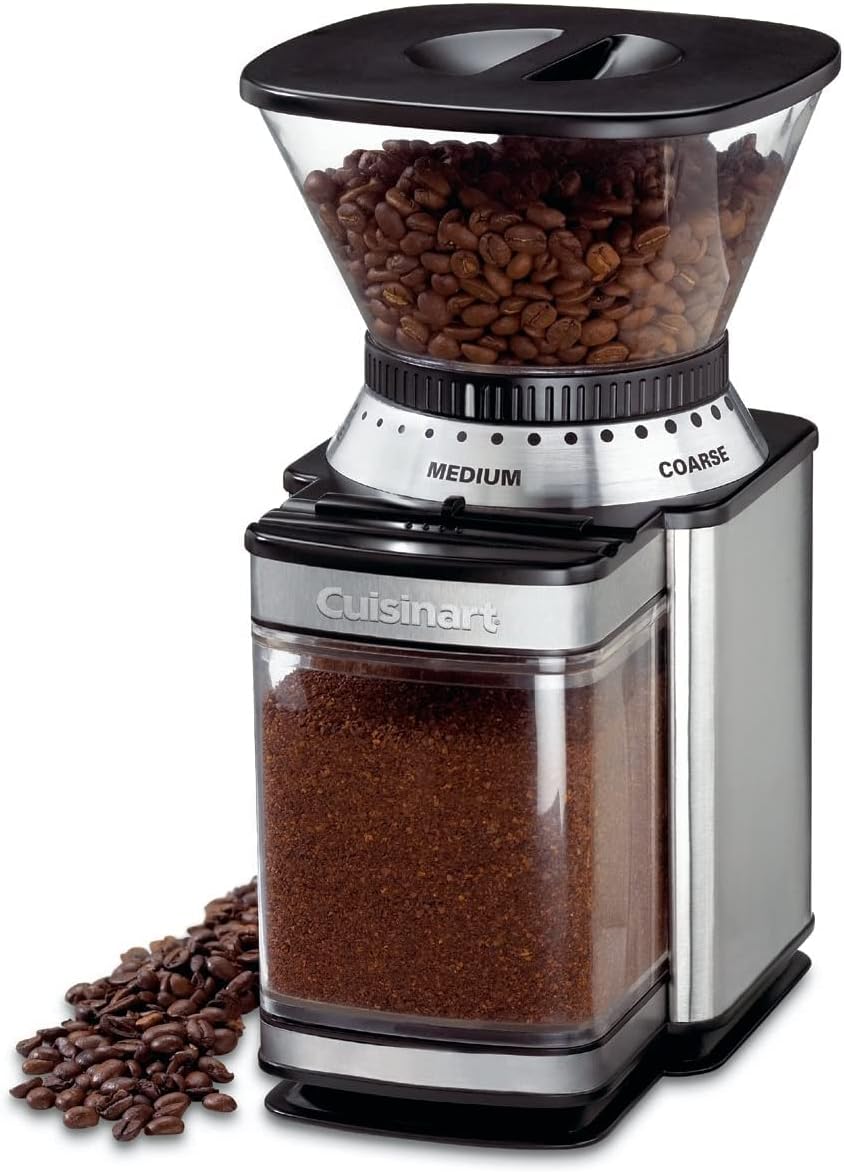 |
| Price on Amazon | |
Best Manual Coffee Grinder  |
| Price on Amazon |
The Quick Answer: What Grind Size Is Best for Cold Brew?
For most cold brew recipes, start with a coarse grind.
| Cold Brew Style | Best Grind Size | Texture |
|---|---|---|
| Cold brew concentrate | Coarse | Coarse sea salt |
| Ready-to-drink cold brew | Coarse to medium-coarse | Raw sugar / coarse sand |
| Shorter, steep, cold brew | Medium-coarse | Slightly finer than classic cold brew |
| Long, steep, cold brew | Coarse to extra-coarse | Chunky, open texture |
| Cold brew for milk drinks | Coarse | Smooth and strong |
| Cold brew for black coffee | Coarse to medium-coarse | Balanced extraction |
My favorite starting point is
| Variable | Starting Point |
|---|---|
| Grind size | Coarse |
| Ratio | 1:8 for concentrate |
| Coffee | 100 g |
| Water | 800 g |
| Steep time | 14–18 hours |
| Steep location | Room temperature or fridge |
| Filter | Fine mesh + paper if needed |
If your cold brew tastes bitter, gritty, or muddy, grind coarser. If it tastes weak, watery, or sour after a full steep, grind slightly finer or steep longer.
Why Cold Brew Needs a Coarse Grind

Cold brew is an immersion method. The coffee grounds sit in water for a long time, usually 12 to 18 hours. Because the contact time is so long, a fine grind can easily over-extract or create a messy batch.
Coarse grinding slows extraction. That is exactly what you want. Cold water extracts more slowly than hot water, but time makes up for that. If the coffee is ground too fine, the water has too much surface area to work on for too long. That can bring out bitter, woody, dusty, or stale flavors. Fine particles also make straining difficult because they clog filters and pass into the finished drink.
Coarse grounds behave better. They steep slowly, filter more easily, and usually produce a cleaner cold brew concentrate. The final drink feels smoother, especially after dilution with water, milk, or ice.
Think of it this way:
| Grind Size | What Happens in Cold Brew |
|---|---|
| Fine | Extracts too quickly, clogs filters, and create bitterness and sludge. |
| Medium | Can work, but often tastes heavier and harder to strain |
| Medium-coarse | Good for shorter steep times or ready-to-drink recipes |
| Coarse | Best all-around starting point |
| Extra-coarse | Very clean, but may taste weak unless steeped longer |
For beginners, coarse is the safest place to start because it gives you room to steep longer without the batch becoming harsh.
What Coarse Cold Brew Grind Should Look Like
A good cold brew grind should not look like a drip coffee grind. It should be noticeably chunkier. When you touch it, the grounds should feel gritty and separate, not soft or powdery.
Here is a simple visual guide:
| Grind Label | Looks Like | Best For |
|---|---|---|
| Fine | Powder / fine salt | Espresso |
| Medium-fine | Fine sand | V60-style pour-over |
| Medium | Regular sand | Drip coffee |
| Medium-coarse | Coarse sand / raw sugar | Chemex, some cold brew |
| Coarse | Coarse sea salt / breadcrumbs | Cold brew, French press |
| Extra-coarse | Cracked peppercorns | Long cold brew, very slow extraction |
Cold brew grind is usually close to French press grind, sometimes even a little coarser. If you recently read our guide on the best grind size for a French press, you can think of cold brew as sitting in that same coarse neighborhood. The difference is that cold brew often uses a longer contact time, so you may go slightly coarser if the batch tastes too heavy.
Coarse vs. Medium-Coarse for Cold Brew
Most people say cold brew should be coarse, and that is true as a starting point. But in real home brewing, coarse and medium-coarse can both work, depending on the ratio and steep time.
A coarse grind is best when you are steeping 14 to 18 hours or making a strong concentrate. A medium-coarse grind can work if you want a shorter steep, a ready-to-drink batch, or a slightly more extracted flavor.
| Grind Choice | Best For | Flavor Result |
|---|---|---|
| Extra-coarse | Very long, steep, clean concentrate | Smooth but may be lighter |
| Coarse | Standard cold brew | Smooth, balanced, and easy to filter |
| Medium-coarse | Shorter, steeper, or lighter ratio | More extraction and sweetness |
| Medium | Risky but possible | Fuller, but more sludge |
| Fine | Not recommended | Bitter, silty, hard to filter |
If your cold brew tastes smooth but weak, do not jump from coarse to fine. Move only slightly finer. Cold brew changes slowly, and small grind changes are enough.
Best Grind Size for Cold Brew Concentrate
Cold brew concentrate is strong by design, usually brewed around 1:5 to 1:8. Because there is a lot of coffee in the water, the grind should stay coarse. If you grind too fine for concentrate, the mixture becomes thick, muddy, and annoying to strain.
My favorite concentrate recipe is
| Ingredient | Amount |
|---|---|
| Coffee | 100 g |
| Water | 800 g |
| Ratio | 1:8 |
| Grind | Coarse |
| Steep time | 14–18 hours |
For a stronger concentrate:
| Coffee | Water | Ratio | Grind |
|---|---|---|---|
| 100 g | 500 g | 1:5 | Coarse |
| 100 g | 600 g | 1:6 | Coarse |
| 100 g | 800 g | 1:8 | Coarse |
The stronger the ratio, the more careful I am about coarse grinding. At 1.5, the coffee bed is dense and thick. Fine grounds can make it sludgy fast. At 1:8, you have a little more flexibility, but the course is still the safest starting point.
After brewing, dilute the concentrate to taste. For a 1:8 concentrate, I usually start with equal parts concentrate and water or milk. For a stronger 1:5 or 1:6 concentrate, I dilute more.
Best Grind Size for Ready-to-Drink Cold Brew
Ready-to-drink cold brew is brewed lighter, usually around 1:10 to 1:12, so you can drink it directly over ice. Because the ratio is more diluted, you can use a coarse or medium-coarse grind depending on the steep time.
A simple ready-to-drink recipe:
| Ingredient | Amount |
|---|---|
| Coffee | 100 g |
| Water | 1,100 g |
| Ratio | 1:11 |
| Grind | Coarse to medium-coarse |
| Steep time | 14–18 hours |
If you use a very coarse grind with a 1:12 ratio, the final drink may taste too light. In that case, either steep longer, grind slightly finer, or use a stronger ratio like 1:10.
For black cold brew, I like medium-coarse a little more than extra-coarse because I want the cup to taste complete without dilution. For milk drinks, I prefer coarse concentrate because I want a clean, strong base.
How Steep Time Changes Cold Brew Grind Size
Grind size and steep time are partners. You cannot separate them.
A finer grind extracts faster. A coarser grind extracts more slowly. So if you steep for a shorter time, you may need a slightly finer grind. If you steep for a longer time, you may need a coarser grind.
| Steep Time | Suggested Grind | Flavor Direction |
|---|---|---|
| 8–10 hours | Medium-coarse | Faster extraction, lighter body |
| 12 hours | Medium-coarse to coarse | Balanced, lighter cold brew |
| 14–18 hours | Coarse | Best all-around range |
| 18–20 hours | Coarse to extra-coarse | Fuller but still smooth |
| 24 hours | Extra-coarse | Long and steep, avoid bitterness. |
My usual routine is coarse grind and 16 hours. That gives me a sweet, smooth batch without making the filtering step painful.
If I am steeping in the fridge, I may go 18 to 20 hours because cold extraction is slower. If I am steeping at room temperature, I usually stay closer to 14 to 16 hours. If my kitchen is very warm, I prefer the fridge for more control.
Room Temperature vs. Fridge: Should Grind Size Change?
Yes, sometimes.
Cold brew steeped at room temperature extracts faster than cold brew steeped in the fridge. That means the same grind and ratio can taste stronger at room temperature than in the fridge.
| Steep Location | Extraction Speed | Grind Tip |
|---|---|---|
| Room temperature | Faster | Use coarse grind. |
| Refrigerator | Slower | Use coarse but steep longer, or go slightly finer. |
| Warm kitchen | Faster and riskier | Use caution and avoid very long steps. |
| Cold fridge | Slowest | Steep longer or use medium coarse. |
If your fridge cold brew tastes weak after 14 hours, do not assume the ratio is wrong. It may simply need more time. Try 18–20 hours before changing everything.
If your room-temperature cold brew tastes heavy or woody, shorten the steep or grind coarser.
How Roast Level Changes Cold Brew Grind Size
Roast level affects extraction. Darker roasts are more porous and extract more easily. Lighter roasts are denser and may need more help.
| Roast Level | Grind Direction | Steep Tip |
|---|---|---|
| Light roast | Medium-coarse to coarse | Steep longer for sweetness |
| Medium-light | Coarse | Good balance |
| Medium roast | Coarse | Best beginner choice |
| Medium-dark | Coarse to extra-coarse | Watch bitterness |
| Dark roast | Extra-coarse or shorter steep | Avoid woody bitterness. |
Cold brew often tastes great with medium and medium-dark roasts because the method brings out chocolate, caramel, nuts, brown sugar, and a smooth body. Light roasts can work too, but they may taste less expressive than they do in Japanese iced coffee or pour-over.
If you are using a dark, oily roast, I would stay coarse and avoid steeping too long. Dark roast cold brew can become woody and bitter if pushed hard.
If you are using a light roast and the batch tastes sour or empty, try a slightly finer coarse grind, a longer steep, or a stronger ratio.
Best Coffee Beans for Cold Brew Grind Testing
For testing grind size, choose a coffee that is balanced and forgiving. Medium roast whole beans are usually best because they show changes clearly without becoming too sharp or too bitter.
| Flavor Goal | Bean Style |
|---|---|
| Smooth and chocolatey | Medium-dark blend |
| Sweet and balanced | Medium roast blend |
| Nutty and round | Brazil or Colombia |
| Fruity and full | Natural Ethiopian |
| Low-acid feel | Medium-dark low-acid style |
| Milk-friendly | Chocolate/caramel profile |
For a soft, cold brew, Lavazza Qualità Oro Whole Bean Coffee can work nicely. For a little more complexity and sweetness, Stumptown Holler Mountain Whole Bean Coffee is a good option. If you like a deeper, bolder cold brew that can handle milk, Peet’s Major Dickason’s Blend Whole Bean Coffee fits that stronger profile.
Freshness still matters, but cold brew is a little more forgiving than hot pour-over. You do not need the most delicate, expensive beans in the kitchen. You need beans that taste sweet, smooth, and pleasant after a long, cold steep.
Why Fine Grind Is Usually Bad for Cold Brew
A fine grind can seem tempting because cold water extracts slowly. You might think, “If I grind finer, I’ll get more flavor.” Sometimes you will—but not always the flavor you want.
Fine grounds create three problems.
First, they over-extract more easily during long steeping. That can bring bitterness, dryness, and woody flavors.
Second, they make filtering difficult. Fine particles clog paper filters and pass through metal filters, leaving sediment in the final drink.
Third, they create a muddy texture. Cold brew should be smooth and rich, not dusty.
| Fine Grind Problem | What You Notice |
|---|---|
| Over-extraction | Bitter, dry, woody flavor |
| Filter clogging | Slow draining, messy straining |
| Sediment | Sludge at the bottom of the jar |
| Uneven extraction | Harsh and weak at the same time |
| Poor mouthfeel | Chalky or gritty drink |
If you accidentally grind too fine, you can still try to save the batch. Steep for a shorter time, strain through paper, and dilute carefully. But for next time, go coarser.
Can Pre-Ground Coffee Work for Cold Brew?
Yes, but it depends on the grind. Most supermarket pre-ground coffee is ground for drip machines, which is usually medium. That is finer than ideal for cold brew. It can still make cold brew, but the batch may taste heavier and be harder to strain.
If you use pre-ground coffee, try these adjustments:
| Issue | Adjustment |
|---|---|
| Grounds are medium-fine. | Steep, shorter, around 10–12 hours |
| The batch tastes bitter. | Dilute more and steep less next time. |
| Too much sediment | Filter through papers. |
| The flavor is weak. | Use a stronger ratio, not a longer steep |
| Tastes muddy | Use coarser coffee next time. |
The best option is to buy whole beans and grind them coarsely. But if pre-ground is all you have, use it carefully. Cold brew is forgiving enough that you can still get a drinkable batch.
Burr Grinder vs. Blade Grinder for Cold Brew
A burr grinder is better because it creates more even particles. A blade grinder chops coffee randomly. Some pieces become powder; others stay huge. That unevenness matters in cold brew.
The powder over-extracts and creates bitterness. The big chunks under-extract and create weakness. The result can taste dull, bitter, and thin all at once.
| Grinder Type | Cold Brew Result |
|---|---|
| Blade grinder | Uneven, sludgy, unpredictable |
| Entry-level burr grinder | Much better consistency |
| Brew-focused burr grinder | Cleaner, sweeter cold brew |
| Manual burr grinder | Good if it handles coarse settings |
| Pre-ground coffee | Convenient but less ideal |
If you brew cold brew often, a burr grinder is worth it. The Baratza Encore ESP is a flexible home option, while the Fellow Ode Brew Grinder Gen 2 is especially appealing if your focus is on brewed coffee rather than espresso.
Step-by-Step Cold Brew with the Right Grind Size
This is my simple cold brew concentrate method.
Ingredients
| Ingredient | Amount |
|---|---|
| Whole bean coffee | 100 g |
| Filtered water | 800 g |
| Ratio | 1:8 |
| Grind | Coarse |
Tools
| Tool | Purpose |
|---|---|
| Cold brew maker or jar | Steeping |
| Burr grinder | Coarse grind |
| Scale | Accurate ratio |
| Spoon | Stirring |
| Filter | Straining |
| Bottle | Storage |
A Takeya cold brew coffee maker keeps the process tidy, but a jar and filter work too.
Step 1: Grind Coarse
Grind 100 g of coffee to a coarse texture. It should look like coarse sea salt or rough breadcrumbs.
Step 2: Add Coffee and Water
Add the grounds to your brewer or jar. Pour in 800 g of filtered water. Stir gently so all grounds are wet. Dry pockets can lead to uneven extraction.
Step 3: Steep
Cover and steep for 14–18 hours. Use room temperature for a fuller extraction or the fridge for a slower, smoother brew.
Step 4: Strain
Strain it through the brew filter. If you want a cleaner cup, strain again through paper. Do not squeeze the grounds hard, because that can push sediment and bitterness into the finished cold brew.
Step 5: Dilute and Serve
Start with equal parts concentrate and water or milk. Serve over ice and adjust to taste.
Cold Brew Grind Size Troubleshooting
This is the table I would use when a batch tastes wrong.
| Problem | Likely Grind Issue | Fix |
|---|---|---|
| Bitter and heavy | Too fine | Grind coarser. |
| Sludgy texture | Too fine or uneven | Use a coarser burr grind. |
| Hard to filter | Too fine | Use coarse grind and a paper filter. |
| Weak and watery | Too coarse or understeeped | Grind slightly finer or steep longer. |
| Sour or grassy | Too coarse or too short | Grind finer or extend the steep. |
| Woody and dull | Too long, steep, or dark roast | Shorten steep, grind coarser |
| It tastes flat. | Stale beans or too diluted | Use fresher beans or a stronger ratio. |
| Muddy with milk | Fine sediment | Filter better or grind coarser. |
The most common fix is simple: if the batch is bitter or sludgy, go coarser; if it is weak after a full steep, go slightly finer.
How Grind Size Changes Cold Brew Flavor
Grind size changes more than strength. It changes the kind of flavor you get.
| Grind Size | Flavor Style |
|---|---|
| Extra-coarse | Very smooth, clean, sometimes light |
| Coarse | Smooth, sweet, balanced |
| Medium-coarse | Fuller, stronger, slightly more intense |
| Medium | Heavy, sometimes muddy |
| Fine | Bitter, chalky, over-extracted |
I like coarse grind because it gives cold brew its best personality: mellow sweetness, low bitterness, and easy drinkability. Medium-coarse can be nice when I want more intensity, especially for black ready-to-drink cold brew. Fine grind rarely feels worth the filtering trouble.
Best Grind Size for Cold Brew with Milk
If you plan to add milk, use a strong concentrate, but keep the grind coarse. Do not grind fine to make the coffee stronger. Use the ratio to make it stronger.
A good milk-friendly concentrate:
| Ingredient | Amount |
|---|---|
| Coffee | 100 g |
| Water | 600 g |
| Ratio | 1:6 |
| Grind | Coarse |
| Steep | 14–16 hours |
Serving idea:
| Ingredient | Amount |
|---|---|
| Cold brew concentrate | 100 g |
| Milk | 120–160 g |
| Ice | Full glass |
| Syrup | Optional |
A coarse 1:6 concentrate usually tastes stronger and cleaner than a fine-ground 1:8 batch. Strength should come from the recipe, not sediment.
Best Grind Size for Black Cold Brew

For black cold brew, I like either a coarse concentrate diluted carefully or ready-to-drink cold brew with a coarse-to-medium-coarse grind.
A black ready-to-drink recipe:
| Ingredient | Amount |
|---|---|
| Coffee | 100 g |
| Water | 1,100 g |
| Ratio | 1:11 |
| Grind | Coarse to medium-coarse |
| Steep | 14–18 hours |
If it tastes too light, use 1:10 next time or grind a touch finer. If it tastes too heavy, use 1:12 or grind coarser.
Black cold brew reveals grind problems more clearly than milk drinks. If there is bitterness, grit, or woody flavor, you will notice it right away.
Best Cold Brew Gear for Coarse Grinding
| Tool | Suggested Option | Why It Helps |
|---|---|---|
| Cold brew maker | Takeya Cold Brew Coffee Maker | Simple, tidy brewing |
| Large-batch brewer | County Line Kitchen Cold Brew Jar | Good for bigger batches |
| Burr grinder | Baratza Encore ESP | Coarse grind consistency |
| Brew grinder | Fellow Ode Brew Grinder Gen 2 | Brew-focused coarse grinding |
| Scale | Hario V60 Drip Scale | Accurate ratio control |
| Paper filters | Coffee Paper Filters | Cleaner final drink |
| Storage bottle | Glass Cold Brew Bottle | Keeps concentrate fresh |
If I had to choose one upgrade, I would choose the grinder. A cold brew maker makes the process cleaner, but a grinder changes the flavor.
My Personal Cold Brew Grind Routine
When I make cold brew, I start with a coarse grind and a 1:8 ratio. I steep for about 16 hours, strain gently, and taste the concentrate before dilution.
If the concentrate tastes smooth but a little light, I do not immediately grind it much finer. I usually dilute less at first. If the next batch still feels weak, I either move to 1:7 or grind just slightly finer. If the concentrate tastes bitter, dusty, or gritty, I grind it coarser and shorten the steep slightly.
My normal recipe looks like this:
| Variable | My Starting Point |
|---|---|
| Coffee | 100 g |
| Water | 800 g |
| Ratio | 1:8 |
| Grind | Coarse sea salt |
| Steep | 16 hours |
| Filter | Mesh, then paper if needed |
| Serve | 1:1 with water or milk |
This gives a flexible concentrate that works well black, with milk, or over ice.
Final Thoughts: The Best Cold Brew Grind Is Coarse and Even
The best grind size for cold brew is coarse and even. Think coarse sea salt, raw sugar, rough breadcrumbs, or cracked pepper. Coarse grinding matches the long steep time, helps prevent bitterness, reduces sludge, and makes filtering much easier.
If your cold brew tastes bitter, muddy, or gritty, your grind is probably too fine or too uneven. If it tastes weak, sour, or watery after a full steep, your grind may be too coarse, your ratio may be too light, or the batch may need more time.
Start with a coarse grind, a 1:8 concentrate ratio, and a 14–18 hour steep. Then adjust slowly. Cold brew rewards patience, but it also rewards consistency. Once you find the right coarse setting on your grinder, the whole process becomes simple: grind, steep, strain, chill, dilute, and enjoy a smooth glass that tastes intentional every time.
FAQ: Best Grind Size for Cold Brew
What grind size is best for cold brew?
The best grind size for cold brew is coarse, similar to coarse sea salt, raw sugar, rough breadcrumbs, or cracked pepper. Coarse grind helps prevent bitterness and makes filtering easier.
Can a cold brew grind be too coarse?
Yes. If the grind is too coarse, the cold brew can taste weak, sour, watery, or under-extracted. Try grinding slightly finer or steeping longer.
What happens if the cold brew grind is too fine?
Fine grind can make cold brew bitter, muddy, gritty, and difficult to filter. It can also leave sludge at the bottom of the batch.
Is a medium grind okay for cold brew?
Medium grind can work, but it is not ideal for long steeping. It may create more sediment and bitterness. If using a medium grind, steep for a shorter time and filter carefully.
Is a cold brew grind the same as a French press?
Cold brew grind is similar to French press grind, usually coarse. It may be slightly coarser if you are steeping for a long time or making a strong concentrate.
Should cold brew be coarse or extra-coarse?
Start with the course. Use extra-coarse if your cold brew tastes bitter, heavy, or woody after a long steep. If extra-coarse tastes weak, move back toward regular coarse.
How long should cold brew steep with a coarse grind?
Most cold brew tastes best after 14–18 hours with a coarse grind. Fridge steeping may take longer, while room-temperature steeping may finish faster.
Can I use pre-ground coffee for cold brew?
Yes, but most pre-ground coffee is finer than ideal. It may taste heavier and be harder to strain. If using pre-ground coffee, steep for a shorter time and filter well.
Why is my cold brew bitter?
Cold brew can taste bitter if the grind is too fine, the steep time is too long, the roast is too dark, or the batch is not filtered well. Grind coarser and shorten the steep next time.
Why is my cold brew weak?
Cold brew can taste weak if the grind is too coarse, the ratio is too light, the steep time is too short, or the finished concentrate is over-diluted. Try 1:8 concentrate, steep 14–18 hours, and dilute less.


