
Best Coffee-to-Water Ratio for Cold Brew


OneHundredCoffee is reader-supported, and some products displayed may earn us an affiliate commission. Details
The best coffee-to-water ratio for cold brew depends on whether you want cold brew concentrate or ready-to-drink cold brew. If you want a concentrate that you can dilute later with water, milk, or ice, start around 1:5 to 1:8. If you want a cold brew that is ready to drink straight from the fridge, start around 1:10 to 1:12. For most home brewers, my favorite beginner cold brew concentrate ratio is 1:8, which means 1 gram of coffee for every 8 grams of water. It gives a smooth, strong, flexible base without becoming too heavy or wasteful.
Cold brew is one of those coffee methods that feels almost too easy at first. You put coffee and water together, wait overnight, strain it, and suddenly you have a chilled coffee base ready for several drinks. But the ratio changes everything. Too much water, and the cold brew tastes thin, flat, and a little disappointing. Too much coffee and it can become syrupy, woody, bitter, or expensive to make regularly. The best cold brew ratio gives you enough strength for ice and milk while still keeping the drink smooth, sweet, and easy to enjoy.
As we discussed previously in our published article about How to Brew Japanese Iced Coffee, iced coffee becomes much better when you treat ice and dilution as part of the recipe instead of an afterthought. Cold brew works the same way, but more slowly. And as we covered in How to Brew Café-Style Iced Coffee at Home, a café-style iced drink needs a strong enough coffee base to survive ice, milk, and sweeteners. Cold brew concentrate is one of the easiest ways to get that café-style strength at home because you can make a batch once, store it in the fridge, and adjust every glass exactly the way you like.
For a simple setup, you can use a mason jar and a filter, but a dedicated brewer like the Takeya Cold Brew Coffee Maker keeps the process cleaner. If you want a bigger batch, something like the County Line Kitchen Cold Brew Mason Jar is practical. For beans, I like medium to medium-dark whole beans for cold brew because they usually bring chocolate, caramel, nutty, and smooth flavors. A coffee like Lavazza Qualità Oro Whole Bean Coffee can make a softer cold brew, while Stumptown Holler Mountain Whole Bean Coffee works nicely if you want more complexity.
Best Coffee Beans and Drinks for Cold Brew
| Image | Product | Features | Price |
|---|---|---|---|
|
Best Strong Ratio

|
Great for 1:4 concentrate
|
Price on Amazon | |
|
Best Smooth Ratio

|
Easy 1:5 cold brew
|
Price on Amazon | |
|
Best Ratio Guide
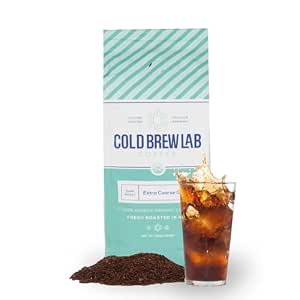
|
Built for cold brewing
|
Price on Amazon | |
|
Best Bold Flavor

|
Good 1:4 concentrate
|
Price on Amazon | |
|
Best Whole Bean

|
Flexible grind ratio
|
Price on Amazon | |
|
Best Organic Dark

|
Rich 1:5 brew
|
Price on Amazon | |
|
Best Pre-Measured

|
No ratio guessing
|
Price on Amazon | |
|
Best Concentrate

|
Dilute to taste
|
Price on Amazon | |
|
Best 4:1 Option

|
Ready-made 4:1 concentrate
|
Price on Amazon | |
|
Best Ready Drink

|
Skip brewing ratio
|
Price on Amazon |
Cold Brew Ratio: The Quick Answer
Here is the easiest way to choose your cold brew ratio.
| Cold Brew Style | Ratio | Example | Best For |
|---|---|---|---|
| Strong concentrate | 1:5 | 100 g coffee + 500 g water | Milk drinks, bold iced coffee |
| Medium concentrate | 1:6 | 100 g coffee + 600 g water | Flexible concentrate |
| Smooth concentrate | 1:8 | 100 g coffee + 800 g water | Best beginner concentrate |
| Ready-to-drink strong | 1:10 | 100 g coffee + 1,000 g water | Drinking over ice |
| Ready-to-drink mild | 1:12 | 100 g coffee + 1,200 g water | Easy black cold brew |
| Very light cold brew | 1:14 | 100 g coffee + 1,400 g water | Gentle sipping |
My personal starting point is
| Ingredient | Amount |
|---|---|
| Coarse coffee | 100 g |
| Water | 800 g |
| Ratio | 1:8 |
| Steep time | 14–18 hours |
| Grind size | Coarse |
| Serving | Dilute 1:1 or to taste |
This gives a concentrate that is strong enough for ice and milk but not so intense that it becomes difficult to balance. If you drink cold brew black, you may prefer 1:10 or 1:12. If you like iced milk coffee, 1:6 to 1:8 usually works better.
What Coffee-to-Water Ratio Means in Cold Brew
A coffee-to-water ratio simply tells you how much coffee you use compared with how much water you add. A 1:8 ratio means 1 part coffee to 8 parts water by weight.
So:
100 g coffee × 8 = 800 g water
Or if you already know how much water fits in your container:
Water ÷ ratio = coffee
For example, if your jar holds 1,000 g of water and you want a 1:8 concentrate:
1,000 ÷ 8 = 125 g coffee
Using grams is much more reliable than using cups or scoops. Cold brew is especially tricky with volume measurements because coarse grounds take up a lot of space, and different roast levels have different densities. A cup of coarse dark roast may weigh differently from a cup of coarse medium roast. A scale makes the recipe repeatable.
If you do not have a scale, you can still make cold brew, but expect to adjust by taste. Cold brew is forgiving, but measuring makes it much easier to recreate your favorite batch.
Cold Brew Concentrate vs Ready-to-Drink Cold Brew
This is the most important cold brew ratio distinction.
Cold brew concentrate is intentionally strong. You dilute it after brewing with water, milk, ice, or a mix of those.
Ready-to-drink cold brew is brewed weaker, so you can pour it directly over ice and drink it as-is.
| Style | Brew Ratio | Dilution Needed? | Best For |
|---|---|---|---|
| Concentrate | 1:5 to 1:8 | Yes | Café-style iced drinks |
| Ready-to-drink | 1:10 to 1:12 | Usually not. | Black cold brew |
| Light ready-to-drink | 1:13 to 1:14 | No | Mild sipping |
I prefer to concentrate because it gives more control. One person can dilute it with water for a black cold brew. Another can mix it with milk. Someone else can pour it over ice with vanilla syrup. A single batch becomes several different drinks.
Ready-to-drink cold brew is easier if you know exactly how you like it and do not want to think later. You brew it, strain it, chill it, and pour. But once it is brewed, you cannot make it much stronger unless you brew another batch.
Best Cold Brew Concentrate Ratio
For cold brew concentrate, I recommend starting with 1:8.
It is strong enough to feel like a concentrate but not so strong that it becomes overpowering or wasteful. If you want more café-style intensity, move to 1:6. If you want a very bold milk-drink base, try 1:5.
| Concentrate Strength | Ratio | Taste Style |
|---|---|---|
| Light concentrate | 1:8 | Smooth, flexible, beginner-friendly |
| Medium concentrate | 1:6 | Strong, rich, milk-friendly |
| Heavy concentrate | 1:5 | Very bold, best diluted |
| Extra-heavy concentrate | 1:4 | Intense, less efficient for daily use |
A good 1:8 recipe:
| Ingredient | Amount |
|---|---|
| Coffee | 100 g |
| Water | 800 g |
| Steep time | 14–18 hours |
| Grind | Coarse |
| Dilution | Start 1:1 |
After straining, try mixing:
| Concentrate | Water or Milk | Result |
|---|---|---|
| 100 g | 100 g | Balanced iced drink |
| 100 g | 150 g | Lighter drink |
| 120 g | 80 g | Stronger drink |
| 80 g | 160 g | Mild drink |
If you are adding a lot of milk, use less dilution or brew a stronger concentrate. Milk softens coffee quickly, so a weak cold brew base can disappear.
Best Ready-to-Drink Cold Brew Ratio
For ready-to-drink cold brew, I recommend 1:10 to 1:12.
A 1:10 ratio gives a stronger black cold brew that still handles ice well. A 1:12 ratio gives a smoother, lighter drink that feels easy to sip.
| Ready-to-Drink Style | Ratio | Example |
|---|---|---|
| Strong ready-to-drink | 1:10 | 100 g coffee + 1,000 g water |
| Balanced ready-to-drink | 1:11 | 100 g coffee + 1,100 g water |
| Smooth ready-to-drink | 1:12 | 100 g coffee + 1,200 g water |
| Mild ready-to-drink | 1:14 | 100 g coffee + 1,400 g water |
My favorite ready-to-drink recipe is
| Ingredient | Amount |
|---|---|
| Coffee | 80 g |
| Water | 900 g |
| Ratio | 1:11.25 |
| Steep time | 14–16 hours |
| Grind | Coarse |
This is nice if you drink cold brew black and do not want to dilute it much. You can pour it over ice and enjoy it directly. If the ice melts slowly, the drink still stays pleasant.
Cold Brew Ratio Chart by Coffee Amount
Use this chart if you know how much coffee you want to use.
| Coffee | 1:5 Water | 1:6 Water | 1:8 Water | 1:10 Water | 1:12 Water |
|---|---|---|---|---|---|
| 50 g | 250 g | 300 g | 400 g | 500 g | 600 g |
| 75 g | 375 g | 450 g | 600 g | 750 g | 900 g |
| 100 g | 500 g | 600 g | 800 g | 1,000 g | 1,200 g |
| 125 g | 625 g | 750 g | 1,000 g | 1,250 g | 1,500 g |
| 150 g | 750 g | 900 g | 1,200 g | 1,500 g | 1,800 g |
| 200 g | 1,000 g | 1,200 g | 1,600 g | 2,000 g | 2,400 g |
For most home batches, 100 g of coffee is a nice starting amount. It is enough to make several drinks, but not so many that you risk wasting a full bag if the recipe needs adjustment.
Cold Brew Ratio Chart by Water Amount
Use this chart if you know how much water your jar or cold brew maker holds.
| Water | 1:5 Coffee | 1:6 Coffee | 1:8 Coffee | 1:10 Coffee | 1:12 Coffee |
|---|---|---|---|---|---|
| 500 g | 100 g | 83 g | 62.5 g | 50 g | 42 g |
| 750 g | 150 g | 125 g | 94 g | 75 g | 62.5 g |
| 800 g | 160 g | 133 g | 100 g | 80 g | 67 g |
| 1,000 g | 200 g | 167 g | 125 g | 100 g | 83 g |
| 1,200 g | 240 g | 200 g | 150 g | 120 g | 100 g |
| 1,500 g | 300 g | 250 g | 188 g | 150 g | 125 g |
This is useful because cold brew containers vary. Some are tall and narrow. Some are big mason jars. Some have filter baskets that reduce available space. If your brewer cannot physically fit enough grounds for a 1:5 ratio, use a lighter ratio and dilute less after brewing.
Best Cold Brew Ratio for Milk Drinks
If you want cold brew with milk, use concentrate. Milk dilutes coffee flavor quickly, especially if you also add ice and syrup. A ready-to-drink 1:12 cold brew can taste lovely and black, but it may disappear in milk.
For milk drinks, I like a 1:5 to 1:8 concentrate.
| Drink Style | Brew Ratio | Serving Idea |
|---|---|---|
| Iced cold-brew latte | 1:6 | 100 g concentrate + 150 g milk |
| Strong milk coffee | 1:5 | 100 g concentrate + 120 g milk |
| Smooth milky cold brew | 1:8 | 120 g concentrate + 120 g milk |
| Sweet vanilla cold brew | 1:6 or 1:8 | Concentrate + milk + syrup |
| Creamy dessert-style drink | 1:5 | Concentrate + milk + cream |
A simple café-style cold brew milk drink:
| Ingredient | Amount |
|---|---|
| Cold brew concentrate | 100 g |
| Cold milk | 140 g |
| Vanilla syrup | 10–20 g |
| Ice | Full glass |
If you like oat milk, a stronger concentrate helps because oat milk can be naturally sweet and creamy. If you use whole milk, 1:8 concentrate may be enough. If you use a lot of ice, go stronger.
Best Cold Brew Ratio for Black Coffee
If you drink cold brew black, you have two good options.
You can brew a ready-to-drink batch at 1:10 to 1:12 or brew concentrate at 1:8 and dilute each glass.
For black cold brew, I often prefer ready-to-drink because the flavor feels more integrated. But concentrate is more flexible.
| Preference | Best Ratio |
|---|---|
| Strong black cold brew | 1:10 |
| Balanced black cold brew | 1:11 |
| Smooth black cold brew | 1:12 |
| Very mellow black cold brew | 1:13 to 1:14 |
| Flexible black concentrate | Brew 1:8, dilute 1:1 or less |
A simple black cold brew serving from concentrate:
| Ingredient | Amount |
|---|---|
| 1:8 concentrate | 120 g |
| Water | 80–120 g |
| Ice | Full glass |
Taste before adding more water. Cold brew can go from “smooth and rich” to “why is this so watery?” very quickly once ice starts melting.
How Much Should You Dilute Cold Brew Concentrate?
Dilution depends on how strong your concentrate is and whether you add milk or water.
Here is a useful starting chart.
| Brew Ratio | Dilution Starting Point | Final Drink Style |
|---|---|---|
| 1:5 concentrate | 1 part concentrate + 1.5–2 parts water/milk | Strong but balanced |
| 1:6 concentrate | 1 part concentrate + 1–1.5 parts water/milk | Bold café-style |
| 1:8 concentrate | 1 part concentrate + 1 part water/milk | Smooth everyday |
| 1:10 cold brew | Little or no dilution | Ready-to-drink |
| 1:12 cold brew | No dilution | Mild ready-to-drink |
For example, if you brewed a 1:8 concentrate, start with:
100 g concentrate + 100 g water or milk
Then adjust.
If it tastes too strong, add more water or milk. If it tastes too weak, use more concentrate next time or brew at 1:6.
Best Grind Size for Cold Brew Ratio

Cold brew usually needs a coarse grind, similar to coarse sea salt or rough breadcrumbs. Because the coffee steeps for many hours, a fine grind can over-extract, create bitterness, and make straining more difficult.
| Grind Size | Cold Brew Result |
|---|---|
| Fine | Bitter, silty, hard to filter |
| Medium | Can work, but may taste heavy |
| Medium-coarse | Good for shorter steeping |
| Coarse | Best general starting point |
| Extra coarse | Cleaner, but may taste weak |
For concentrate ratios like 1:5 or 1:6, coarse grind is especially important because there is a lot of coffee in the brewer. If the grind is too fine, the mixture becomes sludgy and difficult to strain.
A burr grinder like the Baratza Encore ESP helps because it gives a more even coarse grind than a blade grinder. If you use a blade grinder, you may get powder and chunks together, which can make cold brew taste both bitter and under-extracted at the same time.
Best Steep Time for Cold Brew
Most cold brew tastes best after 12 to 18 hours, depending on grind size, ratio, temperature, and taste preference.
| Steep Time | Flavor Result |
|---|---|
| 8–10 hours | Light, sometimes underdeveloped |
| 12 hours | Smooth and mild |
| 14–16 hours | Balanced and flavorful |
| 18 hours | Stronger and fuller |
| 20–24 hours | Can become woody or heavy |
My usual steep time is 14–18 hours. If I brew at room temperature, I often stay closer to 14–16 hours. If I brew in the fridge, I may let it go 16–20 hours because extraction is slower when cold.
Do not assume longer is always better. Cold brew is forgiving, but extremely long steeping can bring out woody, stale, or dull flavors. If your cold brew tastes heavy and rough, shorten the steep or grind coarser.
Room Temperature vs Fridge Cold Brew
You can steep cold brew at room temperature or in the refrigerator.
Room temperature steeping extracts faster and often produces a fuller flavor. Fridge steeping is slower and can taste smoother, but it may need more time.
| Steeping Location | Time | Flavor |
|---|---|---|
| Room temperature | 12–16 hours | Fuller, stronger, faster |
| Refrigerator | 16–24 hours | Smoother, slower, gentler |
If you are new, I would steep at room temperature for about 14–16 hours, then strain and refrigerate the finished cold brew. If your kitchen is very warm, use the fridge for food safety and flavor stability.
Best Beans for Cold Brew Ratio Testing
Cold brew tends to soften acidity and highlight body, chocolate, caramel, nut, and sweet-roast flavors. Medium and medium-dark roasts often work beautifully. Very light roasts can taste interesting, but sometimes they lose their delicate floral notes in cold brew compared with Japanese iced coffee.
| Flavor Goal | Bean Style |
|---|---|
| Smooth and chocolatey | Medium-dark blend |
| Sweet and balanced | Medium roast blend |
| Nutty and round | Brazil or Colombia |
| Fruity and rich | Natural Ethiopian |
| Low-acid feel | Medium-dark, low-acid blend |
| Milk-friendly | Chocolate/caramel roast profile |
For a soft, everyday cold brew, Lavazza Qualità Oro Whole Bean Coffee can work well. For a more complex medium roast, Stumptown Holler Mountain Whole Bean Coffee is a nice option. If you like deeper, stronger cold brew with milk, Peet’s Major Dickason’s Blend Whole Bean Coffee can give a bolder profile.
The best bean for cold brew is not always the fanciest bean. It is the bean that tastes sweet, smooth, and satisfying after long, cold extraction.
Step-by-Step Cold Brew Concentrate Recipe
This is the recipe I would recommend for most beginners.
Ingredients
| Ingredient | Amount |
|---|---|
| Coarse-ground coffee | 100 g |
| Filtered water | 800 g |
| Ratio | 1:8 |
Tools
| Tool | Purpose |
|---|---|
| Jar or cold brew maker | Holds coffee and water |
| Burr grinder | Coarse, even grind |
| Scale | Accurate ratio |
| Spoon | Stirring |
| Filter | Straining |
| Bottle or jar | Storage |
A Takeya Cold Brew Coffee Maker is convenient if you want less mess. A mason jar and paper filter also work well.
Step 1: Grind the Coffee Coarse
Grind 100 g of coffee coarsely. The grind should look chunky, not powdery.
Step 2: Add Coffee and Water
Add the coffee to your jar or brewer. Pour in 800 g of filtered water. Stir gently to make sure all grounds are wet. Dry pockets are one of the easiest ways to get uneven cold brew.
Step 3: Steep
Cover and steep for 14–18 hours. Room temperature gives a fuller extraction. The fridge gives a smoother, slower extraction.
Step 4: Strain Thoroughly
Strain it through the brewer filter, a paper filter, cheesecloth, or a fine mesh filter. For the cleanest cup, strain twice: first through a mesh filter, then through paper.
Step 5: Store
Store the concentrate in the fridge in a sealed bottle or jar. Try to use it within about a week for the best flavor.
Step 6: Serve
Start with equal parts concentrate and water or milk. Adjust from there.
Ready-to-Drink Cold Brew Recipe
If you do not want to dilute later, use this recipe.
| Ingredient | Amount |
|---|---|
| Coarse coffee | 100 g |
| Water | 1,100 g |
| Ratio | 1:11 |
| Steep time | 14–18 hours |
After straining, pour directly over ice. If it tastes too strong, add a little water. If it tastes too light, brew the next batch at 1:10.
This is a great option for people who drink cold brew black every morning and want the easiest, fridge-ready bottle.
Cold Brew Troubleshooting
| Problem | Likely Cause | Fix |
|---|---|---|
| Cold brew tastes weak | Ratio too light or steep too short | Use 1:8 concentrate or steep longer |
| Tastes too strong | The concentrate is not diluted enough | Add water or milk |
| It tastes bitter | Grind too fine or steep too long | Grind coarser, shorten steep |
| It tastes sour | Under-extracted | Steep longer or grind slightly finer |
| It tastes flat | Stale beans or poor water | Use fresher beans, filtered water |
| Too much sludge | Fine grind or poor filtering | Grind coarser and filter twice |
| Tastes woody | Steep too long | Shorten steep time |
| Tastes watery with milk | Concentrate too weak | Brew 1:6 or 1:5 |
The most common cold brew mistake is using a ready-to-drink ratio and then adding lots of ice and milk. By the time the ice melts and milk goes in, the coffee tastes lost. For milk drinks, use concentrate.
Cold Brew Ratio for Iced Coffee Drinks
Here are some practical café-style drinks using cold brew concentrate.
| Drink | Concentrate | Add-In | Notes |
|---|---|---|---|
| Black cold brew | 120 g | 80–120 g water + ice | Adjust to taste |
| Cold brew latte | 100 g | 150 g milk + ice | Use 1:6 or 1:8 concentrate |
| Vanilla cold brew | 100 g | Milk + vanilla syrup | A stronger base works better |
| Cold brew tonic | 80–100 g | Tonic water + ice | Use bright coffee |
| Creamy cold brew | 120 g | Milk + splash of cream | Dessert-style |
| Cold brew over ice | 150 g | Ice only | Use ready-to-drink ratio |
If you add syrup, use a strong enough concentrate. Sweetness can make weak coffee feel even flatter, especially once the ice melts.
How Long Does Cold Brew Last?
Cold brew concentrate usually tastes best within 5 to 7 days when stored in the fridge in a sealed container. It may last longer, but the flavor becomes less fresh over time. Ready-to-drink cold brew can also lose brightness after a few days.
For best flavor:
- Store it cold.
- Keep it sealed.
- Avoid leaving it at room temperature after straining.
- Do not store it with grounds still inside.
- Use clean bottles or jars.
If the cold brew smells sour, fermented, or unpleasant, discard it.
My Personal Cold Brew Ratio Routine
If I am making cold brew for the week, I usually brew concentrate at 1:8. I use 100 g of coffee and 800 g of water, steep for around 16 hours, strain carefully, and store it in a glass bottle.
For black cold brew, I pour about 120 g of concentrate over ice and add 80–100 g of water. For milk cold brew, I use 100 g of concentrate and 120–160 g of milk, depending on how strong I want it. If I know I am only making milk drinks, I brew stronger at 1:6.
The reason I like concentrate is that every glass can be different. Some mornings I want black cold brew. Some afternoons, I want a creamy iced coffee. Sometimes I want a stronger drink over a lot of ice. Concentrate lets me adjust without brewing a new batch.
Best Cold Brew Gear for Consistent Ratios
| Tool | Suggested Option | Why It Helps |
|---|---|---|
| Cold brew maker | Takeya Cold Brew Coffee Maker | Clean, simple fridge brewing |
| Large jar brewer | County Line Kitchen Cold Brew Jar | Bigger batch option |
| Burr grinder | Baratza Encore ESP | Coarse grind consistency |
| Brew grinder | Fellow Ode Brew Grinder Gen 2 | Brew-focused grinding |
| Scale | Hario V60 Drip Scale | Accurate coffee/water ratio |
| Storage bottle | Glass Cold Brew Bottle | Keeps concentrate fresh |
You can absolutely make good cold brew with a jar and filter, but a scale is the tool I would not skip. Ratios are the whole point here, and guessing makes cold brew inconsistent.
Final Thoughts: The Best Cold Brew Ratio Depends on How You Drink It
The best coffee-to-water ratio for cold brew depends on your final drink. If you want to concentrate, start with 1:8. If you want a stronger milk-friendly concentrate, try 1:6 or 1:5. If you want ready-to-drink cold brew, start around 1:10 to 1:12.
For most home brewers, I recommend this simple path:
Use 100 g coarse coffee and 800 g water, steep for 14–18 hours, strain well, and dilute the finished concentrate to taste. Start with equal parts concentrate and water or milk. Then adjust.
Cold brew is forgiving, but the ratio gives it structure. Once you find your preferred strength, the whole process becomes wonderfully easy: grind coarse, add water, wait overnight, strain, chill, and pour a smooth café-style glass whenever you want.
FAQ: Best Coffee-to-Water Ratio for Cold Brew
What is the best coffee-to-water ratio for cold brew?
For cold brew concentrate, start with 1:8. For ready-to-drink cold brew, start with 1:10 to 1:12. Use stronger ratios like 1:5 or 1:6 for milk drinks.
What does a 1:8 cold brew ratio mean?
A 1:8 ratio means 1 gram of coffee for every 8 grams of water. For example, use 100 g of coffee with 800 g of water.
What is the best ratio for cold brew concentrate?
The best beginner concentrate ratio is 1:8. For a stronger concentrate, use 1:6. For a very bold milk-friendly concentrate, use 1:5.
What is the best ratio for ready-to-drink cold brew?
Use 1:10 to 1:12. A 1:10 ratio tastes stronger, while 1:12 tastes smoother and lighter.
How much coffee do I use for 1 liter of cold brew?
For 1 liter of water, use 125 g of coffee for a 1:8 concentrate, 100 g for a 1:10 ready-to-drink cold brew, or about 83 g for a 1:12 mild cold brew.
Should I dilute cold brew concentrate?
Yes. Concentrate is meant to be diluted. Start with equal parts concentrate and water or milk, then adjust to taste.
How long should cold brew steep?
Most cold brew tastes best after 14–18 hours. Room temperature steeping is faster, while fridge steeping may need more time.
What grind size is best for cold brew?
Use a coarse grind, similar to coarse sea salt or rough breadcrumbs. A fine grind can make cold brew bitter, sludgy, and hard to strain.
Why does my cold brew taste watery?
It may be brewed too weak, diluted too much, steeped too briefly, or served over too much ice. Try a stronger ratio like 1:8 or 1: 6.
Why does my cold brew taste bitter?
Bitterness usually comes from grinding too fine, steeping too long, using too dark a roast, or not filtering well. Grind coarser and shorten the steep next time.


