
Best Grind Size for AeroPress


OneHundredCoffee is reader-supported, and some products displayed may earn us an affiliate commission. Details
The best grind size for AeroPress is usually medium-fine, somewhere between regular drip coffee and espresso. It should look a little like table salt, fine sand, or slightly finer drip grind, but it should not be powdery like true espresso unless you are making a very short, concentrated recipe. For most beginners, medium-fine is the safest starting point because it gives you a smooth, flavorful cup without making the press too hard to push or the coffee too bitter.
AeroPress is one of the most forgiving coffee brewers, but grind size still matters. If the grind is too coarse, the coffee may taste sour, thin, watery, or underdeveloped. If the grind is too fine, the cup can become bitter, harsh, chalky, or difficult to press. The sweet spot depends on your recipe: a normal mug-style AeroPress likes medium-fine; a longer steep can use a slightly coarser grind; a short concentrate-style AeroPress can use a finer grind, and iced AeroPress often benefits from a medium-fine grind because you need a strong base that will survive ice and milk.
As we discussed previously in our published article about How to Brew AeroPress Coffee for Beginners, AeroPress is flexible enough to make clean black coffee, stronger concentrate-style coffee, iced coffee, and milk-friendly drinks. And as we covered earlier in How to Make Strong Coffee Without an Espresso Machine, strength should come from the right recipe and extraction balance, not from forcing the coffee with an extremely fine grind. AeroPress gives you room to experiment, but the best cups usually come from calm, controlled adjustments.
For a beginner setup, the AeroPress Original Coffee Maker is the easiest starting point. Pair it with a burr grinder such as the Baratza Encore ESP, a compact manual grinder like the TIMEMORE Chestnut C2, and a small scale such as the Hario V60 Drip Scale, and the whole AeroPress routine becomes much easier to repeat.
Best Coffee Grinders for AeroPress
| Image | Product | Features | Price |
|---|---|---|---|
|
Best AeroPress Fit

|
Fits AeroPress plunger
|
Price on Amazon | |
|
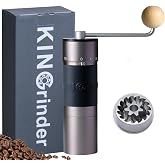
Best Precision Pick
|
16-micron adjustment
|
Price on Amazon | |
|
Best Daily Hand

|
S2C conical burr
|
Price on Amazon | |
|
Best Budget Travel

|
Slim portable body
|
Price on Amazon | |
|
Best Lightweight Pick

|
330g portable grinder
|
Price on Amazon | |
|
Best Outdoor Pick

|
Rugged travel build
|
Price on Amazon | |
|
Best Electric Upgrade

|
Wide grind range
|
Price on Amazon | |
|
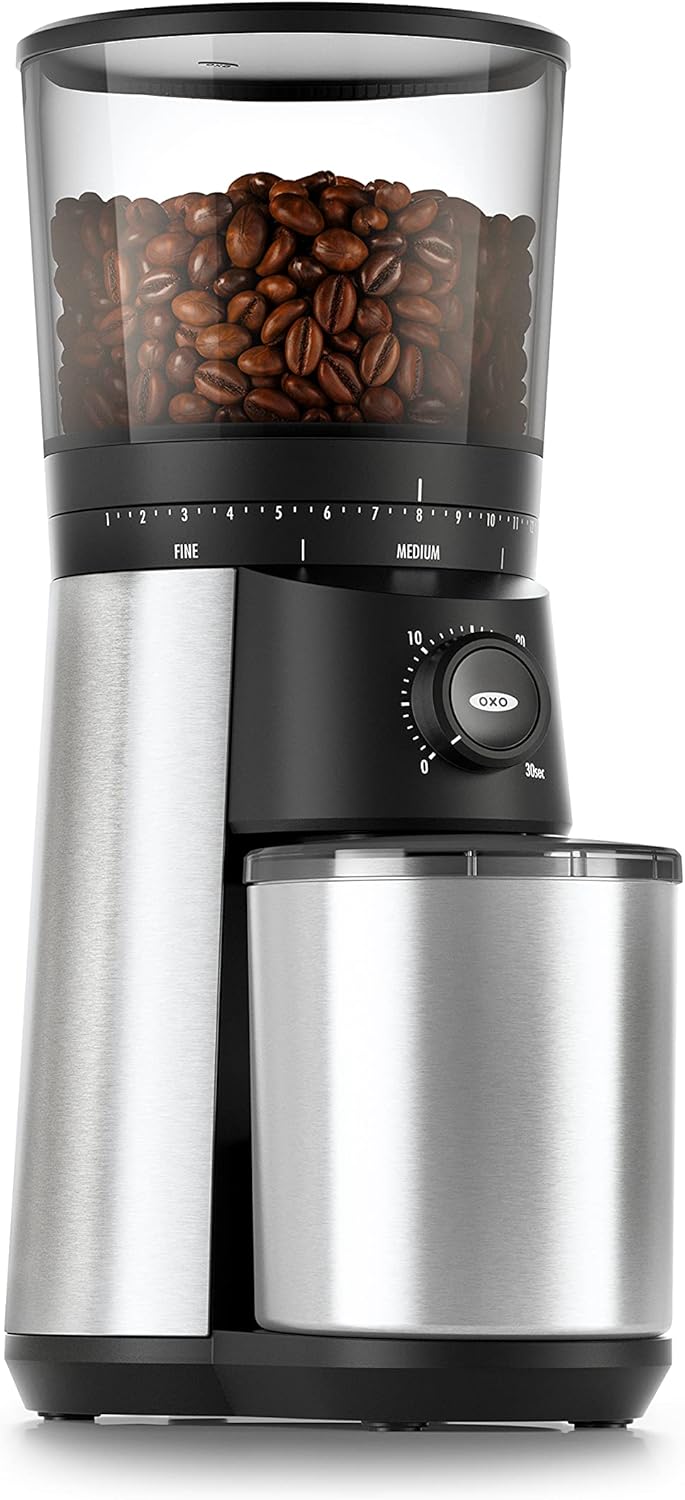
Best Countertop Pick
|
Simple electric burr
|
Price on Amazon | |
|
Best Slim Manual

|
Quiet hand grinding
|
Price on Amazon | |
|
Best Modern Electric

|
Multi-brew grinder
|
Price on Amazon |
The Quick Answer: What Grind Size Is Best for AeroPress?
For most AeroPress recipes, start with a medium-fine grind.
| AeroPress Brew Style | Best Grind Size | Texture |
|---|---|---|
| Beginner mug-style coffee | Medium-fine | Table salt / fine sand |
| Strong AeroPress concentrate | Fine to medium-fine | Slightly coarser than espresso |
| Iced AeroPress | Medium-fine | Fine sand |
| Long-steep AeroPress | Medium | Regular sand |
| Light roast AeroPress | Slightly finer | More extraction help |
| Dark roast AeroPress | Slightly coarser | Less bitterness |
| Metal filter AeroPress | Slightly finer or medium-fine | Depends on taste |
| Paper filter AeroPress | Medium-fine | Clean and balanced |
My favorite beginner starting point is
| Variable | Starting Point |
|---|---|
| Coffee | 16 g |
| Water | 220–240 g |
| Grind | Medium-fine |
| Brew time | 1:30–2:00 |
| Press time. | 20–30 seconds |
| Taste goal | Smooth, balanced, clean |
This gives you a useful baseline. From there, you adjust by taste. “Sour” means “finer.” “Bitter” means coarser. “Weak but balanced” means using more coffee or less water. Strong but smooth” means adding hot water after pressing.
Why AeroPress Grind Size Matters
AeroPress uses a mix of immersion and gentle pressure. The coffee grounds steep in hot water, then you press the liquid through a filter. That means grind size affects both extraction and pressing resistance.
Finer grounds extract faster because more surface area touches the water. Coarser grounds extract more slowly. Since AeroPress brew times are usually short, often around 1 to 3 minutes, the grind generally needs to be finer than French press and often finer than standard drip.
But there is a limit. If the grind is too fine, the plunger can become hard to press. The brew may taste dry, bitter, or muddy. A very fine grind can also create more fines in the cup, especially if you press too hard or use a metal filter.
| Grind Size | What Happens in AeroPress |
|---|---|
| Too fine | Bitter, harsh, hard to press |
| Fine | Good for short concentrate recipes |
| Medium-fine | Best all-around starting point |
| Medium | Good for longer or lighter steeping/extraction |
| Coarse | Often weak, sour, under-extracted |
The best grind size is not only about texture. It is about matching grind size to brew time, water temperature, coffee dose, roast level, and filter type.
What Medium-Fine AeroPress Grind Should Look Like
A medium-fine AeroPress grind should look like table salt or fine sand. It is not espresso powder. It is not chunky like a French press. If you rub it between your fingers, it should feel gritty, not silky.
Here is a visual comparison:
| Grind Texture | Best Use |
|---|---|
| Powdery flour | Too fine for most AeroPress recipes |
| Espresso-fine | Short concentrate only |
| Fine sea salt | Strong AeroPress recipes |
| Table salt | Excellent AeroPress starting point |
| Fine sand | Excellent AeroPress starting point |
| Regular sand | Longer AeroPress recipes |
| Coarse sea salt | Usually too coarse |
| Breadcrumbs | French press/cold brew zone |
If you recently read our guide on the best grind size for Moka pot coffee, Moka pot and AeroPress can overlap slightly, but AeroPress is more flexible. A Moka pot usually needs a fine-medium grind because the brewer itself creates pressure through the stovetop chamber. The AeroPress can work from fine to medium, depending on the recipe, because you control steep time and pressing.
AeroPress Grind Size by Recipe Type
AeroPress is not one fixed recipe. That is why grind advice changes depending on what you want to brew.
1. Standard AeroPress Coffee
For a normal black mug, use medium-fine.
| Recipe Element | Amount |
|---|---|
| Coffee | 16 g |
| Water | 220–240 g |
| Grind | Medium-fine |
| Brew time | 1:30–2:00 |
| Press | Gentle, 20–30 seconds |
This gives a smooth cup that feels cleaner than French press and fuller than some drip coffees. It is the best place for beginners to start.
2. Strong AeroPress Concentrate
For a short, strong coffee base, use fine to medium-fine.
| Recipe Element | Amount |
|---|---|
| Coffee | 18–20 g |
| Water | 90–120 g |
| Grind | Fine to medium-fine |
| Brew time | 1:00–1:30 |
| Press | Slow and steady |
This is the style I use when I want a milk-friendly drink without an espresso machine. It is not true espresso, but it can make a concentrated base for iced milk coffee, hot milk coffee, or a small,
strong cup.
3. Long-Steep AeroPress
For a longer steep, use a medium grind.
| Recipe Element | Amount |
|---|---|
| Coffee | 15–18 g |
| Water | 220–250 g |
| Grind | Medium |
| Brew time | 3:00–4:00 |
| Press | Gentle |
A longer steep gives the water more time to extract from the coffee, so you do not need to grind as fine. This can produce a sweet, rounded cup with less pressing resistance.
4. Iced AeroPress
For iced AeroPress, use medium-fine.
| Recipe Element | Amount |
|---|---|
| Coffee | 16–18 g |
| Hot water | 140–160 g |
| Ice | 80–120 g |
| Grind | Medium-fine |
| Brew time | 1:30–2:00 |
Because some of the final drink is ice, you need the hot brewing portion to extract enough flavor. A medium-fine grind helps keep the iced cup from tasting watery.
5. AeroPress with Milk
For milk drinks, use fine to medium-fine.
| Recipe Element | Amount |
|---|---|
| Coffee | 18–20 g |
| Water | 90–120 g |
| Grind | Fine to medium-fine |
| Milk | 120–180 g |
If the coffee disappears in milk, use less milk or more coffee before grinding extremely fine. Too fine a grind can make the base bitter instead of better.
AeroPress Grind Size by Roast Level
Roast level changes how easily coffee extracts. Light roasts are denser and usually need more extraction help. Dark roasts extract more easily and can become bitter faster.
| Roast Level | Grind Direction | Why |
|---|---|---|
| Light roast | Slightly finer medium-fine | Helps sweetness develop |
| Medium-light | Medium-fine | Balanced extraction |
| Medium roast | Medium-fine | Best beginner zone |
| Medium-dark | Slightly coarser | Reduces bitterness |
| Dark roast | Medium to medium-fine | Keeps cup smoother |
If you are brewing a light roast and the cup tastes sharp, sour, or grassy, grind a little finer, use hotter water, or steep longer. If you are brewing a dark roast and the cup tastes bitter, ashy, or dry, grind coarser, use cooler water, or shorten the brew.
For beginners, a medium roast is easiest. A smooth coffee like Lavazza Qualità Oro Whole Bean Coffee can make a gentle AeroPress cup. A more expressive medium roast, such as Stumptown Holler Mountain Whole Bean Coffee, can give more sweetness and complexity. For milk drinks, a fuller coffee like Peet’s Major Dickason’s Blend Whole Bean Coffee can hold its flavor better.
AeroPress Grind Size and Brew Time
Grind size and brew time are partners. A finer grind extracts faster. A coarser grind extracts more slowly. If you change one, you often need to think about the other.
| Brew Time | Suggested Grind | Cup Style |
|---|---|---|
| 45–60 seconds | Fine | Short, intense, quick extraction |
| 1:30–2:00 | Medium-fine | Best beginner balance |
| 2:30–3:00 | Medium-fine to medium | Fuller, rounded cup |
| 3:00–4:00 | Medium | Sweet, gentle, lower bitterness |
| 5+ minutes | Medium to medium-coarse | Experimental, immersion-style |
If you brew for only 1 minute with a medium-coarse grind, the coffee may taste weak or sour. If you brew for 4 minutes with a very fine grind, the coffee may taste bitter, and pressing may feel unpleasant.
The beginner-friendly combination is
medium-fine grind + 1:30 to 2:00 brew time
That range is forgiving, quick, and easy to adjust.
AeroPress Grind Size and Water Temperature
Water temperature also changes the extraction. Hotter water extracts faster. Cooler water extracts more gently.
| Water Temperature | Grind Pairing |
|---|---|
| 180–185°F | A slightly finer grind may help. |
| 190–195°F | Medium-fine works well. |
| 200–205°F | Medium-fine or slightly coarser |
| Near boiling | Better for light roasts; watch for bitterness. |
If you use cooler water and a coarse grind, the coffee may taste under-extracted. If you use very hot water and a very fine grind, the coffee may become harsh.
A simple guide:
| Roast | Temperature | Grind |
|---|---|---|
| Light roast | 200–205°F | Slightly finer medium-fine |
| Medium roast | 190–200°F | Medium-fine |
| Dark roast | 180–190°F | Medium to medium-fine |
If you do not have a temperature-control kettle, boil water and let it sit for 30–60 seconds before brewing. AeroPress is forgiving enough that you do not need perfect temperature control to get a good cup.
AeroPress Paper Filter vs. Metal Filter Grind Size
Filter type changes the cup, too.
Paper filters make the coffee cleaner and lighter because they hold back more oils and fine particles. Metal filters allow more oils and tiny particles through, making the cup fuller and heavier.
| Filter Type | Cup Style | Grind Tip |
|---|---|---|
| Paper filter | Clean, smooth, less grit | Medium-fine works well. |
| Metal filter | Fuller body, more oils | Avoid too fine if gritty. |
| Double paper filter | Very clean cup | Slightly finer can work. |
| Flow-control cap | More immersion control | The grind depends on the recipe. |
| Prismo-style attachment | Concentrate-style brewing | Fine to medium-fine |
If you use a metal filter and the cup tastes gritty, grind slightly coarser or press more gently. If you use paper filters and the cup tastes too light, grind finer or use a stronger ratio.
For beginners, I recommend paper filters first because they are easier and cleaner.
AeroPress Grind Size vs. Espresso Grind
AeroPress can make strong coffee, but it does not make true espresso. This matters because people sometimes grind espresso fine, expecting a shot-like result.
A true espresso grind is usually too fine for most AeroPress beginner recipes. It can make the plunger hard to press and the cup bitter. For AeroPress concentrate, you can move finer than normal, but I would still avoid powdery espresso grind until you know what you are doing.
| Brew Method | Typical Grind |
|---|---|
| Espresso | Fine |
| AeroPress concentrate | Fine to medium-fine |
| Standard AeroPress | Medium-fine |
| Drip coffee | Medium |
| French press | Coarse |
If you want a strong AeroPress base for milk, use 18–20 g coffee and 90–120 g water with a fine-to-medium-fine grind. That gives strength without turning the cup into bitter sludge.
AeroPress Grind Size vs. Pour-Over Grind
AeroPress and V60 often use similar grind ranges, but they behave differently.
V60 depends heavily on water flowing through the coffee bed. AeroPress gives you immersion time before pressing. That means AeroPress can tolerate a slightly wider grind range.
| Brewer | Grind Range |
|---|---|
| V60 | Medium-fine, quite technique-sensitive |
| AeroPress | Fine to medium, recipe-dependent |
| Chemex | Medium-coarse |
| French press | Coarse |
| Cold brew | Coarse |
If you already have a V60 grind setting you like, start around that setting for AeroPress. If the AeroPress tastes too intense, go slightly coarser. If it tastes weak or sour, go finer.
How to Dial In AeroPress Grind Size by Taste
Taste is the easiest way to adjust.
| Taste Problem | Likely Grind Issue | Fix |
|---|---|---|
| Sour, sharp, grassy | Too coarse | Grind finer. |
| Thin and watery | Too coarse or weak a ratio | Grind finer or use more coffee. |
| Bitter and harsh | Too fine | Grind coarser. |
| Dry or chalky finish | Too fine or over-brewed | Grind coarser or shorten steep |
| Hard to press | Too fine | Grind coarser. |
| Presses too easily | Too coarse | Grind finer. |
| Smooth but weak | Ratio issue | Use more coffee or less water. |
| Strong but balanced | No problem. | Add water after pressing if desired. |
The most helpful rule is this:
Change grind size for flavor problems. Change ratio for strength problems.
If the coffee tastes balanced but too strong, do not grind coarser immediately. Add hot water after pressing or use slightly less coffee next time. If it tastes sour or bitter, then adjust the grind.
Common AeroPress Grind Mistakes

Mistake 1: Grinding Too Coarse
This is common when people treat the AeroPress like a French press. Coarse grind usually needs a long steep. With a short AeroPress brew, coarse grounds often taste sour and weak.
Mistake 2: Grinding Espresso-Fine for Every Recipe
Fine grind can work for concentrate recipes, but espresso-fine is often too much for beginner AeroPress coffee. It can make the cup bitter and pressing difficult.
Mistake 3: Changing Everything at Once
If the coffee tastes wrong, do not change the grind, dose, water temperature, brew time, or stirring altogether. Change one thing. Otherwise, you cannot learn what helped.
Mistake 4: Pressing Too Hard
Hard pressing can push fines through and make the cup taste rough. A slow, gentle press is better.
Mistake 5: Ignoring Roast Level
A dark roast and a light roast do not need the same grind and temperature. Darker beans usually need gentler extraction. Lighter beans usually need more help.
Best Grinder for AeroPress
AeroPress works best with a grinder that can comfortably hit medium-fine. You do not need a dedicated espresso grinder, but you do want more consistency than a blade grinder can provide.
| Grinder Type | AeroPress Result |
|---|---|
| Blade grinder | Uneven, unpredictable |
| Entry burr grinder | Much better consistency |
| Manual burr grinder | Great for travel and small doses |
| Espresso-capable burr grinder | Useful for concentrate recipes |
| Brew-focused grinder | Good for medium-fine to medium recipes |
The Baratza Encore ESP is useful if you want one grinder for AeroPress, drip, moka pot, pour-over, and occasional espresso-style experimentation. The TIMEMORE Chestnut C2 is a good manual option if you brew smaller doses and want something compact.
A blade grinder can work in a pinch, but an AeroPress tastes much better when the grind is even. Uneven grounds create cups that are sour and bitter at the same time, which is frustrating because the problem is not the recipe—it is the particle spread.
Can You Use Pre-Ground Coffee for AeroPress?
Yes, you can use pre-ground coffee with the AeroPress, especially if it is ground for drip. AeroPress is forgiving enough to make decent coffee with pre-ground beans. But fresh grinding gives better aroma and more control.
| Pre-Ground Type | AeroPress Result |
|---|---|
| Espresso pre-ground | Often too fine, can be bitter |
| Drip pre-ground | Usually usable |
| Pour-over pre-ground | Often good |
| French press pre-ground | Usually too coarse |
| Moka pot pre-ground | Can work for strong recipes |
| Fresh whole beans | Best control |
If your pre-ground coffee tastes weak, steep longer or use more coffee. If it tastes bitter, use cooler water, steep less, or dilute after pressing. Since you cannot change the grind, adjust the time, temperature, and ratio instead.
Step-by-Step AeroPress Recipe Using the Right Grind
Here is a simple beginner recipe built around a medium-fine grind.
Ingredients
| Ingredient | Amount |
|---|---|
| Coffee | 16 g |
| Water | 240 g |
| Grind | Medium-fine |
| Temperature | Around 195°F |
Tools
| Tool | Use |
|---|---|
| AeroPress Original | Brewer |
| Paper filter | Clean cup |
| Grinder | Medium-fine grind |
| Scale | Repeatable recipe |
| Mug | Brewing vessel |
| Kettle | Hot water |
Step 1: Grind Medium-Fine
Grind 16 g of coffee to a medium-fine texture, like table salt or fine sand.
Step 2: Prepare the Filter
Place a paper filter in the cap and rinse it if you like. Attach the cap to the chamber.
Step 3: Add Coffee and Water
Place the AeroPress on a sturdy mug. Add the coffee, then pour in 240 g of hot water. If your chamber feels too full, use 200 g of water, press, and then add hot water afterward.
Step 4: Stir Gently
Stir for 5–10 seconds to make sure all grounds are wet.
Step 5: Steep
Let the coffee steep for about 1:30 total time.
Step 6: Press Slowly
Press gently for 20–30 seconds. Stop when you hear the hiss or when resistance increases.
Step 7: Taste
If it is sour, grind finer next time. If it is bitter, grind coarser. If it is too strong but balanced, add hot water.
AeroPress Grind Size Troubleshooting Table
| Problem | Likely Cause | Next Brew Adjustment |
|---|---|---|
| Sour cup | Grind too coarse. | Go finer |
| Bitter cup | Grind too fine. | Go coarser. |
| Weak cup | Coarse grind or too much water | Finer grind or stronger ratio |
| Harsh cup | Fine grind, hot water, long steep | Coarser grind or shorter brew |
| Hard press | Grind too fine. | Coarser grind |
| Fast press | Grind too coarse. | Finer grind |
| Grit in cup | Too many fines or metal filters | Coarser grind or paper filter |
| Good flavor, too strong | Ratio issue | Add hot water. |
| Good flavor, too weak | Ratio issue | Use more coffee. |
Best Grind Size for AeroPress Travel Brewing
AeroPress is popular for travel because it is small, light, and hard to mess up. For travel, I like a slightly more forgiving grind: medium-fine to medium.
Why? Because travel setups can be inconsistent. Water temperature may be approximate. The grinder may be manual. The mug may be small. A slightly forgiving grind helps avoid a harsh cup.
A travel recipe:
| Ingredient | Amount |
|---|---|
| Coffee | 15–16 g |
| Water | 220 g |
| Grind | Medium-fine to medium |
| Brew time | 2:00 |
| Press | Gentle |
The AeroPress Go Travel Coffee Maker is designed for portability, but the original AeroPress is already easy to travel with if you have space.
Best Grind Size for AeroPress Iced Coffee
For iced AeroPress, I like medium-fine because the coffee needs to be strong enough to handle ice.
A simple iced recipe:
| Ingredient | Amount |
|---|---|
| Coffee | 18 g |
| Hot water | 150 g |
| Ice | 100 g |
| Grind | Medium-fine |
| Brew time | 1:30–2:00 |
Press the hot coffee over ice, swirl, and serve. If adding milk, use 20 g of coffee and only 90–120 g of hot water for a stronger base.
If the iced coffee tastes watery, use more coffee, less ice, less water, or a slightly finer grind. If it tastes bitter when cold, grind coarser or use cooler water.
My Personal AeroPress Grind Routine
When I brew AeroPress, I start medium-fine and adjust after tasting. I do not worry about chasing the “perfect” grinder number immediately. I brew once, taste, then move slightly.
My normal routine looks like this:
| Variable | My Starting Point |
|---|---|
| Coffee | 16 g |
| Water | 220–240 g |
| Grind | Medium-fine |
| Temperature | Around 195°F |
| Steep | 1:30–2:00 |
| Press | Gentle, 20–30 seconds |
If I want a stronger coffee with milk, I grind a bit finer and use less water. If I want a cleaner, longer cup, I grind a touch coarser and steep longer. If I am using a darker roast, I go slightly coarser and use cooler water.
AeroPress is fun because it lets you move in small steps. You do not have to get everything perfect immediately.
Best AeroPress Gear for Grind Control
| Tool | Suggested Option | Why It Helps |
|---|---|---|
| Brewer | AeroPress Original Coffee Maker | Simple, flexible brewer |
| Travel brewer | AeroPress Go | Compact travel option |
| Burr grinder | Baratza Encore ESP | Wide grind range |
| Manual grinder | TIMEMORE Chestnut C2 | Portable and consistent |
| Scale | Hario V60 Drip Scale | Repeatable recipes |
| Kettle | Fellow Stagg EKG | Better temperature control |
| Filters | AeroPress Paper Micro-Filters | Cleaner cup |
You can brew good AeroPress coffee without all of these, but a grinder and scale make the biggest difference.
Final Thoughts: Start Medium-Fine, Then Adjust by Taste
The best grind size for the AeroPress is medium-fine for most beginner recipes. Think table salt or fine sand. That grind gives enough extraction for a smooth, flavorful cup without making the brewer hard to press or the coffee too bitter.
Use a slightly finer grind for short, strong concentrate recipes. Use a slightly coarser grind for longer steep times or darker roasts. Use medium-fine for iced Aero. Press because the coffee needs enough strength to handle ice. If the cup tastes sour, grind finer. If it tastes bitter, grind coarser. If it tastes balanced but too strong or too weak, adjust the ratio instead of blaming the grind.
That is the simplest AeroPress rhythm: medium-fine grind, short steep, gentle press, taste, and adjust. Once you learn taste, the AeroPress becomes one of the easiest and most enjoyable brewers to dial in at home.
FAQ: Best Grind Size for AeroPress
What grind size is best for the AeroPress?
The best grind size for AeroPress is usually medium-fine, similar to table salt or fine sand. It should be finer than drip coffee but usually coarser than espresso.
Can I use espresso grind for the AeroPress?
You can use a fine grind for short concentrate recipes, but a true espresso grind is often too fine for standard AeroPress coffee. It can make the cup bitter and the plunger hard to press.
Is drip grind okay for the AeroPress?
Drip grind can work, especially with a longer steep time. For a standard short AeroPress recipe, a slightly finer medium-fine grind usually tastes better.
Why is my AeroPress coffee sour?
Sour AeroPress coffee usually means the grind is too coarse, the water is too cool, or the brew time is too short. Grind finer or steep longer.
Why is my AeroPress coffee bitter?
Bitter AeroPress coffee usually means the grind is too fine, the water is too hot, or the brew time is too long. Grind coarser or shorten the brew.
Why is my AeroPress hard to press?
The grind is probably too fine, or you may be using too much coffee. Try grinding coarser and pressing more gently.
What grind size should I use for AeroPress iced coffee?
Use a medium-fine grind for iced AeroPress. The coffee needs enough extraction and strength to stay flavorful after it hits ice.
What grind size should I use for the AeroPress with milk?
Use a fine to medium-fine grind for a short AeroPress concentrate, then add milk. Avoid going too powdery unless you are comfortable troubleshooting bitterness.
Is the AeroPress grind finer than pour-over?
Often, yes, but not always. The AeroPress usually works well around a V60 grind or slightly finer, depending on brew time and recipe.
Should I change the grind size for the dark roast AeroPress?
Yes. Dark roasts often taste better with a slightly coarser grind, cooler water, or shorter steep time to reduce bitterness.


