
9 Best Cold Black Coffee Recipes to Make at Home


OneHundredCoffee is reader-supported, and some products displayed may earn us an affiliate commission. Details
Cold Black Coffee—How We Got Here & How to Brew It Better
If you’ve ever sipped a glass of cold black coffee on a hot afternoon and thought, “Why does this taste so clean, so smooth, so… necessary?” you’re not alone. The cool, aromatic sweetness of a well-made cold brew or a perfectly iced pour-over has a way of sneaking into your daily ritual and refusing to leave. But here’s the part most people miss: cold black coffee isn’t a modern trend born on social media—it’s the latest chapter in a long, wandering story that began centuries ago, crossing seas and kitchens, street carts and cafés, before settling into our refrigerators. Today, we’ll set the stage for that story and give you a practical, friendly roadmap to brew the kind of cold coffee that tastes like you finally got the memo.
Best Cold Black Coffee — At a Glance
| Image | Product | Features | Price |
|---|---|---|---|
|
Best Overall Concentrate

|
Easy at-home black cold brew
|
Price on Amazon | |
|
Best Nitro Can

|
Smooth sugar-free nitro black
|
Price on Amazon | |
|
Best Budget Bottle

|
Big unsweetened black bottle
|
Price on Amazon | |
|
Best Creamy Black

|
Nitro texture without sugar
|
Price on Amazon | |
|
Best Extra-Strong Box

|
High-volume organic black brew
|
Price on Amazon | |
|
Best Coffeehouse Can

|
Specialty-style black cold brew
|
Price on Amazon | |
|
Best Fast-Mix Concentrate

|
Instant bold black coffee base
|
Price on Amazon | |
|
Best Multi-Pack Carton

|
Califia Farms Pure Black Medium Roast Cold Brew (32 oz, 6-Pack) |
Smooth unsweetened black carton brew
|
Price on Amazon |
|
Best Family Bottle

|
Large-format pure black brew
|
Price on Amazon | |
|
Best Lighter Roast

|
Blonde-roast cold black option
|
Price on Amazon |
How cold black coffee went global (the short story behind the long pour)
Long before iced lattes and nitro taps, cold coffee traveled under different names. Sailors and traders are often credited with early “cold extraction” styles—think Dutch-style slow-drip that later took root in Japan as Kyoto-style coffee: tall glass towers, drip-by-drip extractions, and a concentrate so silky it tastes like chocolate had a meeting with caramel and decided to chill. In North Africa and Portugal, spicy-sweet mazagran—coffee over ice with sugar and sometimes lemon—offered a brisk, bracing refreshment. Fast-forward and you’ll find Greece’s frappé culture (foam-topped, café-life-defining), Vietnam’s cà phê đá (iced coffee, often with condensed milk, but delicious black if you love intensity), and New Orleans’ chicory-tinged cold coffee traditions.
Meanwhile, American diners and cafés were pouring hot coffee over ice for decades—fast, simple, and honestly underrated when brewed strong and cooled quickly. Then came cold brew—steeped cold for hours, low in perceived acidity, velvety in mouthfeel—and everything changed. Coffee lovers discovered they could pull a sweeter, smoother profile from their favorite beans without heat, hold it in the fridge for days, and dial flavor like a stereo knob. That’s when cold black coffee truly exploded worldwide—not just as a drink, but as a method.
Cold brew vs. iced coffee vs. Japanese iced pour-over (and why each tastes different)
You’ll see these three terms floating around; they’re cousins, not twins:
- Cold brew: grounds steeped in cold water for 12–24 hours. Results: rounder body, lower tang, chocolate/caramel notes.
- Iced coffee: brewed hot (strong) and rapidly chilled over ice. Results: brighter, more aromatic, sparkling acidity.
- Japanese iced pour-over: intentionally brewing hot directly over ice so the final volume is cold from the start. Results: perfume-forward, crisp, a “window-clean” expression of the beans.
If you love gentle sweetness with a cocoa finish, cold brew’s your move. If you want florals, berries, and citrus to sing, go iced pour-over. Both can be gloriously black—no milk needed—when your beans are fresh, and your method is on point.
The gear that makes a difference (and keeps you coming back for another glass)
You don’t need a lab bench to make great cold coffee at home. A glass pitcher, a good filter, and patience can pull more flavor than you think. That said, a dedicated brewer simplifies the process, improves consistency, and keeps your fridge from smelling like yesterday’s spaghetti. If you want a truly set-it-and-forget-it approach, consider a proven, easy-clean pitcher brewer like the Takeya or a slow-drip or tank-style system that lifts clarity to café standards. Here are a few examples people love using every summer (and, let’s be honest, all year):
- Takeya Deluxe Cold Brew Coffee Maker
- OXO Good Grips 32-Ounce Cold Brew Coffee Maker
- Hario Mizudashi Cold Brew Coffee Pot
- Toddy Cold Brew System
- County Line Kitchen Cold Brew Mason Jar Pitcher
- Bizzy Organic Cold Brew Coffee (Coarse Ground)
- Stone Street Cold Brew Coffee (Coarse Ground)
(These are examples—use whatever fits your space and style. The key is coarse grind, clean water, and a brewer you’ll actually reach for.)
Taste goals: clean, sweet, and quietly powerful
Cold black coffee shines when bitterness steps back and subtlety steps forward. That’s why you’ll hear people talk about “clean cups” in the cold coffee world. What does that actually mean? Fewer oils left floating around, no papery aftertaste, and a flavor that feels like someone wiped condensation off a window and let the view in. To get there, match your method to your beans:
- Chocolatey, nutty roasts (Brazil, Colombia, some blends) love cold brew—expect caramel, cocoa, and toasted hazelnut.
- Fruity/floral beans (Ethiopia, Kenya, washed Central Americans) sparkle as Japanese iced pour-overs—think blueberry, bergamot, apple skin, and jasmine.
If you’re experimenting, a pre-ground cold brew blend can get you started without gear anxiety. The two options above from Bizzy and Stone Street are classic “first wins” for beginners who want consistent results.
A friendly, realistic way to brew (no stress, great coffee)
Let’s keep this practical. You want a routine you can do on autopilot and still feel proud of the results.
- Pick your ratio. For cold brew concentrate, 1:5 (coffee: water by weight) is a great starting point; dilute to taste over ice. For ready-to-drink cold brew, 1:8–1:10 keeps things smooth. For Japanese iced pour-over, brew a slightly stronger hot ratio and let half of the brew water be ice in the carafe.
- Grind coarser than drip. Think “coarse sea salt.” An overly fine grind makes murky, bitter cups and clogs filters.
- Use good water. Filtered is ideal; it reduces scale in your brewer and keeps flavor predictable.
- Brew time matters. Cold brew likes 12–18 hours in the fridge. Not 4, not 48. Too short = thin; too long = woody.
- Chill and serve. Pour over ice. If you brewed concentrate, dilute it until it tastes like a morning you want to wake up to.
- Store smart. Keep cold brew in a sealed container for up to 3–5 days. Oxygen is the enemy; a good lid helps a lot.
If you want fewer steps and less cleanup, those dedicated pitchers above (like the Takeya, Hario Mizudashi, and County Line options) streamline the soak, strain, and store in one go. If clarity and longer storage matter, the OXO and Toddy systems shine with well-designed filters and easy pours.
Why your cold coffee sometimes tastes “flat” (and how to fix it, fast)
Cold extracting is gentle. That’s lovely for smoothness, but it can also mean your brew feels sleepy. Try these quick fixes:
- Increase extraction: go a smidge finer (not too fine) or extend steeping to 16–18 hours.
- Brighten your blend: add 20–30% of a fruit-forward bean to your base. A splash of Ethiopian or a washed Central American lights up the cup without turning sour.
- Switch methods: if your cold brew tastes heavy and dull, do a Japanese iced pour-over with the same beans—you’ll keep sweetness while lifting aromatics.
- Start fresh: stale beans taste like cardboard, no matter how you brew. Look for recent roast dates or reliable pre-ground options designed for cold brew, like Bizzy or Stone Street.
Cleaning and care (quietly, the most important chapter)
Nothing flattens cold coffee faster than oil film and scale hiding in your brewer. Rinse daily; deep-clean weekly. If your cold brew starts tasting “coated” or “stuffy,” it’s probably lingering oil. If it’s limp and sour, you may be dealing with mineral buildup—especially if you boil water for iced pour-over and fill carafes often. Keep gaskets, mesh filters, and lids pristine. The reward is immediate: livelier aroma, cleaner finish, and a cup that tastes like the label promised.
My first “wow” moment with cold coffee (and why it stuck)
The first time I fell in love with cold black coffee, I didn’t have fancy gear. I had a mason jar, a metal sieve, and coffee. I thought I already understood. I steeped it overnight, strained (badly), and poured it over ice the next morning. Somehow it tasted smoother, almost chocolaty, with a whisper of dried fruit where I’d expected harshness. I upgraded to a proper filter after cleaning grounds out of my sink for a week, but that cup stayed with me—the realization that the same beans could tell different stories at different temperatures. That’s the magic of cold coffee: it’s an invitation to rediscover what you thought you knew.
Quick style guide: choose your cold coffee like you choose your playlist
- Laid-back afternoons: cold brew concentrate, diluted to taste; cocoa-rich blends and low acidity.
- Bright, chatty mornings: Japanese iced pour-over; blooming aromatics, fruit hints, a crisp finish.
- Meal companion: iced coffee (hot-brewed strong, then cooled) pairs beautifully with food because acidity keeps flavors lively.
- Batch-for-the-week: pitcher cold brew; reliable, ready, and endlessly tweakable.
A short gear-and-beans cheatsheet (so you can get brewing tonight)
Want easy wins? Pair a straightforward brewer with a consistent coffee, and you’ll get repeatable results:
- One-pitcher simplicity: Takeya Deluxe Cold Brew Coffee Maker or Hario Mizudashi Cold Brew Coffee Pot
- Cleaner, clearer concentrates: OXO Good Grips 32-Ounce Cold Brew Coffee Maker or Toddy Cold Brew System
- Budget-friendly batch: County Line Kitchen Cold Brew Mason Jar Pitcher
- Beginner-friendly beans: Bizzy Organic Cold Brew Coffee (Coarse Ground) or Stone Street Cold Brew Coffee (Coarse Ground)
Bottom line: Cold black coffee isn’t just “hot coffee, but colder.” It’s a constellation of methods that reveal different sides of your beans—some honeyed and velvety, others bright and sparkling. Its history is a world tour; its future is probably in your fridge. Start simple, keep it clean, choose the method that makes your beans taste the way you like, and don’t be afraid to tweak. When that first sip hits just right—sweetness rising, bitterness quiet, aroma clear—you’ll understand why cold coffee didn’t merely become a phenomenon. It became a habit worth keeping.
1. Origins of Coffee Consumption
- Coffee has been consumed since at least the 15th century, originating in the Sufi monasteries of Yemen. It then spread to the Middle East, North Africa, and Europe.
- Traditional coffee preparation was hot, as cold brewing techniques had not yet been developed.
2. Early Cold Coffee Variations
- 16th–17th Centuries: Kyoto-Style Brewing
- One of the earliest forms of cold coffee brewing originated in Japan, where “Kyoto-style coffee” became popular. This method involved slow-dripping cold water through coffee grounds over several hours, producing a smooth, low-acidity coffee.
- Dutch Influence
- Dutch traders may have introduced cold coffee brewing techniques to Asia during the 17th century as they sought methods to brew coffee for long voyages.
3. Rise of Iced Coffee in the 19th Century
- Mazagran (1830s–1840s)
- Often considered the precursor to modern iced coffee, Mazagran originated in Algeria during the French colonial period. It consisted of coffee mixed with cold water and sugar, served over ice. French soldiers popularized it upon returning to Europe.
- American Influence
- By the late 19th century, iced coffee began appearing in American cookbooks, particularly as a summer beverage.
4. Cold Brew Emerges in the 20th Century
- While Kyoto-style coffee existed for centuries, “cold brew” as a global trend emerged more prominently in the 20th century.
- In the 1960s, Toddy® cold brew systems popularized a method for steeping coffee grounds in cold water for an extended period, creating a smooth and concentrated coffee base.
- This method gained popularity for its simplicity and the ability to store concentrated coffee for later use.
5. Global Spread and Commercialization (Late 20th – 21st Century)
- Iced Coffee Becomes a Staple
- By the 1990s, iced coffee was a regular feature in cafes worldwide, with chains like Starbucks helping popularize it further.
- Flavored syrups and variations like iced lattes and mochas made it appealing to a broader audience.
- Cold Brew Renaissance (2010s)
- Cold brew coffee experienced a resurgence, driven by specialty coffee shops emphasizing its smooth, rich flavors.
- Retailers began offering ready-to-drink bottled cold brews, making it a mainstream beverage.
- Nitro Cold Brew (2010s)
- Cold brew infused with nitrogen gas created a creamy, foamy texture, adding another dimension to cold coffee experiences.
Cultural Significance
- Cold black coffee is now a symbol of modern coffee culture, blending convenience, innovation, and tradition.
- It caters to diverse preferences, from health-conscious consumers seeking sugar-free options to connoisseurs appreciating its nuanced flavors.
Cold black coffee continues to evolve, influenced by changing consumer tastes and brewing innovations. Its global appeal reflects the adaptability of coffee as a beverage and cultural icon.
Mazagran Recipe

Mazagran is a refreshing, iced coffee drink that originated in Algeria. It’s a perfect mix of strong coffee, lemon, and sometimes rum, served chilled. Here are a couple of popular recipes for making Mazagran:
Classic Algerian Mazagran
Ingredients:
- 1 strong espresso or black coffee (about 1/4 cup)
- 1-2 teaspoons of sugar (to taste)
- Ice cubes
- A slice of lemon (or lemon juice)
- Water (optional, to dilute if you prefer a milder taste)
Instructions:
- Brew a strong coffee (espresso or very dark black) and let it cool slightly.
- Add sugar to the hot coffee in a glass and stir to dissolve.
- Fill a tall glass with ice cubes.
- Pour the cooled coffee over the ice.
- Add a squeeze of fresh lemon juice or place a slice of lemon into the drink.
- Stir well, and if desired, add a splash of water to dilute to your preferred taste.
Mazagran with Rum (Variation)
Ingredients:
- 1 strong espresso or black coffee (about 1/4 cup)
- 1-2 teaspoons of sugar
- Ice cubes
- A slice of lemon
- 1 oz (30 ml) dark rum (optional)
- Water (optional)
Instructions:
- Brew your coffee as usual, then let it cool.
- Stir in sugar while the coffee is still warm.
- Fill a tall glass with ice cubes.
- Pour the cooled coffee into the glass.
- Add the rum and stir.
- Squeeze a fresh lemon slice or add lemon juice, and stir again.
- If you prefer a milder drink, you can add some water.
- Serve chilled and enjoy!
Both of these recipes are delicious and refreshing, making them perfect for a hot day or whenever you need a cool pick-me-up. You can adjust the sweetness and coffee strength to suit your preferences.
Iced Espresso Recipe

Here are a few iced espresso recipes to enjoy:
1. Classic Iced Espresso
Ingredients:
- 1 shot of espresso
- Ice cubes
- 1-2 teaspoons of sugar (optional)
- Milk or cream (optional)
Instructions:
- Brew a shot of espresso.
- Fill a glass with ice cubes.
- Pour the espresso over the ice.
- Add sugar or milk if desired, and stir. Enjoy!
2. Iced Vanilla Latte
Ingredients:
- 1 shot of espresso
- 1 tablespoon vanilla syrup (or more to taste)
- Ice cubes
- 1/2 cup milk (or any milk alternative)
Instructions:
- Brew a shot of espresso.
- Add the vanilla syrup to the espresso and stir.
- Fill a glass with ice cubes.
- Pour the vanilla espresso mixture over the ice.
- Add milk and stir gently. Enjoy!
3. Iced Caramel Macchiato
Ingredients:
- 1 shot of espresso
- 1 tablespoon caramel syrup (or more to taste)
- Ice cubes
- 1/2 cup milk (or any milk alternative)
Instructions:
- Brew a shot of espresso.
- Add caramel syrup to the bottom of the glass.
- Fill the glass with ice.
- Pour the milk over the ice.
- Slowly pour the espresso over the milk for a “macchiato” effect.
- Stir before drinking. Enjoy!
4. Iced Mocha
Ingredients:
- 1 shot of espresso
- 2 tablespoons chocolate syrup
- Ice cubes
- 1/2 cup milk (or any milk alternative)
- Whipped cream (optional)
Instructions:
- Brew a shot of espresso.
- In a separate glass, combine the chocolate syrup and milk.
- Fill a glass with ice and pour the chocolate milk mixture over it.
- Add the espresso on top.
- Optional: top with whipped cream and a drizzle of chocolate syrup. Enjoy!
5. Iced Espresso Tonic
Ingredients:
- 1 shot of espresso
- 1/2 cup tonic water
- Ice cubes
- A slice of lemon (optional)
Instructions:
- Brew a shot of espresso.
- Fill a glass with ice.
- Pour the tonic water over the ice.
- Slowly pour the espresso over the tonic water.
- Garnish with a slice of lemon, if desired. Stir and enjoy!
6. Iced Espresso with Cinnamon
Ingredients:
- 1 shot of espresso
- 1/2 teaspoon ground cinnamon
- Ice cubes
- Milk or cream (optional)
- Sugar (optional)
Instructions:
- Brew a shot of espresso.
- Stir in cinnamon and sugar (if desired) into the espresso while it’s still hot.
- Fill a glass with ice cubes.
- Pour the cinnamon-infused espresso over the ice.
- Add milk or cream, if preferred, and stir. Enjoy!
These iced espresso drinks can be customized by adjusting the sweetness, milk, or flavoring to your taste. Let me know if you’d like any more variations!
Sparkling Espresso Recipe
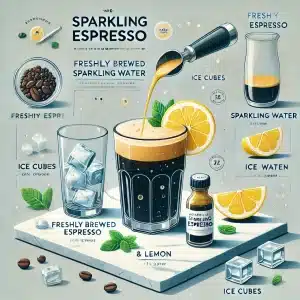
Here are a few sparkling espresso recipes that combine the rich, bold flavor of espresso with the refreshing effervescence of sparkling water or soda. These drinks are perfect for anyone looking to add a fun twist to their coffee experience:
1. Sparkling Espresso Tonic
A trendy and refreshing coffee drink that pairs espresso with tonic water for a unique flavor.
Ingredients:
- 1 shot of espresso (about 1 ounce)
- 4 ounces of tonic water (chilled)
- Ice
- Orange or lemon slice for garnish (optional)
Instructions:
- Fill a glass with ice.
- Pour the chilled tonic water into the glass.
- Brew a shot of espresso and carefully pour it over the back of a spoon or gently into the glass to create a layered effect.
- Garnish with a slice of orange or lemon if desired.
- Stir before sipping to combine the flavors, or enjoy it layered for a more dramatic presentation.
2. Sparkling Coffee Lemonade
A tangy, sweet, and sparkling twist on the classic iced coffee.
Ingredients:
- 1 shot of espresso
- 2 ounces of fresh lemon juice
- 2 teaspoons of simple syrup (adjust to taste)
- 4 ounces of sparkling water
- Ice
- Lemon wedge or mint for garnish (optional)
Instructions:
- In a shaker, combine the espresso, fresh lemon juice, and simple syrup. Shake well to mix.
- Fill a glass with ice and pour the mixture over it.
- Top with sparkling water.
- Stir gently, and garnish with a lemon wedge or fresh mint.
- Serve immediately and enjoy!
3. Sparkling Espresso Mojito
An espresso twist on the classic mojito, combining mint, coffee, and bubbles.
Ingredients:
- 1 shot of espresso
- 6-8 fresh mint leaves
- 1/2 ounce simple syrup
- 2 ounces of soda water or sparkling water
- 2 ounces of club soda
- Crushed ice
- Lime wedge for garnish
Instructions:
- Muddle the mint leaves with simple syrup at the bottom of a glass.
- Add crushed ice, and pour over the shot of espresso.
- Top with soda water or sparkling water.
- Garnish with a lime wedge and additional mint leaves.
- Stir gently and serve.
4. Sparkling Espresso Ginger Ale
A spicy, sweet, and fizzy coffee drink that’s both refreshing and energizing.
Ingredients:
- 1 shot of espresso
- 4 ounces ginger ale (chilled)
- 1 teaspoon honey or simple syrup (optional)
- Ice
- Cinnamon stick or fresh ginger for garnish (optional)
Instructions:
- Fill a glass with ice.
- Pour ginger ale over the ice.
- Brew a shot of espresso and carefully pour it over the ginger ale.
- Stir gently to combine and sweeten with honey or simple syrup if desired.
- Garnish with a cinnamon stick or a small piece of fresh ginger.
5. Iced Sparkling Affogato
A fun take on the classic affogato, combining espresso and ice cream with sparkling water.
Ingredients:
- 1 shot of espresso
- 1 scoop of vanilla ice cream
- 4 ounces of sparkling water
- Cocoa powder or chocolate shavings for garnish (optional)
Instructions:
- Place a scoop of vanilla ice cream in a glass or bowl.
- Pour the shot of espresso over the ice cream.
- Top with sparkling water.
- Garnish with cocoa powder or chocolate shavings, if desired.
- Serve immediately and enjoy the bubbly, creamy treat!
These recipes are perfect for anyone who loves coffee and wants to experiment with new and exciting flavor combinations. Enjoy!
Snow White’s Recipe
Snow White’s Coffee Recipe is a delightful, creamy drink that is perfect for those who enjoy a sweet and indulgent coffee experience. While there isn’t a single official “Snow White” coffee recipe, a popular interpretation could be a white coffee, enhanced with whipped cream or a sweet, vanilla-flavored cream topping to mimic Snow White’s fair and beautiful complexion. Here’s a recipe you can try:
Snow White’s Coffee Recipe
Ingredients:
- 1 cup brewed coffee (preferably medium roast)
- 1/4 cup milk (or your preferred milk substitute)
- 2 tablespoons vanilla syrup or 1/2 teaspoon vanilla extract and 1 tablespoon sugar
- Whipped cream (for topping)
- A sprinkle of cinnamon or nutmeg (optional, for garnish)
Instructions:
- Brew the Coffee: Start by brewing a strong cup of coffee. You can use a drip coffee maker, French press, or espresso machine based on your preference.
- Heat the Milk: In a small saucepan, heat the milk over medium heat until warm but not boiling. Alternatively, you can microwave it for about 30 seconds.
- Mix Vanilla and Sweetener: Stir in the vanilla syrup or vanilla extract and sugar into the hot milk. Adjust the sweetness according to your taste.
- Combine: Pour the brewed coffee into a mug. Add the vanilla-flavored milk and stir gently to combine.
- Top with Whipped Cream: Generously top your coffee with whipped cream to give it that creamy, snowy appearance.
- Garnish (Optional): Sprinkle a little cinnamon or nutmeg on top for added flavor and decoration.
- Serve and Enjoy: Sip and enjoy the smooth, sweet, and creamy Snow White’s Coffee!
This coffee recipe offers a cozy, indulgent treat with a rich vanilla flavor and a beautiful, snowy-white appearance, perfect for a magical touch!
Espresso Cola Recipe
An Espresso Cola combines the rich, bold flavor of espresso with the refreshing, fizzy taste of cola. Here’s a simple recipe to make your own:
Ingredients:
- 1 shot of espresso (about 1 ounce)
- 6 ounces of cola (use your favorite brand)
- Ice cubes
- Optional: a splash of simple syrup (if you want extra sweetness)
- Garnish (optional): lemon twist or coffee beans
Instructions:
- Prepare the Espresso: Brew a fresh shot of espresso. If you don’t have an espresso machine, you can use strong brewed coffee as a substitute.
- Fill a Glass with Ice: Take a tall glass and fill it with ice cubes to chill the drink.
- Pour the Espresso: Add the freshly brewed espresso to the glass.
- Add Cola: Slowly pour the cola into the glass over the espresso.
- Optional Sweetener: If you prefer a sweeter drink, add a splash of simple syrup and stir gently.
- Garnish (optional): Garnish with a twist of lemon or a couple of coffee beans for a decorative touch.
- Serve: Stir the drink to combine and enjoy the fizzy, caffeinated refreshment!
This drink is a fun and energizing twist on both the classic espresso and a cola beverage.
Iced Cascara Coffee Recipe
Iced Cascara coffee, made from the dried fruit of the coffee cherry, offers a fruity and lightly sweet flavor with a tea-like texture. Here are a few recipes you can try for a refreshing iced beverage:
1. Classic Iced Cascara Coffee
Ingredients:
- 2 teaspoons of Cascara (dried coffee cherry husks)
- 1 cup hot water (about 190°F / 88°C)
- Ice cubes
- Sweetener (optional, like honey or simple syrup)
- Milk or cream (optional)
Instructions:
- Brew the Cascara: Add the Cascara to a mug and pour the hot water over it. Let it steep for 4-5 minutes.
- Strain: After steeping, strain the mixture into a cup, discarding the Cascara.
- Chill: Allow the brewed Cascara to cool to room temperature, then place it in the refrigerator for 20-30 minutes to chill.
- Serve: Fill a glass with ice cubes, then pour the chilled Cascara brew over the ice.
- Add sweetness: Stir in honey, sugar, or any sweetener of your choice. You can also add milk or cream for a creamy twist.
- Enjoy: Your refreshing Iced Cascara coffee is ready!
2. Iced Cascara Latte
Ingredients:
- 2 teaspoons of Cascara
- 1 cup hot water (about 190°F / 88°C)
- 1/2 cup milk (dairy or plant-based)
- Ice cubes
- Sweetener of your choice (optional)
Instructions:
- Brew Cascara: Steep the Cascara in hot water for 4-5 minutes, then strain.
- Cool the brew: Let the Cascara brew cool down to room temperature or place it in the fridge.
- Prepare the milk: Froth the milk (you can do this with a frother or by shaking it in a jar). If you prefer a cold, non-frothed version, just use the milk as is.
- Assemble the drink: In a tall glass, add ice cubes and pour the chilled Cascara brew over the ice.
- Add milk: Pour the frothed or regular milk over the Cascara coffee. Stir to combine.
- Sweeten: Add any sweetener as desired.
- Serve and Enjoy!
3. Cascara Iced Coffee with Citrus
Ingredients:
- 2 teaspoons Cascara
- 1 cup hot water (190°F / 88°C)
- Ice cubes
- 1-2 tablespoons orange juice (freshly squeezed)
- Sweetener (optional)
- Orange slice for garnish
Instructions:
- Brew the Cascara: Steep the Cascara in hot water for about 4-5 minutes, then strain.
- Cool the brew: Let it cool to room temperature, then refrigerate.
- Citrus twist: Add orange juice to the chilled Cascara brew.
- Serve: Fill a glass with ice and pour the mixture over it.
- Garnish: Add a slice of orange to the rim of the glass or drop it into the drink for extra citrusy flavor.
- Enjoy: Refresh yourself with this unique iced Cascara drink!
4. Iced Cascara Mocha
Ingredients:
- 2 teaspoons Cascara
- 1 cup hot water (190°F / 88°C)
- 1 tablespoon cocoa powder
- 1 tablespoon sugar or sweetener of choice
- 1/2 cup milk or cream
- Ice cubes
Instructions:
- Brew the Cascara: Steep the Cascara in hot water for 4-5 minutes, then strain and let it cool.
- Make the chocolate syrup: In a small bowl, mix cocoa powder with sugar and a little bit of hot water to form a smooth chocolate syrup.
- Mix: Stir the cooled Cascara brew with the chocolate syrup until combined.
- Assemble: Fill a glass with ice cubes, then pour the Cascara-chocolate mixture over the ice.
- Add milk: Pour in milk or cream, and stir to combine.
- Enjoy: Your Iced Cascara Mocha is ready to refresh you with a delicious chocolatey twist!
5. Iced Cascara Cold Brew (Cascara-infused Cold Brew)
Ingredients:
- 2 teaspoons Cascara
- 1 cup coarsely ground coffee
- 4 cups cold water
- Ice cubes
- Sweetener (optional)
Instructions:
- Make Cascara Cold Brew: Combine the Cascara and coarsely ground coffee in a jar or pitcher. Add the cold water and stir to mix. Let it steep in the fridge for 12-16 hours.
- Strain: After steeping, strain the cold brew through a coffee filter or fine mesh sieve.
- Serve: Fill a glass with ice and pour the chilled Cascara cold brew over it.
- Sweeten: Add any sweeteners or milk to taste.
- Enjoy: A refreshing, smooth iced coffee with a fruity twist!
These recipes offer a variety of ways to enjoy the unique flavors of Cascara, whether you prefer a simple brew, a creamy latte, or something more adventurous with citrus or chocolate.
Coffee Cola Float Recipe
A Coffee Cola Float is a refreshing and indulgent drink combining the bold flavors of coffee, the fizz of cola, and the creaminess of ice cream. Here are a couple of variations you can try:
Classic Coffee Cola Float
Ingredients:
- 1 cup strong brewed coffee (cooled or chilled)
- 1/2 cup cola (chilled)
- 2 scoops vanilla ice cream
- Whipped cream (optional)
- Chocolate syrup or sprinkles (optional, for garnish)
Instructions:
- Pour the chilled coffee into a tall glass until it’s about halfway full.
- Add the cola slowly to avoid excessive fizzing, filling the glass to about 3/4 full.
- Gently place two scoops of vanilla ice cream on top of the liquid.
- (Optional) Top with whipped cream, a drizzle of chocolate syrup, or sprinkles.
- Serve immediately with a straw and a spoon.
Mocha Coffee Cola Float
Ingredients:
- 1 cup cold brew coffee
- 1/2 cup cola
- 1 scoop of chocolate ice cream
- 1 scoop of coffee ice cream
- Cocoa powder or chocolate shavings (optional, for garnish)
Instructions:
- In a tall glass, combine the cold brew coffee and cola.
- Add the chocolate and coffee ice cream scoops on top.
- Sprinkle cocoa powder or chocolate shavings for extra flavor.
- Serve immediately with a straw and a spoon.
Spiced Coffee Cola Float
Ingredients:
- 1 cup espresso or strong coffee (chilled)
- 1/2 cup spiced cola (e.g., cola with hints of cinnamon or nutmeg)
- 2 scoops of cinnamon or vanilla ice cream
- Ground cinnamon or nutmeg (optional, for garnish)
Instructions:
- Pour the espresso into a tall glass, then slowly add the spiced cola.
- Add two scoops of cinnamon or vanilla ice cream.
- Garnish with a sprinkle of ground cinnamon or nutmeg.
- Enjoy immediately!
Feel free to experiment with different coffee styles, flavored ice creams, or garnishes to create your unique twist!
Cream Coffee Pop Recipe
Here are a few creative and delicious recipes for cream coffee pops that you can easily make at home:
1. Classic Cream Coffee Pops
Ingredients:
- 1 cup freshly brewed coffee, cooled
- 1/2 cup heavy cream (or half-and-half)
- 1/4 cup sweetened condensed milk (adjust to taste)
- 1 tsp vanilla extract
Instructions:
- In a mixing bowl, whisk together coffee, cream, sweetened condensed milk, and vanilla extract until well combined.
- Pour the mixture into popsicle molds.
- Freeze for 6-8 hours or until fully set.
- Run warm water over the outside of the molds to release the pops.
2. Mocha Swirl Coffee Pops
Ingredients:
- 1 cup coffee, cooled
- 1/2 cup heavy cream
- 1/4 cup chocolate syrup
- 2 tbsp sugar (optional)
Instructions:
- Mix coffee and sugar (if using) in a bowl until dissolved.
- In a separate bowl, mix heavy cream and chocolate syrup.
- Alternatively, pour the coffee mixture and the chocolate mixture into the molds to create swirls.
- Use a skewer or toothpick to gently swirl the layers for a marbled effect.
- Freeze for 6-8 hours.
3. Coconut Cream Coffee Pops
Ingredients:
- 1 cup coffee, cooled
- 1/2 cup coconut milk (full-fat for creaminess)
- 1/4 cup sugar or maple syrup
- 1/2 tsp coconut extract (optional)
Instructions:
- Combine coffee, coconut milk, sugar, and coconut extract in a blender and mix until smooth.
- Pour into molds and freeze for 6-8 hours.
- Garnish with shredded coconut after releasing from the molds (optional).
4. Coffee & Cookies Cream Pops
Ingredients:
- 1 cup coffee, cooled
- 1/2 cup heavy cream
- 1/4 cup sugar
- 1/2 cup crushed chocolate cookies or graham crackers
Instructions:
- Stir together coffee, heavy cream, and sugar until combined.
- Add the crushed cookies and mix well.
- Pour into molds and freeze for 6-8 hours.
- Add extra cookie crumbles as a garnish after releasing the pops.
5. Iced Vanilla Latte Pops
Ingredients:
- 1 cup coffee, cooled
- 1/2 cup vanilla-flavored creamer
- 1 tbsp sugar (optional)
Instructions:
- Mix coffee and vanilla creamer in a bowl.
- Taste and add sugar if desired.
- Pour into molds and freeze for 6-8 hours.
Enjoy these pops on a warm day or as a frozen twist to your daily coffee routine! Let me know if you’d like variations or tips on these recipes. 😊
Caribbean Punch Recipe
Here’s a delicious Caribbean Punch Coffee recipe to enjoy:
Caribbean Punch Coffee
Ingredients:
- 1 cup brewed coffee (strong)
- 2 tbsp dark rum
- 2 tbsp coconut cream (or coconut milk for a lighter version)
- 1 tbsp brown sugar (adjust to taste)
- 1/2 tsp vanilla extract
- 1/4 tsp ground cinnamon
- 1/8 tsp ground nutmeg
- Whipped cream (optional, for topping)
- Toasted coconut flakes (optional, for garnish)
Instructions:
- Brew Coffee:
- Brew a strong cup of your favorite coffee. Keep it hot.
- Prepare the Caribbean Base:
- In a small saucepan over low heat, combine the coconut cream, brown sugar, vanilla extract, cinnamon, and nutmeg.
- Stir until the sugar dissolves and the mixture is well-blended. Do not boil.
- Combine Coffee and Rum:
- Pour the hot coffee into a heatproof mug. Add the dark rum and stir.
- Add the Coconut Mixture:
- Slowly pour the prepared coconut cream mixture into the mug and stir to combine.
- Garnish and Serve:
- Optionally, top with whipped cream and garnish with toasted coconut flakes for an extra tropical flair.
Enjoy this warm, spiced Caribbean-inspired coffee punch as a unique treat!
Conclusion: Embrace The Versatility Of Cold Black Coffee With These Delicious Recipes
For those looking for a refreshing twist on traditional beverages, cold black coffee can be transformed into delightful concoctions. Create an invigorating iced coffee by pouring it over ice cubes and adding milk or cream to taste. Or, if you’re feeling adventurous, try blending it with ice cream and turning it into an indulgent frappe that will satisfy your cravings for both caffeine and dessert.
If you need an energy boost but don’t want to sacrifice taste, consider incorporating cold black coffee into your breakfast routine. Start your day off right with a hearty bowl of homemade granola infused with the essence of freshly brewed dark roast coffee. Or whip up some fluffy pancakes drizzled with velvety espresso syrup that will awaken your senses before you even take that first bite.
But why stop at desserts and breakfast? Cold black coffee can also play a starring role in savory dishes, adding depth and complexity to your favorite recipes. Try marinating steak in a mixture of cold black coffee, soy sauce, garlic, and spices for an unforgettable flavor experience on the grill. Alternatively, infuse your homemade barbecue sauce with the boldness of coffee to create a tangy and smoky delight that will elevate any grilled meat or vegetables.
In conclusion, cold black coffee is more than just a pick-me-up in the morning. Its versatility allows it to be transformed into a wide range of delightful recipes, from desserts and beverages to breakfast dishes and savory delights. So, don’t limit yourself to simply sipping on a cup of black coffee; embrace its potential as an ingredient and let your creativity soar.
With these delicious recipes, you’ll discover a whole new world of flavors that will leave you craving for more of this versatile elixir.


