
OneHundredCoffee is reader-supported, and some products displayed may earn us an affiliate commission. Details
Why Your Roasted Coffee Tastes Smoky and How to Fix It


If you have ever pulled a fresh roast out of the cooling tray, caught that deep roasty aroma, felt pretty proud of yourself, and then brewed the coffee the next day only to think, “Why does this taste like smoke instead of coffee?” you are very much not alone. Smoky coffee is one of those frustrating roasting problems because it can fool you twice. First, the roast can look decent. Second, the aroma right after roasting can even seem exciting in that dark, dramatic, “serious coffee” kind of way. But once it lands in the cup, the charm disappears. Instead of tasting sweet, structured, and origin-driven, the coffee comes across as ashy, dirty, blunt, and strangely flat. And the hardest part is that a smoky cup often does not come from just one catastrophic mistake. More often, it comes from a stack of smaller choices: not enough airflow, too much smoke around the beans, a roast pushed too dark, a slow finish after first crack, poor chaff removal, or beans that stayed hot too long after drop. Scott Rao notes that smokiness is always a roasting issue, and he specifically points to insufficient airflow or roasting dark enough for long enough as common causes.
As we touched on before in our published coffee roasting basics content, roasting is not just about getting beans brown. It is really about controlling an environment. Heat, airflow, smoke, bean momentum, chaff, and cooling all start fighting for influence once the roast gets moving. That is why smoky flavor can show up even when your charge temperature seems fine or your overall roast time looks normal on paper. The coffee may not be “burnt” in the dramatic, charcoal-black sense. It may simply have spent too much time surrounded by smoke and roast exhaust, or it may have lingered too long in a dark finishing phase where clean roast character slips into dirty roast character. Rao makes that distinction clearly too: smoky is not the same thing as generic roastiness or char, and even supposedly “clean” roasters can still produce smoky coffee if beans dwell in smoke too long.
Best Home Coffee Roasters

| Image | Product | Features | Price |
|---|---|---|---|
|
Best Starter Air Roaster
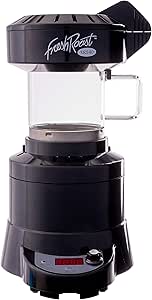
|
Compact convection roasting
|
Price on Amazon | |
|
Best Air-Roaster Control

|
Variable heat + fan
|
Price on Amazon | |
|
Best SR540 Upgrade Kit

|
Bundle with scale
|
Price on Amazon | |
|
Best All-in-One Starter

|
Roaster + cooler kit
|
Price on Amazon | |
|
Best Full Setup Kit

|
Roast, cool, grind
|
Price on Amazon | |
|
Best Manual Stovetop

|
Ceramic waffle interior
|
Price on Amazon | |
|
Best Artisan Gas Drum

|
Motorized perforated drum
|
Price on Amazon | |
|
Best Semi-Auto Drum

|
Auto + manual modes
|
Price on Amazon | |
|
Best 500g Value Drum

|
Smoke filter + pipes
|
Price on Amazon | |
|
Best Heavy-Duty Home

|
Built-in smoke management
|
Price on Amazon |
Why does roasted coffee taste smoky in the first place?
The simplest explanation is this: your beans either absorbed too much smoke, developed too far, or sat in a roasting environment that was no longer clean enough to preserve sweetness and clarity. That sounds obvious when you say it quickly, but in practice, there are several ways it happens.
During roasting, coffee gives off smoke and chaff as the organic material breaks down and transformations accelerate. If that smoke is not carried away efficiently, the beans remain in contact with it. MTPak notes that excessive smoke during roasting can give coffee unpleasant smoky flavors in the cup, which is why roasters invest so much effort in reducing smoke exposure and managing roast environments well.
That is the first big piece: smoke contact time matters.
The second big piece is roast depth. Even with decent airflow, if you roast dark enough and long enough, some smokiness will creep into the coffee. That is not a moral failure. It is just how roast chemistry and flavor development work. You can absolutely choose a dark, bold, bittersweet flavor on purpose. But when the cup tastes more like ash than chocolate, more like campfire than caramelized sugar, you have crossed a line.
The third piece is localized overheating. Scorching and tipping do not always create a purely smoky cup, but they often contribute harsh, burnt notes that people loosely describe as smoky, ashy, or roasty in a bad way. Uneven heat distribution, poor airflow, and overly aggressive heat application all increase the risk of those defects.
The smoky flavor people mean is usually one of three things.

One thing I have learned from talking to home roasters is that “smoky” gets used to describe several different bad cups. Separating them helps you fix the real cause.
1. Real smoke taint
This is the most literal version. The coffee tastes like roasted exhaust, stale smoke, or something slightly sooty. The finish can feel dirty and dry.
Usually connected to:
- low airflow
- smoke recirculating around beans
- poor exhaust
- too much chaff in the roast path
- dirty machine internals
2. Over-roasted bitterness mistaken for smoke
This cup tastes darker than intended, with muted sweetness and heavy roast notes. People call it smoky because it reminds them of toasted or burned food.
Usually connected to:
- going too dark
- Too much development after the first crack
- a slow, dragging finish
3. Scorching, tipping, or surface damage
This shows up as sharp, acrid, biting notes rather than broad smoke taint. Sometimes the roast still smells okay whole, but the ground coffee reveals the harshness immediately.
Usually connected to:
- too much early heat
- hot drum contact
- insufficient bean movement
- weak airflow at high power
The biggest cause: not enough airflow
If I had to bet on the single most common reason a home roast tastes smoky, I would put my money on airflow first.
Rao flatly says roasts taste smoky because of insufficient airflow or excessively dark roasting. That lines up with what a lot of roasters eventually discover the hard way: you can get away with many imperfect decisions for a while, but if the roast atmosphere turns dirty and stagnant, the cup usually tells on you.
Airflow does several jobs at once:
- It removes smoke from around the beans
- It carries away chaff and debris
- It helps regulate the roasting environment
- It influences convective heat transfer
- It keeps the roast from feeling stale and suffocated
When airflow is too low, especially later in the roast, the coffee can become trapped in its own smoke. And that is where the cup starts losing clarity. The sweetness gets muffled first. Then the finish grows dull. Then the smoky note becomes obvious.
This is why smoky coffee is often paired with another complaint: my roasts all taste kind of muddy, dirty, or flat, no matter what bean I use. That is a huge clue that the issue is not just the coffee or the roast level. It is probably the roasting environment.
Roast depth can create smokiness even with decent technique.

There is also a more uncomfortable truth here: sometimes the coffee tastes smoky because you simply roasted it darker than the coffee could handle gracefully.
A lot of home roasters gradually drift toward darker roasts without realizing it. The visual cues become familiar. The roast sounds “active.” The smell feels rich and dramatic. Maybe the first few dark batches even taste powerful and satisfying. But then the pattern starts: chocolate notes vanish, fruit disappears, and every coffee begins tasting like the same dark, blunt roast.
That is the danger zone.
Rao specifically notes that if you roast dark enough for long enough, even adequate airflow will not fully prevent some smokiness from entering the cup. So if you keep getting smoky results, ask yourself honestly whether you are finishing the roast too deep, too slowly, or both.
Signs that roast depth is part of the problem
- All origins taste strangely similar
- sweetness drops off sharply
- The finish feels ashy rather than bittersweet
- The original character disappears under the roasted flavor
- The brew aroma smells darker than the bean color alone would suggest
Slow finishes after the first crack are sneakier than people think.
This is one of my personal trouble spots, because it is easy to talk yourself into a slow finish. You think you are being gentle. You think you are “coasting” into development. But sometimes what you are actually doing is leaving the coffee in a smoky environment too long while steadily cooking away the liveliness.
A roast that drags after the first crack can produce coffee that is technically not extremely dark yet still tastes strangely roasty, woody, or smoky. The coffee loses sparkle and picks up a stale, roasted coating of flavor instead.
That is why smoky cups are not always from obviously dark beans. Sometimes the roast curve just loses momentum in the wrong place.
Chaff is a bigger problem than many home roasters realize.
Chaff is not just annoying cleanup material. If it accumulates, burns, or circulates the beans too long, it can contribute to a dirty roast character. MTPak’s discussion of smoke reduction also ties smoke management to byproduct control during roasting, which includes chaff handling.
This matters especially in small batch roasting because home machines often have limited exhaust paths, compact chambers, and less forgiving airflow behavior than large professional systems.
Watch for these warning signs.
- visible chaff hanging in the roast chamber late into the roast
- The chaff collector is filling fast or clogging
- smoke lingering around the machine rather than venting away
- a roast room that smells dense and stale rather than clean and vented
If you are roasting on something like a compact home air roaster or small drum setup, a good cleaning and airflow check can fix more cup problems than people expect. Even a basic infrared thermometer like the Kizen Infrared Thermometer can help you stay more aware of surface temperatures and hot spots around your setup, though it is not a replacement for proper bean or environmental probes.
Dirty equipment can make clean coffee taste dirty.
This is the least glamorous answer and one of the most common. If your roaster, exhaust path, chaff collector, cooling tray, or roasting area is coated in old oils, dust, residue, and stale chaff, that grime can absolutely push the sensory impression toward smoky, stale, or ashy flavors.
It is not that every dirty machine directly paints smoke onto the bean. Indeed, a dirty system usually has worse airflow, worse thermal consistency, and more burnt residue in the environment. Those things pile up.
I have seen this in brewing, too. People spend weeks tweaking the wrong variable because they want the solution to be technical and exciting when the machine simply needs to be cleaned thoroughly.
Scorching and tipping can masquerade as smokiness.
MTPak notes that low-density coffees and coffees more sensitive to heat can be especially prone to scorching or over-roasting under poor heat application. When that happens, the resulting cup may not read to every taster as “scorched” specifically. Many people just say it tastes smoky, burnt, or harsh.
This is where roast defect language gets messy, but the fix is usually similar: cleaner heat, better airflow, more even bean movement, and less aggressive early thermal pressure.
Clue surface damage may be involved.
- acrid bite rather than broad, smoky, dullness
- Beans show darkened tips or face marks
- Roast smells sharp, not just deep
- The cup has sudden bitter spikes rather than a uniform smoky coating
Cooling matters more than most homeowners admit.
A roast does not magically stop the moment you dump it. If cooling is slow, the beans continue developing and can slide further into dull, roasty, or smoky territory after the roast is technically over.
This is one of those issues that creates maddening inconsistency because the roast log may look fine, the drop point may seem right, and the bean color might still appear acceptable. But the cup comes out heavier and dirtier than expected because the roast coasted too far after discharge.
That is why a fast cooling setup matters. If you roast at home regularly, a simple bean cooler or strong cooling tray setup can genuinely improve cup clarity. A product like the Kaldi Chaff Collector & Cooler is the kind of accessory home roasters use when they want better post-drop control, especially on small roasting rigs.
Green coffee can make the problem easier or harder.
The green coffee is not the root cause of smoke taint, but it can affect how forgiving the roast is. MTPak notes that lower-density coffees, larger screen sizes, and some naturally processed coffees may be more prone to scorching or tipping.
In real life, this means some coffees need a gentler early approach, cleaner airflow, and more discipline through the finish. If you roast the same aggressively across every bean, some coffees will punish you faster than others.
That is why I usually tell people to diagnose smoky coffee in context:
- Washed dense coffees may tolerate one style of heat application
- Lower-density naturals may taste dirty or singe much faster
- Old crop greens may behave more unpredictably
- Very small beans can react differently from large, low-density seeds
How to tell whether the smoke problem is from roasting or brewing

This is worth asking, because dark brewing methods can exaggerate roasty notes too. But if the coffee tastes smoky across multiple brew methods, especially filter and cupping, the roast is the problem.
A quick way to check
Try the coffee three ways:
- cupping
- simple pour-over
- immersion brew
If all three reveal smoke, ash, or dirty roast character, the problem is almost certainly upstream in roasting, not brewing.
Rao also frames smokiness as a roasting result rather than a green or extraction issue.
A practical troubleshooting table
| Symptom in Cup | Likely Cause | First Fix to Try |
|---|---|---|
| Dirty smoke, stale exhaust note | Low airflow / smoke recirculation | Increase airflow and clean exhaust path. |
| Ashy, dark, flat finish | The roast was pushed too far. | End earlier and shorten late-stage development. |
| Harsh burnt edges | Scorching or tipping | Reduce early aggression, improve bean movement |
| Smoky but not very dark-looking | Slow late roast / stalled finish | Keep momentum cleaner after the first crack. |
| All coffees taste similarly roasty. | Systemic, roast-environment issue | Clean the machine, reassess airflow, and finish timing. |
| Coffee tastes darker after rest. | Slow cooling / post-drop carryover | Cool, faster, and more aggressively |
How I would fix a smoky roast profile in real life
If I were troubleshooting my own roaster after a string of smoky batches, I would not change ten variables at once. I would go in this order:
1. Clean everything
Not “wipe the obvious parts.” I mean, really clean:
- chaff collector
- exhaust path
- cooling tray
- roasting chamber
- any screens or filters
- nearby residue buildup
2. Increase airflow earlier or more decisively.
Especially as the roast enters the browning phase and moves toward first crack. The later the roast gets, the less forgiving stale air becomes.
3. End the roast earlier.
If you are unsure whether roast depth is part of the problem, assume yes and test that first.
4. Shorten the finish after the first crack.
Do not drag it out, trying to “smooth” the coffee if that smoothing is really just baking and smoke exposure.
5. Cool faster
Get the beans out of development mode quickly.
6. Compare with a cleaner, easier bean
A washed coffee with a straightforward chocolate-caramel profile is often easier for diagnosis than a weird, delicate natural that already comes with more roast sensitivity.
If you are roasting with a small home machine, a unit like the Fresh Roast SR540 is popular partly because it gives home users more practical control over heat and fan adjustments than ultra-basic starter roasters. And if you are shopping for green beans for testing roast cleanliness, looking for a simpler washed profile through something like washed Ethiopian or Central American green coffee listings can make it easier to read what your roast is doing.
Why smoky coffee often tastes flatter, not just smokier
This is something I think newer roasters do not hear often enough. Smokiness is not only an added bad flavor. It also tends to erase good flavor.
That is what makes it so disappointing.
A smoky roast does not just give you smoke. It usually strips out the following:
- sweetness
- clarity
- fruit expression
- floral lift
- cleaner finish
- separation between notes
So if your coffee tastes smoky, do not only think in terms of “how do I remove smoke?” Also think, “What clean flavors am I losing because this roast atmosphere is dirty?”
That mindset leads to better decisions.
How smoke management changes across roast stages

Drying phase
This is usually not where smoke flavor is created directly, but too much early aggression can set up later problems like scorching.
Maillard / browning phase
This is where the roast atmosphere starts mattering more. If airflow is weak here, the coffee can begin losing some transparency.
First crack and after
This is the danger zone for smoky cups. Smoke output increases, roast chemistry accelerates, and any lack of exhaust becomes much more costly.
If you remember nothing else, remember this: late-roast cleanliness matters a lot.
Some gear that can help you roast cleaner
I do not think gear automatically fixes technique, but the right tools can make it easier to see what is happening and respond faster.
A few useful things:
- A controllable home roaster like the Fresh Roast SR540
- A more advanced electric roaster platform, like the Aillio Bullet R1, if you are deep into profile control
- An infrared thermometer, such as the Kizen Infrared Thermometer
- A dedicated cooling accessory like the Kaldi Chaff Collector & Cooler
Those are not magic fixes. But they can reduce blind spots, especially if your main problem is inconsistent heat management and sluggish cooling.
What smoky coffee is not
Sometimes it helps to say what the problem is not.
Smoky coffee is not the same as
- pleasantly bittersweet dark chocolate
- structured roast depth
- cedar or pipe-tobacco complexity in certain origins
- syrupy, low-acid body
- a deliberate, darker roast done cleanly
You can roast coffee darker and still keep it clean. You can produce bold coffee without making it smoky. That distinction matters because otherwise people either overcorrect toward pale, underdeveloped coffee or accept dirty roast flavor as “just how dark coffee tastes.”
It does not have to.
FAQ
Why does my roasted coffee taste smoky even when the beans do not look too dark?
Because smokiness is not only about visible roast depth. Insufficient airflow, smoke recirculation, and a slow late-stage roast can make coffee taste smoky even when the beans do not look extremely dark. Rao specifically identifies insufficient airflow as a cause of smoky coffee.
Can poor airflow really make that much difference?
Yes. Poor airflow means smoke and chaff stay around the beans longer, which can create dirty, smoky cup flavors and reduce clarity. Multiple roasting sources tie airflow and smoke management directly to cleaner flavor outcomes.
Is smoky flavor the same as burnt flavor?
Not exactly. Smoky flavor often points to smoke exposure or a dirty roast atmosphere, while burnt flavor may also involve scorching, tipping, or roasting far too dark. In the cup, though, people often use the same language for both.
Can chaff cause smoky coffee?
Indirectly, yes. If chaff accumulates, burns, or interferes with airflow and exhaust, it can contribute to a dirtier roast environment and smoky cup character.
Does slow cooling make roasted coffee taste smokier?
It can. Slow cooling lets the beans continue developing after the drop, which can push the roast further into duller, darker, more roasty territory.
What is the fastest fix for smoky home roasts?
Clean the machine thoroughly, increase airflow, finish slightly earlier, and cool faster. Those four steps solve a surprising number of smoky cup problems.
Final thoughts
If your roasted coffee tastes smoky, I would not start by assuming you are a bad roaster or that the beans are hopeless. I would start by assuming the roast environment got dirtier than you realized. That is a more useful diagnosis, and honestly, it is usually the right one.
Smoky coffee is often the result of a roast that lost cleanliness somewhere along the way. The beans stayed in the smoke too long. The finish ran darker or slower than it should have. Airflow did not clear the chamber well enough. Cooling lagged. Chaff built up. Small things drifted in the same wrong direction.


