
OneHundredCoffee is reader-supported, and some products displayed may earn us an affiliate commission. Details
How Ambient Temperature Affects Coffee Roasting


If you roast coffee long enough, you eventually stop blaming the beans for everything.
That sounds funny, but it is true. In the beginning, a roast goes wrong, and it is so easy to think, “Maybe this coffee just does not like this profile,” or “Maybe this lot is weird,” or “Maybe I just missed first crack by a bit.” Then one day, you roast the same coffee with what feels like the same settings, on the same machine, in the same batch size, and the result still moves in a different direction. The curve drifts. The turning point behaves differently. Drying takes longer, or the first crack shows up early, or the development feels oddly rushed. That is usually the moment you start noticing the room around the roaster.
Ambient temperature matters more than people realize. Not in a dramatic, mystical way. More in a practical, steady, frustratingly real way. The temperature of the roastery, the warmth or chill of the incoming air, the temperature of the green coffee itself, and even seasonal shifts in humidity and pressure can all nudge a roast away from where you thought it would go. Cropster puts it plainly: if you create a profile in a warm summer roastery, both the stored coffee and the inlet air can be warmer, while winter roasting may require compensating for cooler coffee and colder inlet air; they note that humidity and barometric pressure can disrupt profiles in similar ways.
As I touched on in our guide to how charge temperature affects coffee roasting, roast behavior is never just about one number on a screen. Coffee roasting is a moving system. A roast is not only responding to the burner setting or heat application you chose. It is also responding to the conditions that existed before the beans ever hit the drum.
Equipment for Managing Ambient During Coffee Roasting
| Image | Product | Features | Price |
|---|---|---|---|
|
Best Ambient Logger

|
Tracks room temperature shifts
|
Price on Amazon | |
|
Best USB Logger

|
Records ambient temperature history
|
Price on Amazon | |
|
Best Dew Point Tool

|
Shows ambient heat load
|
Price on Amazon | |
|
Best Heat Drift Check

|
Tracks room temperature range
|
Price on Amazon | |
|
Best Roaster Surface Check

|
Reads hot surfaces fast
|
Price on Amazon | |
|
Best Ambient IR Combo

|
Reads surface and air conditions
|
Price on Amazon | |
|
Best Room Air Mixing

|
Reduces hot-room pockets
|
Price on Amazon | |
|
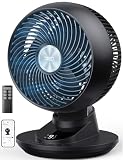
Best Smart Cooling
|
Stabilizes roasting-room air
|
Price on Amazon | |
|
Best Temp-Triggered Ventilation

|
Auto-adjusts cooling power
|
Price on Amazon | |
|
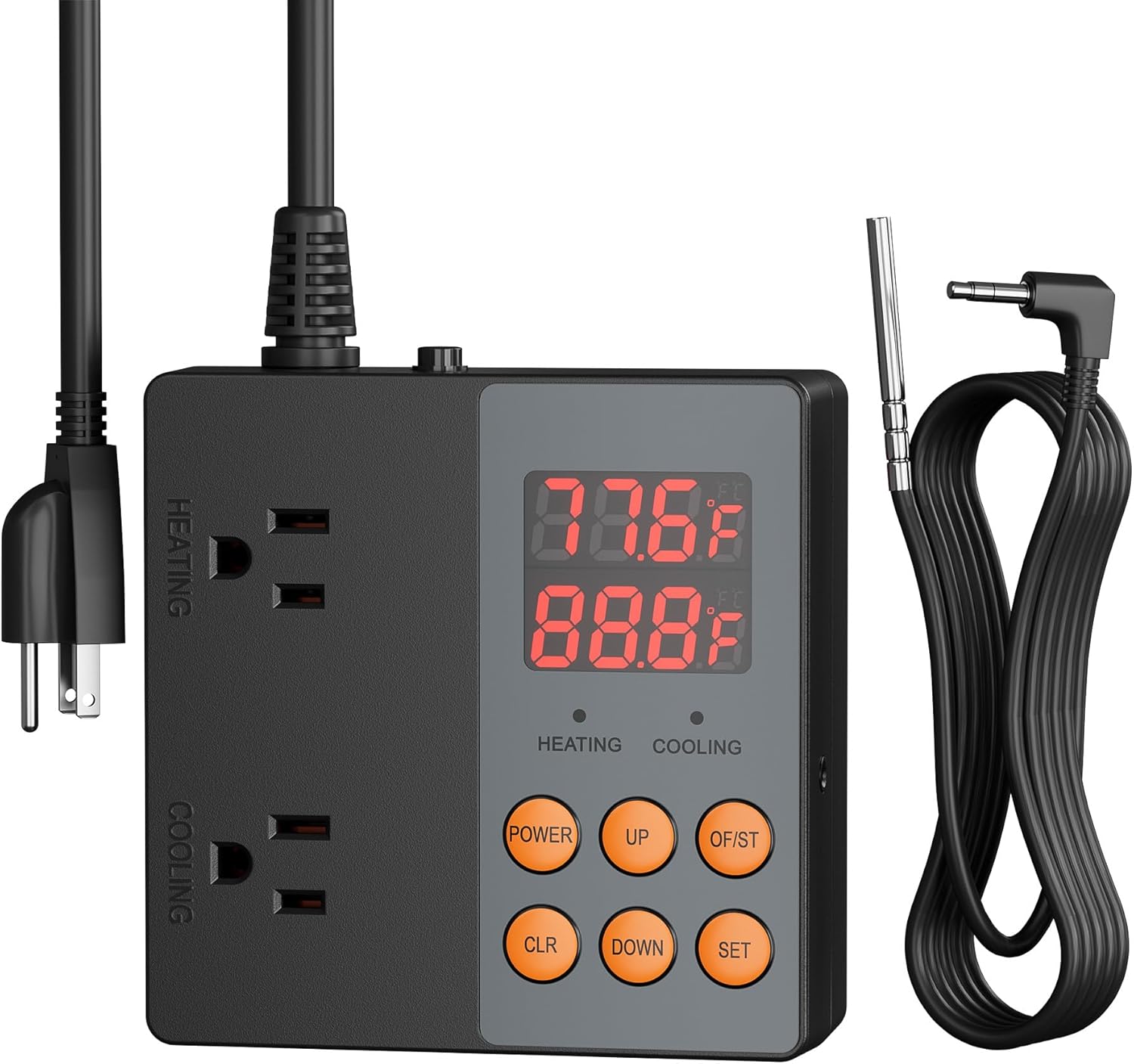
Best Temperature Controller
|
Controls cooling or heating
|
Price on Amazon |
Ambient temperature is not a side note. It is part of the roast.
I think this is the first mindset shift that helps. A lot of us treat ambient temperature like background noise, something mildly annoying but not really central. In reality, it is part of the thermal environment your roast lives in.
That affects a few big things at once:
- How much energy does the machine retain between batches
- how warm or cold the green coffee is when it enters the roaster
- how cold or warm the incoming air is
- How hard the machine has to work to maintain momentum
- How predictable your rate of rise becomes
- How repeatable is your profile really from batch to batch
Cropster’s roasting guidance stresses that environmental conditions in both the green coffee storage area and the roasting room are important parts of a profile, and their experts also emphasize that between-batch protocols matter because starting conditions need to stay as close as possible from roast to roast. Mill City likewise highlights environmental temperature as a useful live data point because it helps an operator anticipate changes in bean temperature, and it notes that airflow changes can create cooling effects inside the machine.
That is why a profile that feels beautifully stable in October can suddenly feel clumsy in January.
Why does cold ambient temperature change a roast so much?

Cold weather tends to expose every weak spot in a roasting setup.
The most obvious issue is that everything starts colder. The drum sheds heat faster into the room. The air being pulled into the machine is colder. The green coffee may have been sitting in a cool storage space, which means the beans themselves begin the roast with less internal thermal energy. Cropster specifically notes that colder winter storage can mean cooler coffee entering the roaster and colder inlet air entering the machine, both of which need to be accounted for in your roasting controls.
In real life, that often shows up like this:
- Your turning point arrives later than expected
- Your drying phase stretches out
- The roast can feel sluggish in the middle
- Your normal gas application suddenly seems too gentle
- If you react late, you can end up pushing too hard later and flattening the cup
This is where newer roasters sometimes get tricked. The early roast looks slow, so they hammer the batch with heat to catch up. Then the middle dries out unevenly, the first crack arrives awkwardly, and the development phase feels compressed or aggressive. The final color might even look close to the target, but the cup tastes less sweet and more blunt.
Cold conditions do not ruin roasts by default. They just demand more awareness.
Why is hot ambient temperature just as tricky?
A warm roastery feels easier because the machine often responds faster, and the roast seems more lively. But hot ambient conditions can create their own problems.
If the drum, inlet air, and green coffee are all starting warmer, the roast may accelerate more quickly than you expect. Cropster notes that when profiles are established in warmer summer conditions, both the stored coffee and the inlet air may be warm, entering the roast system.
That can lead to:
- a faster turning point
- a quicker climb through drying
- Less room for correction if you overshoot early
- a roast that “looks fine” on paper but tastes a little baked or a little hollow if the shape gets distorted
Hot weather roasts can also trick you into thinking you are more efficient than you really are. Sometimes the machine is simply starting with more heat in the system, so the profile is not necessarily better controlled, just more eager.
I have found that hot-day roasting rewards restraint. Not passivity, but restraint. If winter asks you to stay awake and feed enough energy into the roast, summer often asks you not to bully the batch just because the machine feels ready for action.
The green coffee temperature matters more than people think

This is one of those details that sounds nerdy until it ruins your consistency.
If your green coffee is stored in a colder room, the beans themselves absorb energy differently in the opening minutes of the roast. They are not just “the same beans in a different room.” They are literally entering the roast colder, and that changes the early momentum of the batch. Cropster explicitly calls out the temperature of the green coffee storage room as an important part of profile consistency.
That means two batches roasted with the same nominal settings may not actually be starting from the same point.
When the beans are colder, I often think of it like this: the roast has to spend a little more energy just getting the coffee to the same starting point of conversation. That energy has to come from somewhere, and if you do not plan for it, the curve lets you know.
Incoming air is not neutral.
Roasters spend a lot of time talking about drum temperature and bean temperature, but incoming air is one of those hidden levers that changes more than many people notice.
If your machine relies significantly on convective transfer, then colder inlet air can pull energy from the roast system and make the same airflow settings behave differently. Mill City notes that airflow has a cooling effect, and Cropster points out that warmer versus colder inlet air can change how a profile behaves across seasons.
That helps explain a common frustration:
You keep airflow exactly where you always keep it, but the roast still moves differently.
The problem may not be the fan setting itself. It may be that the air entering the machine has changed. In winter, the same airflow can feel more aggressive because it is introducing colder air. In warmer conditions, it may feel gentler.
That is one reason fixed “set and forget” roast recipes can disappoint people. The control positions may be identical, but the thermal effect is not.
Humidity, pressure, and the “weather stack.”
Ambient temperature does not act alone. It usually arrives as part of a weather package.
Cropster notes that changes in humidity and barometric pressure can also disturb established profiles. Their environmental sensing tools track temperature, humidity, and pressure specifically because those conditions affect quality decisions and storage conditions over time.
I like to think of it as a stack:
- room temperature
- green coffee temperature
- ambient humidity
- air pressure
- machine heat retention
- airflow behavior
Any one variable may be manageable. But when two or three shift together, the roast can feel oddly unfamiliar.
That is why some days your coffee seems “off” even though the batch size, charge, and target end temperature all look normal. The roast was never running in the same environment to begin with.
How ambient temperature affects each roast phase

Drying phase
This is usually where ambient temperature announces itself first.
Cold room, cold beans, cold air: the batch often needs more energy to get moving. If you do not account for that, drying stretches and your momentum weaken.
Warm room, warm beans, warm machine: drying can move faster than expected, which sounds great until you realize you have less room to shape the middle of the roast.
Maillard phase
This is where I often notice the cup’s consequences.
If the early phase was sluggish because the environment was colder and you reacted too late, the Maillard section may get squeezed or overcorrected. If the environment is warm and the roast runs too hot early, Maillard can become less controlled, and sweetness can suffer.
Development phase
Ambient conditions do not only matter before the first crack. They also affect how much control you still have after the crack begins. A roast that has been fighting the room all day often reaches development, carrying some momentum issues with it. That can make post-crack adjustments feel less responsive or more abrupt than usual.
Roast consistency is really about starting conditions.
This is one of the strongest lessons in professional roasting: consistency is often less about repeating numbers and more about repeating conditions.
Cropster’s experts say between-batch protocols matter because they keep starting conditions as close to the profile as possible, and their roasting platform emphasizes tracking multiple temperatures and the rate of rise in real time. Mill City likewise highlights the value of monitoring environmental temperature because it can help predict upcoming changes in bean temperature.
So if you want better consistency in changing ambient conditions, the goal is not just “copy yesterday’s profile.” The goal is
- know how the room changed
- know how the coffee changed
- know how the machine retained or lost heat
- Adjust the start so the roast can behave more like your target roast
That is a much more useful mindset than blind repetition.
Practical adjustments when the room is colder

When I roast in colder conditions, I usually think in terms of protecting momentum rather than forcing color.
A few practical moves can help:
- Preheat more deliberately and confirm the machine is truly stable
- Pay attention to the temperature of the green coffee, not just the machine
- Consider slightly warmer charge conditions if your machine and coffee support it
- Be thoughtful with airflow early if cold inlet air is dragging energy out of the system
- avoid panicked mid-roast overcorrections
The key is not to turn every cold-day roast into a high-heat rescue mission. The key is to give the roast enough early support that you do not need rescuing later.
Practical adjustments when the room is warmer

Warm conditions usually call for a different kind of discipline.
I often recommend:
- Watch the early roast closely; do not assume your normal heat input will behave normally
- respect how much retained heat is already in the machine
- Avoid rushing the opening just because the roast looks lively
- Be ready for earlier transitions and a slightly more active rate of rise
Hot-day roasting often rewards quieter hands. If cold days tempt you to chase the roast, warm days tempt you to overtrust it.
A simple table: cold room vs. warm room roasting tendencies
| Condition | What often happens | Common risk | Better mindset |
|---|---|---|---|
| Colder ambient temperature | Slower start, more heat loss, later turning point | Overcorrecting with too much late heat | Protect early momentum. |
| Warmer ambient temperature | Faster start, more retained heat, quicker progression | Overshooting early and compressing control | Roast with restraint |
| Cold green coffee | Slower energy absorption early on | Stalled or stretched drying | Treat bean temperature as part of your setup. |
| Warm green coffee | Faster early response | Uneven pacing if charged too aggressively | Expect a quicker opening |
| Higher humidity / shifting pressure | Less predictable repeatability | Confusing curve behavior | Log conditions and compare outcomes |
Why logging ambient conditions is worth it
This may sound boring until it saves you several batches.
If you are serious about repeatability, write down the following:
- room temperature
- green coffee temperature, if possible
- humidity, if you can measure it
- whether the day is notably hotter, colder, drier, or more humid than normal
Cropster’s tools include environmental sensors because changes in temperature, humidity, and pressure are useful enough to track over time, both for storage and roast decision-making.
You do not need a giant industrial system to start paying attention. Even a simple room thermometer/hygrometer can teach you a lot if you record it consistently.
Useful gear for keeping an eye on ambient conditions
If you want to get more intentional about this side of roasting, the most helpful tools are usually not flashy.
A simple indoor thermometer-hygrometer, an infrared thermometer for surfaces, and a reliable way to log roast notes can go a long way. Cropster also highlights the value of environmental sensing and tracking moisture-related green coffee data over time, and SCA recently featured the DiFluid Omix as a portable tool that can measure temperature, humidity, moisture, water activity, roast degree, and more.
If you want a few practical starting points, home roasters often look at tools like the INKBIRD IHT-1M thermometer, a simple mini hygrometer/thermometer, or a non-contact infrared thermometer to understand their roasting space a little better. For green coffee storage and roast tracking at a higher level, even basic monitoring can be more useful than guessing.
The cup always tells the truth eventually.

One thing I love and hate about roasting is that the cup is patient. It lets you believe your roast was fine for a while. Then it quietly shows you what really happened.
When ambient temperature was part of the problem, the cup often felt slightly off before you could fully explain why.
Maybe:
- sweetness is flatter
- Acidity is more awkward.
- The body feels thinner than normal.
- The roast is technically on target but less expressive
- Development tastes rushed or drying feel exaggerated
That is the part that makes environmental awareness so valuable. It gives you something more useful than blame. It gives you a reason.
FAQ: How ambient temperature affects coffee roasting
Does ambient temperature really affect coffee roasting that much?
Yes. Warmer or colder room conditions can change machine heat retention, inlet air temperature, green coffee temperature, and roast momentum. Cropster specifically notes that warm summer versus cold winter conditions can require changes in roasting controls.
Why do my winter roasts feel slower?
Usually, because the machine, the inlet air, and the green coffee are all starting colder and losing more heat to the environment. That often stretches the early roast unless you account for it.
Can hot weather make a roast cook too fast?
Yes. In warmer conditions, the machine and coffee may start warmer, which can speed the opening stages and make the roast feel more aggressive if you use the same controls unchanged.
Does humidity matter too, or only temperature?
Humidity matters too. Cropster notes that humidity and barometric pressure can disrupt roast profiles, and its environmental tools track temperature, humidity, and pressure for exactly that reason.
Should I change the charge temperature when the weather changes?
Sometimes, yes, but not automatically. The smarter move is to think about the entire starting condition: machine stability, bean temperature, inlet air, airflow, and how your roast normally behaves on that machine.
Is this mostly a commercial-roasting issue?
No. It matters in home roasting too, especially if you roast in garages, on balconies, in kitchens with open windows, or in places with large seasonal swings. Smaller systems can actually feel ambient changes very quickly.
Final thoughts
Ambient temperature is one of those roasting variables that becomes more interesting the longer you pay attention to it. At first, it feels unfair, like the room is interfering with your plan. Later, it starts to feel more like useful context. You stop expecting the machine to behave in a vacuum, and you start roasting the actual day in front of you.
That, to me, is when roasting gets better.
Not when you memorize more numbers. Not when you chase some perfect universal profile. But when you begin noticing that the weather, the room, the coffee, and the machine are all in conversation with one another, and your job is to listen closely enough to keep the roast moving the way you want.
That is where consistency really begins.


