
Best Coffee Gator Coffee Makers (2026 Guide)


One Hundred Coffee is reader-supported, and some products displayed may earn us an affiliate commission. Details
Coffee Gator uses one brand name across brewers that create very different cups. In this eight-product lineup, the morning can begin with clean manual pour-over, an overnight cold-brew pitcher, concentrated moka coffee, or a full-bodied stainless-steel French press. Choosing by capacity alone would miss the more important question: which extraction method fits the way I actually drink coffee?
I ranked these products around real use rather than assuming the largest vessel is automatically the best. The 27-ounce pour-over earns the top position because it covers the widest daily range. The 47-ounce cold-brew pitcher solves a distinct warm-weather routine, and the nine-cup glass moka pot offers the most dramatic concentrated batch for shared stovetop coffee.
The remaining products become more personal. The 10.5-ounce pour-over is the portable one-cup choice, the 14-ounce carafe fills a standard solo mug, the six-cup aluminum moka pot delivers the classic ritual, the four-cup glass moka pot better suits one person, and the insulated French press prioritizes heat retention and durability.
What ties the lineup together is manual involvement. None of these brewers hide grind, ratio, water, and time behind a capsule or automated program. That makes them inexpensive to operate and easy to understand, but it also means the cup reflects the grinder and technique more directly.
Top 3 Coffee Gator Coffee Makers — Editor’s Picks
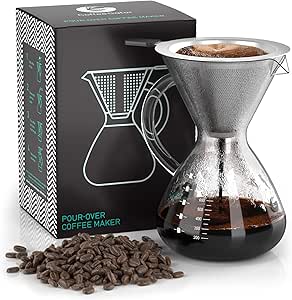
Coffee Gator 27 oz Pour Over Coffee Maker
- 27 oz capacity
- 800ml glass carafe
- Reusable steel filter
- Paper-free brewing
- Heat-resistant glass

Coffee Gator 47 oz Cold Brew Coffee Maker
- 47 oz capacity
- Borosilicate pitcher
- Removable mesh filter
- Cold coffee or tea
- Fridge-friendly shape

Coffee Gator 9-Cup Glass Moka Pot
- 9-cup moka size
- 15 oz capacity
- 450ml output
- Transparent glass top
- Stainless-steel body
The three editor’s picks represent three separate coffee personalities. Pour-over rewards fresh beans, a controlled stream, and a cup with more clarity than immersion. Cold brew rewards planning and refrigerator space. Moka coffee rewards heat management and produces a concentrated drink that stands up particularly well to milk.
The reusable steel filters in the pour-over models create a fuller cup than paper because more oils pass into the carafe. That body is part of their appeal, but it also means the grinder should not create excessive fines. A good medium-fine distribution keeps the drawdown controlled without filling the last sip with sediment.
The three pour-over sizes are not interchangeable. The 10.5-ounce carafe is a compact personal brewer; the 14-ounce model fills a normal mug, and the 27-ounce version can cover one large serving or two smaller cups. I choose the size that will be emptied immediately rather than buying excess capacity for rare occasions.
Cold brew moves in the opposite direction. A large batch is useful because the extraction takes many hours, and the finished coffee stores better than a hot carafe. The 47-ounce pitcher makes sense when several iced servings will be consumed over a few days.
Moka-pot capacity also needs interpretation. “Cup” means a small moka serving, not an eight-ounce American mug. The nine-cup glass pot produces about fifteen ounces, the six-cup aluminum pot about twelve ounces, and the four-cup glass pot about six to seven ounces. Each works best near its designed fill level.
I do not call mocha coffee espresso. The pot uses steam pressure, but the pressure is much lower than a pump espresso machine. The drink is concentrated and intense, yet its texture, crema, and extraction behavior remain distinct. That difference is useful rather than disappointing when the brewer is judged on its own terms.
The French press creates the fullest cup of the group. Its double-wall steel body keeps heat in, while the layered plunger limits grit. The method is forgiving about pouring skill, but it still benefits from a uniform coarse grind and complete decanting after the steep.
Across all eight brewers, the grinder is the common investment. Pour-over needs controlled medium-fine particles; cold brew and French press need coarse consistency; and moka pots need a fine-medium grind without espresso-level powder. A grinder that creates fewer fines makes every cleanup easier and every recipe more predictable.
Water quality matters as much as the brewer material. Coffee is mostly water, so heavy chlorine or extreme mineral content can flatten sweetness and exaggerate harshness. I use fresh water that tastes good on its own and adjust the temperature to the roast rather than automatically pouring at a violent boil.
Cleaning is simple but method-specific. Metal filters need prompt rinsing so oils do not dry into the mesh. Moka-pot seals and screens should be inspected and dried. The cold-brew pitcher needs a thorough filter rinse after a long steep, while the French press plunger should be disassembled periodically.
None of these products is a universal replacement for an electric coffee machine. Their advantage is control, low operating cost, and a direct connection between recipe and cup. The best Coffee Gator brewer is therefore the one whose ritual feels sustainable every morning, not merely interesting during the first week.
Top 8 Coffee Gator Coffee Makers — At a Glance
Coffee Gator 27 oz Pour Over Coffee Maker
- 27 oz capacity
- 800ml glass carafe
- Reusable steel filter
- Paper-free brewing
- Heat-resistant glass
- Wide serving handle
Coffee Gator 47 oz Cold Brew Coffee Maker
- 47 oz capacity
- Borosilicate pitcher
- Removable mesh filter
- Cold coffee or tea
- Fridge-friendly shape
- Large batch brewing
Coffee Gator 9-Cup Glass Moka Pot
- 9-cup moka size
- 15 oz capacity
- 450ml output
- Transparent glass top
- Stainless-steel body
- Stovetop brewing
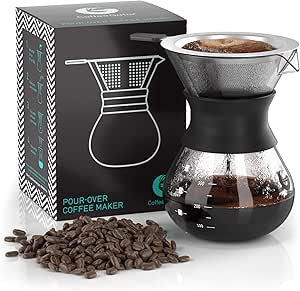
Coffee Gator 10.5 oz Portable Pour Over Coffee Maker
- 10.5 oz capacity
- 300ml single serve
- Reusable steel filter
- Compact glass carafe
- Paper-free brewing
- Travel-friendly size

Coffee Gator 14 oz Pour Over Coffee Maker
- 14 oz capacity
- 400ml glass carafe
- Reusable steel cone
- Single-mug sizing
- Paper-free method
- Visible brew level

Coffee Gator 6-Cup Aluminum Moka Pot
- 6-cup moka size
- 12 oz capacity
- 360ml aluminum pot
- Two steel cups
- Classic octagonal body
- Stovetop brewing

Coffee Gator 4-Cup Glass Moka Pot
- 4-cup moka size
- 6.7 oz capacity
- 200ml output
- Transparent glass top
- Stainless-steel body
- Solo stovetop batch

Coffee Gator 34 oz Stainless-Steel French Press
- 34 oz capacity
- 304 stainless steel
- Double-wall insulation
- Four-level filtration
- Travel canister included
- Hot or cold brewing
Quick Ranking: Best Coffee Gator Coffee Makers
| Rank | Coffee Maker | Best For | Why It Earned Its Place |
|---|---|---|---|
| 1 | Coffee Gator 27 oz Pour Over Coffee Maker | Best Overall | Best all-round size for one large mug or two smaller servings, with a reusable metal filter and visible glass carafe. |
| 2 | Coffee Gator 47 oz Cold Brew Coffee Maker | Best Cold Brew | Large refrigerator-friendly pitcher for overnight cold coffee or tea with a removable filter and 47-ounce serving capacity. |
| 3 | Coffee Gator 9-Cup Glass Moka Pot | Best Moka Pot | Transparent 15-ounce stovetop brewer for several small moka servings, combining a glass upper chamber with stainless-steel construction. |
| 4 | Coffee Gator 10.5 oz Portable Pour-Over Coffee Maker | Best Portable | Compact 300ml glass pour-over set for a single small cup, office desk, hotel room, or tightly organized kitchen. |
| 5 | Coffee Gator 14 oz Pour-Over Coffee Maker | Best Solo | A 400 ml middle-size pour-over that fills a normal mug more comfortably than the portable model without reaching the two-person size. |
| 6 | Coffee Gator 6-Cup Aluminum Moka Pot | Best Classic | Traditional 12-ounce aluminum moka brewer with two small stainless-steel cups for strong Italian- or Cuban-style coffee. |
| 7 | Coffee Gator 4-Cup Glass Moka Pot | Best Small Moka | Smaller transparent moka brewer for one person or a pair of compact milk drinks, with a glass upper chamber and stainless-steel styling. |
| 8 | Coffee Gator 34 oz Stainless-Steel French Press | Best French Press | Durable double-wall 304 stainless-steel press with four-level filtration and an included travel canister for hot or cold immersion coffee. |
Best Coffee Gator Coffee Makers: Detailed Reviews
1. Best Overall: Coffee Gator 27 oz Pour Over Coffee Maker
Best all-round size for one large mug or two smaller servings, with a reusable metal filter and visible glass carafe.
Coffee Gator 27 oz Pour Over Coffee MakerBest all-round size for one large mug or two smaller servings, with a reusable metal filter and visible glass carafe.
Price on AmazonTechnical Specifications & Daily Features
- Brewing method: Manual pour over
- Capacity: 27 oz / 800ml
- Carafe: High-heat borosilicate glass
- Filter: Reusable stainless-steel mesh cone
- Paper filters: Not required
- Serving range: One large mug or two smaller cups
- Heat source: Hot water is added manually; the carafe is not a kettle
- Best grind: Medium to medium-fine
- Best user: A household wanting the most versatile Coffee Gator pour-over size
30-Day Ownership Outlook: Pros & Cons
Pros
- Useful capacity: It makes enough coffee for a generous personal mug or two moderate cups without becoming cumbersome.
- Reusable filter: The metal cone removes the recurring cost of paper filters and preserves more coffee oils.
- Visible extraction: The glass body makes bloom, drawdown, and final volume easy to monitor.
- Simple cleanup: The filter lifts out and the wide carafe is easier to rinse than a narrow-neck brewer.
- Balanced footprint: It has enough capacity for everyday use without occupying the counter like an electric machine.
Cons
- More sediment: The metal filter allows more fine particles through than a good paper filter.
- Manual technique: Water temperature, pouring speed, grind, and bed agitation all affect the cup.
- Glass fragility: The carafe needs gentler handling than stainless-steel brewers.
My Final Verdict
This is the Coffee Gator brewer I would recommend first because the 27-ounce size is flexible enough for normal daily use without creating a large batch that sits cooling on the counter.
Choose it when you enjoy controlling the pour, want a reusable filter, and prefer a clean-looking glass brewer that can serve one or two people.
The 27-ounce Coffee Gator pour-over is the easiest product in this lineup to recommend broadly. It offers enough volume for a substantial morning mug, yet it does not feel oversized when I brew only for myself. That middle capacity matters because manual coffee is best when the batch matches the serving rather than waiting in the carafe and losing aroma.
The stainless-steel cone changes the character of the cup compared with paper. More oils pass through, so the coffee feels fuller and slightly rounder. It can also carry a little more sediment, especially when the grinder produces many fines. I therefore use a consistent medium-fine grind, rinse the filter immediately after brewing, and avoid stirring aggressively once the bed is saturated.
The glass carafe gives useful feedback throughout the process. I can see the bloom expand, watch the stream enter the vessel, and stop at the intended final volume without lifting the brewer onto a scale repeatedly. A slow, even pour works better than flooding the cone, and I keep the water below a violent boil so the coffee does not taste harsh.
What makes this model the best overall pick is its lack of unnecessary complexity. There is no heating plate, pump, app, or disposable capsule. The brewer rewards a good grinder and a steady pour, but it remains approachable enough for a beginner who wants to learn why ratio, grind, and drawdown time matter.
2. Best Cold Brew: Coffee Gator 47 oz Cold Brew Coffee Maker
Large refrigerator-friendly pitcher for overnight cold coffee or tea with a removable filter and 47-ounce serving capacity.
Coffee Gator 47 oz Cold Brew Coffee MakerLarge refrigerator-friendly pitcher for overnight cold coffee or tea with a removable filter and 47-ounce serving capacity.
Price on AmazonTechnical Specifications & Daily Features
- Brewing method: Cold immersion
- Capacity: 47 oz
- Pitcher: Borosilicate glass carafe
- Filter: Removable reusable mesh filter
- Brew time: Typically 12–24 hours depending on grind and strength
- Coffee style: Ready-to-drink cold brew or concentrate
- Other use: Iced tea and infused drinks
- Best grind: Coarse
- Best user: Cold-coffee drinkers preparing several servings at once
30-Day Ownership Outlook: Pros & Cons
Pros
- Large batch: The 47-ounce pitcher supports several glasses without repeating the overnight steep every day.
- Easy refrigerator use: The tall carafe is intended to brew and store in the same vessel.
- Reusable filter: The grounds remain contained while the brewed coffee drains into the pitcher.
- Flexible strength: The coffee-to-water ratio and steep duration can produce ready-to-drink coffee or concentrate.
- Tea versatility: The same filter works well for loose tea and simple infusions.
Cons
- Long preparation: Cold brewing requires planning many hours before serving.
- Glass handling: A full pitcher is heavy and should be moved carefully in a crowded refrigerator.
- Fine sediment: Grinding too finely can slow draining and leave more residue in the finished coffee.
My Final Verdict
This is the clear specialty choice for anyone who drinks cold coffee throughout the week. Its capacity makes more sense than repeatedly chilling hot pour-over coffee, and the removable filter keeps the workflow simple.
Choose it when refrigerator space is available and you prefer a smooth, low-acidity cold drink that can be served straight or diluted with water or milk.
The 47-ounce cold-brew pitcher solves a completely different morning than the pour-over models. Instead of standing over a cone and controlling a hot-water stream, I load the filter, add cool water, refrigerate the pitcher, and let time perform the extraction. The result is smoother, less aromatic than fresh hot coffee, and particularly useful when the weather makes a steaming mug unappealing.
Capacity is its strongest feature. A small cold-brew jar can feel like a full-night project for one glass, while this pitcher creates several servings. I can prepare a ready-to-drink ratio for easy pouring or make a stronger concentrate that lasts longer and is diluted over ice. The better choice depends on refrigerator space and how quickly the coffee will be consumed.
Grind quality still matters. I use a coarse distribution that allows water to move freely through the filter and reduces mud at the bottom of the carafe. A very fine grind may extract strongly, but it also makes cleanup slower and can leave the drink chalky. After the steep, I remove the filter promptly rather than letting the coffee continue extracting for days.
This brewer is also useful beyond coffee. Loose tea, fruit, and simple infusions fit the same cold-storage format, although I clean the mesh carefully between strongly flavored ingredients. For a household that keeps iced coffee ready, the pitcher earns its space more easily than a dedicated electric appliance.
3. Best Moka Pot: Coffee Gator 9-Cup Glass Moka Pot
Transparent 15-ounce stovetop brewer for several small moka servings, combining a glass upper chamber with stainless-steel construction.
Coffee Gator 9-Cup Glass Moka PotTransparent 15-ounce stovetop brewer for several small moka servings, combining a glass upper chamber with stainless-steel construction.
Price on AmazonTechnical Specifications & Daily Features
- Brewing method: Pressure-driven stovetop moka
- Nominal size: 9 moka cups
- Capacity: 15 oz / 450ml
- Upper chamber: Transparent glass
- Lower body: Stainless-steel construction
- Coffee style: Concentrated moka coffee
- Serving range: Several small cups or two larger milk drinks
- Best grind: Fine-medium; coarser than espresso
- Best user: Households wanting visual moka brewing and a larger batch
30-Day Ownership Outlook: Pros & Cons
Pros
- Large moka output: The nine-cup size is useful for shared breakfast coffee or multiple milk drinks.
- Visible brewing: The glass chamber makes the rising coffee easy to watch.
- Modern construction: The stainless-and-glass design looks cleaner than a traditional all-aluminum pot.
- Strong coffee: It produces a concentrated cup that stands up well to warm milk.
- No paper waste: The internal basket and screen are fully reusable.
Cons
- Not pump espresso: Moka pressure is lower than espresso-machine pressure and creates a different drink.
- More parts to protect: The transparent chamber requires careful handling and inspection.
- Large minimum batch: Moka pots work best near their designed fill level, so this is not ideal for one tiny serving.
My Final Verdict
The nine-cup glass moka pot is the best moka choice for a household that wants a larger batch and enjoys seeing the extraction rise into the serving chamber.
Choose it for strong stovetop coffee, shared breakfasts, or milk drinks, but choose the smaller four-cup model when one person normally drinks alone.
The nine-cup glass moka pot is the most visually engaging brewer here. Traditional moka pots hide the extraction inside an opaque metal chamber, but this design lets me watch the coffee rise. That feedback helps me lower the heat before the brew becomes violent, which is one of the easiest ways to reduce scorched or overly bitter flavors.
The fifteen-ounce capacity is large in moka terms. A moka cup is not a standard eight-ounce mug, so the nine-cup label describes multiple small, concentrated servings. I use this output for two substantial milk drinks or several demitasse-style cups. Because moka pots are designed around a filled basket and a set water level, I do not buy the large size intending to brew it half full.
The grind should sit between drip and true espresso. Too coarse and the drink can taste thin; too fine and the pot may sputter, stall, or overextract before water passes through the bed. I fill the basket level without tamping, keep the rim clean, and use moderate heat rather than trying to force a faster brew.
This product earns third place because it combines capacity, visual control, and a distinctive cup style. It is less universal than the 27-ounce pour-over and less convenient for chilled storage than the cold-brew pitcher, but it is the strongest option when concentrated stovetop coffee is the goal.
4. Best Portable: Coffee Gator 10.5 oz Portable Pour-Over Coffee Maker
Compact 300ml glass pour-over set for a single small cup, office desk, hotel room, or tightly organized kitchen.
Coffee Gator 10.5 oz Portable Pour Over Coffee MakerCompact 300ml glass pour-over set for a single small cup, office desk, hotel room, or tightly organized kitchen.
Price on AmazonTechnical Specifications & Daily Features
- Brewing method: Manual pour over
- Capacity: 10.5 oz / 300ml
- Carafe: High-heat borosilicate glass
- Filter: Reusable stainless-steel mesh cone
- Serving range: One small to medium cup
- Paper filters: Not required
- Portability: Compact footprint for travel or office use
- Best grind: Medium-fine
- Best user: Solo drinkers who prioritize compact storage
30-Day Ownership Outlook: Pros & Cons
Pros
- Small footprint: It stores easily in a cabinet and occupies little desk or counter space.
- Right-sized batch: The 300ml volume encourages brewing only what one person will drink immediately.
- No paper supply: The reusable cone is convenient away from home.
- Visible cup level: The small glass vessel makes the target volume easy to judge.
- Simple routine: Only hot water, ground coffee, and a basic scale are needed.
Cons
- Limited serving size: It is too small for two full mugs or a large travel tumbler.
- Glass travel risk: The compact format is portable, but the carafe still needs protective packing.
- Metal-filter body: The cup is fuller and less paper-clean than some pour-over drinkers prefer.
My Final Verdict
The 10.5-ounce brewer is the best Coffee Gator option for a solo traveler, office user, or minimalist kitchen. Its capacity is intentionally small rather than compromised.
Choose it when one fresh cup is the normal routine and storage matters more than serving flexibility.
The 10.5-ounce pour-over is the most focused of the three glass carafes. It makes one modest cup and then gets out of the way. That can feel restrictive beside the 27-ounce model, but it is exactly the right design for someone who dislikes leftover coffee and does not want a large brewer occupying a small counter.
Its reusable filter is useful during travel because there is no need to carry a matching stack of paper cones. I can keep coffee and a small scale together, source hot water from a kettle, and brew directly into the included vessel. The glass still needs protection in luggage, so I think of it as compact travel gear rather than rugged campsite equipment.
The small bed responds quickly to pouring mistakes. If I add water too aggressively, the level rises fast and the drawdown can become uneven. I use a controlled bloom, then two or three steady pours. A narrow-spout kettle helps, but a patient pour from a regular kettle can still produce good coffee.
This is also a sensible office brewer because cleanup is contained. The filter can be emptied, rinsed, and left to dry without a large electric machine or shared carafe. For one person who values freshness over volume, the smallest Coffee Gator pour-over is arguably the most efficient product in the range.
5. Best Solo: Coffee Gator 14 oz Pour Over Coffee Maker
A 400ml middle-size pour-over that fills a normal mug more comfortably than the portable model without reaching the two-person size.
Coffee Gator 14 oz Pour Over Coffee MakerA 400ml middle-size pour-over that fills a normal mug more comfortably than the portable model without reaching the two-person size.
Price on AmazonTechnical Specifications & Daily Features
- Brewing method: Manual pour over
- Capacity: 14 oz / 400ml
- Carafe: High-heat borosilicate glass
- Filter: Reusable stainless-steel mesh cone
- Serving range: One full mug
- Paper filters: Not required
- Best ratio range: Approximately 22–26g coffee depending on preferred strength
- Best grind: Medium-fine
- Best user: Solo drinkers wanting more volume than a compact travel brewer
30-Day Ownership Outlook: Pros & Cons
Pros
- Natural mug size: The 400ml vessel suits a full personal serving after coffee retention in the grounds.
- Reusable brewing: The steel filter keeps the routine simple and paper-free.
- Manageable bed depth: The cone supports a useful coffee dose without becoming difficult to saturate evenly.
- Easy observation: Glass makes brew volume and drawdown visible.
- Compact storage: It remains smaller than the 27-ounce household model.
Cons
- Narrow purpose: It lacks the two-person flexibility of the larger carafe.
- Sediment potential: Fine particles can pass through the reusable mesh.
- Temperature loss: A small glass batch cools faster than coffee held in an insulated vessel.
My Final Verdict
The 14-ounce model is the best solo size for someone who considers 10.5 ounces too small but rarely needs two cups. It gives the pour-over bed a little more room and fills a standard mug naturally.
Choose it for a daily personal brew and the 27-ounce model when serving flexibility matters.
The 14-ounce Coffee Gator pour-over sits in the useful space between a travel brewer and a shared carafe. After the grounds retain some water, it produces a normal personal mug rather than a tasting-sized cup. That makes it a better permanent kitchen brewer than the 10.5-ounce model for many solo drinkers.
I use the same basic technique as the larger version: medium-fine coffee, a complete bloom, and a steady series of pours that keep the bed from drying out or flooding. The smaller batch responds quickly, so a consistent kettle and grinder make a noticeable difference. The reusable cone produces a fuller cup than paper and suits medium roasts especially well.
Capacity affects thermal behavior. A 400 ml glass brewer loses heat faster than an insulated carafe, so I preheat the vessel with hot water before starting. That small step keeps the first part of the brew from warming cold glass and helps the finished cup remain hotter when it reaches the mug.
I rank this model below the portable version only because the use case is less distinct. The 10.5-ounce brewer clearly wins for minimalism, while the 27-ounce model wins for versatility. The 14-ounce model is nevertheless the best-balanced personal size when one full mug is the entire goal.
6. Best Classic: Coffee Gator 6-Cup Aluminum Moka Pot
Traditional 12-ounce aluminum moka brewer with two small stainless-steel cups for strong Italian- or Cuban-style coffee.
Coffee Gator 6-Cup Aluminum Moka PotTraditional 12-ounce aluminum moka brewer with two small stainless-steel cups for strong Italian- or Cuban-style coffee.
Price on AmazonTechnical Specifications & Daily Features
- Brewing method: Pressure-driven stovetop moka
- Nominal size: 6 moka cups
- Capacity: 12 oz / 360ml
- Body: Matte-gray aluminum
- Included accessories: Two small stainless-steel cups
- Coffee style: Concentrated Italian- or Cuban-style coffee
- Compatibility: Traditional stovetop use; verify induction suitability separately
- Best grind: Fine-medium without tamping
- Best user: Buyers wanting a traditional moka experience and included serving cups
30-Day Ownership Outlook: Pros & Cons
Pros
- Classic workflow: The aluminum body follows the familiar moka-pot design and brewing rhythm.
- Useful middle size: Six moka cups suit one strong coffee drinker or two milk drinks.
- Serving accessories: The included stainless cups make the set ready for small concentrated servings.
- Lightweight body: Aluminum heats quickly and is easy to handle.
- Compact storage: The brewer occupies little space compared with an espresso machine.
Cons
- Heat management: High heat can drive a harsh, sputtering finish.
- Hand washing: Aluminum moka pots are best cleaned gently rather than placed in a dishwasher.
- Stove limits: Induction compatibility should not be assumed with a traditional aluminum base.
My Final Verdict
The six-cup aluminum moka pot is the best classic choice for buyers who want the familiar octagonal stovetop ritual and a practical middle-size output.
Choose it over the glass moka pots when tradition, light weight, and included serving cups matter more than watching the extraction.
The six-cup aluminum moka pot feels closest to the classic stovetop experience. Its octagonal body heats quickly, the brew moves through a simple funnel and basket, and the included steel cups reinforce the idea that moka coffee is concentrated rather than a full mug of drip coffee.
I manage it with medium-low heat and remove it before the final aggressive sputter. Starting with hot water in the base can shorten the time that the coffee bed sits over heat, although the lower chamber becomes hot to assemble and requires a towel. With either method, I avoid tamping the basket because moka pots are not designed around a compressed espresso puck.
The six-cup size is a practical compromise. It can make two milk drinks or several small servings without the large minimum batch of the nine-cup model. It is still too much for a person who wants only a short solo cup, which is where the four-cup glass model becomes more sensible.
Aluminum requires a little different care from stainless steel. I rinse it, dry it thoroughly, and avoid abrasive detergents that leave odor or discolor the surface. When maintained well, the simple construction is part of the appeal: there is very little to replace beyond seals and the filter screen.
7. Best Small Moka: Coffee Gator 4-Cup Glass Moka Pot
Smaller transparent moka brewer for one person or a pair of compact milk drinks, with a glass upper chamber and stainless-steel styling.
Coffee Gator 4-Cup Glass Moka PotSmaller transparent moka brewer for one person or a pair of compact milk drinks, with a glass upper chamber and stainless-steel styling.
Price on AmazonTechnical Specifications & Daily Features
- Brewing method: Pressure-driven stovetop moka
- Nominal size: 4 moka cups
- Capacity: Approximately 6.7 oz / 200ml
- Upper chamber: Transparent glass
- Lower body: Stainless-steel construction
- Serving range: One strong serving or two small cups
- Coffee style: Concentrated moka coffee
- Best grind: Fine-medium without tamping
- Best user: Solo drinkers wanting visual brew control
30-Day Ownership Outlook: Pros & Cons
Pros
- Better solo size: The smaller basket avoids brewing a large nine-cup batch for one person.
- Visible extraction: The glass chamber helps identify the moment to reduce or remove heat.
- Concentrated output: The coffee works well as a short drink or a base for milk.
- Reusable parts: No paper filters or capsules are required.
- Compact footprint: The brewer stores easily in a small kitchen.
Cons
- Small capacity: It is not designed for several full-size drinks.
- Glass care: The upper chamber requires more careful handling than an all-metal moka pot.
- Recipe sensitivity: A small basket makes grind and heat changes noticeable quickly.
My Final Verdict
The four-cup glass moka pot is the best moka option for one person. It retains the visual appeal of the larger glass model without requiring a fifteen-ounce batch.
Choose it when you want concentrated stovetop coffee in a compact amount and do not regularly serve a group.
The four-cup glass moka pot is the more logical, transparent model for a solo routine. Moka capacity labels are small-cup measurements, but the difference between four and nine cups is still significant. This version produces enough concentrated coffee for one strong serving or a pair of smaller drinks without forcing the owner to store leftovers.
Watching the coffee enter the glass chamber is more than entertainment. I can see the flow begin, lower the heat when the chamber fills, and remove the pot before the pale, bubbly final phase dominates the cup. That visual feedback can make a new moka pot easier to learn than an opaque design.
I keep the basket level and untamped, use water below the safety valve, and stop the brew with controlled heat. A grind slightly coarser than espresso usually works well. When the coffee tastes bitter, the first corrections are lower heat, an earlier stop, and a slightly coarser grind rather than packing less water into the base.
The small moka pot ranks seventh only because it is a specialized serving size. For its intended owner, it can be the best choice in the entire lineup. It gives one person a strong, compact cup with almost no counter footprint and no dependence on electricity.
8. Best French Press: Coffee Gator 34 oz Stainless-Steel French Press
Durable double-wall 304 stainless-steel press with four-level filtration and an included travel canister for hot or cold immersion coffee.
Coffee Gator 34 oz Stainless-Steel French PressDurable double-wall 304 stainless-steel press with four-level filtration and an included travel canister for hot or cold immersion coffee.
Price on AmazonTechnical Specifications & Daily Features
- Brewing method: Full-immersion French press
- Capacity: 34 oz
- Body: 304-grade stainless steel
- Insulation: Double-wall construction
- Filter: Four-level plunger filtration system
- Included accessory: Small travel coffee canister
- Other use: Cold brew and loose tea
- Best grind: Coarse
- Best user: Households, travelers, or campers prioritizing durability and heat retention
30-Day Ownership Outlook: Pros & Cons
Pros
- Excellent durability: The steel body avoids the breakage risk of glass presses.
- Heat retention: Double-wall construction keeps coffee warm longer during serving.
- Reduced grit: The layered filter system limits sediment while preserving French-press body.
- Travel readiness: The included canister and robust body suit camping or road trips.
- Large serving size: Thirty-four ounces covers several cups or two large mugs.
Cons
- No visual feedback: The opaque body hides bloom level and plunger position.
- Heavier vessel: Double-wall steel weighs more than a glass beaker.
- Continued extraction: Coffee should still be decanted after plunging instead of left on the grounds.
My Final Verdict
The stainless French press is the most durable and heat-retentive Coffee Gator brewer here. It ranks last only because the lineup contains several more distinctive brand formats, not because the press is weak.
Choose it for camping, shared immersion coffee, or a kitchen where broken glass is a recurring concern.
The 34-ounce Coffee Gator French press is the brewer I would trust most outside a careful kitchen. Its double-wall 304 stainless-steel body resists breakage, holds heat better than a bare glass beaker, and feels appropriate for travel, camping, or a busy household.
The cup is richer than paper-filtered pour-over because the mesh allows oils and very fine particles through. The four-level filtration system reduces grit, but it does not turn French press into paper-filtered coffee. I use a coarse, uniform grind, saturate all the grounds, and press slowly after the chosen steep time rather than forcing the plunger through a compacted bed.
Heat retention is helpful during brewing and serving, yet it creates a common misunderstanding. Insulation keeps the liquid hot, but it does not stop extraction while coffee remains in contact with grounds. I decant the entire batch after plunging, especially when the full 34-ounce capacity will not be consumed immediately. The full method is covered in my French press brewing guide.
The included canister adds practical travel value, although it is not the reason to buy the press. The main reason is the combination of durability, insulation, capacity, and a cleaner-than-average metal filtration system. It is the best Coffee Gator choice for someone who wants immersion coffee without owning a fragile glass beaker.
Buying Guide: How to Choose the Best Coffee Gator Coffee Maker
Choose the Brewing Method Before the Capacity
Pour-over emphasizes clarity and pouring control; cold brew emphasizes smooth refrigerated batches; moka pots emphasize concentrated stovetop coffee; and French press emphasizes immersion body. I choose among those flavor profiles before comparing ounces.
A larger version of the wrong method does not solve the morning. Someone who wants fast cold coffee will not be satisfied by a large moka pot, and someone who loves paper-clean pour-over may find the French press body too heavy.
Match Capacity to the Entire Finished Serving
The labeled capacity is not always the amount that reaches the mug. Pour-over grounds retain water, French-press grounds and the plunger occupy volume, and moka “cups” are smaller than household mugs. I size the brewer around the finished drink rather than the number printed on the product’s name.
For most solo users, a 300–400 ml pour-over is enough. The 800 ml carafe suits one large or two smaller cups. The 47-ounce cold-brew pitcher is appropriate because the drink stores, while the 34-ounce French press should be decanted promptly.
Understand Metal Versus Paper Filtration
The Coffee Gator pour-over sets use reusable steel mesh. This preserves oils and creates more body, but it also allows more fine sediment through than paper. The French press goes further in the same direction, while moka pots use a metal screen under pressure.
A uniform grinder is the best improvement for every metal-filter method. Fewer fines mean a cleaner cup, easier plunging, faster filter rinsing, and less residue in the carafe.
Use the Right Grind for Each Brewer
Pour-over generally needs medium-fine coffee; cold brew and French press need coarse coffee; and moka pots need fine-medium grounds that are coarser than pump espresso. One setting cannot serve all four methods well.
I adjust by taste and flow. A stalled pour-over or sputtering moka pot usually needs a coarser grind. Thin cold brew or weak French press may need a slightly finer grind, more coffee, or more contact time.
Control Heat on the Moka Pots
Moka pots reward moderate heat. High heat can drive water through too violently and produce a harsh final phase. I lower the burner as the coffee begins rising and remove the pot before aggressive sputtering.
I never tamp the basket. I fill it level, clean the grounds from the rim, and keep water below the safety valve. These habits protect the seal and make the flow more predictable.
Plan Cold Brew a Day Ahead
Cold brew trades active effort for waiting time. A twelve- to twenty-four-hour steep is common, depending on grind, ratio, and desired strength. I label the start time so the pitcher does not remain forgotten in the refrigerator.
After steeping, I remove the filter and taste the coffee before adding ice or milk. Concentrate should be diluted; ready-to-drink coffee can be poured directly. The recipe should be judged in the final glass, not only in the brewing pitcher.
Decant French Press Coffee After Plunging
A French press does not stop extracting because the plunger is down. Coffee left in contact with grounds continues changing. The insulated steel body keeps it hot, which makes prompt decanting even more important when the whole batch will not be consumed immediately.
I press slowly, pour every serving, and move leftovers to a separate thermal carafe. That preserves sweetness and prevents the last cup from tasting much harsher than the first.
Check Cleaning and Replacement Parts
Reusable filters need immediate rinsing, moka-pot seals wear over time, and French-press screens collect oils between layers. A brewer that is easy to disassemble is more likely to remain clean and taste neutral.
I inspect glass for chips, dry metal parts completely, and avoid storing moka pots assembled while damp. Simple brewers last because their few components are maintained rather than ignored.
Final Comparison Table: Which Coffee Gator Coffee Maker Should You Buy?
| Product | Type | Best For | Product/Use Fit | Amazon |
|---|---|---|---|---|
| Coffee Gator 27 oz Pour Over | Pour Over | Best Overall | Best all-round size for one large mug or two smaller servings, with a reusable metal filter and visible glass carafe. | Price on Amazon |
| Coffee Gator 47 oz Cold Brew | Cold Brew | Best Cold Brew | Large refrigerator-friendly pitcher for overnight cold coffee or tea with a removable filter and 47-ounce serving capacity. | Price on Amazon |
| Coffee Gator 9-Cup Glass Moka | Moka Pot | Best Moka Pot | Transparent 15-ounce stovetop brewer for several small moka servings, combining a glass upper chamber with stainless-steel construction. | Price on Amazon |
| Coffee Gator 10.5 oz Pour Over | Pour Over | Best Portable | Compact 300ml glass pour-over set for a single small cup, office desk, hotel room, or tightly organized kitchen. | Price on Amazon |
| Coffee Gator 14 oz Pour Over | Pour Over | Best Solo | A 400ml middle-size pour-over that fills a normal mug more comfortably than the portable model without reaching the two-person size. | Price on Amazon |
| Coffee Gator 6-Cup Moka Pot | Moka Pot | Best Classic | Traditional 12-ounce aluminum moka brewer with two small stainless-steel cups for strong Italian- or Cuban-style coffee. | Price on Amazon |
| Coffee Gator 4-Cup Glass Moka | Moka Pot | Best Small Moka | Smaller transparent moka brewer for one person or a pair of compact milk drinks, with a glass upper chamber and stainless-steel styling. | Price on Amazon |
| Coffee Gator 34 oz French Press | French Press | Best French Press | Durable double-wall 304 stainless-steel press with four-level filtration and an included travel canister for hot or cold immersion coffee. | Price on Amazon |
My Final Recommendation
The 27-ounce Coffee Gator Pour Over is my best overall recommendation because it serves the broadest daily audience. It has enough capacity for one generous mug or two smaller cups, requires no paper supply, and makes the effect of grind, ratio, and pouring technique easy to see.
I would choose the 47-ounce cold brew maker instead when iced coffee is the normal drink. Its large refrigerator batch justifies the long steep and creates several ready servings. For concentrated hot coffee, the nine-cup glass moka pot is the strongest shared option, and the four-cup version is better for one person.
The six-cup aluminum moka pot is the traditionalist’s choice, while the 10.5-ounce and 14-ounce pour-over models divide the solo market by portability and mug size. The stainless French press is the durability pick for immersion drinkers, campers, and households that do not want fragile glass.
The right purchase is ultimately the brewer whose normal batch will be finished at its best. The matching method and capacity prevent stale leftovers, reduce cleanup, and make the daily ritual easier to repeat.
FAQ: Best Coffee Gator Coffee Makers
Which Gator Coffee Gator coffee maker is the best overall?
The 27-ounce pour-over is the best all-round choice because it suits one large mug or two smaller cups, uses a reusable stainless filter, and requires very little storage space.
Which Coffee Gator brewer is best for cold coffee?
The 47-ounce cold-brew pitcher is the dedicated choice. It holds several refrigerated servings and uses a removable mesh filter for overnight immersion.
Does the Coffee Gator pour-over require paper filters?
No. The 10.5-ounce, 14-ounce, and 27-ounce pour-over models include reusable stainless-steel filters. Paper can produce a cleaner cup, but it is not required for the intended setup.
Which Coffee Gator pour-over size should I buy?
Choose 10.5 ounces for compact travel or a small cup, 14 ounces for one normal mug, and 27 ounces for a large serving or two smaller cups.
Is moka-pot coffee the same as espresso?
No. A moka pot produces concentrated pressure-brewed coffee, but it operates at much lower pressure than an espresso machine and has a different texture and extraction profile.
Which moka-pot size is best for one person?
The four-cup glass moka pot is the best solo size. The six-cup aluminum model suits one heavy drinker or two milk drinks, while the nine-cup model is better for sharing.
Can Coffee Gator moka pots be used on induction?
Compatibility depends on the base material and the specific stove. Traditional aluminum moka pots are generally not induction-compatible without an adapter, while stainless models should still be checked against the manufacturer and stove requirements.
What grind should I use for a Coffee Gator moka pot?
Use a fine-medium grind that is coarser than espresso. Fill the basket to level and do not tamp it.
What grind should I use for the Coffee Gator pour-over?
Start medium-fine. Move coarser if the drawdown stalls or the cup tastes harsh, and finer if the water drains too quickly and the coffee tastes thin.
How long should the Coffee Gator cold brew steep?
A typical range is twelve to twenty-four hours in the refrigerator. The exact time depends on grind size, ratio, and whether you are making concentrate or ready-to-drink coffee.
Is the Coffee Gator French press good for camping?
Yes. Its double-wall stainless-steel body is more durable than glass, and the included canister is useful for transporting a small amount of coffee.
How do I reduce sediment in the French press?
Use a uniform coarse grind, avoid excessive agitation, let fines settle briefly, press slowly, and decant the coffee immediately after plunging.
Can the cold-brew pitcher make tea?
Yes. The reusable filter can hold loose tea or simple infusion ingredients, but it should be cleaned thoroughly before returning to coffee.
Are the glass Coffee Gator brewers dishwasher-safe?
Care guidance can vary by component. Gentle hand washing is the safest default for glass carafes and metal filters, especially when preserving seals, coatings, and mesh shape.
Which Coffee Gator brewer keeps coffee the hottest longest?
The double-wall stainless-steel French press retains heat better than the open glass pour-over carafes. Coffee should still be decanted after pressing so it does not continue extracting on the grounds.


