
Breville Barista Touch Impress vs. Gaggia Classic Pro


One Hundred Coffee is reader-supported, and some products displayed may earn us an affiliate commission. Details
Two machines, two totally different personalities.
The Breville Barista Touch Impress Espresso Machine (BES881BSS) is the “smart, guided barista” that tries to get you café results fast—touchscreen, assisted puck prep, and a workflow that feels like the machine is gently coaching you along.
The Gaggia Classic Pro (RI9380 series) is the “old-school, hands-on classic”—manual switches, a commercial-style portafilter format, and a vibe that says, “Learn the rhythm, and I’ll reward you.”
If you’re deciding between them, the real question isn’t “Which is better?” It’s “Do you want the machine to guide you…?” Or do you want to drive?
Breville Barista Touch Impress vs Gaggia Classic Pro
Ten important buying factors scored side by side to determine whether Breville’s guided all-in-one espresso workflow or Gaggia’s traditional 58 mm home-barista platform is the better machine for your kitchen.

Breville Barista Touch Impress BES881BSS
out of 100
- Guided touchscreen drink workflow
- Integrated precision burr grinder
- Assisted dosing and tamping
- Automatic milk microfoam texturing
- Fast repeatable café-style drinks
10-Factor Buying Score
Each category scored out of 10 points
Impress
Classic Pro
Breville Barista Touch Impress Wins Overall
The Barista Touch Impress is the stronger recommendation for most buyers because it combines genuine portafilter espresso with an integrated grinder, assisted puck preparation, touchscreen guidance and automatic milk texturing. It dramatically shortens the path to repeatable café-style drinks without becoming fully automatic.
Choose the Gaggia Classic Pro instead when you want espresso to be a craft rather than a guided routine. Its traditional 58 mm platform, straightforward controls, manual steam wand and extensive upgrade ecosystem make it the more rewarding long-term machine for committed enthusiasts with a capable separate grinder.
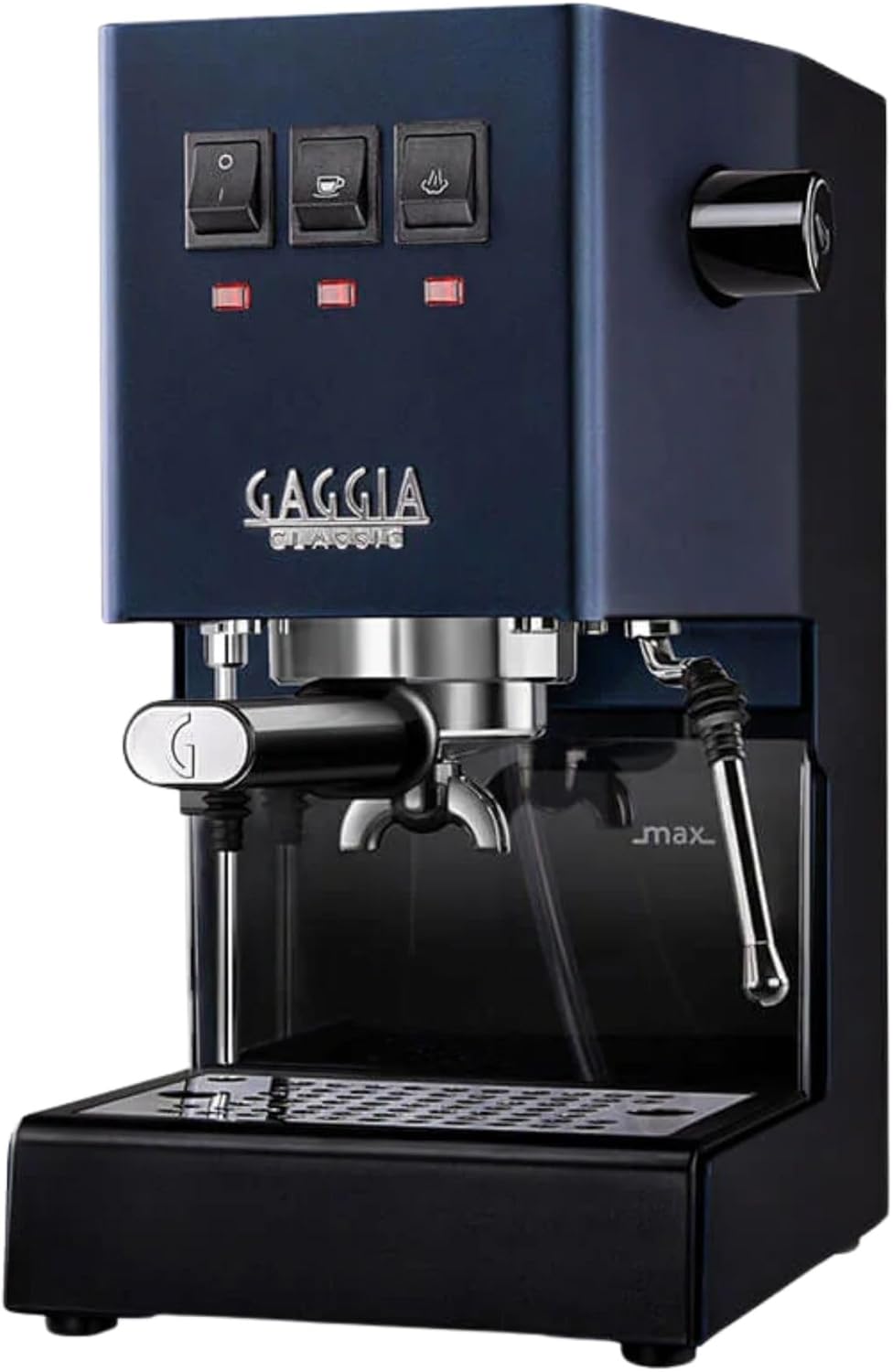
Gaggia Classic Pro RI9380 Series
out of 100
- Traditional 58 mm portafilter
- Commercial-style manual steam wand
- Simple mechanical switch controls
- Extensive accessory and modification support
- Excellent long-term skill platform
These results are reported by our editors after 30 days of comparative testing and review, using our authentic editorial scoring process.
How I review and compare machines like these (real kitchen method)
I don’t compare espresso machines the way a spec sheet compares them. I compare them to the way you’ll actually live with them—sleepy mornings, guests coming over, milk drinks back-to-back, cleaning fatigue, and the “why did my shot taste weird today?” moments.
1) Workflow comes first.
How many steps does it take to go from “I want coffee” to “coffee is in my cup”?
And more importantly: how many of those steps are annoying?
- On a guided machine, I look for speed + repeatability.
- On a manual machine, I look for control + consistency.
2) I test repeatability (not just one lucky shot)
Almost any decent machine can pull one good shot. The question is
Can you do it again tomorrow without frustration?
3) Milk drinks are the real stress test
Milk reveals everything—steam power, temperature stability, workflow, and how much effort the machine demands.
4) Cleaning is either “fine” or “deal-breaking.”
The fastest way to stop using a machine is realizing it turns coffee into chores. So I weigh daily wipe-down reality, weekly maintenance, and how forgiving the machine is if you skip a step.
5) I judge value like a human.
Not “how many features exist,” but which features actually make mornings better.
Overview
Who is this for?
The Barista Touch Impress is for coffee lovers who want café-quality drinks with guidance and speed, not guesswork. It suits busy mornings, shared households, and beginners who appreciate intuitive touchscreen recipes, assisted tamping, and an integrated grinder that keeps workflow clean and simple. If you like dialing flavor but prefer the machine to streamline dosing, tamping, and milk texturing, this is your lane. Great for small kitchens and frequent hosts, it delivers repeatable shots and silky milk with minimal cleanup—ideal for anyone upgrading from entry-level gear who wants convenience without losing control. LEARN MORE
Who is this for?
The Classic Pro is for hands-on espresso fans who want a durable, compact machine with real café feel. It’s perfect if you enjoy learning puck prep, timing shots, and steaming microfoam on a proper wand, yet don’t want the size or cost of commercial gear. Ideal for apartments, solo drinkers, or couples, it rewards a good grinder and fresh beans with rich, consistent extractions. Tinkerers love its upgrade path and straightforward maintenance. If you’re moving beyond capsules or entry-level machines and want authentic performance and control, this is a smart, long-term platform. LEARN MOREBreville Barista Touch Impress (BES881BSS)—the guided, modern all-in-one
This machine is built for people who want café drinks without turning espresso into a second job. You get a touchscreen experience, quick drink selection, and an assisted puck workflow designed to reduce mess and guesswork. It’s like Breville looked at all the reasons people quit home espresso—tamping inconsistently, dosing wrong, feeling overwhelmed—and tried to smooth those edges.
Gaggia Classic Pro (RI9380 series)—the classic manual path
This is the “learn it once, use it forever” style of machine. It’s built around a traditional semi-automatic workflow with a commercial-style portafilter format and a more hands-on approach. It won’t hold your hand. But if you enjoy the process, it can feel deeply satisfying and surprisingly “connected” compared to menu-driven machines.
Which Is Better?
Pick the Breville Barista Touch Impress if…
- You want guided espresso with fewer “beginner mistakes.”
- You make milk drinks often and want them fast.
- You love the idea of espresso, but not the idea of a long learning curve.
- You want a machine that feels modern: touchscreen, prompts, and smoother workflow.
- You value convenience and consistency more than pure manual craft.
Pick the Gaggia Classic Pro if…
- You want a traditional espresso workflow and enjoy learning.
- You like the idea of upgrading your skills over time.
- You want a simple, mechanical-feeling machine that does the essentials well.
- You don’t mind a more manual routine for dosing/tamping/steaming.
- You care about the “classic espresso station” vibe.
Breville vs Gaggia (the honest difference)
Breville Touch Impress:
You tap, follow the machine’s flow, and the machine helps you land near “good” quickly—especially if you’re new or busy.
Gaggia Classic Pro:
You do more yourself. It can feel harder at first but more rewarding if you enjoy the craft and want that traditional espresso rhythm.
| Key Feature | Breville Barista Touch Impress | Gaggia Classic Pro (RI9380/46) |
|---|---|---|
| Machine Image |
|
|
| Machine type | Semi-auto, built-in grinder | Semi-auto, no grinder |
| Model number | BES881BSS | RI9380/46 |
| Heating system | ThermoJet | Single boiler |
| Warm-up time | 3 sec | 5–6 min typical |
| Pump pressure | 15 bar | 15 bar |
| Espresso brew pressure | 9 bar extraction | 9 bar extractions |
| Temperature control | Adjustable temp | Traditional control |
| PID control | Yes | No |
| Pre-infusion | Low-pressure pre-infusion | No programmed pre-infusion |
| Portafilter size | 54 mm | 58 mm |
| Filter baskets included | Single/dual wall baskets | Pressurized + commercial baskets |
| ESE pod compatible | No | Yes |
| Integrated grinder | Yes | No |
| Grinder type | Conical burr grinder | No grinder |
| Burr material | Hardened steel | No grinder |
| Grind settings | 30 settings | No grinder |
| Assisted dosing | Intelligent dosing | No |
| Assisted tamping | Assisted 22 lb tamp | No |
| Milk system | Auto MilQ steam wand | Commercial steam wand |
| Milk temp sensor | Yes | No |
| Alternative milk modes | 3 milk settings | No |
| Automatic milk frothing | Yes | No |
| Drink presets | 8 drinks | Manual |
| Cold drink mode | Cold Brew | No |
| Display | Touchscreen | No |
| Controls | Touch UI | Buttons |
| User profiles | Yes | No |
| Water tank capacity | 2 L | 2.1 L |
| Bean hopper capacity | 340 g | No hopper |
| Dimensions (D×W×H) | 13.62×14.09×16.42 in | 8×9.5×14.2 in |
| Weight | 24.2 lb | 20 lb |
| Voltage | 120 V | 120 V |
| Power | 1750 W | 1425 W |
| Boiler material | ThermoJet system | Brass boiler |
| 3-way solenoid valve | Yes | Yes |
| Made in | China | Italy |
| Water filter included | Yes | No |
| Price on Amazon | Price on Amazon | Price on Amazon |
Breville Barista Touch Impress—Full Review
Breville Barista Touch Impress
This is the “I want great espresso, but I don’t want the mess” machine. You get a modern touchscreen menu, built-in grinding, assisted dosing/tamping, and automatic milk texturing—so your daily latte routine feels smooth instead of complicated. It’s the sweet spot for people who want café-style results without turning espresso into a full-time hobby.
- Touchscreen drink menu: simple selection, quick customization.
- Impress-style puck help: cleaner dosing/tamping workflow.
- Built-in grinder: fresh grind per shot for better flavor.
- Auto milk texturing: hands-free steaming for lattes/cappuccinos.
- Fast morning routine: designed to cut steps and reduce mess.
- Pros: beginner-friendly; less mess; great milk convenience; modern UI; repeatable results.
- Cons: larger footprint; you’ll still need good beans; purists may want more manual control.
- The workflow feels “guided” instead of intimidating.
- Milk drinks come out consistent without babysitting the wand.
- Touchscreen makes daily use fast for everyone in the house.
- If you love fully manual espresso rituals, the guidance can feel “too assisted.”
- Regular cleaning keeps the milk system tasting fresh—don’t skip it.
| Type | Semi-automatic all-in-one |
| Grinder | Built-in conical burr grinder |
| Portafilter | 54mm-style workflow (machine ecosystem) |
| Milk | Automatic milk texturing/steaming |
| Controls | Touchscreen interface |
| Best for | Guided espresso + milk drinks |
| Grinder | Built-in |
| Milk steamer | Yes — automatic texturing |
| Portafilter | Yes — assisted puck workflow |
| Heater | Fast heat-up workflow |
| Water tank | Removable reservoir |
| Brewer | Guided extraction routine |
Who is this for? Anyone who wants café-style espresso and milk drinks with a guided, low-mess workflow—perfect for beginners, busy mornings, and latte lovers. Skip it if you want a fully manual “dial-everything” espresso ritual. LEARN MORE
The first thing you notice with the Breville Barista Touch Impress (BES881BSS) is how quickly it tries to pull you into a smooth rhythm. Instead of feeling like you’re assembling espresso from scratch, it feels like you’re following a smart routine that was built by someone who understands how people actually behave at 7 a.m. You’re not trying to remember ten steps—you’re tapping your way through a workflow that encourages you to do the right thing in the right order.
That touchscreen matters more than people expect. It’s not just “nice.” It changes your relationship with the machine. With traditional semi-autos, the machine is a tool, and you’re the operator. With the Touch Impress, the machine feels more like a partner: it cues you, keeps the process moving, and reduces the number of times you’ll stand there thinking, Wait… did I already do that? If you’ve ever made espresso half-awake and ended up with a messy puck, a sink full of sticky grounds, and a drink that tastes “fine,” you understand why that kind of guidance is valuable.
The other big difference is how it approaches puck prep. One of the most frustrating parts of home espresso is that dosing and tamping mistakes don’t just look messy—they show up directly in the cup. A shot can run too fast, channel, or come out thin and sour, and you’ll blame the beans when the real culprit was technique. The Touch Impress pushes hard in the opposite direction: it’s designed to reduce the mess and reduce the guesswork so you can land closer to a good shot earlier in your learning curve. That means it’s especially friendly to people who love espresso but don’t love “failing their way forward” for weeks.
In day-to-day use, this machine shines most when you’re doing repeat drinks. If you tend to make the same couple of beverages—say a morning latte and an afternoon espresso—this Breville is excellent at making that feel fast and almost automatic without becoming a fully automatic machine. You still get that semi-auto identity (you’re still engaged), but the machine absorbs a lot of the chaos.
Milk drinks are where the Touch Impress earns its place in a busy home. With many manual machines, you can pull a shot just fine, then lose time and patience steaming milk. Here, the overall flow is built to get you from shot to milk without breaking your stride. It encourages consistency, and consistency is what makes home espresso feel like a lifestyle instead of a weekend hobby.
Now—this is important—it’s not “effortless.” It’s still espresso. Beans still matter. Grind still matters. Taste still changes as beans age and humidity changes. But compared to the classic manual path, the Breville dramatically reduces the number of variables you have to wrestle with at once. So instead of spending your first month wondering why everything tastes sharp and thin, you spend your first month making drinks that are already enjoyable and then gradually improving them.
The trade-off is philosophical: some people love a machine that’s ultra-direct and mechanical. The Touch Impress is not that. It’s a modern appliance with a lot going on. If you prefer simplicity and minimal tech, you might feel like you’re paying for “help” you don’t want. But if your goal is consistent café-style espresso at home without the frustration phase, this machine’s whole identity is built around that mission.
Gaggia Classic Pro – Full Review

Gaggia Classic Pro
Classic Pro is the machine you buy when you want the real espresso ritual at home: grind, dose, tamp, brew — then steam milk the old-school way. It’s simple, sturdy, and upgrade-friendly, which is why it’s basically the “learn espresso properly” classic.
- 58mm portafilter workflow: café-style baskets and puck prep.
- Commercial-style steam wand: learn microfoam for lattes.
- Manual extraction: full control over shot timing and yield.
- Simple switch controls: fewer menus, more muscle memory.
- Upgrade-friendly platform: accessories and mods everywhere.
- Pros: real espresso craft; durable build; strong community support; great learning machine.
- Cons: needs a good grinder; steaming takes practice; not one-touch convenient.
- It teaches you espresso “the right way” and rewards consistency.
- Milk texturing can get genuinely café-level with practice.
- It’s the kind of machine you keep for years, not months.
- Without a capable grinder, you’ll feel stuck quickly.
- It’s not built for people who want push-button lattes.
| Type | Semi-automatic |
| Portafilter | 58mm (commercial-style) |
| Milk | Manual steam wand |
| Grinder | External grinder required |
| Workflow | Manual grind → tamp → brew |
| Best for | Hands-on espresso lovers |
| Grinder | External (recommended) |
| Milk steamer | Yes — manual steam wand |
| Portafilter | Yes — 58mm |
| Heater | Single-boiler style workflow |
| Water tank | Removable reservoir |
| Brewer | Group head + classic extraction |
Who is this for? Home baristas who want a real 58mm portafilter workflow, enjoy learning, and want a durable machine they can upgrade over time. Skip it if you want push-button drinks with zero technique. LEARN MORE
The Gaggia Classic Pro is the kind of machine people buy when they want espresso to feel real. Not “real” as in snobby—real as in switches, portafilters, steam wands, and you at the center of it. It doesn’t try to distract you with menus or a guided experience. It’s just a classic espresso setup that expects you to bring the skill (or at least the curiosity) to the table.
And honestly? That simplicity is the charm. Something is calming about machines like this. You walk up, you know what you’re going to do, and the routine becomes muscle memory. Once you learn your dosing habits and how your beans behave, the machine stops feeling like a device and starts feeling like a daily ritual.
The biggest headline difference versus the Breville is that the Gaggia does not try to be your all-in-one barista station. This path assumes you’ll pair it with a separate grinder and build your setup piece by piece. For some people, that’s inconvenient. For others, it’s exactly what they want—because it allows them to choose their own grinder, dial it in, and upgrade later without replacing their whole espresso machine. In other words, the Gaggia is a “foundation” machine.
Workflow-wise, expect more hands-on moments: you grind, dose, distribute, tamp, lock in, brew, and then steam. If you enjoy the craft, this is satisfying. If you’re rushed or you want espresso to be effortless, you might find it demanding. The Gaggia asks for attention. And it will reflect your attention on you: when your puck prep is tidy and your timing is good, the machine gives you a punchy, café-style shot with a “true espresso” feel.
Milk is also a key part of the Gaggia identity. Manual steaming is not about convenience—it’s about control. With practice, you can texture milk beautifully and build the kind of foam you actually want for your drink style. Some days you’ll want a dense cappuccino foam; other days you’ll want a glossy latte texture. The Gaggia doesn’t decide for you. You decide. That can be deeply rewarding, especially if you like learning.
The “classic” compromise is that manual machines often require you to learn pacing and temperature rhythm—especially when moving between brewing and steaming. With experience, it becomes second nature: you learn when to start steaming, how long to purge, and how to keep your workflow smooth. But it is still a learning curve, and it’s one of the reasons the Breville feels easier for beginners. The Breville tries to shorten the path to “good.” The Gaggia makes you walk the path, and then you own it.
Where the Gaggia really wins hearts is in long-term satisfaction. Many people don’t want a touchscreen coffee appliance that feels outdated in five years. They want a machine that still feels relevant because the fundamentals don’t change: a solid espresso workflow, a good portafilter format, and a steam wand you can master. If that’s your personality, this machine can be the kind you keep for a long time and genuinely bond with.
So if you’re someone who wants espresso to be a craft and a ritual—something you get better at and feel proud of—the Gaggia Classic Pro style makes a lot of sense. If you want the machine to do more of the thinking, Breville is going to feel like home faster.
My Final Verdict
If you want the most frictionless path to consistently good espresso and milk drinks at home, the Breville Barista Touch Impress (BES881BSS) is the safer bet. It’s the machine you’ll use more often when life is busy because it smooths the workflow and reduces beginner pain.
If you want the most authentic classic espresso experience and you actually enjoy learning the manual rhythm (and building your setup), the Gaggia Classic Pro (RI9380 series) is the more rewarding long-term relationship. It’s less “guided,” more “earned.”
Quick rule that rarely fails:
- Want espresso as a daily convenience? → Breville
- Want espresso as a craft + ritual? → Gaggia
FAQ
1) Which one is better for total beginners?
The Breville Touch Impress is easier to get “good” results quickly because it’s designed to reduce puck-prep mistakes and guide the workflow.
2) Which one makes better espresso eventually?
If you enjoy learning, the Gaggia can be incredible—because your technique becomes the upgrade. The Breville can also make excellent espresso, but it’s designed to make the journey smoother and quicker.
3) Which one is better for lattes every day?
Most daily latte drinkers will be happier with the Breville because the overall workflow is optimized for speed and repeatability.
4) Do I need a separate grinder for the Gaggia?
Yes—this is a key difference. The Gaggia is a classic espresso machine path that requires a separate grinder.
5) Which one is easier to clean daily?
They’re different kinds of “easy.” Breville tries to reduce mess during puck prep. Gaggia is straightforward, but your overall station (especially with a separate grinder) can create more cleanup points.
6) Which one is better for guests?
Breville. Guests can follow a simpler, more guided flow. With the Gaggia, you’ll usually end up being the barista.
7) Which one is better for a small kitchen?
If you want a single appliance, Breville makes sense. If you go with Gaggia, remember you’ll also need counter space for a grinder.
8) Which one has more of a “classic café” feel?
Gaggia—manual controls, traditional workflow, and that hands-on barista rhythm.


