
Best Manual Espresso Machines Tested & Reviewed 2026


OneHundredCoffee is reader-supported, and some products displayed may earn us an affiliate commission. Details
There is something wonderfully stubborn about a manual espresso maker. In a world full of touchscreens, automated milk systems, guided recipes, and machines that try to turn espresso into a frictionless appliance, manual espresso still asks you to show up. It asks you to boil the water yourself, think about heat, think about grind, think about pressure, and pay attention to what your hands are doing. And honestly, that is exactly why I keep finding manual espresso so appealing. When it works, it does not just make coffee. It makes the whole process feel intimate, physical, and weirdly satisfying in a way that button-driven machines rarely do.
If you are searching for the best manual espresso makers, you are probably not looking for convenience in the usual sense. You are looking for involvement. You want to feel the lever or the pump. You want to understand the shot instead of just receiving it. You may want something portable, something beautiful, something mechanical, or something that lets you chase café-style espresso without surrendering your kitchen to a massive electric machine. That is a different kind of buyer, and I like that buyer. I understand that buyer.
The five machines in this list all live inside that manual world, but they do not mean the same thing. The Flair Pro 3 is a more serious all-manual lever press with a pressure gauge, a removable brew head, and room for deeper espresso nerdiness; the Flair NEO Flex is positioned more as a beginner- and travel-friendly direct lever machine with a carrying case and included gauge; the Wacaco Picopresso is a compact, manually operated portable espresso maker aimed at specialty coffee lovers; the Wacaco Nanopresso is a lighter, more convenience-oriented portable pressure device; and the ROK EspressoGC is a hand-powered countertop lever-style espresso maker with a stainless steel portafilter and non-electric design.
That makes this list unusually fun, because it is not just one style of machine repeated five times. It is really five different answers to the same question: how much ritual do you want, how much control do you want, and where do you want your espresso life to happen?
Best Manual Espresso Makers — At a Glance
| Image | Product | Features | Price |
|---|---|---|---|
|
Best Lever Upgrade
|
Pressure-gauge manual lever espresso
|
Price on Amazon | |
|
Best Budget Lever
|
Direct-lever espresso with gauge
|
Price on Amazon | |
|
Best Travel Shot

|
Pro-style portable manual espresso
|
Price on Amazon | |
|
Best Compact Portable
|
18-bar hand-powered espresso
|
Price on Amazon | |
|
Best Countertop Manual
|
Hand-powered countertop espresso press
|
Price on Amazon |
My Ranking: Best Manual Espresso Makers
1. Flair Pro 3
2. ROK EspressoGC
3. Wacaco Picopresso
4. Flair NEO Flex
5. Wacaco Nanopresso
That ranking is not about which one is easiest to throw into a bag. It is about which one gives me the best mix of real espresso potential, manual satisfaction, workflow quality, and long-term ownership appeal.
What I Want from the Best Manual Espresso Makers
When I think about manual espresso makers, I care about a different set of things than I do with normal electric machines.
I care about the pressure feeling. If I am the pump, or I am the lever, then the machine needs to give me enough feedback that I can actually learn from the process. That is part of the joy. A manual espresso maker should feel like it is teaching me something instead of just making me guess.
I care about thermal management. Manual espresso lives or dies on heat discipline. A design that makes preheating easier, or less annoying, earns huge points with me because temperature chaos is one of the fastest ways to turn “romantic espresso ritual” into “why am I doing this to myself?”
I care about cleanup and reset time. A manual maker does not need to be effortless, but it should feel reasonable. If a machine gives me beautiful espresso and then punishes me every time I clean it, I will gradually use it less.
I care about portability only when portability is real. Some products look travel-friendly but are only fun in a very optimistic kind of travel. Others are genuinely practical away from home.
And above all, I care about whether the process still feels good after the novelty wears off. That is the secret test. A manual espresso maker can be charming for three days. The better ones stay satisfying for months.
Why Manual Espresso Still Matters
I think a lot of people misunderstand manual espresso. They assume it is only for hobbyists who want to be difficult on purpose. Sometimes, sure, that happens. But the deeper appeal is not difficulty. It is agency.
With a manual espresso maker, you do not just push a button and trust the idea of extraction. You are part of the extraction. You can feel resistance. You can sense how the puck is behaving. You can notice when your prep was uneven, when your grind is too fine, when your preheat was lazy, when the shot is flowing beautifully, or when the coffee is suddenly singing because everything lined up.
That kind of feedback is deeply educational. It also keeps espresso from becoming boring.
And then there is the portability angle. A good manual machine can do something traditional electric machines simply cannot: let you make real, concentrated, espresso-like coffee in places where a plug, a big kitchen, or a full coffee station would be ridiculous. That is not a gimmick. For some people, that is the whole point.
Flair Pro 3 — Best Overall Manual Espresso Maker
Flair UPDATED PRO 3 Manual Lever Espresso Maker
Key Features
- 100% manual lever extraction
- Pressure gauge feedback
- Pro-style brew head
- Portable travel-friendly setup
- Easy rinse-and-clean parts
Why We Like It
I like the PRO 3 when I want espresso control without electricity. It’s a hands-on, satisfying workflow—heat water, prep the dose, and pull a shot while watching pressure like a real lever machine.
Pros
- True lever-style feel
- Excellent pressure control
- Easy to pack and store
- Simple to clean
Cons
- Needs kettle + grinder
- Learning curve is real
Bottom Line
A top manual-lever espresso maker for people who want maximum control and café-style technique anywhere.
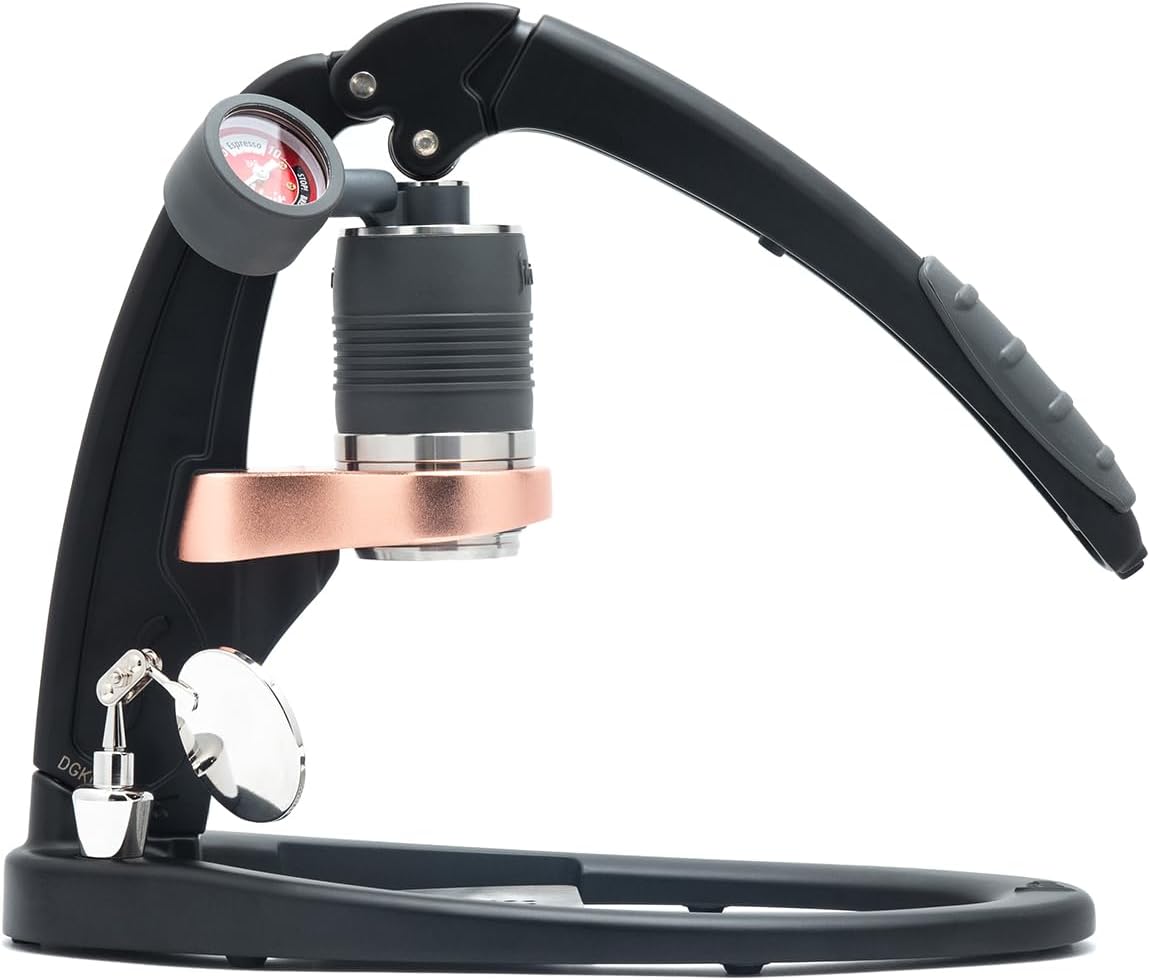
Price on AmazonThe Flair Pro 3 is the one I would rank first because it feels like the most complete expression of what manual espresso can be without becoming absurd. It is a 100% human-powered manual espresso press with a pressure gauge, 70 ml water capacity, doses up to 24 grams, yields up to a 56 ml shot, includes a detachable brew head, and features upgrades such as a thinner “no-preheat” cylinder, an integrated shot mirror, and a preheat funnel.
That combination says a lot. This is not a cute little coffee gadget pretending to make espresso. This is a machine that expects you to care and rewards you when you do. And that is exactly why I like it.
What I love most about the Flair Pro 3 is that it sits in that sweet spot where manual espresso becomes genuinely serious but not yet emotionally exhausting. It gives you the sense that the shot quality ceiling is high enough to matter. It gives you pressure visibility. It gives you real control over the brew ratio. It gives you a brew head that can actually be disassembled and cleaned sensibly. That all matters. A lot.
I also think the Pro 3 is one of the best manual espresso makers for the person who wants the ritual without losing the reward. Some manual machines are fun because they are portable. Some are fun because they are cheap. Some are fun because they are weird. The Pro 3 is fun because it feels like espresso equipment. Not a toy, not a compromise, not a backup plan. Real equipment.
Of course, that seriousness comes with responsibility. You do need good prep. You do need good grinding. You do need to respect heat. This is not a shortcut machine. But I do not see that as a weakness in this category. I see that as the whole appeal.
If I were buying one manual espresso maker for home use and wanted the most convincing balance of craftsmanship, learning, and shot potential, this would be my pick.
Why I rank it first
- The pressure gauge gives real extraction feedback.
- It supports larger doses and more serious shot experimentation.
- The removable brew head and carrying case make it practical as well as nerdy.
Best for
People who want a true manual espresso hobby machine, not just a travel novelty.
ROK EspressoGC—Best Countertop Alternative to Flair
ROK EspressoGC Manual Espresso Maker
Key Features
- Hand-powered espresso lever press
- No electricity required
- Portable for travel/camping
- Stainless steel portafilter
- Simple rinse-clean workflow
Why We Like It
I like the EspressoGC style when you want a physical, hands-on espresso ritual on the counter—more “press and feel” than “push a button.” It’s a fun option for people who enjoy the craft side of espresso.
Pros
- Truly energy-free espresso
- Great tactile control
- Portable and packable
- Easy to clean
Cons
- Needs good grinder
- Technique affects results
Bottom Line
A satisfying hand-powered espresso press for people who want a manual ritual and portable, electricity-free brewing.
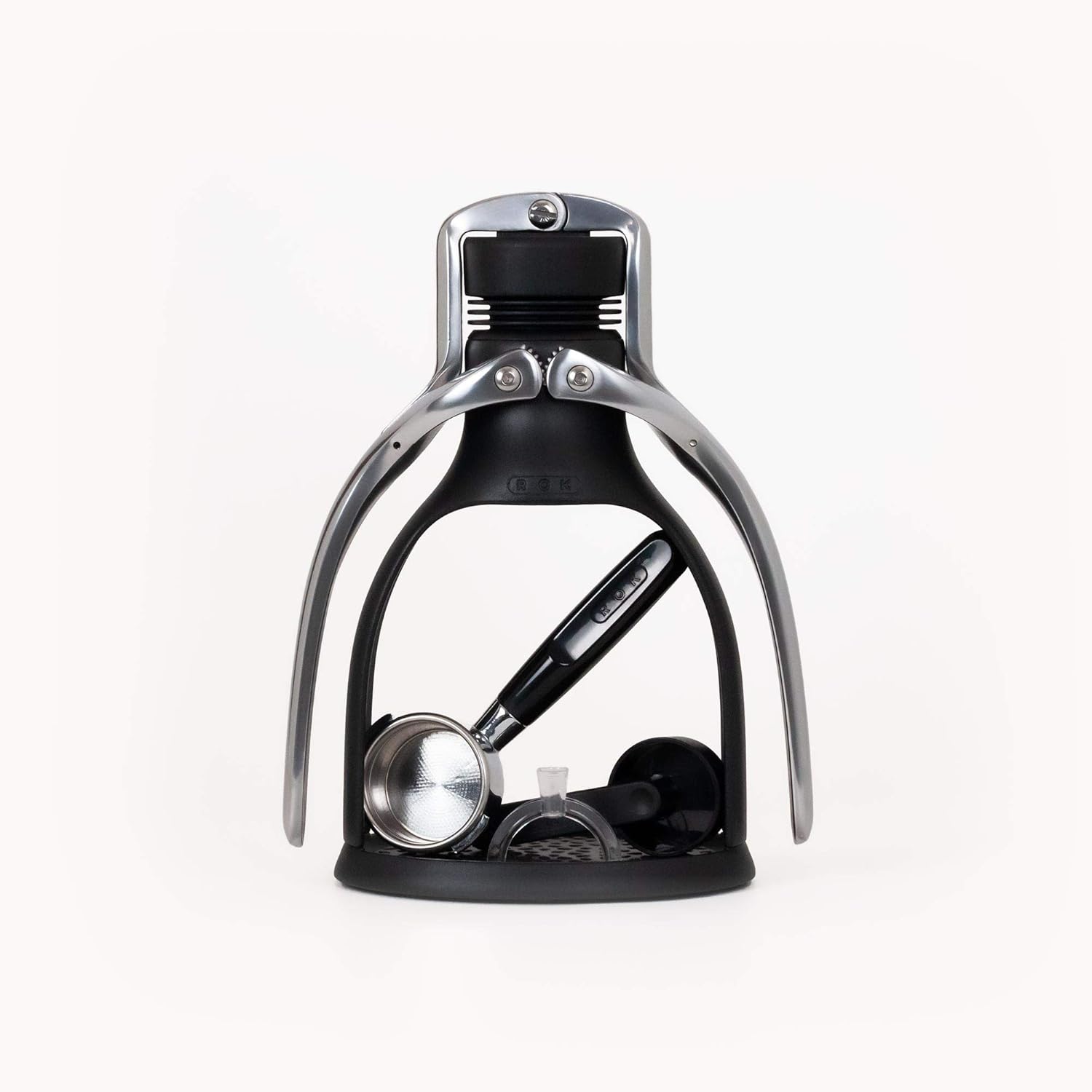
Price on AmazonThe ROK EspressoGC is the machine I would place second because it has a different manual personality that I find deeply appealing.
The ROK feels less like a portable specialist and more like a permanent manual sculpture for your kitchen. That matters. Some people want their manual espresso to feel like an event they set up. Others want it to feel like a beautiful, tactile countertop ritual they can slip into daily. The ROK makes more sense to me for the second group.
What I like here is its physicality. A machine like the ROK has a kind of old-school, mechanical charm that really works if you enjoy visible leverage and direct participation. It looks manual. It feels manual. It announces itself as something different from the modern automatic coffee landscape. I respect that.
I also think the ROK appeals to a different temperament than the Flair Pro 3. The Flair feels more like a precision-focused espresso instrument. The ROK feels more like an expressive manual device that you learn through rhythm and repetition. That is not less. It is just different.
Where I would be careful is this: the ROK is probably blessed with someone who already understands what they enjoy about manual coffee. It is not the most obviously beginner-friendly option in this list. It is attractive to people who want something beginner-friendly. If that is you, it can be a brilliant fit. If you mainly want the cleanest path to learning espresso mechanics with obvious feedback, the Flair Pro 3 probably makes more sense.
Why does Raranko high for me?
- It offers a true non-electric manual espresso experience with a strong presence.
- The stainless steel portafilter and hand-powered format suit serious home tinkerers.
Best for
The manual espresso lover who wants a permanent kitchen ritual machine with a strong mechanical personality.
Wacaco Picopresso—Best Portable Manual Espresso Maker for Serious Coffee People

WACACO Picopresso Portable Espresso Maker
Key Features
- Pro-style portable espresso design
- Manual operation (no electricity)
- Naked portafilter visual extraction
- Basket built for richer shots
- Travel-ready protective case
Why We Like It
I like the Picopresso when I want “real espresso vibes” away from the kitchen. With the right grind, it can pull shockingly legit shots for something that fits in a bag—perfect for travel and coffee-nerd weekends.
Pros
- Excellent travel espresso
- No power required
- Great extraction potential
- Easy to pack
Cons
- Needs very fine grind
- Small capacity per shot
Bottom Line
One of the most “serious” portable espresso makers—ideal for travelers who still care about real extraction.
Price on AmazonThe Wacaco Picopresso is one of the most interesting machines on this list because it solves a very specific problem beautifully: how do you make a genuinely serious portable manual espresso maker without turning it into a joke? It is a pro-level specialty coffee machine, manually operated, portable, and built around ultra-fine grind compatibility, which tells you immediately that Wacaco is not pitching it as a casual convenience brewer.
That is exactly why I like it.
The Picopresso is not trying to replace a full-size home lever machine emotionally. It is trying to give you specialty-minded espresso capability in a small, travel-ready footprint. And for the right person, that is incredibly compelling. If I traveled often, camped often, or simply hated the idea of being separated from good espresso whenever I left home, this is probably the manual machine on this list that would tempt me most.
What makes it stronger than many “portable espresso” devices is that it seems to respect real coffee technique. It asks for a fine grind. It expects some seriousness. It is not pretending that espresso can be totally effortless in a tiny body. I appreciate that honesty.
I rank it below the Flair Pro 3 and ROK only because portability naturally introduces limits. A portable machine can be outstanding at what it does and still not replace the pleasure and flexibility of a more dedicated home manual setup. But if the question becomes, “Which manual espresso maker would I trust most away from home if I still cared about shot quality?” the Picopresso jumps right near the top.
Why does it deserve this spot?
- It is aimed at specialty coffee users, not just casual travelers. deserve
- It keeps manual espresso portable without making it feel unserious.
- It is one of the best “real espresso away from home” ideas in this whole category.
Best for
Travelers, campers, office users, and coffee obsessives who want a packable manual espresso tool that still respects proper coffee prep.
Flair NEO Flex—Best Beginner Manual Espresso Maker
Flair The NEO Flex — Direct Lever Manual Espresso Maker
Key Features
- Direct lever manual brewing
- Portable, no electricity needed
- Beginner-friendly espresso workflow
- Compact travel-ready footprint
- Easy clean brew components
Why We Like It
I like the NEO Flex idea when you want real “manual espresso” fundamentals—pressure, flow, and puck prep—without paying for a big countertop machine. It’s simple, portable, and surprisingly satisfying once you find your rhythm.
Pros
- Very portable setup
- Great for learning basics
- No power required
- Quick to clean
Cons
- Needs kettle + grinder
- Practice required for consistency
Bottom Line
A beginner-friendly manual lever espresso maker that’s perfect for travel, small kitchens, and learning by feel.
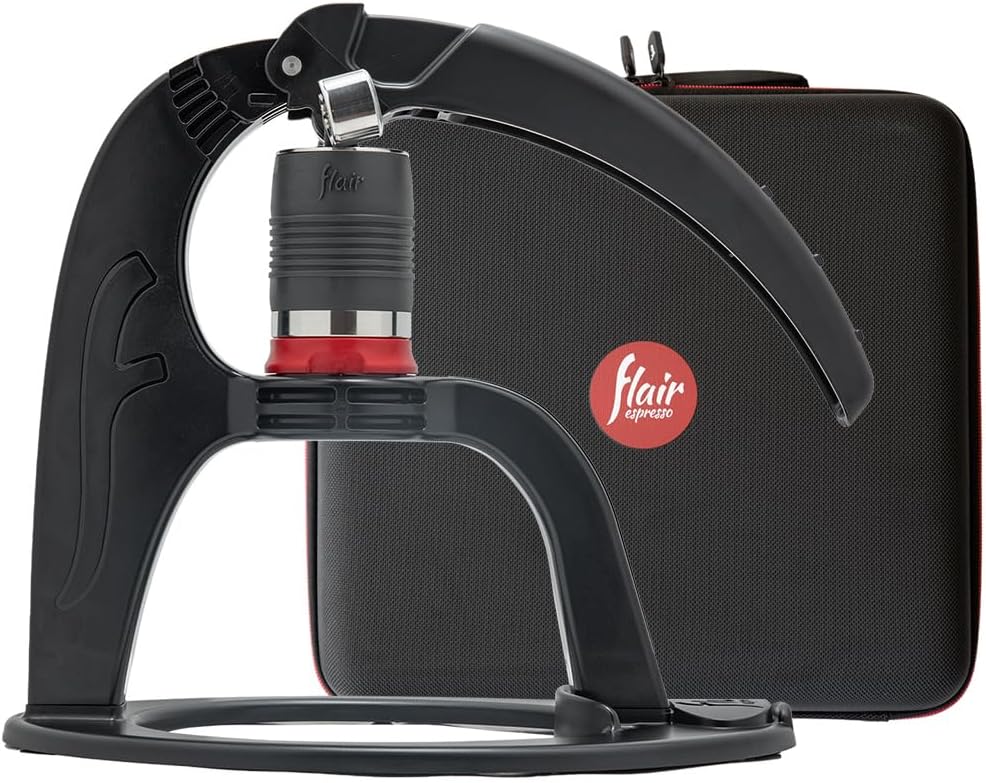
Price on AmazonThe Flair NEO Flex is the manual espresso maker in this lineup that feels most obviously welcoming to newer users. It is an updated direct lever manual espresso maker for beginners and travel, bundled with a carrying case and an included pressure gauge for 9-bar brewing.
I think that positioning makes a lot of sense. Manual espresso can be intimidating, and a beginner-friendly manual device has to walk a very fine line. It needs to be forgiving enough that new users do not feel punished instantly, but real enough that they actually learn something rather than just playing with a coffee-shaped gadget.
The NEO Flex strikes me as that bridge machine. It says, “Yes, manual espresso can be approachable. No, it does not need to be stripped of all seriousness to become approachable.”
That is a valuable role. Not everybody should start with the most advanced manual setup. Some people need a machine that helps them learn the language of pressure, puck prep, and extraction without demanding expert-level confidence from day one. The included gauge helps a lot there, because visible pressure feedback makes manual espresso far less mysterious.
I rank it below the Picopresso because the Picopresso feels more specialized and more impressive once you know what you’re doing. I rank it below the ROK and Flair Pro 3 because those machines feel more complete as long-term manual espresso platforms. But as an entry point? I think the NEO Flex is one of the smartest ideas in this category.
Why I like it
- It is explicitly built for beginners and travel.
- The included pressure gauge is a genuinely useful learning tool.
- It lowers the barrier to manual espresso without deleting the fun.
Best for
Someone curious about manual espresso who wants a gentler, more learnable first step.
Wacaco Nanopresso—Best Casual Portable Option
WACACO Nanopresso Portable Espresso Machine
Key Features
- Compact handheld espresso maker
- Manual pumping extraction
- No batteries or power needed
- Great for travel and camping
- Simple rinse-clean design
Why We Like It
I like the Nanopresso when I want a true “throw it in the bag” espresso solution. It’s not trying to replace a full machine—it’s for those moments when a decent espresso on the road feels like a small luxury.
Pros
- Very travel-friendly size
- No electricity required
- Quick brewing routine
- Easy to rinse clean
Cons
- Smaller shot volume
- Grind quality matters
Bottom Line
A compact handheld espresso maker that’s perfect for travel, camping, and “espresso anywhere” convenience.
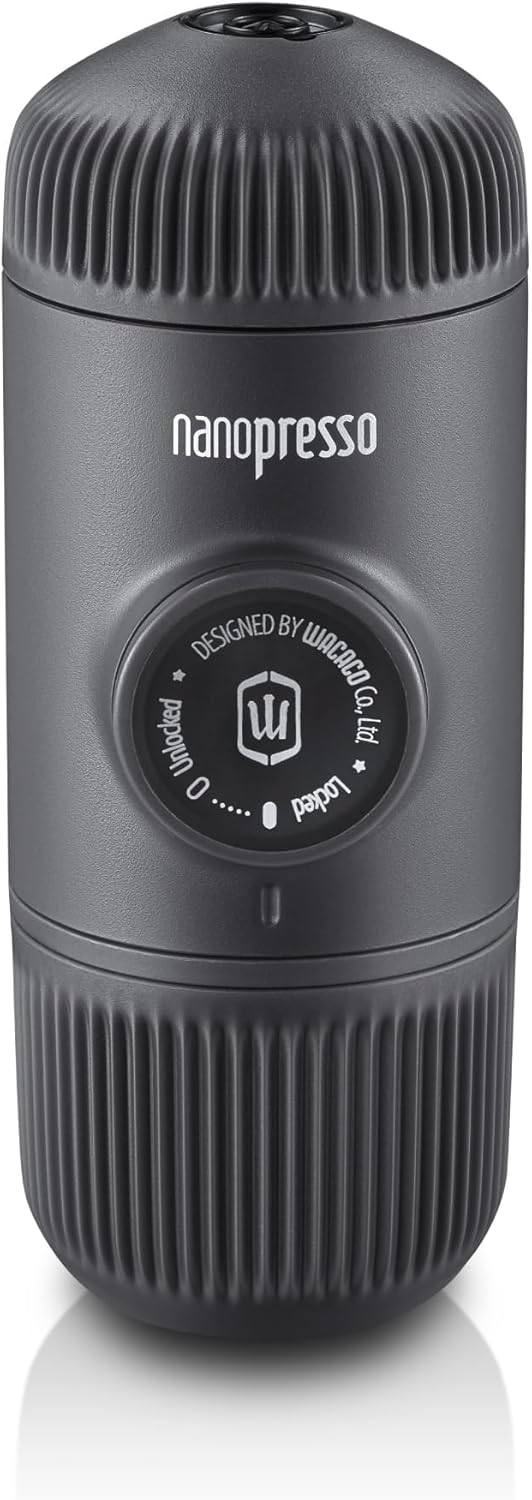
Price on AmazonThe Wacaco Nanopresso ranks fifth here, but I do not mean that as dismissal. It is just aimed at a slightly different user. It is a portable espresso machine, manually operated, with maximum pressure up to 18 bar, and explicitly says it needs no battery or electricity.
That profile makes it very attractive to people who want espresso-like portability with fewer demands and less bulk. It is the kind of product I would recommend to someone who values packability and ease of use more than chasing the highest possible manual espressoing.
And that is the key difference. The Nanopresso feels less like a manual espresso craft object and more like a clever, genuinely useful portable coffee solution. I can see the appeal immediately. If I were headed on a trip and wanted something easy to toss in a bag without bringing a larger kit or more involved device, the Nanopresso would be very tempting.
Why does it rank lower? Because this article is about the best manual espresso makers, and for me, that phrase implies not just portability but espresso seriousness. The Nanopresso is a great portable manual device, but the Picopresso feels more ambitious for coffee quality, while the Flair and ROK options feel more satisfying as manual espresso machines in the deeper sense.
Still, I do not want to undersell it. There are many buyers for whom the Nanopresso is actually the smartest choice because it better fits their real life. And I always think fit matters more than coffee-snob theater.
Why it still belongs here
- It is very portable and fully manual.
- No electricity is needed, which keeps it genuinely travel-friendly.
- It makes more sense than larger manual systems for lighter, more casual use.
Best for
People who want manual espresso on the go without committing to the more demanding portable specialty outlet.
Which Manual Espresso Maker Would I Choose for Different People
Best overall manual espresso maker
Flair Pro 3
This is the one I’d choose if I wanted the most convincing all-around manual espresso experience at home. It feels the most complete and the most rewarding over time.
Best manual espresso maker for beginners
Flair NEO Flex
If someone told me they were fascinated by manual espresso but nervous about starting too deep, this is the one I’d point to first.
Best portable manual espresso maker
Wacaco Picopresso
For serious coffee away from home, this is the most compelling travel-focused option in the group.
Best countertop lever alternative
ROK Espresso GC
For the person who wants a beautiful manual device to live in the kitchen and become part of a daily routine, the ROK is extremely attractive.
Best casual travel pick
Wacaco Nanopresso
This is the easiest answer for someone who wants manual espresso portability without wanting the whole experience to become highly technical.
What Makes a Manual Espresso Maker Actually Good
I think this is where a lot of buying guides become too shallow. They compare features but skip the emotional reality of ownership.
A good manual espresso maker should do a few things well:
- It should make you want to improve, not make you feel punished.
- It should provide enough feedback that the learning feels meaningful.
- It should have a workflow you can realistically repeat.
- It should reward care with noticeably better shots.
- It should fit your life, whether that means countertop permanence or actual portability.
That last point matters more than people expect. A great manual espresso maker that does not match your life becomes clutter. A slightly less “elite” one that fits the way you actually drink coffee becomes beloved.
The Beans I’d Use with Manual Espresso Makers
Manual espresso really rewards beans with structure and sweetness. Personally, I think medium roasts often shine here because they give you enough nuance to enjoy the hands-on extraction process without becoming wildly unforgiving.
For home lever systems like the Flair Pro 3 or ROK, I’d lean toward the following:
- medium roasts
- chocolate-and-caramel blends
- Wash coffees with clean fruit if you enjoy brighter shots
- Coffee roasted specifically for espresso
For portable systems like the Picopresso or Coffeeesso, I’d usually keep it simpler.
- medium to medium-dark bean
- blends with good body
- coffee that tastes satisfying, even if the old conditions are not perfect
- beans that stay pleasant without requiring a laboratory-perfect shot
PoA portable annual espresso gets much better when the beans are forgiving, and the grind is. That is one of those annoying truths people try to skip, but it matters.
What I’d Watch Out for Before Buying
Before buying any manual espresso maker, I think there are a few honest questions worth asking.
Do you actually enjoy preparation, or do you just enjoy the idea of preparation? Those are not the same thing.
Do you already have an espresso-capable grinder? If not, the best manual espresso maker in the world will still frustrate you.
Do you want this machine for home, travel, or both? A countertop lever and a bag-friendly pressure device are not interchangeable lives.
How patient are you with preheating? Some people love the ritual. Some people hate it after the first week.
And are you looking for coffee convenience or coffee involvement? Manual espresso is at its best when you choose it for the right reason.
FAQ: Best Manual Espresso Makers
Are manual espresso makers worth it?
Yes, if you enjoy the process and want more direct involvement in extraction. They can be deeply satisfying and, in the right hands, make genuinely impressive espresso.
Which is the best manual espresso maker overall?
For me, the Flair Pro 3 is the best overall because it combines serious shot potential, visible pressure feedback, and a workflow that still feels practical enough to live with.
What is the best manual espresso maker for beginners?
The Flair NEO Flex makes the strongest beginner case because it is explicitly positioned for beginners and includes a pressure gauge, which helps a lot when learning.
Is the Picopresso better than the Nanopresso?
For more serious specialty-style espresso, I would choose the Picopresso. For lighter, simpler portable use, the Nanopresso may feel easier and more casual. Both are portable and manually operated, but they aim at different users.
Can a manual espresso maker make real crema?
Yes, especially when paired with fresh beans, a proper grinder, and solid prep. Machines like the Flair Pro 3 are explicitly marketed for producing shots with crema.
Are manual espresso makers hard to clean?
Some are easier than others. I strongly prefer designs with removable brew components because they make cleanup less annoying. The Flair Pro 3’s detachable brew head is a good example.
Which manual espresso maker is best for travel?
The Wacaco Picopresso is my favorite travel-focused option for serious coffee people, while the Nanopresso is better if you want something easier and more casual.
Do manual espresso makers need electricity?
No. All the machines in this guide are non-electric/manual in core operation, though you still need hot water from an external source.
Is the ROK EspressoGC good for daily home use?
Yes, I think it makes the most sense as a home manual ritual machine rather than a purely travel option. Its countertop size and hand-powered design fit that role well.
Do I need a special grinder for a manual espresso maker?
You need a grinder that can grind properly for espresso. Without that, manual espresso becomes much more frustrating and much less rewarding.
Final Verdict:
The Best Manual Espresso Makers Depend on What You Want the Ritual to Feel Like
The funny thing about the best manual espresso makers is that they are not just products. They are personalities.
If I wanted the most complete and satisfying manual espresso experience at home, I would choose the Flair Pro 3. It feels like the best balance of seriousness, feedback, portability, and long-term espresso potential.
If I wanted something beautiful and mechanical to live on the counter and become part of a daily hand-powered ritual, I would be very tempted by the ROK EspressoGC.
If I cared most about taking real espresso skills on the road, the Wacaco Picopresso would probably be my favorite portable choice.
If I were just getting into manual espresso and wanted a less intimidating starting point, I would recommend the Flair NEO Flex.
And if I simply wanted the easiest portable manual option for casual travel coffee, the Wacaco Nanopresso still deserves a place in the conversation.
That is really the heart of manual espresso. The best machine is not just the one with the highest theoretical ceiling. It is the one whose ritual you will actually keep coming back to.
Full Detailed Comparison Table
| Manual Espresso Maker | Best For | Manual Style | Why I Like It | Main Tradeoff | Verified Details |
|---|---|---|---|---|---|
| Flair Pro 3 | Best overall | Lever manual espresso press | Serious shot potential with strong feedback | More demanding than beginner tools | Pressure gauge; 70 ml water; up to 24 g dose; up to 56 ml shot; removable brew head; carrying case. |
| ROK EspressoGC | Best countertop ritual | Hand-powered countertop lever style | Distinctive mechanical feel and kitchen presence | Less obviously beginner-friendly | Hand-powered stainless steel portafilter; non-electric; countertop dimensions around 6 x 6.11 x 11.42 inches. |
| Wacaco Picopresso | The best portable for serious coffee | Compact, portable, manual pressure device | Most specialty-minded travel options here | A smaller portable format has natural limits. | Portable; manually operated; “pro-level specialty coffee” positioning; ultra-fine grind compatibility. |
| Flair NEO Flex | Best for beginners | Direct-lever manual espresso maker | Approachable way into manual espresso | Lower ceiling than the Pro 3 | Beginner/travel po: An approachable entry to make; included a pressure gauge for 9-bar brewing. |
| Wacaco Nanopresso | Best casual portable pick | Portable hand-pressure espresso device | Easy to toss in a bag and use anywhere | Less ambitious than Picopresso | Portable; manually operated; up to 18 bar; no battery or electricity needed. |


