
Best Espresso Machines Under $1000 (Performance Sweet Spot)


OneHundredCoffee is reader-supported, and some products displayed may earn us an affiliate commission. Details
If you’re searching for the best espresso machines under $1000, you’re in one of the most interesting parts of the espresso market. This is where machines stop feeling like basic starter appliances and start becoming genuinely satisfying long-term setups. It is also where things get confusing fast, because “under $1000” does not describe one type of machine. In this price range, you can end up choosing between an all-in-one grinder machine, a more serious traditional single-boiler setup, a beginner-friendly semi-automatic, or a polished, premium-feeling home barista machine. That is why I never think the smartest way to shop in this category is by asking which machine is “best” in the abstract. I think the real question is which machine gives you the best espresso experience for your style of use, your kitchen, and your patience level.
For this roundup, I’m building the review around these five machines:
- Breville Barista Pro
- Breville Barista Express Impress
- Rancilio Silvia
- KitchenAid Semi-Automatic Espresso Machine KES6403
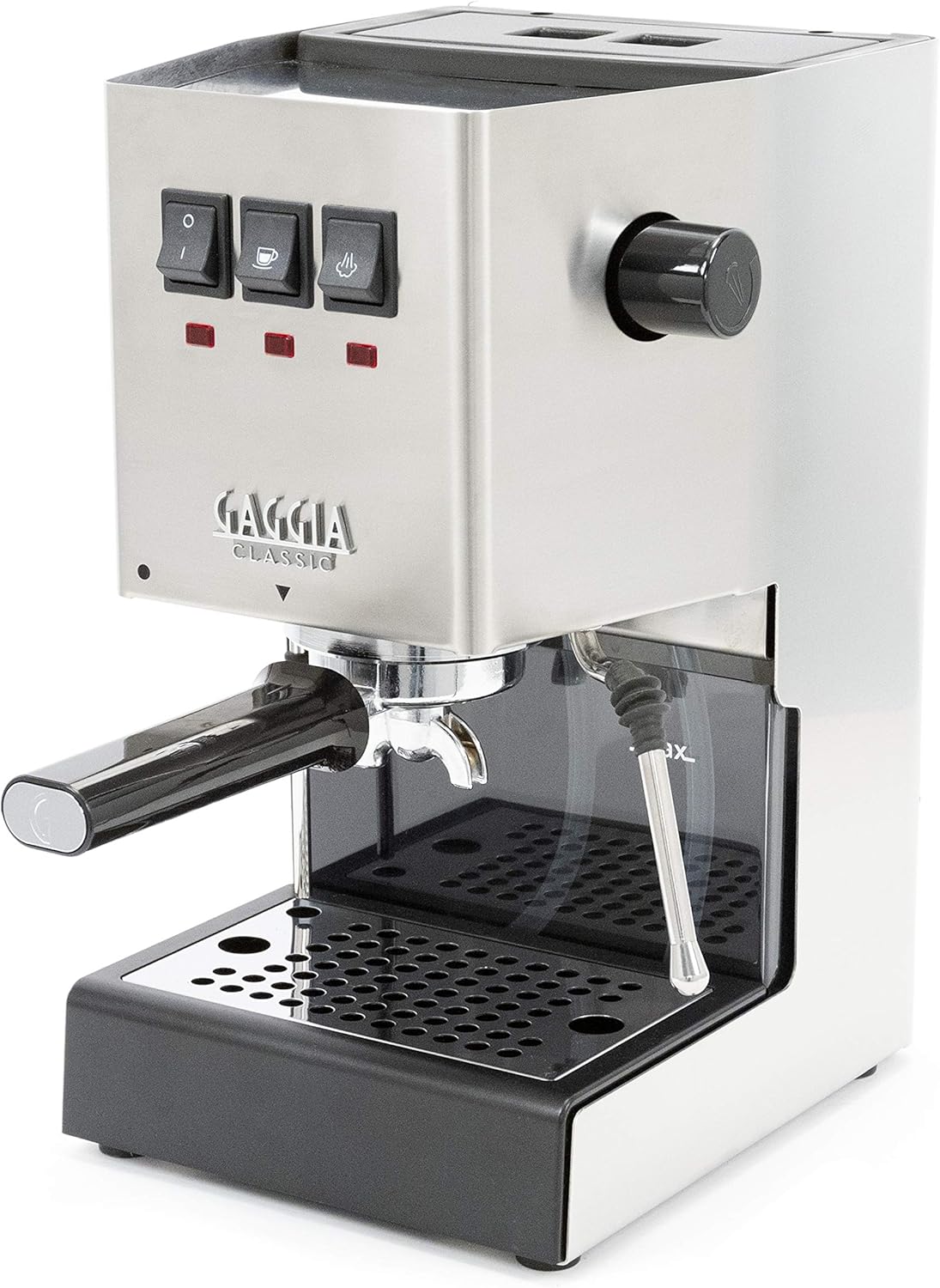
- Gaggia Classic Evo Pro
These are not random picks. They represent five different ways to spend your espresso money under four figures. The Breville Barista Pro packages fast heat-up, an integrated grinder, and a built-in milk steam workflow into one body, with a 13″ x 14″ x 16″ footprint and a 2-liter capacity. The Barista Express Impress also gives you an integrated grinder, but its main idea is simplifying puck prep with the Impress puck system, smart dosing, and assisted tamping in a 12.5″ x 14.5″ x 16.5″ body. The Rancilio Silvia goes in the opposite direction: a classic single-boiler semi-automatic with a 58 mm commercial-style portafilter and a notably compact 11.4″ x 9.2″ x 13.4″ footprint. The KitchenAid KES6403 is one of the slimmer options here at about 6.38″ deep, 13.15″ wide, and 11.26″ high, with a 1.4-liter water tank. And the Gaggia Classic Evo Pro continues the traditional enthusiast path with a steel housing, 9-bar extraction, a 58 mm commercial-style portafilter, and a commercial steam wand.
What I like about this group is that it is strong in different directions. You do not need to pretend these machines all serve the same buyer. They do not. One of them is for the person who wants speed and guidance. One is for the person who wants control and room to grow. One is for the person who wants the cleanest learning bridge into espresso. And one is for the person who already knows they would rather own something more old-school and upgrade around it later.
Best Espresso Machines Under $1000 At a Glance
| Image | Product | Features | Price |
|---|---|---|---|
|
Fast Heat Favorite

|
Built-in grinder + quick ThermoJet heat-up
|
Price on Amazon | |
|
Smart Dosing Pick

|
Assisted tamping + grinder workflow
|
Price on Amazon | |
|
Best Prosumer Classic

|
Commercial-style single-boiler build
|
Price on Amazon | |
|
Compact Style Pick

|
Slim semi-automatic espresso setup
|
Price on Amazon | |
|
Best Entry Prosumer
|
58mm commercial-style platform
|
Price on Amazon |
That’s exactly where the ranking gets interesting.
My Ranking for the Best Espresso Machines Under $1000
1. Breville Barista Pro
2. Rancilio Silvia
3. Breville Barista Express Impress
4. Gaggia Classic Evo Pro
5. KitchenAid Semi-Automatic Espresso Machine
That ranking is not based on raw feature count alone. It is based on what I think gives the strongest mix of espresso quality, usability, long-term satisfaction, and value under $1000.
Why This Price Range Matters So Much
Below this price point, you can still find enjoyable machines, but compromises usually get more obvious. Steam power often feels weaker, temperature control becomes shakier, grinders get omitted, and the machines can feel more like “entry tools” than true home espresso setups. Under $1000, though, you can start getting machines that feel like something you can actually live with for years rather than months.
That does not mean every under-$1000 espresso machine is equally good. It means the good ones start becoming much more compelling. You can get integrated grinders, improved thermal stability, 58 mm portafilters, stronger steam performance, faster heat-up times, and more serious café-style components depending on which route you take. The trade-off is that every brand chooses a different philosophy. Breville tries to make specialty coffee more approachable. Rancilio and Gaggia feel more traditional and technique-driven. KitchenAid aims for an approachable design with a smaller body. So the real decision is less about “highest spec” and more about which workflow you’ll still love six months later.
Breville Barista Pro — Best Espresso Machine Under $1000 Overall

Breville Barista Pro Espresso Machine (BES878BSS) — Brushed Stainless Steel
Key Features
- Integrated conical burr grinder
- Fast heat-up brewing system
- Digital temperature control (PID)
- Low-pressure pre-infusion
- Powerful manual steam wand
Why We Like It
I like this style of machine when you want a clean “grind → dose → brew” rhythm without buying separate gear right away. Once it’s dialed in, it rewards you with a fast, repeatable workflow that feels genuinely café-like at home.
Pros
- All-in-one countertop setup
- Fast warm-up routine
- Consistent temp control
- Strong steaming potential
Cons
- Dial-in takes patience
- Grinder limits upgrades
Bottom Line
A built-in-grinder espresso machine that’s ideal when you want speed, consistency, and a tidy daily workflow.
Price on AmazonIf someone asked me to name the best espresso machine under $1000 for most people, this is the one I would put first. Not because it is perfect, and not because it is the most hardcore machine here, but because it balances too many important things unusually well.
The Barista Pro combines a built-in grinder with a semi-automatic espresso workflow, and that matters. In this budget range, the ability to buy one machine instead of immediately budgeting for a separate grinder is a huge advantage. It also helps that Breville did not make this into a stripped-down all-in-one compromise machine. The Barista Pro uses the brand’s ThermoJet heating system, a Baratza-designed precision conical burr grinder, and a manual steam wand, all inside one fairly kitchen-friendly footprint.
What makes it so easy to recommend is that it covers the middle ground extremely well. It is approachable enough for a motivated beginner, but it still gives you enough control to keep learning. It looks and feels like a serious machine without immediately throwing you into the deep end the way something more old-school can. I think that matters more than people admit. A machine can be brilliant on paper and still end up annoying in daily use if it creates too much friction.
What I’d expect to like most in real-world use is the speed. A faster-heating machine simply gets used more. That sounds almost too simple, but it is true. Espresso setups that feel sluggish often become weekend machines. Ones that feel responsive become everyday machines. That’s a major reason I rate the Barista Pro so highly.
Why I rank it first
- An integrated grinder keeps the full setup cost more manageable.
- Fast-heating design makes daily use easier.
- Strong beginner-to-intermediate balance.
- Still gives you a real espresso ritual rather than reducing everything to push-button coffee.
What keeps it from being perfect?
- Built-in grinders are convenient, but not as upgrade-friendly as separate grinders.
- It is more guided than a Silvia or Gaggia-style enthusiast path.
- Buyers chasing a pure traditional machine may prefer a different feel.
Still, if I were writing for the broadest audience searching this keyword, this would be the machine I would put at the top.
Rancilio Silvia — Best for Serious Espresso Hobbyists Under $1000

Rancilio Silvia Espresso Machine — Stainless Steel
Key Features
- Prosumer-style build quality
- Single-boiler espresso workflow
- 58mm portafilter platform
- Strong steaming potential
- Built for long-term ownership
Why We Like It
I like Silvia-type machines for people who want that “serious espresso hobby” feel in a compact body. It’s not the easiest path, but it’s a rewarding one—especially if you enjoy learning temperature timing and workflow discipline.
Pros
- Excellent durability vibe
- Great espresso potential
- Strong steam capability
- Huge community knowledge
Cons
- Single-boiler workflow learning
- Benefits from a great grinder
Bottom Line
A classic prosumer-style machine for espresso lovers who enjoy mastering technique and want long-term sturdiness.
Price on AmazonThe Rancilio Silvia is the machine in this list that feels least interested in holding your hand. And honestly, that is part of why people love it. It is a classic single-boiler semi-automatic machine with a 58 mm commercial-style portafilter, a steel case, and a footprint of roughly 11.4″ deep, 9.2″ wide, and 13.4″ high.
This is not the machine I would recommend to every beginner. But if someone told me, “I do not want training wheels, I want a real machine I can grow into,” the Silvia immediately becomes one of the strongest answers under $1000.
The reason is simple: it gives you a more traditional espresso foundation. There is less smoothing of the process. Less automation. Less convenience padding. What you get instead is a machine that asks more from you and can reward you more if you are willing to learn. That includes learning grind size properly, managing workflow, understanding temperature behavior, and building milk-steaming skill the old-fashioned way.
There is a reason this machine has had such a long reputation among home espresso enthusiasts. It feels like a machine people buy when they are choosing a path, not just an appliance.
Why I rank it this high
- Serious long-term enthusiast appeal.
- Commercial-style 58 mm workflow.
- Compact body for how substantial it feels.
- Strong foundation if you already plan to buy or own a capable grinder.
Why is it not number one for everyone?
- No built-in grinder.
- More demanding learning curve.
- Less instantly friendly for busy weekday use than Breville’s all-in-one approach.
If I were advising someone who already knows they enjoy the hobby side of espresso, I might even place the Silvia first for them specifically. For the average buyer, though, the Barista Pro is easier to live with.
Breville Barista Express Impress—Best for Easiest Learning Curve Under $1000
Breville Barista Express Impress

Breville Barista Express Impress Espresso Machine (BES876BSS) — Brushed Stainless Steel
Key Features
- Impress puck system workflow
- Smart dosing assistance
- Built-in grinder convenience
- Manual espresso control feel
- Steam wand for milk drinks
Why We Like It
I like this one when someone wants the hands-on espresso vibe, but also wants fewer “messy variables” in the daily routine. The assisted dosing/tamping approach can make consistency feel more achievable, faster.
Pros
- More consistent puck prep
- All-in-one footprint
- Great learning support
- Strong home espresso results
Cons
- Still needs dial-in time
- Workflow takes counter space
Bottom Line
A “manual espresso made easier” machine—excellent when you want better consistency without losing the barista feel.
Price on AmazonThe Barista Express Impress is one of the smartest “bridge” machines in this category. It is clearly aimed at people who want real espresso with fresh-ground beans but do not want the most frustrating parts of manual puck prep ruining the experience.
It includes the Impress puck system, intelligent dosing, and a smart system that helps auto-correct the next dose, along with an integrated grinder in a 12.5″ x 14.5″ x 16.5″ frame and 2-liter capacity.
That design idea makes sense. A lot of people are interested in espresso until the repetition starts: dose too much, dose too little, tamp unevenly, make a mess, waste beans, and get discouraged. The Impress system is Breville’s answer to that. It keeps more of the ritual than a fully automatic machine, but it lowers the pain of learning.
That is why I rank it above some more traditional competitors for certain buyers. Not because it is more “purist,” but because it is more realistic. Espresso enthusiasm dies quickly when every morning feels like a correction session. A machine that gently guides you without removing the pleasure can be a very smart buy.
What I like about its role
- Makes puck prep less intimidating.
- Integrated grinder helps control total cost.
- Great for people who want hands-on espresso without full chaos.
- Likely to fit beginners better than more demanding classics.
What makes me keep it below Barista Pro and Silvia?
- It can feel more system-led than enthusiast-led.
- Some buyers may outgrow the assisted approach.
- Value depends a lot on how much you personally want dosing guidance.
I think this is one of the easiest machines here to recommend to a first serious buyer who wants a smoother on-ramp.
Gaggia Classic Evo Pro — Best Traditional Value Pick Under $1000
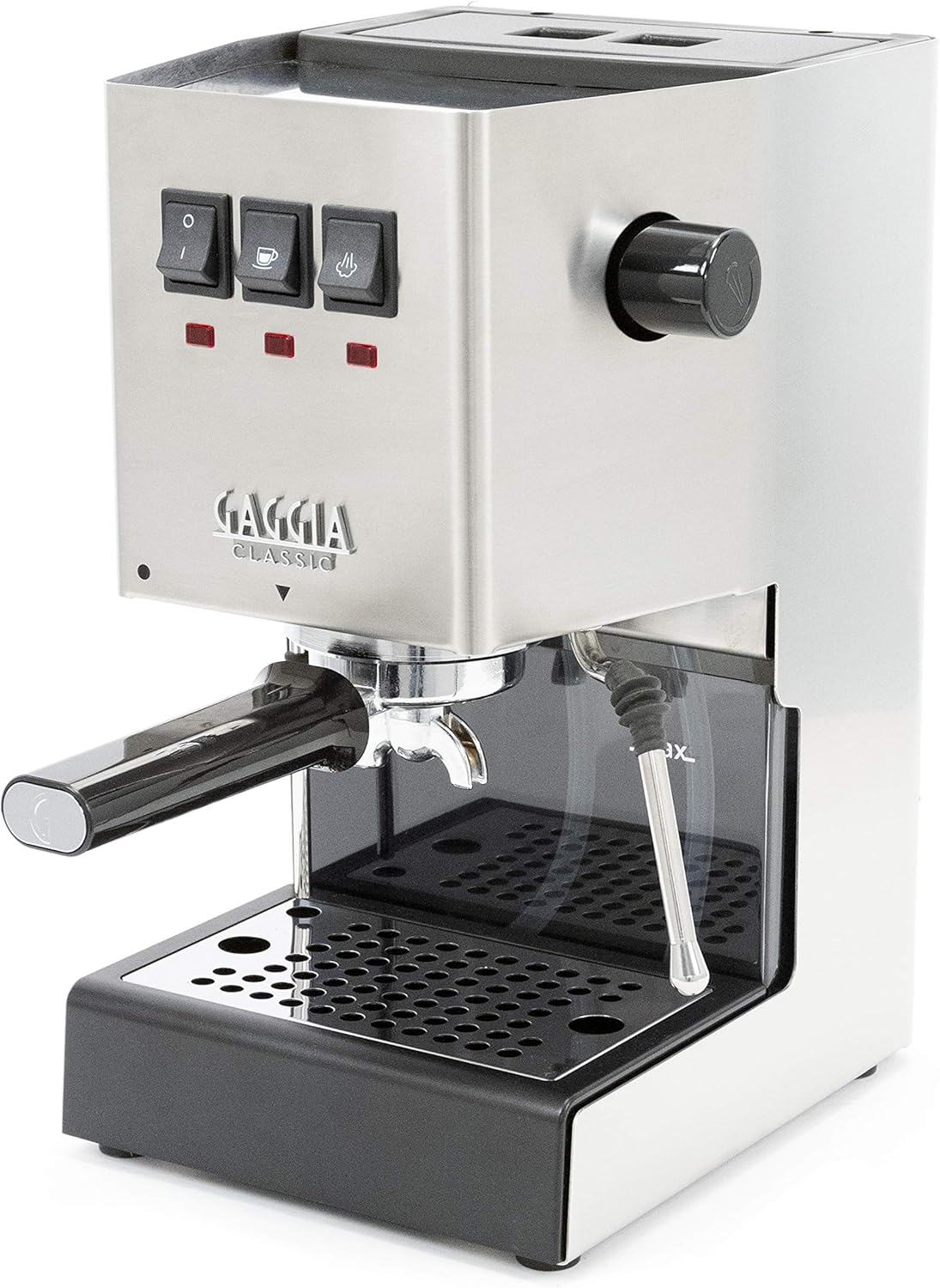
Gaggia Classic Pro / Classic Evo Pro Espresso Machine (RI9380/46) — Brushed Stainless Steel
Key Features
- Commercial-style 58mm portafilter
- Traditional 9-bar style extraction
- Commercial steam wand control
- Solid steel body construction
- Great base for upgrading skills
Why We Like It
I like the Classic Pro line because it teaches you real espresso habits—grind quality matters, puck prep matters, and your steaming technique actually shows up in the cup. It’s the “learn it properly” machine without going huge.
Pros
- True 58mm ecosystem
- Excellent community support
- Strong milk-texturing potential
- Feels built to last
Cons
- Needs a capable grinder
- Learning curve is real
Bottom Line
A classic 58mm semi-auto espresso machine that’s perfect if you want to learn “real espresso” technique at home.
Price on AmazonThe Gaggia Classic Evo Pro sits in a very interesting place. It is not trying to wow you with a screen, smart dosing language, or a beginner-friendly guided system. It is trying to give you a traditional espresso machine with good bones: steel housing, a made-in-Italy build, 9-bar extraction, a 58 mm commercial-style portafilter, and a commercial steam wand.
That formula is why the Gaggia line has lasted so long in home espresso discussions. Machines like this appeal to people who want something closer to the old-school home-barista path without immediately crossing into more expensive territory.
What keeps it below the Silvia for me is that when I think about buyers spending close to four figures, I think the Silvia has a slightly more substantial “serious machine” aura and longer-standing enthusiast pull. But the Gaggia is still very attractive, especially if you like the idea of a machine that feels mechanically simple, proven, and mod-friendly in spirit.
Why it deserves a spot
- Commercial-style 58 mm workflow.
- Traditional enthusiast appeal.
- Solid steel housing and manual steam focus.
- Strong value for buyers who want a classic format.
Why I didn’t rank it higher
- No built-in grinder.
- Less convenient than Breville’s all-in-one options.
- More of a technique machine than a plug-and-play daily comfort machine.
If your taste runs toward straightforward, traditional espresso hardware, this one still makes a lot of sense.
KitchenAid Semi-Automatic Espresso Machine — Best for Slim-Kitchen Simplicity
KitchenAid Semi-Automatic Espresso Machine KES6403

KitchenAid Semi-Automatic Espresso Machine (KES6403)
Key Features
- Space-efficient narrow footprint
- Semi-automatic shot control
- Steam wand for milk drinks
- Removable water tank convenience
- Good for daily cappuccinos
Why We Like It
I like this kind of semi-auto when you want something that looks clean on the counter and feels straightforward to use. It’s the “daily driver” idea: enough control to learn, without turning your morning into a science project.
Pros
- Slim, counter-friendly design
- Approachable for beginners
- Good milk-drink potential
- Easy daily routine
Cons
- Needs a solid grinder
- Milk technique takes practice
Bottom Line
A sleek semi-automatic espresso machine that fits smaller counters and supports a simple, repeatable daily workflow.
Price on AmazonThe KitchenAid KES6403 is the machine here that feels most oriented toward buyers who want something neat, approachable, and visually manageable. At 6.38″ deep, 13.15″ wide, and 11.26″ high, with a 1.4-liter capacity and features including a removable tank and milk frother.
That slim depth is the detail that jumps out immediately. In smaller kitchens, narrow and shallow machines can matter a lot more than spec-heavy buyers sometimes admit. If your kitchen is not built around coffee gear, a compact, friendlier-looking machine can genuinely be the difference between keeping it on the counter and stashing it away.
Why did I place it fifth, then? Mostly because this is an especially competitive group. The KitchenAid may be appealing from a space and style standpoint, but the others feel more specialized and more compelling for espresso-focused buyers. The Brevilles offer more integrated value. The Silvia and Gaggia offer more enthusiast legitimacy. So the KitchenAid ends up as the nicest fit for someone who wants a less intimidating, slimmer, design-conscious machine, but not necessarily the strongest enthusiast pick.
Where it makes sense
- Small kitchens.
- Buyers who want an approachable semi-automatic espresso.
- People who care about a clean visual footprint.
- Households where ease and compactness matter as much as hobby depth.
Why does it rank last in this group?
- Less iconic enthusiast appeal than Silvia or Gaggia.
- Less all-in-one value than the Breville machines.
- Harder to argue as the strongest “performance buy” under $1000.
That said, fifth here is not bad. It is just a reflection of how strong the top of this list is.
Which One Would I Pick for Different Buyers?
If I had to simplify the whole article into buyer types, this is how I’d break it down:
For most people:
Breville Barista Pro
For the serious hobbyist:
Rancilio Silvia
For the easiest learning path into real espresso:
Breville Barista Express Impress
For traditional value and a classic manual feel:
Gaggia Classic Evo Pro
For small kitchens and cleaner visual simplicity:
KitchenAid KES6403
Coffee Beans I’d Pair With These Machines
I usually think machines under $1000 perform best when you stop trying to force them into being ultra-fussy café lab instruments and instead give them coffees that flatter home espresso.
For the Barista Pro and Barista Express Impress, I’d lean into medium- to medium-dark espresso blends with chocolate, caramel, and nutty sweetness. Those machines tend to make the most everyday sense when paired with forgiving coffees that taste good both straight and with milk.
For the Silvia and Gaggia, I’d also start with balanced medium or medium-dark beans, but I’d feel more tempted to experiment once the grinder and workflow are dialed in. Those machines invite deeper espresso play.
For the KitchenAid, I’d keep it simple: approachable blends, low bitterness, and beans you genuinely want to drink daily rather than coffees that need endless dialing in.
Final Verdict
If I were publishing this as a straight answer to the keyword “best espresso machines under $1000,” the Breville Barista Pro would still be my top recommendation. It simply covers the most ground well. It gives you the integrated grinder, the strong feature set, the fast-heating daily convenience, and the kind of experience that feels serious without becoming exhausting.
The Rancilio Silvia is the machine I would point to for buyers who already know they want to build skill and do things the more traditional way. The Barista Express Impress is the one I’d recommend to people who want help, structure, and a gentler learning curve without losing the pleasure of manual espresso. The Gaggia Classic Evo Pro remains a traditional-value favorite with strong café-style fundamentals. And the KitchenAid KES6403 is the compact, design-friendly alternative for people who want espresso at home without their whole kitchen turning into a workshop.
FAQ
What is the best espresso machine under $1000 overall?
For most buyers, I’d choose the Breville Barista Pro because it combines a grinder, fast heat-up, milk-steaming capability, and a strong balance of ease and control in one machine.
Is the Rancilio Silvia better than the Breville Barista Pro?
It depends on the buyer. The Silvia is better for people who want a more traditional enthusiast setup and already expect to pair it with a separate grinder. The Barista Pro is better for buyers who want an all-in-one machine that is easier to live with daily.
Is the Gaggia Classic Evo Pro good for beginners?
Yes, but mainly for beginners who actually want to learn manual espresso. It is less beginner-friendly than the Breville machines because it offers less guidance and no built-in grinder.
Which espresso machine under $1000 is best for small kitchens?
The KitchenAid KES6403 stands out for its slim dimensions, while the Breville Barista Pro is the better all-in-one choice if you want to avoid adding a separate grinder to the counter.
Is a built-in grinder worth it under $1000?
For many people, yes. A built-in grinder helps keep the total cost and counter clutter lower. The trade-off is that a separate grinder often gives more upgrade flexibility later. That’s why integrated machines like the Barista Pro and Barista Express Impress appeal strongly to mainstream buyers.
Full Detailed Comparison Table
| Machine | Best For | Type | Built-In Grinder | Key Strengths | Main Trade-Off | Dimensions |
|---|---|---|---|---|---|---|
| Breville Barista Pro | Best overall | Semi-automatic | Yes. | Fast heat-up, integrated grinder, balanced workflow | Less upgrade freedom than a separate grinder setup | 13″D x 14″W x 16″H |
| Rancilio Silvia | Enthusiasts | Semi-automatic | No | 58 mm portafilter, brass boiler, classic long-term platform | Steeper learning curve | 11.4″D x 9.2″W x 13.4″H |
| Breville Barista Express Impress | Easiest learning curve | Semi-automatic | Yes. | Assisted dosing and tamping, integrated grinder | More guided, less purist feel | 12.5″D x 14.5″W x 16.5″H |
| Gaggia Classic Evo Pro | Traditional value | Semi-automatic | No | Steel body, 9-bar extraction, 58 mm portafilter, steam wand | Needs grinder and technique | 8″D x 9.5″W x 14.2″H |
| KitchenAid KES6403 | Small kitchens | Semi-automatic | No | Slim body, approachable design, removable tank | Less compelling enthusiast value than rivals | 6.38″D x 13.15″W x 11.26″H |
At-a-Glance Ranked List
| Rank | Machine | Why I Put It There |
|---|---|---|
| 1 | Breville Barista Pro | Best overall mix of performance, convenience, and value |
| 2 | Rancilio Silvia | Best traditional enthusiast machine under this budget |
| 3 | Breville Barista Express Impress | Best for guided learning and easier puck prep |
| 4 | Gaggia Classic Evo Pro | Best traditional-value alternative with classic espresso appeal |
| 5 | KitchenAid KES6403 | Best slim-space lifestyle pick, but not the strongest espresso value of the group |


