
Best 10 Espresso Machines Under $1500


One Hundred Coffee is reader-supported, and some products displayed may earn us an affiliate commission. Details
I have found that a $1,500 espresso-machine budget is both generous and surprisingly easy to misuse. It is enough to buy a machine that can transform a home coffee routine, but it is also enough to pay for automation, screens, grinders, and drink menus that look impressive while leaving the most important parts of espresso only slightly improved.
When I compare machines in this range, I start with the daily sequence rather than the headline specification. I look at how quickly the machine becomes ready, how naturally the grinder and portafilter work together, whether the milk system suits the drinks I actually make, and how much cleaning remains after the cup is finished. A feature only earns its place when it removes friction or gives me control I can taste.
This price range also brings several very different machine types into the same conversation. A guided model such as the Barista Touch Impress still asks me to handle a portafilter, while the Dinamica Plus and Philips 5500 move toward one-touch bean-to-cup convenience. The Gaggia Classic Pro E24 goes in the opposite direction and gives me a traditional 58mm platform with no built-in grinder at all.
Top 3 Espresso Machines Under $1,500 — Editor’s Picks

Breville Barista Touch Impress
- Touchscreen drink guidance
- Impress assisted tamping
- 30 grinder settings
- Auto MilQ texturing
- Cold espresso programs

De’Longhi La Specialista Maestro
- Integrated burr grinder
- Smart tamping station
- Cold extraction
- Automatic milk carafe
- Manual steam wand

Breville Barista Touch
- Three-second heat-up
- Touchscreen drink menu
- 30 grinder settings
- Eight saved drinks
- Automatic microfoam
I do not consider one format universally better. The right machine depends on whether the owner wants to learn puck preparation, make several milk drinks quickly, save recipes for different people, or press one button before an early commute. The mistake is buying the most automated machine when the ritual is the attraction, or buying the most manual machine when the ritual is the obstacle.
The under-$1,500 ceiling is particularly strong for integrated-grinder semi-automatics. Breville and De’Longhi use the budget to combine grinding, dosing assistance, fast heating, and milk control in one body. These machines keep the counter organized and simplify the first purchase, though they also tie the owner to the built-in grinder. A separate machine and grinder are more modular, but the two-appliance route demands more space and more decisions.
I pay close attention to heating architecture because it shapes the entire morning. ThermoJet machines become ready quickly and suit single drinks or rushed routines. Thermocoil systems need a little more patience but remain practical. The Gaggia’s brass single boiler rewards a longer warm-up and a clear brew-to-steam rhythm. None of these systems is automatically superior; each creates a different relationship between speed, temperature stability, and steam capacity.
The grinder deserves equal attention. Integrated grinders are convenient and capable, but their adjustment range and burr design define the ceiling of the complete machine. A broader range helps when beans change, while a dose-correction system can make a modest grinder easier to use. The Gaggia avoids that compromise by requiring a separate grinder, which can produce the best long-term path if the remaining budget is spent carefully.
Milk workflow divides the list more sharply than espresso controls. Auto MilQ, LatteCrema, and LatteGo systems can produce repeatable drinks for several users, but they also introduce sensors, carafes, and cleaning routines. Manual steam wands ask more from the owner and give more freedom in return. I prefer automatic milk when speed and consistency dominate; I prefer manual steaming when texture and latte art are part of the experience.
I also separate guidance from automation. A touchscreen can explain grind, dose, and milk decisions while leaving the owner in control. That is different from a super-automatic machine that forms and discards the puck internally. Guidance helps a person become more capable. Automation helps a person avoid the steps entirely. Both are valuable, but they serve different motivations.
Prices in this category can move around the ceiling, especially during promotions. I treat the machines here as models positioned at or below $1,500 rather than promising that every finish will remain at the same price every day. The practical question is whether the complete package still makes sense once a scale, cleaning supplies, a milk pitcher, water filters, and fresh coffee are included.
The strongest machines below deliver a coherent ownership experience. The Barista Touch Impress leads with guidance, assisted puck preparation, automatic milk, and speed. The Maestro follows with one of the broadest hybrid workflows. Fully automatic models favor convenience, while the Gaggia and original Barista Express remain compelling because they devote more of the budget to core brewing and hands-on control.
Best 10 Espresso Machines Under $1,500 — At a Glance
Breville Barista Touch Impress
- Touchscreen drink guidance
- Impress assisted tamping
- 30 grinder settings
- Auto MilQ texturing
- Cold espresso programs
- Six saved drinks
De’Longhi La Specialista Maestro
- Integrated burr grinder
- Smart tamping station
- Cold extraction
- Automatic milk carafe
- Manual steam wand
- Eight drink presets
Breville Barista Touch
- Three-second heat-up
- Touchscreen drink menu
- 30 grinder settings
- Eight saved drinks
- Automatic microfoam
- Compact footprint

De’Longhi Dinamica Plus
- 24 one-touch recipes
- Four user profiles
- 13 grinder settings
- Three milk textures
- Removable brew unit
- Smart drink ordering
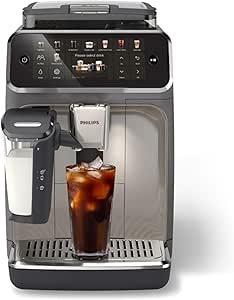
Philips 5500 LatteGo
- 20 hot and iced drinks
- Two-part LatteGo
- Ceramic burr grinder
- SilentBrew design
- Four user profiles
- AquaClean compatibility

De’Longhi La Specialista Touch
- Ten preset recipes
- 15 grinder settings
- Bean Adapt guidance
- Cold brew in minutes
- Five foam levels
- Six bean profiles

Breville Barista Pro
- Three-second heat-up
- 30 grinder settings
- LCD shot guidance
- Manual steam wand
- 54mm portafilter
- Compact all-in-one body

Breville Barista Express Impress
- Intelligent dose correction
- Assisted tamping
- 25 grinder settings
- PID thermocoil
- Manual steam wand
- 54mm portafilter
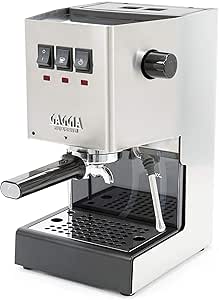
Gaggia Classic Pro E24
- Lead-free brass boiler
- 58mm portafilter
- Nine-bar extraction
- Three-way solenoid
- Commercial steam wand
- Made in Italy

Breville Barista Express
- Integrated burr grinder
- 16 grinder settings
- PID thermocoil
- Low-pressure preinfusion
- Manual steam wand
- Volumetric shot buttons
Quick Match: Which Espresso Machine Under $1,500 Fits You Best?
| Order | Espresso Machine | Award | Best Match |
|---|---|---|---|
| 1 | Breville Barista Touch Impress | Best Overall | Maximum guidance |
| 2 | De’Longhi La Specialista Maestro | Best Hybrid | Hot and cold range |
| 3 | Breville Barista Touch | Best Touchscreen | Fast personalization |
| 4 | De’Longhi Dinamica Plus | Best Automatic | One-touch drinks |
| 5 | Philips 5500 LatteGo | Best Variety | Easy milk cleanup |
| 6 | De’Longhi La Specialista Touch | Best Guided | Learning espresso |
| 7 | Breville Barista Pro | Best Manual | Fast hands-on use |
| 8 | Breville Barista Express Impress | Best Tamping | Cleaner puck prep |
| 9 | Gaggia Classic Pro E24 | Best Traditional | Pure espresso skills |
| 10 | Breville Barista Express | Best Value | Proven value |
1. Best Overall: Breville Barista Touch Impress
The strongest all-around choice for buyers who want café-style espresso, guided puck preparation, automatic microfoam, and a polished touchscreen workflow without crossing beyond the $1,500 ceiling.
Breville Barista Touch ImpressThe Barista Touch Impress brings together the parts that usually live in separate machines: a grinder, assisted dosing, a repeatable tamp, guided extraction, automatic milk texturing, and a broad drink menu. It still uses a real portafilter, so the cup retains more hands-on character than a fully automatic machine, but the screen removes much of the uncertainty that makes first-time espresso ownership frustrating.
Price on AmazonTechnical Specifications & Daily Features
- Machine style: Guided semi-automatic with integrated grinder
- Interface: Color touchscreen with step-by-step drink guidance
- Drink menu: 13 café-style presets plus personalized drinks
- Grinder: Integrated conical burr grinder with 30 settings
- Puck preparation: Intelligent dosing with assisted tamping
- Heating: Fast ThermoJet heating system
- Portafilter: 54mm stainless-steel format
- Milk system: Hands-free Auto MilQ with adjustable temperature and texture
- Cold drinks: Cold Brew and Cold Espresso programs
- Best user: A buyer who wants real portafilter espresso with the least guesswork
Ownership Experience: Pros & Cons
Pros
- Excellent bridge between automation and real espresso
- Assisted dosing and tamping reduce mess
- Automatic milk is unusually consistent
- Fast enough for busy weekday routines
Cons
- Sits right at the budget ceiling
- Touchscreen guidance can feel excessive to experienced baristas
- Integrated grinder limits future grinder upgrades
30-Day Workflow & Who Should Buy It?
During the first month, the most useful habit is to let the dose-correction system settle before changing several variables at once. I choose a fresh medium roast, find a grind range that produces a steady extraction, and allow the machine to refine the dose. Once that foundation is stable, drink strength, milk texture, and temperature become easy to personalize.
Choose it when convenience matters but a capsule or fully automatic machine feels too detached. Skip it when you already own a high-end grinder, prefer a 58mm commercial platform, or want every step to remain completely manual.
The Barista Touch Impress takes first place because it solves the widest range of everyday problems without turning the process into a push-button approximation of espresso. I still lock in a portafilter, watch the extraction, and make decisions about beans and grind size, yet the machine quietly handles the repetitive parts that most often derail consistency. The dosing system learns the correct amount, the assisted lever applies a clean tamp, and the screen shows where the routine needs attention.
The machine is particularly convincing in a shared household. A confident user can move quickly through familiar settings, while a beginner can follow the on-screen sequence without memorizing dose, tamp, milk, and cleaning steps. That shared usability matters more than an oversized menu. It is easy for an expensive machine to become one person’s hobby and everyone else’s forbidden appliance; this Breville is approachable enough that several people can use it without undoing the setup.
Milk performance is another reason it leads the group. Auto MilQ can texture dairy milk and common alternatives with selectable temperature and foam levels, which makes weekday lattes far more repeatable. I can still intervene and steam manually when I want to practice. That combination gives the machine a useful progression: automation at the beginning, greater control later, and no requirement to replace the entire setup once confidence improves.
The integrated grinder is capable and convenient, but it is also the machine’s long-term limitation. A separate premium grinder offers more freedom with burr design, retention, and alignment. Here, the grinder is part of the appliance, so the owner is buying one complete system. For most people shopping under $1,500, that integration is a benefit because it keeps the counter tidy and the workflow fast. For a hobbyist who already owns an advanced grinder, a grinder-free machine may be the better investment.
The Barista Touch Impress earns its price when the goal is to make good espresso and milk drinks every day rather than to build a modular laboratory. It is not the most traditional machine here, nor the most mechanically simple, but it is the one I would trust to satisfy the widest mix of beginners, busy professionals, and households that want café-style drinks without a long morning learning curve.
2. Best Hybrid: De’Longhi La Specialista Maestro
The best hybrid choice for households that want a real portafilter, integrated grinding and tamping, automatic milk drinks, manual latte-art control, and fast cold coffee from one substantial machine.
De’Longhi La Specialista MaestroLa Specialista Maestro feels like two espresso machines sharing one chassis. It can prepare polished milk drinks with the LatteCrema carafe, yet it also gives the owner a manual steam wand for more traditional texture control. The grinder and tamping station reduce mess, while cold extraction expands the menu beyond hot espresso and iced drinks made by pouring hot coffee over ice.
Price on AmazonTechnical Specifications & Daily Features
- Machine style: Hybrid semi-automatic with grinder and assisted preparation
- Grinder: Integrated conical burr grinder with 15 settings
- Tamping: Built-in smart tamping station
- Drink selection: Eight preset hot and cold recipes
- Cold coffee: Cold Extraction Technology for fast cold drinks
- Milk options: LatteCrema Hot system and manual My LatteArt wand
- Temperature: Active temperature control with multiple selections
- Dosing: Selectable dose level for single and double baskets
- Best strength: Switching between automatic convenience and manual milk control
- Best user: A household that wants broad drink variety without giving up a portafilter
Ownership Experience: Pros & Cons
Pros
- Excellent balance of guided and manual control
- Cold coffee adds real seasonal versatility
- Automatic and manual milk options
- Clean built-in tamping workflow
Cons
- Large footprint compared with compact Breville models
- More components require organized cleaning
- Touch-free convenience is lower than a full super-automatic
30-Day Workflow & Who Should Buy It?
The first month is easiest when I learn one path at a time. I begin with espresso and manual milk, then add the LatteCrema carafe, and finally explore cold extraction. Keeping those workflows separate at first prevents the menu from feeling larger than it really is.
Choose it for a mixed household, frequent milk drinks, and year-round hot-and-cold variety. Skip it when counter depth is limited or when the owner wants a simple machine with very few milk parts.
The Maestro takes second place because its flexibility is unusually practical. Many hybrid machines offer a few automated touches but still force the owner into one fixed style of preparation. This De’Longhi lets me move between automatic milk, manual steaming, hot espresso, and fast cold extraction without changing appliances. That makes it especially attractive for a household where one person wants a quick latte and another wants to practice pouring a flat white.
The smart tamping station is more than a convenience feature. Integrated-grinder machines often create their biggest mess between the grinder chute and tamping mat. Here, the portafilter stays in place while the dose is compressed, which keeps loose grounds contained and makes consecutive drinks calmer. The process still feels connected to espresso because I handle the portafilter and observe the extraction, but the repetitive mechanics are streamlined.
Cold extraction gives the Maestro a clearer identity than a machine that merely adds an iced-coffee button. The lower-temperature process is useful when I want a smoother, refreshing drink without brewing a hot shot directly over ice. It does not replace every style of immersion cold brew, but it makes a genuinely different coffee available in minutes and broadens the machine’s value through warmer months.
The machine’s size and complexity are the main tradeoffs. There is a grinder, tamping system, brew group, hot-milk carafe, manual steam wand, cold-drink capability, and several removable parts to keep clean. Owners who enjoy a minimal station may find the Barista Pro or Gaggia more satisfying. Owners who want one machine to cover almost every café order are more likely to appreciate the Maestro’s abundance.
I recommend the Maestro to buyers who see $1,500 as a complete-station budget and do not already own a grinder. It uses that budget to deliver range rather than a single uncompromising specialty. The experience is less guided than the Barista Touch Impress, but the milk choices and cold workflow give it a character that the Breville cannot fully duplicate.
3. Best Touchscreen: Breville Barista Touch
The best touchscreen value for buyers who want automatic milk and rapid personalized drinks but are comfortable dosing and tamping the portafilter themselves.
Breville Barista TouchThe original Barista Touch remains one of the most balanced all-in-one machines under $1,500. It heats quickly, saves personalized drinks, automates milk texture, and keeps the counter footprint manageable. It asks for more puck-preparation skill than the Touch Impress, but that is exactly why some owners prefer it: the screen helps without controlling every movement.
Price on AmazonTechnical Specifications & Daily Features
- Machine style: Touchscreen semi-automatic with integrated grinder
- Heating: ThermoJet system with rapid heat-up
- Grinder: Integrated conical burr grinder with 30 settings
- Interface: Swipe-and-select touchscreen
- Personalization: Up to eight named custom drinks
- Portafilter: 54mm stainless-steel format
- Milk: Automatic wand with adjustable temperature and eight texture levels
- Extraction: Low-pressure pre-infusion followed by controlled espresso extraction
- Best strength: Fast personalized milk drinks without assisted tamping
- Best user: Someone comfortable tamping manually who wants automatic milk
Ownership Experience: Pros & Cons
Pros
- Very fast daily workflow
- Excellent automatic milk control
- Clear touchscreen personalization
- Smaller and less expensive than Touch Impress
Cons
- No assisted tamping system
- Older interface and puck workflow
- Integrated grinder remains the upgrade ceiling
30-Day Workflow & Who Should Buy It?
Over thirty days, I would spend the first week standardizing dose and tamp, then use the saved-drink slots to lock in the household’s most common recipes. The machine becomes dramatically faster once those two parts of the routine stop changing.
Choose it when automatic milk and speed matter more than assisted tamping. Skip it when cold drinks are central or when a more traditional commercial-size portafilter is the priority.
The Barista Touch works best for a user who wants a polished interface but does not need the machine to supervise tamping. I grind into the portafilter, distribute the coffee, tamp, and lock in the basket before using the screen to manage extraction and milk. The experience is quicker and cleaner than a fully manual station, yet it still leaves enough physical control to feel like espresso preparation rather than beverage selection.
ThermoJet heating changes how often the machine gets used. A long warm-up can be satisfying on a weekend, but it becomes a reason to skip espresso before work. The Barista Touch is ready almost immediately, and the automatic wand can texture milk while I prepare the cup. The result is a workflow that fits into ordinary mornings instead of demanding a protected block of time.
The touchscreen is most valuable after the first week. Once I save a preferred flat white, cappuccino, and latte, the menu becomes a set of household shortcuts rather than a novelty. Strength, milk temperature, and foam level can be adjusted without entering a deep settings structure. A partner or guest can use the saved recipe without changing the underlying grinder setup.
Compared with the Touch Impress, this machine needs more attention around dose height and tamp level. That can lead to inconsistency during the learning period, but it also teaches useful puck-preparation habits. Buyers who enjoy that involvement can save money and still receive the same broad benefits of fast heating and automatic milk.
The Barista Touch is the sensible middle ground in this group. It is more automated than the Barista Pro and Express models, less expensive than the Touch Impress, and more compact than the Maestro. It lacks the newest cold-extraction features, but for hot espresso and milk drinks it remains one of the easiest machines to live with.
4. Best Automatic: De’Longhi Dinamica Plus
The best fully automatic choice for households that want twenty-four recipes, four user profiles, automatic milk, and bean-to-cup drinks with almost no manual preparation.
De’Longhi Dinamica PlusThe Dinamica Plus is the outlier in this group because it removes the portafilter entirely. It grinds, doses, compresses, brews, discards the puck, and textures milk through a removable carafe. That makes it less flexible for espresso experimentation but far more convenient for a household that wants dependable drinks before work, between meetings, or after dinner.
Price on AmazonTechnical Specifications & Daily Features
- Machine style: Fully automatic bean-to-cup espresso machine
- Drink menu: 24 one-touch hot coffee and milk recipes
- Profiles: Four customizable user profiles
- Grinder: Integrated conical burr grinder with 13 settings
- Milk system: LatteCrema Hot carafe with three froth settings
- Interface: Color touchscreen with frequently used drinks prioritized
- Brewing: Automatic grinding, dosing, tamping, extraction, and puck disposal
- Cleaning: Removable brew unit and dishwasher-safe milk components
- Best strength: Maximum convenience for several daily users
- Best user: A household that values one-touch consistency over portafilter control
Ownership Experience: Pros & Cons
Pros
- Simplest complete workflow in the group
- Large drink menu with user profiles
- Easy repeatability for several people
- Milk carafe stores in the refrigerator
Cons
- Less control over puck preparation
- Espresso texture differs from a portafilter machine
- At the top of the budget range
30-Day Workflow & Who Should Buy It?
The first month is mostly about editing the menu. I create profiles, move the most useful drinks to the front, and adjust strength before changing grinder settings. The grinder should be altered gradually while it is running, then left alone long enough to judge several cups.
Choose it for true one-touch coffee and a shared household. Skip it when the ritual of grinding into a portafilter and steaming milk manually is part of the reason you want an espresso machine.
The Dinamica Plus belongs here because many buyers using a $1,500 budget are not actually searching for a new hobby. They want fresher coffee than a capsule system, more choice than a drip machine, and less work than a manual espresso station. This De’Longhi answers that need directly. The owner chooses a drink, adjusts strength and volume, and lets the machine complete the rest.
Four profiles make the large menu manageable. One person can keep a short, strong espresso and a dry cappuccino, while another saves a long coffee and a mild latte. The screen prioritizes frequently used recipes, so the interface becomes faster with normal use. That personalization is more meaningful than a high recipe count by itself because it reduces the daily path to the drinks that matter.
The LatteCrema system is designed for repeatability rather than latte-art practice. Milk texture can be adjusted, the carafe can move to the refrigerator, and several drinks can be prepared without learning steam wand position. The foam is consistent and convenient, though a skilled barista with a manual wand can create finer control over microfoam density and integration.
Espresso expectations need to match the format. A super-automatic uses a compact internal brew unit and automatic puck formation. It can make satisfying, aromatic espresso-style drinks, but it will not offer the same basket depth, dose freedom, or extraction experimentation as the Gaggia or Breville portafilter machines. Its advantage is not maximum control; it is repeatable coffee with almost no mess.
The Dinamica Plus is the best choice here for a busy family, an office-like home routine, or anyone who has previously abandoned a manual machine because the steps felt excessive. It is the wrong choice for someone who wants to improve distribution, pressure, and milk-pouring skills. Within the under-$1,500 category, it represents the convenience extreme.
5. Best Variety: Philips 5500 LatteGo
The best variety-focused automatic machine for buyers who want twenty hot and iced drinks, simple two-part milk cleanup, user profiles, and a quieter everyday bean-to-cup routine.
Philips 5500 LatteGoThe Philips 5500 LatteGo competes through ease rather than theatrical luxury. Its milk carafe has only two main pieces and no internal tube, which makes rinsing faster than many automatic systems. The machine also offers a broad drink menu, profile support, a ceramic grinder, and iced-coffee options, giving a family plenty of choice without requiring portafilter skills.
Price on AmazonTechnical Specifications & Daily Features
- Machine style: Fully automatic espresso machine
- Drink menu: 20 hot and iced coffee selections
- Milk system: Two-piece LatteGo carafe without internal tubes
- Grinder: Ceramic burr grinder with multiple adjustment steps
- Profiles: Four user profiles plus guest access
- Noise control: SilentBrew sound-reduction design
- Start-up: QuickStart function for faster drink preparation
- Water care: AquaClean filter compatibility
- Best strength: Large menu with exceptionally simple milk cleanup
- Best user: A family that values variety and low-maintenance milk drinks
Ownership Experience: Pros & Cons
Pros
- LatteGo is very easy to rinse
- Broad hot and iced recipe range
- Ceramic grinder and user profiles
- Friendly for multiple casual users
Cons
- Less manual control than hybrid machines
- Milk texture favors convenience
- Large menu can exceed what many owners use
30-Day Workflow & Who Should Buy It?
During the first month, I would create profiles immediately and keep the milk carafe rinse as part of every drink rather than postponing it. The removable brew group gets a weekly rinse, while grinder changes stay small and infrequent.
Choose it for menu variety and simple milk care. Skip it when the main goal is dense, manually controlled espresso or latte-art microfoam.
The 5500 earns its place because maintenance determines whether an automatic milk machine remains enjoyable after the first month. A complicated carafe can make a one-touch latte feel like a poor bargain once every joint and tube needs attention. LatteGo is easier to understand: milk enters a compact chamber, mixes with air, and pours directly into the cup. The pieces separate quickly and can be rinsed without threading a brush through a hose.
Twenty drinks create useful range, especially when several people share the machine. Espresso, coffee, cappuccino, flat white, iced coffee, and other variations can be adjusted and saved to profiles. The menu is larger than most households need, but the profile structure keeps personal favorites accessible.
The ceramic grinder and removable brew group support practical ownership. Grinder adjustments should still be made carefully, and the brew group benefits from routine rinsing and lubrication. The maintenance is not zero, yet it is visible and manageable. Owners who follow a simple weekly routine are less likely to experience the gradual decline in flow and taste that can make an automatic machine seem inconsistent.
Compared with the Dinamica Plus, the Philips feels less focused on dense Italian milk drinks and more focused on variety, quiet operation, and easy cleanup. Espresso body can be lighter than a well-dialed portafilter shot, and LatteGo foam is designed for repeatability rather than hand-poured art. That tradeoff is appropriate for the buyer who values speed over technique.
I recommend the Philips 5500 to a household that wants an automatic machine but does not want milk-system cleaning to dominate the experience. It is especially appealing when both hot and iced drinks are popular. Buyers who primarily drink straight espresso may be happier putting the same budget into the Gaggia and a capable grinder.
6. Best Guided: De’Longhi La Specialista Touch
The best guided learning machine for buyers who want a touchscreen, Bean Adapt feedback, automatic milk, cold brew, and enough manual involvement to build real espresso skills.
De’Longhi La Specialista TouchLa Specialista Touch is a compact, modern alternative to the Maestro. It guides grind, dose, pre-infusion, temperature, and milk choices through a color display, yet the user still handles the portafilter and tamp. Ten recipes, six bean profiles, automatic milk, and fast cold extraction make it unusually versatile for its size.
Price on AmazonTechnical Specifications & Daily Features
- Machine style: Guided semi-automatic with integrated grinder
- Interface: 3.5-inch color touchscreen
- Drink menu: Ten customizable hot and cold recipes
- Grinder: Italian-made conical burr grinder with 15 settings
- Guidance: Bean Adapt support for grind, dose, pre-infusion, and temperature
- Milk: Automatic wand with five froth levels and four temperatures
- Profiles: Six saved bean profiles
- Cold coffee: Cold extraction in under five minutes
- Extraction: PID-supported temperature control and 9-bar brewing
- Best user: A learner who wants feedback without assisted lever tamping
Ownership Experience: Pros & Cons
Pros
- Excellent on-screen learning support
- Automatic and manual milk modes
- Useful cold-drink capability
- Compact relative to the Maestro
Cons
- Fewer grind settings than top Breville models
- Newer platform with less long-term ownership history
- Still requires manual distribution and tamping
30-Day Workflow & Who Should Buy It?
The first month should be organized by bean rather than by drink. I create one bean profile, learn espresso and milk with that coffee, then add a second roast only after the first recipe is stable. That makes the screen’s recommendations easier to interpret.
Choose it when guidance and skill-building matter equally. Skip it when assisted tamping is essential or when a completely automatic bean-to-cup routine is the real goal.
The La Specialista Touch is designed around feedback. Instead of presenting a drink icon and hiding the preparation, it helps the owner understand how the bean and recipe interact. Bean profiles store useful starting points, and the screen suggests changes when the extraction needs correction. That makes the machine particularly attractive to someone who wants to learn but finds an entirely manual setup intimidating.
The milk system offers a similar progression. Automatic mode can produce repeatable foam at selectable temperatures and textures, while manual mode leaves the wand under the user’s control. A beginner can start with automatic cappuccinos, then practice manual stretching and rolling without buying another machine. This is a better long-term path than an appliance that locks the owner into one fixed milk texture.
Cold brew in minutes broadens the menu without requiring a separate brewer. The process uses lower-temperature extraction rather than simply cooling a hot shot, so the drink has a smoother profile and works well with milk or ice. It is one of the features that makes the machine feel current rather than like a touchscreen added to an older espresso platform.
The main competition comes from Breville. The Barista Touch Impress provides more direct puck assistance and a wider grinder range, while the original Barista Touch has a very mature automatic-milk workflow. The De’Longhi counters with bean guidance, cold extraction, and a choice between automatic and manual milk in a compact format.
I place it sixth only because the machines above it are stronger for a particular broad audience: the Maestro offers more hardware flexibility, the super-automatics are easier for pure convenience, and the Breville Touch models are established all-rounders. For a learner who wants guided improvement, however, this may be the most engaging machine in the group.
7. Best Manual: Breville Barista Pro
The best manual all-in-one option for home baristas who want rapid heat-up, an informative display, thirty grinder settings, and full control over tamping and milk texture.
Breville Barista ProThe Barista Pro strips away automatic milk and guided tamping while retaining the fast ThermoJet heater and integrated grinder. It is a better fit for someone who wants to learn espresso through repetition but does not want a separate grinder or a long boiler warm-up. The LCD provides useful timing and grind feedback without turning the experience into a touchscreen menu.
Price on AmazonTechnical Specifications & Daily Features
- Machine style: Manual semi-automatic with integrated grinder
- Heating: ThermoJet rapid-heating system
- Grinder: Integrated conical burr grinder with 30 settings
- Interface: LCD display for grind and extraction information
- Portafilter: 54mm stainless-steel format
- Milk: Manual steam wand
- Extraction: Low-pressure pre-infusion followed by controlled pressure
- Workflow: Grind, dose, tamp, extract, and steam manually
- Best strength: Fast start with meaningful hands-on control
- Best user: A home barista who wants speed without touchscreen automation
Ownership Experience: Pros & Cons
Pros
- Quickest manual workflow in the group
- Clear display without a large touchscreen
- Strong value for an integrated setup
- Good platform for building technique
Cons
- Manual milk demands practice
- No assisted tamping
- Single integrated grinder limits modular upgrades
30-Day Workflow & Who Should Buy It?
The first thirty days are most productive when I use a scale and record dose, yield, and time. I make one grinder change at a time, then repeat the same milk quantity until the steam routine becomes automatic.
Choose it for a fast manual workflow and integrated grinder. Skip it when automatic milk or assisted tamping is necessary for daily use.
The Barista Pro is where the experience becomes more deliberately hands-on. I grind into the portafilter, distribute, tamp, start the shot, and steam the milk manually. The machine does not correct a poor puck or stop me from adding too much air to the pitcher. That responsibility creates a steeper learning curve, but it also makes improvement visible from one drink to the next.
ThermoJet heating keeps that practice accessible. Traditional machines can require enough warm-up time that a single afternoon espresso feels inefficient. The Pro is ready quickly, so I can make one drink, clean the station, and move on. The group and portafilter still benefit from a short warming flush, but the overall routine remains fast.
The grinder’s broader adjustment range gives more room than the original Barista Express, and the display helps track the relationship between grind, dose, and shot time. It is not a replacement for a premium standalone grinder, yet it is capable enough for fresh medium roasts and common home recipes. The integrated design also reduces the counter width and cable clutter of a two-appliance setup.
Milk is the dividing point. A manual wand can create more personalized microfoam than an automatic carafe, but only after the user learns air introduction and vortex control. Early drinks may be bubbly or too hot. With practice, the same wand becomes one of the reasons to keep the machine because it supports latte art and texture changes across cappuccino, flat white, and cortado.
The Barista Pro is a strong recommendation for someone who finds the Touch models too automated and the Gaggia too bare. It delivers modern speed with traditional responsibility. The price leaves room in the budget for a scale, a better tamper, a distribution tool, and fresh coffee.
8. Best Tamping: Breville Barista Express Impress
The best tamping-assisted choice for buyers who want intelligent dosing, a cleaner puck, manual milk control, and a traditional interface without paying for a touchscreen.
Breville Barista Express ImpressThe Barista Express Impress takes the familiar Barista Express platform and fixes its most frustrating beginner problem: inconsistent dosing and tamping. The side lever compresses the puck inside the machine, while dose correction helps the grinder learn how much coffee the basket needs. Milk remains manual, preserving a meaningful skill-building path.
Price on AmazonTechnical Specifications & Daily Features
- Machine style: Assisted manual semi-automatic with grinder
- Grinder: Integrated conical burr grinder with 25 settings
- Dosing: Intelligent dose calculation and correction
- Tamping: Assisted lever tamp with a consistent finish
- Heating: Thermocoil with PID temperature control
- Portafilter: 54mm stainless-steel format
- Milk: Manual steam wand
- Shot control: Preset single or double plus manual volume
- Best strength: Reducing puck-preparation mess while keeping manual milk
- Best user: A beginner who wants help with dosing and tamping but not a touchscreen
Ownership Experience: Pros & Cons
Pros
- Clean and repeatable tamping workflow
- Easy transition into manual espresso
- Good grinder adjustment range
- Less expensive than touchscreen Impress
Cons
- Slower heat-up than ThermoJet models
- Manual milk still requires skill
- Large body for its level of automation
30-Day Workflow & Who Should Buy It?
For the first month, I would trust the dose indicator and resist over-adjusting the internal burr. Once the dose settles, I use the external grind control to tune shot time. Milk practice stays separate so one difficult variable does not hide another.
Choose it when clean puck preparation and manual milk are the right balance. Skip it when fast ThermoJet heating or automatic milk is more important.
The Express Impress is easy to underestimate because its front panel looks more traditional than the Touch machines. The important change happens in the puck system. Loose grounds stay closer to the portafilter, the tamp pressure is repeatable, and the machine indicates whether the dose needs correction. That removes several causes of mess without hiding the espresso process behind a drink menu.
The 25-step grinder offers enough range for most medium and medium-dark espresso coffees. Light roasts may still expose the limitations of an integrated grinder and thermocoil system, but the machine can produce balanced, syrupy shots when the coffee suits its strengths. The assisted system is especially useful when several people use the same machine because tamp variation is reduced.
Heating is less immediate than the Barista Pro’s ThermoJet system, yet the thermocoil and PID provide a stable, familiar workflow. I allow the machine and portafilter to warm up, run a brief flush, and then begin. That extra time is not severe, but it matters for someone comparing every morning minute.
The manual steam wand keeps the machine from becoming fully automatic. I still need to purge, position, stretch, roll, and wipe. This is a benefit for a user who wants to learn microfoam and a drawback for someone who expects the machine to finish a latte alone. The Touch Impress is the better fit for automatic milk; the Express Impress is the better value for guided puck preparation.
I recommend it to beginners who are attracted to the classic Barista Express but worry about dosing consistency. It teaches extraction and milk technique while removing the most repetitive tamping problem. The result is not the fastest or most advanced machine here, but it is one of the easiest ways to enter real espresso without constant countertop cleanup.
9. Best Traditional: Gaggia Classic Pro E24
The best traditional machine for buyers who already own a capable grinder and want a 58mm portafilter, brass boiler, nine-bar extraction, and a simple platform that rewards technique.
Gaggia Classic Pro E24The Gaggia Classic Pro E24 is the only machine here that spends almost none of the budget on a grinder, display, or automatic milk system. That simplicity is the point. Its brass boiler, 58mm portafilter, three-way solenoid, and manual steam wand create a compact traditional platform that can produce excellent espresso when paired with the right grinder.
Price on AmazonTechnical Specifications & Daily Features
- Machine style: Traditional single-boiler semi-automatic
- Boiler: Solid lead-free brass boiler
- Portafilter: 58mm commercial-size format
- Brew pressure: Factory-calibrated 9-bar extraction
- Valve: Three-way solenoid for a drier puck
- Milk: Commercial-style manual steam wand
- Controls: Simple rocker switches
- Grinder requirement: Requires a separate espresso-capable grinder
- Best strength: Mechanical simplicity and commercial-format accessories
- Best user: A hobbyist who wants to learn without integrated automation
Ownership Experience: Pros & Cons
Pros
- Strong 58mm accessory ecosystem
- Simple, repairable architecture
- Excellent espresso value with a good grinder
- Compact Italian-made body
Cons
- A separate grinder is mandatory
- Single boiler cannot brew and steam together
- Temperature management requires practice
30-Day Workflow & Who Should Buy It?
The first month should focus on heat routine, grind adjustment, and a consistent dose. I warm the portafilter thoroughly, use a scale, and steam one milk quantity repeatedly. Consistency matters more than chasing advanced modifications immediately.
Choose it for traditional skill-building and a modular grinder setup. Skip it when the $1,500 budget must include effortless milk, a screen, and a built-in grinder.
The Gaggia requires a separate grinder, which changes how the complete $1,500 budget is divided. As an espresso platform, it can outperform more expensive all-in-one appliances in the hands of a careful user. As a complete purchase, the quality of the grinder determines whether the remaining budget is used wisely.
The E24 brass boiler improves the machine’s thermal character and gives it a more substantial feel than earlier versions. It remains a single-boiler design, so brewing and steaming happen in sequence. I pull the shot, activate steam mode, wait for the temperature to rise, texture milk, and then cool and refill the boiler before the next espresso. That rhythm is slower but understandable.
A 58mm portafilter opens a broad accessory ecosystem. Precision baskets, tampers, distribution tools, bottomless portafilters, and replacement parts are easy to find. More importantly, the basket format feels familiar to anyone who later moves to a larger prosumer machine. Skills learned here transfer well because the machine does not disguise puck preparation.
Temperature surfing and grinder quality create the learning curve. Without a PID display, the owner learns the heating cycle and uses a repeatable flush routine. A forgiving medium roast is the best starting point. Light roasts and very high-flow modern recipes demand more precision than the stock machine provides easily.
I recommend the Gaggia to someone who already owns or plans to buy a serious grinder and values mechanical simplicity over convenience. It is not the best choice for a household that wants one-touch lattes. It is one of the best choices for a person who wants espresso to become a craft and prefers to upgrade components over time.
10. Best Value: Breville Barista Express
The best proven value for first-time owners who want a grinder, PID-supported extraction, manual milk, familiar controls, and enough remaining budget for tools and fresh coffee.
Breville Barista ExpressThe Barista Express remains the benchmark all-in-one because it combines the essential parts of a home espresso station at a price far below the $1,500 ceiling. It is slower and less refined than the newer Touch, Pro, and Impress machines, but its grinder, thermocoil, pressure gauge, volumetric buttons, and steam wand still provide a complete learning platform.
Price on AmazonTechnical Specifications & Daily Features
- Machine style: Manual semi-automatic with integrated grinder
- Grinder: Integrated conical burr grinder with 16 settings
- Heating: Thermocoil with PID temperature control
- Extraction: Low-pressure pre-infusion followed by 9-bar brewing
- Portafilter: 54mm stainless-steel format
- Milk: Manual steam wand
- Shot control: Single, double, and manual volumetric control
- Included help: Dosing funnel for reduced spill
- Best strength: A proven complete setup at a lower price
- Best user: A first-time owner who wants the classic all-in-one experience
Ownership Experience: Pros & Cons
Pros
- Excellent price-to-capability ratio
- Huge community and accessory support
- Integrated grinder and manual wand
- Simple controls that teach the workflow
Cons
- Slower heating and steaming than newer models
- Only 16 external grind settings
- Dose and tamp consistency depend on the user
30-Day Workflow & Who Should Buy It?
The first month should be deliberately simple: one bean, one dose, one basket, one yield, and one milk pitcher. I use the pressure gauge as a broad reference rather than a target and judge the shot by flow and taste.
Choose it for proven value and a complete beginner station. Skip it when automatic milk, assisted tamping, cold extraction, or very fast heat-up is essential.
The Barista Express remains relevant because the original concept still works, even though newer machines make the same routine faster and cleaner. It grinds fresh coffee, controls brew temperature, pre-infuses the puck, and gives the owner manual control over extraction and milk. For many first-time buyers, that is enough to build a serious home routine.
The 16-step grinder is the clearest limitation. Espresso can be sensitive enough that one setting runs fast and the next runs slow. Dose changes can bridge that gap, but the process is less flexible than the 25- and 30-setting grinders in newer Breville models. A medium roast and a standard double-shot recipe make the grinder easier to manage.
The thermocoil needs more patience than ThermoJet. I warm the machine, portafilter, and cup and then allow steam mode to build before texturing milk. The slower pace is noticeable when preparing several drinks, yet it can also make the workflow less intimidating for a beginner because each step happens separately.
The machine’s long history creates an ownership advantage. Accessories, replacement parts, tutorials, baskets, dosing funnels, tampers, and troubleshooting knowledge are abundant. The design is familiar to technicians and home users, and the controls are simple enough that the machine does not feel obsolete when a software menu changes.
I recommend the Barista Express when value matters more than speed and the buyer wants to learn. The lower purchase price leaves room for a quality scale, fresh beans, a better tamper, and cleaning supplies. Those additions can improve daily espresso more than spending the entire $1,500 on features the household may never use.
Buying Guide: How to Choose an Espresso Machine Under $1,500
Choose the machine type before the feature list
The most useful first decision is whether I want a portafilter. A portafilter machine keeps the coffee bed visible and gives me control over dose, distribution, tamp, and extraction. A super-automatic machine handles those steps internally and trades some control for speed. Guided hybrids sit between the two. They still use a portafilter but help with dose, tamping, temperature, milk, or recipe selection.
I would not buy a fully automatic machine simply because it has more drink icons. I would buy it because I genuinely want the puck formed and discarded without my involvement. I would not buy a traditional machine simply because it looks professional. I would buy it because I enjoy learning and repeating the manual sequence.
Decide whether the grinder belongs inside the machine
An integrated grinder makes the first setup easier. The hopper, dosing chute, controls, and portafilter position are designed to work together, and the counter needs only one power outlet. That convenience is valuable in a compact kitchen.
A separate grinder is the stronger long-term path when espresso becomes a serious hobby. Burr upgrades, low-retention single dosing, decaf switching, and precise adjustment are easier outside the machine. The Gaggia is the obvious modular choice here. The other nine models make more sense when the buyer wants a complete station in one purchase.
Match the heating system to the number of drinks
Fast-heating systems are ideal for one or two drinks at a time. They reduce waiting and make spontaneous espresso realistic. A single boiler such as the Gaggia can produce excellent coffee but must change temperature between brewing and steaming. That adds time when several milk drinks are waiting.
These machines are not café-volume equipment. Even the most capable models are designed for home sequences. I think about the usual order: one espresso, two morning lattes, or four weekend cappuccinos. The correct machine is the one that handles that normal pattern without making every session feel like a stress test.
Treat automatic milk as a workflow choice
Automatic milk is most valuable when several people want repeatable drinks. Temperature and foam settings reduce technique differences, and a carafe can make back-to-back cappuccinos easier. The cleaning must remain part of the decision. A milk system that is not rinsed immediately will become the least convenient feature on the machine.
Manual steam wands are better for control. They let me adjust aeration, rolling, final temperature, and pitcher angle. The result can be finer microfoam, but the learning curve is real. Buyers who do not want to practice should not assume they will suddenly enjoy manual steaming after the purchase.
Look beyond the number of presets
A large recipe count often combines the same espresso, water, and milk components in different proportions. That can be useful, but it does not guarantee better coffee. I value the ability to save a few personal recipes more than a long list I must scroll through every morning.
The most important adjustments are coffee dose or strength, beverage volume, brew temperature where available, milk temperature, and milk texture. A machine that makes those controls easy will usually feel more luxurious than one that hides them inside a crowded menu.
Budget for water, cleaning, and tools
A $1,500 ceiling should include the ownership essentials. Portafilter machines benefit from a scale, proper tamper, milk pitcher, cleaning tablets, backflush supplies where appropriate, and fresh beans. Super-automatic machines need filters, a descaler, a milk-system cleaner, and brew-group care.
Water quality affects taste and machine life. Hard water creates scale, while extremely soft water can produce flat flavor and interact poorly with sensors. I use water that is suitable for espresso equipment and follow the machine’s filter and descaling routine rather than waiting for flow or temperature to decline.
Think about who will use the machine
A shared machine needs forgiving controls. The Touch Impress, Dinamica Plus, Philips 5500, and Barista Touch are easier for several users because they guide the process or save recipes. The Gaggia is best when one or two people are willing to learn the same manual routine.
I also consider how often decaf or a second bean is used. Most integrated hoppers are inconvenient for frequent switching. A bypass chute on a super-automatic can help with pre-ground decaf, while a separate single-dose grinder gives the cleanest flexibility on a manual setup.
Choose a machine you will still enjoy after the novelty fades
The first week rewards every screen, button, and drink preset. The third month reveals whether the drip tray is easy to empty, the milk parts are annoying, the grinder adjustment is sufficient, and the warm-up fits the household schedule.
I favor machines whose strongest feature solves a recurring problem. Assisted tamping solves inconsistent puck preparation. Automatic milk solves repeatability. A removable brew group solves cleaning access. A 58mm platform solves accessory and upgrade flexibility. Features tied to daily friction continue to matter long after the unboxing excitement disappears.
Final Comparison: Best Espresso Machines Under $1,500
This final table separates machine type, intended user, and daily workflow so the differences remain clear before choosing a model.
| Espresso Machine | Type | Best For | Workflow Fit | Amazon |
|---|---|---|---|---|
| Breville Barista Touch Impress | Guided semi-auto | Best Overall | Assisted puck prep and automatic milk | Price on Amazon |
| De’Longhi La Specialista Maestro | Hybrid semi-auto | Best Hybrid | Manual control with automatic milk | Price on Amazon |
| Breville Barista Touch | Touch semi-auto | Best Touchscreen | Automatic milk with manual puck prep | Price on Amazon |
| De’Longhi Dinamica Plus | Super-automatic | Best Automatic | Bean-to-cup convenience | Price on Amazon |
| Philips 5500 LatteGo | Super-automatic | Best Variety | Wide hot and iced menu | Price on Amazon |
| De’Longhi La Specialista Touch | Guided semi-auto | Best Guided | Touch guidance and auto milk | Price on Amazon |
| Breville Barista Pro | Integrated semi-auto | Best Manual | Manual milk and puck control | Price on Amazon |
| Breville Barista Express Impress | Assisted semi-auto | Best Tamping | Assisted dose and tamp | Price on Amazon |
| Gaggia Classic Pro E24 | Single-boiler semi-auto | Best Traditional | Commercial-format manual workflow | Price on Amazon |
| Breville Barista Express | Integrated semi-auto | Best Value | Classic all-in-one workflow | Price on Amazon |
Which Espresso Machine Under $1,500 Should You Buy?
The Breville Barista Touch Impress is my overall recommendation for the widest audience. It keeps the portafilter experience, reduces dosing and tamping inconsistency, textures milk automatically, heats quickly, and gives beginners enough guidance to avoid the usual early frustration.
The De’Longhi La Specialista Maestro is the better choice when hot and cold variety, automatic milk, manual steaming, and built-in tamping all matter. It is a larger and busier machine, but the hybrid workflow suits a household with very different drink preferences.
The Dinamica Plus is the right answer when the owner does not want to handle a portafilter. It gives up some espresso control and replaces it with one-touch consistency, user profiles, and a broad milk-drink menu. The Philips 5500 is the stronger alternative when milk-system cleanup and iced-drink variety lead the decision.
The Barista Pro is the best integrated option for someone who wants to learn manually without waiting for a traditional boiler. The Gaggia Classic Pro E24 is the stronger craft-focused path when a separate espresso grinder is already available. The original Barista Express remains the value choice for a first station that leaves room in the budget for accessories and coffee.
The most expensive machine is not automatically the best purchase. The right model is the one whose workflow matches the number of drinks, the people using it, and the amount of technique the owner genuinely wants to practice. A simpler machine used twice every day is a better investment than a flagship whose most advanced features remain untouched.
Frequently Asked Questions
Is $1,500 enough for a serious home espresso machine?
Yes. It is enough for a strong integrated-grinder semi-automatic, a premium guided hybrid, a capable super-automatic, or a traditional machine paired with a good grinder. The best use of the budget depends on whether convenience or manual control matters more.
Which machine is best for a complete beginner?
The Breville Barista Touch Impress is the easiest beginner recommendation because it guides grinding, dosing, tamping, extraction, and milk texture while keeping the real portafilter workflow visible.
Which machine makes drinks with the fewest steps?
The De’Longhi Dinamica Plus and Philips 5500 LatteGo require the least manual work. It both grinds and brews, disposes of the puck, and prepares milk drinks automatically.
Which option is best for learning real espresso technique?
The Gaggia Classic Pro E24 provides the most traditional learning platform. The Barista Pro is easier as a complete first setup because it includes a grinder and heats quickly.
Do integrated grinders make good espresso?
They can make very good home espresso when the beans suit the adjustment range and the recipe is consistent. A premium standalone grinder offers more precision and upgrade flexibility, but it also increases cost and counter space.
Which machine is best for latte art?
The Barista Pro, Gaggia Classic Pro E24, Barista Express Impress, and Barista Express provide manual steam wands that reward technique. The Touch machines can produce consistent microfoam automatically and also allow varying levels of manual involvement.
Are super-automatic machines as good as portafilter machines?
They are better for convenience and repeatability, but they offer less control over puck preparation and extraction. A carefully dialed portafilter machine can produce a more expressive espresso; a super-automatic can produce a good drink far more quickly.
Which machine is easiest to clean?
The Philips 5500 has one of the simplest milk systems because LatteGo separates into two main pieces without an internal tube. Traditional machines have fewer milk parts but require manual wiping, purging, and backflushing.
Can these machines use light-roast coffee?
Yes, but light roasts demand finer grinding, higher temperature, and more precise extraction. The guided machines can help, while a separate grinder and temperature-controlled manual machine provide the greatest flexibility.
Should I spend the full $1,500?
Not necessarily. The Barista Pro, Barista Express Impress, Gaggia Classic Pro E24, and Barista Express can leave room for a scale, accessories, cleaning supplies, and high-quality coffee. Those additions may improve the experience more than an unused premium feature.
Which machine is best for several family members?
The Dinamica Plus and Philips 5500 are the easiest shared machines because they save profiles and automate the complete drink. The Barista Touch and Touch Impress are stronger when the household wants a real portafilter experience.
How long should an espresso machine in this range last?
Longevity depends on water quality, cleaning, milk care, and repairability. Regular descaling, backflushing where supported, brew-group cleaning, gasket care, and immediate milk-system rinsing can make a substantial difference.
Final Verdict
The Barista Touch Impress offers the strongest overall balance below $1,500 because it makes the difficult parts of a portafilter routine more repeatable without removing the connection to real espresso. The Maestro is the most flexible hybrid, the Dinamica Plus is the easiest complete automatic, and the Gaggia is the most traditional foundation for a long-term hobby.
Choose by workflow before brand. Guidance points toward the Touch Impress or La Specialista Touch. One-touch drinks point toward the Dinamica Plus or Philips 5500. Manual control points toward the Barista Pro, Gaggia, Express Impress, or Barista Express. Once that decision is made, the feature list becomes much easier to interpret.
A $1,500 ceiling is enough to create an excellent home coffee station. The best result comes from spending on the parts used every day: a capable grinder, stable extraction, milk performance that matches the household, sensible cleaning, and a routine that feels inviting rather than demanding.


