
Home Roasting vs Commercial Roasting: Key Differences


There is something wildly seductive about the idea of roasting your own coffee.
Not just brewing it. Roasting it.
The first time most coffee people seriously think about home roasting, it usually starts the same way. You buy a bag of beans from a good roaster, notice how alive it tastes for that brief, sweet window after roast, and then your brain takes a turn: what if I could control that part too? What if the gap between green coffee and the cup were no longer a mystery? What if instead of choosing between “light roast,” “medium roast,” and “dark roast,” you could decide exactly where the coffee lands?
That curiosity is real. It is part romance, part nerdiness, part practicality, and part plain old coffee obsession.
But then reality enters the room.
Home Roasting vs. Commercial Roasting — Our Top Picks
| Image | Product | Features | Price |
|---|---|---|---|
|
Best Overall Home Roaster

|
Fluid-bed control + speed
|
Price on Amazon | |
|
Best Compact Upgrade
|
Smaller fluid-bed precision
|
Price on Amazon | |
|
Best Manual Learning Tool

|
Stovetop, hands-on roasting
|
Price on Amazon | |
|
Best Post-Roast Cooling

|
Rapid cooling to stop carryover
|
Price on Amazon | |
|
Best Roast Data Tracking

|
Multi-probe temperature logging
|
Price on Amazon | |
|
Best Commercial-Style Consistency

|
Roast color/degree measurement
|
Price on Amazon | |
|
Best Quick Surface Checks

|
Fast IR checks + probe backup
|
Price on Amazon | |
|
Best Cheap “Roast Memory”

|
Simple, structured roast records
|
Price on Amazon |
Because home roasting and commercial roasting are not just two versions of the same thing at different sizes. They are genuinely different worlds. They overlap, yes, but they are shaped by different priorities, different limits, different economics, different equipment, and very different definitions of success.
At home, success might mean, “This tastes better than anything I thought I could make myself.” In a commercial roastery, success usually means, “This tastes excellent, matches the last batch, scales reliably, fits the brand, works across brew methods, and is profitable.”
That is a huge difference.
And honestly, that is what makes this topic so interesting. Home roasting is intimate, scrappy, personal, and often gloriously imperfect. Commercial roasting is disciplined, repeatable, quality-controlled, and built to survive the brutal realities of volume, consistency, staffing, timing, and customer expectation.
Both can be wonderful. Both can produce beautiful coffee. But they do not do it for the same reasons, and they do not get there the same way.
This article is for the coffee lover who has been wondering where the real line is between the two. Maybe you are thinking about trying home roasting. Maybe you already roast at home and want to understand why a professional coffee tastes “finished” in a way yours sometimes does not. Maybe you buy from specialty roasters and want to know what, exactly, you are paying for. Or maybe you just love coffee enough to enjoy the weirdly fascinating truth that roasting is where agriculture, chemistry, engineering, sensory craft, and human judgment all crash into each other.
So let’s dig in properly.
Not with the shallow version. Not with the “home roasting is fun, commercial roasting is big” version. I mean the real thing: heat transfer, airflow, batch size, sensory control, repeatability, bean movement, cooling, resting, economics, smoke, workflow, green coffee selection, brand decisions, and the quiet psychological difference between roasting for yourself and roasting for people who expect your coffee to taste the same every time.
Because once you really see those differences, you start to understand coffee more deeply.

Who is this for?
This commercial-grade electric coffee roaster is built for serious coffee producers, small roasteries, cafés, or dedicated enthusiasts who want full control over larger batch roasting. With its stainless-steel drum, adjustable heat settings, and automatic operation, it’s ideal for professionals or hobbyists ready to scale up. Capable of roasting up to 750g per batch, this machine is designed for efficiency, repeatability, and durability. Whether you’re fine-tuning roast profiles or testing blends, this roaster delivers reliable performance and consistent results. Great for anyone needing a powerful, semi-automated solution for fresh-roasted coffee with commercial-level output, speed, and quality.What we loved
We appreciated the high capacity, stainless steel drum, and user-friendly interface. The built-in chaff collection and uniform roasting make it stand out in its class.Final verdict
A heavy-duty, professional-grade roaster perfect for scaling up. Great value for prosumers, boutique cafes, or hobbyists looking to roast like the big leagues.The short answer before we get into the real answer
If I had to sum it up in one breath, I would say this:
Home roasting is about exploration and personal freshness. Commercial roasting is about consistency, scalability, and deliberate flavor design at the production level.
That sounds simple, but it hides a lot.
At home, you are often chasing freshness, learning by feel, and making one coffee sing for your own palate. In a commercial setting, the roaster is building a product that has to hold up in cafés, on shelves, in espresso grinders, in filter brewers, in customer kitchens, and across many batches with minimal drift. Commercial roasters are not just roasting coffee. They are managing systems.
And that system’s part is where most of the big differences live.
Why this comparison matters more than people think
A lot of coffee conversations flatten roasting into a style debate.
Light versus dark. Nordic versus classic. Fruity versus chocolatey.
But roast style is only one piece of the picture. The more important distinction is often the roasting context. The same green coffee can behave very differently depending on whether it is being roasted in a compact home machine, a pan, a small fluid-bed roaster, a sample roaster, a 3 kg drum roaster, or a larger production machine with software-assisted profile control and industrial airflow management.
That matters because people often compare outcomes without comparing conditions.
Someone might say, “Why doesn’t my home-roasted Ethiopian taste as polished as the one from my favorite specialty roaster?” And the answer is usually not “you have bad taste” or “they use better beans” or “your roast is too dark.” The answer is more often a layered combination of:
- different thermal momentum
- different airflow behavior
- different batch size
- different cooling efficiency
- different sensory checkpoints
- different roast logging tools
- different green coffee selection standards
- different post-roast resting and packaging choices
That is a lot to stack against a home setup.
But the reverse is also true. A commercial roaster might produce coffee that is more stable and more broadly appealing, while a skilled home roaster can sometimes hit a wonderfully lively, personal, “for me and only me” sweet spot that no commercial blend would even try to target.
So this isn’t just a quality hierarchy. It is a purpose hierarchy.
What roasting is really doing to coffee
Before comparing home and commercial roasting, it helps to ground this in what roasting actually is.
Green coffee is not “almost coffee.” It is potential. It contains moisture, acids, sugars, proteins, organic compounds, and aroma precursors that only become the coffee we recognize once heat drives a long chain of physical and chemical changes. During roasting, the beans go through drying, browning reactions, caramelization-related development, and then the audible stages people know as first crack and second crack. Royal Coffee describes the broad stages as drying or dehydration, the Maillard reaction, caramelization with the first crack, and then the second crack or pyrolysis.
That is the technical way to say something most coffee lovers recognize intuitively: roasting is not just “making beans darker.” It is choosing which parts of the bean’s potential get emphasized and which get muted.
A coffee dropped relatively soon after first crack can show more origin character and brighter acidity. Sweet Maria notes that the first crack is a loud popping stage, often around roughly 390–410°F in many roasters, while the second crack is a later, softer snapping stage. Their glossary also describes City+ as a roast level after the first crack that often balances roast flavor with origin expression. Royal Coffee similarly notes that lighter styles are often dropped around 45–90 seconds after first crack to showcase flavor more clearly.
That is true whether you roast at home or commercially. But the degree of control over how you get from green to that point is where the gap opens up.
The first big difference: purpose
This is the most overlooked difference of all, and to me it is the most important one.
Home roasting usually exists to serve the roaster.
Home roasting is deeply personal. Even when it is methodical, it is still centered on the roaster’s own pleasure, curiosity, and convenience.
You might roast because:
- You want the freshest coffee possible
- You enjoy the craft
- You want to experiment with origins and roast levels
- You like saving money on green coffee
- You want control over flavor
- You simply enjoy the process of turning raw beans into something alive
That purpose changes your decision-making. You can chase weirdness. You can accept inconsistency as part of the fun. You can roast one Kenyan lighter because you want sparkle, then take a Brazil darker because you want syrupy comfort, and nobody is waiting with a support email if batch three tastes different from batch two.
Commercial roasting exists to serve the customer and the business.
A commercial roaster can absolutely love coffee and still have to think in a completely different frame.
They roast for:
- consistency
- repeatability
- shelf performance
- café usability
- target flavor profile
- production efficiency
- profit margin
- staffing realities
- packaging timelines
- wholesale expectations
This sounds less romantic, but it is not less skilled. If anything, it is a harder balancing act.
A home roaster can say, “This batch tasted amazing, even though I’m not sure exactly why.” A commercial roaster cannot build a reliable business on that sentence.
That is why commercial roasting tends to become less about pure spontaneity and more about controlled creativity. The artistry is still there, but it has to live inside a system.
The second big difference: batch size changes everything.

This is where the conversation stops being poetic and starts being very practical.
Batch size is not just about “more beans.” It affects heat transfer, bean movement, reaction time, control, momentum, and forgiveness.
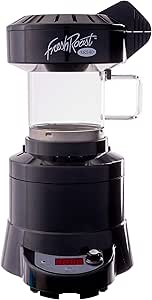
A home machine like the Fresh Roast SR800 is marketed for roughly 6–8 ounces, or about 170–226 grams, per batch. On the commercial side, even a relatively small shop roaster such as Diedrich’s DR-3 is built around about 3 kg, while PROBAT’s larger production lines can range much further, including 45–120 kg in the G Series and hundreds of kilos in industrial systems.
That difference does not just mean “commercial roasters make more coffee.” It means the roast environment itself behaves differently.
A small home batch changes temperature quickly. It can react fast, but it can also become unstable fast. A commercial batch has more mass and more momentum. It stores and releases heat differently. It often gives the operator more room to shape the roast deliberately over time, but it also requires a deeper understanding because mistakes can be more expensive.
To put it plainly, roasting 180 grams and roasting 15 kilos are not the same act scaled up. They are different thermodynamic experiences.
Why batch size matters so much
- Small batches can respond quickly but also swing quickly.
- Large batches often behave more steadily but require a stronger system understanding.
- Bean movement becomes more complex at scale.
- Heat penetration and airflow relationships become more consequential as volume rises.
- Small inconsistencies in setup have larger downstream effects in production.
This is one reason home roasters often find it easier to make dramatic changes batch to batch, while commercial roasters become obsessed with avoiding tiny unwanted changes.
The third big difference: equipment capability
This one seems obvious at first, but the nuance matters.
Home roasting equipment ranges from extremely basic to surprisingly sophisticated. You can roast coffee in a pan, in a stovetop tool, in a popcorn popper, in a small fluid-bed machine, or in a more advanced home roaster with variable heat and fan control.
A simple manual tool like the Nuvo Eco Ceramic Handy Roaster is basically a tactile, low-tech way to roast small amounts over a heat source. On the other end of the home spectrum, the Fresh Roast SR800 offers variable heat and fan control with a digital interface.
Commercial machines, by contrast, are designed around consistency, repeatability, cooling systems, airflow control, logging, production workflow, and much larger thermal systems. Manufacturers such as Diedrich emphasize precision and repeatability, while Loring highlights touchscreen controls, real-time feedback, profile-based automation, and even automatic control of bean temperature curves in profile mode. PROBAT’s systems range across drum and continuous designs for different scales and process goals.
What this means in real life
At home, even when you have decent control, you are often working with fewer data points and fewer control layers. You may hear the first crack, watch color, smell the smoke, and make decisions partly by instinct.
In a commercial roastery, the operator may still use their senses constantly, but those senses are backed by:
- roast logs
- profile software
- machine-specific controls
- airflow settings
- drum speed or agitation control
- bean probes
- environmental probes
- cooling tray performance
- batch history
- cupping feedback loops
So the difference is not just “more expensive machine.” It is “more information, more control, more reproducibility, and often more consequences.”
The fourth big difference: airflow and heat management

This is one of the least glamorous topics in coffee and one of the most important.
People new to roasting often focus on roast color and crack timing because those are the visible, audible parts. But airflow is a massive part of what shapes the roast. Perfect Daily Grind notes that airflow is not just about moving smoke; it also plays a major role in heat transfer. More recent industry discussion also emphasizes that adequate airflow is essential for heat distribution and for removing smoke and chaff.
That matters in both home and commercial roasting, but commercial systems generally manage airflow in a much more deliberate, controllable, and stable way.
Home roasting airflow realities
In many home setups, airflow is limited or somewhat crude. If you roast in a pan, it is basically manual agitation and ambient conditions. If you roast in a small electric machine, you may get fan settings, but the airflow environment is still compact and reactive.
This can make home roasting feel exciting and intimate, but it also means:
- Smoke can build up quickly
- Chaff can become messy
- Heat can stack unpredictably
- Minor room-condition changes can influence the roast
- Back-to-back batch consistency is harder
Commercial roasting airflow realities
Commercial systems are built with airflow as a core design element, not an afterthought. They are expected to move smoke, manage draft, help control convective heat transfer, and support repeatable development.
That is why commercial operators talk so much about:
- airflow percentages
- damper settings
- exhaust balance
- heat recirculation
- environmental conditions in the roastery
- ventilation performance
And once you understand that, you realize why a commercial roast can feel “cleaner” or “more composed.” It is not only about bean quality or roast degree. It is often about the roast environment being much more stable and intentional.
The fifth big difference: consistency is optional at home and mandatory in commercial roasting.
This is the line I come back to again and again.
If your home roast from Tuesday is a little sweeter than your home roast from Saturday, that is not a crisis. It may even be part of the fun. You can call it exploration.
If a commercial roaster’s flagship espresso changes noticeably from one production batch to the next, that is a problem.
The café dial-in changes. The wholesale customer notices. The retail customer thinks the bag tastes different. The brand trust weakens.
That is why commercial roasting is so deeply tied to logging, profile management, quality control, and post-roast cupping. It is not because professional roasters are joyless spreadsheet people. It is because consistency is one of the actual products being sold.
Loring’s documentation around profile roasting and Roast Architect makes this especially clear: modern commercial roasting often involves designed profiles, saved files, networked systems, and reproducibility tools that help operators repeat desired outcomes more reliably.
What consistency really means
Consistency is not just matching color.
It includes:
- roast degree
- flavor balance
- acidity expression
- body
- solubility
- espresso behavior
- filter behavior
- development character
- packaging timing
- customer expectation
At home, you can shrug and enjoy the variation. Commercially, variation has a cost.
A practical table: home roasting vs. commercial roasting at a glance
| Area | Home Roasting | Commercial Roasting |
|---|---|---|
| Main goal | Freshness, curiosity, personalization | Consistency, scale, product quality, business viability |
| Batch size | Very small to small | Small commercial to industrial |
| Equipment control | Limited to moderate | Moderate to highly advanced |
| Profile repeatability | Harder | Core requirement |
| Sensory freedom | Very high | Balanced against brand standards |
| Risk tolerance | Personal | Financial and reputational |
| Cooling systems | Often basic or improvised | Integrated, fast, standardized |
| Ventilation | Often a challenge | Essential infrastructure |
| Roast logging | Optional | Standard practice |
| Green buying | Small quantities, retail-oriented | Production planning, sourcing strategy |
| Cost per mistake | Usually low | Potentially high |
| Learning curve | Immediate, tactile | Technical, operational, sensory, managerial |
The sixth big difference: the cooling stage is massively underrated.
A lot of new roasters think the roast ends when they hit the drop point.
It does not.
The roast ends when the beans are actually cooled down.
This is one of those places where commercial roasting often has a decisive advantage. Integrated cooling trays with stirring arms and strong airflow are designed to stop the roast quickly and predictably. Loring, for example, explicitly mentions cooling tray fans and stirring paddles as part of automation and post-drop handling.
At home, cooling is sometimes improvised. Colanders. Fans. DIY cooling trays. Shaking outside over a sink. It works, but it is not always elegant or consistent.
That matters because coffee continues to change if it sits hot after dropping. Even a good roast can edge darker or flatter if cooling is too slow.
That is why home roasters often end up buying a dedicated cooler once they get serious. A bean cooler, such as this electric coffee bean cooler or similar home cooling tray tool, exists for exactly that reason: stopping roast momentum quickly.
Why fast cooling matters
- It helps preserve your intended drop point.
- It reduces the risk of continued development after the roast.
- It can improve cup clarity.
- It makes repeatability much easier.
Commercial roasters know this instinctively because every second after drop counts. Home roasters usually learn it the hard way, after tasting a roast that looked right but somehow felt duller than expected.
The seventh big difference: smoke, chaff, and the inconvenient truth of roasting at home
Home roasting sounds magical until your kitchen smells like a campfire and the smoke alarm starts participating.
This is not a small issue.
Roasting creates smoke and chaff. Perfect Daily Grind notes that good ventilation is crucial for both roast quality and safety and recommends extractor fans, open windows, or roasting outside or in open garage spaces. Their more recent coverage of environmental variables also stresses that ventilation and stable airflow affect roast performance itself, not just comfort.
Commercial roasteries are designed around this reality. Venting, airflow, afterburners or filtration strategies, space planning, and hazard reduction are all part of the operational picture. PDG’s discussion of roastery hazards explicitly warns that poor ventilation and neglected systems can expose workers to harmful emissions and safety risks.
At home, ventilation is usually the first thing people underestimate, and the first thing that reminds them roasting is not just “brewing’s older cousin.”
The home-roasting ventilation reality check
If you are roasting at home, especially indoors, you need to think seriously about:
- smoke accumulation
- chaff cleanup
- odor
- family tolerance
- neighbor tolerance
- weather if roasting outdoors
- where hot beans will cool safely
This is one reason a lot of people love the idea of home roasting more than the practice. The flavor can be great. The process can be exciting. But the smoke is not theoretical.
The eighth big difference: green coffee buying is a different game.
This is where home roasting becomes really interesting, because green coffee is both cheaper and more revealing.
A home roaster often buys green coffee in small amounts, sometimes one pound at a time, sometimes five, sometimes a few kilos if they are committed. They are choosing exploration. Maybe one was washed Ethiopian, one was natural Brazil, and one was honey-processed Costa Rica. The joy is variety.
Commercial roasting is more strategic. It is not just “what sounds delicious.” It is also
- What is available in a useful volume
- What fits the brand
- What performs consistently
- What works at the target cost
- What can be purchased again or replaced intelligently
- What suits the intended roast approach
- What supports menu needs and blend planning
That changes the relationship with green coffee completely.
Home green coffee buying tends to be:
- smaller quantity
- curiosity-driven
- variety-heavy
- Forgiving of one-off lots
- emotionally motivated
Commercial green coffee buying tends to be:
- volume-aware
- cost-aware
- seasonality-aware
- supply chain dependent
- brand-aware
- consistency-driven
That is why a commercial roaster may choose a coffee not only because it cups beautifully, but because it can be bought, roasted, priced, blended, and replaced responsibly. The home roaster has the luxury of being more whimsical.
And honestly, that whimsy is one of the best parts of home roasting.
If you want to try the green-coffee route, there are now even specialty-grade unroasted coffees on Amazon, such as this Ethiopian Yirgacheffe green coffee or this Ethiopian Guji washed green coffee. I would still tell most serious hobbyists to compare those with specialist green-coffee sellers, but the fact that green coffee has become this accessible says a lot about how home roasting has matured.
The ninth big difference: the learning curve feels different because the feedback loops are different.
This one is subtle, but once you notice it, it explains a lot.
Home roasting feedback is slow and emotional.
You roast. You cool. You wait. You brew. You like it, or you do not. Then you try again.
That loop is intimate, but it is also fuzzy. You may change multiple variables at once without realizing it. You may not log the roast precisely. You may taste with your mood, your water, your grinder, your brew method, or your expectations, affecting the result.
This is not bad. It is just human.
Commercial roasting feedback is structured and layered.
Commercial roasters often:
- log roast data
- cup repeatedly
- compare batches
- assess solubility and brew performance
- review customer response
- Monitor inventory age
- tweak profiles with intention
That kind of structured repetition changes how learning happens. It makes improvement less romantic and more reliable.
At home, you may have brilliant accidental moments. Commercially, accidents are not a sustainable workflow.
The tenth big difference: home roasting often favors excitement; commercial roasting often favors balance.
This is not a strict rule, but I think it is true often enough to say out loud.
Home roasters, especially newer ones, tend to chase excitement. They love it when the coffee tastes dramatically different from supermarket coffee. They love brightness, smoke, fruit, character, anything that feels vivid and alive. They are discovering possibilities.
Commercial roasters, especially good ones, often become slightly less seduced by drama and more interested in balance.
Not boring balance. Not a flatten-everything balance.
I mean the kind of balance where:
- Acidity is energetic but not raw
- Sweetness is developed but not dull
- body feels intentional
- The finish is clean
- The cup holds together across brew styles
- The coffee feels complete
That “finished” feeling is one of the hardest parts of roasting to explain and one of the clearest differences between enthusiastic home coffee and deeply competent production roasting.
It is not that home roasts cannot get there. They absolutely can. But commercial roasters are built around delivering that feeling repeatedly.
Does home roasting save money?

This question always comes up, and the annoying answer is yes, but only if you count selectively.
Green coffee is usually cheaper per pound than roasted specialty coffee. That part is real.
But then you add:
- equipment
- smoke management
- cooling tools
- electricity or fuel
- inevitable failed batches
- time
- learning curve
- storage containers
- Your tendency to buy “just one more origin.”
So yes, home roasting can save money, especially over time and especially if you drink a lot of coffee and enjoy the process enough to stick with it.
But if you are hoping for instant thrift with no friction, home roasting is probably not the neat financial miracle people imagine.
Commercial roasting, meanwhile, operates on completely different economics. The cost of green coffee is only one layer. There is also
- labor
- rent
- utilities
- equipment finance
- maintenance
- packaging
- testing
- quality control
- waste
- compliance
- payroll
- distribution
- marketing
That is why a bag from a good roaster costs what it costs. You are not just paying for beans. You are paying for an entire consistency machine.
The eleventh big difference: rest time and freshness are not as simple as people think.
Freshness is the home roaster’s favorite argument, and it is a good one. Coffee begins degassing as soon as it leaves the roaster and cools. Royal Coffee’s glossary notes that for a few hours to a few days after roast, coffee can be too gassy to extract evenly, and their roast glossary similarly points out that many roasters recommend resting before brewing. Sweet Maria’s storage guidance also notes that roasted coffee starts to stale soon after the resting or degassing period.
This means two things that seem contradictory but are both true:
- Freshly roasted coffee is special.
- Coffee that is too fresh can be less enjoyable.
Home roasters often love having total control over this window. They can roast on Tuesday and drink on Friday. They can experiment with rest periods and notice how espresso behaves differently from filter.
Commercial roasters understand this too, but they have to think at the scale of bagging, shipping, retail shelf life, and customer use patterns. So their version of freshness is not just “as soon as possible.” It is “fresh enough, rested enough, and stable enough.”
That is a much more complicated target.
The twelfth big difference: branding changes roast decisions.
This is a point coffee lovers do not always consider.
A commercial roast is not only a roast. It is a message about the company.
If a roaster is known for transparent, tea-like, high-acid-washed coffees, they are likely to roast differently than a roaster known for chocolate-forward, comfort-heavy espresso blends. The roasting choices are sensory, yes, but they are also strategic and aesthetic.
At home, you do not have to maintain a brand language. You can roast one coffee light because you want jasmine and citrus, then take the next one deeper because it tastes amazing in milk drinks.
Commercial roasters do not always have that freedom. They have a house style, or at least a house reputation.
That is one more reason home roasting can feel playful while commercial roasting feels disciplined. A home roast only has to satisfy you. A commercial roast may have to satisfy your palate, your brand, your café clients, and your repeat customers all at once.
A second table: who should choose which path?
| You value most | Home roasting may suit you if… | Commercial coffee may suit you if… |
|---|---|---|
| Freshness | You want a dependable result for every bag. | You want expertly timed freshness without the work. |
| Variety | You love experimenting with many small lots. | You prefer curated selections from skilled roasters. |
| Convenience | You enjoy making time for the process. | You want excellent coffee with zero smoke and fuss. |
| Consistency | You are okay with variation while learning. | You want roasting as a hobby in itself. |
| Cost | You are willing to invest upfront | You prefer paying for finished quality and convenience. |
| Learning | You want to shape the roast level yourself. | You want to enjoy coffee without adding a new craft. |
| Control | You want to shape roast level yourself. | You want specialists to do the hard part. |
The sensory difference in the cup
Now for the part everyone really wants.
How home-roasted coffee often tastes
When it is good, home-roasted coffee can taste:
- lively
- immediate
- personal
- fresh in a way that feels almost electric
- occasionally a little rough-edged, but charming
That rough edge is not always a flaw. Sometimes it is just honesty. You can taste the decisions. You can taste the enthusiasm.
How well-roasted commercial coffee often tastes
When it is good, commercial coffee can taste:
- composed
- integrated
- stable
- polished
- intentional in a way that feels quietly professional
It often has fewer wild swings. Even when it is adventurous, it still tends to feel managed.
If I had to say it in one sentence: home roasting often feels expressive; commercial roasting often feels resolved.
And the beautiful part is that both experiences can be worth having.
Gear that shapes the home experience
If you are thinking about home roasting, the gear path really matters because it determines what kind of learning experience you are signing up for.
Entry-level, more tactile options
A manual tool like the Nuvo Eco Ceramic Handy Roaster is a very “hands-on” way in. It is not about precision in the commercial sense. It is about feeling the process, hearing the cracks, learning visually, and roasting in a way that makes you very aware of coffee as a physical thing.
More controlled home-machine options
A home machine like the Fresh Roast SR800 offers far more practical control through variable heat and airflow. For many hobbyists, this is where home roasting starts to become less “novelty” and more “repeatable craft.”
Support tools that matter more than people expect
A good cooling setup matters. So does storage. So does having a coffee you actually like brewing once it is roasted.
Some useful add-ons people often overlook:
- a dedicated bean cooler
- a notebook or a roast log
- a scale
- airtight storage
- a dependable grinder for evaluating results honestly
And if you are going to roast at home, I would strongly argue that you should also care about brewing your results properly. A solid grinder, such as the Baratza Encore, and a clean, consistent brewer like the AeroPress or Hario V60 can make evaluation far more honest. A roast that seems disappointing on a sloppy brew can suddenly make sense when brewed well.
One thing home roasting teaches better than buying roasted coffee ever can.
Even if you never become especially good at it, home roasting teaches you respect.
It teaches you that roast color is not the whole story. It teaches you that development is not a buzzword. It teaches you that “light roast” and “underdeveloped” are not synonyms. It teaches you why some coffees bloom aggressively, and others settle into the cup more gently. It teaches you that smoke, airflow, timing, momentum, and cooling all matter in ways that are invisible when you only ever buy finished beans.
And maybe most importantly, it teaches you humility.
Because once you roast coffee yourself, even a few times, you stop talking about professional roasters as if they merely “pick a darkness.” You realize they are managing a far more intricate craft than most drinkers ever see.
When home roasting is the better choice
I think home roasting makes the most sense when the joy of the process is at least as important to you as the final convenience of the product.
It is a great fit if:
- You are deeply curious
- You enjoy tinkering
- You love freshness
- You do not mind some inconsistency while learning
- You want to understand coffee more intimately
- You enjoy craft for craft’s sake
It is especially compelling if you already find yourself obsessing over grind size, brew ratio, origin, processing, and flavor notes. If you are already that person, roasting is a natural next obsession.
When commercial roasting is the better choice

Commercially roasted coffee is the better choice when you want:
- reliable excellence
- no smoke
- no cleanup drama
- No failed batches
- no equipment learning curve
- access to highly refined profiles
- coffee that has been deliberately selected, roasted, rested, and packaged by people doing this at a serious level
And there is absolutely no shame in that.
In fact, for many coffee lovers, the smartest path is not choosing one side forever. It is buying great commercial coffee most of the time and treating home roasting as an occasional craft project or hobby lane.
That hybrid approach makes a lot of sense.
The emotional difference no one talks about enough
Here is the part I think matters most, and it is not technical.
Home roasting makes coffee feel closer.
Commercial roasting makes coffee feel more dependable.
When you roast at home, there is a small thrill in knowing that this cup came through your own hands at every stage. Even if the roast is not perfect, it can feel more intimate. You hear the cracks. You smell the shift from grassy to bready to caramelized. You cool the beans. You wait for them to rest. You brew them with the kind of attention that people usually reserve for homemade bread or slow-cooked food. There is pride in that.
Commercial coffee, on the other hand, carries a different kind of pleasure. It is the pleasure of trusting someone else’s expertise and being rewarded for it. It is opening a bag and finding that the roaster has already solved the hard parts well. It is drinking a coffee that feels complete because many layers of experience, equipment, and discipline were quietly built into it before it ever reached your grinder.
Those are different pleasures. I do not think one replaces the other.
Final verdict: which is better?
I do not think “better” is the right word.
If what you want is
- control
- freshness
- experimentation
- intimacy with the craft
- the joy of learning
Then home roasting can be incredibly rewarding.
If what you want is
- consistency
- polish
- convenience
- refined roast design
- dependable results at a high level
Then, commercial roasting will usually serve you better.
And if I am being honest, the happiest coffee people I know tend not to become ideological about it. They understand that home roasting and commercial roasting are not enemies. They are different expressions of the same fascination.
One says, “Let me touch every part of this.”
The other says, “Let me perfect this at scale.”
Both are valid. Both can taste wonderful. Both can deepen your appreciation for coffee in different ways.
If you are curious, start small. Roast one coffee. Pay attention to the first crack. Cool it fast. Let it rest. Brew it with care. Taste it without pretending it has to be amazing just because you made it. Then compare it to a professionally roasted version of something similar.
That comparison alone will teach you more about coffee than a hundred social posts ever could.
And once you do that, you may find yourself appreciating not just the coffee in your cup, but the invisible craft behind it—whether it came from a home roaster on a balcony or a production machine in a real roastery humming away through batch after batch.
That, to me, is the real reward.
Because the deeper you go into coffee, the less you ask, “Which side is right?” and the more you ask, “What is each side trying to do well?”
That is when the whole subject opens up.
And that is when coffee gets even more interesting.


