
JURA ENA 8 vs Philips 4300 LatteGo


OneHundredCoffee is reader-supported, and some products displayed may earn us an affiliate commission. Details
If you’re torn between “I want café-quality espresso with as little effort as possible” and “I want a machine that still feels premium and personal every single morning,” you’ve landed on one of the most relatable matchups in the super-automatic world.
On one side, you’ve got the sleek, boutique-style JURA ENA 8 Automatic Espresso Machine—the compact “luxury apartment espresso” vibe with high-end brewing tech and a very refined user experience. On the other hand, the crowd-pleasing Philips 4300 Series Fully Automatic Espresso Machine with LatteGo—the “everyone in the house can make their favorite drink without calling you” kind of machine.
And here’s the thing: both can make genuinely delicious drinks. The difference is how they fit into your life—your mornings, your habits, your tolerance for cleaning, and whether you like the machine to feel like a “coffee ritual” or a “coffee shortcut.”
JURA ENA 8 vs Philips 4300 LatteGo
Ten important buying factors scored side by side to determine whether JURA’s compact luxury and refined espresso or Philips’ family-friendly variety and low-maintenance LatteGo system is the better purchase.

JURA ENA 8 Automatic Espresso Machine
out of 100
- Refined espresso-forward drink quality
- Compact premium kitchen footprint
- Professional Aroma Grinder system
- Fine café-style milk foam
- Polished luxury ownership experience
10-Factor Buying Score
Each category scored out of 10 points
ENA 8
4300
Philips 4300 LatteGo Wins Overall
The Philips 4300 LatteGo is the more convincing recommendation for most households because it combines one-touch drink variety, useful user profiles, approachable customization and one of the simplest automatic milk systems to clean after everyday use.
Choose the JURA ENA 8 instead when premium espresso refinement, compact design and a more luxurious ownership experience matter more than maximum drink variety or value. Its coffee tastes more polished, and its smaller footprint suits upscale kitchens with limited space.
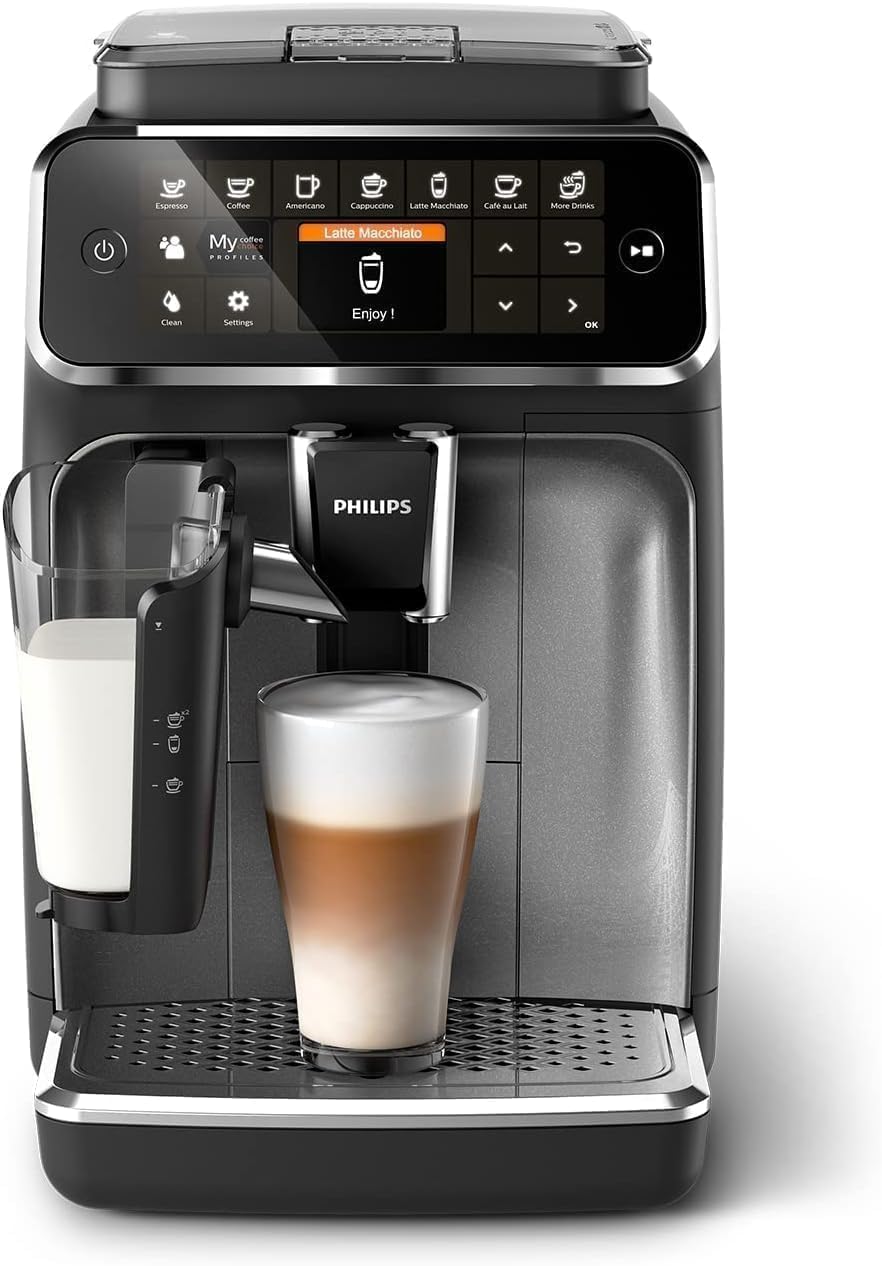
Philips 4300 Series LatteGo
out of 100
- Family-friendly one-touch drink menu
- Fast-rinsing two-piece LatteGo system
- Twelve adjustable grinder settings
- Two user profiles plus guest
- Excellent features-per-dollar value
These results are reported by our editors after 30 days of comparative testing and review, using our authentic editorial scoring process.
How I review and compare machines like these (the way it actually matters at home)
When I compare two bean-to-cup machines, I don’t just stare at specs. I focus on the stuff you’ll feel after week two—when the excitement fades, and the machine becomes part of your routine.
1) Daily workflow (the “half-awake test”)
- How many taps to get a latte?
- Can it handle back-to-back drinks without drama?
- Does it feel smooth… or finicky?
2) The espresso foundation (because milk can hide sins)
A latte is only as good as the espresso underneath. I look at:
- clarity vs bitterness
- consistency day-to-day
- How the machine handles different beans
3) Milk performance (speed + texture + cleanup)
With super-automatics, milk is where most people either fall in love or give up.
- foam quality and temperature
- how well it handles oat/almond
- How annoying cleaning feels in real life
4) Customization that you’ll actually use
Some machines offer “50 settings,” but nobody touches them. The best machines give you:
- simple strength + volume tuning
- profiles that save preferences
- enough control to improve results without turning coffee into homework
5) Maintenance reality (the “am I going to keep doing this?” factor)
Super-autos are amazing… until you hate cleaning. So I compare:
- daily rinse routines
- milk system cleaning
- filter systems
- how much the machine nags you (and whether it’s helpful)
Overview

Who is this for?
The JURA E8 is for anyone who wants premium bean-to-cup coffee with almost no effort. It suits busy homes and entertainers who need one-touch espresso, cappuccino, or flat white that tastes the same—perfect—every time. If you value quiet grinding, silky milk foam, and automatic cleaning routines that keep maintenance painless, this is your set-and-forget machine. Great for design-minded kitchens and executives who want reliability and speed over tinkering, it delivers café-level flavor, intuitive menus, and a polished look—ideal when you want top-tier results, minimal learning curve, and zero morning guesswork.
Who is this for?
The Philips 3200 LatteGo is for first-time super-automatic owners and busy families who want fresh-ground coffee with push-button simplicity. It shines if you prioritize easy cleaning—the LatteGo milk system snaps apart and rinses in seconds—plus an intuitive panel for espresso, americano, or cappuccino. If you’re upgrading from pods, you’ll appreciate consistent crema, programmable strength/volume, and a compact footprint that fits most counters. Perfect for shared homes with mixed preferences, it delivers reliable, everyday café drinks without the learning curve, keeping mornings smooth and routine while still tasting like fresh beans—not capsules.The personality of the JURA ENA 8
The JURA ENA 8 Automatic Espresso Machine is a compact, premium machine built around high-end brewing and a polished experience. JURA highlights features like the Professional Aroma Grinder, Fine Foam Technology, and a touchscreen-style interface—aiming for refined espresso and elegant milk drinks in a smaller footprint.
The personality of the Philips 4300 LatteGo
The Philips 4300 Series Fully Automatic Espresso Machine with LatteGo is the “busy household hero.” It’s designed for variety, speed, and minimal milk cleanup thanks to the LatteGo system, plus a friendly interface and customization options like grinder settings, temperature levels, and user profiles.
Grinder
- Big similarity: Both are true “bean-to-cup” daily drivers where freshness matters more than people expect. When I feed either machine fresh, non-oily beans and keep the grind dialed, the espresso base becomes noticeably sweeter and less sharp—especially in milk drinks. If I use older beans, both start tasting flatter and a bit more bitter on the finish.
- Big difference: JURA ENA 8 gives me a more refined, tight-tasting espresso core—cleaner, smoother, and more “put together” with less effort once I find my settings. The Philips 4300 LatteGo can taste very good, but it feels more dependent on bean choice and strength/grind tweaks; it can drift into “a bit light” faster if I’m not deliberate.
Milk Frothing
- Big similarity: Both are built for people who want milk drinks without practicing steaming. In real life, I can walk up half-awake, press a milk drink, and get consistent foam texture without the “Did I stretch too much?” learning curve.
- Big difference: JURA ENA 8 milk drinks feel more premium in texture and integration—foam tends to look finer, and the drink feels more café-like. The Philips 4300 LatteGo wins on everyday practicality: the LatteGo system is the one I’m most likely to rinse fast and reuse without overthinking; the milk result is very good, just more convenience-first than “luxury finish.”
Shot Consistency
- Big similarity: Both are about repeatability. Once I set my favorite strength and volume, I get a predictable cup every morning, which is honestly the whole point of choosing this category.
- Big difference: JURA ENA 8 feels more consistent across different drinks and days—my espresso base tastes steadier and less “random” when I switch between espresso, coffee, and milk recipes. The Philips 4300 LatteGo is consistent, too, but I notice more variability with certain beans; if the grind or strength is slightly off, it shows up as a thinner body more quickly.
Warm-Up & Speed
- Big similarity: Both are “push-button life” machines. I don’t need to plan a warm-up ritual—if I want coffee now, both fit into real mornings.
- Big difference: JURA ENA 8 feels smoother and faster in the full experience—less waiting, fewer “steps” feeling like steps. The Philips 4300 LatteGo is still quick, but it feels a bit more utilitarian; it does the job efficiently rather than feeling seamless and premium.
Ease vs Control
- Big similarity: Both remove the barista workload—no dosing, no tamping, no messy puck prep. From a user perspective, they’re both about reducing friction while still using real beans.
- Big difference: JURA ENA 8 gives me the sense that small adjustments actually noticeably upgrade the cup, so dialing feels rewarding rather than fiddly. The Philips 4300 LatteGo offers simple, friendly controls, but the flavor ceiling feels more “good and convenient” than “wow, that’s polished,” unless everything is perfectly matched.
Temperature & Workflow Sensitivity
- Big similarity: Neither demands manual temperature management or timing tricks. If I’m tired or distracted, both still produce a drinkable, consistent result without babysitting.
- Big difference: JURA ENA 8 feels more stable and confident in how the drink lands—espresso and milk feel better balanced and more consistent in mouthfeel. The Philips 4300 LatteGo is solid, but I find it more setting-sensitive; I’m more likely to adjust temp/strength to get the exact satisfaction level I want.
Learning Curve
- Big similarity: Both are beginner-friendly and guest-proof. I can hand either one to someone, and they’ll make a latte without asking a bunch of questions.
- Big difference: JURA ENA 8 learning feels like “discovering your favorite café menu at home”—fine-tuning for taste. Philips 4300 LatteGo learning can feel more like “finding the right combo so it doesn’t taste too light,” especially if you prefer a stronger espresso flavor.
Espresso Feel & Flavor Outcome
- Big similarity: Both aim for a smooth, approachable espresso base that shines most in milk drinks and long coffees. They’re designed for daily enjoyment, not for chasing ultra-manual, syrupy café shots.
- Big difference: The JURA ENA 8 tastes richer and more layered to me—more sweetness, a cleaner finish, and a more “premium” espresso identity in the cup. The Philips 4300 LatteGo tastes simpler and lighter; it’s enjoyable and easy, but it doesn’t hit that same refined espresso core unless I push strength settings and choose beans carefully.
Long-Term Ownership & “Hobby Factor”
- Big similarity: Both are “clean me, and I’ll treat you well” machines. If I keep up with rinsing, milk system care, and scheduled cleaning cycles, both can be reliable long-term.
- Big difference: JURA ENA 8 feels like a long-term luxury daily driver—great if I care about refined flavor and a premium experience every single morning. The Philips 4300 LatteGo feels like the practical value workhorse—great if I care most about easy milk drinks, easy cleaning, and consistent convenience without chasing the last layer of espresso nuance.
Which is better?
Choose the JURA ENA 8 if you…
- want a more “luxury” espresso feel (smooth, refined, consistent)
- care about compact design and premium build vibe
- value espresso clarity and a polished user experience
- don’t need the biggest drink menu—just the drinks you love done really well
- want a machine that feels like a statement piece on your counter
Choose the Philips 4300 LatteGo if you…
- want maximum convenience, especially for milk drinks
- have multiple coffee drinkers at home
- want easy customization + profiles without complexity
- want fast milk cleaning (LatteGo is built for this)
- prefer a “feature-rich for the price” super-auto approach.
If I had to boil it down to one sentence:
- JURA ENA 8 = “premium espresso experience, compact luxury”
- Philips 4300 LatteGo = “easy variety + family-friendly convenience”
JURA ENA 8 vs Philips 4300 LatteGo (FIRST vs SECOND)
FIRST (JURA ENA 8): the machine that feels like a boutique espresso bar moved into your kitchen—sleek, controlled, refined.
SECOND (Philips 4300 LatteGo): the machine that makes coffee easy for everyone—lots of drinks, saved preferences, and quick milk cleanup.
| Key Feature | JURA ENA 8 | Philips 4300 LatteGo |
|---|---|---|
| Machine Image |
|
|
| Machine type | Fully automatic (premium compact) | Fully automatic (feature-rich) |
| Best for | Refined espresso + compact luxury | Variety + easy milk drinks |
| Learning curve | Low | Low |
| Interface feel | Sleek, premium touchscreen-style | Friendly touch display + icons |
| Drink variety approach | Specialty-focused quality | Menu variety + customization |
| Milk system style | Fine foam milk specialties | LatteGo automatic milk system |
| Milk cleanup vibe | Guided cleaning cycles | Very quick, minimal parts |
| Best “latte speed” | Fast, polished workflow | Very fast one-touch |
| Grinder type | Professional Aroma Grinder | Ceramic grinder |
| Grinder settings | Model-dependent | 12 settings |
| Aroma/strength levels | Model-dependent | 5 levels |
| Temperature settings | Model-dependent | 3 levels |
| Profiles | Model-dependent | 2 + Guest |
| Pre-brew / aroma control | Smart extraction logic | Pre Brew Aroma control |
| Espresso “clarity” feel | Very refined, premium-leaning | Bold, customizable |
| Espresso “tuning” feel | Simpler, quality-first | More user-driven adjustments |
| Milk foam texture | Light, fine-foam style | Silky, consistent froth |
| Milk alternatives | Good with tuning + temp choice | Designed to handle alternatives |
| Hot water for tea | Yes | Yes |
| Drink back-to-back | Strong consistency | Very good consistency |
| Water filtration | Filter ecosystem supported | AquaClean supported |
| Descaling reminders | Yes (guided) | Yes (guided) |
| Brew group access | Typically internal system | Removable brew group |
| Oily bean tolerance | Prefer medium roasts | Prefer medium roasts |
| Noise profile | Refined, short bursts | Typical super-auto sound |
| Footprint feel | Compact premium | Medium counter footprint |
| Design vibe | Minimalist, upscale | Modern, practical |
| Spout height flexibility | Good for espresso + cups | Good for cups + mugs |
| Best for solo drinkers | Excellent | Excellent |
| Best for households | Great (if menu fits tastes) | Excellent (profiles + variety) |
| Best for guests | Premium “wow” factor | Easy for anyone |
| Best for cappuccino lovers | High-end foam style | One-touch cappuccino |
| Best for latte macchiato | Very strong specialty focus | One-touch latte macchiato |
| Best for Americano fans | Good | Excellent (menu + sizing) |
| Best for “coffee” (long cup) | Good (specialty style) | Very good (coffee option) |
| Customization depth | Premium simplicity | More granular control |
| Maintenance mindset | Guided + premium system | Guided + user-serviceable group |
| Milk system parts count | More system-dependent | Low (LatteGo simplicity) |
| Daily wipe-down effort | Low | Low |
| Who it’s “least annoying” for | People who want premium ease | People who want fast routines |
| Value proposition | Pay for premium experience | Pay for features + variety |
| Upgrade feel | Luxury countertop upgrade | Household coffee upgrade |
| Price on Amazon | Price on Amazon | Price on Amazon |
JURA ENA 8
JURA ENA 8
The ENA 8 is the “I want it to feel luxury every morning” kind of super-automatic. It’s compact, looks sharp on the counter, and focuses on smooth, consistent espresso drinks without turning your routine into a project. If you love café-style milk drinks but want the process to be clean and effortless, this is the vibe.
- Compact super-automatic: premium feel without a huge footprint.
- One-touch specialties: quick espresso and milk-based drinks.
- Fresh grinding: built-in grinder for aroma and crema.
- Easy daily workflow: designed for quick rinse/clean habits.
- Polished UI: streamlined navigation for everyday use.
- Pros: premium build feel; compact; consistent drinks; great for busy mornings.
- Cons: less hands-on control; milk system still needs routine cleaning; premium price tier.
- It feels “high-end” every time you use it—quiet, smooth, confident.
- Perfect for people who want café drinks without practicing steaming technique.
- Great choice when counter space matters but quality still matters more.
- If you want to tinker like a barista (portafilter, manual shot timing), this isn’t that lane.
- Like all super-autos, best taste comes from good beans + consistent cleaning.
| Type | Fully automatic (bean-to-cup) |
| Grinder | Integrated grinder |
| Milk | Automatic milk frothing system |
| Portafilter | N/A (internal brew unit) |
| Heater | Automatic thermo-control workflow |
| Best for | Premium convenience + compact kitchens |
| Grinder | Built-in |
| Milk steamer | Automatic frothing |
| Portafilter | N/A |
| Heater | Auto heating control |
| Water tank | Removable reservoir |
| Brewer | Automatic brew group |
Who is this for? Someone who wants premium, one-touch espresso and milk drinks in a compact machine—fast, clean workflow, and consistently smooth results. Skip it if you want manual portafilter espresso and full barista control. LEARN MORE
JURA ENA 8 — the real “daily experience.”
The JURA ENA 8 automatic espresso machine is one of those machines that feels “finished.” Not just in how it looks, but in how it behaves. You don’t get the sense that you’re wrestling with menus or babysitting steps. It’s more like you choose a drink, the machine quietly does its thing, and what comes out tastes like it was meant to be there—balanced, smooth, and confidently espresso-forward.
What JURA really leans into with the ENA 8 is the idea that compact doesn’t have to mean compromised. The brand frames it as a small machine with “big performance,” and that’s the vibe you get: high-end internal tech packaged into a footprint that doesn’t swallow your kitchen. JURA spotlights features like the Professional Aroma Grinder and Fine Foam Technology, and those aren’t just marketing words—they reflect a very specific goal: maximize aroma consistency, then make milk drinks feel airy and café-like.
Now, let’s talk taste in a way normal humans actually care about. The ENA 8 tends to shine when you drink espresso or espresso-led drinks where the shot needs to stand on its own. Think: espresso, ristretto, or a smaller cappuccino where the coffee flavor still needs to punch through the milk. It’s not “overly bitter” by default, and when the beans are decent, the machine gives you that polished sweetness you want in the finish—the “I could sip this straight” feeling. A lot of super-autos do milk drinks well, but treat espresso as an afterthought. The ENA 8 feels like it starts with espresso first, then builds outward.
The interface is also a big part of the luxury feel. Instead of the machine shouting options at you, it guides you cleanly—less clutter, less “button soup.” JURA emphasizes intuitive touchscreen operation on ENA 8 variants, and in day-to-day life, this matters because it keeps the machine from feeling like an appliance you tolerate. It feels more like a tool you enjoy using.
Milk drinks on the ENA 8 are where people either become loyal forever… or realize they actually prefer the “LatteGo-style simplicity” of Philips. With JURA, milk systems are typically built around fine foam results and guided cleaning. The foam can be impressively light and layered—more “café texture” than “big bubbly cap.” But you do need to respect the cleaning prompts and run the milk system cleaning when the machine asks. If you’re the kind of person who ignores maintenance reminders like they’re spam emails, a JURA will eventually force the conversation.
The underrated win here is the overall “premium calm” of ownership. The machine feels steady. It doesn’t feel like it’s cutting corners or rushing. It’s the sort of machine you’d buy if you want your coffee corner to feel like a small luxury you use daily—like good headphones or a great mattress. It’s not just output. It’s an experience.
That said, the ENA 8 isn’t for everyone. If you want a huge drink menu, loads of profiles, and a milk system you can basically rinse and forget, JURA can feel like you paid for finesse when you wanted flexibility. But if you love espresso, drink a smaller number of favorite beverages, and want them done beautifully, the ENA 8 earns its reputation here.
Philips 4300 LatteGo
Philips 4300 LatteGo
The 4300 LatteGo is built for real-life routines: you want cappuccinos and lattes on weekdays, and you want cleanup to feel reasonable. LatteGo is popular because it’s designed to be quick to rinse and simple to re-attach, which makes it much easier to keep your milk drinks tasting fresh.
- LatteGo milk system: quick-attach frothing designed for fast rinsing.
- One-touch drinks: espresso + milk favorites from a simple menu.
- Bean-to-cup grinder: fresh grinding for better aroma and flavor.
- Easy customization: strength, volume, and temp-style tweaks.
- Family-friendly workflow: great when multiple people use it daily.
- Pros: milk cleanup feels easy; consistent daily drinks; friendly UI; great for busy homes.
- Cons: less “manual craft”; espresso nuance depends on beans/settings; milk care still matters.
- LatteGo is the kind of milk system you’ll actually clean—so drinks stay tasty.
- Super fast for mornings: press, walk away, come back to a finished drink.
- Great “shared kitchen” machine because it’s simple for everyone.
- If you want hardcore espresso tinkering (portafilter, manual profiling), this won’t feel “hobby” enough.
- For best milk taste, stick to a quick rinse habit after each session.
| Type | Fully automatic (bean-to-cup) |
| Grinder | Integrated grinder |
| Milk | LatteGo automatic milk frothing |
| Portafilter | N/A (internal brew unit) |
| Heater | Automatic thermo-control workflow |
| Best for | Quick milk drinks + easy cleanup |
| Grinder | Built-in |
| Milk steamer | Automatic (LatteGo) |
| Portafilter | N/A |
| Heater | Auto heating control |
| Water tank | Removable reservoir |
| Brewer | Automatic brew group |
Who is this for? Anyone who wants one-touch cappuccinos and lattes with a milk system that’s quick to rinse—perfect for busy mornings and families. Skip it if you want manual portafilter espresso and hands-on steaming technique. LEARN MORE
Philips 4300 LatteGo — the “everyone can use it” superstar
The Philips 4300 Series Fully Automatic Espresso Machine with LatteGo is the kind of machine that wins people over because it removes friction. It takes that whole “I want espresso drinks at home, but I don’t want a second job” feeling and solves it with a workflow that’s almost suspiciously simple. Tap your drink, adjust strength if you care, and the machine does the rest.
Let’s start with the obvious star: LatteGo. If you’ve owned a machine with a traditional milk tube and a bunch of tiny milk parts, you already know why LatteGo matters. Philips designed it to be quick to clean and easy to live with. It’s basically a carafe system that you can rinse fast, without feeling like you need a PhD in milk hygiene management. And in real life, that’s what keeps people making cappuccinos and lattes daily instead of “only on weekends when I have time.”
Now, the other big advantage of the Philips 4300 is that it gives you meaningful customization without turning it into a complicated control panel. Philips lists customization options like 5 aroma strength settings, 12 grinder settings, 3 temperature settings, and user profiles (plus a guest profile). In human terms: you can actually tune your coffee to taste like your coffee, not just “whatever the machine thinks espresso is.”
This matters because beans are not all the same. One medium roast might taste perfect on a mid-level grind. Another might taste thin unless you go finer. With 12 grinder steps and aroma controls, you can nudge your espresso toward “stronger, thicker, more intense” or “smoother, longer, gentler,” depending on what you like. And you don’t have to do the barista math. You’re not weighing doses or timing shots. You’re just adjusting a few levers that actually make a difference.
Drink variety is another reason the 4300 works so well in households. Philips describes it as being able to make multiple black and milk-based drinks at the touch of a button. In practice, that means it suits people who bounce between espresso, coffee, cappuccino, latte macchiato, and Americano depending on mood. And when two people share the machine, profiles become sanity-saving. One person likes a stronger, hotter drink. Another likes it lighter and longer. Profiles keep peace in the kitchen.
Where Philips tends to feel especially “smart” is the removable brew group concept (common in this ecosystem). That makes basic cleaning feel more approachable because you can remove it, rinse it, and keep things happy without fear that you’re voiding the universe’s coffee warranty. Maintenance still exists—every super-auto needs regular cleaning—but Philips machines are typically built to make that maintenance feel doable for normal people.
Taste-wise, the Philips 4300 generally lands in the “bold and comforting” zone, especially when you set aroma strength up and go slightly finer on the grind. It can produce very satisfying espresso-based drinks, and where it shines most consistently is milk drinks—because the LatteGo gives you dependable froth quickly and repeatably. If your daily order is a cappuccino or latte, the Philips is often the machine that gets used the most simply because it makes your favorite drink feel easy.
The trade-off? Compared to a premium-leaning machine like the ENA 8, Philips can feel more “practical” than “luxurious.” The coffee can be excellent, but the overall experience is more about convenience and settings than that boutique “espresso bar” refinement. Some people want the premium calm; others want the practical power. Philips is the practical power pick.
If I’m picturing real homes, this is the machine that fits more lifestyles: busy mornings, multiple coffee drinkers, quick milk cleanups, and enough customization to keep coffee lovers happy without dragging them into espresso-nerd territory.
Final Verdict (What I’d choose depending on your lifestyle)
If you told me, “I want my kitchen coffee to feel like a small luxury every day,” I’d point you straight to the JURA ENA 8 Automatic Espresso Machine. It’s compact, premium-leaning, and built around refined espresso and polished specialties using JURA’s highlighted grinder and foam technologies.
If you told me, “I want lattes and cappuccinos with zero drama, and other people in my house will use this too,” I’d point you to the Philips 4300 LatteGo. The profiles, customization, and LatteGo cleanup convenience make it a more universally “easy to live with” pick.
My simplest decision rule:
- Pick JURA ENA 8 if you want premium refinement in a compact form.
- Pick the Philips 4300 LatteGo if you want easy variety + fast milk routines.
FAQ
1) Which one makes better espresso (straight shots)?
If espresso is your “main drink,” the JURA ENA 8 tends to satisfy people who prioritize refinement and balance. If you like to tweak settings and chase boldness, the Philips 4300 LatteGo gives you more obvious day-to-day adjustment levers (aroma, temp, and grind steps).
2) Which is best for cappuccino and latte lovers?
For pure convenience and speed, the Philips 4300 LatteGo is hard to beat because the LatteGo is designed for quick milk routines.
3) Which one is easier to clean?
Both have guided maintenance, but in daily life, LatteGo tends to feel simpler because it’s built around quick rinsing and has fewer fiddly milk parts.
4) Do both have grinder settings?
Yes. Philips lists 12 grinder settings for the 4300 series. JURA uses its own grinder tech (Professional Aroma Grinder), with settings/behavior depending on the variant.
5) Do they have profiles for different people?
Philips lists 2 user profiles + a guest on the 4300. JURA capabilities vary by version and ecosystem, but the ENA line emphasizes intuitive operation and specialty access.
6) Which one is better for a family or shared kitchen?
Usually, the Philips 4300 LatteGo—it’s just easier for multiple people with different tastes to get what they want quickly.
7) Which one is better for small kitchens?
The ENA 8 is positioned as a compact machine with strong performance, so it’s often the more “small-space luxury” pick.
8) Can I use oat milk in both?
Yes, both can work with milk alternatives. Expect to tweak temperature/strength and accept that foam texture varies by oat milk brand.
9) Which one feels “more premium”?
The ENA 8—its design, experience, and the overall “quiet luxury” vibe—are major reasons people pay the premium.
10) Which one gives the best value for the money?
Most shoppers looking at features per dollar end up loving the Philips 4300 because of the combination of variety, profiles, and LatteGo convenience.
11) What’s the biggest reason people regret buying a super-auto?
Not matching the machine to their lifestyle. If you hate cleaning milk systems, pick the one that makes that easiest. If you care most about espresso refinement, don’t buy purely based on “number of recipes.”
12) If I only drink one or two drinks every day, which is smarter?
If you drink a small set of favorites and want them to feel premium every time, the JURA ENA 8 can be incredibly satisfying. If you like variety and “push-button ease,” the Philips 4300 LatteGo fits better.


