
Best Grosche Coffee Makers (2026 Guide)


One Hundred Coffee is reader-supported, and some products displayed may earn us an affiliate commission. Details
GROSCHE makes the kind of coffee equipment that reminds me how many different meanings the phrase “coffee maker” can carry. In this nine-product lineup, it can mean a compact three-cup moka pot, a family-sized twelve-cup stovetop brewer, a glass French press, an insulated steel press, or a paper-free pour-over carafe. Those tools do not compete by producing the same cup. They compete by matching a different morning.
I therefore approached this ranking by brewing method first and product size second. A moka pot creates concentrated, pressure-brewed coffee that works beautifully in Americanos, café au lait, and cappuccino-style drinks, but it is not a pump espresso machine. A French press emphasizes body and aromatic oils through full immersion. The Amsterdam pour-over moves in the opposite direction, giving me more control over flow and a cleaner cup while still retaining more oils than paper.
The best choice depends on the number of drinkers, the stove in the kitchen, how much glass I am comfortable handling, and whether I want to participate in the brew or simply set a timer and return. The Milano 6-Cup earns the top position because its capacity suits the broadest number of households, while the Milano Induction solves modern cooktop compatibility, and the Dublin offers the most durable press experience.
Top 3 GROSCHE Coffee Makers — Editor’s Picks

GROSCHE Milano 6-Cup Moka Pot
- 6 espresso-cup size
- 9.3 fl oz capacity
- Food-safe aluminum
- Gas and electric use
- Soft-touch burn guard

GROSCHE Milano Induction 6-Cup Moka Pot
- Induction-ready base
- 6 espresso-cup size
- 9.3 fl oz capacity
- Stainless lower chamber
- Aluminum upper chamber
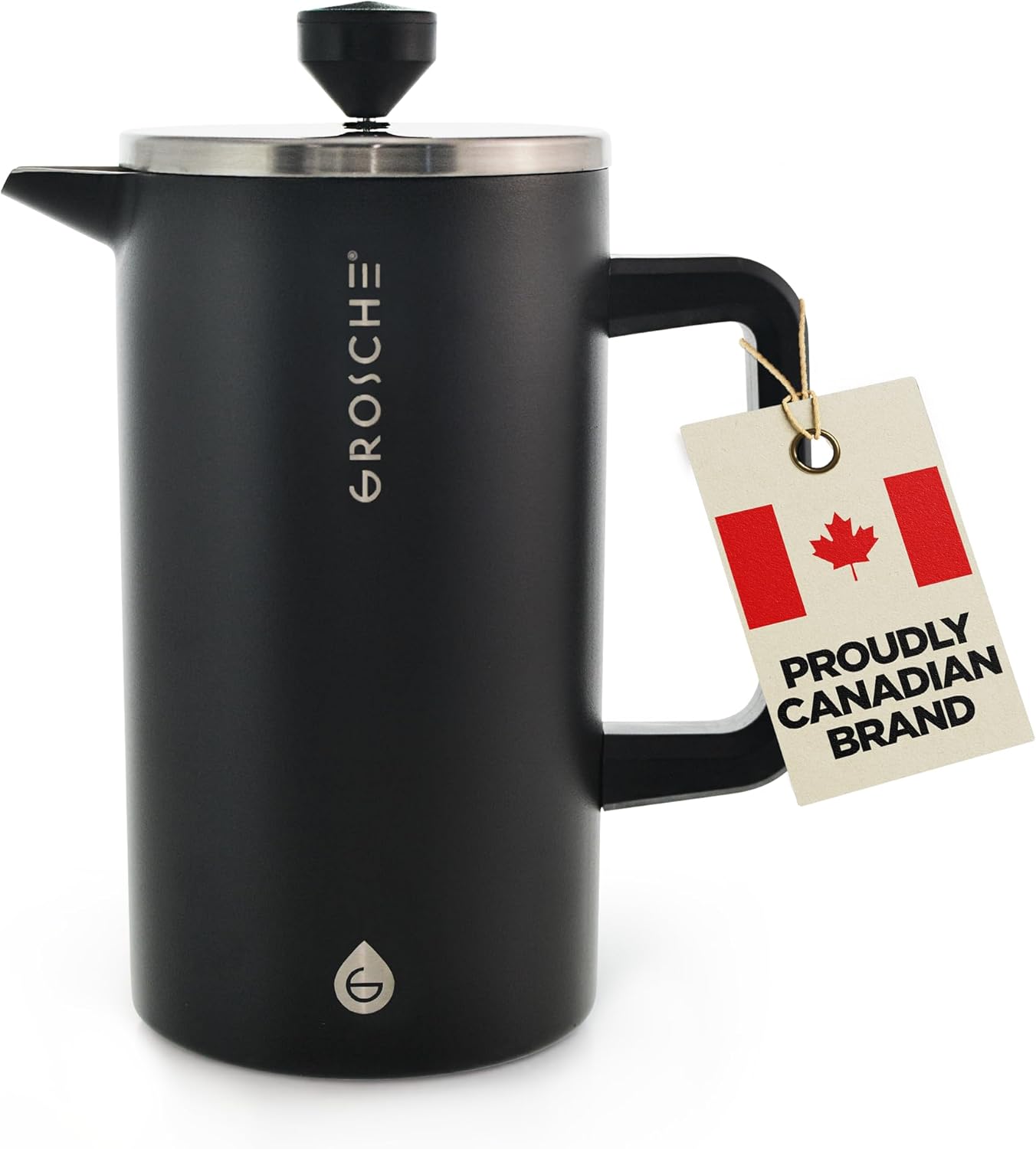
GROSCHE Dub'lin Double-Wall French Press
- Double-wall steel body
- 34 fl oz capacity
- 18/8 stainless steel
- Hot or cold brew
- Measurement scale
The Milano range deserves special explanation because moka-pot cup sizes are not ordinary mugs. A three-cup Milano produces roughly five fluid ounces, a six-cup version about 9.3 ounces, the nine-cup around 15.2 ounces, and the twelve-cup approximately 23.6 ounces. Those are concentrated servings designed to be enjoyed in small cups or diluted and mixed into larger drinks.
I do not buy a larger moka pot with the idea that I can casually half-fill it. The funnel basket and water chamber are designed around a complete batch. If I usually drink alone, the three-cup size makes fresher coffee with less waste. If two people share milk drinks, the six-cup model is more natural. The nine- and twelve-cup versions make sense when the whole batch will be served immediately.
Stove compatibility is equally important. Standard Milano models use aluminum and perform well on gas, electric, propane, and many camping burners, but they are not ideal for direct induction cooking. The Milano Induction uses a stainless-steel lower chamber so the cooktop can recognize and heat the pot efficiently.
The French presses separate by construction. The Madrid is the classic transparent option. I can watch the bloom, see the grounds settle, and appreciate the visual ritual. The Dublin trades that visibility for double-wall steel, stronger heat retention, and resistance to breakage. Neither is universally better; the right one depends on whether glass beauty or durable insulation matters more.
The Amsterdam pour-over is the outlier, and that is exactly why I like it. Its permanent double-layer steel filter preserves more oil and body than paper while giving me direct control over bloom, agitation, pour rate, and drawdown. It feels more deliberate than the moka pots and cleaner than the French presses, but it also depends more heavily on kettle technique.
Across all nine products, grind quality remains the quiet foundation. Moka pots need an even medium-fine grind that is coarser than pump espresso and should never be tamped. French presses need a consistent medium-coarse to coarse grind. The Amsterdam usually performs well around medium, adjusted according to brew time and filter flow.
Water temperature and removal timing matter too. I do not leave a Moka pot on the burner after aggressive sputtering begins. I do not leave brewed French press coffee resting on the grounds. I do not continue pouring through the Amsterdam when the filter has stalled. Each brewer rewards attention at a different stage.
GROSCHE also builds social impact into the brand, with purchases supporting access to safe drinking water. That mission does not replace practical product judgment, but it gives the lineup an identity beyond color and capacity. I still rank the brewers by everyday performance and fit, while recognizing the broader purpose behind the company.
The detailed reviews below preserve those distinctions. Rather than repeating the same praise for every Milano size, I explain who each capacity actually serves, when the larger version becomes inconvenient, and why the induction model deserves its own place.
Top 9 GROSCHE Coffee Makers — At a Glance
GROSCHE Milano 6-Cup Moka Pot
- 6 espresso-cup size
- 9.3 fl oz capacity
- Food-safe aluminum
- Gas and electric use
- Soft-touch burn guard
- Silicone gasket
GROSCHE Milano Induction 6-Cup Moka Pot
- Induction-ready base
- 6 espresso-cup size
- 9.3 fl oz capacity
- Stainless lower chamber
- Aluminum upper chamber
- Certified safety valve
GROSCHE Dub'lin Double-Wall French Press
- Double-wall steel body
- 34 fl oz capacity
- 18/8 stainless steel
- Hot or cold brew
- Measurement scale
- Durable travel-friendly build

GROSCHE Madrid 34 oz French Press
- 34 fl oz capacity
- Borosilicate glass
- Dual filter system
- Stainless steel plunger
- Coffee or tea use
- Easy visual brewing

GROSCHE Amsterdam Glass Pour-Over Coffee Maker
- 27.6 fl oz capacity
- Borosilicate glass carafe
- Permanent steel filter
- Removable glass dripper
- Paper-free brewing
- Natural oils retained

GROSCHE Milano 3-Cup Moka Pot
- 3 espresso-cup size
- 5 fl oz capacity
- Compact aluminum body
- Gas and electric use
- Silicone gasket
- Heat-resistant handle
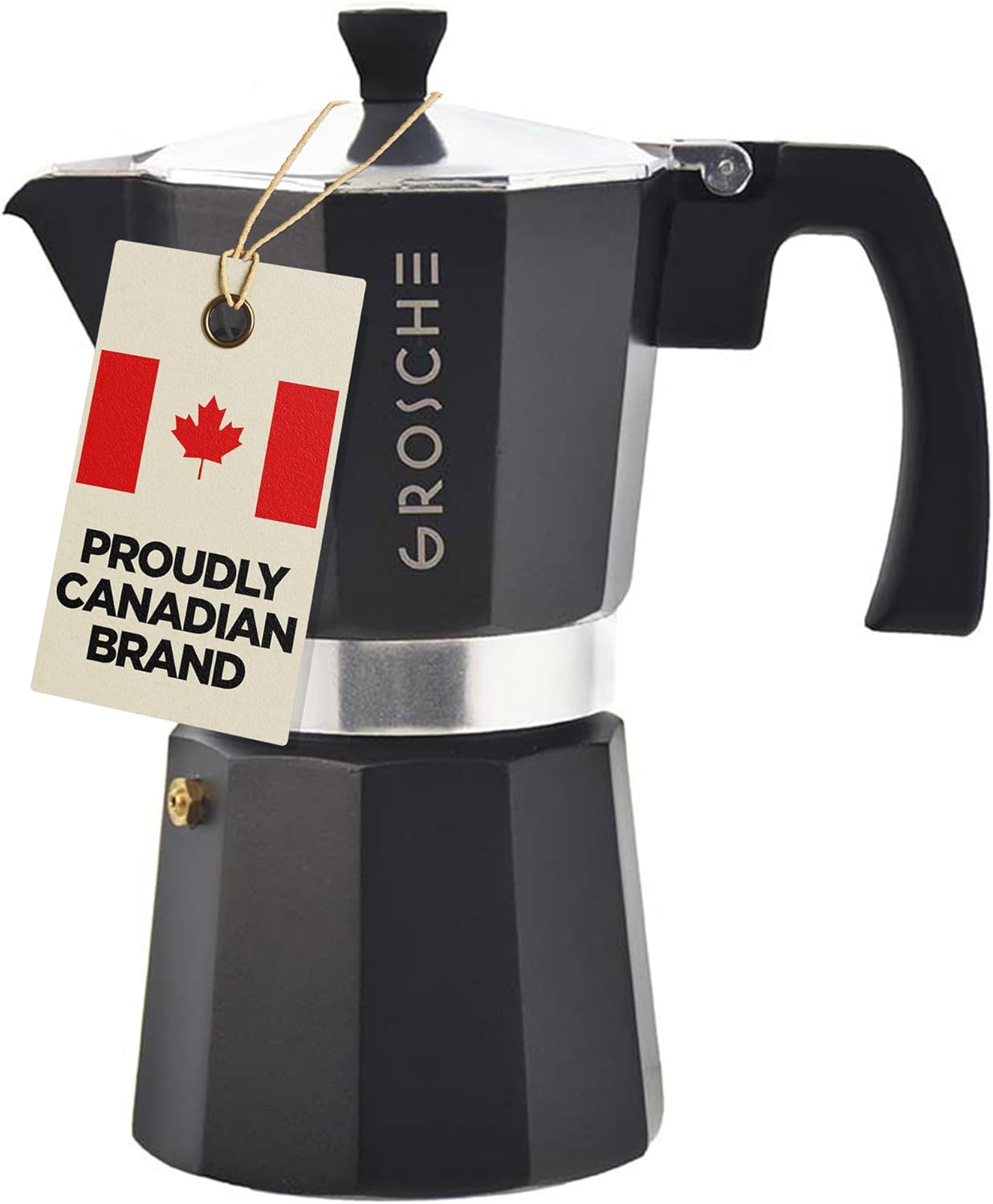
GROSCHE Milano 9-Cup Moka Pot
- 9 espresso-cup size
- 15.2 fl oz capacity
- Food-safe aluminum
- Gas and electric use
- Large soft-touch handle
- Italian safety valve
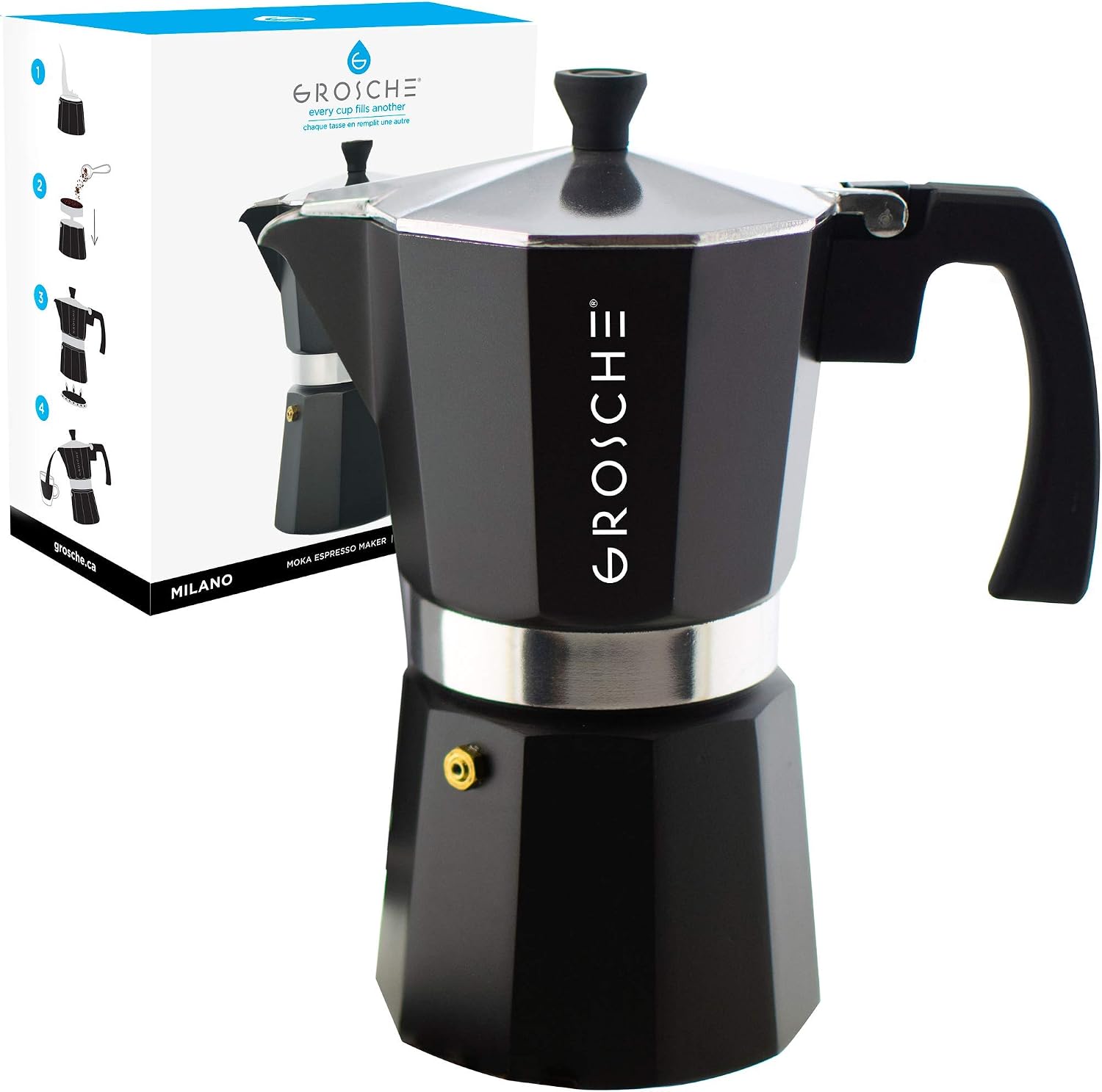
GROSCHE Milano 12-Cup Moka Pot
- 12 espresso-cup size
- 23.6 fl oz capacity
- Large aluminum body
- Group coffee batches
- Soft-touch handle
- Reusable metal filter

GROSCHE Madrid 11.8 oz French Press
- 11.8 fl oz capacity
- One-mug size
- Borosilicate glass
- Stainless steel filter
- Coffee or tea use
- Compact storage
Quick Ranking: Best GROSCHE Coffee Makers
| Rank | GROSCHE Coffee Maker | Best For | Why It Earned Its Place |
|---|---|---|---|
| 1 | GROSCHE Milano 6-Cup Moka Pot | Best Overall | Best balance of size, portability, and daily output |
| 2 | GROSCHE Milano Induction 6-Cup Moka Pot | Best Induction | Best for induction kitchens and mixed cooktops |
| 3 | GROSCHE Dublin Double-Wall French Press | Best Premium | Best premium press for hot or cold brewing |
| 4 | GROSCHE Madrid 34 oz French Press | Best French Press | Best glass press for several cups |
| 5 | GROSCHE Amsterdam Glass Pour-Over Coffee Maker | Best Pour Over | Best for clean manual brewing with reusable filter |
| 6 | GROSCHE Milano 3-Cup Moka Pot | Best Small | Best compact moka pot for one person |
| 7 | GROSCHE Milano 9-Cup Moka Pot | Best Family | Best family balance before the extra-large size |
| 8 | GROSCHE Milano 12-Cup Moka Pot | Best Large | Best for gatherings and high-volume serving |
| 9 | GROSCHE Madrid 11.8 oz French Press | Best Solo | Best personal French press for coffee or tea |
Best GROSCHE Coffee Makers: Detailed Reviews
1. Best Overall: GROSCHE Milano 6-Cup Moka Pot
Best GROSCHE coffee maker for everyday moka coffee.
GROSCHE Milano 6-Cup Moka PotThe most balanced GROSCHE coffee maker for one or two people who want bold moka coffee, simple stovetop use, and enough output for two milk drinks.
Price on AmazonTechnical Specifications & Daily Features
- Brewer style: Classic aluminum stovetop moka pot
- Nominal size: 6 espresso cups
- Capacity: Approximately 9.3 fl oz
- Material: Food-grade anodized aluminum
- Stovetop compatibility: Gas, electric, propane, and slow heating on nonmagnetic glass induction surfaces
- Handle: Soft-touch handle with finger burn guard
- Safety: Certified Italian safety valve
- Filter: Reusable metal funnel and filter plate
- Cleaning: Hand washing recommended
30-Day Ownership Outlook: Pros & Cons
Pros
- Useful daily size: It produces enough concentrated coffee for two generous drinks without the bulk of the largest Milano pots.
- Simple operation: Water, coffee, heat, and a timely removal from the stove are the only essential steps.
- Portable design: The non-electric body works well in kitchens, cabins, RVs, and camping setups with a suitable burner.
- Comfortable handle: The enlarged soft-touch handle and guard reduce the chance of touching the hot body.
- Replaceable wear parts: The silicone gasket follows a familiar moka-pot maintenance routine.
Cons
- Not true espresso: The moka process creates rich pressure-brewed coffee but not pump-driven café espresso.
- No induction base: This standard aluminum version is not the best choice for a true induction cooktop.
- Hand wash only: Detergent-heavy dishwasher cycles can affect the aluminum finish and seals.
My Final Verdict
The Milano 6-Cup is the easiest all-round recommendation because its output fits a normal two-drink morning without creating excessive leftovers.
Choose it for bold black coffee, Americanos, café au lait, cappuccinos, or iced drinks when you want a compact brewer rather than an electric machine.
The six-cup Milano is where the GROSCHE moka-pot range feels most practical. The three-cup version is excellent for one concentrated serving, while the nine- and twelve-cup versions begin to behave like group brewers. The six-cup model sits between those extremes and gives me enough moka coffee to divide into two mugs or build two milk drinks without reheating a second batch.
I like this size because it is forgiving about how the coffee will be used. Drunk straight, it produces several small moka servings. Mixed with hot water, it becomes two fuller Americanos. Combined with steamed or frothed milk, it has enough concentration to stay noticeable in a cappuccino-style drink. That versatility makes it easier to justify as the only stovetop coffee maker in a small kitchen.
The brewing routine is traditional: water below the safety valve, medium-fine coffee leveled in the funnel without tamping, firm assembly, and moderate heat. I listen for the change in sound and remove the pot before the final aggressive sputter. That small timing habit keeps the last overheated water from adding a harsh, metallic finish.
The main limitation is stove compatibility. The aluminum body works naturally on gas, electric, and propane burners, but it is not magnetic enough for normal induction performance. Buyers with induction should move directly to the Milano Induction model rather than relying on slow or inconsistent heating.
2. Best Induction: GROSCHE Milano Induction 6-Cup Moka Pot
Best GROSCHE coffee maker for all-stovetop compatibility.
GROSCHE Milano Induction 6-Cup Moka PotThe best GROSCHE choice for induction users, combining a magnetic stainless-steel lower chamber with the familiar Milano upper body and six-cup output.
Price on AmazonTechnical Specifications & Daily Features
- Brewer style: Hybrid induction-compatible stovetop moka pot
- Nominal size: 6 espresso cups
- Capacity: Approximately 9.3 fl oz
- Lower chamber: 18/8 stainless steel for induction compatibility
- Upper chamber: Food-safe aluminum
- Cooktop compatibility: Induction, gas, electric, and propane
- Handle: Heat-resistant soft-touch handle with guard
- Safety: Certified pressure-relief valve
- Cleaning: Hand washing is the safest routine for preserving finishes and seals
30-Day Ownership Outlook: Pros & Cons
Pros
- True induction use: The stainless lower chamber couples with magnetic induction surfaces instead of relying on an adapter plate.
- Broad compatibility: It can move between induction, gas, electric, and camping burners.
- Balanced output: The six-cup size suits one strong coffee drinker or two milk drinks.
- Familiar Milano workflow: Users of the standard pot do not need to learn a different brewing method.
- Durable base: The steel lower chamber feels substantial and resists the softness associated with thin aluminum bases.
Cons
- Heavier construction: The hybrid steel-and-aluminum body weighs more than the standard Milano.
- Higher cost: Induction compatibility adds expense compared with the classic aluminum pot.
- Mixed-material care: The two metals reward gentle cleaning and complete drying after use.
My Final Verdict
The Milano Induction is the clear choice when the kitchen uses induction or when the brewer needs to travel between different cooktops.
It preserves the compact moka routine while removing the biggest compatibility weakness of the standard aluminum Milano.
The Milano Induction solves a very specific problem: a traditional aluminum moka pot often sits uselessly on an induction cooktop because the base is not magnetic. GROSCHE replaces the lower chamber with stainless steel while keeping the recognizable aluminum upper body, creating a brewer that works across modern induction surfaces and conventional burners.
That hybrid construction changes the heating feel slightly. Stainless steel can take a little longer to respond than thin aluminum, but the induction element transfers energy efficiently once the base is recognized. I still use moderate power rather than maximum heat. A moka pot rewards a controlled rise in pressure; forcing it aggressively can produce a fast, bitter brew and make the handle area unnecessarily hot.
The six-cup capacity is another reason this is the induction model I would choose. It is large enough to justify heating the cooktop yet compact enough to keep the coffee fresh. I can divide the brew immediately instead of leaving concentrated coffee in the upper chamber while the metal remains hot.
The premium over the standard Milano makes sense only when induction compatibility is genuinely needed. On a gas or electric coil stove, the aluminum six-cup model is lighter and usually less expensive. On induction, the hybrid model is the better ownership decision because it works directly and consistently without a separate converter plate.
3. Best Premium: GROSCHE Dublin Double-Wall French Press
Best GROSCHE coffee maker for heat retention.
GROSCHE Dub'lin Double-Wall French PressThe most durable and heat-retentive option in the lineup, with double-wall 18/8 stainless steel construction and a full 34-ounce family capacity.
Price on AmazonTechnical Specifications & Daily Features
- Brewer style: Double-wall stainless-steel French press
- Capacity: 34 fl oz / approximately 1 liter
- Material: 18/8 stainless steel
- Insulation: Double-wall body for improved heat retention
- Filter: Reusable stainless-steel plunger assembly
- Brew options: Hot coffee, cold brew, tea, and infused drinks
- Interior aid: Measurement markings
- Durability: No exposed glass beaker
- Best use: Family batches, outdoor use, and slower breakfast service
30-Day Ownership Outlook: Pros & Cons
Pros
- Better heat retention: The insulated steel walls keep a full batch warm longer than a single glass beaker.
- Break-resistant body: There is no borosilicate carafe to chip or shatter during cleaning.
- Large capacity: The 34-ounce volume supports several cups or a generous cold-brew concentrate.
- Versatile brewing: The press can handle coffee, loose-leaf tea, cold extraction, and infused water.
- Premium feel: The black stainless construction looks more substantial than an entry-level press.
Cons
- Opaque body: I cannot watch the coffee level or the grounds settle through the sides.
- Heavier pouring: A full steel press feels weightier than the Madrid glass model.
- Higher price: The insulation and metal body cost more than a basic French press.
My Final Verdict
The Dub'lin is the best choice for buyers who value durability and temperature retention more than seeing the brew through glass.
It is especially persuasive for busy breakfasts, patios, cabins, and households that leave the second cup in the press for a few minutes.
The Dublin is the GROSCHE coffee maker I would trust most around a busy kitchen. Glass French presses are beautiful and easy to monitor, but they remain vulnerable to sinks, cabinet edges, and accidental thermal shock. The double-wall stainless body removes that anxiety and gives the press a more durable, travel-friendly character.
Heat retention is the practical advantage. French press coffee extracts for only a few minutes, but the serving can stretch much longer. An insulated body slows heat loss while I pour the first cups, prepare breakfast, or return for a refill. I still decant coffee promptly when possible because the grounds remain in contact with the liquid, but the warmer vessel gives more flexibility than thin glass.
The 34-ounce capacity suits roughly three to four ordinary mugs depending on the recipe. For a balanced starting point, I use a coarse, even grind and a coffee-to-water ratio near 1:15 or 1:16, then adjust by taste. The dual-filter approach helps hold back larger particles, though no French press will produce the paper-filter clarity of pour-over.
The opaque steel body changes the sensory routine. I cannot see the bloom or the grounds settling, so I rely on the scale, timer, and tactile resistance of the plunger. That tradeoff is easy to accept when durability and heat retention are the priorities.
4. Best French Press: GROSCHE Madrid 34 oz French Press
Best GROSCHE coffee maker for classic full batches.
GROSCHE Madrid 34 oz French PressThe best classic glass French press for a household batch, combining a one-liter borosilicate beaker with a stainless filter and an easy-to-monitor brew.
Price on AmazonTechnical Specifications & Daily Features
- Brewer style: Glass French press
- Capacity: 34 fl oz / 1.0 L
- Beaker: Heat-resistant borosilicate glass
- Frame: Protective metal frame and handle assembly
- Filter: Dual-filter stainless-steel plunger
- Brew options: Coffee, tea, cold brew, and infused beverages
- Serving size: Several cups depending on mug size
- Cleaning: Disassemblable plunger and removable beaker
- Best use: Family breakfast and traditional full-immersion coffee
30-Day Ownership Outlook: Pros & Cons
Pros
- Visible extraction: The glass beaker lets me watch bloom, saturation, and settling.
- Full batch size: One liter is practical for several drinkers or a large morning mug.
- Classic flavor: The metal filter preserves oils and body that paper filters remove.
- Versatile vessel: It can steep tea or prepare cold brew as easily as hot coffee.
- Accessible cleaning: The plunger separates for brushing and the beaker can be rinsed directly.
Cons
- Glass vulnerability: The beaker needs careful handling around sinks and hard countertops.
- Faster cooling: It loses heat sooner than the double-wall Dub'lin.
- Sediment remains: Very fine particles can pass through the metal filter into the cup.
My Final Verdict
The Madrid 34 oz is the best traditional French press in the supplied lineup for buyers who prefer glass visibility and full-bodied coffee.
Choose it when the brew ritual and classic appearance matter more than maximum insulation or impact resistance.
The large Madrid is the familiar French press most coffee drinkers picture: a clear cylindrical beaker, a metal frame, a lid, and a plunger. That simplicity is part of its appeal. I can see exactly how much water I added, whether all the coffee is saturated, and how the grounds settle before I press.
The one-liter capacity gives the brewer a social role. It can serve a couple over breakfast, fill several smaller cups, or produce one very large batch for a slow morning. I avoid filling it to the absolute rim because the plunger displaces liquid and the bloom needs room to rise. Leaving a little headspace makes stirring and pressing cleaner.
For the best cup, I use a coarse grinder setting and avoid the common advice to grind into enormous uneven chunks. An even medium-coarse grind often extracts more sweetness, while the dual filter controls the larger particles. After four minutes, I break the crust gently, wait for settling, press slowly, and pour the entire batch rather than leaving coffee on the grounds.
This is also the easiest product here to connect with my complete French press brewing guide. The Madrid does not automate anything; it rewards water temperature, grind consistency, ratio, steep time, and careful decanting.
5. Best Pour Over: GROSCHE Amsterdam Glass Pour-Over Coffee Maker
Best GROSCHE coffee maker for paper-free pour-over.
GROSCHE Amsterdam Glass Pour-Over Coffee MakerThe best GROSCHE option for pour-over drinkers, using a removable glass dripper, permanent double-layer stainless filter, and a generous glass carafe.
Price on AmazonTechnical Specifications & Daily Features
- Brewer style: Manual pour-over brewer and carafe
- Capacity: Approximately 27.6 fl oz
- Carafe: Heat-resistant borosilicate glass
- Dripper: Removable matching glass upper chamber
- Filter: Reusable double-layer stainless-steel mesh
- Paper requirement: None
- Flavor profile: More oils and body than paper-filter pour-over
- Kettle pairing: Best with a controlled gooseneck pour
- Best use: Two to three cups of manual brewed coffee
30-Day Ownership Outlook: Pros & Cons
Pros
- Reusable filter: No paper filters are required for daily brewing.
- Integrated carafe: The dripper and serving vessel form one coordinated setup.
- Rich pour-over body: The steel mesh allows aromatic oils through while holding back most grounds.
- Visible brewing: The glass design makes water level and drawdown easy to monitor.
- Removable top: The dripper lifts away cleanly before serving.
Cons
- Less paper clarity: Microfines and oils create more texture than a paper-filter cup.
- Technique sensitive: Pour rate, grind, bloom, and kettle control directly affect extraction.
- Glass handling: Both the carafe and upper dripper require careful washing and storage.
My Final Verdict
The Amsterdam is the strongest choice for someone who enjoys the hands-on control of pour-over but does not want to buy disposable filters.
It produces a richer, more textured cup than a paper cone and works best with an even medium grind and controlled kettle.
Amsterdam is the most visually distinctive brewer in this group. Instead of placing a plastic cone on a separate mug, GROSCHE uses a removable glass upper chamber over a matching carafe. The arrangement looks deliberate on the counter and keeps the brewing and serving pieces together.
The permanent double-layer stainless filter defines the flavor. Paper removes more oils and very fine particles, creating a brighter, cleaner cup. Metal allows more of those oils through, so the Amsterdam tastes rounder and fuller. I would not call one profile better; the reusable filter simply gives pour-over a character closer to a refined French press.
Technique matters more than with a moka pot or press. I bloom the coffee first, pour in controlled pulses, keep the water level stable, and watch the total brew time. A gooseneck kettle makes that easier because the narrow spout controls agitation. If the drawdown stalls, I grind coarser; if the brew races through and tastes thin, I move finer.
The removable upper chamber is practical after brewing. I can lift the spent filter and dripper away, then serve directly from the glass carafe. The main ownership concern is simply protecting two glass components instead of one.
6. Best Small: GROSCHE Milano 3-Cup Moka Pot
Best GROSCHE coffee maker for single servings.
GROSCHE Milano 3-Cup Moka PotThe best compact option for one drinker, producing about five ounces of concentrated moka coffee in a small, portable aluminum brewer.
Price on AmazonTechnical Specifications & Daily Features
- Brewer style: Compact aluminum stovetop moka pot
- Nominal size: 3 espresso cups
- Capacity: Approximately 5 fl oz
- Material: Food-safe aluminum
- Stovetop compatibility: Gas, electric, and propane; not designed for direct induction use
- Handle: Soft-touch handle with burn guard
- Safety: Certified Italian valve
- Portability: Small enough for camping kits and limited storage
- Best use: One concentrated coffee or one milk drink
30-Day Ownership Outlook: Pros & Cons
Pros
- Fresh single batch: The small output reduces the temptation to leave moka coffee sitting in the hot chamber.
- Minimal footprint: It fits easily in a drawer, cabinet, or travel box.
- Fast heating: The smaller water volume reaches brewing pressure quickly.
- Affordable entry: It offers the Milano design at a lower size and typical cost.
- Easy recipe control: The basket naturally fixes a small dose that is simple to repeat.
Cons
- Limited output: It is too small for two large milk drinks.
- Small burner fit: Wide gas grates may need careful positioning or a support ring.
- No induction: The standard aluminum base is not magnetic.
My Final Verdict
The Milano 3-Cup is the right purchase for a solo coffee drinker who values freshness and compact storage.
It is less suitable for entertaining, but excellent for one strong morning serving or a portable brewing kit.
The three-cup Milano is the moka pot I would choose for one person who drinks the entire batch immediately. Moka cup sizes are small espresso-style measures, so the total output is roughly five fluid ounces rather than three ordinary mugs. That concentrated volume is ideal for one strong coffee or a single milk drink.
The smaller chamber heats quickly and responds noticeably to burner power. I use a low-to-medium flame that stays beneath the base instead of curling around the sides. Once the first coffee appears, I reduce heat or move the pot partially off the burner to keep the flow smooth.
The compact size also makes it excellent for travel. It does not require electricity, paper, or fragile glass. A camping stove, ground coffee, and water are enough. I pack it dry with the funnel and gasket seated correctly so small parts do not disappear in the bag.
The limitation is obvious: output. Two people can split the batch into tiny cups, but anyone preparing two lattes will be happier with the six-cup Milano. The three-cup model succeeds because it does one small batch efficiently rather than trying to stretch beyond its size.
7. Best Family: GROSCHE Milano 9-Cup Moka Pot
Best GROSCHE coffee maker for shared moka batches.
GROSCHE Milano 9-Cup Moka PotA larger Milano for households that want several small moka servings or enough concentrated coffee for multiple Americanos and milk drinks.
Price on AmazonTechnical Specifications & Daily Features
- Brewer style: Large aluminum stovetop moka pot
- Nominal size: 9 espresso cups
- Capacity: Approximately 15.2 fl oz
- Material: Food-safe aluminum
- Stovetop compatibility: Gas, electric, propane, and suitable camping burners
- Handle: Extended soft-touch handle with burn guard
- Safety: Certified Italian safety valve
- Filter: Reusable funnel and metal filter plate
- Best use: Several moka servings or three to four mixed coffee drinks
30-Day Ownership Outlook: Pros & Cons
Pros
- Group-friendly volume: The pot produces enough concentrated coffee to serve several people from one cycle.
- Fewer repeat brews: A family can prepare breakfast coffee without immediately resetting the pot.
- Milk-drink capacity: The brew can support several cappuccino-style or iced drinks.
- Simple construction: There are no pumps, cords, or electronics to manage.
- Familiar parts: The gasket, funnel, and filter follow the classic moka format.
Cons
- Longer heat time: The larger water mass takes more time than the three- or six-cup pots.
- More coffee required: A full basket uses a meaningful dose whether or not every serving is needed.
- Standard stove only: The aluminum base is not intended for direct induction use.
My Final Verdict
The Milano 9-Cup is the best family compromise when the six-cup model feels small but the twelve-cup model feels excessive.
It is most efficient when the whole batch is served immediately across several cups.
The nine-cup Milano turns moka brewing into a shared ritual. Its approximately 15.2-ounce output is still concentrated, but there is enough volume to divide across a family breakfast or mix into several larger drinks. It saves the time of cooling, opening, rinsing, and reloading a smaller pot.
Large moka pots need more patience. I avoid increasing the burner too aggressively just to shorten the wait. The larger coffee bed benefits from a controlled rise in pressure, and moderate heat reduces the risk that the upper chamber erupts into a harsh, sputtering finish.
The full basket also uses more coffee. A moka pot is designed around a filled, leveled funnel, so I do not half-fill a nine-cup basket to make a tiny batch. Buyers who regularly drink alone should choose a smaller size and preserve the nine-cup pot for gatherings.
When the batch matches the household, the nine-cup model is efficient and enjoyable. I preheat serving cups, remove the pot promptly, stir the finished coffee in the upper chamber for uniform strength, and pour everything while it is fresh.
8. Best Large: GROSCHE Milano 12-Cup Moka Pot
Best GROSCHE coffee maker for largest moka batches.
GROSCHE Milano 12-Cup Moka PotThe largest moka pot in the supplied group, designed for gatherings, batch iced coffee, and households that need substantially more concentrated output.
Price on AmazonTechnical Specifications & Daily Features
- Brewer style: Extra-large aluminum stovetop moka pot
- Nominal size: 12 espresso cups
- Capacity: Approximately 23.6 fl oz
- Material: Food-safe aluminum
- Stovetop compatibility: Gas, electric, propane, and appropriately sized camping burners
- Handle: Large soft-touch handle with heat guard
- Safety: Certified pressure-relief valve
- Serving role: Gatherings, batch milk drinks, and iced coffee bases
- Cleaning: Hand wash and dry fully
30-Day Ownership Outlook: Pros & Cons
Pros
- Maximum output: It prepares the most coffee in one cycle among the supplied Milano models.
- Entertaining value: The batch can serve a table without multiple resets.
- Iced-coffee base: The concentrated volume is useful when several cold drinks are being assembled.
- No electrical footprint: It stores away when the gathering is over.
- Simple maintenance: Routine care centers on the gasket, filter plate, funnel, and valve.
Cons
- Bulky handling: The pot is heavier and less nimble when full.
- High coffee dose: Every proper batch requires a large filled basket.
- Slower brewing: The extra water and metal take longer to heat evenly.
My Final Verdict
The Milano 12-Cup is a specialist choice for high-volume moka brewing rather than an everyday pot for one person.
Buy it when the large batch will genuinely be served; otherwise, the six- or nine-cup models are easier and more economical.
The twelve-cup Milano is less of a personal coffee maker and more of a serving tool. Its 23.6-ounce capacity creates enough concentrated moka coffee for a group, a tray of milk drinks, or a pitcher of iced coffee. That makes it useful for gatherings but excessive for a normal solo morning.
Because the pot is large, burner matching matters. A tiny flame concentrates heat in the center and lengthens the brew, while an oversized flame can climb the sides. I choose a burner close to the base diameter and use moderate heat so the chamber warms evenly.
The full basket consumes a substantial dose. I never tamp moka coffee, but I do distribute it evenly and wipe grounds from the rim before tightening the pot. A clean rim and healthy silicone gasket help the large chamber build pressure without leaking steam around the joint.
This is the model I would keep for brunches rather than daily use. When the batch is fully served, it is efficient. When half the coffee sits cooling in the chamber, a smaller Milano would have produced a fresher result with less coffee.
9. Best Solo: GROSCHE Madrid 11.8 oz French Press
Best GROSCHE coffee maker for one mug brewing.
GROSCHE Madrid 11.8 oz French PressA compact personal French press that makes one generous mug with the same borosilicate glass and stainless-filter approach as the larger Madrid.
Price on AmazonTechnical Specifications & Daily Features
- Brewer style: Personal glass French press
- Capacity: 11.8 fl oz / 350 ml
- Beaker: Heat-resistant borosilicate glass
- Filter: Stainless-steel plunger assembly
- Serving size: One generous mug or several tasting cups
- Brew options: Coffee, tea, and small cold-brew batches
- Storage: Compact cabinet footprint
- Cleaning: Removable beaker and disassemblable filter
- Best use: Solo brewing at home or office
30-Day Ownership Outlook: Pros & Cons
Pros
- Fresh single serving: The entire batch can be poured immediately instead of remaining on the grounds.
- Compact footprint: It is easy to store beside a mug or kettle.
- Lower coffee use: The small batch suits one drinker without wasting a full-liter recipe.
- Visual control: The glass beaker shows saturation and settling clearly.
- Tea versatility: It doubles as a personal loose-leaf tea press.
Cons
- One-person capacity: It cannot comfortably serve a couple from one brew.
- Faster cooling: The small glass mass loses heat quickly.
- Fragile beaker: The narrow glass body still needs careful handling.
My Final Verdict
The small Madrid is the best personal French press for someone who wants one fresh mug and no leftover batch.
Its position is lower only because the title covers broad household value; for a solo desk or apartment setup, it may be the most sensible choice.
The 350 ml Madrid is a reminder that a smaller brewer can be more useful than a larger one. French press coffee should ideally be poured away from the grounds when extraction is complete. A one-mug press makes that easy because the whole batch goes directly into the cup instead of sitting in the beaker and becoming heavier over time.
The recipe is simple to scale. I start with roughly 22 to 24 grams of coffee for the full capacity, then adjust the ratio according to roast and taste. The narrow beaker benefits from a careful stir so every grain is saturated during the bloom.
The smaller thermal mass means preheating is worthwhile. A quick rinse with hot water warms the glass before the actual brew and reduces the initial temperature drop. I also use a lid during steeping and pour immediately after the slow press.
This is a particularly good office brewer because it needs only a kettle and coarse ground coffee. It is compact, quiet, and capable of tea. The only concern is protecting the glass beaker in a shared sink or crowded cabinet.
Buying Guide: How to Choose the Best GROSCHE Coffee Maker
Choose the Brewing Method Before the Size
A moka pot, French press, and pour-over carafe make fundamentally different coffee. Moka is concentrated and intense. French press is full-bodied and textural. Pour-over is more controlled and aromatic. I choose the method first, then compare capacity and materials inside that category.
A buyer who wants something close to a strong café base should start with the Milano line. Someone who values a large, round breakfast cup should look at Madrid or Dub’lin. Someone who enjoys controlling every pore should choose Amsterdam.
Understand Moka Cup Sizing
Moka-pot cups are small espresso-style measures, not household mugs. The three-cup Milano makes about five fluid ounces, the six-cup about 9.3 ounces, the nine-cup around 15.2 ounces, and the twelve-cup roughly 23.6 ounces.
I size the pot according to the batch I will finish immediately. A larger model is not automatically more flexible because the basket is intended to be filled for each brew.
Check the cooktop.
Standard Milano models are aluminum and work on gas, electric, propane, and suitable camping burners. Aluminum is not magnetic, so direct induction performance is unreliable.
The Milano Induction uses a stainless lower chamber and is the correct choice for magnetic induction cooktops. It also works on conventional stoves, making it the most universal version.
Glass Versus Stainless French Press
Glass gives visual feedback. I can watch the bloom, monitor the level, and see the grounds settle. It is lighter and traditionally styled, but it can break and cools faster.
Double-wall stainless steel is more durable and retains heat longer. It is heavier and opaque, but better for patios, cabins, busy kitchens, and slow serving.
Permanent Metal Filter Versus Paper
The Amsterdam metal filter allows more coffee oil and very fine particles into the carafe than paper. The result has more body and aroma but less sparkling clarity.
A permanent filter saves paper and is convenient, but it needs regular cleaning. Coffee oils can clog fine mesh and slow drawdown if they are not removed with warm water and mild detergent.
Use the Correct Grind
Moka coffee should be medium-fine, finer than drip but coarser than pump espresso. I level the basket and never tamp it down. A French press needs an even medium-coarse to coarse grind. Amsterdam pour-over usually begins around medium.
Uniformity matters more than choosing the largest possible particles. Too many fines create bitterness and sediment, while overly coarse coffee can taste weak and hollow.
Control Heat and Brew Time
Moka pots benefit from moderate heat and timely removal before violent sputtering. French presses need a consistent steep and immediate decanting. Pour-over depends on total contact time and controlled flow.
A timer and scale improve every brewer here. They turn a visual ritual into a repeatable recipe and make adjustments easier to understand.
Plan for Cleaning and Replacement Parts
Moka-pot gaskets and filters are wear items. The safety valve should remain clear, and aluminum pots should be hand washed and dried. French press filters need occasional disassembly because fines collect between screens.
Glass components deserve careful handling, while stainless bodies need complete drying to avoid water spotting. The brewer that feels easiest to maintain is usually the one that remains in daily use.
Final Comparison Table: Which GROSCHE Coffee Maker Should You Buy?
| Product | Type | Best For | Product/Use Fit | Amazon |
|---|---|---|---|---|
| Milano 6-Cup | Moka pot | Best Overall | Best balance of size, portability, and daily output | Price on Amazon |
| Milano Induction | Induction moka pot | Best Induction | Best for induction kitchens and mixed cooktops | Price on Amazon |
| Dub'lin 34 oz | French press | Best Premium | Best premium press for hot or cold brewing | Price on Amazon |
| Madrid 34 oz | French press | Best French Press | Best glass press for several cups | Price on Amazon |
| Amsterdam Pour Over | Pour-over | Best Pour Over | Best for clean manual brewing with reusable filter | Price on Amazon |
| Milano 3-Cup | Moka pot | Best Small | Best compact moka pot for one person | Price on Amazon |
| Milano 9-Cup | Moka pot | Best Family | Best family balance before the extra-large size | Price on Amazon |
| Milano 12-Cup | Moka pot | Best Large | Best for gatherings and high-volume serving | Price on Amazon |
| Madrid 11.8 oz | French press | Best Solo | Best personal French press for coffee or tea | Price on Amazon |
My Final Recommendation
The GROSCHE Milano 6-Cup is my best overall choice because its capacity fits the widest number of everyday routines. It is compact enough for one strong coffee drinker, yet large enough to prepare two Americanos or milk drinks from one batch.
For induction kitchens, the Milano Induction 6-Cup is the clear answer. The stainless lower chamber removes the compatibility uncertainty of standard aluminum moka pots while preserving the familiar Milano brewing method.
I would choose the Dublin for maximum durability and heat retention, the Madrid 34 oz for a classic visual French press, and the Amsterdam for paper-free pour-over control. The remaining Milano sizes should be selected according to the exact batch the household will finish immediately.
The simplest rule is to avoid buying capacity as a form of future insurance. A coffee maker performs best when its normal batch matches the normal number of drinkers. Freshness, correct grind, and attentive technique matter more than owning the largest model.
FAQ: Best GROSCHE Coffee Makers
What is the best GROSCHE coffee maker overall?
The Milano 6-Cup is the strongest overall choice because its 9.3-ounce output suits one or two people and works for straight moka coffee, Americanos, iced drinks, and milk-based coffee.
Is moka coffee the same as espresso?
No. A moka pot uses steam pressure that is much lower than a pump espresso machine’s. It makes concentrated, rich coffee with an espresso-like role but not true café espresso.
Which GROSCHE moka pot works on induction?
The Milano Induction uses a stainless-steel lower chamber designed for induction cooktops. Standard aluminum Milano models are not the best direct-induction choice.
What does six-cup moka pot mean?
It means six small espresso-style servings, not six mugs. The GROSCHE Milano 6-Cup holds approximately 9.3 fluid ounces.
Which size is best for one person?
The Milano 3-Cup is best for one concentrated moka serving. The Madrid 11.8 oz. is the better choice for one full French press mug.
Which GROSCHE maker is best for a family?
The Milano 9-cup suits several concentrated servings, while the Madrid or Dublin 34 oz presses suit multiple regular cups. The right choice depends on flavor preference.
Is the Dublin better than the Madrid French press?
The Dublin is more durable and retains heat longer. The Madrid is lighter and transparent and lets the user watch extraction. Neither is universally better.
Does the Amsterdam need paper filters?
No. It includes a permanent double-layer stainless-steel filter. The metal filter produces more body and oil than a paper-filter pour-over.
What grind should I use for a GROSCHE moka pot?
Use an even medium-fine grind, coarser than pump espresso. Fill and level the basket without tamping.
What grind should I use for Madrid or Dublin?
Begin with a consistent medium-coarse to coarse grind. Adjust slightly finer for weak coffee or coarser for excessive bitterness and sediment.
Can GROSCHE French presses make tea?
Yes. Both Madrid and Dub’lin can steep loose-leaf tea, but the filter should be cleaned carefully so coffee oils do not affect delicate tea flavors.
How should I clean a Milano moka pot?
Allow it to cool, disassemble it, rinse the chambers and filter, check the valve and gasket, and dry everything fully. Hand washing is recommended for the aluminum models.
Should I leave French press coffee in the brewer?
No. Pour or decant the finished coffee after pressing because continued contact with the grounds can make the later cups heavier and more bitter.
Which GROSCHE product is best for camping?
The standard Milano moka pots are compact and non-electric, making them excellent for propane and camp stoves. Choose a size that matches the group and burner support.
Does every GROSCHE purchase support safe water projects?
GROSCHE connects product purchases with its Safe Water Project, which funds access to safe drinking water. Program details may evolve, so the current brand information should be checked when purchasing.


