
Best Compact Coffee Grinders for Small Storage


OneHundredCoffee is reader-supported, and some products displayed may earn us an affiliate commission. Details
A coffee grinder should fit the kitchen you have, not the kitchen in an equipment advertisement. A narrow apartment counter might need room for a kettle, a small brewer, breakfast plates and a cutting board before a grinder earns its place. Even a model with excellent burrs becomes a poor purchase if you cannot lift its hopper lid, reach the controls or move its grounds container without nudging other appliances. The right compact grinder solves a practical storage problem and makes dependable coffee at the same time.
For most people brewing drip, pour-over or French press, I recommend the OXO Brew Conical Burr Grinder as the balanced everyday electric choice. Its 15 main settings and remembered timer provide useful control without turning a small kitchen into a professional workstation. But the standard OXO measures approximately 14.8 inches tall. If you really mean minimal storage—the kind of kitchen where everything goes into a drawer—Hario Smart G is the better choice. This 24 g hand mill detaches into a packable form and needs no permanent power outlet.
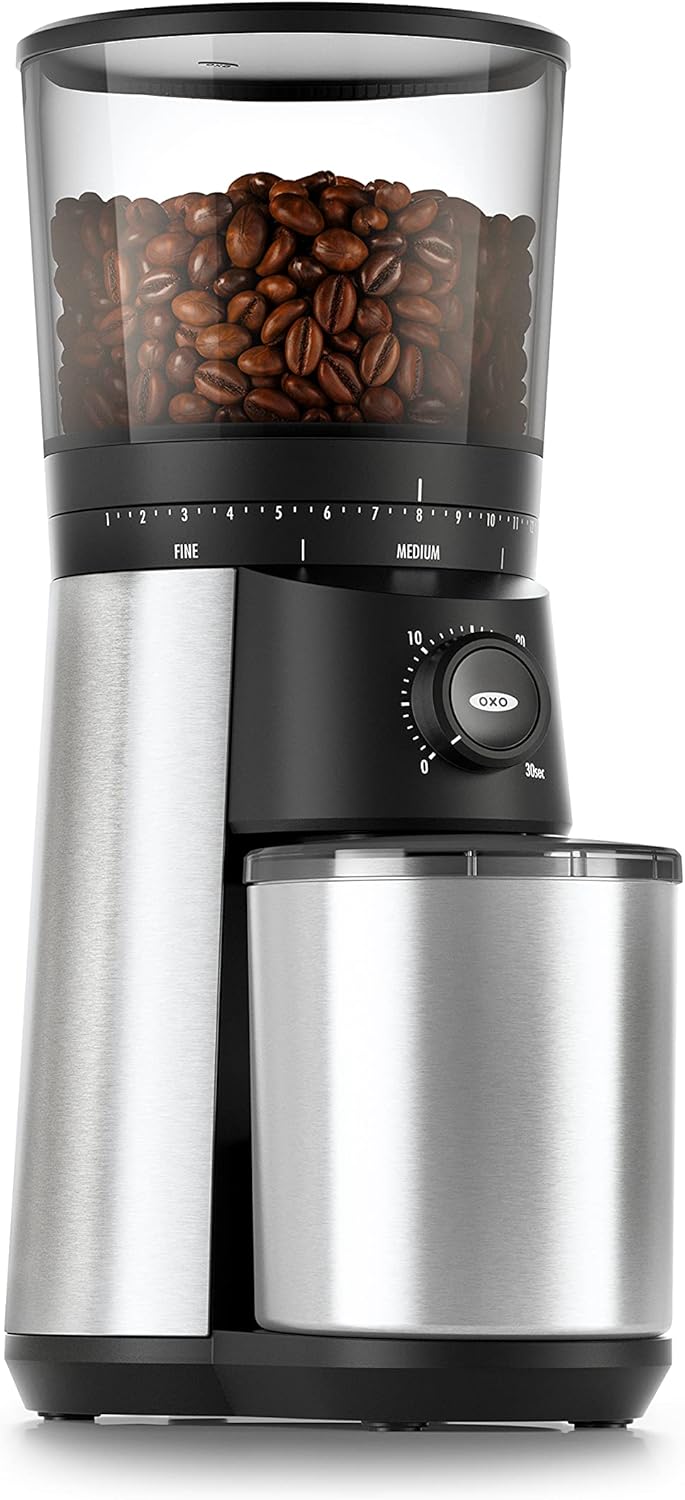
OXO Brew Conical Burr
- 15 main settings
- 12 oz hopper
- Timed memory
- Conical burrs
- Static-fighting cup
- 6.8-inch width

Hario Smart G
- 24 g capacity
- Ceramic burr
- Detachable handle
- Clear chamber
- No power needed
- Travel-friendly

MiiCoffee DF54
- 54 mm flat burrs
- Stepless dial
- 150 W motor
- 4.5-inch width
- Plasma chute
- Single dosing
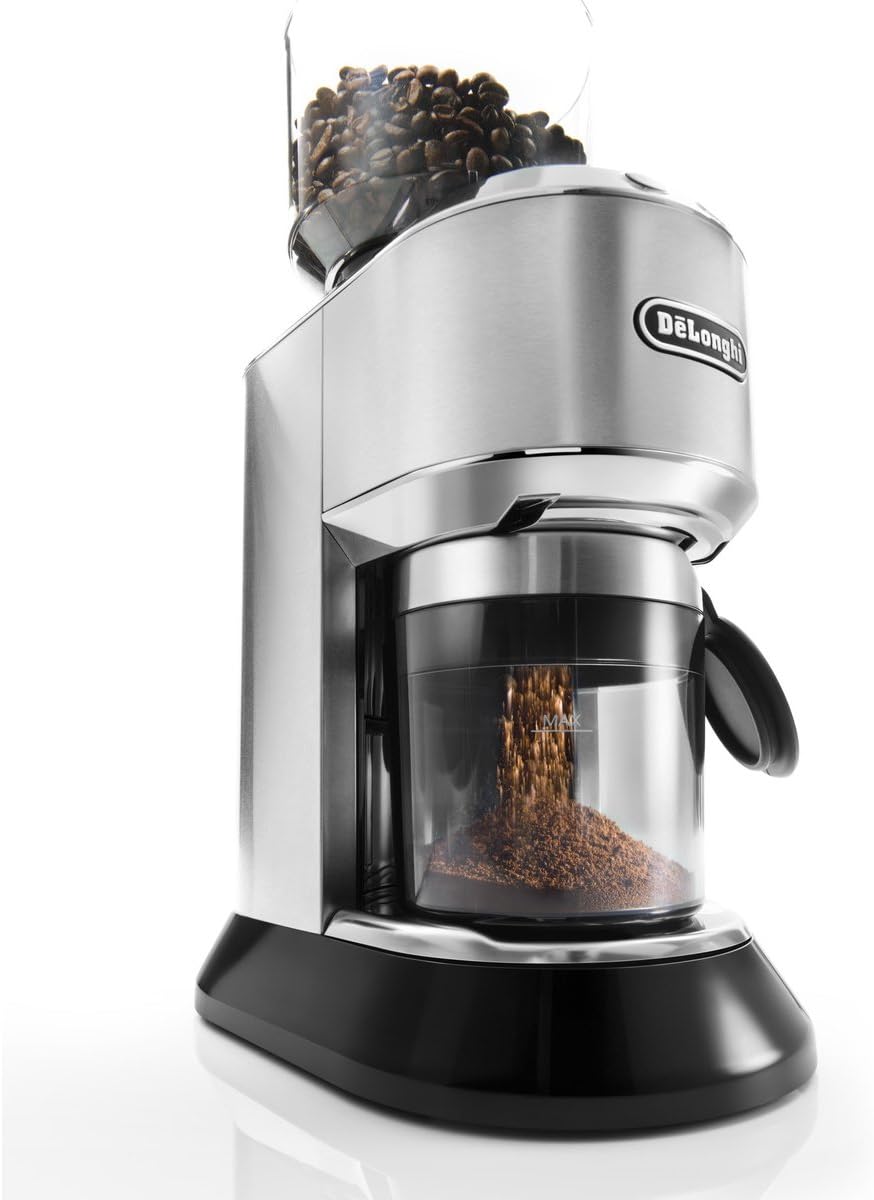
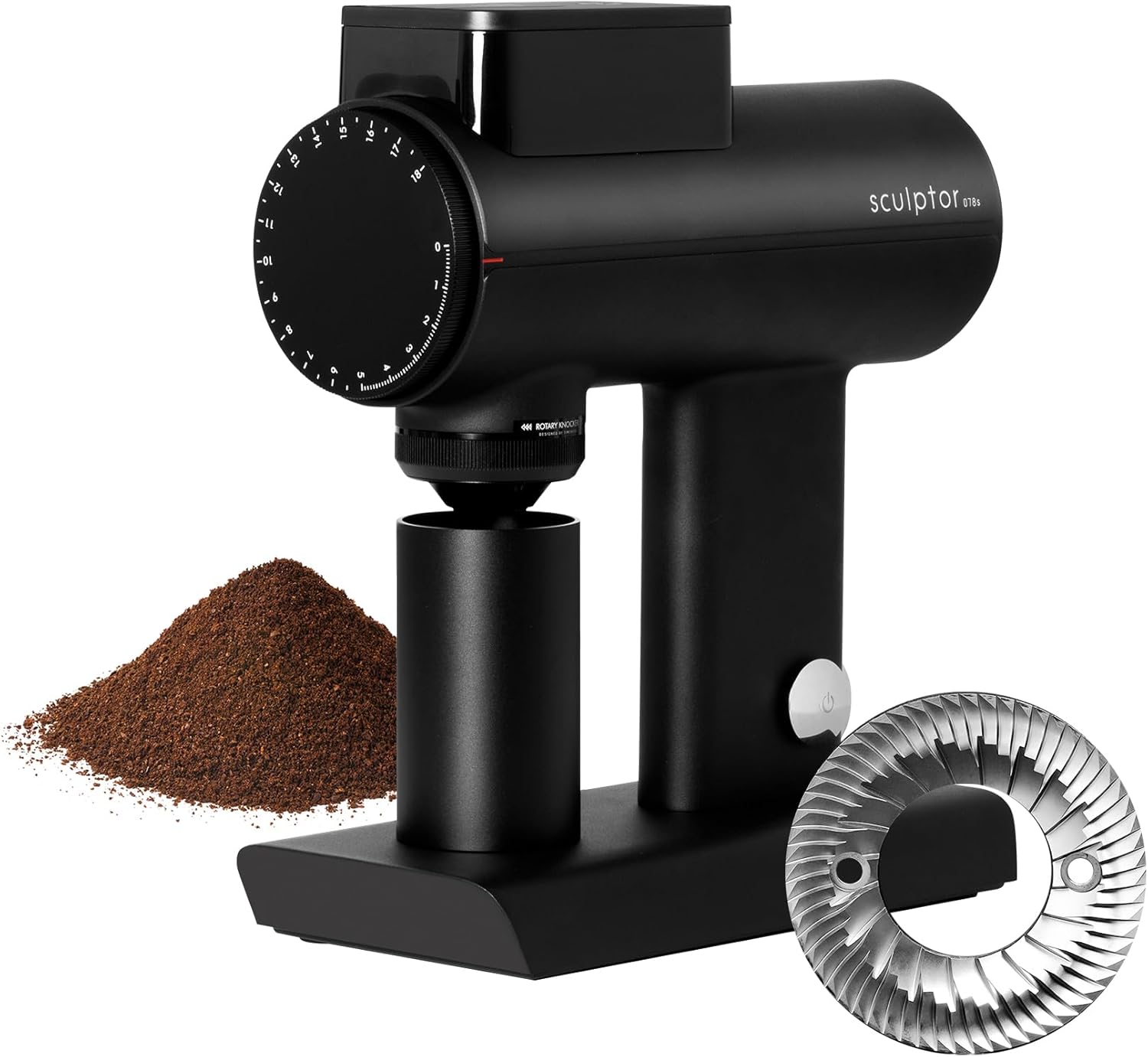
Espresso changes the recommendation. MiiCoffee DF54 has a notably narrow body, a 54 mm flat-burr set and a stepless adjustment dial suited to fine tuning a shot. De’Longhi KG521M goes in a more convenient, digitally controlled direction, with 18 settings and a compatible portafilter adaptor. For enthusiasts who can dedicate more space, TIMEMORE Sculptor 078S offers premium single-dose flat-burr control, while Moccamaster KM5 is a filter-specific machine with a substantial glass catcher. The rechargeable DmofwHi rounds out the choices for people who need cordless portability, though it uses blades rather than precision burrs.
The most useful comparison is not simply which grinder is shortest. It is whether you want an appliance that stays on the counter, a lightweight tool that packs away after every brew, or a specialist that justifies the space it occupies. A permanent espresso station, a shared student kitchen and a camper-van shelf place different demands on the same equipment. Below, each recommendation is judged against its realistic daily storage routine, dose capacity, burr mechanism, cleaning requirements and brewing role—not just its silhouette.
If you mainly make drip coffee, the related coffee grinder guide for drip brewing covers more filter-oriented options. For this roundup, the priority is finding usable grinding control without sacrificing essential counter space.
Best Compact Coffee Grinders for Minimal Storage at a Glance


Quick Ranking: Compact Grinders by Storage and Brewing Fit
| Rank | Grinder | Storage benefit | Burr system | Capacity | Trade-off |
|---|---|---|---|---|---|
| 1 | OXO Brew Conical Burr | Best Overall | Stainless conical burr | 12 oz bean hopper | 14.8-inch height and full hopper are not drawer-friendly |
| 2 | Hario Smart G | Best Drawer Storage | Ceramic conical hand burr | 24 g grounds capacity | Slow for large batches and not a precision espresso tool |
| 3 | MiiCoffee DF54 | Best Compact Espresso | 54 mm stainless flat burrs | 20 g without bellows / up to 50 g with bellows | 10 lb heavy body; slower than larger burr models |
| 4 | De’Longhi Dedica KG521M | Best Portafilter | Stainless conical burr | 350 g hopper / 170 g bin | 15-inch height and limited espresso micro-adjustment |
| 5 | DmofwHi Cordless | Best Cordless | Rechargeable stainless blade | Small removable steel grinding cup | Blade grind uneven; charging and battery care |
| 6 | TIMEMORE Sculptor 078S | Best Premium | 78 mm flat steel burrs | Around 30 g single-dose hopper | Substantial premium body; not truly drawer-sized |
| 7 | Moccamaster KM5 | Best Filter Specialty | 50 mm flat hardened steel burrs | 8.8 oz hopper; 100 g grounds catcher | Not intended for espresso; substantial 4.6 kg body |
1. OXO Brew Conical Burr Coffee Grinder, Silver — Best Overall
Best for: Everyday drip, pour-over, French press.
The everyday footprint matters as much as the burr design
The standard OXO Brew is often treated as a compact grinder because its base is neatly contained. The more useful measurement is its full 14.8-inch height. A shallow cabinet can make the hopper awkward to fill, especially if you need to lift the lid while the grinder remains in place. I regard this as a good permanent-counter choice for a modest kitchen, rather than a truly invisible storage tool.
Repeatable drip brewing without a complicated panel
The OXO offers a push dial, a remembered timer and a grind-setting ring. That combination suits the person who makes a measured carafe every weekday and a larger French press on Sunday. Settings are repeatable, but the timer does not weigh beans; the output dose changes with roast density and grind size. Weigh the first few batches when establishing a recipe.
Where espresso stretches its versatility
Although the fine end is advertised across several brew methods, the most persuasive reason to buy OXO is filter coffee. An unpressurized espresso basket may need adjustments smaller than those that feel comfortable on a general-use grinder. Rather than chase an elusive shot setting, treat the OXO as an excellent drip-and-pour-over companion with occasional finer-grind flexibility.
How to store it cleanly in a crowded kitchen
Keep the grinder near an outlet with just enough room to pull out the grounds cup. Wipe stray chaff from the chute and rim after grinding, and keep beans in a separate airtight container if the grinder sits in sunlight. If you need to put it away nightly, measure the shelf height including the hopper lid first. A narrow machine that cannot pass through a cabinet opening is not actually compact for your kitchen.
OXO Brew Conical Burr Coffee Grinder, Silver
Everyday drip, pour-over, French press
Grinding: Stainless conical burr
Adjustment: 15 main settings + micro-settings; timed start
Capacity: 12 oz bean hopper
Good fit: Everyday drip, pour-over, French press
Pros
- Comfortable daily grind selector
- Remembers last timed dose
- Versatile filter-coffee range
- Removable UV-tinted hopper
Cons
- 14.8 inches tall with hopper
- Not a fine-adjustment espresso specialist
- Requires counter or cabinet clearance
Technical Specifications & Daily Features
The OXO Brew standard conical-burr grinder uses stainless-steel conical burrs, 15 main grind settings with additional micro-settings, a 12-ounce bean hopper, and a push-to-start timer that remembers its previous time. The silver unit stands approximately 6.8 inches wide, 11.8 inches deep and 14.8 inches tall.
The tinted hopper has a trap door for removal, while the static-fighting metal grounds cup aims to contain loose coffee. This model is different from the smaller OXO Brew Compact grinder: the large standard grinder is convenient for regular households but is not intended to disappear into a cutlery drawer.
Pros & Cons After 30 Days of Use
The strongest ownership advantage is an everyday routine that needs very little setup. A repeatable timer and recognizable grind dial reduce repeated adjustment for a household that mainly uses one or two brew methods. The removable hopper and upper burr provide ordinary access for brushing.
The storage limitation is physical height, not just base area. Keep enough overhead clearance to remove and refill the hopper without dragging the machine out from under a shelf. For nonpressurized espresso, narrower adjustments may become frustrating; use a dedicated espresso grinder if that is the main goal.
My Final Verdict
For a small home that keeps one electric grinder on the counter, my best all-round choice is the OXO Brew. Its clear controls, broad filter-grind range and predictable timer justify its place. It is less convincing when every appliance must be stored away after each cup, in which case the Hario Smart G is the obvious space-first alternative.
What the storage requirement changes for OXO Brew Conical Burr
The strongest ownership advantage is an everyday routine that needs very little setup. A repeatable timer and recognizable grind dial reduce repeated adjustment for a household that mainly uses one or two brew methods. The removable hopper and upper burr provide ordinary access for brushing.
The storage limitation is physical height, not just base area. Keep enough overhead clearance to remove and refill the hopper without dragging the machine out from under a shelf. For nonpressurized espresso, narrower adjustments may become frustrating; use a dedicated espresso grinder if that is the main goal.
My final recommendation for OXO Brew Conical Burr
For a small home that keeps one electric grinder on the counter, my best all-round choice is the OXO Brew. Its clear controls, broad filter-grind range and predictable timer justify its place. It is less convincing when every appliance must be stored away after each cup, in which case the Hario Smart G is the obvious space-first alternative.
2. Hario Smart G Ceramic Coffee Mill, Clear — Best Drawer Storage
Best for: Single-cup AeroPress and pour-over; travel.
A grinder that can genuinely leave the counter
If a kitchen measures available coffee space in drawer compartments rather than square feet, a hand grinder is the practical answer. The Smart G has no bulky base, transformer or power cord to manage. Take the handle off, keep the parts together in a pouch and the worktop is empty again. That convenience is not marketing shorthand: it changes whether a grinder can be part of a tiny home at all.
The one-cup dose is its natural assignment
The 24 g capacity suits an 18–20 g pour-over dose or an ordinary AeroPress recipe. It will not conveniently prepare a large batch for a family drip machine. It is better to weigh a serving, grind it slowly and brew immediately than to overfill the chamber in pursuit of speed. Filter-focused work is also a more natural match for the adjustment system than exacting espresso.
A quiet option for shared homes
Hand grinding makes little mechanical noise compared with a motorized grinder, but it does take attention. That is helpful in a shared apartment where early-morning coffee should not dominate the room. The downside is simple physical effort. Dense beans take more cranks, and repeated fine-grind doses can turn the morning routine into a chore if there are several drinkers.
Storage care is part of the choice
The clear chamber makes it easy to spot residual grounds, which matters when the grinder is going straight into a drawer. Brush coffee from the mouth and catcher and keep the burrs dry in accordance with the care instructions. The detachable handle also needs its own place so it does not get lost among teaspoons. This is an intentionally simple tool, and it works best when the brewing plan is just as simple.
Hario Smart G Ceramic Coffee Mill, Clear
Single-cup AeroPress and pour-over; travel
Grinding: Ceramic conical hand burr
Adjustment: Internal stepped hand adjustment
Capacity: 24 g grounds capacity
Good fit: Single-cup AeroPress and pour-over; travel
Pros
- Stores away without a cord
- Only 24 g to measure
- Quiet hand-operated routine
- Slim transparent body
Cons
- Arm effort for repeated cups
- Ceramic mill is slow for espresso-fine work
- Plastic body needs gentle handling
Technical Specifications & Daily Features
The Hario Smart G is a compact hand grinder with ceramic conical burrs, a detachable crank handle, a transparent body and approximately 24 g coffee capacity. Hario gives the current Smart G form a compact 150 × 53 × 190 mm overall size with the handle included.
The grinder is useful for one modest brew at a time; manual grind adjustment does not offer the marked micrometric precision of an expensive steel-burr espresso mill. It does not need a charging cable, countertop socket or motor, which is a genuine advantage in a tiny kitchen.
Pros & Cons After 30 Days of Use
The strongest feature is the ability to remove the handle, put both pieces in a small container and recover the kitchen counter entirely. A dry brush keeps the ceramic mill clean; plastic components and fittings should be handled carefully during reassembly.
Hand grinding becomes less appealing as the dose grows or the beans get hard and fine grinding is required. Coffee for one AeroPress is comfortable in concept, while several large carafes are not a sensible daily target. Protect the clear housing when packing it beside metal utensils.
My Final Verdict
Hario Smart G is my storage-first recommendation. It is the most persuasive option here for a drawer, an RV cupboard or a travel coffee kit because it needs no electricity and removes the permanent countertop problem. Choose a metal-burr hand grinder instead if daily espresso dialing is the primary need.
What the storage requirement changes for Hario Smart G
The strongest feature is the ability to remove the handle, put both pieces in a small container and recover the kitchen counter entirely. A dry brush keeps the ceramic mill clean; plastic components and fittings should be handled carefully during reassembly.
Hand grinding becomes less appealing as the dose grows or the beans get hard and fine grinding is required. Coffee for one AeroPress is comfortable in concept, while several large carafes are not a sensible daily target. Protect the clear housing when packing it beside metal utensils.
My final recommendation for Hario Smart G
Hario Smart G is my storage-first recommendation. It is the most persuasive option here for a drawer, an RV cupboard or a travel coffee kit because it needs no electricity and removes the permanent countertop problem. Choose a metal-burr hand grinder instead if daily espresso dialing is the primary need.
3. MiiCoffee DF54 Single Dose Flat Burr Coffee Grinder — Best Compact Espresso
Best for: Single-dose espresso in a narrow coffee station.
Small footprint does not mean lightweight
The DF54 claims little width on the counter, making it appealing beside a small espresso machine. It is also a substantial metal appliance. That combination matters: leave it in a stable position rather than treat it like a toaster that moves from drawer to counter every day. For someone with one spare strip of counter, the compact base can be more useful than shaving a few inches from the overall height.
Why the stepless dial belongs on an espresso setup
A small change in burr gap can have a substantial effect on how a nonpressurized espresso basket flows. The DF54 adjusts continuously instead of restricting you to a fixed set of clicks. That makes it a more natural companion for espresso than the OXO or KM5. For filter coffee, it still has a broad useful range, although changing from very fine to much coarser settings calls for careful adjustment and resetting notes.
A cleaner single-dose station needs planning
There is no large bean tower occupying the upper half of the coffee station. Instead, you measure the coffee, drop it into the grinder and catch the grounds. The plasma generator is designed to reduce static at the outlet. Nevertheless, you still need a scale, dosing cup, brush and a place to keep the bellows. Minimalism works only when those accessories have an organized home.
What I value most in the DF54
The appeal is precision without an espresso-grinder footprint that dominates the worktop. Its metal construction, standard flat-burr format and straightforward dial make it more purposeful than a generic compact electric grinder. The trade-off is slower grinding and more deliberate ownership than a timed hopper model. Anyone who mostly makes filter coffee may find the OXO easier and cheaper to live with.
MiiCoffee DF54 Single Dose Flat Burr Coffee Grinder
Single-dose espresso in a narrow coffee station
Grinding: 54 mm stainless flat burrs
Adjustment: Stepless grind dial; 150 W motor
Capacity: 20 g without bellows / up to 50 g with bellows
Good fit: Single-dose espresso in a narrow coffee station
Pros
- Only 4.5 inches wide
- Fine espresso control
- Anti-static plasma generator
- Dedicated dosing cup
Cons
- Heavy despite narrow footprint
- Requires manual dose weighing
- Grounds chute still needs cleaning
Technical Specifications & Daily Features
The DF54 is a 54 mm stainless-steel flat-burr grinder with stepless adjustment, a 150 W motor, an aluminum chassis and a narrow approximately 4.5-inch width. Its published footprint is about 4.5 inches wide by 7 inches deep with a 12-inch height.
MiiCoffee includes a dosing cup, bellows and an ionizing plasma generator at the exit chute. The product is a single-dose grinder rather than a large-hopper design. Approximately 20 g fits without bellows and up to 50 g with the bellows installed; the maker describes a low-retention grinding path.
Pros & Cons After 30 Days of Use
The narrow base makes the DF54 unusually suitable for a compact espresso station. Weighing a dose first eliminates a large bean hopper, though the workflow introduces a scale and a separate container that must also be stored. The ionizer can reduce static but does not eliminate the need for periodic cleaning.
At roughly 10 pounds the DF54 is not a portable appliance to move between shelves daily. Leave it on a stable surface, avoid rushing beans through the chute and brush the accessible passages during routine cleaning. Its fine stepless adjustment is the central feature for espresso, not a promise of zero maintenance.
My Final Verdict
The DF54 is my pick for serious espresso in the narrowest permanent counter space. Its 54 mm flat burrs and stepless dial give more exact shot control than the general filter grinders here. The trade-off is weight and a measured single-dose routine, both worthwhile only when espresso is an important daily drink.
What the storage requirement changes for MiiCoffee DF54
The narrow base makes the DF54 unusually suitable for a compact espresso station. Weighing a dose first eliminates a large bean hopper, though the workflow introduces a scale and a separate container that must also be stored. The ionizer can reduce static but does not eliminate the need for periodic cleaning.
At roughly 10 pounds the DF54 is not a portable appliance to move between shelves daily. Leave it on a stable surface, avoid rushing beans through the chute and brush the accessible passages during routine cleaning. Its fine stepless adjustment is the central feature for espresso, not a promise of zero maintenance.
My final recommendation for MiiCoffee DF54
The DF54 is my pick for serious espresso in the narrowest permanent counter space. Its 54 mm flat burrs and stepless dial give more exact shot control than the general filter grinders here. The trade-off is weight and a measured single-dose routine, both worthwhile only when espresso is an important daily drink.
4. De’Longhi Dedica KG521M Digital Conical Burr Grinder — Best Portafilter
Best for: Compact espresso-machine pairing and everyday filter coffee.
Slim depth changes the layout of a coffee corner
The Dedica grinder extends roughly six inches from front to back, which is useful if the worktop has enough width for a machine and grinder side by side. Height is the catch: at approximately fifteen inches, it is far from drawer-sized. Check the space between counter and wall cabinet before deciding that this unit is a compact match. A shallow appliance that forces you to pull it out whenever you refill the hopper still needs a practical home.
Direct-to-portafilter is a convenience, not an absolute
The included filter-holder support can remove one transfer step for compatible portafilters. That saves a little counter clutter, but the connection is not universal. Home brewers with an unrelated espresso machine should check the fit and may be better served by the grounds container. The LCD, cup selector and 18-step dial also make the grinder approachable for family members who do not want to measure every button press.
The eighteen-step limit matters for espresso
A fixed number of grind steps can work with many pressurized baskets and forgiving espresso recipes, but a demanding unpressurized basket may fall between two ideal settings. The grinder is flexible across drip and other methods, yet flexibility is not the same as precise espresso dial-in. This is the central distinction from the DF54: convenient digital use on one side, stepless specialty adjustment on the other.
Everyday upkeep without a sprawling station
The removable grounds container, upper burr access and familiar button layout make it easy to understand. Keep the drawer or shelf free of loose grounds before storing accessories, and avoid leaving the portafilter adaptor where it can get bumped. For a kitchen that wants one machine to cover ordinary coffee and an occasional shot, Dedica makes a reasonable compromise between controls and space.
De’Longhi Dedica KG521M Digital Conical Burr Grinder
Compact espresso-machine pairing and everyday filter coffee
Grinding: Stainless conical burr
Adjustment: 18 settings; LCD; cup selector 1–14
Capacity: 350 g hopper / 170 g bin
Good fit: Compact espresso-machine pairing and everyday filter coffee
Pros
- Portafilter support reduces transfers
- Easy LCD dose controls
- Conical burr design
- Slim depth for a counter
Cons
- 15 inches tall
- Less fine control than DF54
- 350 g hopper takes visual space
Technical Specifications & Daily Features
The De’Longhi KG521M has stainless-steel conical burrs, 18 selectable grind settings, an LCD display and a grounds-container or filter-holder workflow. The American model is approximately 9.5 inches wide, 6 inches deep and 15 inches tall, with a 350 g hopper and up to 14 cup selection.
The cup and aroma controls are convenient for ordinary home use, but cup counts are not gram-accurate dosing. The portafilter adaptor suits the compatible filter holders rather than every possible diameter. For precision espresso, 18 discrete settings offer less adjustment resolution than a purpose-built stepless grinder.
Pros & Cons After 30 Days of Use
The KG521M saves an accessory transfer when its filter-holder adaptor matches the espresso setup. This is practical in a crowded kitchen that already has an espresso machine, but the side-to-side arrangement still needs clearance to remove and manage the portafilter.
The hopper adds height. A 15-inch appliance under an upper cupboard may be harder to refill than it looks in a product photo. The grounds bin and upper burr should be cleaned regularly, especially with dark oily roasts. Because the dose selector controls a nominal amount, measure output when establishing espresso recipes.
My Final Verdict
The De’Longhi Dedica KG521M works best for a household that already owns a compatible Dedica-style espresso machine and prefers an uncomplicated digital routine. Its narrow depth is useful, but I rank the DF54 above it for fine espresso control and the Hario above it for true stowaway storage.
What the storage requirement changes for De’Longhi Dedica KG521M
The KG521M saves an accessory transfer when its filter-holder adaptor matches the espresso setup. This is practical in a crowded kitchen that already has an espresso machine, but the side-to-side arrangement still needs clearance to remove and manage the portafilter.
The hopper adds height. A 15-inch appliance under an upper cupboard may be harder to refill than it looks in a product photo. The grounds bin and upper burr should be cleaned regularly, especially with dark oily roasts. Because the dose selector controls a nominal amount, measure output when establishing espresso recipes.
My final recommendation for De’Longhi Dedica KG521M
The De’Longhi Dedica KG521M works best for a household that already owns a compatible Dedica-style espresso machine and prefers an uncomplicated digital routine. Its narrow depth is useful, but I rank the DF54 above it for fine espresso control and the Hario above it for true stowaway storage.
5. DmofwHi Cordless Rechargeable Coffee Grinder — Best Cordless
Best for: Temporary setups, RVs and occasional immersion coffee.
The rare case where portability beats particle precision
Some kitchens have no outlet near the coffee area. An RV counter may also be too shallow for a tall hopper grinder. In those environments, an integrated rechargeable unit has a clear advantage. The DmofwHi stores without a hanging cable and can be used away from a wall socket. That frees space during brewing but does not change its basic grinding mechanism: it is a blade machine, not a compact burr grinder.
Understanding the cup you can expect
Blades chop beans through repeated contact, so small fragments and larger pieces develop together. A longer run does not reproduce the controlled spacing of burrs. French press or cold brew can tolerate a broader particle range better than delicate espresso. Even there, excessive fine dust can produce sediment and an uneven finish. Use a short-pulse approach to reduce extreme over-grinding and judge the grounds rather than treating seconds as a calibrated grind setting.
Charging is a storage detail too
It is easy to compare a battery grinder with a hand grinder and overlook the charging cord. Keep a designated cable and follow the charging guidance; do not store a wet cup connected to the motor. For daily coffee, this is an added maintenance step. For travel or occasional use, it may be a reasonable trade for not carrying a separate power converter or finding an accessible socket.
A sensible backup, not the only specialty grinder
If your main method is a sensitive cone-filter pour-over, the blade mechanism is not the ideal foundation. If your goal is fresh beans while visiting family or using a temporary office station, it can be useful. The narrow buyer profile is what gives this unit a place in a compact-storage roundup: occasional convenience under imperfect conditions, rather than a claim that it matches the consistency of the flat-burr electric models.
DmofwHi Cordless Rechargeable Coffee Grinder
Temporary setups, RVs and occasional immersion coffee
Grinding: Rechargeable stainless blade
Adjustment: Pulse duration; no burr-setting dial
Capacity: Small removable steel grinding cup
Good fit: Temporary setups, RVs and occasional immersion coffee
Pros
- Cordless operation frees counter outlets
- Easy to pack and move
- Removable cup for emptying
- Simple controls
Cons
- Blade method creates uneven particles
- Battery requires charging
- Not an espresso grinder
Technical Specifications & Daily Features
The DmofwHi B08PQRQ96L is a cordless rechargeable electric blade grinder with a removable stainless-steel grinding cup. The mechanism uses high-speed blades, not a pair of adjustable burrs, and particle size is primarily influenced by how long it is pulsed.
There is no numbered burr adjustment system and no grounds-weight measurement. Its compact rechargeable design can be convenient in a van or crowded shared kitchen, but charging equipment and sensible battery care remain part of ownership. Follow the product instructions for cup cleaning and charging.
Pros & Cons After 30 Days of Use
Freedom from a wall socket is the defining advantage. Grind coffee at a temporary station, remove the cup, transfer the grounds, then put the appliance away. Its powered operation is faster and easier for repeated small doses than a hand crank, although results will not be equally uniform.
Blade grinding involves fines and larger fragments in the same batch. Short pulses and redistributing beans between pulses can improve the average texture without turning it into a burr mill. Keep the cup clean and dry, charge as directed and do not assume any cordless appliance is ideal for harsh wet outdoor conditions.
My Final Verdict
DmofwHi is a convenience pick, not a grind-precision recommendation. Choose it when there is no practical outlet and a small powered grinder matters more than uniformity. For better tasting repeatable pour-over from a fully stowable unit, I recommend the Hario hand burr instead.
What the storage requirement changes for DmofwHi Cordless
Freedom from a wall socket is the defining advantage. Grind coffee at a temporary station, remove the cup, transfer the grounds, then put the appliance away. Its powered operation is faster and easier for repeated small doses than a hand crank, although results will not be equally uniform.
Blade grinding involves fines and larger fragments in the same batch. Short pulses and redistributing beans between pulses can improve the average texture without turning it into a burr mill. Keep the cup clean and dry, charge as directed and do not assume any cordless appliance is ideal for harsh wet outdoor conditions.
My final recommendation for DmofwHi Cordless
DmofwHi is a convenience pick, not a grind-precision recommendation. Choose it when there is no practical outlet and a small powered grinder matters more than uniformity. For better tasting repeatable pour-over from a fully stowable unit, I recommend the Hario hand burr instead.
6. TIMEMORE Sculptor 078S Electric Flat Burr Coffee Grinder — Best Premium
Best for: Premium espresso and filter on permanent counters.
Premium performance still occupies real kitchen space
The 078S photographs beautifully in minimalist settings, but metal construction and a large burr platform impose a physical price. It is smaller in visual clutter than a busy commercial grinder and uses a single-dose bean inlet, yet it is neither featherweight nor built to disappear into a drawer. In a narrow coffee area, measure the full footprint and surrounding clearance before choosing it. This is a grinder to leave in place.
Stepless control expands the espresso role
The 078S is not the same product as the standard Sculptor 078. Its flat burrs and continuous grind adjustment are aimed at espresso as well as filter methods. That difference matters more than external styling when you are trying to tune a nonpressurized basket. The option to vary motor speed adds another control, though changing speed should not replace careful grind and dose adjustments when dialing coffee.
Convenience comes from the details around the burrs
A magnetic grounds catcher finds its position without fiddly alignment. A rotary knocker helps clear fines at the exit. These are small practical design choices that support a tidy single-dose routine in a tight space, where even a few stray grams can become frustrating. They do not make the grinder maintenance-free: dry brushing and careful handling of the grind path remain normal.
Who gains enough to justify the investment
A home barista alternating lighter-roast espresso and clean filter recipes can make good use of the available controls. A daily French press drinker does not need the same machine. The 078S is the right choice when grinding quality and adjustment range outrank the goal of hiding every appliance. For storage above all else, spending more here moves away from the actual need.
TIMEMORE Sculptor 078S Electric Flat Burr Coffee Grinder
Premium espresso and filter on permanent counters
Grinding: 78 mm flat steel burrs
Adjustment: Stepless dial; variable RPM approximately 800–1400
Capacity: Around 30 g single-dose hopper
Good fit: Premium espresso and filter on permanent counters
Pros
- Wide espresso-to-filter capability
- Fine stepless adjustment
- Knocker clears residual fines
- Magnetic cup alignment
Cons
- Heavy and relatively large
- Expensive for occasional brewing
- Requires permanent counter space
Technical Specifications & Daily Features
TIMEMORE Sculptor 078S uses an approximately 78 mm flat burr set, stepless grind adjustment, a magnetic grounds cup, a rotary knocker and variable motor speed. The 078S is the espresso-and-filter model; it must not be confused with the filter-focused Sculptor 078 using Turbo burrs and stepped adjustment.
TIMEMORE describes the 078 series as a substantial 400 W class platform with a hopper around 30 g. The 078S supports variable speed around 800–1400 RPM. It is a single-dose specialty grinder rather than a miniature electric that belongs in a kitchen drawer.
Pros & Cons After 30 Days of Use
The most convenient features are the knocker and magnetic cup, which reduce steps between grinding and cleaning. The stepless adjustment is particularly useful for espresso, but a small position on the counter does not eliminate its substantial metal weight.
This grinder should have a dedicated, dry, stable surface with clearance for bean loading and the collection cup. Fine grind settings still require occasional chute cleaning. Users who rotate between espresso and filter should document their settings and account for any retained grounds when changing methods.
My Final Verdict
The Sculptor 078S is the premium performance pick for buyers who can reserve a permanent spot in a relatively small coffee station. I do not recommend it primarily to save storage space: the Hario and DF54 are more convincing for that goal. Its justification is a sophisticated espresso-and-filter workflow in a single elegant appliance.
What the storage requirement changes for TIMEMORE Sculptor 078S
The most convenient features are the knocker and magnetic cup, which reduce steps between grinding and cleaning. The stepless adjustment is particularly useful for espresso, but a small position on the counter does not eliminate its substantial metal weight.
This grinder should have a dedicated, dry, stable surface with clearance for bean loading and the collection cup. Fine grind settings still require occasional chute cleaning. Users who rotate between espresso and filter should document their settings and account for any retained grounds when changing methods.
My final recommendation for TIMEMORE Sculptor 078S
The Sculptor 078S is the premium performance pick for buyers who can reserve a permanent spot in a relatively small coffee station. I do not recommend it primarily to save storage space: the Hario and DF54 are more convincing for that goal. Its justification is a sophisticated espresso-and-filter workflow in a single elegant appliance.
7. Technivorm Moccamaster KM5 Burr Coffee Grinder — Best Filter Specialty
Best for: Filter-coffee brewers and Moccamaster owners.
The KM5 is a filter station, not a travel appliance
The KM5 belongs beside a brewer that prepares more than one mug. Its stable weight, sizeable grounds catcher and filter-specific grind adjustment all make sense for a kitchen with a regular drip machine. It is relatively narrow but still heavy and deep enough to need a dedicated location. Describing it as a tiny stowaway obscures its actual strength: steady repeatable filter grinding.
Correcting the adjustment misunderstanding
The KM5 has a stepless control, not a numbered sequence of fixed mechanical click stops. The knob is marked for reference within the range. This is useful when shifting a paper-filter recipe slightly finer or coarser, particularly to tune drawdown and balance. It does not extend the grinder into serious espresso territory. Its intended range remains filter brewing, and that limitation deserves respect.
The larger catcher makes batch brewing easier
A 100 g grounds container gives space for substantial drip doses without transferring grounds from several tiny cups. Its spout incorporates static-reducing features, a meaningful convenience when grinding into a kitchen that has limited cleanup space. The glass vessel should have a safe dedicated location rather than be jammed into a crowded drawer against metal utensils.
A good fit for the right kind of minimalist
Minimalism does not always mean the smallest object. It can mean choosing one durable appliance that does exactly what your household needs. The KM5 suits someone who drinks filter coffee consistently, wants a visually coherent station and values the brand’s service and warranty approach. It is far less compelling for a person who alternates between espresso and pour-over or needs to remove every appliance after breakfast.
Technivorm Moccamaster KM5 Burr Coffee Grinder
Filter-coffee brewers and Moccamaster owners
Grinding: 50 mm flat hardened steel burrs
Adjustment: Stepless numbered dial; fine-to-coarse filter range
Capacity: 8.8 oz hopper; 100 g grounds catcher
Good fit: Filter-coffee brewers and Moccamaster owners
Pros
- Dedicated filter grind control
- Static-reducing chute
- Consistent large filter batches
- Serviceable long-term build
Cons
- Not suitable for espresso
- Heavier than compact models
- Needs a dedicated shelf
Technical Specifications & Daily Features
The Moccamaster KM5 has 50 mm flat hardened-steel burrs, a stepless grind adjustment dial, a direct-drive motor and a static-reducing dispensing path. Its grounds vessel holds about 100 g, while its bean hopper is roughly 8.8 oz on the U.S. specification.
The brand positions the KM5 for filter coffee and says it is not suitable for espresso. The model is substantial rather than ultracompact: published European dimensions are about 21.1 × 12.8 × 32.3 cm, with an approximately 4.6 kg weight. Its five-year warranty and parts-service position make it appealing as a long-term home station.
Pros & Cons After 30 Days of Use
The KM5 is helpful for someone regularly preparing larger drip batches and wanting a relatively clean grounds delivery. The 100 g catching vessel is practical for multiple servings, and the static-control chute addresses a common source of counter mess.
It is too heavy and specialized to be a sensible nightly drawer-storage solution. The stepless adjustment dial allows gradual filter-grind changes, but its ranges are not built for genuine espresso. Note useful brewing positions and adjust with the grinder running with the grinder running to reduce the risk of trapped beans.
My Final Verdict
The KM5 earns a specialist place for home filter coffee where a permanent station is available. Its thoughtful spout and 50 mm flat burrs matter more than its ability to fit a tiny cabinet. Choose it over an all-purpose grinder only when filter coffee is the clear priority and long-term repairability is attractive.
What the storage requirement changes for Moccamaster KM5
The KM5 is helpful for someone regularly preparing larger drip batches and wanting a relatively clean grounds delivery. The 100 g catching vessel is practical for multiple servings, and the static-control chute addresses a common source of counter mess.
It is too heavy and specialized to be a sensible nightly drawer-storage solution. The stepless adjustment dial allows gradual filter-grind changes, but its ranges are not built for genuine espresso. Note useful brewing positions and adjust with the grinder running with the grinder running to reduce the risk of trapped beans.
My final recommendation for Moccamaster KM5
The KM5 earns a specialist place for home filter coffee where a permanent station is available. Its thoughtful spout and 50 mm flat burrs matter more than its ability to fit a tiny cabinet. Choose it over an all-purpose grinder only when filter coffee is the clear priority and long-term repairability is attractive.
Final Comparison: Size, Controls, and Brewing Limitations
| Grinder | Mechanism | Adjustment | Brew style | Space requirement | Main limitation |
|---|---|---|---|---|---|
| OXO Brew Conical Burr | Stainless conical burr | 15 main settings + micro-settings; timed start | Everyday drip, pour-over, French press | Best Overall | 14.8-inch height and full hopper are not drawer-friendly |
| Hario Smart G | Ceramic conical hand burr | Internal stepped hand adjustment | Single-cup AeroPress and pour-over; travel | Best Drawer Storage | Slow for large batches and not a precision espresso tool |
| MiiCoffee DF54 | 54 mm stainless flat burrs | Stepless grind dial; 150 W motor | Single-dose espresso in a narrow coffee station | Best Compact Espresso | 10 lb heavy body; slower than larger burr models |
| De’Longhi Dedica KG521M | Stainless conical burr | 18 settings; LCD; cup selector 1–14 | Compact espresso-machine pairing and everyday filter coffee | Best Portafilter | 15-inch height and limited espresso micro-adjustment |
| DmofwHi Cordless | Rechargeable stainless blade | Pulse duration; no burr-setting dial | Temporary setups, RVs and occasional immersion coffee | Best Cordless | Blade grind uneven; charging and battery care |
| TIMEMORE Sculptor 078S | 78 mm flat steel burrs | Stepless dial; variable RPM approximately 800–1400 | Premium espresso and filter on permanent counters | Best Premium | Substantial premium body; not truly drawer-sized |
| Moccamaster KM5 | 50 mm flat hardened steel burrs | Stepless numbered dial; fine-to-coarse filter range | Filter-coffee brewers and Moccamaster owners | Best Filter Specialty | Not intended for espresso; substantial 4.6 kg body |
Buying Guide: Choosing a Small-Footprint Coffee Grinder
Measure usable shelf height before shopping
Width gets all the attention, yet height often decides whether an electric grinder can remain beneath a wall cabinet. Measure the counter-to-cabinet clearance, the opening through which the appliance must pass, and the additional room required to refill the hopper. The standard OXO stands around 14.8 inches high; De’Longhi KG521M is about 15 inches.
A grinder may physically fit while remaining difficult to use. If the hopper lid cannot lift or the bean container cannot come off, the daily ritual becomes inconvenient. Check both stored height and operating clearance, including the full handle sweep of a manual grinder.
Distinguish a compact footprint from easy storage
Footprint means the area touching the countertop. Storage convenience includes height, weight, cord management, loose accessories and how much strength it takes to move the appliance. The DF54 is very narrow but weighs roughly ten pounds; the Hario Smart G needs no outlet and can be packed with its handle detached.
For a kitchen where appliances stay out, a small base can be ideal. For a kitchen where everything must go away after breakfast, a light hand grinder or small cordless tool is easier to live with. Be clear which problem needs solving before choosing a winner.
Choose the correct grinder for espresso
A nonpressurized espresso basket is sensitive to small changes in grind size. Stepless models such as the DF54 and TIMEMORE Sculptor 078S allow very fine adjustments. The De’Longhi offers convenient 18-step adjustment, which is simpler but less granular.
Do not assume every grinder that reaches a fine texture can dial in espresso reliably. Filter-focused OXO and KM5 are more natural choices for drip and pour-over. Blade devices such as DmofwHi cannot offer repeatable burr spacing at all.
Prioritize medium-grind control for drip coffee
Paper-filter coffee usually benefits from repeatable particle size more than a huge list of advanced motor features. The OXO’s numbered settings and timed operation give practical everyday control. The Moccamaster KM5 emphasizes the filter range with a stepless dial and a 100 g collection vessel.
A consistent dose, measured water and a sensible brew ratio still matter. Begin near a medium grind, then adjust one variable at a time. If water stalls and the cup tastes harsh, try a slightly coarser grind; if it tastes weak and sharp, consider a modestly finer grind.
Consider the strength and effort required by hand grinding
A hand grinder eliminates motor sound and power-cord clutter, which makes it attractive in tiny homes. But making repeated 30–40 g doses, especially of hard beans or very fine coffee, requires time and hand effort. Hario Smart G is designed around a small 24 g load.
If one person brews a single AeroPress every morning, the effort may feel negligible. If three people need coffee before work, a compact electric burr grinder is more convenient. Storage space and physical effort are competing constraints, not problems solved by one model.
Understand the actual difference between burr and blade
Burrs work with a controlled gap, helping create more repeatable particles. Blades repeatedly strike whole beans and fragments; the outcome depends on pulse duration and redistribution. The cordless DmofwHi is a blade machine, despite being grouped with precision electric grinders in some casual comparisons.
Blade mills can make fresh grounds for casual immersion brews, but they produce more dust alongside coarse fragments. For consistent pour-over or unpressurized espresso, a proper burr grinder is worth prioritizing over motor convenience.
Count the accessories that must also fit
A narrow single-dose grinder often needs a scale, dosing cup, bellows, brush and containers for spare beans. If the coffee corner is so small that none of those items have a home, the nominally compact grinder can create more clutter than a wider machine with integrated timed dosing.
A small tray or drawer divider can solve the problem. Keep the dose cup near the grinder, store the brush away from food preparation, and return loose lids to one dedicated compartment. Storage design is part of everyday workflow.
Avoid storing beans in oversized hoppers for weeks
A large hopper is convenient when a household consumes the same coffee quickly. However, exposing roasted beans to warmth and oxygen can accelerate staling. For slow drinkers, store the bag in a suitable airtight container and measure daily doses rather than leaving the hopper full for an extended period.
The OXO and De’Longhi both accommodate much more coffee than a single serve. That is useful for a household making several drinks, but unnecessary for someone grinding only 18 g once a day. The DF54 approach avoids a permanent bean tower altogether.
Plan around low cabinets and wall shelves
Before committing to a layout, check where the power outlet is, whether the cord bends sharply behind the grinder and whether the grounds cup can be removed without hitting another appliance. A six-inch-deep machine can still be awkward if its controls and accessory access demand space to the sides.
Do not store an electric grinder pressed against a sink or where water regularly splashes. Keep the motor body on a dry, stable surface. A hand mill can sit in a separate container, away from damp dishcloths and utensils.
Know when a single-dose grinder is genuinely useful
Single dosing means weighing the desired beans before grinding rather than storing a large amount in a hopper. It supports frequent bean changes and avoids leaving a large amount of coffee in the appliance. DF54 and Sculptor 078S are designed around this workflow.
The method does not automatically guarantee zero grounds retention. Small particles can cling to chutes or burr chambers, and several accessories still need care. It is a good system for espresso experimenters and single-cup households, not necessarily the quickest option for an entire breakfast table.
Evaluate static control in your actual climate
Dry conditions can make finely ground coffee cling to plastic bins or scatter during transfer. The OXO incorporates a static-fighting steel cup, DF54 uses an ionizing outlet and KM5 has a static-reducing chute. Those mechanisms can help without making a grinder perfectly clean.
After grinding, allow loose coffee to settle and gently tap removable collection vessels when appropriate. Clean the receiving surfaces with a dry brush. Avoid adding moisture to a mechanism unless that technique is safe for the grinder.
Match dose capacity to your brewing ratio
For a 300 g mug brewed at roughly 1:16, the dry coffee dose is about 19 g. That fits inside the Hario Smart G’s 24 g capacity. A large 1-liter carafe at a similar ratio requires roughly 62 g, which is not a one-load task for many compact hand grinders.
Use capacity to estimate the number of batches before purchasing. Grounds container capacity also matters: KM5 can collect a large filter batch, while espresso single-dose cups are intentionally small. Repeated refilling can be more annoying than a modest increase in appliance width.
Think about which side of the grinder needs clearance
Some grinders load from the top, some dispense at the front, and some use a collection cup that needs to slide forward. The DF54’s narrow width works well next to another appliance, while the De’Longhi may need extra room to position and remove a compatible portafilter.
A photograph of the grinder alone cannot show where hands and accessories need to go. Imagine the full sequence: fill beans, adjust, grind, remove grounds, brush and put away. Position the machine so each action happens without moving another appliance.
Make cord management a genuine buying criterion
A compact motorized grinder still requires a safe electrical route. A tidy cord along the back wall and an accessible outlet may allow it to stay plugged in without taking over the workspace. An extension cable snaking across a sink area does not meet the same standard.
Where no permanent outlet exists, the choice narrows to manual or rechargeable appliances. The manual burr option usually wins on consistency, while a cordless blade grinder wins on avoiding repeated cranking. Choose the compromise deliberately.
Prioritize cleaning access over decorative minimalism
A smooth body and hidden buttons look elegant, but accumulated coffee oils and old fines eventually affect taste and ease of use. Look for removable grounds cups and clear instructions for burr access. The OXO and De’Longhi have removable parts; DF54 includes access for routine chute care.
Never immerse an electric motor unit. Use the recommended brushes and dry-cleaning methods for burrs and chambers. Plastic housings, glass vessels and ceramic burrs each need material-appropriate handling. A grinder that is simple to maintain is more likely to stay pleasant in daily use.
Do not confuse weight with counter stability
A heavy machine can be stable while still being inconvenient to store. DF54 and Sculptor 078S are designed to stay on a counter or a strong shelf. Their mass can make a narrow station feel secure, but repeatedly lifting them into a high cabinet adds risk and inconvenience.
If the appliance must move daily, select a genuinely lightweight manual grinder. Pack the detached handle with the grinder and protect the burr mechanism from impacts in transit. A slim silhouette is not enough to make a large motor unit portable.
Choose between precision and simplicity
Stepless adjustment provides a nearly continuous control range, helpful for espresso and fine tuning. A few clearly marked filter settings are easier to return to when the family shares a grinder. OXO’s 15 main settings and De’Longhi’s 18-step dial suit different kinds of convenience.
More adjustment is not a universal improvement. The user making one drip recipe can value a remembered timer more than sophisticated burr spacing. The user chasing consistent espresso shots may accept extra setup for fine control.
Avoid automatic assumptions about flat burr flavor
Flat and conical burrs differ in geometry, but cup quality depends on their specific design, alignment, grind size and coffee itself. The DF54 and Sculptor use flat steel burrs; OXO and Dedica use conical steel burrs. Those facts do not promise the same flavor differences for every roast.
Use brew suitability and adjustment resolution as the stronger shopping criteria. A well-set conical grinder can make excellent drip coffee, and a flat-burr espresso grinder can be harder to store. Consider the grinder as a complete system rather than a burr label alone.
Account for serving size when traveling
A compact hand mill packs well with an AeroPress or collapsible dripper, provided the crank is protected and the grounds catcher stays attached. Most travelers need only one or two doses at a time. Avoid taking a heavy electric grinder simply because its counter footprint looks small.
Portable blade grinders can be useful for short trips where manual effort is unwelcome, but charging and power restrictions must be considered. For travel filter clarity, a small ceramic-burr hand mill is usually the more orderly approach.
Make a final decision based on the storage routine
For an electric grinder that remains visible, OXO is the balanced daily choice. For a drawer or backpack, Hario Smart G saves the most practical space. DF54 is the narrow espresso specialist. Dedica suits a compatible portafilter station; TIMEMORE and KM5 focus on high-performance permanent setups.
Try imagining the first three minutes of your typical morning. Where are the beans stored? Can you reach the outlet? Does a lid hit a shelf? Is there room for a scale? The right grinder makes that sequence easier without forcing the kitchen to reorganize around it.
Compact Coffee Grinder FAQs
What is the best compact coffee grinder for a small apartment?
For an apartment with a permanent coffee corner, OXO Brew offers a sensible balance of filter-grind control, timing and footprint. If the counter must be empty after every brew, Hario Smart G is the more convincing answer. The important difference is whether you need to store the grinder in a drawer or merely keep its base narrow.
Which of these grinders takes up the least permanent counter space?
The Hario Smart G can be removed from the counter entirely, with its handle detached for compact storage. Among electric espresso-capable options, the DF54 is especially narrow at about 4.5 inches wide. Its ten-pound weight means it is best left in place, even though the base footprint is modest.
Can the OXO Brew grinder fit under kitchen cabinets?
The standard OXO Brew model is around 14.8 inches tall, so it may fit under many wall cabinets. The remaining space must also accommodate lifting the hopper lid and pouring beans. Measure your actual clearance rather than relying on height alone.
Is the standard OXO Brew the same as OXO Brew Compact?
No. The standard OXO Brew in this roundup uses a 12 oz hopper, 15 main grind settings and a remembered timer. OXO Brew Compact is a separate smaller-capacity design. Their names are similar, but their footprint, bean-handling routine and adjustment details differ.
Is Hario Smart G good for espresso?
It can make fine grounds, but its ceramic-burr adjustment is not the best match for repeated dialing of nonpressurized espresso. I recommend it for travel, AeroPress and modest pour-over doses. A stepless electric grinder such as DF54 gives substantially more convenient control for demanding espresso recipes.
How much coffee does the Hario Smart G hold?
Hario specifies approximately 24 g capacity. That is enough for many single-cup recipes, including a typical AeroPress or pour-over. A large carafe dose may require multiple loads. Weigh the beans, rather than treating the level of the clear chamber as an exact measuring system.
Is the MiiCoffee DF54 a flat burr grinder?
Yes. It uses 54 mm stainless-steel flat burrs, a stepless adjustment dial and a 150 W motor. It is designed as a compact single-dose grinder and includes a dosing cup and static-reducing outlet technology.
Does DF54 work for both espresso and pour-over?
Yes, the adjustment range covers fine espresso through coarser filter methods. The stock burr set is more espresso-oriented than the separately available filter burr alternatives. Keep notes of useful dial positions when moving between brew styles, and allow for grind-path clearing.
Is the DF54 portable enough for daily cabinet storage?
Its narrow dimensions can be misleading. The body weighs approximately ten pounds, so frequent lifting is less convenient than using a lightweight hand grinder. It is best suited to a stable permanent surface in a small espresso station.
Is De’Longhi KG521M good for unpressurized espresso?
The 18-step dial can be limiting when a nonpressurized basket needs a grind size between adjacent settings. The KG521M is convenient for compatible filter-holder dosing and routine brewing, but a stepless specialty grinder provides finer control.
What is the Dedica KG521M hopper capacity?
The KG521M has a published bean hopper capacity of about 350 g, a removable 170 g grounds container and a cup selector that supports one through fourteen cups. The cup selector is a practical dosing convenience, not a precision gram scale.
Will the Dedica portafilter attachment fit every espresso machine?
No. Compatibility depends on the filter holder and the included support design. If you have a different brand or size, check that the holder fits securely before relying on direct-to-portafilter dosing. The regular grounds container remains available for broader use.
Is the Moccamaster KM5 adjustment stepped or stepless?
The KM5 uses stepless grind adjustment. Its dial markings provide references, but the control can move continuously between positions. It uses 50 mm flat steel burrs and is designed primarily for filter-coffee grinding, not genuine espresso.
How much ground coffee can the KM5 collect?
The KM5 collection vessel holds about 100 g of grounds, enough for a substantial drip batch. That larger container is helpful for families but adds space requirements compared with a small single-dose espresso cup.
Can I use the Moccamaster KM5 for espresso?
Moccamaster does not position the KM5 as an espresso grinder. Its best role is a filter-focused station for drip and pour-over. Even with stepless adjustment, the available fineness range and burr design matter; continuous control does not guarantee espresso suitability.
Is the TIMEMORE Sculptor 078S really compact?
It is streamlined for a premium single-dose grinder but substantial compared with the smallest home electric units. It uses a 78 mm burr platform and a solid metal body. Buy it for specialty grind control, not because it can be placed in a shallow drawer.
What is the difference between Sculptor 078 and 078S?
The 078S is the stepless espresso-and-filter version with 78 mm flat burrs. The 078 is a different filter-oriented configuration using its Turbo burr design and stepped adjustment. Matching the exact suffix matters when comparing grind range and intended use.
Does the Sculptor 078S support different motor speeds?
Yes. The 078S supports variable RPM in roughly the 800–1400 range. This provides another way to tailor the grinding setup, although a consistent dose and appropriate grind size still remain the foundation of repeatable brewing.
Is the DmofwHi cordless grinder a burr grinder?
No. The linked rechargeable DmofwHi operates with stainless-steel blades. It is easy to use without a wall outlet, but its particle sizes are less uniform than those from a proper burr grinder. It is best treated as a portable convenience tool.
Can a cordless blade grinder produce good French press coffee?
It can produce usable grounds for casual immersion brewing, especially with short pulses and careful redistribution. Expect more dust and larger fragments than with burr grinding. If you prize a clean cup with little sediment, choose a burr grinder instead.
Which grinder is quietest for a shared apartment?
The Hario Smart G has no motor and makes much less mechanical noise than an electric grinder. It requires hand effort and produces one small dose at a time. A cordless blade grinder avoids the outlet but still creates motor and blade noise.
Do I need a scale with a single-dose grinder?
A small scale makes single dosing more repeatable because you measure beans before grinding. The DF54 and Sculptor 078S are designed for this workflow. The scale takes some storage space, but it also helps maintain consistent recipes across changing beans.
What causes grounds to cling to a compact grinder?
Static electricity increases in dry conditions and can cause chaff and fine grounds to stick to the collection cup or chute. Metal catching surfaces, ionizers or static-reducing spout designs can help. Cleaning and letting grounds settle are useful additional habits.
Are conical burrs always quieter than flat burrs?
No. Noise depends on motor design, gearing, housing, grind load and the entire grinding system. Burr shape by itself is not enough to predict noise level. A hand grinder will generally avoid the motor sound altogether.
How often should I clean a compact coffee grinder?
Brush accessible grounds from the catcher and chute as needed, especially when using oily roasts. More thorough cleaning should match the grinder’s care instructions and your usage frequency. Never immerse an electric motor body or wet the burr system contrary to its care instructions.
Should I keep beans inside my grinder hopper?
Keeping some beans in a sealed or tinted hopper is convenient if you drink them quickly. If a bag lasts several weeks, an airtight storage container is better than leaving a full hopper exposed to light and fluctuating room temperatures. Measure small doses as needed.
Which grinder is best for an RV or camping setup?
Hario Smart G is the stronger choice for consistent hand-burr grinding without needing a power source. DmofwHi can be useful when cordless motor convenience outweighs particle consistency, provided charging access and dry storage are available.
Which compact grinder should I choose for a moka pot?
For an adjustable everyday burr grinder, OXO and De’Longhi can cover medium-fine moka-pot recipes. A fine-control espresso grinder such as DF54 can also work. Avoid treating any universal setting number as correct: basket size, coffee and stove behavior change the ideal grind.
Does a narrow grinder guarantee more space for brewing?
Not necessarily. A narrow base may still require a grounds cup, scale, portafilter, hopper lid clearance or a brush tray. Plan the entire coffee station instead of shopping from base width alone. The Hario hand grinder is easiest to remove completely after use.
What is the best value choice for a small drip-coffee kitchen?
OXO Brew is the balanced electric choice for regular filter brewing when it has a permanent spot. If budget and storage needs favor hand grinding, Hario Smart G is simpler and takes virtually no permanent counter space, though it demands more time per dose.
Final Recommendation: The Best Grinder for Your Available Space
OXO Brew Conical Burr is my top everyday electric recommendation for a small kitchen where the grinder has a permanent home. Its manageable width, timer memory and filter-brew adjustment are practical rather than fussy. It is not a true drawer-storage machine: verify clearance around its 14.8-inch body before buying. If the counter needs to be completely clear between cups, Hario Smart G is my best storage-first pick. Its manual ceramic burrs and removable handle trade motor convenience for genuine packability.
MiiCoffee DF54 is my compact espresso choice. It occupies only a narrow strip of the counter and offers stepless adjustment with 54 mm flat burrs. The weight and need for a scale make it a permanent specialist station rather than a lightweight travel unit. De’Longhi KG521M deserves attention when a compatible portafilter holder and straightforward LCD controls are the greater priority. The DF54, however, is the stronger choice for carefully dialed unpressurized shots.
For advanced espresso and filter exploration, TIMEMORE Sculptor 078S offers the broadest specialty features here, but it occupies more physical space and budget. Moccamaster KM5 suits a committed filter household making larger batches, with a stepless dial and a useful 100 g grounds vessel. The DmofwHi Cordless is a reasonable occasional convenience tool where outlet access is difficult, provided its blade-grinding limitations are acceptable.
The best small-space grinder is the one that completes your actual coffee routine without rearranging the room around it. Measure the cabinet first, decide whether espresso truly matters, and account for the scale, cup, power lead and cleaning brush as well as the grinder itself. Better coffee should make your kitchen easier to use, not harder.


