
Best Coffee Grinders for Flavored Coffee Beans


OneHundredCoffee is reader-supported, and some products displayed may earn us an affiliate commission. Details
Vanilla-hazelnut coffee can fill a kitchen with the scent of toasted pastry. Cinnamon, caramel and maple blends can make an ordinary morning feel like a café treat. But the grinder has a different experience. Some flavored coffees are infused with aromas that leave little visible residue; others contain applied oils or coating compounds that stick to chambers and chutes. A machine that handles clean, ordinary roasted beans beautifully may be a poor fit for the stickiest seasonal blend.
That is why buying a grinder for flavored beans is not a simple race to the largest burrs. The first question is whether the grinder manufacturer approves the specific coffee. The second is whether its parts allow the necessary maintenance without exposing a motor, bearing or electronic component to inappropriate cleaners. Flavor carryover matters too: a few aromatic grounds from yesterday can noticeably change a carefully brewed plain coffee the next day.
If a bag of coffee is genuinely tacky with added flavor coating, my first choice would be to check the grinder manual before putting any beans inside it. A low-cost dedicated mill may be appropriate only if the manufacturer permits the material. A premium burr grinder is usually better reserved for normal roasted beans. An alternative worth considering is to grind plain coffee and add flavoring syrup or another food-safe ingredient after brewing, which keeps your grinding system cleaner.
I rank the Multi-Grind highest for convenient dedicated use among these source products, the AYCHIRO as the approachable electric burr option for compatible coffee, the push-top Mr. Coffee for value, the DF83V for technical precision with ordinary beans, and the Porlex for quiet manual brewing. The reviews below avoid pretending that these specific machines have undergone an undocumented month of first-hand testing. Instead, I focus on documented mechanisms, sensible ownership decisions and practical brewing routines.
Editor’s Picks for Flavored Coffee Beans
These three picks answer different needs. The first can serve as a dedicated inexpensive chamber for permissible flavored beans; the second offers a true burr gap for clean, ordinary coffee; the third is a high-precision specialist whose value is best protected by keeping sticky additives out of its burr chamber.

Mr. Coffee Multi-Grind 12-Cup Automatic Blade Grinder (BVMC-PBG77)
Preset electric blade
- Five automatic blade presets
- Four-to-twelve cup dose selector
- Removable grinding chamber
- Twist-to-clean chamber system
- Lid-activated safety switch
- Automatic stop after grinding

AYCHIRO Electric Conical Burr Coffee Grinder — 30 Settings
30-step electric conical burr
- Thirty stepped burr adjustments
- Stainless-steel conical burrs
- Two-to-twelve cup selection
- Removable hopper and upper burr
- Filter-to-French-press suitability
- Not confirmed for coated beans

MiiCoffee DF83V Variable-Speed Single-Dose Coffee Grinder
83 mm variable-speed flat burr
- Eighty-three millimetre flat burrs
- Variable 300–1,600 RPM speed
- Stepless grind-size adjustment
- Single dose with bellows
- Plasma anti-static chute
- Premium machine for plain beans
Do not mistake the top three picks for three approvals to grind syrup-coated beans. If the coffee maker’s flavoring is sticky or unusual, the appliance instructions take priority over general grinder recommendations.
Best Coffee Grinders for Flavored Coffee Beans — At a Glance
All five original selections appear in the source order. Check the mechanism first: two Mr. Coffee grinders are blade machines, while AYCHIRO, DF83V and Porlex use burrs.
Mr. Coffee Multi-Grind 12-Cup Automatic Blade Grinder (BVMC-PBG77)
- Five automatic blade presets
- Four-to-twelve cup dose selector
- Removable grinding chamber
- Twist-to-clean chamber system
- Lid-activated safety switch
- Automatic stop after grinding
AYCHIRO Electric Conical Burr Coffee Grinder — 30 Settings
- Thirty stepped burr adjustments
- Stainless-steel conical burrs
- Two-to-twelve cup selection
- Removable hopper and upper burr
- Filter-to-French-press suitability
- Not confirmed for coated beans

Mr. Coffee One-Touch Electric Blade Coffee Grinder
- One-touch electric blade grinding
- Transparent lid for viewing
- Compact countertop footprint
- Fixed blade chamber
- Inexpensive dedicated setup
- No calibrated grind-size gap
MiiCoffee DF83V Variable-Speed Single-Dose Coffee Grinder
- Eighty-three millimetre flat burrs
- Variable 300–1,600 RPM speed
- Stepless grind-size adjustment
- Single dose with bellows
- Plasma anti-static chute
- Premium machine for plain beans
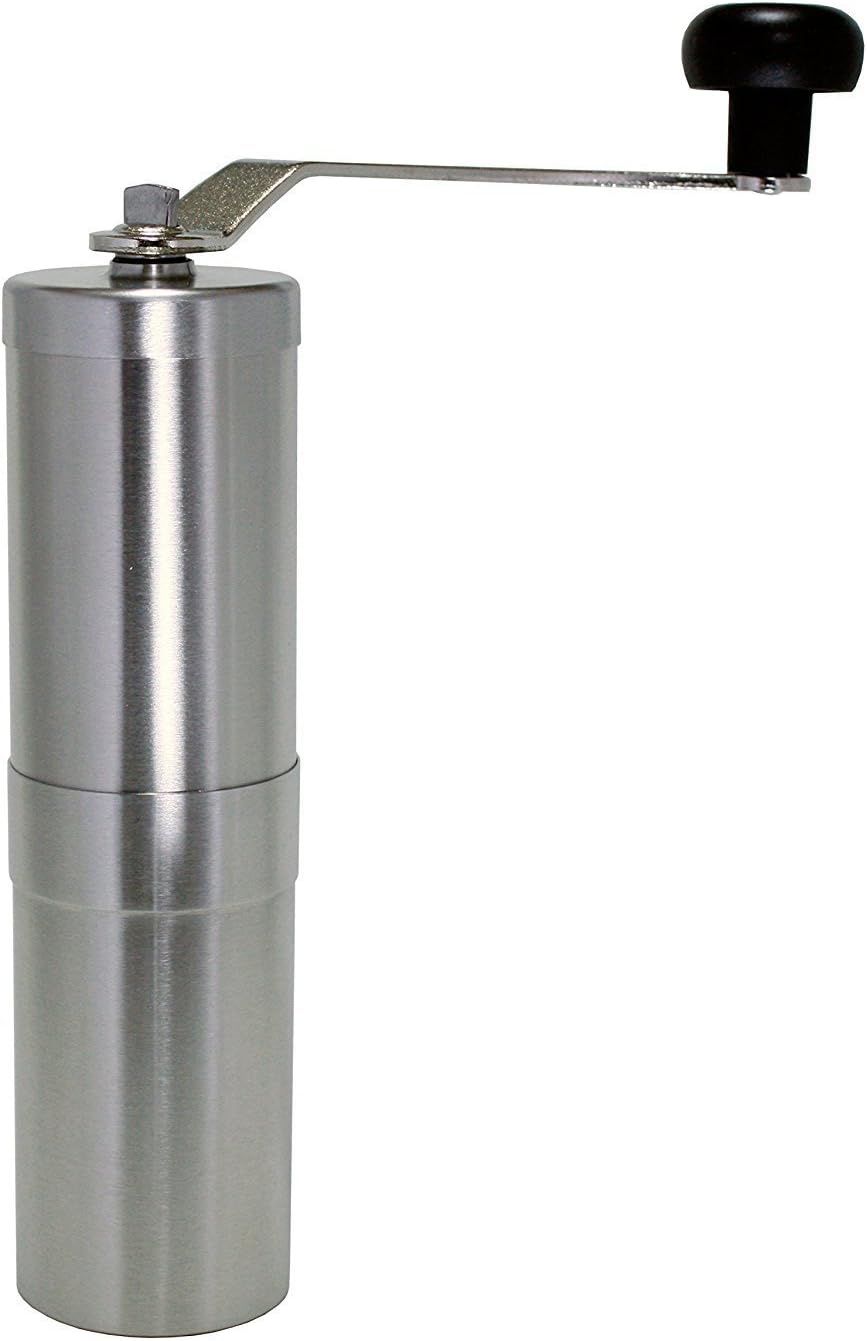
Porlex JP-30 Stainless-Steel Manual Coffee Grinder
- Porlex JP-30 manual grinder
- Ceramic burr assembly
- Stainless-steel cylindrical body
- Hand-crank stepped adjustment
- About 30 g bean capacity
- JP-30 is not the Porlex Mini
Quick Comparison: Mechanisms and Cleaning Trade-Offs
| Original selection | Grinding mechanism | Routine best suited to | Cleanup issue | Flavored-bean caution |
|---|---|---|---|---|
| Mr. Coffee Multi-Grind BVMC-PBG77 | Five-preset electric blade | Dedicated simple drip, batch coffee | Removable chamber, twist cleaner | Still verify permitted coffee |
| AYCHIRO 30 Settings | Stepped stainless conical burr | Compatible everyday filter and immersion | Hopper and chute can retain aromas | Do not presume coated beans approved |
| Mr. Coffee One-Touch | Fixed-bowl blade | Occasional inexpensive quick cups | Fixed chamber limits access | Aroma may linger on lid/hub |
| MiiCoffee DF83V | 83 mm stepless variable-speed flat burr | Precision plain-bean espresso/filter | Complex precision grind path | Avoid sticky additives unless approved |
| Porlex JP-30 | Manual click-adjusted ceramic burr | Quiet single cups, hand brewing | Brush burr carrier and body carefully | Not a Mini; verify permitted materials |
Five Detailed Grinder Reviews
1. Mr. Coffee Multi-Grind 12-Cup Automatic Blade Grinder (BVMC-PBG77)
A practical dedicated grinder for occasional artificially flavored coffee: preset blade chopping, a removable grinding chamber and a useful chamber-cleaning mechanism. It is not a burr grinder.
A five-preset grinder that is genuinely a blade model
The product title in the old post describes the Mr. Coffee Multi-Grind as a burr grinder, but its maker is unambiguous: BVMC-PBG77 uses stainless-steel blades. The five positions are automatic grinding programs intended to approximate coarse, medium, and fine textures; they do not move one burr toward another. That matters when a customer expects repeatable pour-over flow. A blade chamber can produce a mixed distribution, no matter how polished the control dial looks.
For flavored coffee, the automatic controls still solve a legitimate practical problem. You can load a modest dose, select the intended brew texture and cup count, let the cycle finish and empty the chamber. The machine also has a chamber-cleaning system designed to sweep grounds off the wall. That is a useful feature when coffee has a stronger lingering fragrance than ordinary beans, although it will not remove every aromatic film.
Why the removable chamber is the selling point
Artificially flavored beans may carry flavoring compounds or oils applied after roasting. These materials do not disappear when the grinder stops, and strong vanilla, caramel or cinnamon aromas can linger. A removable grinding chamber gives you better access than a narrow fixed cup for the cleaning method specified by its instructions. You can see more of the surface where residue accumulates and transfer coffee without tipping the entire appliance.
I would treat this as a dedicated grinder for flavored beans if the household frequently alternates between strongly scented and delicate unflavored coffee. That prevents an expensive espresso grinder from being asked to cope with sticky coffee simply because a holiday blend happens to be in the cupboard. If the purchased product or beans explicitly discourage grinding coated coffee, follow that instruction; convenience is not a reason to bypass a manufacturer warning.
The quality ceiling for drip and French press
This Mr. Coffee is easier to program than a completely manual push-top blade mill, but it remains a blade mill. A user making basic automatic drip coffee may be perfectly content with a repeatable program and a paper filter that catches some sediment. A brewer using a precise flat-bottom dripper should expect more variability: particles of different size extract at different speeds, and the resulting cup may lose some clean separation of flavors.
French press emphasizes the trade-off. You can stop at a coarser-looking texture, but blade grinding usually leaves a proportion of fine dust. Pouring slowly and avoiding the last silty portion helps. For espresso with a traditional non-pressurized basket, I would choose an appropriate burr grinder instead. The espresso word on a preset selector is not a promise of narrow particle distribution or predictable shot time.
How I would use it for a seasonal blend
For a cup of flavored drip coffee, I would weigh the beans before grinding, use the maker’s medium program as a first approximation, and brew with the same amount of water each time. If the flavor tastes harsh, do not immediately assume the added flavor is the problem; check the coffee dose, whether the cycle produced powder and whether the machine’s filter is clogging. Small adjustments in dose and program are more informative than changing every variable.
When finished, empty the chamber and clean the surfaces as directed. Let the removable parts dry completely before reassembly. Because flavored beans are not necessarily interchangeable with normal roasted beans under manufacturer rules, I would keep the original manual near the grinder. No rice, generic cleaning tablet, alcohol wipe or improvised solvent should be treated as universally approved for this appliance.
Who should buy the Multi-Grind
I would place this machine ahead of the other source selections for a household that wants a relatively affordable dedicated flavored-coffee tool and values a removable chamber. It is not the best machine on the page for technical grinding precision, and it is certainly not a replacement for the MiiCoffee DF83V. It earns the recommendation because the purpose of this niche article is easy management of scented coffee rather than the most expensive burr set available.
A buyer wanting one machine for pristine single-origin beans, coated vanilla beans and demanding espresso should recognize that those goals are in tension. Dedicated equipment and careful cleaning often make a better solution than trying to buy one grinder that claims to be perfect for everything. This choice puts practicality first.
Mr. Coffee Multi-Grind 12-Cup Automatic Blade Grinder (BVMC-PBG77)
A practical dedicated grinder for occasional artificially flavored coffee: preset blade chopping, a removable grinding chamber and a useful chamber-cleaning mechanism. It is not a burr grinder.
- Real removable chamber eases handling
- Five time-based texture presets reduce guesswork
- Automatic stopping on selected program
- Useful for assigning to flavored beans only
- Stainless-steel blade creates varied particle sizes
- Preset coarse/fine is not burr-gap calibration
- Aromatics can still adhere to the chamber
- Never use cleaning pellets unless specifically approved
Technical Specifications & Daily Features
- Linked product B08RQZ39WC, Mr. Coffee BVMC-PBG77
- Stainless-steel blade mechanism, not conical burr
- Five programmed texture/time presets
- Four-to-twelve-cup selected quantities
- Automatic shutoff and lid-locked safety
- Removable chamber and twist-cleaning system
- Approximate 170 W in listed technical records
- Never immerse electrical motor base
Product specifications refer to the linked model. Follow the exact user manual for permitted beans, accessories, operation, duty cycle and cleaning.
Pros & Cons After 30 Days of Use
First-month ownership checkpoints, not a claim that I personally used this exact machine for thirty days. Observe the same coffee and brew recipe over several sessions, measure grind-dose consistency where practical, inspect aromatic residues and record how easy it is to clean without damaging the appliance.
Specific benefits to evaluate: real removable chamber eases handling; five time-based texture presets reduce guesswork; automatic stopping on selected program. Specific cautions to monitor: stainless-steel blade creates varied particle sizes; preset coarse/fine is not burr-gap calibration; aromatics can still adhere to the chamber.
My Final Verdict
A practical dedicated grinder for occasional artificially flavored coffee: preset blade chopping, a removable grinding chamber and a useful chamber-cleaning mechanism. It is not a burr grinder.
Choose this product when its preset electric blade design fits your actual use. If artificially coated beans are not authorized by its maker, use normal beans and add the chosen flavor only after grinding or brewing.
My ownership advice is to confirm the exact model and permitted materials before ordering. For strongly coated or scented coffee, maintenance and manufacturer approval matter more than a marketing promise of easy grinding.
2. AYCHIRO Electric Conical Burr Coffee Grinder — 30 Settings
A 30-setting conical-burr machine for people who mainly brew uncoated or naturally aromatic coffee. With heavily flavored beans, check manufacturer permission before use and clean more carefully.
A true conical burr grinder with thirty adjustments
AYCHIRO is the first true electric burr grinder in the original selection. The linked family uses a stainless-steel conical burr assembly and thirty selectable grind positions, with a cup selector for ordinary batch sizes. Compared with a blade device, it gives a meaningful repeatable relationship between the adjustment dial and particle size. That makes it easier to recreate a morning drip setting or keep a French press recipe consistent over several days.
A related distinction is that the number of positions is not a measure of cup quality in isolation. Burr geometry, mechanical alignment and how the machine delivers grounds all matter. Thirty steps may be plenty for manual filter brewing, but some espresso baskets need changes smaller than the gap between adjacent numbers. I would not buy an entry-level stepped burr grinder exclusively for demanding espresso without checking fit with the specific machine and basket.
Flavored oils and the burr-chamber problem
The temptation is to assume that every machine described as easy to clean is suitable for oily flavored beans. That is not the same claim. A hopper, burr teeth, declumper and exit chute all give a flavoring coating places to remain. A narrow ground path may accumulate residue over time. If the AYCHIRO instructions prohibit artificially flavored or unusually oily coffee, do not grind those beans even if the burr looks robust.
For uncoated coffee that is naturally aromatic, the AYCHIRO offers a sensible everyday approach. I would use the removable upper burr and hopper only in the way the actual instructions authorize, brush dry coffee particles away, and avoid spraying water or fragrant cleaning chemicals into the mechanism. If aroma carryover is a major concern, a cheaper dedicated blade appliance may still be the more economical choice.
Filter brewing consistency versus blade convenience
A burr adjustment is especially useful when flavors are subtle rather than heavily added. A naturally vanilla-like coffee, for example, may reveal its sweetness better when the brew is not full of dust and large fragments. Choose a middle setting, fix a coffee-to-water ratio, brew, and then move the dial only if the extraction needs improvement. The result is a repeatable workflow rather than an uncontrolled guess at grinding duration.
For heavily coated flavored coffee, the best tasting decision may be to avoid placing that blend in the grinder at all. Many people get a stronger, cleaner result by grinding ordinary beans and adding a food-safe flavoring syrup to the finished beverage. That approach preserves the burr chamber and allows the flavor strength to be adjusted without affecting grinding performance.
Cleaning, changing beans and small batches
For a hopper-fed machine, storing a whole bag of fragrant beans overhead is not automatically an advantage. The larger the exposed batch, the more beans are in contact with air and the more residue the hopper sees. I would measure a useful dose for the next brew and avoid leaving strongly scented coffee in the grinder overnight. Small batch changes also reduce the amount wasted when experimenting with a new flavor.
If switching from an aromatic but uncoated coffee to a delicate origin, clean the grounds path according to instructions and consider a small purge if needed. Do not assume that running plain beans through a machine makes it fully decontaminated; an oily film can remain behind an obstruction. Evaluate the need for a separate dedicated grinder based on how sensitive the household is to carryover.
Where the AYCHIRO belongs
I would recommend the AYCHIRO for regular coffee drinkers who want burr-based control at a comparatively approachable level and primarily grind normal roasted beans. Its thirty-step adjustment and removable serviceable components suit an improving home brewing setup. Compared with the two Mr. Coffee blade devices, it is a more credible tool for precise filter recipes.
My hesitation for this particular flavored-bean article is not grind quality; it is use-case compatibility. If your flavored beans are tacky, shiny with added syrup or strongly coated, verify approval in the manual or choose a dedicated grinder explicitly suited to that material. I would rather make that caveat clear than promise “easy cleaning” is a guarantee against coating buildup.
AYCHIRO Electric Conical Burr Coffee Grinder — 30 Settings
A 30-setting conical-burr machine for people who mainly brew uncoated or naturally aromatic coffee. With heavily flavored beans, check manufacturer permission before use and clean more carefully.
- Real burr gap adjustment across 30 steps
- More consistent filter grind than blade devices
- Removable components for maker-approved care
- Convenient batch selection for households
- Sticky coatings may be prohibited by manufacturer
- Burrs and chute can hold scented residues
- Thirty steps may not fine-tune demanding espresso
- Hopper is less convenient for frequent flavor changes
Technical Specifications & Daily Features
- Linked product B0DT966M9G, AYCHIRO 30-setting family
- Stainless-steel conical burr mechanism
- Thirty grind-setting positions; two-to-twelve-cup selector
- Removable hopper, upper burr and collection container
- Cleaning brush supplied in product descriptions
- US product listings specify 120 V
- Exact dimensions/variant differ across sellers: verify package
- Do not assume flavored-coated coffee is authorized
Product specifications refer to the linked model. Follow the exact user manual for permitted beans, accessories, operation, duty cycle and cleaning.
Pros & Cons After 30 Days of Use
First-month ownership checkpoints, not a claim that I personally used this exact machine for thirty days. Observe the same coffee and brew recipe over several sessions, measure grind-dose consistency where practical, inspect aromatic residues and record how easy it is to clean without damaging the appliance.
Specific benefits to evaluate: real burr gap adjustment across 30 steps; more consistent filter grind than blade devices; removable components for maker-approved care. Specific cautions to monitor: sticky coatings may be prohibited by manufacturer; burrs and chute can hold scented residues; thirty steps may not fine-tune demanding espresso.
My Final Verdict
A 30-setting conical-burr machine for people who mainly brew uncoated or naturally aromatic coffee. With heavily flavored beans, check manufacturer permission before use and clean more carefully.
Choose this product when its 30-step electric conical burr design fits your actual use. If artificially coated beans are not authorized by its maker, use normal beans and add the chosen flavor only after grinding or brewing.
My ownership advice is to confirm the exact model and permitted materials before ordering. For strongly coated or scented coffee, maintenance and manufacturer approval matter more than a marketing promise of easy grinding.
3. Mr. Coffee One-Touch Electric Blade Coffee Grinder
The inexpensive one-touch blade grinder is an uncomplicated second machine for occasional flavored coffee. It gives up fine grind-size control to keep purchasing and cleaning simple.
Why a second, simple grinder can be sensible
The plain Mr. Coffee push-top grinder is almost the opposite of the DF83V. It has a compact body, a transparent lid and an electric blade, and the person using it controls the texture mainly by how long it runs. There is no real burr-gap selector, no speed programming and no high-cost espresso assembly. For someone who makes only occasional caramel, hazelnut or cinnamon-flavored coffee, that simplicity can be a genuine advantage.
I would consider a dedicated inexpensive grinder not because flavored coffee deserves lower quality, but because strong coatings and scents can be inconvenient to remove from a grinder also used for carefully selected unflavored coffee. A separate blade machine makes the handling decision easier. Even then, the appliance’s manual must permit the material being ground; dedicating it to one purpose does not override operating restrictions.
What blade grinding can and cannot control
A spinning blade chops whatever beans pass through its path. The longer it runs, the more fragments are reduced in size, but a portion of the batch can become powder while other pieces remain much larger. A clear lid helps you estimate the overall texture visually; it does not turn this into a calibrated burr grinder. The difference becomes noticeable when coffee filters drain unpredictably or a French press collects a thick layer of sediment.
Short pulses with the motor stopped between bursts can reduce overprocessing, provided the method is allowed by the manufacturer. Stop the blades completely before moving or opening the container. For a simple drip machine, the results may still be enjoyable, particularly because paper filters trap many fines. For traditional espresso, the quality and adjustability limitations are too significant to ignore.
The fixed cup complicates aroma removal
Unlike the BVMC-PBG77, the push-top model uses a more basic fixed grinding compartment. That makes transfers and thorough cleaning more awkward: you have to tip the unit and wipe or brush reachable surfaces without getting moisture into the electrical parts. Strong aroma compounds may linger along the lid seal, housing or blade hub. The absence of a removable bowl is the main maintenance disadvantage for flavored use.
My approach would be a soft dry brush after each use and only the cleaning steps authorized in the product documentation. Resist the familiar internet advice to run uncooked rice or random cleaning beads through every grinder. Such materials can burden the motor or damage finishes, and approval varies by design. If a smell remains stubborn after approved cleaning, reserving the unit for that flavor category is safer than using harsh household solvents.
Brewing a simple flavored pot
I would start with a modest measured dose of the flavored beans and use a basic drip method rather than try to force a fine espresso texture. A ratio close to 1:16 coffee to water can serve as a starting point, though flavored blends may taste different depending on the base roast and degree of added aroma. Keep the water and dose consistent as you learn what the blade does at each pulse duration.
If the brew tastes weak, confirm that the coffee was fresh and that enough coffee was used. If it tastes muddy, shorten the grinding duration or consider a burr grinder with an actual setting suited to the filter. A blade grinder cannot always achieve a clean coarse texture for French press, and making it run longer only increases fines. Sometimes the correct answer is to change the brewing method rather than keep adjusting the blade.
Who gets the best value from the plain Mr. Coffee
This is for a newcomer, an occasional flavored-coffee drinker or someone needing a small separate appliance to isolate seasonal aromas. It is not for a serious espresso setup or a household grinding several large pots at once. The lower price is best understood as an affordability advantage rather than an indication that the grinder will match a sophisticated burr mechanism.
I would choose the Multi-Grind first if its removable chamber and presets matter, and this push-top model when counter space and the initial expense matter even more. The difference between the two should not be disguised as “burr versus blade”: both linked Mr. Coffee choices use blades.
Mr. Coffee One-Touch Electric Blade Coffee Grinder
The inexpensive one-touch blade grinder is an uncomplicated second machine for occasional flavored coffee. It gives up fine grind-size control to keep purchasing and cleaning simple.
- Small and simple to store
- One-button operation is easy to learn
- Can be reserved for flavored coffee alone
- Low-commitment alternative to a costly burr
- A fixed bowl is awkward to clean thoroughly
- No measured grind-size selector
- Blade grinding produces fines and large fragments
- Aroma carryover remains possible
Technical Specifications & Daily Features
- Linked product B00005OTXM, Mr. Coffee blade grinder
- Electric push-to-grind stainless-steel blade
- Transparent cover for visual checking
- One-touch operation, no fixed burr grind settings
- Compact stationary chamber with brush-and-wipe maintenance
- Suitable for small simple batches of coffee
- Confirm maximum fill in the exact manual
- Unplug before opening to clean
Product specifications refer to the linked model. Follow the exact user manual for permitted beans, accessories, operation, duty cycle and cleaning.
Pros & Cons After 30 Days of Use
First-month ownership checkpoints, not a claim that I personally used this exact machine for thirty days. Observe the same coffee and brew recipe over several sessions, measure grind-dose consistency where practical, inspect aromatic residues and record how easy it is to clean without damaging the appliance.
Specific benefits to evaluate: small and simple to store; one-button operation is easy to learn; can be reserved for flavored coffee alone. Specific cautions to monitor: a fixed bowl is awkward to clean thoroughly; no measured grind-size selector; blade grinding produces fines and large fragments.
My Final Verdict
The inexpensive one-touch blade grinder is an uncomplicated second machine for occasional flavored coffee. It gives up fine grind-size control to keep purchasing and cleaning simple.
Choose this product when its simple push-top blade design fits your actual use. If artificially coated beans are not authorized by its maker, use normal beans and add the chosen flavor only after grinding or brewing.
My ownership advice is to confirm the exact model and permitted materials before ordering. For strongly coated or scented coffee, maintenance and manufacturer approval matter more than a marketing promise of easy grinding.
4. MiiCoffee DF83V Variable-Speed Single-Dose Coffee Grinder
A serious premium flat-burr single-doser for enthusiasts using ordinary roasted coffee. Do not treat low retention as manufacturer approval to grind syrup- or oil-coated flavored beans.
Why the DF83V is in a different class
The MiiCoffee DF83V is a premium grinding platform with 83 mm flat burrs, a brushless DC motor, stepless adjustment and variable rotation speed. The manufacturer lists a 300–1,600 RPM range, anti-static ionizer, prebreaker auger and single-dose hopper with bellows. These details make it a serious espresso and filter machine whose control options cannot reasonably be compared with a basic push-top blade grinder.
It also makes the DF83V an awkward recommendation for sticky, artificially flavored beans. Coating compounds may transfer onto expensive burrs and internal components. A low-retention design reduces the amount of loose ground coffee left behind; it does not mean there is no surface residue or that every material is authorized by the manufacturer. I would protect the investment and use plain roasted coffee unless the actual maker explicitly approves a flavored product.
Single dosing is not the same as easy decontamination
The DF83V is designed around measuring one dose rather than storing a huge quantity in a permanent hopper. That makes switching between different normal coffees convenient. The bellows helps clear grounds through the chute, and the plasma ionizer reduces static. Those measures are useful when chasing consistency between a dark roast and a bright washed origin; they do not guarantee a sticky artificial coating has been removed from burr faces and gaskets.
For that reason, I would not tell owners that a quick purge of two grams of plain coffee makes the machine safe for the next delicate specialty coffee. A small purge can remove a little retained material but cannot prove that scented oils are gone. If you have already put coated beans through a precision grinder, unplug it and follow the actual disassembly and cleaning instructions rather than improvising with cleaners.
What variable speed really gives you
Variable RPM changes how quickly the burrs turn and how beans enter the cutting surfaces. It can alter feeding behavior, particle distribution and throughput, but the effects depend on burr geometry, coffee and recipe. Slower is not automatically cooler or tastier, and faster is not automatically correct for espresso. That is why the adjustment is interesting for a careful hobbyist: it permits controlled experiments rather than selling a universal “best speed.”
I would begin by holding dose, grind size and brew recipe steady, then test a moderate RPM while tasting and recording changes. Once a preferred speed is established, it can remain fixed for daily use. The stepless grind dial is more central for precise espresso adjustment, where a small shift in the burr gap can change extraction time substantially.
Burr variants and electrical compatibility
MiiCoffee describes different factory or optional burr configurations for espresso and filter-oriented work. The name DF83V alone does not tell you exactly which burr set ships with a particular offer. Check the purchase variation, model generation and manufacturer listing before assuming you are receiving a specific coated espresso burr, a filter burr or an SSP upgrade. That distinction matters more than marketing language about café-level performance.
The US MiiCoffee product page describes a 100–120 V, 60 Hz configuration, while international vendors offer 220–240 V regional versions. A plug adapter is not a voltage transformer. The product is also sizable and heavy, so plan a stable location and enough clearance for a dosing cup and bellows. It belongs on a deliberate espresso station, not necessarily beside a collection of sticky seasonal flavor syrups.
My verdict for flavored-coffee readers
Among these five original selections, I would not call the DF83V the best routine grinder for heavily coated flavored beans. It is too good—and too costly—to recommend casually for an application that may conflict with the grinder maker’s permitted uses. Its true value is precise normal-bean grinding, single-dose consistency and the option to explore RPM as a brewing variable.
If you love caramel lattes, the smarter pairing can be a DF83V for fresh plain espresso and the flavor added afterward in the cup. That protects the precision grinder while allowing the sweetness and aroma to be controlled directly. If you specifically want to grind pre-flavored beans, first ask the maker whether that use is approved; otherwise choose a permissible dedicated appliance.
MiiCoffee DF83V Variable-Speed Single-Dose Coffee Grinder
A serious premium flat-burr single-doser for enthusiasts using ordinary roasted coffee. Do not treat low retention as manufacturer approval to grind syrup- or oil-coated flavored beans.
- Large 83 mm flat burrs and stepless fine-tuning
- 300–1,600 RPM adjustment and anti-static design
- Bellows and short grind path aid routine purging
- True single-dose architecture for normal coffee
- Costly to risk with sticky, coated flavored coffee
- Flat burrs and internal chute still need maintenance
- Different burr configurations have different profiles
- US and international voltage variants differ
Technical Specifications & Daily Features
- Linked product B0D1NLPHLX, MiiCoffee DF83V
- 83 mm flat burr design; espresso or brew burr variant
- Brushless DC variable speed 300–1,600 RPM
- Stepless grind adjustment
- Single-dose hopper about 60 g with bellows
- Plasma anti-static ionizer, prebreaker auger
- MiiCoffee lists 680 W; US model 100–120 V 60 Hz
- Manufacturer lists 1-year warranty (region dependent)
Product specifications refer to the linked model. Follow the exact user manual for permitted beans, accessories, operation, duty cycle and cleaning.
Pros & Cons After 30 Days of Use
First-month ownership checkpoints, not a claim that I personally used this exact machine for thirty days. Observe the same coffee and brew recipe over several sessions, measure grind-dose consistency where practical, inspect aromatic residues and record how easy it is to clean without damaging the appliance.
Specific benefits to evaluate: large 83 mm flat burrs and stepless fine-tuning; 300–1,600 rpm adjustment and anti-static design; bellows and short grind path aid routine purging. Specific cautions to monitor: costly to risk with sticky, coated flavored coffee; flat burrs and internal chute still need maintenance; different burr configurations have different profiles.
My Final Verdict
A serious premium flat-burr single-doser for enthusiasts using ordinary roasted coffee. Do not treat low retention as manufacturer approval to grind syrup- or oil-coated flavored beans.
Choose this product when its 83 mm variable-speed flat burr design fits your actual use. If artificially coated beans are not authorized by its maker, use normal beans and add the chosen flavor only after grinding or brewing.
My ownership advice is to confirm the exact model and permitted materials before ordering. For strongly coated or scented coffee, maintenance and manufacturer approval matter more than a marketing promise of easy grinding.
5. Porlex JP-30 Stainless-Steel Manual Coffee Grinder
The classic JP-30 is a hand-cranked ceramic-burr grinder with roughly a 30 g capacity. Its easy single-dose routine is appealing, but it is the larger original JP-30, not the shorter Porlex Mini.
JP-30 is not Porlex Mini
The original source repeatedly calls this product the Porlex Mini, but its linked ASIN and product title identify the JP-30 stainless-steel grinder. These are not interchangeable model names. The JP-30 belongs to the older full-length Porlex hand-mill family, with a different size and approximate bean capacity from the shorter Mini models. I am retaining the correct linked original rather than silently switching the ASIN to a different Porlex.
This matters for portability claims. A shorter Mini can be convenient for particular travel storage arrangements, while a JP-30 should not automatically be described as fitting inside an AeroPress plunger. Always check dimensions of the exact model. The genuine advantage of the JP-30 is a powered-by-hand, stainless-bodied ceramic-burr workflow that can handle a modest measured dose without taking up an outlet.
Ceramic burr control for an occasional aromatic cup
Unlike the blade selections, the Porlex uses a grinding gap that can be mechanically adjusted in clicks. This gives the user a way to repeat a similar coarseness after learning a favorite coffee recipe. It is especially appealing for one mug of pour-over, AeroPress or French press where a quiet, deliberate routine matters more than grinding several servings quickly.
Ceramic burrs are not odor-proof, and they do not guarantee zero heat or zero fines. Coffee oil and fragrance can still adhere to particles and internal materials. In normal use, however, a small manual grinder avoids a lengthy electric exit chute and makes the quantity visible. Whether this exact product can grind artificially flavored coated coffee must still be checked against the manufacturer’s care guidance.
Travel and daily effort
A hand grinder is useful when electricity is unavailable and you want to avoid carrying a battery-powered appliance. Its downside is simply work. If a household makes several cups each morning, turning a crank for multiple batches may become a chore. Heavily roasted coffee often grinds relatively easily, but a very fine setting still takes patience, especially if you are trying to use it for espresso.
The approximate 30 g capacity fits a single-person brew well. For a larger French press, you may need two rounds of grinding, and the assembled grinder will occupy more storage space than the shorter Mini. Weighing beans before loading prevents overfilling and makes it easier to keep the recipe stable even when working far from the kitchen.
Maintenance without soaking parts indiscriminately
A stainless-steel shell is easy to wipe, but that is not permission to immerse every moving part or bearing in water. I would take the grinder apart only as described by Porlex, brush out coffee residues and dry all parts thoroughly before reassembly. Added flavoring compounds can be persistent, so take time to check the burr carrier and grounds container where aromatics might remain.
For flavored beans, a manual mill can be attractive as a dedicated alternative because it is relatively self-contained. Nevertheless, placing heavily syrup-coated beans into any burr mechanism may be undesirable. I would rather preserve the JP-30 for normal coffee and add flavor after brewing if the product guidance does not explicitly allow the coated beans.
Who I would recommend the JP-30 to
The JP-30 fits a minimalist who prefers a quiet grinder with adjustable ceramic burrs and modest daily output. It can also make a thoughtful travel companion, provided the buyer checks the dimensions rather than relying on Mini-specific assumptions. The lack of an electric motor is a real convenience in cabins, camping setups and places with limited power.
I would rank it as the best manual option among the original five, but not because it automatically produces superior flavored coffee. The verdict is about ownership: a straightforward single-dose habit, manageable parts and a traditional tactile brewing style. For very precise espresso, seek a more modern hand grinder with finer adjustment resolution.
Porlex JP-30 Stainless-Steel Manual Coffee Grinder
The classic JP-30 is a hand-cranked ceramic-burr grinder with roughly a 30 g capacity. Its easy single-dose routine is appealing, but it is the larger original JP-30, not the shorter Porlex Mini.
- No electrical supply or motor noise
- Ceramic burr gap is mechanically adjustable
- About 30 g small-batch capacity
- Stainless housing suits travel and storage
- Manual effort for every batch
- JP-30 is not the Mini; larger travel dimensions
- Coarse/fine dial lacks espresso-micrometric precision
- Sensitive burr parts require careful drying
Technical Specifications & Daily Features
- Linked product B0002JZCF2, Porlex JP-30
- Original JP-30 stainless-steel hand grinder
- Ceramic conical-style burr and manual click adjustment
- Approximately 30 g capacity on JP-30 format
- Hand-crank operation; no mains power
- This linked JP-30 is not Porlex Mini II
- Stainless cylindrical body with detachable handle
- Use manufacturer-approved brush/cleaning care
Product specifications refer to the linked model. Follow the exact user manual for permitted beans, accessories, operation, duty cycle and cleaning.
Pros & Cons After 30 Days of Use
First-month ownership checkpoints, not a claim that I personally used this exact machine for thirty days. Observe the same coffee and brew recipe over several sessions, measure grind-dose consistency where practical, inspect aromatic residues and record how easy it is to clean without damaging the appliance.
Specific benefits to evaluate: no electrical supply or motor noise; ceramic burr gap is mechanically adjustable; about 30 g small-batch capacity. Specific cautions to monitor: manual effort for every batch; jp-30 is not the mini; larger travel dimensions; coarse/fine dial lacks espresso-micrometric precision.
My Final Verdict
The classic JP-30 is a hand-cranked ceramic-burr grinder with roughly a 30 g capacity. Its easy single-dose routine is appealing, but it is the larger original JP-30, not the shorter Porlex Mini.
Choose this product when its jp-30 ceramic manual burr design fits your actual use. If artificially coated beans are not authorized by its maker, use normal beans and add the chosen flavor only after grinding or brewing.
My ownership advice is to confirm the exact model and permitted materials before ordering. For strongly coated or scented coffee, maintenance and manufacturer approval matter more than a marketing promise of easy grinding.
Buying Guide: Choosing and Caring for a Grinder for Flavored Beans
1. Distinguish naturally flavored notes from applied coatings
Coffee descriptions sometimes use “vanilla,” “orange blossom” or “hazelnut” to describe naturally occurring tasting notes. Those coffees are ordinarily roasted beans with no added flavoring. Another bag may contain post-roast flavorings or oils. The difference is central to grinder ownership. A technically fine grinder that is ideal for a natural vanilla note may not be suitable for a very tacky hazelnut-flavored product.
Read the bag ingredients and examine the surface rather than assuming every aromatic roast is oily. If the treatment is unknown, contact the coffee brand or grinder manufacturer. Protecting the grinder does not mean the flavored product is bad coffee; it means the mechanical application may not match the appliance design.
2. Check maker permission before thinking about grind quality
Manufacturer manuals frequently define intended use narrowly. A high-speed motor and hardened burrs do not automatically permit oily coatings, unroasted beans, wet ingredients or anything other than roasted coffee. Some limited warranties may exclude use outside the intended application. When a manual is unclear, contact support with the exact flavor or coating rather than relying on general internet tips.
This caution is particularly important with the DF83V. A premium grinder may have a short grind path and anti-static outlet but still hold aromatic film on burr faces. The smart purchase is the one appropriate for the actual material you plan to feed through it.
3. Burr grinding versus blade chopping
Burr mechanisms set a defined space between two grinding surfaces. That makes it easier to return to a recorded drip, French press or espresso adjustment. Blade mechanisms chop irregular fragments, so duration controls how fine the average result becomes but leaves a wider mixture of particles. Both types can make enjoyable ordinary coffee when used within their intended operating conditions.
For the article’s three burr products, AYCHIRO offers thirty indexed adjustments, DF83V offers stepless control and Porlex offers hand-adjusted ceramic burrs. The two Mr. Coffee devices are both blade machines, even though the Multi-Grind has five preset programs.
4. The best cleaning method is the approved one
Brush away loose coffee after unplugging an electric grinder, and use the cleaning method written for that specific chamber, cup and burr carrier. A removable metal cup may be washable on one appliance while another model explicitly forbids water. A wooden hand grinder needs different treatment from a stainless or plastic bowl. Do not transfer cleaning rules between products merely because they share a brand name.
Uncooked rice, baking soda, abrasive cleaning powder, household solvent and generic pellets are not automatically safe for coffee grinders. Use cleaning products only where the relevant maker authorizes them. Never immerse an electrical motor base or spray liquids into an energized grinder.
5. Prevent aroma carryover when rotating coffee
Flavor compounds can remain in a small amount of retained grounds, on plastic parts or in oily films. A quick purge of normal beans may reduce some loose residue, but it cannot prove the grinder is odor-free. More reliable approaches are complete maker-approved cleaning or assigning one inexpensive grinder to compatible flavored beans and another to delicate ordinary coffee.
If the household makes an occasional flavored latte rather than whole pots, adding approved syrups, extracts or spices to the finished drink may be more controllable and less difficult to clean. It keeps the grinder dedicated to plain roasted coffee while retaining the seasonal flavor experience.
6. Hopper size and the single-dose question
A large hopper reduces refilling but encourages leaving coffee exposed to air and applying any coating over a larger internal surface area. For frequent flavor changes, the more useful habit is to weigh only the beans needed for the next brew and grind them promptly. This makes recipe adjustments easy and reduces the quantity of expensive beans discarded during experiments.
A true single-dose grinder such as DF83V helps with normal-bean switching, but do not mistake single dosing for a guarantee against flavored-oil contamination. A small blade grinder and a measured scoop may be more suitable for the occasional flavored-coffee-only setup when that use is approved.
7. Espresso is not the right job for every grinder
Espresso made with a conventional single-wall basket requires tight, repeatable grind adjustment. A blade grinder, even one with five presets, rarely provides the precision to tune flow reliably. The AYCHIRO can reach fine positions, but thirty steps will not necessarily allow the tiny adjustments that a particular espresso machine needs. The DF83V is far more appropriate for normal-bean espresso precision.
Flavored espresso drinks generally do not require grinding coated flavored beans. Make espresso from appropriate plain beans and add an intended-for-beverages syrup after extraction. This keeps the brew variables controllable and is easier on a precision burr system.
8. Coffee ratio and the filter method still matter
Start a conventional drip or pour-over recipe near one part coffee to sixteen parts water by mass. That might mean 20 grams of coffee and 320 grams of water. Then adjust based on how strong and balanced the finished beverage tastes. A flavored coffee may already contain sweetness-related aromas, so taste the brewed coffee before automatically adding more sugar.
When a blade grinder produces fines, a paper-filter brewer can help reduce suspended sediment. French press and metal-filter methods allow more fine particles into the cup. The grinder cannot compensate for incorrect water temperature, stale beans or a brew ratio that is far too weak.
9. Avoid mistaking speed for low heat or lower retention
Marketing often connects powerful motors, slow burrs or short grind times directly to better flavor. In practice, temperature and retention depend on design, dose, burr condition, speed and the coffee itself. A very brief blade cycle can produce a wide distribution, and a premium flat-burr machine can have a different retention pattern when used at a different RPM.
Record how much coffee you put in and how much comes out when useful, and avoid overfilling the machine. Use speed controls to test a recipe logically rather than assume that 300 RPM must always taste better than 1,000 RPM.
10. Consider capacity, routine and electricity
The Multi-Grind’s four-to-twelve-cup selector is designed for household quantities, while the plain Mr. Coffee is simpler and smaller. AYCHIRO can be convenient for regular filter-brew routines. MiiCoffee is a substantial electrical appliance suitable for a dedicated counter, and Porlex JP-30 offers hand operation when you do not want a motor or power supply.
Electric models marketed for Amazon.com may use US mains voltage. Check the actual rating plate before using one outside that region. A plug shape adapter alone does not convert 120 volts to 230 volts. This is especially relevant if the grinder is purchased internationally or intended for travel.
11. Keep coffee flavorings out of unsafe cleaning routines
A strong cinnamon or caramel smell may tempt someone to scrape, soak or dissolve residue with an aggressive household cleaner. Avoid that approach. The blade hub, burr surfaces, gaskets and lubricant areas are not interchangeable with ordinary kitchen dishes. Consult approved cleaning instructions and dry everything fully before restarting a machine.
If cleaning never completely removes an added flavor’s scent, that is useful information about the workflow. Consider dedicating the appliance to that category of beans or switch to adding flavor in the cup. Do not hide persistent odors by repeatedly grinding expensive normal coffee through an untreated machine.
12. Match your budget to the problem you actually have
Buying the DF83V solely because flavored beans leave oil in a cheap grinder is solving the wrong problem with an expensive instrument. A costly burr can still retain coating. Buying the least expensive blade grinder only because it is easy to replace may also be wasteful if you truly need repeatable pour-over or espresso quality.
The most rational purchase starts with the brew method and the allowed bean type. If your goal is occasional flavored drip, an approved dedicated simple grinder may be enough. If your goal is espresso from plain beans with flavor added afterward, a good precision burr grinder becomes much easier to justify.
Four Practical Flavored-Coffee Brewing Routines
Vanilla-Hazelnut Filter Coffee
Use a suitable pre-flavored coffee only if the grinder’s manual permits it. Weigh 20 g of beans and begin with 320 g of water. Brew in a paper-filter dripper at a setting appropriate for the roast. Adjust dose and grind based on taste. If you are using a premium burr grinder whose manual does not approve flavored coatings, instead grind plain coffee and add a food-safe flavor to the finished cup.
Caramel Cappuccino Without Coated Beans
Grind normal espresso beans in an espresso-capable burr grinder, aim for a recipe appropriate to your machine, and add measured caramel syrup to the finished drink. The milk and syrup contribute the dessert profile without putting sticky flavoring agents into the grind chamber. For the source selection, the DF83V is the specialist option for the plain-bean espresso stage.
Cinnamon French Press
Start with around 24 g of suitable plain coffee to 380 g of water and a coarse burr grind. After pressing and decanting, use a small amount of culinary cinnamon or flavored syrup in the cup rather than putting ground spice into the coffee grinder. If the final drink tastes muddy, check fines and pouring before adding more aromatic ingredients.
Cold-Brew Base for Seasonal Flavors
Use roughly ground ordinary roasted coffee and a ratio suited to your intended ready-to-drink or concentrate style. Brew covered under food-safe refrigeration and strain thoroughly. After filtering, adjust the flavor with food-safe vanilla, toasted-hazelnut or maple additions. This technique lets one neutral coffee batch support several drinks without perfuming the grinder.
Flavored-Coffee Troubleshooting Table
| Symptom | Likely issue | Practical next action |
|---|---|---|
| Plain coffee tastes like yesterday’s vanilla | Aromatic carryover from retained grounds or surfaces | Clean as authorized; consider dedicated grinder |
| Filter coffee tastes muddy | Mixed blade particle sizes and fines | Try burr grinding or adjust filter and duration |
| Grinder becomes sticky | Applied flavoring coating on internal surfaces | Stop using coated beans; consult manufacturer cleaning |
| Grinder is hard to adjust | Old grounds or debris near adjustment mechanism | Unplug; follow maker cleaning/disassembly instructions |
| French press is gritty | Excess fines or disturbed sediment | Use burr coarseness; pour slowly or decant |
| Espresso extracts too quickly | Grounds too coarse or inconsistent | Choose espresso-capable burr; adjust stepwise |
| Coated beans smell stale | Aroma oxidized or coffee stored poorly | Use fresh coffee; keep airtight away from heat |
| Lots of chaff or static | Dry air, static charge and collection geometry | Use prescribed transfer/cleaning methods |
| Strong smell despite purging | Aromatics remain on chamber surfaces | Deep clean per manual or separate appliances |
| Electric grinder seems strained | Overload or inappropriate sticky material | Stop, unplug and seek maker guidance |
Final Comparison: Which Original Grinder Fits Your Routine?
| Product | Badge | Best practical job | What to remember |
|---|---|---|---|
| Mr. Coffee Multi-Grind BVMC-PBG77 | Best Overall | A simple dedicated chamber with presets | Blade, not burr; manufacturer permission still matters |
| AYCHIRO 30-setting burr | Best Entry Burr | Repeatable filter grinding with ordinary beans | Coated beans may cause problematic buildup |
| Mr. Coffee One-Touch | Best Budget | Occasional small compatible flavored batches | Fixed chamber harder to clean |
| MiiCoffee DF83V | Best Precision | Normal-bean espresso and filter experimentation | Protect premium grinder from sticky coatings |
| Porlex JP-30 | Best Manual | Quiet measured single cups | Original JP-30, not Mini; clean carefully |
Frequently Asked Questions About Flavored Coffee Grinders
Can I grind flavored coffee beans in any grinder?
No. It depends on the beans and the grinder manufacturer’s permitted uses. Artificially coated or very oily beans may leave residue and be discouraged by some makers.
What makes flavored beans different from naturally fruity coffee?
Naturally fruity, floral or vanilla-like tasting notes come from the coffee itself. Artificially flavored products may have oils or flavor compounds added after roasting.
Do flavored beans damage burr grinders?
They can leave residue on burrs and chutes, and sticky coatings may be outside intended use. Follow the specific maker’s manual rather than general assumptions.
Is the Mr. Coffee Multi-Grind B08RQZ39WC a burr grinder?
No. Mr. Coffee lists stainless-steel blades for the BVMC-PBG77, with five presets and a removable grinding chamber.
Why does the Multi-Grind have grind settings if it uses blades?
Its programs vary the grinding cycle to approximate different overall textures. It does not set the physical gap between burrs.
Is the Mr. Coffee One-Touch a burr grinder?
No. The linked B00005OTXM is a basic electric blade grinder controlled by pressing the lid or switch.
Which original model has the easiest-to-remove grinding chamber?
The Mr. Coffee Multi-Grind specifically advertises a removable grinding chamber and a chamber-cleaning mechanism, unlike the simpler push-top model.
Does AYCHIRO really offer thirty grind settings?
Yes, the linked conical-burr product family is described with thirty indexed positions and a two-to-twelve-cup selector. Verify the specific selected variant.
Is AYCHIRO recommended for heavily coated flavored beans?
Only if the maker explicitly permits the particular flavored coffee. Its stainless burrs and removable components do not themselves establish compatibility.
What burr size does the MiiCoffee DF83V use?
The DF83V family uses 83 mm flat burrs. Burr surface and configuration can vary with selected model and optional upgrades.
What is the DF83V variable-speed range?
MiiCoffee lists an adjustable brushless DC motor speed from 300 to 1,600 RPM.
Does low retention make DF83V safe for syrup-coated beans?
No. Low loose-ground retention is different from zero residue on burr faces and inside the grinder.
Can I use DF83V for espresso from normal coffee beans?
Yes, the machine is designed as a serious fine-adjustment grinder. It has stepless adjustment and an espresso-oriented burr option.
Is the linked Porlex the Mini?
No. The original product link identifies the JP-30. It should not be relabeled as the smaller Porlex Mini.
What is the approximate capacity of Porlex JP-30?
The original JP-30 format is commonly described as approximately 30 grams per dose, depending on bean size and loading.
Can I fit Porlex JP-30 inside an AeroPress plunger?
Do not assume so. That claim is often associated with shorter Porlex Mini models; check JP-30 dimensions and your specific brewer.
Which of these grinders is best for frequent flavored drip coffee?
A maker-approved, dedicated simple grinder is often practical. Among the source models, the Mr. Coffee Multi-Grind offers a removable chamber.
Is a separate flavored-bean grinder worthwhile?
It can be if fragrance carryover bothers you or you routinely alternate coated coffee with subtle unflavored origins. Its maker still needs to permit the material.
Can I clean a burr grinder with uncooked rice?
Do not assume rice is safe. Follow the individual grinder manufacturer’s instructions and only use explicitly approved cleaning materials.
Should I spray alcohol or soap into a grinder motor?
No. Never spray liquid cleaners into electrical areas or immerse a motor base. Clean only the specified removable surfaces.
Can I add a flavor after espresso instead of using coated beans?
Yes. Using ordinary roasted beans and adding a beverage-safe flavoring to the finished espresso or milk drink can reduce grinder residue.
Which grinder makes the most consistent pour-over grounds?
A suitable burr grinder generally offers more repeatable particle size than blade grinding. AYCHIRO, Porlex and DF83V have burr mechanisms, but differ greatly in precision and use case.
Why does my French press have sludge after blade grinding?
Blade chopping creates a mixture of small fines and large pieces. Fine particles can pass through a metal press filter and settle at the bottom.
Can flavor coatings change a coffee grinder’s smell?
Yes. Added aromatic oils or compounds may linger in retained grounds and on materials, causing carryover into the next dose.
Is slower RPM always better for flavored beans?
No. Speed interacts with burr type and feeding, and it does not override a manufacturer prohibition on coating materials.
Should I leave flavored beans inside the hopper?
It is generally more convenient for freshness and cleaning to measure only the next dose, especially when beans have strong added aromas.
What is a good flavored-coffee brew ratio?
A reasonable initial drip baseline is around 1 gram coffee per 16 grams water. Adjust the ratio, grind and flavor level to taste.
Which model is best if I have no electrical outlet?
The manual Porlex JP-30 works without electricity, though you must hand-grind every dose.
Is a US 120 V coffee grinder safe on 230 V with a plug adapter?
Not necessarily. Plug adapters change plug shape, not supply voltage. Confirm the appliance rating and use appropriate approved conversion where required.
What is the safest final recommendation for coated flavored beans?
First verify that the manufacturer allows that material. If not, use ordinary beans and add suitable flavoring after grinding or brewing.
My Final Verdict
The right grinder for flavored coffee is not automatically the one with the largest burrs. The Multi-Grind offers a practical removable chamber and automatic presets for someone wanting a dedicated simple appliance, while the inexpensive push-top Mr. Coffee can be a small second grinder. Both are blade devices and should be described that way. Never assume either permits a particular coating without checking the instructions.
AYCHIRO provides a genuinely useful thirty-setting burr mechanism for everyday compatible coffee; Porlex JP-30 provides a quiet manual option; DF83V is the technical standout for normal espresso and filter beans. None should be described as universally safe for syrup-coated products. Preserve a precision grinder by adding flavors after brewing when the beans have sticky additives.
If you buy one of these original five models, keep its exact ASIN and manufacturer guidance together. Weigh your coffee, brew consistently and make careful one-variable adjustments. A clean grinder and a sensible brewing habit will contribute more to the quality of tomorrow’s flavored cup than an exaggerated claim about perfect grinding performance.


