
Can You Drink Coffee with Statins? Timing, Safety & What Doctors Advise


The Role Of Statins In Lowering Cholesterol Levels: A Brief Overview
The health information on One Hundred Coffee is provided for general educational and informational purposes only and is not medical advice, diagnosis, or treatment. Coffee and caffeine can affect people differently and may interact with medications or certain medical conditions. Always speak with a qualified healthcare professional about your individual health, medication use, caffeine intake, or any symptoms or concerns.
Cholesterol, a waxy substance found in our bloodstream and cells, plays a vital role in various bodily functions. However, when the levels of cholesterol become too high, it can lead to serious health problems such as heart disease and stroke. Statins, a class of medications commonly prescribed by doctors, have proven to be effective in reducing cholesterol levels and preventing cardiovascular diseases.
Top Scientific Books About Statins


If you’re taking a statin, you’ve probably already made a quiet pact with your future self: fewer worries about cholesterol, more room to enjoy the everyday things you love. For a lot of us, one of those everyday joys is coffee—the warm cup that makes mornings feel possible. Naturally, the question comes up: can your coffee and your statin get along?
The short answer is yes for most people—especially in moderation—but it’s worth understanding how coffee’s “moving parts” (caffeine, acids, and antioxidant polyphenols) can nudge the way statins feel in your body. Caffeine can briefly lift heart rate and alertness; acids in coffee may bother sensitive stomachs; and those polyphenols (the flavor heroes in good beans) can play small roles in metabolism. None of this means you have to choose between heart health and your ritual—only that tiny habits around timing, brew style, and bean choice can make the combo smoother.
Think of it this way: statins do the heavy lifting in the liver to lower LDL and improve overall cardiovascular risk. Coffee—depending on how much you drink, how it’s brewed, and your personal tolerance—can either fade into the background or tap you on the shoulder with jitters, reflux, or a later bedtime. If you’re caffeine-sensitive, you’ll often feel better with a gentler cup: low-acid beans, or decaf/half-caff on days when you want the ritual more than the stimulation. If reflux ever tags along, don’t stack the odds against yourself—avoid taking your statin or your coffee on an empty stomach, and keep the sip pace slow instead of “fast and hot.” And if sleep is precious (isn’t it always?), make your last caffeinated cup an early-afternoon habit and keep late-day comfort decaf.
The easiest “no drama” move is to make your brew smoother and more predictable. A paper-filtered drip tends to feel gentler than unfiltered methods for reflux-prone people, and it also makes your cup easier to repeat the same way each day. If you want a simple, consistent brew without a lot of fuss, something like the Moccamaster Cup-One Single Serve Coffee Brewer helps keep portions modest and steady—exactly what you want when you’re trying to avoid jitters or late-day caffeine creep.
Bean choice is the quiet superpower. If acidity is the thing that pokes your stomach, a low-acid roast can keep coffee enjoyable without that “burn” feeling. A gentle option like LifeBoost Low Acid Coffee can be a friendly lane if reflux is part of your pattern. And if you want to keep the ritual but protect sleep (or calm down palpitations), decaf that still tastes full makes the habit easier to maintain; something like Caribou Coffee Decaf can keep the comfort without tugging on bedtime.
Spacing is another tiny tweak that often solves the “friction” without changing your whole life. An hour of separation between pill and pour is usually enough for most people to feel more predictable—especially if you’re sensitive to stomach upset. If you like a simple visual cue so you don’t have to think about it, a small kitchen timer like the Time Timer Original 60-Minute Visual Timer makes it easy to keep the routine consistent.
Hydration helps too, especially if coffee tends to make you feel a little “tight” or headachy. Pair each cup with water, and you’ll often notice fewer jitters and fewer “why is my heart racing?” moments after a fast sip. If you want that to be automatic, keep a bottle you actually use nearby—like the YETI Rambler Water Bottle—so water becomes part of the coffee ritual, not an extra chore.
Most importantly, personalize. Your history with reflux, blood pressure, sleep, and exercise matters far more than a one-size-fits-all rule. Small tweaks—an hour of spacing, a paper-filtered brew instead of unfiltered, a switch to low-acid or decaf—usually solve it. Your goal is simple: let the statin do its quiet, reliable work while coffee stays a daily pleasure you barely have to think about.
Below you’ll find a quick, practical table for the most common statins: atorvastatin, rosuvastatin, simvastatin, pravastatin, fluvastatin, lovastatin, and pitavastatin. You’ll see what coffee might change, a real-life tip, simple timing, and a “safest beans” pick aimed at gentler acidity and steadier energy. Use it as a friendly starting point, and keep listening to your own body (and your clinician) as you dial things in.
The Impact of Statins on LDL and HDL Cholesterol Levels
Numerous clinical trials have demonstrated statins’ efficacy in lowering LDL cholesterol levels. These studies consistently show that statin therapy can reduce LDL cholesterol by an average of 20-55%, depending on the specific drug used and the dosage administered. Furthermore, statins have also been shown to increase high-density lipoprotein (HDL) cholesterol levels – often dubbed “good” cholesterol – which aids in removing excess LDL from arteries.
Beyond lowering LDL cholesterol levels, statin therapy has additional benefits that contribute to overall cardiovascular health. Statins help stabilize existing plaques within arterial walls, reducing their vulnerability to rupture and subsequent clot formation. This mechanism is crucial since ruptured plaques are one of the primary causes of heart attacks and strokes.
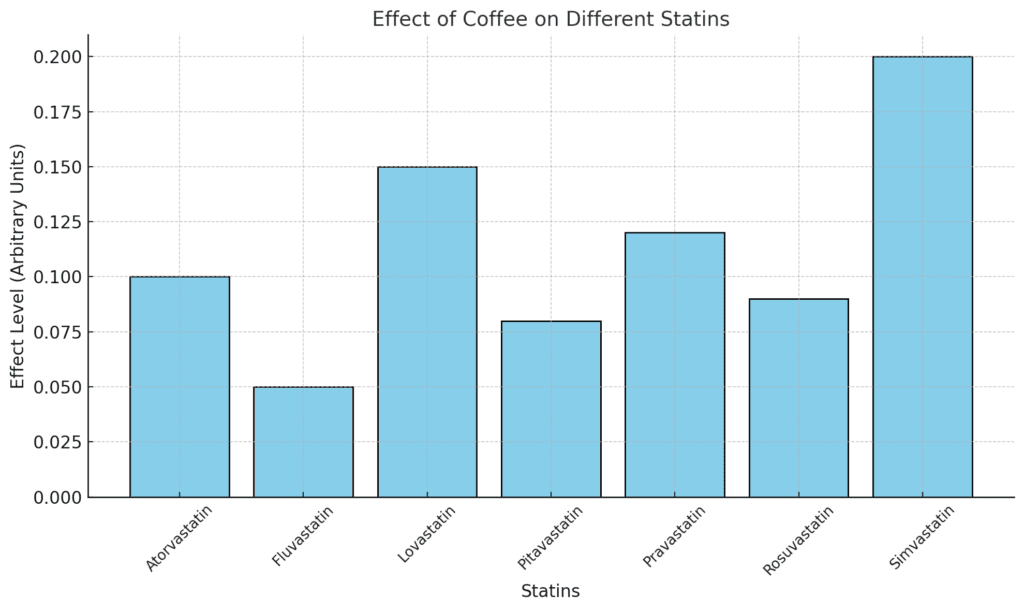
Introduction: Understanding The Relationship Between Lipid-Lowering Drugs And Coffee
If you’re taking a statin and you love your morning coffee, you’re definitely not alone—and it’s completely normal to wonder whether the two play nicely together. On one side, you have statins, the workhorses of modern cardiology that lower LDL (“bad”) cholesterol by blocking the liver enzyme HMG-CoA reductase. On the other side, coffee is a daily ritual with caffeine, antioxidants, and flavour that many of us would rather not give up.
The good news is that, for most people, moderate coffee consumption and statin therapy can coexist quite comfortably. Large meta-analyses show that drinking about 2–4 cups of coffee a day is associated with lower all-cause and cardiovascular mortality, not higher. (PubMed) Coffee, especially when it’s paper-filtered and not loaded with sugar and cream, often sits within a heart-healthy lifestyle rather than against it.
The nuance comes from how coffee is brewed and which statin you take. Unfiltered coffee—such as French press, Turkish, boiled coffee, or some office-machine brews—contains diterpenes like cafestol and kahweol that can raise LDL cholesterol by about 10–15 mg/dL in heavy drinkers. (NATAP) Paper-filtered coffee removes most of these compounds, making it a better partner when your goal is to drive LDL down as far as possible.
Statins themselves aren’t all identical. Lipophilic statins such as atorvastatin, simvastatin, lovastatin, and fluvastatin are more heavily handled by liver CYP450 enzymes, while hydrophilic statins like pravastatin and rosuvastatin are minimally metabolised by those enzymes and rely more on transporters and renal or biliary excretion. (NCBI) That matters because many classic food–drug interactions (for example, with grapefruit juice) happen when a food strongly inhibits CYP3A4 and pushes statin levels dangerously high. (Health)
Coffee is different. Caffeine is mainly metabolised by CYP1A2 rather than the CYP3A4 or CYP2C9 pathways that handle most statins, so direct pharmacokinetic clashes are not expected in everyday life. What we do see in the literature is more subtle:
- Experimental research suggests that caffeinated coffee can blunt some of atorvastatin’s cardioprotective preconditioning effects via adenosine-receptor blockade. (Research Experts)
- Laboratory cancer studies where combining caffeine with statins (atorvastatin or simvastatin) enhances tumour-cell killing—interesting science, but not guidance for routine clinical care. (PubMed)
For you as a real person simply trying to protect your heart, the practical take-home is usually:
- keep coffee moderate (generally up to 3–4 normal cups a day, unless your clinician advises otherwise);
- prefer paper-filtered brewing methods;
- avoid loading coffee with sugar and saturated fat;
- and check with your prescriber if you have liver disease, uncontrolled arrhythmias, or if you’re very sensitive to caffeine.
In the sections below, we’ll walk through what this means for each major statin—using familiar brand names like Lipitor (atorvastatin), Lescol XL (fluvastatin), Mevacor / Altoprev (lovastatin), Livalo / Zypitamag (pitavastatin), Pravachol (pravastatin), Crestor (rosuvastatin), and Zocor / FloLipid (simvastatin). (Medicines.org.uk)
As always, what follows is general information, not personal medical advice—your own cardiologist, diabetologist, or family doctor knows your full risk profile and should have the final word on how much coffee fits safely into your statin-based treatment plan.
Exploring The Impact Of Caffeine On Statin Effectiveness: What Research Shows
When people search “coffee and statins” online, what they’re really asking is: Will my daily cappuccino undo the benefit of my cholesterol pill? It’s a fair concern, especially when you’ve heard about grapefruit juice and certain antibiotics dramatically boosting statin levels.
So far, human data don’t show a consistent harmful interaction between normal coffee intake and statin effectiveness. The big lipid and cardiovascular-outcome trials that made statins famous didn’t systematically ban coffee; their impressive risk-reduction numbers—roughly 20–30% relative risk reduction in major cardiovascular events—were achieved in real-world coffee drinkers. (NCBI)
Where it gets intriguing is in small mechanistic studies. One well-known experiment in rats found that caffeinated coffee blunted the infarct-size reduction normally seen with short-term atorvastatin therapy. The proposed mechanism: atorvastatin’s acute cardioprotective effect partly depends on adenosine receptors, and caffeine is a non-selective adenosine-receptor blocker. (Research Experts) In other words, caffeine might interfere with some of the short-term, preconditioning benefits of statins in experimental models. Whether that translates into meaningful differences in long-term human outcomes is still completely unclear.
On the flip side, laboratory oncology research has looked at caffeine plus statins as a potential anti-cancer duo. Atorvastatin combined with caffeine has been shown to enhance apoptosis (programmed cell death) in human prostate cancer cells, with caffeine appearing to boost statin-induced DNA damage and stress responses. ( PubMed) Another study in neuroblastoma models found that caffeine supplementation potentiated the anti-tumour effects of simvastatin via FOXM1 inhibition. (AACR Journals) These are fascinating data for scientists, but we’re very far from recommending specific coffee–statins combinations as cancer therapy in the clinic.
So what about cholesterol numbers themselves? Here, coffee’s impact is driven less by caffeine and more by diterpenes:
- Unfiltered coffee can raise LDL cholesterol by 9–14% when consumed in large quantities. (NATAP)
- Paper-filtered coffee removes most diterpenes and has little or no effect on LDL. (PubMed)
If you’re on a high-intensity statin like atorvastatin 40–80 mg or rosuvastatin 20–40 mg, that LDL-raising effect from unfiltered coffee could nibble away at the hard-earned LDL drop your pill is giving you.
Clinically, the safest, evidence-aligned way to enjoy coffee while preserving statin benefits is:
- Choose filtered coffee most of the time.
- Aim for 1–3 cups/day, which falls in the range repeatedly associated with lower cardiovascular and all-cause mortality. (PubMed)
- Keep an eye on your lab results; if your LDL isn’t where your doctor wants it despite good adherence, the brew method, and coffee volume are worth a conversation.
In short, coffee can be part of a cardioprotective lifestyle alongside statins, as long as you’re mindful of brewing method, portion size, and your overall risk profile.
Coffee and Atorvastatin
Atorvastatin is the world’s “blockbuster” statin, best known under the brand name Lipitor and also available as generics and as an oral suspension (Atorvaliq). (Empr) It’s strongly lipophilic and extensively metabolised by CYP3A4, which is why grapefruit juice and some antifungals or macrolide antibiotics are such important interaction partners. (NCBI)
Where does coffee fit into this picture?
- Metabolism overlap: Caffeine uses CYP1A2; atorvastatin uses CYP3A4 and transporter pathways (OATP1B1, BCRP, P-gp).(Medicines.org.uk) There’s no convincing evidence that normal coffee drinking changes atorvastatin blood levels in a clinically significant way.
- Cardioprotection nuance: The rat study showing caffeinated coffee blocking atorvastatin’s infarct-size-limiting effect is the main cautionary signal. (Research Experts) It looked at a short pre-treatment course, not the long-term lipid-lowering use you and your doctor care about.
From a practical point of view, if you’re on atorvastatin 10–80 mg daily:
- Filtered coffee is your ally. Atorvastatin’s goal is to lower LDL aggressively, often by ≥50%. Unfiltered coffee could push LDL up by 10–15 mg/dL in heavy drinkers, which is the kind of change we normally chase with dose adjustments. (NATAP) Switching to drip, pour-over, or paper-filtered machines lets you keep your coffee without fighting your medication.
- Timing is flexible, but routine helps. Atorvastatin can be taken at any time of day. Many people take it at night with other meds and enjoy coffee in the morning. Separating them by a few hours is mainly about building a consistent routine, not avoiding a proven pharmacokinetic clash.
- Watch the extras. Sugary flavoured lattes or cream-heavy drinks can quietly add saturated fat and calories that counter your cholesterol goals. A mostly black or lightly milked coffee fits better with Lipitor’s mission.
Interestingly, some cancer-biology work suggests that atorvastatin plus caffeine may synergise to trigger cancer-cell death in vitro, particularly in prostate cancer cell lines. (PubMed) That’s scientifically exciting but doesn’t yet change cardiology practice; for now, it simply reinforces that moderate coffee isn’t inherently “toxic” alongside atorvastatin.
If you’re reaching high-intensity doses because of a previous heart attack, diabetes plus additional risk factors, or familial hypercholesterolaemia, any potentially modifiable LDL-raising factor—like unfiltered coffee—deserves attention. But for most Lipitor users, two or three filtered coffees a day are compatible with excellent LDL control and cardiovascular risk reduction.
Coffee and Fluvastatin
Fluvastatin, sold as Lescol and Lescol XL, is something of a quiet workhorse. It’s less commonly prescribed than atorvastatin or rosuvastatin, but it has a unique metabolic profile: fluvastatin is primarily metabolised by CYP2C9 with smaller contributions from CYP3A4 and CYP2C8. (NCBI) That gives it a slightly different interaction pattern and often makes it attractive in complex polypharmacy, where CYP3A4 inhibition is a concern. (Alfa Chemistry)
From a coffee perspective, there are a few reassuring points:
- Caffeine’s major metabolic pathway (CYP1A2) doesn’t clash with fluvastatin’s main route (CYP2C9), so direct enzyme competition is unlikely.
- No clinical pharmacokinetic studies have shown that coffee alters fluvastatin blood levels or efficacy in humans. Most interaction data instead focus on other CYP2C9 substrates like warfarin or certain diabetes medications. (ResearchGate)
That means your day-to-day questions become more lifestyle-oriented:
- Will coffee undermine my LDL goals? If your lipid-lowering plan relies on a moderate-intensity fluvastatin dose like Lescol XL 80 mg, and you drink large volumes of unfiltered coffee, the LDL-raising effect of cafestol and kahweol could work against you. (NATAP) Choosing paper-filtered coffee helps your statin shine.
- Does fluvastatin have any special sensitivity to caffeine? Not that we know of. There are no animal or cell-culture studies equivalent to the atorvastatin–coffee cardioprotection work specifically for fluvastatin.
Many patients are prescribed Lescol XL because they’ve had muscle symptoms or interaction issues with other statins. If that’s you, the stability of your overall regimen matters more than any hypothetical niche interaction with coffee. Practical tips:
- Keep coffee moderate (1–3 cups/day) and filtered.
- Monitor your lipid panel; if LDL hasn’t dropped as expected, your doctor might explore adherence, dose, or diet—including whether you’re routinely drinking unfiltered coffee at work.
- Report any new muscle pain, especially if it appears after starting a new medication or drastically changing your coffee habits (for example, suddenly going from no coffee to six strong French presses a day), even though a direct link is unlikely.
For the vast majority of people on fluvastatin, a sensible coffee routine is compatible with good lipid control and a lower cardiovascular-risk trajectory.
Coffee and Lovastatin
Lovastatin—better known as Mevacor or Altoprev—was one of the earliest statins brought to market. (Wikipedia) It’s lipophilic and relies heavily on CYP3A (especially CYP3A4) for metabolism, making it vulnerable to the same kind of interactions we worry about with simvastatin and atorvastatin. (NCBI)
Again, coffee doesn’t behave like grapefruit juice. It does not meaningfully inhibit CYP3A4, and there’s no evidence that it raises lovastatin levels the way grapefruit can. (Health) The bigger overlapping themes are:
- Shared target—cholesterol. Lovastatin aims to reduce LDL and events like heart attack or stroke. Unfiltered coffee can push LDL the wrong way, so brewing method becomes a simple, high-yield tweak. (NATAP)
- Overall cardiovascular risk. Moderate coffee intake is associated with lower cardiovascular and all-cause mortality, even in people at higher cardiometabolic risk. (Frontiers)
If you’re taking Mevacor or Altoprev in the evening with food—as commonly recommended—your coffee is probably happening in the morning or early afternoon. That separation is helpful mainly for sleep and adherence: too much late-day caffeine can worsen insomnia, and poor sleep in turn raises cardiometabolic risk.
Some easy, patient-friendly strategies:
- If your LDL is stubborn: Before jumping to a different statin, it’s worth asking, “Am I drinking large amounts of unfiltered coffee?” If yes, try switching to drip or pour-over and re-checking your lipids after a few months.
- If you have pre-existing liver disease or are on other hepatically-metabolised drugs: Your doctor may prefer lower doses of lovastatin or a different statin altogether, but coffee itself is rarely the limiting factor.
For most lovastatin users, the real interaction to avoid remains grapefruit juice, not coffee. A couple of mugs of filtered coffee can be part of the healthy lifestyle changes you’re already making alongside your statin.
Coffee and Pitavastatin
Pitavastatin is marketed as Livalo and Zypitamag and is often chosen for patients who need potent LDL lowering but have complex medication lists or a history of statin intolerance. (WebMD) What makes pitavastatin special is its metabolism: it is handled mainly by UGT1A3 and UGT2B7 glucuronidation, with only minimal involvement of CYP2C9 and CYP2C8 and none from CYP3A4. (NCBI)
That unusual profile dramatically reduces classic CYP-mediated food–drug interactions. In other words, pitavastatin is structurally set up to be “interaction-light”, and coffee fits comfortably into that picture:
- Caffeine doesn’t affect UGT1A3 or UGT2B7 in a clinically meaningful way.
- There are no published human studies showing that coffee changes pitavastatin pharmacokinetics, LDL response, or side-effect rates.
So the conversation becomes about optimising the environment you give pitavastatin to work in:
- Filtered coffee protects the LDL gains you’re trying to achieve. If your goal is a 40–50% LDL reduction on Livalo, eliminating the LDL-raising effect of unfiltered coffee is low-hanging fruit. (NATAP)
- Moderate consumption might add cardiometabolic benefits. Observational data suggest coffee drinkers—even people with diabetes—have lower cardiovascular and all-cause mortality than non-drinkers at similar risk levels. (Frontiers) That aligns nicely with pitavastatin’s purpose.
Some patients on pitavastatin are specifically there because they had muscle aches on other statins. If you’re one of them, it’s easy to wonder, “Could my coffee be part of the problem?” There’s no evidence that moderate caffeine intake worsens statin-associated muscle symptoms directly. However:
- Severe sleep deprivation, dehydration, and excessive caffeine can all make muscle soreness and fatigue more noticeable.
- Sticking to morning coffee, hydrating well, and not exceeding ~400 mg of caffeine per day (about 4 standard cups) is a sensible middle ground. (New York Post)
Overall, pitavastatin is one of the easiest statins to pair with coffee. The key is still “filtered, moderate, and mindful,” rather than “none at all.”
Coffee and Pravastatin
Pravastatin—sold under brand names like Pravachol—belongs to the more hydrophilic end of the statin family. (WebMD) It differs from many of its cousins in a few important ways:
- It’s minimally metabolised by the CYP450 system and is not significantly handled by CYP3A4.(ScienceDirect)
- It depends heavily on hepatic uptake transporters and renal/biliary excretion.
- It tends to have fewer drug–drug interactions overall, which is one reason clinicians like it in patients with complicated polypharmacy.
Because pravastatin largely sidesteps CYP3A4, grapefruit interactions are minimal, and the same logic extends to coffee: we simply don’t see evidence that caffeine changes pravastatin blood levels or efficacy in real-world patients.
So how do you make coffee “pravastatin-friendly”?
- Align your brew with your lipid goals. Pravastatin is often used at moderate doses (e.g., 40 mg) for both primary and secondary prevention. If your LDL target is fairly strict—common in diabetes or after a stroke—using paper-filtered coffee instead of unfiltered methods lets pravastatin’s LDL reduction show up clearly on your lab printout. (NATAP)
- Take advantage of potential synergy. Coffee’s polyphenols and antioxidants have been linked to lower risks of cardiovascular disease, type 2 diabetes, and mortality at moderate intakes.(BMJ) Pravastatin simultaneously reduces LDL and stabilizes plaque. Used together sensibly, they can support the same long-term goal: fewer heart attacks and strokes.
- Keep your clinician in the loop if you change habits dramatically. If you suddenly move from no coffee to 5–6 strong cups of unfiltered coffee daily, you might see a bump in LDL. Your doctor may interpret that as “pravastatin failure” unless you mention the change.
For many patients—especially those with multiple medications or higher interaction risk—pravastatin plus moderate filtered coffee represents one of the lowest-drama combinations in the cholesterol-management toolbox.
Coffee and Rosuvastatin
Rosuvastatin, best known as Crestor, is a high-potency, relatively hydrophilic statin widely used when aggressive LDL lowering is needed. (N ahdi Pharmacy) It’s only about 10% metabolised in the liver—primarily by CYP2C9 and CYP2C19—with most of the drug excreted unchanged in bile and faeces. ( NCBI)
Again, that means coffee has very little room to interfere pharmacokinetically:
- Caffeine doesn’t meaningfully inhibit CYP2C9 or CYP2C19 at dietary doses.
- Rosuvastatin isn’t significantly dependent on CYP1A2, so there’s no metabolic “tug of war.”
Where the coffee–rosuvastatin story becomes interesting is around risk–benefit stacking:
- Crestor is frequently prescribed to people at substantial cardiovascular risk—after a heart attack, in diabetes with additional risk factors, or for markedly elevated LDL.(crestor.com)
- Moderate coffee consumption in similar populations has been associated with lower cardiovascular and all-cause mortality, though the evidence is observational and should be interpreted cautiously. (Frontiers)
That suggests a scenario where your morning filtered coffee and your evening rosuvastatin tablet are rowing in the same direction, as long as you avoid unfiltered brews that push LDL up.
Practical points for rosuvastatin users:
- High-intensity plans deserve high-quality coffee choices. At 20–40 mg doses, rosuvastatin can reduce LDL by up to ~55–63%. Even a 10–15 mg/dL LDL rise from unfiltered coffee is worth avoiding if you’re chasing very low LDL targets after stenting or bypass surgery. (NATAP)
- Be cautious with mega-dosing caffeine. Very high caffeine intake (energy drinks, multiple large coffees plus pills) can promote palpitations, insomnia, and blood-pressure spikes—all unhelpful when you already have coronary disease. Staying under ~400 mg/day total caffeine is a good baseline unless your clinician sets a different limit. (Arab American University)
- Timing is flexible. Rosuvastatin can be taken any time of day; many people prefer evening dosing. You can happily enjoy your coffee in the morning; there’s no need to “separate” them for safety.
With Crestor, the most important interactions are still other drugs (like certain HIV treatments, cyclosporine, or gemfibrozil) and kidney function, not your coffee habit. But making that habit filtered and moderate helps ensure your LDL-lowering effort shows its full benefit.
Coffee and Simvastatin
Simvastatin, sold as Zocor and FloLipid, is another classic lipophilic statin extensively metabolised by CYP3A4. (WebMD) It’s particularly sensitive to strong CYP3A4 inhibitors and grapefruit juice, which can raise simvastatin levels and increase the risk of muscle toxicity and rhabdomyolysis. (Health)
Fortunately, coffee does not fall into that category. It doesn’t significantly inhibit CYP3A4, and no clinical data show that coffee changes simvastatin blood concentrations or directly raises toxicity risk.
What is interesting are two lines of research:
- Analytical studies have developed methods to measure simvastatin and caffeine simultaneously in plasma, mainly to support pharmacokinetic and preclinical work. (Arab American University) These don’t show an interaction by themselves, but demonstrate that scientists are looking at the combination.
- Cancer research has shown that caffeine can enhance simvastatin’s anti-tumour effects in neuroblastoma models by interfering with FOXM1-driven survival pathways. (AACR Journals) Again, this is exciting bench science, not a reason to self-medicate with massive coffee plus statin doses.
In the everyday world of cholesterol clinics and primary care, your main concerns while taking Zocor are:
- Avoiding strong CYP3A4 inhibitors (certain antifungals, macrolide antibiotics, HIV protease inhibitors, cyclosporine) and grapefruit products;
- Monitoring for muscle symptoms and liver-enzyme elevations;(Drugs.com)
- Achieving LDL and non-HDL targets set by your clinician.
Coffee weaves into this picture by influencing lipid levels and overall heart risk:
- If you love espresso, Turkish, or French press coffee and drink many cups a day, consider that your unfiltered coffee may be raising LDL by 10–15 %. (NATAP) With simvastatin, where doses above 40 mg are now used very cautiously due to myopathy risk, it makes sense to use every non-pharmacologic tool you have—including switching to filtered coffee—to hit your LDL goal without escalating the dose.
- Moderate filtered coffee can slot into a heart-healthy lifestyle that includes simvastatin, exercise, a Mediterranean-style diet, and smoking cessation.
If you’re on simvastatin 20–40 mg nightly and enjoy a couple of cups of filtered coffee each morning, you’re very much within what current evidence and guidelines would consider a reasonable, safe combination. Just remember that any new symptoms—muscle pain, dark urine, unusual fatigue—warrant prompt medical review, regardless of your coffee pattern.
A quick closing note
Across all of these statins, a consistent pattern emerges:
- Coffee does not behave like grapefruit juice; it doesn’t meaningfully shut down the enzymes that clear most statins.
- The main concerns are unfiltered brewing methods, raising LD, L, and very high caffeine loads, worsening blood pressure, sleep, or palpitations.
- Moderate, paper-filtered coffee—especially 1–3 cups in the morning—can sit comfortably alongside statin therapy and may even offer independent cardiovascular benefits. (PubMed)
Always keep your own clinician in the loop, particularly if you:
- change your coffee habits dramatically;
- have existing liver or kidney disease;
- or are on several other medications.
They can interpret your lipid numbers, side-effect profile, and broader health goals in context—and help you enjoy both a safer heart and a satisfying coffee routine.
Can You Drink Coffee with Statins? Timing, Safety & What Doctors Advise — FAQ
Covers simvastatin, atorvastatin, lovastatin, rosuvastatin, pravastatin, fluvastatin, pitavastatin. Informational only—follow your clinician’s guidance.
1) Can I drink coffee while taking a statin?
Yes—moderate coffee intake is generally compatible with statins. There’s no routine “coffee–statin” prohibition.
2) Which statins are most relevant here?
Common statins: simvastatin, atorvastatin, lovastatin, rosuvastatin, pravastatin, fluvastatin, pitavastatin. Coffee advice below applies broadly unless noted.
3) Does caffeine interact with statins’ effectiveness?
No established clinically significant interaction. Caffeine does not “turn off” LDL-lowering effects.
4) I’ve heard fruit juice is the issue—what’s that about?
The well-known interaction is grapefruit with some statins (especially simvastatin and lovastatin; less so atorvastatin). Coffee is not the main concern here.
5) Best time to drink coffee if I take my statin at night?
Have coffee earlier in the day to protect sleep. Timing relative to statin is flexible; choose what avoids insomnia or reflux for you.
6) Morning statin dosing—can I take it with my coffee?
Usually fine. If your stomach is sensitive, sip coffee after a light meal. Follow any label guidance specific to your statin.
7) Do rosuvastatin or pravastatin have coffee restrictions?
No special coffee restrictions are expected with these. They have fewer food–drug interactions compared with some other statins.
8) Can coffee worsen common statin side effects like muscle aches?
No clear link. If you notice jitteriness or poor sleep from caffeine, that can indirectly worsen how you feel overall—adjust intake accordingly.
9) Does coffee affect liver tests while on statins?
Coffee is not known to raise liver enzymes; some research suggests neutral or favorable associations. Your clinician will monitor labs as needed based on your statin and history.
10) Will coffee raise my blood pressure and counter my heart meds?
Caffeine can cause a short-term BP/HR rise in sensitive people. That’s separate from cholesterol-lowering. If BP is labile, keep caffeine modest and consistent.
11) Is decaf a safer option with statins?
Decaf minimizes caffeine-related palpitations or sleep issues while preserving flavor. It’s a good choice if you’re sensitive to caffeine.
12) Any difference between espresso, drip, and cold brew here?
Total caffeine matters more than brew method. A large drip can exceed a single espresso shot’s caffeine—adjust volume to your tolerance.
13) Are milk-based coffees okay with my statin?
Yes. There’s no routine dairy–statin restriction. If calories are a concern for cholesterol goals, choose smaller or lower-fat options.
14) Should I avoid coffee before a fasting lipid blood test?
Follow the lab’s fasting instructions. Many labs allow plain water only during the fasting window; black coffee may be restricted—check your requisition.
15) Are there supplements with coffee that raise statin risks?
Be cautious with high-dose niacin or red yeast rice alongside statins due to additive side-effect risks. Discuss all supplements with your clinician.
16) Energy drinks vs. coffee while on statins—any difference?
Energy drinks can deliver high caffeine plus other stimulants and sugars. If you’re sensitive to palpitations or BP spikes, coffee is typically the gentler option.
17) Any weight or diet tips that pair well with coffee and statins?
Pair your statin with a heart-healthy pattern: vegetables, fruits, whole grains, legumes, lean proteins, and healthy fats. Keep sugary coffee drinks in check.
18) I’m experiencing muscle aches—should I cut out coffee?
Coffee isn’t a typical trigger. Report muscle symptoms to your clinician; they may adjust dose, check labs, or try a different statin.
19) Quick timing rule if I notice reflux or jitters?
Leave a 1–2 hour buffer between your largest coffee and dosing, and avoid late-evening caffeine to protect sleep and adherence.
20) Bottom line—what do doctors usually advise?
- Moderate, consistent coffee intake is fine for most people on statins.
- Mind sleep and stomach comfort; switch to decaf if sensitive.
- Avoid grapefruit with certain statins as advised.
- Stay adherent to your dose and follow up on labs.
Tip: Consistency helps you and your clinician spot patterns fast.
Disclaimer: Informational only and not medical advice. Always follow your prescriber’s instructions for your medication.


